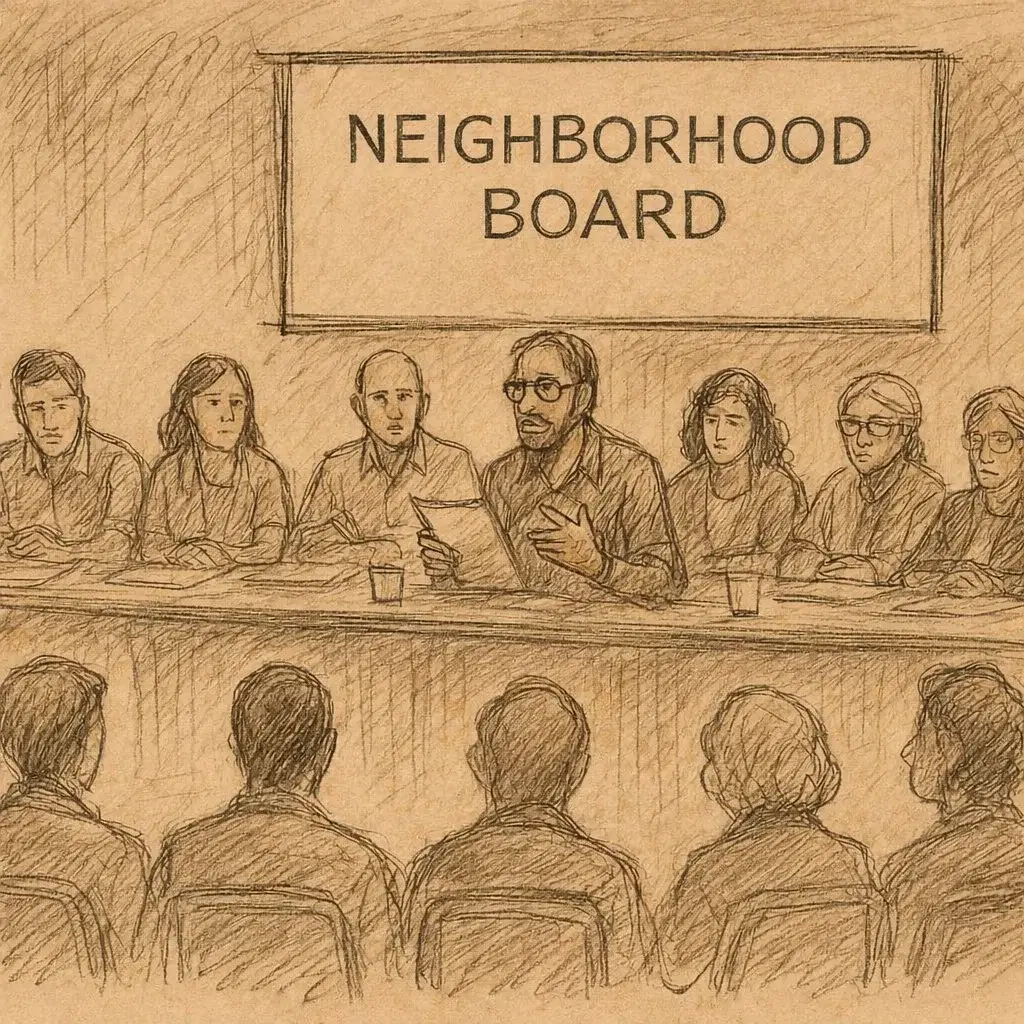
No 06 Pālolo Neighborhood Board Regular Meeting September 2026
Listen to this article:
6 Palolo Neighborhood Board Meeting – September 10, 2026
Post-Hurricane Meeting Conditions
Secretary Darlene Nakayama chaired the meeting in place of Chair Renell, who was absent because of illness. The meeting occurred approximately two days after Hurricane Lowell, and Nakayama noted that public agencies, board members, and residents were still responding to storm-related conditions and damage. The agenda was therefore handled as expeditiously as possible. Neither the Honolulu Fire Department nor the Honolulu Police Department delivered a report, with the understanding that both agencies were heavily occupied with post-hurricane public-safety and recovery duties.
Water-Main Construction and System Operations
Board of Water Supply civil engineer Raya Cuizon reported that Pālolo experienced no water-main breaks during August. Installation of the new eight-inch main on Waimau Homestead Road was completed, the roadway was restored, and the project was awaiting scheduling of its pre-final inspection. For Pālolo Water System Improvements Part 3, the main between Orchid Street and Carlos Long Street was also installed and chlorinated, and the contractor was transferring individual customer services to the new line. Cuizon also invited residents to the Board of Water Supply’s “Imagine a Day Without Water 2026” event on September 26 at the Arc of Safety at Waiʻanae Mall. The event, organized with the office of State Representative Chris Maruoka and more than 25 government agencies, nonprofit organizations, and community groups, was to include a rain-barrel workshop, food, hands-on activities, and giveaways.
Lead Testing at Jarrett Middle School
Cuizon followed up on earlier questions about lead detected at Jarrett Middle School. The testing was conducted under the federal Water Infrastructure Improvements for the Nation, or WIIN, Act through the U.S. Environmental Protection Agency, Hawaiʻi Department of Health, and Hawaiʻi Department of Education rather than the Board of Water Supply. Published results showed five samples above the EPA threshold, while other samples showed no detectable lead. Based on that pattern, the Board of Water Supply concluded that the lead was coming from plumbing within the school rather than from the public water supply entering the property. Cuizon emphasized that water delivered to the school is lead-free and that the utility cannot control plumbing installed beyond its meter. Residents seeking detailed results were directed to search online for the Hawaiʻi WIIN school-testing results or contact the Department of Health.
How Pālolo Receives Drinking Water
The Board of Water Supply provided a detailed presentation on Oʻahu’s drinking-water system. One hundred percent of the utility’s drinking water comes from groundwater created when a portion of rainfall percolates through the ground; the rest becomes runoff, evaporates, or is taken up by plants. The islandwide system supports approximately 170,000 service connections, serving roughly one million people, through 194 groundwater wells, 13 tunnels, five shafts, 13 treatment facilities, 172 potable-water reservoirs, approximately 192 booster pumps, 2,100 miles of pipeline, and 21,000 fire hydrants. Many treatment facilities are in Central Oʻahu and on the North Shore because of the legacy of plantation and agricultural activity in those areas.
Pālolo Reservoirs, Pumps, and Emergency Conservation
Pālolo receives a combination of water moved from other parts of Oʻahu and water pumped from a local well. Water is pumped into a primary reservoir and then gravity-fed to most homes in the valley. Homes at higher elevations are served by water pumped to a second reservoir, from which it is again distributed by gravity. A small group of homes at the back of the valley receives water directly from a groundwater tunnel, which also helps supply the upper reservoir and parts of the lower service zone. This layout explains why the Board of Water Supply requests conservation during hurricanes, power failures, and similar emergencies: prolonged electrical outages can prevent pumps from refilling reservoirs, while stored water is needed to preserve system pressure and continued household and firefighting service.
Water-Quality Monitoring and Conservation Rebates
The Board of Water Supply tests its groundwater sources quarterly and distributes water-quality reports twice each year, in July and December. Reports are mailed to property owners, so renters and residents of condominiums or townhomes may not receive them directly, but all reports are available online by entering a service address. Each report identifies the sources serving that address, the substances tested, any detections, and the maximum contaminant levels established by the EPA and Hawaiʻi Department of Health. Cuizon said that if a source approaches a regulatory limit, the Board of Water Supply shuts it down immediately, following the cautious approach demonstrated during the Red Hill crisis. Because groundwater is Oʻahu’s sole drinking-water source and only part of rainfall replenishes it, residents were encouraged to conserve through Board of Water Supply rebate programs for efficient washing machines, toilets, rain barrels, and other household improvements.
Follow the Drop Rainwater Program
Cyrus Howe, operations manager for the nonprofit Hawaiʻi Green Growth, presented the Follow the Drop rainwater assessment and capture program serving Pālolo and the wider Ala Wai watershed. The program promotes green stormwater infrastructure such as rain gardens, bioswales, and rain barrels to recharge aquifers, reduce flooding, and limit polluted brown-water runoff from densely developed areas. The watershed extends approximately from Lēʻahi/Diamond Head to Punchbowl and from the Koʻolau range to the reef, encompassing about 200,000 residents, 11 neighborhoods, and eight neighborhood-board districts. Hawaiʻi Green Growth recently completed a green-infrastructure project at Aliʻiolani Elementary School on Seventh Avenue, visible near Building A.
Free Property Assessments and Rain-Barrel Installations
Through a Hawaiʻi Community Foundation-sponsored program, residents can request a free rainwater assessment. Staff walk around a property and use a digital application to map roofs, driveways, and other impervious surfaces. The system estimates the annual number of gallons flowing through each downspout, allowing the team to recommend the most suitable type and capacity of stormwater infrastructure. The initiative began in 2024 with support from a National Fish and Wildlife Foundation grant and later installed about two dozen rain barrels across the Ala Wai watershed in partnership with Mālama Maunalua. Hawaiʻi Green Growth subsequently received a Hawaiʻi Department of Health Section 319 grant to install 100 additional barrels. A household must first complete an assessment so the program can confirm that the site is suitable, although public applications for this new installation phase will open only after the Department of Health contract is finalized.
Million-Gallon Capture Goal
Hawaiʻi Green Growth uses its assessment platform to monitor actual and projected rainwater collection by barrel and household. The program’s goal is to capture one million gallons by 2030 and had reached roughly 10 percent of that target at the time of the meeting. Organizers estimated that another 300 to 500 barrels would be needed to achieve the goal. To encourage participation, local artist Mari Izumi painted a reclaimed 55-gallon blue barrel from Keep It Simple Kaimukī with ridge-to-reef imagery. Everyone completing an assessment by the end of the calendar year will be entered into a drawing to receive the decorated barrel. One resident reported having already been accepted for a barrel through the Mālama Maunalua program; Howe noted that its January 2025 launch attracted more than 2,000 applicants for only a few hundred available barrels.
East Oʻahu Climate and Resilience Network
An East Oʻahu Community Action Network representative returned for a third presentation to Pālolo as the climate and resilience initiative moved from outreach into implementation. The project had visited the neighborhood boards covering Pālolo, Kaimukī, Waiʻalae-Kāhala, Kuliʻouʻou-Kalani Iki, Maunalua-Hawaiʻi Kai, and Waimānalo. Hawaiʻi Green Growth is managing a community survey database, and additional responses were to be gathered during September and October to identify East Oʻahu’s sustainability and disaster-preparedness priorities. Initial results ranked green infrastructure and water management as the top concern, leading organizers to plan a corresponding working group. Survey respondents generally believed they were personally prepared for a disaster but viewed their communities as largely unprepared, indicating a gap between household readiness and coordinated neighborhood capacity.
Disaster, Resilience, and Youth Working Groups
Several action groups were already being organized. A disaster-readiness group, led by participants from ʻĀina Haina Prepared and Hawaiʻi Kai Strong, was developing a strategic plan. A resilience-hub group included community participants and representatives or staff connected with Representatives Tina Grandinetti and Gideon, along with other local members. The Haumāna Youth Sustainability Coalition had grown to approximately 25 members after being initiated by Navarro Dantor, an 11th-grade student at Kalani High School. The coalition intended to involve eight Oʻahu high schools and was beginning with food security projects. The presenter urged residents to vote yes on Proposal 1, described as a food-security measure on the November general-election ballot, which the youth coalition planned to pursue in collaboration with the Hawaiʻi Foodbank and other partners.
Resilience-Hub Planning
The network hopes to establish three resilience hubs in East Oʻahu, reflecting the region’s transportation vulnerability along the single principal Kalanianaʻole Highway corridor between Waimānalo and the freeway near Waiʻalae-Kāhala. Waimānalo was already pursuing a hub under Chairman Kimiola Kane, and another possible site was being considered in Hawaiʻi Kai. No location had yet been identified to serve Waiʻalae-Kāhala, Kaimukī, and Pālolo. The proposed hubs would operate during “blue-sky” periods as places for education, preparation, nonprofit services, and community programming, and during “gray-sky” emergencies as disaster-support facilities. Potential requirements include internet service, a generator, shared offices, and storage sufficient for approximately 14 days of community food supplies. The city had recently adopted a resolution defining resilience-hub functions, and the presenter referenced approximately $18 million in funding and Hauʻula being selected as the first hub to receive assistance.
Kīlauea Gym as a Possible Hub Site
A participant suggested the Kīlauea gym complex near Kīlauea Avenue and 21st or 22nd Avenue as a potential resilience-hub location. The facility reportedly contains a large gymnasium and several smaller office or meeting spaces but is often underused and needs renovation. The discussion considered whether Hawaiʻi Community Foundation or other funding sources could help renovate and harden an existing public facility for emergency use. The climate-network representative agreed to inspect the site and invited the resident to join the resilience-hub effort. The network was still determining exact space requirements and was open to shared or multipurpose properties rather than requiring an entirely dedicated building.
Pālolo Representation in Regional Planning
The East Oʻahu network’s steering committee consists of 20 members and four principal coordinators, including Kahala Hotel and Resort executives Joe Ibarra and Mark McGuffey, KISCA manager Taylor Ledgerwood, and the presenter. Pālolo did not yet have a representative on the committee, so the board was asked to select someone able to attend by Zoom from 1:00 to 2:30 p.m. on the first Monday of each month. A board participant volunteered to be considered, subject to discussion with the chair. The wider KISCA Hui had approximately 178 members who would assist with implementing working groups across East Oʻahu, including three members from Pālolo and the board chair. As each working group finalizes its strategic plan, organizers intend to return to neighborhood boards to recruit volunteers based on community interests and priorities.
Pālolo ʻĀina and Community Growing Assessment
Kaleo presented a proposal for a Pālolo ʻĀina and Community Growing Assessment, building on more than six years of interest in why the valley lacks a community garden and on work through Long Spoon Farms to encourage residents to grow and freely share food. Rather than relying on a single garden site, the assessment would explore a connected valley-wide growing network involving private yards, balconies, apartment residents, community spaces, and underused land on a voluntary basis. It would identify what crops and useful plants grow well in different locations, who has land, who wants to grow, and who can contribute knowledge, supplies, or labor. It would also evaluate barriers to safe cultivation, including water movement, flooding, erosion, soil health, previous land uses, and locations where soil testing may be needed. The resulting roadmap would match land with growers, guide resource-sharing and preservation of surplus harvests, support household and apartment cultivation, and potentially lay the groundwork for a future community garden. Kaleo asked the board to support creation of a community working group to guide the assessment.
State Legislative Report and Storm Preparedness
State Senator Jackson Sayama reiterated emergency-preparedness guidance as the community faced multiple hurricanes and storms. He encouraged residents to inspect how heavy rainfall moves across their properties, particularly where runoff may affect foundations, and to check on neighbors during emergencies. Drawing on his own household’s experience with changing water flows during heavy rain, he stressed both personal property adjustments and neighborhood-level communication. He also expressed interest in coordinating federal, state, and city resources to renovate Pālolo Gym as both a recreational facility and an emergency shelter. Although the gym is a city property, Sayama said the valley’s central location makes it a practical shelter candidate given the shortage of adequate emergency shelters on Oʻahu and statewide. He hoped to begin advancing the effort in November, while acknowledging that securing funding and agency cooperation would require substantial work.
Parks, Community Gardening, and Coqui Frog Control
Senator Sayama proposed a cleanup at Azama Park near Waimau in the back of Pālolo once hurricane conditions had passed. He also identified a parcel functioning informally as parkland, with existing avocado and other fruit trees, as a possible community-garden location and invited further discussion with the Pālolo growing initiative. Sayama recognized volunteers working to control coqui frogs in the back of Waimau and said he hoped to join their efforts. The board added that volunteers had been catching the frogs individually and had recently used citric-acid spraying. A multi-agency community meeting was scheduled for Wednesday, September 16, from 6:00 to 8:00 p.m. at Pālolo Chinese Home to support and coordinate the eradication work, with flyers to be distributed to residents.
Board Vacancies and Lack of Quorum
The board sought applicants for vacant seats, including an at-large position and a Subdistrict 2 position. One resident came forward and had their eligibility checked, but the board lacked a quorum and therefore could not vote on an appointment. The candidate was encouraged to return the following month, when the board hoped enough members would be present to act. Nakayama attributed the unusual attendance partly to the immediate aftermath of the hurricane and residents’ ongoing recovery responsibilities. No other voting business could be conducted without quorum.
Meeting Schedule, Broadcasts, and Staff Transition
The next regular meeting was announced for October 14. The board stated that it would recess rather than hold its November meeting because of a holiday and would also recess in January. Meeting broadcasts were scheduled on ʻŌlelo Channel 49 on the fourth Thursday at 9:00 p.m. and on the first and third Sundays at noon. Residents were encouraged to watch and share the broadcast because of the evening’s extensive information on water, stormwater capture, disaster resilience, community agriculture, and emergency preparedness. The board also introduced Kelly Nakamura as the new neighborhood assistant replacing Camila, thanked Camila for her service, and wished her well before adjourning the meeting.