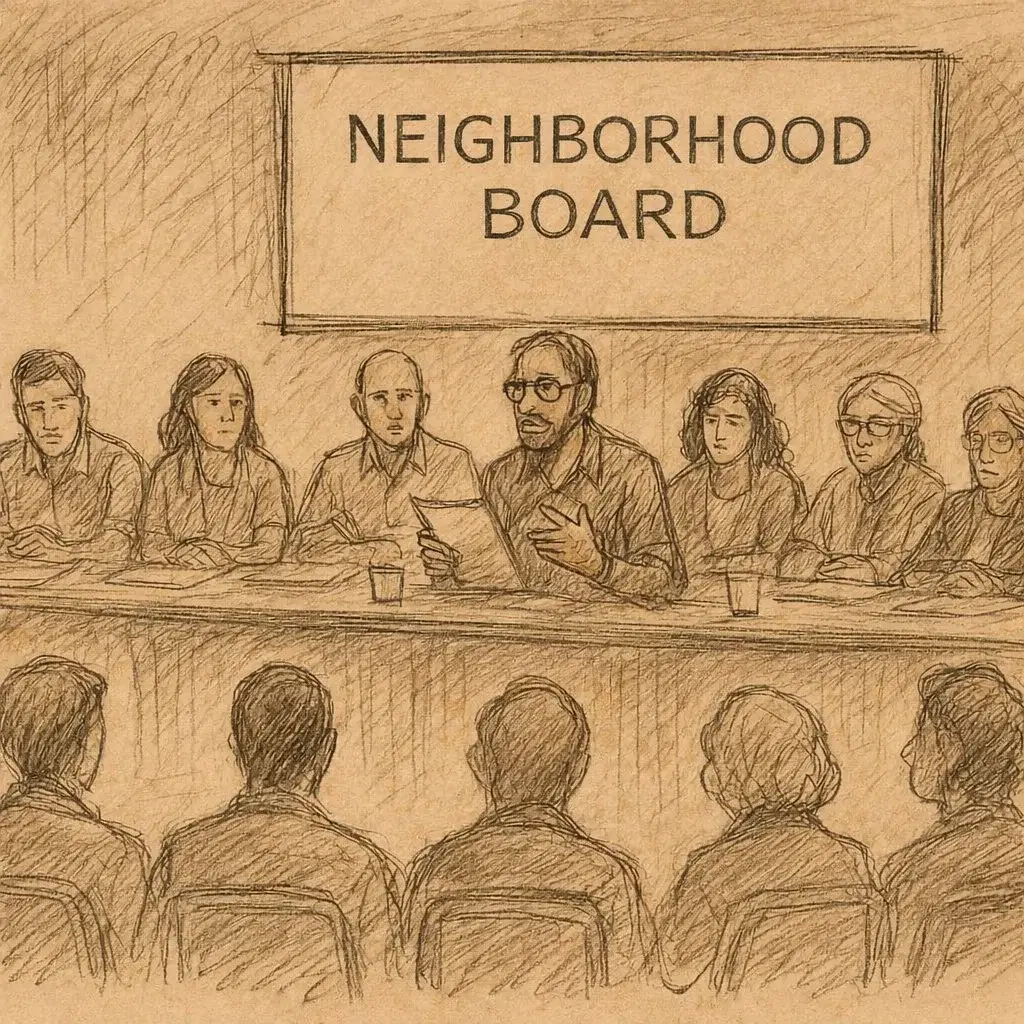
No 06 Pālolo Neighborhood Board Regular Meeting August 2026
Listen to this article:
6 Palolo Neighborhood Board Meeting – August 14, 2026
Honolulu Fire Department
Captain Ren Miyamoto of the Pālolo Uka Fire Station reported that during July 2026 the area experienced one structure fire, 27 medical alarms, and one motor-vehicle collision. The department’s monthly safety message focused on knowing how official emergency warnings are distributed and where residents can obtain reliable information. Residents were encouraged to visit Honolulu’s Department of Emergency Management stay-informed page and register at HNL Alert for text, email, or app notifications based on their selected preferences; these opt-in notices are not automatically sent according to a person’s location. During immediate threats, authorities may also activate the Emergency Alert System, Wireless Emergency Alerts, outdoor warning sirens, or a combination of those systems. Official city, state, and trusted partner social-media accounts may provide additional updates.
Police Statistics and Active-Shooter Preparedness
Lieutenant Taro Nakamura of the Honolulu Police Department presented July crime statistics compared with the previous month. Motor-vehicle thefts declined from seven to three, burglaries remained unchanged at two, general thefts increased from 10 to 17, and unauthorized entry into motor vehicles, or thefts from vehicles, rose from seven to 17. The district recorded 5,475 total calls for service, with further data available at Honolulu Police Department’s website. With students returning to school, HPD’s safety message addressed active-shooter situations through the “avoid, deny, defend” approach. Residents were advised to remain aware of entrances, exits, and their surroundings; move away from danger while creating as much distance and as many barriers as possible; shelter in place when escape is not possible by locking and barricading doors, turning off lights, staying out of sight, and silencing phones; and, as a last resort, defend themselves decisively. Nakamura noted that police respond to active-shooter incidents nationally in roughly three minutes on average, although much can occur before officers arrive. When law enforcement reaches the scene, people should show their hands and immediately follow instructions.
New Honolulu Police Chief
Board member Sean Aronson asked whether newly appointed Police Chief Lazar, who came from San Francisco, could attend a future neighborhood board meeting to introduce himself and discuss his perspective. Lieutenant Nakamura said the chief had been highly active at internal and public events and suggested that the board contact the chief’s office directly. Nakamura also agreed to mention the Pālolo board’s interest in his after-action report, while clarifying that he could not commit to an appearance on the chief’s behalf.
Water Main Breaks and System Improvements
Rhea Quazon, a civil engineer with the Honolulu Board of Water Supply’s Long Range Planning Branch, reported that water main breaks declined to two during the preceding month, both on 10th Avenue. Installation of an eight-inch water line on Waimau Homestead Road was completed, with road paving still pending. The Pālolo Water System Improvement Part 3 project was approximately 20% complete, and crews had finished installing an eight-inch main from Orchard Street to Carlos Long. That line was being chlorinated and would be placed into service after passing the required tests. Quazon, who joined the Board of Water Supply in March after previously consulting for the agency, said she looked forward to continuing communication with the community.
Construction Visibility at Kauhana Street
Following a concern raised by a resident after the previous meeting, the Board of Water Supply reviewed limited visibility for motorists exiting Kauhana Street onto Pālolo Avenue. Vehicles already park close to the corner, and nearby water-main work has made sight lines more difficult. The agency is placing temporary no-parking signs along Pālolo Avenue during construction and will add signs specifically near the north intersection of Kauhana Street and Pālolo Avenue while work is underway. Quazon thanked the resident for identifying a condition affecting both motorists and work crews.
Water Service During Storm Emergencies
Board member Randolph Hack asked whether an approaching storm and possible electrical outages could interrupt running water. Quazon explained that the Board of Water Supply maintains permanent and mobile emergency generators and tracks storms so it can restore pumping equipment when grid power fails. Some pump stations could not be powered during the earlier Konolo storm because of compounded problems, but the agency is preparing to respond if similar conditions occur. Pālolo is part of the larger metropolitan water system, with substantial supplies imported from Central Oʻahu through transmission boosters and supplemented by smaller urban wells. Water is generally pumped from the base of valleys to elevated reservoirs, then gravity-fed to homes. If pumps fail, residents could experience pressure disturbances because adequate reservoir pressure is necessary to maintain household service. Quazon said Pālolo is typically in a relatively favorable position during emergencies, while the agency experienced greater difficulty moving water through areas such as Kapolei and Nānākuli during the previous storm.
Lead Testing and Water-Quality Reporting
Board member Kaleo asked about a reported elevated lead result at Jarrett Intermediate School dating to November. Quazon did not have the school’s specific results but said the Board of Water Supply is complying with federal Lead and Copper Rule Improvements, which require sampling at schools and childcare facilities as well as testing on the utility side of the system before the meter. She explained that when lead is detected inside a private property or school, fixtures and on-site plumbing are often the source because the utility controls standards for mains and service laterals only up to the meter. She agreed to research Jarrett’s status. Kaleo also noted that the latest readily visible district lead reading appeared to be from 2023 and asked how frequently water-quality reports are updated. Quazon said reports are issued at least annually but would verify whether testing or updates occur more frequently.
“Imagine a Day Without Water” Event
The Board of Water Supply invited residents to its annual “Imagine a Day Without Water” event on September 26, 2026, from 9:00 a.m. to 1:00 p.m. at the “Arc of Safety” at Waiʻanae Mall. Planned activities included educational exhibits, prize giveaways, and a rain-barrel workshop. Flyers were made available at the meeting, and additional information was provided through the Board of Water Supply’s One Water Hawaiʻi webpage.
Board Size, Quorum, and Representation
Neighborhood Commission Chair Patrick Smith addressed the Pālolo board’s recurring quorum and vacancy problems. The board had 13 authorized seats but only eight filled seats at the beginning of the discussion, and Smith said the commission might recommend reducing the board to nine members, comparable to the Downtown-Chinatown board. Any reduction would not take effect until the next term, but a decision would need to be made soon enough for the May 2027 neighborhood board election process and any related election or mapping work. Smith emphasized that the Neighborhood Commission has final authority but generally seeks recommendations from the board and community. He also explained that Pālolo could replace its subdistrict system with entirely at-large seats, which could be accomplished more easily than changing boundaries. Separately, he advised the board that neighboring communities were discussing a possible transfer of part of the St. Louis Heights area from the Diamond Head board to the Kaimukī board, subject to recommendations from both affected boards.
Calls for Greater Board Participation
Several participants argued that Pālolo should retain 13 seats and address quorum problems by increasing participation rather than shrinking the board. One resident urged elected board members to attend consistently and challenged neighbors to become involved, noting that previous meetings had drawn residents concerned about albizia trees, landslide areas, and other unresolved problems. The speaker suggested that frustration over limited results may have discouraged continued attendance. Smith recommended working with elected officials to promote meetings through newsletters and town halls. Board members also discussed advertising meetings online and at walkable community events, offering refreshers on Robert’s Rules of Order, enforcing time limits, presenting public-safety statistics through clearer visualizations, and selecting topics that reflect residents’ interests. Board member Hack described the existing subdistrict divisions as artificial and favored at-large representation, while Kaleo volunteered to help publicize meetings online and supported converting all seats to at-large positions. Participants also shared examples of residents being elected after simply attending an initial meeting.
Final Decision on Board Composition
After further discussion, the board chose not to reduce its authorized membership from 13 to nine. A motion was made to retain all 13 seats while converting every seat from subdistrict representation to at-large representation. With no objections or abstentions stated, the motion passed. The recommendation will require Neighborhood Commission action and is intended to make recruitment easier by allowing candidates to represent the entire Pālolo area rather than requiring them to live in a particular subdistrict.
East Oʻahu Climate and Resilience Network
Aloha McGuffey returned with the second part of a presentation on the climate and resilience mandate, explaining that the initiative had moved from planning into implementation through the East Oʻahu Community Action Network, or EOCAN. The name also invokes the Hawaiian expression “eō,” described as people coming together in agreement. Organized by the Kahala Initiative for Sustainability, Culture, and the Arts and supported by the Kahala Hotel and Resort, the network has grown to approximately 170 members and includes about 15 nonprofit partners. It has been meeting with six neighborhood boards across East Oʻahu, including Hawaiʻi Kai/Maunalua, Waimānalo, Kuliʻouʻou-Kalani Iki, Waiʻalae-Kāhala, Kaimukī, and Pālolo. The initiative is based on findings from a two-day climate-resilience symposium at the Kahala Hotel attended by roughly 100 invited participants and featuring 32 speakers from state and city government, neighborhood boards, nonprofit organizations, and Hawaiʻi Green Growth.
Long-Range Community Planning
EOCAN’s framework extends through 2050 and is intended to collect priorities from the six neighborhood board areas, translate them into strategic actions, and submit community recommendations to the Department of Planning and Permitting. Pālolo falls within the Primary Urban Center Development Plan, which spans a broad corridor that includes Waiʻalae-Kāhala, Kakaʻako, and areas toward Pearl City. Other portions of the network fall under the East Honolulu and Koʻolau sustainable community plans. McGuffey said the group seeks an East Oʻahu development pattern based on neighborhood collaboration and stewardship rather than the more intensive development seen in Kakaʻako. A survey managed by Hawaiʻi Green Growth was available in paper and QR-code formats, and the results were expected to be presented to the boards in September or October. The complete presentation and a roughly 46-page EOCAN framework were also made available online.
Resilience Working Groups and Community Hubs
EOCAN is developing working groups that are expected to begin operating in 2027 after strategic action plans are prepared. Initial groups will focus on disaster readiness, community resilience hubs, and a haumāna youth sustainability coalition. Additional proposed subjects include coastal resilience, renewable energy, affordable and workforce housing, local food and agriculture, waste management, reforestation, watershed protection, invasive-species control, and policy and advocacy. The youth coalition already includes students and educators associated with Kalani High School, Waipahu High School, Punahou School, Kaimukī Middle School, and the Department of Education’s school-garden programs. The network envisions three resilience hubs serving Waimānalo, Maunalua/Hawaiʻi Kai, and the Kaimukī-Waiʻalae-Pālolo area. These centers would assist communities during “gray-sky” emergencies such as hurricanes and major storms and provide education and preparedness programs during normal “blue-sky” conditions. The presentation emphasized that local volunteer networks can help communities respond while government resources are delayed or concentrated elsewhere.
Coqui Frog Control in Pālolo
Robbie Snyder of the Oʻahu Invasive Species Committee, a University of Hawaiʻi project, provided an update on the coqui frog population in upper Pālolo. The committee had been conducting one monthly treatment using 400 gallons of citric solution and planned to increase to two treatments per month beginning in August 2026 after hiring and training additional staff. Sound monitors are placed before and after treatments, and monitors along Lot E Ridge were being retrieved to compare current frog activity with data collected one year earlier. Snyder cautioned that acoustic monitoring is still an evolving tool but said the year-over-year results may help show how the population is shifting.
Multiagency Coqui Response
The Hawaiʻi Department of Agriculture and Biosecurity continues treatments, assists other agencies and volunteer operations, and surveys for and captures outlying frogs beyond the main infestation. The current strategy uses spraying in the dense core population and hand capture around the perimeter because the frogs reproduce too rapidly for hand removal to control the main colony. The Division of Forestry and Wildlife is also working to prevent the frogs from spreading into the forest reserve behind Pālolo, where they could heavily consume native insects and damage intact forest ecosystems. Forestry and Wildlife is conducting two treatments per month at 600 gallons each, totaling 1,200 gallons of citric solution monthly, with support from agriculture personnel and community volunteers. Volunteers also conduct weekly hand captures and record information used to guide agency strategy. Snyder invited residents to beginner hand-capture sessions in Waimānalo on the second and third Thursdays of the month and directed those interested in Pālolo operations to contact the local volunteer group at the email address given as palolocoqui@gmail.com.
Pālolo Park Maintenance
Kaleo, who participates in Trees for Pālolo, raised concerns about maintenance at Pālolo Park. Volunteers water newly planted trees every other day, but weeds and grass appeared to have remained uncut for several weeks. The chair said the maintenance responsibilities and schedule might depend on an agreement between Trees for Pālolo and the Department of Parks and Recreation and agreed to identify the proper contact and seek clarification.
Filling Board Vacancies
The board announced vacancies for one at-large seat, one seat in Subdistrict 1, two in Subdistrict 2, and one in Subdistrict 3. Resident Elizabeth Weitz, who also volunteers with the Pālolo tree-watering team, expressed interest in serving. After her address was verified, she was nominated to fill the Subdistrict 3 vacancy. The roll-call vote was seven in favor, with no abstentions, and the appointment passed. Her addition increased the board’s filled membership from eight to nine seats.
Youth Climate Grants
Mayor Rick Blangiardi’s representative, Regina Malampay, reported that the Office of Climate Change, Sustainability and Resiliency and the Honolulu Youth Commission were accepting applications for the Youth Climate Action Fund. Oʻahu youth could receive up to $4,999 to design and carry out a climate-related project. Applications were due September 7, 2026, with details available through Resilient Oʻahu.
Lower School-Zone Speed Limits
The city is lowering school-zone speed limits under Ordinance 24-32. City roadways bordering schools will change from 25 miles per hour when children are present to 20 miles per hour from 6:00 a.m. to 6:00 p.m. on school days. The Department of Transportation Services will also install or replace missing, faded, or outdated school-zone signs within 1,000 feet of schools. Implementation will be phased according to enrollment, Title I status, the number of students living within walking distance, grade level, crash history, and speeding concerns. For roads not controlled by the city, Honolulu will ask the relevant owner or operator to adopt the lower limit.
Driver’s Licenses and City Information
The mayor’s latest newsletter, including information on newly designed Hawaiʻi driver’s licenses and state identification cards, was shared in the meeting chat. Board member Hack asked whether any driver could obtain the new design for a $7 fee and whether the same option applied to state identification cards. Malampay did not have a confirmed answer and agreed to research the eligibility and cost. She also reminded residents to enroll in HNL Alert and monitor the city’s website for storm-related press releases.
State Government Updates
Kiele Amundsen of the Hawaiʻi Emergency Management Agency, representing Governor Josh Green’s office, reported that the governor signed four measures in mid-July intended to strengthen Hawaiʻi’s education system. He also signed Act 259 to modernize transportation law, support a clean-energy economy, account for new technologies, and advance cleaner and safer roads. Specific provisions of the measures were not detailed during the meeting. Residents were directed to the governor’s newsletter, Ke Ala Hou, through the governor’s website.
Tropical Cyclone and Emergency Readiness
The state warned that Tropical Cyclone 1C was expected to become a tropical storm the following day and move west-northwest toward the Hawaiian Islands. Possible impacts included heavy rain, flash flooding, landslides, and gusty winds. Residents were urged to make emergency plans, stock supplies, maintain backup power and radio options, prepare property for flooding and wind, and rely on official updates from Ready Hawaiʻi, its alerts page, and the National Weather Service Honolulu Forecast Office. The University of Hawaiʻi system was also scheduled to begin classes on August 24, and residents were advised to anticipate heavier traffic near campuses.
Legislative and Community Representation
State Senator Les Ihara attended briefly and left a written statement at the meeting entrance. Representative-elect Derek Turbin introduced himself as the incoming representative for the district and said he would share his phone number and email so residents could contact him with neighborhood concerns. Turbin thanked Senator-elect Jackson Sayama for his community involvement, recognized outgoing Senator Ihara’s years of service, and expressed appreciation to the other State House candidates, including Chair Osuega, Vice Chair Andrew Pomsavan, Angie Knight, and Jake Morrow. Turbin previously served with the neighborhood board from 2021 through 2024 and said he looked forward to working with the board again.
Approval of Meeting Record
The board considered approval of the regular meeting’s written summary associated with the video record. A motion to approve was made, and with no objections or abstentions, the summary was approved.
Next Meeting and Broadcast Schedule
The next Pālolo Neighborhood Board meeting was announced for Wednesday, September 9, 2026, at 7:00 p.m., with participation available at Pālolo Elementary School and online. ʻŌlelo Community Media rebroadcasts Board No. 6 meetings on Channel 49 on the fourth Thursday of each month at 9:00 p.m. and on the first and third Sundays at noon. Archived meetings can be found at ʻŌlelo’s website by searching for “Palolo.” The chair encouraged attendees to take the informational materials available at the entrance before the meeting adjourned.