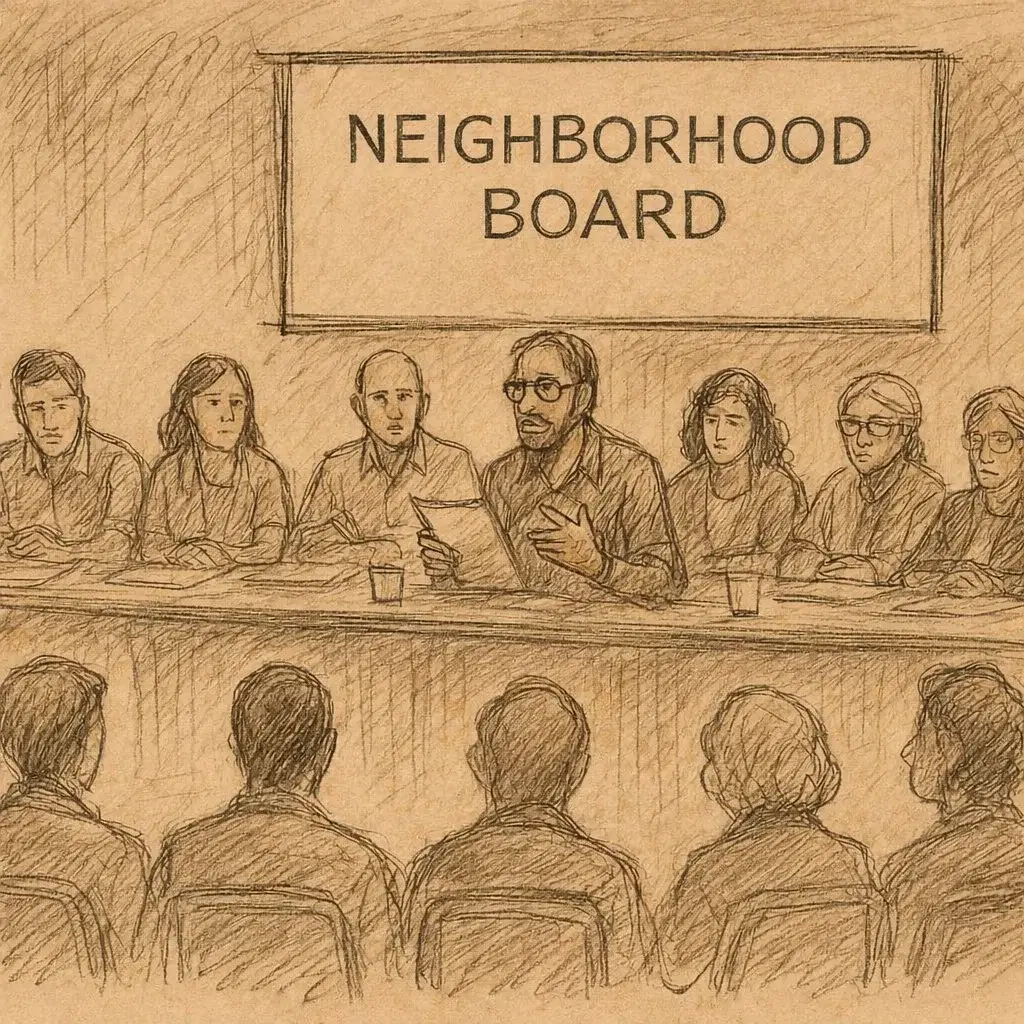
No 06 Pālolo Neighborhood Board Regular Meeting July 2026
Listen to this article:
6 Palolo Neighborhood Board Meeting – July 10, 2026
Honolulu Police Department
Lieutenant Taro Nakamura reported Honolulu Police Department statistics for June 2026 compared with the previous month. Motor vehicle thefts remained unchanged at seven, burglaries declined from three to two, and thefts decreased from 12 to 10. Unauthorized entry into motor vehicles, or theft from automobiles, increased from three to seven. The wider police district recorded 5,315 calls for service, with additional statistics available through the HPD website. Nakamura repeated the previous month’s severe-weather preparedness message, noting NOAA’s forecast of a potentially very active El Niño-related tropical cyclone season, possibly reaching double-digit weather events including hurricanes and tropical depressions. Residents were urged to prepare supplies and plans before storms develop. Board member Earl also renewed a longstanding request for speed enforcement near the Chinese women’s home, particularly around a posted 15-mile-per-hour turn. Nakamura said the location remains part of an ongoing enforcement effort.
Water Main Breaks and Construction
Dominic Diaz of the Honolulu Board of Water Supply reported nine water-main breaks during the previous month, most associated with ongoing construction along Pālolo Avenue rather than spontaneous pipe failures. All affected lines were repaired or replaced. Installation of the eight-inch waterline on Waiʻōmaʻo Homestead Road has been completed, with only final paving and project closeout remaining. The Water System Improvements Part Three project along Pālolo Avenue, around Orchid Street through the Carlos Long Street area, was approximately 10 percent complete, with RMY serving as the contractor. Diaz acknowledged the rough roads, trenches, and other disruptions caused by waterline replacement. He explained that final full-width planing and finish paving normally occurs after construction is complete through a separate paving contractor. Residents who encounter settled trenches, dangerous bumps, or other immediate hazards should report them so temporary repairs can be made before final repaving. The Board of Water Supply’s 24-hour number is 748-5000, Diaz’s number is 748-5928, and the communications office can be reached at 748-5041; emergencies should be reported to 911.
Illegal Dumping Signs and Water Conservation Event
Following a concern raised at the prior meeting, Board of Water Supply personnel met with community members and installed several “No Dumping” signs on agency fencing at Carlos Long Street and Pālolo Avenue. Residents were encouraged to continue reporting dumping or unauthorized activity on water-system property. Diaz also announced the annual Unthirsty Plant Sale at the Board of Water Supply Xeriscape Garden, 99-1268 Iwaena Street in Hālawa, scheduled for Saturday, August 1, from 9 a.m. to 1 p.m. The event was to include drought-tolerant plants, xeric-gardening experts, rain-barrel catchment workshops, and free compost. Information was made available at the meeting and through the Board of Water Supply website.
Board of Water Supply Representative Transition
Diaz announced that this would be his final regular appearance after approximately two decades of attending Pālolo meetings. Rhea Crazon, a recently hired Board of Water Supply engineer and fellow Pālolo resident, will become the agency’s primary neighborhood representative, while Diaz will remain the alternate. The board thanked Diaz for his long service and welcomed Crazon as an in-district contact who can respond to questions about construction, water infrastructure, and safety conditions.
Coqui Frog Eradication
Mike Shiroma presented an update from the Pālolo volunteer coqui frog team, which began operations during the second half of February. In only several months, the group conducted 55 hunts involving a cumulative 436 participant-visits and captured 3,619 coqui frogs. It also held 15 workdays, generally lasting two to three hours with one to three volunteers, to clear trails and remove frog habitat. One particularly large workday involved 26 volunteer Navy sailors. Five elected officials or candidates had participated in hunts or spraying support, including Ronell, Andrew, Catalina, Derek Turbin, and Jackson Sayama. The group has also coordinated citric-acid spraying with the Division of Forestry and Wildlife, the Oʻahu Invasive Species Committee, and the Department of Agriculture and Biosecurity.
Coqui Volunteer Recruitment and Spread Risk
The group has averaged approximately 66 frogs per hunt. Its highest single-night total was 337 frogs during an unusually long hunt that continued until midnight, while the highest individual volunteer total was 75. Normal outings are limited to about two hours, with approximately 90 minutes spent actively hunting after volunteers gather and walk to the stream. Shiroma said additional volunteers are needed so multiple teams can work simultaneously in different parts of the valley rather than concentrating on one location. Participation is open islandwide, and one regular volunteer travels from Kāneʻohe. He cautioned against assuming that drier communities such as Kaimukī or other parts of East Honolulu are safe from infestation, pointing to established coqui populations in dry and warm areas of Kona. The group supplies walkie-talkies, emergency whistles, extra headlamps, collection bottles, citric acid, refreshments, and snacks. Interested volunteers may contact the team at palolokoki@gmail.com. In response to a question about coconut rhinoceros beetles, Shiroma said his group is focused specifically on coqui frogs and that the Department of Agriculture and Biosecurity is the lead agency for beetle control. The board noted that it had hosted a rhinoceros beetle presentation roughly four to six months earlier and offered to share that information.
Fire and Emergency Response
Captain Miller of the Pālolo Fire Station’s Third Watch reported June 2026 incident statistics. Firefighters responded to one nuisance fire, one activated alarm, 35 medical calls, one motor vehicle collision, and one mountain rescue, for a total of 39 reported incidents. Because mountain rescues are a recurring concern in the valley, Miller emphasized hiking safety. Hikers should choose trails appropriate to their fitness and experience, check forecasts for rain, wind, and ocean swell where relevant, remain on marked trails, avoid dangerous positioning for photographs, hike with a companion, tell someone their plans, and allow enough time to return before dark. He noted that people frequently underestimate the time and difficulty of Pālolo trails, which may become muddy, deeply rutted, and steep, particularly near the upper sections. Fire Department neighborhood-board questions may be submitted through hfdnhb@honolulu.gov.
Residential Fire Prevention
A resident asked about the causes of fires in the valley and specifically raised concern about kūpuna who may not know that dryer lint traps and vents require cleaning. Miller explained that nuisance fires are distinct from structure fires and may involve unauthorized outdoor burning, fireworks, or fires started in brush by unhoused people. Legal open burning is generally limited to cooking or religious uses and should be reported to fire dispatch when appropriate, such as for an imu. Residential structure fires can result from overloaded electrical circuits, unattended food or candles, dryer lint, or unsuitable materials placed in dryers, including towels with nylon components. Although the Fire Department primarily conducts inspections at businesses rather than private residences, Miller agreed that regularly cleaning lint traps and dryer vents is an important household safety measure, particularly for older residents and homes with aging appliances.
Route 200 Bus Resolution
Juanita Liu and Leilani Iwaki, working through transportation committees involving Kaimukī, Diamond Head, and Pālolo, presented an updated resolution concerning TheBus Route 200, which replaced Routes 9 and 9S. The current routing no longer travels through central Kaimukī and the 18th Avenue area, where commercial establishments, the library, schools, and other community resources are concentrated. The original version of the resolution had been supported more than a year earlier, but the revised measure added ridership observations, schedule data, economic effects, and a proposal to remove the Route 200 segment through Kapahulu and Kapiʻolani Park. Liu said nearly 600 buses of all routes pass through the Kapahulu and Kūhiō Avenue intersection each day, averaging approximately one bus every two minutes, and argued that removing Route 200 from that area could reduce congestion, operating time, and expense. The existing turn near Paki Avenue was also described as difficult and congestion-producing.
Restoring Access to Central Kaimukī
The presenters said Pālolo riders traveling to Waikīkī already have more direct service through Routes 13 and 14 along Kapahulu, while the loss of the former Route 9 alignment has reduced access to central Kaimukī. Interviews with riders near McDonald’s indicated that passengers understood the available Waikīkī connections. Merchants have reported lower foot traffic, and the Kaimukī Library observed that middle-school students stopped visiting after school after the route changed. The updated resolution therefore seeks restoration of an essential trunk connection linking Pālolo, Kaimukī, Diamond Head, Kapahulu, St. Louis Heights, and surrounding communities to the Kaimukī commercial center and community facilities. Angie Knight, a St. Louis Heights representative on the Diamond Head–Kapahulu–St. Louis Heights Neighborhood Board, added that the St. Louis Heights Community Association had submitted a letter supporting the proposed revision. Board members said the updated measure retained the core purpose of the earlier resolution while providing stronger evidence and refinements. After a motion and second, the Pālolo board approved the resolution without objection or abstention; updated versions had already passed the Diamond Head and Kaimukī neighborhood boards.
East Oʻahu Community Action Network
A representative introduced the draft East Oʻahu Community Action Network plan, known as EO CAN and convened by KISCA, the Kahala Initiative for Sustainability, Culture, and the Arts. The effort is sponsored by the Kahala Hotel, described as East Oʻahu’s only resort and one of the region’s larger employers. EO CAN covers six neighborhood-board areas: Kaimukī, Pālolo, Waiʻalae-Kāhala, Kuliʻouʻou–Kalani Iki, Hawaiʻi Kai, and Waimānalo. Waimānalo was added because an ahupuaʻa-based planning approach recognizes its ecological and cultural relationship to Hawaiʻi Kai across the Koʻolau range. The initiative began with a symposium featuring 32 speakers, followed by 10 roundtables addressing subjects including rainforest restoration, sea-level rise, coral reef degradation, storm drains, and clean streams. Students from Ke Kula Kaiapuni ʻo Ānuenue provided opening protocol, oli, and music reflecting the beauty of Pālolo.
East Oʻahu Priorities and Volunteer Network
The roundtables concluded that East Oʻahu communities should remain socially and culturally intact while recognizing that each neighborhood has distinct priorities. Keeping families in place emerged as a central concern because younger residents are leaving due to housing costs, limited affordable options, food prices, and access to locally produced food. Participants also identified threats to natural and cultural resources, including invasive species such as Pālolo’s coqui frogs. The presenter offered to recruit assistance from KISCA Hui’s approximately 150 members for Pālolo’s frog-control work and said similar volunteer groups will be needed throughout East Oʻahu. The plan assumes that residents, neighborhood boards, government agencies, nonprofit groups, and businesses will all have roles in implementing local projects, particularly when communities cannot wait for government action. Recent Kona low storm response was cited as an example of residents and grassroots organizations having to provide immediate assistance while public resources were strained elsewhere.
Coordinating Regional Development Plans
EO CAN proposes collaboration among the six neighborhood boards and alignment with the city’s development and sustainable-community planning systems. Pālolo falls under the Primary Urban Center Development Plan, Waiʻalae-Kāhala is divided between that plan and the East Honolulu Sustainable Communities Plan, Hawaiʻi Kai is covered by the East Honolulu plan, and Waimānalo is governed through the Koʻolaupoko Sustainable Communities Plan. Although each plan is generally updated every 10 years, the cycles do not coincide. One proposal is to work with the Department of Planning and Permitting to align future planning periods so residents and neighborhood boards can coordinate regional goals, implementation, and agency engagement. The draft framework, titled “EO CAN: Building a Better East Oʻahu with Aloha,” had expanded to 39 pages and was available with the meeting materials. A roughly 20-member steering committee of residents and government representatives is helping prepare it. The roadmap extends to 2050, with more immediate work identified through 2027. Residents were asked to complete an accompanying survey, and the presenter planned to return on August 12 for a second presentation, questions, and an update based on feedback from all six boards.
Board Vacancies
The board announced five open seats: one at-large position, one seat in Subdistrict 1, two seats in Subdistrict 2, and one seat in Subdistrict 3. Interested residents were invited to speak with board staff and provide identification to verify eligibility. The vacancies leave several parts of Pālolo underrepresented and remain open to residents willing to participate in monthly meetings and community issue tracking.
Election of Board Officers
The board elected officers for the term running from July 1, 2026, through June 30, 2027. Ronell was elected chair, Andrew was elected vice chair, Darlene was elected secretary, Randy was nominated and selected as treasurer, and Earl was elected sergeant-at-arms. Voting was conducted by roll call, including efforts to reconnect Earl after online technical difficulties. The officer selections were approved without competing nominations.
Elected Officials’ Reports and Candidate Forum Scheduling
Because a legislative candidate forum was scheduled immediately after adjournment, elected officials did not present their usual oral reports. Their written reports were instead made available in the meeting-materials section of the board’s Google Drive. The board clarified that the candidate forum was informational and separate from regular board business.
Annual Recess Schedule
The board discussed which three months to recess while still satisfying the Neighborhood Plan requirement to hold at least nine meetings each year. November was selected because the regular meeting date would fall on Veterans Day and the hybrid online component made a federal-holiday meeting impractical. After discussion, the board approved recesses for November 2026, January 2027, and June 2027 without objection or abstention.
Meeting Minutes and Hybrid Access
The board approved the written summaries of the February and May meetings. One member said the format was difficult to understand but accepted it provided that it complied with the Sunshine Law and Neighborhood Commission requirements. The next regular meeting was announced for August 12 at 7 p.m. at Pālolo Elementary School and online. A member stressed the need to preserve Webex access for residents and board members who have difficulty traveling, and the chair confirmed that the hybrid format would continue. The regular meeting was then adjourned.
Legislative Candidate Forum
Following adjournment, the board hosted a nonpartisan candidate forum intended to help residents make informed choices in the 2026 election. The board emphasized that it does not endorse candidates or political parties and asked the audience to allow equal speaking time without interruptions. Five candidates seeking the district’s State House seat participated—Derek Turbin, Ronell, Jake Takaya Morrow, Andrew Pomsuvan, and Angie Knight—along with State Senate candidate and incumbent State Representative Jackson Sayama. The format included one-minute introductions, community questions, rapid responses, and closing statements.
Candidate Introductions
Derek Turbin said he was born and raised nearby, served on the Pālolo Neighborhood Board from 2021 to 2024, chaired the Democratic Party of Hawaiʻi from 2024 to 2026, and is managing partner of a Honolulu insurance-law firm. He centered his campaign on cost of living, small-business conditions, and invasive species. Ronell described herself as a mother of four, auntie to many, lifelong Pālolo resident, and Neighborhood Board chair who regularly connects residents with services and resources. Jake Takaya Morrow said he lives and works at the Pālolo Zen Center, formerly farmed organically on Kauaʻi, earned a master’s degree in political science, taught American politics, and worked at the Legislature on agriculture and environmental policy. He framed his candidacy around affordability, housing, invasive species, climate resilience, and ethical leadership. Andrew Pomsuvan discussed growing up on Carlos Long and Gardenia streets in an immigrant family from Laos, working for the Department of Agriculture and Biosecurity and in City Council constituent services, and his commitment to working families, farmers, and biosecurity. Angie Knight cited her service on the Diamond Head–Kapahulu–St. Louis Heights Neighborhood Board and Neighborhood Commission, along with four and a half years in homelessness advocacy and community relations. She said government must address interconnected systemic problems and coordinate across jurisdictional boundaries. Jackson Sayama highlighted six years representing Pālolo in the House, community cleanups, legislative work, and more than $1 billion in statewide affordable-housing investments. He said he was seeking the Senate seat to provide active district representation while addressing long-term statewide issues.
Candidates’ First-Year Priorities
Asked to name two district priorities and first-year actions, Ronell emphasized affordable housing, keeping residents in Hawaiʻi, youth, mental health, and deeper consultation with residents. Morrow focused on housing, the spread of large “monster homes,” the condition of Pālolo Avenue, and reducing waste so limited public funds reach community needs. Pomsuvan prioritized stronger funding for agriculture and biosecurity, noting that agriculture receives less than 1 percent of the state budget, along with cost-of-living relief for kūpuna on fixed incomes and families living paycheck to paycheck. Knight emphasized aging residents and aging housing stock, storm-recovery and insurance challenges, family-caregiver tax credits, general excise tax relief for medical and dental services, removing taxes on menstrual products, education-to-employment pathways, and pedestrian safety. Sayama identified disaster preparedness and infrastructure as his first priority, noting that Pālolo Stream nearly overflowed during a Kona low and that the valley lacks a clear evacuation plan and stored emergency resources. He called for revisiting Ala Wai flood mitigation and also prioritized paid family leave for parents, caregivers, and kūpuna. Turbin identified invasive species and cost of living, proposing a dedicated invasive-species unit within the Department of Land and Natural Resources to address coqui frogs, feral chickens and cats, coconut rhinoceros beetles, and albizia trees. He also proposed expanding the state insurance fund to offer homeowners and flood coverage to residents who lose private insurance because of storm claims or single-wall construction.
Affordable Housing Proposals
In response to an audience question about making housing genuinely affordable for local families, Morrow proposed building housing on state land and leasing it to teachers and other public employees, linking housing assistance to the state government’s reported 24 percent vacancy rate. Pomsuvan supported continued investment in both ownership and rental housing, including the Rental Housing Revolving Fund and tools that enable developers to produce more affordable units. Knight called for a systemwide approach that includes transit-oriented development, less mandatory parking in locations designed for residents with lower car dependence, continued supportive-housing vouchers, and protections for people whose federal subsidies may be reduced. Sayama supported affordable rental development along appropriate portions of Waiʻalae Avenue and expansion of ownership opportunities, including the recently approved 99-year leasehold model intended to help local graduates return home. Turbin proposed repairing and expanding underused University of Hawaiʻi student housing so students are not competing for rentals in Pālolo, redeveloping underused Department of Education property such as the approximately six-acre site near Kapiʻolani Community College, and consolidating decentralized housing agencies into a state Department of Housing. Ronell said she would rely on resident input and favored using and rehabilitating existing developed properties rather than continuously consuming additional land.
Leadership and Difficult Decisions
Candidates were asked how difficult professional or community decisions had prepared them for office. Pomsuvan and Knight both described leaving jobs they valued in order to run, with Knight noting that her role as a spokesperson for a major homeless shelter could have created a conflict. Sayama characterized his decision to leave a secure House seat and challenge an incumbent senator as a willingness to choose community progress over personal comfort. Turbin described taking over the Democratic Party of Hawaiʻi during leadership turnover, financial strain, and public frustration, including having to say no to powerful people and mediate among strongly divided personalities. Ronell said she generally confronts challenges through faith, prayer, family teachings, and community experience rather than identifying one defining decision. Morrow recounted intervening when a legislative coworker was being mistreated in a difficult office environment, bringing the matter to the representative so internal conflict would not interfere with constituent service.
Kaimukī Business District
A resident asked how government could help locally owned businesses along Waiʻalae Avenue and preserve Kaimukī’s distinctive commercial character. Knight pointed to the shrinking of the City’s Office of Economic Revitalization and said more should be done to connect Pālolo and Kaimukī through markets, events, and neighborhood activity. Sayama cited organizations such as Keep It Kaimukī, Sustainable Coastlines Hawaiʻi, and the Kaimukī Business and Professional Association, saying the state can support eligible nonprofits through grants-in-aid and help them organize cleanups, parades, discounts, and events that draw people to local businesses. Turbin advocated a Small Business Procurement Fund, legal and lease assistance, tax credits for buying local agricultural products, and paid family leave to reduce staffing pressure on very small employers. Morrow proposed affordable emergency loans and direct grants for businesses facing sudden financial stress. Pomsuvan drew on his family’s small jewelry business and proposed stronger marketing assistance through the Department of Business, Economic Development and Tourism, along with enforcement of “Made in Hawaiʻi” standards requiring qualifying products to be at least 51 percent Hawaiʻi-made. Ronell chose not to offer a response to that question.
Kūpuna Care and Aging in Place
The forum also addressed support for older residents and caregivers. Turbin supported expanding the Kūpuna Care tax credit and investing in mobile health services that could reach residents in the back of Pālolo Valley and on steep hills where transportation is difficult. Ronell supported credits, grants, mobile care, and stronger neighborhood check-ins for isolated elders. Morrow argued for more aggressive tax relief, observing that inflation effectively reduces fixed retirement incomes, and suggested significant property-tax relief for elderly homeowners whose properties are now valued far above their original purchase prices. Pomsuvan supported paid family leave and stronger partnerships with nonprofit and private providers such as Meals on Wheels. Knight noted that rising costs have caused some people over age 65, including residents in their 80s, to become homeless for the first time. She supported implementation of a recent legislative study on financial assistance and long-term caregiving, broader supportive services such as case management, housekeeping and grocery assistance, and discussion of publicly supported assisted-living options.
Candidates’ Closing Messages
Turbin asked voters to remember his empathy, responsiveness, and willingness to bring residents’ concerns and emotions into legislative work. Ronell emphasized her family’s multigenerational community service, her work as a resident and board chair, and her intention to continue serving regardless of the election result. Morrow stressed his legislative knowledge, independence from corporate contributions, and goal of establishing a more ethical style of leadership. Pomsuvan emphasized his lifelong roots, authenticity, open-door approach, and commitment to making decisions in the community’s interest. Knight said she would follow through on conversations, work alongside residents, and help the distinct neighborhoods of Pālolo, St. Louis Heights, and Wilhelmina Rise cooperate while retaining their identities. Sayama pointed to six years of district involvement, park cleanups, legislative accomplishments, and more than $35 million secured for district schools, arguing that a Senate position would allow him to do more. The forum concluded with a reminder that the Neighborhood Board makes no endorsements and an appeal for residents to become informed and vote in the upcoming election.