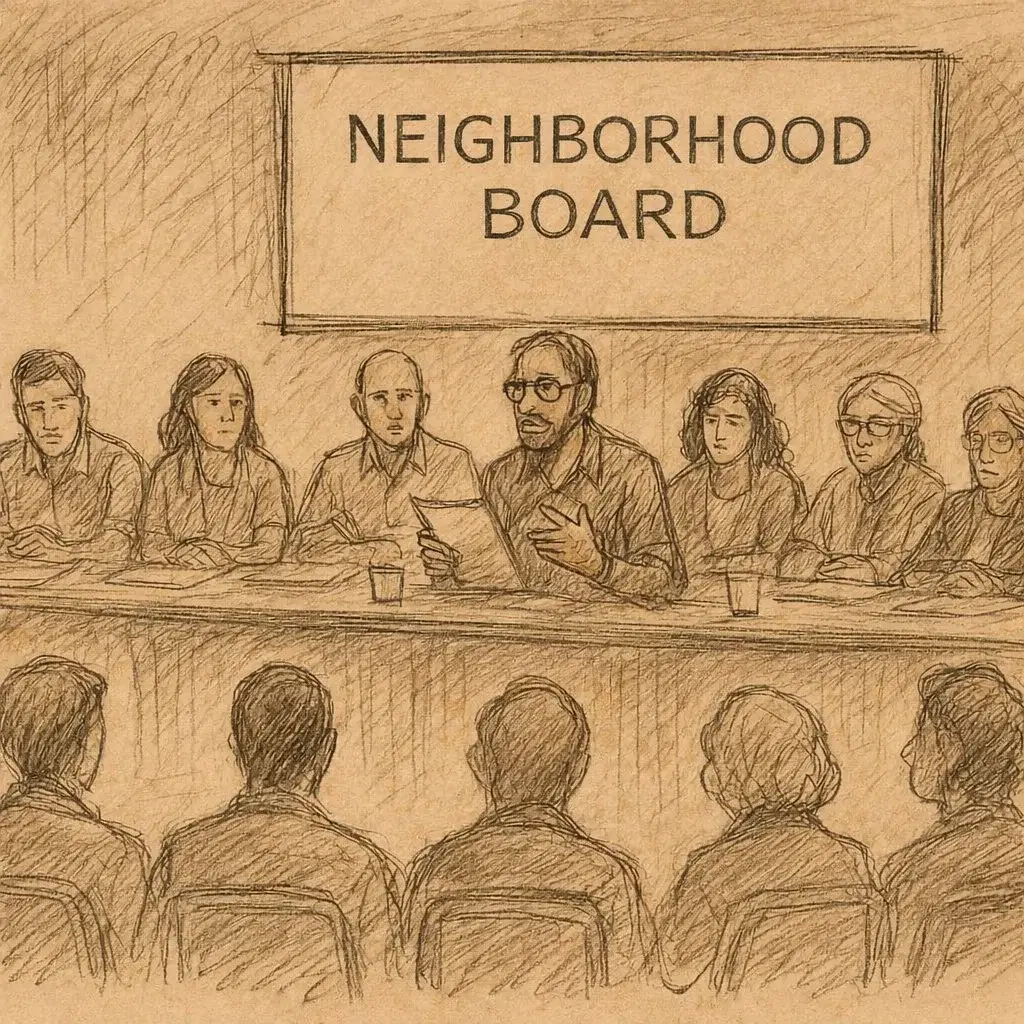
No 30 Kāneʻohe Neighborhood Board Regular Meeting August 2026
Listen to this article:
30 Kaneohe Neighborhood Board Meeting – August 24, 2026
Board Vacancies
The Kāneʻohe Neighborhood Board opened by noting vacancies in Sub-District 2, Crown Terrace; Sub-District 9, Keapuka; Sub-District 13, Kokokahi; and Sub-District 14, Yacht Club Terrace. No eligible residents in attendance or online volunteered for the positions. The board’s request to fill the seats through at-large assignments was pending before the Neighborhood Commission, which was expected to vote at its meeting the following Monday. If approved, the board anticipated filling the vacant seats at its next meeting.
Police Crime and Traffic Report
Honolulu Police Department Lieutenant Sanford Yu reported unusually low crime totals for July. Kāneʻohe recorded no motor-vehicle thefts, burglaries, or robberies, while thefts fell from 10 to five. Motor-vehicle break-ins were the only category to rise, increasing from two to five. Police said the improvement could reflect repeat offenders being incarcerated, criminal activity shifting to other districts, or residents doing a better job of locking vehicles and homes. In response to a report of 52 high-speed vehicles traveling on H-3 and turning around near Exit 11 by Kamehameha Highway, HPD said officers had responded on the rainy night in question and chased the drivers out of the district. Officers were continuing nightly H-3 enforcement when calls for service permitted. Sergeant Nakagawa reported that the previous night’s enforcement produced three excessive-speeding citations and 14 other speeding citations. Police clarified that, on a freeway with a 55-mph limit, driving 81 mph or faster can qualify as excessive speeding. A resident also asked what would happen if a large pine tree on police property fell during a storm; the response was that the Fire Department may be able to cut a fallen tree with chainsaws, but larger trees may have to remain until a road crew can remove them. The Honolulu Fire Department was unavailable because it was responding to a call.
Marine Corps Base Hawaiʻi
Marine Corps Base Hawaiʻi reported that July had been particularly busy and confirmed that RIMPAC-related training and its associated noise had ended. The base hosted a canoe regatta with more than 3,000 participants, welcomed Paepae o Heʻeia fishpond interns for a Nuʻupia workday and visits to culturally significant areas of Mōkapu, and conducted a well-received junior lifeguard program led by experienced lifeguards and big-wave surfers. Kalaheo High School JROTC was scheduled to conduct a junior cadet program on September 11 and 12. The base also publicized its monthly race series, which is open to the public; registration for the next event, a triathlon, was due August 30. Residents were encouraged to report military noise through the base’s QR-code form so the information can be compiled and forwarded to Marine Corps Air Station personnel responsible for operations and community impacts.
Sandbar Boating Oversight
Marine Corps representatives described their participation in an August 11 meeting concerning unsafe or inappropriate boating activity at Ahu o Laka, commonly known as the Kāneʻohe sandbar. The Marine Corps marina had no plans to expand its fleet, which consisted of 24 pontoons and nine Boston Whalers. Renters must pass a test, hold a marina license, and comply with operating rules; licenses and boating privileges can be revoked immediately, and revocations occur regularly. Two patrol boats remain on the water to guide renters, observe conduct, and order boats back to the dock when violations occur. The base presented its system as a possible model for stronger state oversight. Members clarified that enforcement at the sandbar rests with the Department of Land and Natural Resources, including its Division of Boating and Ocean Recreation, with other DLNR divisions also involved depending on the issue.
Windward Community College Registration and Events
Windward Community College Chancellor Ardis Eschenberg said fall registration remained open as classes were about to begin, although the recent storm and campus closure disrupted registration during a peak period. Prospective students could still enroll the following week but were urged to register quickly to avoid missing classes. The college’s Paniolo Barbecue was scheduled for September 19, with $15 barbecue plates, children’s games, seed planting, bandana decorating, invasive-species activities, and other mostly free attractions; horse rides were expected to carry a small charge.
University of Hawaiʻi Reorganization and Budgeting
The University of Hawaiʻi system was preparing to eliminate the separate community-college subsystem by December, after which each community-college chancellor would report directly to the UH president. Chancellor Eschenberg said direct access to the president could improve campus input and understanding of system decisions, although the effects would depend on implementation. UH was also using a new performance-based budgeting model. Windward’s legislatively appropriated general-fund budget was not expected to change immediately, and tuition was not scheduled to increase in the current or following year. However, campuses no longer automatically retained all unspent prior-year funds. Sixteen percent of carry-forward funds had been retained centrally to establish a system reserve, and campuses received back only a portion of the remainder. Windward shifted approximately $120,000 to the system, less than many campuses because it had already spent much of its available money on community priorities. During the pandemic, for example, Windward used federal support to provide full-tuition scholarships to graduating seniors and launch the initiative later supported by the Castle Foundation. Eschenberg emphasized that responsible campuses still need reserves for storms, building damage, and unforeseen costs. Windward was permitted to retain up to 20% of its operating budget and used some local flexibility to buy a truck and trailer so Hawaiian Studies students could transport navigation canoes to the ocean, a project that might not rank highly in centralized system budgeting.
College Facilities and Middle College Programs
Windward Community College, founded in 1972, was 54 years old and had several significant capital-improvement needs. Its older Hawaiian Studies building, originally a physicians’ residence associated with the former state hospital, was being renovated. Alakaʻi, which houses administration, financial aid, admissions, registration, and the business office, had not undergone a major renovation in decades and was next on the campus priority list. Hale ʻĀwea, the former law library, was technically abandoned, but the college expected design funding to plan its reuse. The chancellor hoped it could become a permanent home for Windward’s two middle-college high school programs, which currently use scattered classrooms. The programs allow students who may be less likely to attend college to spend part of the week on campus while earning certificates focused on Hawaiian knowledge, innovation, ahupuaʻa, and moʻolelo. Windward described itself as the only middle-college site of its kind in Hawaiʻi and expected its first senior class in one of the programs during the coming year.
Castle High School
Castle High School students reported that the school’s 70th-anniversary Diamond Jubilee was successful, with strong attendance, vendors, and entertainment. A Castle Performing Arts Center garage sale was scheduled for the following Saturday from 8 a.m. to 2 p.m. in the auditorium parking lot. Homecoming week was planned for September 29 through October 3. Students were also preparing to volunteer at the Okinawan Festival, the Out of the Darkness Walk, and fun fairs at Hui Mōʻiliʻili and Kāneʻohe-area elementary schools, with volunteer coordination available through Student Activities Coordinator Renee Omori.
Castle Storm, Power, and Internet Impacts
A Castle student raised concerns about preparedness for future storms after recent outages left some Kāneʻohe residents, including those on Kahuhipa Street, without power for approximately 30 to 40 hours, compared with past restoration times of roughly five hours. Although electricity and air conditioning had returned at Castle, some classrooms remained without Wi-Fi, and replacement parts were expected to take at least a week to arrive. Because instruction now depends heavily on computers, the outage left some classes without an effective backup method. The board suggested determining whether the unresolved connectivity issue belonged to Spectrum, Hawaiian Telcom, or another provider. School staff said frozen cafeteria food was apparently preserved, but some refrigerated items had to be discarded. Castle also confirmed that it operates a STEM and robotics program whose students have competed nationally.
Kalanianaʻole Road and H-3 Access
The board briefly discussed the Department of Transportation project along Kalanianaʻole Road. The access road serving the church and Koʻolau golf course and ballroom had reopened after approximately six months, and the H-3 on-ramp appeared close to paving, although no state representative was present to provide a formal construction update. Later discussion raised concerns that the roadway between nearby residences and the Koʻolau facilities was again deteriorating despite having been paved in 2023. Members also cited returning vegetation, erosion near a downhill drainage ditch, and the lack of a safe shoulder or easement, requesting inspection before further damage affects access.
GROW Food-Waste Composting Program
The City’s Refuse Division presented the Green Recycling Organic Waste, or GROW, program, which will allow households with automated curbside collection to put food scraps directly into green compost carts. Oʻahu households generate about 60,000 tons of residential food waste annually, and the program is intended to support the City’s goal of 95% landfill diversion by 2030. A pilot began April 1, 2026, in Waipahu, Nānākuli, Hawaiʻi Kai, Mililani, Kailua, and Kalihi. Islandwide expansion was scheduled for October 1, 2026. Existing green waste such as grass, leaves, branches, hedge trimmings, palm fronds, and natural Christmas trees will remain accepted. Newly accepted food materials will include fruits, vegetables, dairy solids, bread, baked goods, pasta, rice, grains, cereal, beans, nuts, seeds, meat, seafood, poultry, bones, eggshells, shells, leftovers, spoiled food, plate scrapings, coffee grounds, and tea leaves.
Compost Restrictions and Collection Practices
Liquids, paper products, plastics, metals, glass, fats, oils, grease, pet waste, dirt, rocks, bricks, plant pots, cups, utensils, takeout containers, pizza boxes, and fast-food packaging will not be accepted in green carts. Products labeled biodegradable or compostable are also prohibited because of concerns that manufactured compostable materials may contain PFAS “forever chemicals.” Residents were advised to collect scraps in sealed reusable containers, resealable bags, or repurposed lidded containers and then empty the material loose into the green cart without leaving bags or liners in the cart. Freezing scraps until collection day, adding baking soda or coffee grounds, layering scraps under green waste, keeping lids closed, and placing carts out only on collection morning were recommended to control odor and pests. Collection will remain biweekly, with no change to pickup days or added collection-truck traffic.
Compost Processing and Resident Concerns
Collected material will be taken to the Hawaiian Recycling Composting Facility in Wahiawā, where it will be processed into compost for homeowners, farmers, landscapers, and other agricultural users. The facility is trained by the U.S. Department of Agriculture to safely process coconut rhinoceros beetle host material. Residents may make up to two free self-drop-off trips per day, but commercial vehicles are not allowed. City transfer stations and convenience centers will continue accepting green waste but not food waste. Board members asked whether an official mailer would be sent, requested accessible formats for blind residents and translated information under Title VI, and encouraged the City to provide vermiculture resources for home composting. They also questioned whether private intermediaries could collect scraps more frequently, since driving to Wahiawā or storing food for two weeks may discourage participation. Concerns were raised about odors, rats, cart sanitation, and whether the City should clean carts because the carts remain municipal property. The City said the pilot was still gathering participation and contamination data and agreed to seek answers regarding mail outreach, third-party collection, accessibility, and home worm-composting resources.
Hawaiʻi Loa DLNR Campus Proposal
The Department of Land and Natural Resources provided an update on its proposed acquisition of the former Hawaiʻi Pacific University Hawaiʻi Loa campus near Kamehameha and Kalanianaʻole highways. DLNR intends to turn the approximately 132-acre property into a consolidated conservation campus rather than a conventional office complex. The agency said its Oʻahu facilities are overcrowded, with employees working in storage containers, temporary modular buildings, and shared workspaces. The Division of Forestry and Wildlife, Division of Conservation and Resources Enforcement, and Koʻolau Mountains Watershed Partnership must leave their state-owned Waimānalo location by the end of 2029 because the Department of Health plans to take over the full campus as part of its service expansion. DLNR determined that existing facilities at Makiki and Kawainui could not absorb the displaced operations because of space and environmental constraints.
Hawaiʻi Loa Facilities and Operations
Under the conceptual plan, the former academic center would provide laboratories, offices, meeting rooms, and agency training space. Existing dormitories would be renovated for temporary housing, particularly for the nine-month DOCARE academy, and would also support visiting staff and other agency training. Approximately 120,000 square feet of existing floor area could be renovated, but DLNR estimates it needs another 49,000 square feet for field equipment, boats, jet skis, vehicles, storage buildings, and nursery shade houses. The campus would support Forestry and Wildlife, DOCARE, Historic Preservation, Aquatic Resources, State Parks, and Boating and Ocean Recreation, along with the Koʻolau Mountains Watershed Partnership and Oʻahu Invasive Species Committee. A Honolulu Emergency Medical Services substation was also included in the plan. Approximately 250 employees could eventually work at the campus, out of roughly 1,100 DLNR employees statewide. Kitchen and meeting spaces could be shared with community partners, and the former auditorium would be renovated to support agency offices and educational functions.
Recreation, Environment, and Traffic at Hawaiʻi Loa
DLNR intends to preserve the softball and soccer fields, likely through partnerships with nonprofit organizations. The tennis courts were described as nonfunctional and costly to restore, so DLNR was considering repurposing the concrete pads for shade houses or DOCARE storage. A board member objected that pickleball players had previously been led to expect recreational use of those courts and urged DLNR to work with the City or Legislature to restore them. DLNR agreed to examine the possibility if funding becomes available but noted that the courts are removed from the proposed public area and sit near a flood and drainage basin. Cultural and archaeological reviews found no significant historic-resource concerns, although an area associated with the boundary between the Kāneʻohe and Kailua ahupuaʻa would remain undisturbed. A drainage corridor and lower fields would also remain largely open to accommodate heavy-rain events. A traffic study is examining the difficult left turn from the campus onto the highway. The undeveloped tree-line area, including any homeless encampments, would fall under DLNR management, but conservation-district restrictions will limit expansion beyond the existing HPU footprint. No major vehicle-refueling facility was planned; any fuel storage would primarily support backup generators needed to protect sensitive research and biological materials during outages.
Hawaiʻi Loa Acquisition Timeline and Cost
DLNR was negotiating a purchase-and-sale agreement with Adventist Health. The Legislature had appropriated $18 million, while the anticipated purchase price or appraisal was about $21 million, leaving an estimated $3 million acquisition gap. DLNR planned to request approximately $30 million in capital-improvement funding to complete the purchase and begin phase-one renovations needed to meet the 2029 Waimānalo move-out deadline. A draft environmental assessment was expected around October 2026, with final environmental review in early spring 2027 and Board of Land and Natural Resources acquisition approval targeted for spring 2027. After purchase, DLNR would still need approval of a conservation-district use application. Full implementation was expected to occur in phases over approximately 10 years and would depend on continued legislative funding.
Youth Alcohol Prevention and Emergency Preparedness
The Windward Neighborhood Security Watch Coordinators Group announced an “Under 21 ʻAʻole Alcohol” sign-waving event for September 4 at Windward Mall near the Haʻikū Road and Kamehameha Highway intersection. Check-in was scheduled from 3:15 to 3:45 p.m. near the malasada truck and bus stop, with sign-waving from 4 to 6 p.m. Registration was recommended by 5 p.m. on September 2. Participating students could earn two hours of community service. The group was also scheduled to participate in the Kailua Emergency Preparedness Fair at Kailua Town Center on September 12 from 9 a.m. to noon. Neighborhood Security Watch organizers were working to recruit additional coordinators and planned their next meeting for October; residents were referred to HonoluluPD.org for neighborhood-watch and crime-mapping information.
Kailua Half Marathon
Shaka Racing and Pacific Runners Club announced a half marathon for October 4 beginning at 5:30 a.m. at Kailua Beach Park. The course would run along Kalaheo Avenue, turn onto Mōkapu, climb the hill, use a portion of Kāneʻohe Bay Drive, and return toward Kailua. No road closures were planned. Runners would use shoulders or a narrow coned section near the road edge, with HPD support, and organizers expected most participants to clear the roadway before normal morning traffic increased. A separate 5K would remain around Kailua Beach Park and Lanikai. Registration information was available through the Shaka Racing Hawaiʻi website.
Keaʻahala Road Conditions
The board read a resident’s complaint about Keaʻahala Road from Kahekili Highway toward Kāneʻohe District Park and playground. The resident, who had lived in Kāneʻohe for 24 years, said the road had never been fully resurfaced during that period and contained numerous potholes and repeatedly failing patches. Drivers reportedly use the middle of the roadway or weave to avoid defects, while damaged and uneven sidewalks force parents with strollers into the street. The complaint asked when the road would receive complete resurfacing rather than repeated patching. Board members suggested checking the City’s Complete Streets and paving schedules. Representative Scot Matayoshi later said he understood that Keaʻahala Road was included in broader paving plans connected with Kamehameha Highway work and might be resurfaced later in 2026, although it remains a City road and no final date was provided.
Congresswoman Jill Tokuda
Congresswoman Jill Tokuda’s new constituent advocate assistant, McKenna, introduced herself and highlighted two bipartisan rural-health bills. The Rural Hospital Security Enhancement Act would require the federal government to develop training for rural hospital employees in basic cybersecurity practices. The Reimbursing Emergency Services for Critical Care Urgent Act would seek to align Medicare payments for air and ground medical transportation with actual service costs. Applications for congressional nominations to U.S. military service academies were open through October 18. A board member asked the Congresswoman to examine alleged fraud and accountability problems in Section 8 and other federally supported housing programs, stressing the need to protect funding for disabled residents, veterans, people experiencing homelessness, and low-income households. The office agreed to relay the concern.
Governor’s Office
Governor Josh Green’s representative reported that the Hawaiʻi State Hospital was addressing overcrowding by discharging patients to appropriate group homes, returning restored-to-fitness patients to the Department of Corrections and Rehabilitation, and placing frail or elderly patients in skilled nursing or long-term-care facilities. The hospital was strengthening safety training and incident-response procedures, including nonviolent crisis-intervention techniques intended to prevent assaults. The representative also explained that a proposed electric-vehicle fee was federal rather than state policy. Under Section 1129 of the proposed Build America 250 Act, states would collect annual fees of $130 for electric vehicles and $35 for plug-in hybrids, increasing by $5 every two years beginning in 2029 until reaching $150 and $50 respectively. States that fail to collect and remit the fees could lose 125% of the amount owed from federal highway funding. The proposal is intended to offset declining gasoline-tax revenue, while Hawaiʻi is separately studying road-usage charging based on miles driven. The Governor’s representative also connected a board member with University of Hawaiʻi faculty working on a $1.6 million American History and Civic Education America 250 grant. A reminder was given about the August 20 deadline for March 2026 Kona Low storm tax-relief requests, although the deadline was nearly expired by the time of the meeting.
Physician Shortage, Graffiti, and Elections
Board members asked the Governor to address the shortage of primary-care physicians as older doctors retire, leaving residents—especially seniors and people with disabilities—struggling to find replacements. They suggested incentives may be necessary to recruit and retain doctors. A report was also made of graffiti beneath the elevated H-3 viaduct on the Windward side approaching the Harano Tunnels, and the Governor’s representative agreed to seek more precise location information for the Department of Transportation. Members further urged restoration of regular Elections Commission meetings following the departure of its chair, saying public oversight was needed before the general election. Discussion later focused on improving voter confidence, resolving tied primaries more clearly, and expanding voter service centers after Kāneʻohe District Park experienced greater-than-usual in-person participation.
Mayor’s Office and Storm Recovery
The City reported that damage assessments following the recent storm were still being compiled. Preliminary damage to City property, mainly roads and bridges, was just under $20 million, and the City planned to coordinate with the Hawaiʻi Emergency Management Agency while refining estimates. Tropical system Moke had shifted south and weakened enough for the City to cancel preparations, but another system was being monitored southeast of the islands. Residents were urged to subscribe to HNL Alert and keep battery-powered radios because the storm exposed weaknesses in electrical and telecommunications systems, including lengthy cell-service disruptions in Hawaiʻi Kai. The City also reminded homeowners that claims for the home exemption were due September 30. Homeowners with gross income of $80,000 or less could apply by the same date for the Real Property Tax Credit Program.
City Permits, Hotel Tax, and Public Facilities
The Mayor’s representative followed up on construction staging near the police station and a storage facility. A Department of Transportation Services street-usage permit allowed staging only for concrete and lateral work, not routine all-day obstruction; residents were advised to report continuing blockage so inspectors could return. The building permit governs zoning and construction compliance but does not authorize road use. The City’s estimated fiscal year 2027 Oʻahu transient accommodations tax revenue was $106.674 million, with half dedicated to rail construction and half retained in the general fund for government services. A separate question concerned work at the Kāneʻohe Civic Center. State legislators explained that approximately $2 million had been appropriated to renovate the facility for social-service functions such as welfare and food-assistance access, a more permanent Institute for Human Services presence, and potentially showers and laundry for homeless or otherwise vulnerable residents. The project also includes a new rear parking area created by regrading part of the sloped property.
Hoʻomaluhia Botanical Garden
Councilmember Esther Kiaʻāina’s office thanked participants in the August 13 Windward Wildfire Preparedness Town Hall. It also reported that a near-final Hoʻomaluhia Botanical Garden Master Plan was presented on August 5 to community members, City Parks staff, garden staff, and consultants. The plan incorporates public and visitor feedback and proposes changes to the entrance, facilities, interactive features, and community gathering areas. The final master plan was expected in fall 2026. A land-conservation workshop canceled by the storm was rescheduled for September 29 from 10 a.m. to 12:30 p.m. at Windward Community College’s Hale Aʻo Koa. Board members who attended the garden planning sessions expressed support for the long-range improvements.
Storm Damage Reporting and Renewable Energy Zones
Councilmember Kiaʻāina’s office encouraged residents to report storm damage to the Department of Planning and Permitting, either online or by emailing the property address and tax map key. The reports will help document community impacts but do not constitute applications for disaster assistance. A board member also asked how the Councilmember would involve residents in planning for newly approved renewable-energy zones, including a Koʻolaupoko area identified for possible clean-energy development. Concern centered on preventing large concentrations of solar panels from changing the community without adequate input. The Councilmember’s representative agreed to seek a response. The office was also asked to provide follow-up on Bills 47 and 18 and to notify the board in advance of zoning matters or major development proposals affecting Kāneʻohe.
Landfill Debate
The possible use of Kapāʻa Quarry as Oʻahu’s next landfill drew strong concern. The Mayor’s representative said the administration was discussing the property with its owner but had made no final decision. Current Act 73 generally prohibits a landfill within one-half mile of schools and other specified public places, so using the quarry would likely require amending or repealing state law. The City had previously examined Navy land at Waipiʻo, a Wahiawā site located roughly 800 feet above the aquifer with proposed double-liner technology, and expansion near the existing Waimānalo Gulch facility. The administration wants to avoid shipping waste off-island because of the major operating costs. Windward legislators said they would strongly oppose weakening Act 73 and warned that a change could expose other communities to landfill siting. They urged greater consideration of waste-conversion technologies, including a proposal to mine existing landfill material and convert it into energy and carbon black while reducing waste volume by as much as 95%.
State Legislative Reports
Representative Scot Matayoshi said Spectrum had opened free public Wi-Fi hotspots to all users, not only Spectrum customers, at locations including Windward Mall and other Kāneʻohe shopping areas. He warned that lights in the Wilson Tunnels were expected to remain out for three to four weeks, creating dark and potentially hazardous driving conditions. The same damaged power line affected AT&T towers, so customers could continue experiencing dropped calls during repairs. Matayoshi announced a free legal clinic with the Young Lawyers Division on August 30 from 10 a.m. to 2 p.m. at Windward Mall, including free notary service from noon to 2 p.m. He also discussed the sandbar enforcement meeting, suggesting seven-day harbormaster coverage and a lower-level offense such as a petty misdemeanor so repeat illegal commercial operators could receive frequent citations even when more serious charges are difficult to prove. His office was also offering cages and assistance for residents dealing with feral chickens.
Electrical and Communications Resilience
Representative Lisa Marten and other legislators expressed concern for residents who experienced prolonged power failures, including areas of Kāneʻohe Bay Drive, and asked households to review family emergency plans before additional storms. Board members pressed lawmakers on why Windward electrical and communications systems were not more hardened against wind and rain, noting that the recent storm was not a direct hit. Legislators cited the securitization law enacted about two years earlier to improve Hawaiian Electric’s ability to finance grid hardening and wildfire-mitigation projects, while acknowledging that projects were still at an early stage and that utility infrastructure remains vulnerable. Members also discussed physical security threats to wells, power facilities, and other systems, and requested continued legislative attention to both storm resilience and deliberate damage.
Wildfire Preparedness and Emergency Support
A board member who attended the Windward Wildfire Preparedness Town Hall reported presentations by the Hawaiʻi Wildfire Management Organization, Honolulu Fire Department, Hawaiian Electric, and the City Department of Emergency Management. The wildfire organization was seeking groups of at least four households interested in coordinated wildfire-risk reduction around their homes and neighborhoods. Hawaiian Electric discussed grid-hardening efforts, while emergency agencies outlined expanding preparedness responsibilities. The board also learned that the American Red Cross has a supply container that it may consider dedicating for Windward emergency use. The City and State had conducted outreach before the recent storm to warn people living near waterways, drainage channels, and flood-prone areas to move to safety. Members suggested another visit to the local kauhale to evaluate how it had fared during the storm.
Police Leadership and Community Engagement
A board member attended incoming HPD Chief David Lazar’s strategic-planning session and described him as energetic, well received, and interested in stronger community engagement. The department was expected to review the public feedback over the coming months. Chief Lazar was tentatively scheduled to attend an October 15 community or board meeting for a meet-and-greet and discussion of neighborhood policing priorities.
Board Business and Committees
The board approved the July regular-meeting minutes as amended. Reports and related materials were said to be available through the board’s Google Drive, addressing a request that written reports be attached or otherwise accessible rather than relying exclusively on video. Planning continued for a candidate forum, with the chair intending to ask Windward Community College about room availability. Board Member Don Sakamoto was added to the Education Committee. Committee reports covered the HPD strategic session, wildfire preparedness, Red Cross emergency supplies, Hoʻomaluhia planning, Community Emergency Response Team instruction on fire extinguishers, smoke alarms, natural disasters, and fire safety, as well as pre-storm outreach to homeless residents.
Next Meeting and Adjournment
The board announced that its next regular meeting would be held Thursday, September 17, at Windward Community College’s Hale Aʻo Koa. With no further committee reports or business, the meeting was adjourned.