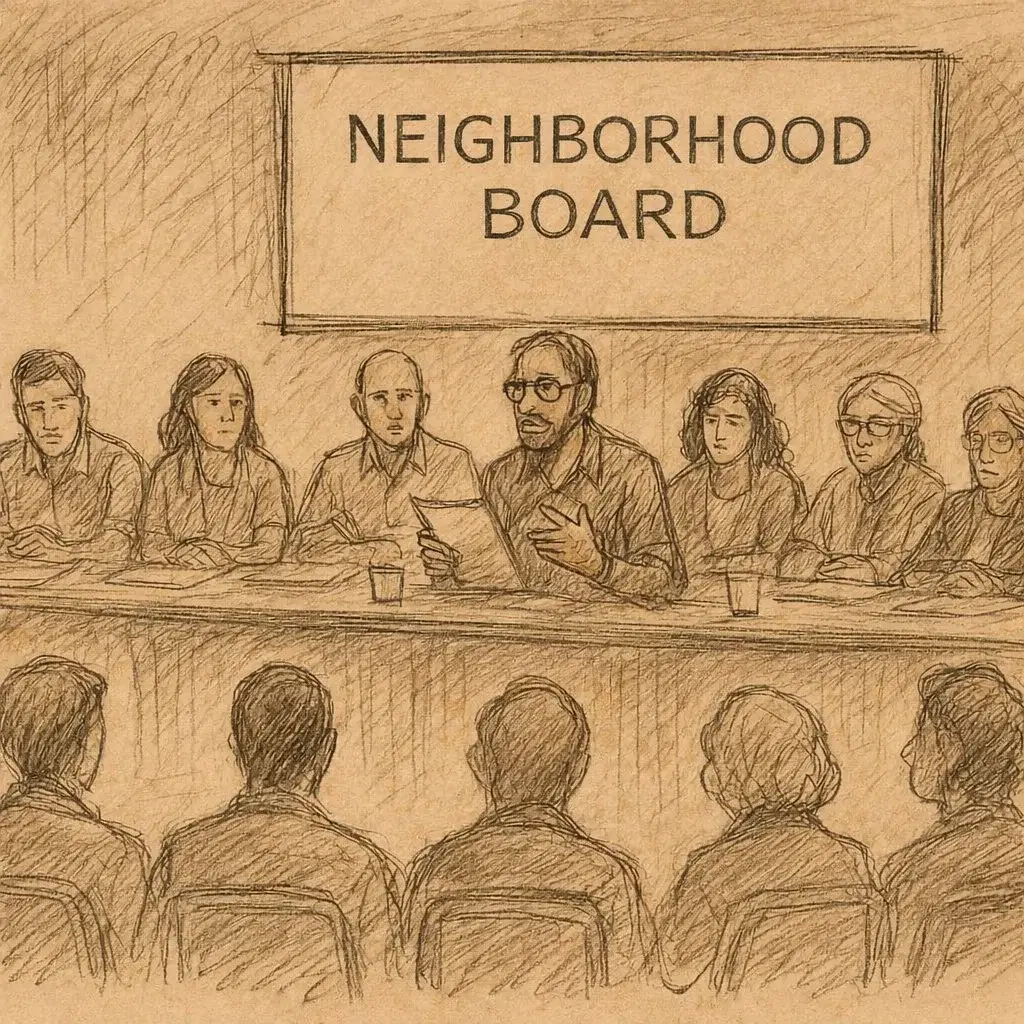
No 30 Kāne‘ohe Neighborhood Board Regular Meeting July 2026
Listen to this article:
30 Kaneohe Neighborhood Board Meeting – July 17, 2026
Marine Corps Base Noise and RIMPAC
The community was advised that cannon salutes are scheduled for August 10 and 11 from 8 a.m. to noon. The salutes are expected to be audible across much of Kāneʻohe. The Rim of the Pacific Exercise, or RIMPAC, is expected to conclude during the first week of August. Residents affected by aircraft noise were encouraged to use the available noise-reporting line so that incidents can be documented and reliable data collected; anyone needing the contact information was invited to request it from the military representative.
Castle High School Events
Castle High School student Jersey Livingston announced the school’s 75th anniversary Diamond Jubilee, scheduled for July 31 from 4 to 9 p.m. and open to the public. The celebration will feature food vendors, live performances, and booths operated by student clubs and councils. Castle will also hold a “High Five” HI-5 recycling drive on July 25 from 7 to 11 a.m. for the Class of 2029. These drives take place on the fourth Saturday of each month, with recyclables delivered to a recycling center and proceeds returned to the class conducting that month’s drive. The money supports graduation expenses and may also subsidize prom costs, such as hiring a DJ. Livingston said her favorite part of Kāneʻohe is the community and the opportunity to meet people she otherwise would not encounter.
Castle High School Meals and Student Transportation
A Castle alumnus asked about present-day cafeteria service. The student described the food as mixed in quality, with some portions considered too small. Student lunches were estimated at approximately $2.50 to $2.75, while adult meals cost more than $7, although work has been underway through the Legislature to expand free school meals. Unlike earlier years, when students could select from several meal lines, the cafeteria now generally offers one line and one meal choice. Castle High School still does not provide regular school-bus service to the general student population, although special-education transportation remains available. Eligible students may instead register online for a City transit HOLO card program, reportedly called an express card. Eligibility generally requires attendance at the student’s home school and residence more than 1.5 miles from campus. Students who live closer or attend Castle through a geographic exception must purchase regular transit fare.
Honolulu Police Department Crime Report
HPD reported District 4 crime statistics for June. Motor-vehicle thefts rose from one in the previous month to four, while burglaries declined from two to one and general thefts fell from 13 to nine. Unauthorized entry into a motor vehicle remained unchanged at four incidents, and robberies decreased from one to zero. HPD emphasized that officers remain visible, engaged, and focused on identifying and apprehending offenders. A board member also noted that District 4 covers a large territory of approximately 136 miles and praised its officers for their work with limited resources. The member had invited the police chief to attend a future Kāneʻohe Neighborhood Board meeting, and the HPD representative said such a visit would be a valuable opportunity for the community.
Traffic Safety and Fatality Reduction
In response to a question about traffic enforcement, HPD said critical and fatal traffic incidents have declined significantly compared with the previous year. Although the representative did not have the exact figure available, last year’s total had been in the double digits, while the current total was in the single digits. District 4 officers have been addressing speeding, distracted driving, mobile-phone use, and pedestrians entering roadways outside crosswalks. HPD attributed the improvement to sustained enforcement and efforts to change driver behavior, and offered to provide the board with exact comparative figures later.
Out-of-State Plates and Expired Vehicle Documents
Board members raised concerns about an apparent summer increase in vehicles displaying out-of-state plates, including some with expired or missing registration. HPD said the trend may be seasonal because military personnel arriving on orders are allowed time to obtain Hawaiʻi plates or secure an exemption to retain their home-state plates. The representative offered to review enforcement numbers and report back through the board chair. Another member suggested that HPD consider a system in which officers or authorized personnel photograph vehicles with expired registration or safety inspections, potentially improving enforcement and recovering revenue. HPD said officers already issue many warnings and citations for these violations and agreed to forward the photographic-enforcement idea for consideration.
Windward Community College Registration and Renovation
Windward Community College reported that renovation of its former meeting location is proceeding faster than expected and may take less than one year. The college is in its busiest registration period and encouraged prospective students to submit applications and register while classes remain available. Counselors are available daily to help residents begin or resume their education.
Windward Community College Career Pathways
Although Windward Community College has traditionally been known for general-transfer education, it is developing structured freshman career pathways with predetermined schedules and support. Offerings include helping professions, psychology, mental health, sociology and social sciences, Hawaiian studies, and health pre-professional studies. The health cohort had already filled, although the college was attempting to open an additional section. That pathway includes anatomy, physiology, appropriate mathematics and English courses, and a support class. A new skilled-trades exploration pathway will allow Windward students to learn about different trades before committing to programs generally offered through Honolulu Community College. Trade specialists will discuss training and certification options, while students complete construction-related mathematics and English courses that can advance them toward later technical education.
Hoʻolei Tuition Scholarship
Recent Windward-side high school graduates may qualify for the Hoʻolei scholarship, supported by the Harold K. L. Castle Foundation. The program is intended to ensure that no recent Windward graduate begins college with first-year tuition debt; after financial aid is applied, Hoʻolei covers remaining tuition. The college is also trying to fund a second year for students who received Hoʻolei as freshmen, potentially allowing students who complete an associate degree in two years to do so without tuition debt. Windward Community College has used and expanded versions of the program since approximately 2022. Among the participating freshman population, 52% are the first in their families to attend college, 50% are Native Hawaiian, and 43% are Pell Grant eligible. Native Hawaiian and Pell-eligible participants have graduated at rates higher than the college’s overall graduate population. The college has contacted returning eligible students by email, text, telephone calls from peer mentors, and possibly postcards to ensure they know about second-year support.
Paniolo Barbecue and Community Outreach
Windward Community College announced a free Paniolo Barbecue festival for September 19. The event will include free children’s and adult activities, music by Kamuela Kimokeo and Sons and Hāwaiʻi Loa with Uncle Herb Lee, two hula hālau, cowboy-hat activities, horse rides through the veterinary technology program, and a petting zoo with goats and rabbits. Food and the country store will be the fundraising portions of the event. Neighborhood boards and community organizations may request outreach tables, although fundraising at those tables will not be allowed. Cowboy-themed outreach activities were encouraged, and a community emergency response team expressed interest in participating.
Board Officer Elections
The board elected officers to serve from July 1, 2026, through June 30, 2027. Mo Radke was elected chair, Adriel Lam was elected vice chair, Donald Sakamoto volunteered for and was elected secretary, and Dale Christensen was elected treasurer. The treasurer’s principal anticipated role is to communicate with the Neighborhood Commission about possible funding for board activities and community events. The elections were conducted by roll-call or voice vote, and the nominees received unanimous support from participating members. The board also announced that MidWeek will publish monthly notices in its Windward Oʻahu community section identifying the date and location of Kāneʻohe Neighborhood Board meetings.
Honolulu Century Ride
The Hawaiʻi Bicycling League announced that the 43rd Honolulu Century Ride will take place Sunday, September 27, with approximately 1,200 cyclists expected. Participants may ride distances ranging from 13 miles to the full 100 miles. On Kahuhipa/Kāhekili Highway, three lanes will be reduced to two to create wider shoulders for cyclists traveling in both directions; normal lane configuration is expected to be restored at approximately 1 p.m. The route formerly used Kamehameha Highway, but transportation officials and community concerns led organizers to use Kāhekili Highway as the preferred route. Approximately 55 special-duty police officers are being requested for the event, with officers stationed in town and at locations across Kāneʻohe and the Windward side.
Paleka Road Flooding and Development Drainage
Resident Michael Renda of Paleka Road reported that his home was first flooded approximately eight years ago following a private development project and has continued to flood during heavy rain. He said he had contacted the mayor’s office, Brian Gallagher, Councilmember Esther Kiaʻāina, and the Department of Planning and Permitting but had not obtained a solution. He argued that every new Kāneʻohe construction project needs an adequate drainage plan because runoff cannot simply be allowed to flow downhill onto neighboring properties. Renda said the developer had threatened him and that multiple project inspectors were replaced while he pursued the matter. The chair explained that this was the board’s first direct notice of the case, recorded Renda’s name and address area, and offered to engage the mayor’s representative and elected officials. The board encouraged residents to bring unresolved permitting and runoff problems to it promptly so officials can be asked for documented follow-up.
Neighborhood Safety, Speed Controls, and Reckless Motorcycles
Renda also described community anxiety following incidents involving people believed to be unstable, including a person allegedly stalking female neighbors at approximately 3 a.m. and the murder of Mike Chu, whose memorial plaque is at Windward City Shopping Center. He said longtime residents who once felt comfortable walking freely are now more likely to watch their surroundings. On traffic calming, he supported some speed bumps and cameras but opposed excessive use, explaining that poorly visible bumps in heavy rain had contributed to damage to his truck, including repeated axle-seal repairs, and could also affect vehicles towing boats. He additionally reported high-speed sport motorcycles traveling at what he estimated to be 110 mph and nearly striking vehicles.
Ahu o Laka Sandbar Conduct and Enforcement Meeting
A resident speaking after a Makai Watch meeting raised serious concerns about conduct at Ahu o Laka, commonly called the Kāneʻohe Sandbar. She reported that an outside group had allegedly brought boats equipped with dance poles and that another boat had sold liquor, with sexually explicit activity occurring in public. She described Ahu o Laka as a sacred cultural place and said such conduct constitutes desecration and exposes children and teenagers to inappropriate activity. Representatives from Kāneʻohe, Heʻeia, Kahaluʻu, the Coast Guard, DLNR, and Mokapu had discussed the issue, including whether the sandbar should be closed or restricted for cultural purposes. The speaker said she preferred continued public access but argued that stronger community-supported controls are needed because DLNR reportedly had only three officers available to handle enforcement. A public meeting is scheduled for August 11 from 6 to 8 p.m. at Windward Community College, sponsored by the Heʻeia National Estuarine Research Reserve with community co-sponsors. Cultural history, illegal commercial activity, alcohol restrictions, military involvement, and possible management options will be discussed, with elected officials, DLNR, the military, and other agencies invited.
Koʻolaupoko Songwriting Contest
The Koʻolaupoko Hawaiian Civic Club will again hold a public composers contest centered on the theme of Koʻolaupoko. Categories include professional, amateur, Hawaiian-language, and a new ʻōpio category for younger participants. Entry is free, everyone receives a prize, and the top prize was described as approximately $2,000. Songs may address any person, animal, place, or experience connected to Koʻolaupoko.
Governor’s Newsletter and Summer Food Benefits
The governor’s representative announced the monthly newsletter “Ke Ala Hou: A New Path Forward,” available through the governor’s website. She also outlined the 2026 SUN Bucks program administered by the Department of Human Services in partnership with the Department of Education. Eligible households receive $189 per qualifying school-age child for summer food purchases, but eligibility must be established annually. Detailed eligibility guidance was supplied to the board for posting. Applications and information are available at sunbucks.dhs.hawaii.gov or by calling 888-975-7328.
Nā Ala Hele Trails and Access Plan
DLNR is updating the Nā Ala Hele Trails and Access Program plan for the first time since 1991. Nā Ala Hele manages many trails and access roads on public lands through the Division of Forestry and Wildlife. The public may review the draft and submit comments through July 31 at the program’s DLNR recreation website. The update will guide the future of public trails and land access throughout Hawaiʻi.
Small-Business State Contracting and Government Recruitment
The State Procurement Office’s Small Business Initiative offers a free route for small companies, particularly businesses owned by Native Hawaiians, veterans, and women, to participate in state contracting. Registration and assistance information was supplied to the board, with support available through the Small Business Office at 808-466-1403. Windward Community College will also host targeted recruitment on August 7 for the Department of Human Services and Department of Corrections and Rehabilitation. Applicants for social-worker and human-services positions had to apply through the listed state posting by July 20. Selected candidates would be screened in advance and assigned interviews at Hale ʻĀkoakoa.
Real Property Tax Credit
The mayor’s representative reminded homeowners that applications for the City real-property-tax credit are due September 30. General qualifications include ownership of the home, an active home exemption, and aggregate taxable and nontaxable income of no more than $80,000 among all titleholders. Although Council members have discussed increasing the income limit and expanding other exemptions or credits, Budget and Fiscal Services recommended considering the proposals together through a permitted interaction group so tax relief can be balanced with the revenue needed for City services. Council Chair Tommy Waters was said to be preparing such a group, whose interim briefings and final report would become public.
ADA Committee Request
The City administration has declined to reestablish a dedicated Americans with Disabilities Act committee during the current mayoral term, citing other existing committees. Board member Donald Sakamoto argued that an elderly-services committee does not replace direct representation for people with disabilities and suggested combining elderly and disability functions if a separate committee will not be restored. He noted the history of the ADA, signed July 26, 1990, and expressed disappointment that residents with disabilities may have to wait for a future administration after 2028 to seek reinstatement.
Kamehameha Highway Storage Facility
The City identified Lockup Kaneohe LLC as the applicant for the large storage facility under construction near the police station. Building permits A-2024-10-0393 and A-2024-10-0458 were issued in May 2026 through the standard permitting process, and storage facilities are permitted in the B-2 community business district. The project had not been presented to the neighborhood board. Members criticized its scale and reported that construction operations regularly block a northbound lane of Kamehameha Highway, sometimes affecting both lanes, especially when equipment is moved at the end of the workday. Although HPD officers have reportedly been present, members said they were not seeing effective traffic direction. The mayor’s representative agreed to investigate. Questions were also raised about neighboring structures that may have suffered construction damage. Affected owners were advised to contact the contractor and use DPP’s complaint process, with the board willing to elevate unresolved cases. Sakamoto also stressed the need for legally required accessible parking after a similar storage project elsewhere initially omitted a disability stall.
Kāneki Street Bridge and Kinaʻole Road Lighting
The Department of Facilities Maintenance inspected the deteriorating Kāneki Street bridge and found that it appeared secure, but the Department of Design and Construction was asked to perform an additional inspection and recommend repairs. A report is expected at the next meeting. Concerns include a partially deteriorated stairway and a lack of wheelchair-accessible ramps. The City also continues to investigate streetlights on Kinaʻole Road that are obstructed by overgrown trees, with a further report expected after consultation with DPP.
Ballot Processing and Drop-Box Security
The acting City clerk clarified that approximately 19,000 ballots referenced at the prior meeting represented the first stage of ballot processing, when City election staff review envelopes to verify voter eligibility. After verification, custody transfers to the State Office of Elections, which opens the envelopes and runs ballots through counting equipment. Members requested that final-day processing totals be reported promptly and transparently, noting that prior election cycles had produced daily figures but not always a timely final-day total. Several members also raised security and access concerns about the yellow ballot drop box at Kāneʻohe District Park. They said it is in a dark, unsecured area, may lack camera coverage, occupies roughly three parking spaces, and becomes difficult to access during busy sports weekends. Officials were asked to consider moving it to a lighted turnaround area closer to staff and building surveillance. Representative Lisa Kitagawa said ballots are generally collected daily and do not remain in the box for more than one day, while Councilmember Kiaʻāina’s office agreed to seek a fuller response before the next meeting if possible.
Aquarium-Fish Harvest Resolutions
The City Council’s Committee on Zoning and Planning, chaired by Councilmember Esther Kiaʻāina, advanced Resolutions 26-159 and 26-160. Resolution 26-159 urges the Board of Land and Natural Resources to direct DLNR’s Division of Aquatic Resources to prohibit commercial aquarium harvest in state marine waters. Resolution 26-160 urges the State Legislature to enact a statutory prohibition on the same activity. Both measures are expected before the full Council on August 12. Kiaʻāina’s office credited the Kāneʻohe Neighborhood Board for its leadership. The board later unanimously authorized sending DLNR a cover letter enclosing its previously adopted resolution opposing aquarium fishing, restating its existing position without drafting a new resolution.
Windward Wildfire Town Hall and Land Conservation Workshop
Councilmember Kiaʻāina will host a Windward Wildfire Town Hall at Kailua Intermediate School on August 13 at 6 p.m. The Hawaiʻi Wildfire Management Organization is helping plan the event, and invitations are being extended to the Honolulu Fire Department, Department of Emergency Management, State Fire Marshal, HPD, and Hawaiian Electric. The program will include a panel, public questions, and resource tables. Kiaʻāina will also hold a land-conservation workshop on August 17 from 10 a.m. to 12:30 p.m. at Hale ʻĀkoakoa, Windward Community College. Participants will include the City’s Clean Water and Natural Lands Program, the Department of War’s Readiness and Environmental Protection Integration program, Trust for Public Land, Office of Hawaiian Affairs, and Hawaiʻi Land Trust. The workshop is intended for nonprofit organizations and residents interested in preserving land.
City Budget Questions
The City’s fiscal year 2026–2027 budget was estimated to include approximately $105 million from the City’s 3% transient accommodations tax. A board member also requested the final appropriation for the Department of Emergency Management; the budget director did not have the figure available and agreed to provide it later.
Civic Education and the National Anniversary
A member thanked the mayor for the City’s events marking the nation’s 250th anniversary, including fireworks and a July 8 reading of the Declaration of Independence coordinated with readings across the country and in Guam. The governor’s office was asked to determine who at the University of Hawaiʻi controls a reported $1.6 million federal grant for American history and civic education. The member and community partners have been conducting free weeklong K–12 seminars about the Declaration of Independence, Constitution, American history, and civics and would like to explore participation in the grant-funded effort.
Hawaiʻi State Hospital Capacity and Safety
Board members again raised overcrowding and worker-safety conditions at the Hawaiʻi State Hospital, including reports that employees are being assaulted or otherwise abused by patients. Representative Scot Matayoshi said all current hospital patients are forensic commitments ordered by courts, leaving inadequate capacity for civil commitments involving people who need treatment before committing a crime. He continues to support expanding capacity by renovating the Guensberg Building, using the Bishop Building, or constructing another facility on hospital grounds. The hospital’s newer building has had serious construction problems, including allegations that contractors poured grout into drains and failed to install adequate anti-ligature features. The Attorney General is pursuing remediation and contractor responsibility, while the Legislature previously allocated approximately $5 million to $7 million for urgent health and safety repairs. Matayoshi said further expansion remains necessary but will require substantial funding.
Electric-Vehicle Registration Fees
A member questioned the increase in registration charges for electric vehicles, arguing that higher fees may discourage residents from switching away from fossil fuels and conflict with Hawaiʻi’s clean-energy goals for 2030 and 2045. Representative Matayoshi, himself an EV owner, explained that road maintenance is partly funded through gasoline taxes that EV drivers do not pay. Because EVs are also comparatively heavy and contribute to roadway wear, he considered an additional registration charge a fair way for EV owners to contribute to maintenance, despite the added cost. The governor’s representative agreed to obtain more information and communicate the member’s concern.
Housing Bills and Accessibility
Questions were submitted to Councilmember Kiaʻāina about Bills 18, 7, and 47 and, in particular, why elevator requirements had reportedly been removed from some walk-up housing proposals. Sakamoto said stairs can make housing inaccessible as residents age or acquire disabilities, even though elevators increase construction costs. Kiaʻāina’s representative could not answer immediately and agreed to request a response from the Councilmember.
Voting-Center Waits and Illegal Vacation Rentals
Senator Brenton Awa’s office reported that the senator questioned Chief Election Officer Scott Nago during a joint House-Senate judiciary briefing about in-person voting waits reportedly exceeding six hours. Awa advocated additional in-person voting centers, particularly because mailed ballots may face delivery delays. His office is also working with DPP on constituent complaints about illegal vacation rentals and continues to seek stronger enforcement and accountability.
Castle Complex School-Supply Drive and Voting Center
Representatives Lisa Kitagawa and Scot Matayoshi completed their sixth annual Castle Complex school-supply drive. Donations were collected at Windward Mall, then counted, sorted, and packed at the Windward District Office. More than 500 students received supplies this year, bringing the six-year total to more than 3,000 students. Kitagawa also announced that Kāneʻohe District Park will operate as an in-person voting center from August 3 through 7, from 9 a.m. to 5 p.m. Other centers include Wahiawā, Honolulu Hale, and Kapolei Hale. Sakamoto added that voters with disabilities may register to receive and return an accessible electronic ballot securely online.
Electronic-Waste Collection
Representative Matayoshi reported that the latest community electronic-waste drive collected two truckloads, roughly four times the volume collected at many comparable island events. Residents brought dozens of flat-screen televisions, computers, and other electronics. The event has continued for several years and will likely be repeated because participation remains high and electronic devices contain batteries and toxic components that should not enter ordinary landfills or H-POWER.
Disposable Vapes and Unauthorized E-Cigarettes
Two vaping measures have been signed into law. One bans disposable vapes, approximately five of which are discarded every second nationwide, amounting to an estimated 150 million battery-containing devices entering landfills annually. The other empowers state authorities to enforce the federal Food and Drug Administration’s authorized-product list. Only approximately 45 e-cigarettes are FDA authorized, even though retailers may sell thousands of other products that federal authorities lack the staffing to remove. The new state enforcement system takes effect next year and is expected to eliminate most flavored products, although mango and blueberry products were recently added to the federal authorized list. Matayoshi described flavored products as a major means of attracting young people and creating long-term nicotine addiction.
E-Bike Regulation and School Meals
A new e-bike law creates a regulatory framework that includes enforcement tools, age limits for Class 2 and Class 3 e-bikes, and helmet requirements for underage riders. The measure responds to young riders performing wheelies and other dangerous maneuvers on public roads, although legislators acknowledged that the law will require active enforcement. Matayoshi also highlighted expanded school meal support covering nearly all students. Drawing on his experience teaching in Nānākuli, he said hungry students often cannot focus and may disrupt entire classrooms, so meal access supports both individual students and the wider learning environment.
Maunawili Conservation Land and Ka Paʻakai Review
The chair reported discussing emergency preparedness, roads, permitting, and Ka Paʻakai cultural analysis during a KHON “Unscripted” interview. He emphasized the need for culturally informed planning when large projects such as the storage facility are proposed. The board is also considering a permitted interaction group concerning approximately 1,000 acres of conservation land acquired by the State in Maunawili. Future planning should include substantial community participation and protect waterways flowing from Maunawili into Kawainui Marsh so the marsh can continue filtering and sustaining clean water.
December Recess and Meeting Minutes
The board agreed without objection to recess its regular December meeting and instead hold its customary community potluck and pāʻina. A suggestion to establish an additional summer recess did not advance, partly because July is used for officer elections and board attendance has remained strong through recent spring and summer meetings. The board also unanimously approved the June regular meeting minutes as amended by Secretary Sakamoto.
Vacant Seats and At-Large Appointments
The board discussed converting subdistrict seats that remain vacant for more than two months into temporary at-large positions. This would allow willing Kāneʻohe residents from other subdistricts to serve for the remainder of the election term rather than leaving seats empty. Members favored allowing an at-large appointee to complete the full term instead of removing that person at the next annual officer election if a resident from the original subdistrict later becomes interested. The chair will formalize the proposal in a letter to the Neighborhood Commission and seek placement on the next agenda. The board acknowledged that many residents do not know neighborhood boards exist and said members, elected officials, and MidWeek outreach could help recruit candidates. Paleka Road resident Michael Renda expressed interest in learning more about serving.
Subdistrict Maps and Names
The chair will circulate two district maps so members can verify that subdistrict boundary descriptions and commonly used names, including areas such as Pōhākea and Kapunahala, match the communities represented. Members may have different local preferences for area names, but the immediate goal is to confirm the board’s official boundaries and plain-language titles.
General Election Candidate Forum
The board began planning a candidate forum for the November general election, likely in September so it does not occur too close to voting. Members favored a format used previously in which candidates receive the questions in advance but draw individual questions at the event, allowing preparation while preserving some spontaneity. A Thursday evening start around 6:30 or 7 p.m. was discussed, possibly at Windward Community College and separate from the regular board meeting. The board will determine the number of candidates after the primary, including whether to invite Office of Hawaiian Affairs, federal, and neighboring Koʻolaupoko district candidates. Members also considered coordinating with the Kailua, Kahaluʻu, or North Shore boards. The forum should have structured time limits, possibly including two-minute introductions, and may be streamed or recorded through ʻŌlelo or Facebook Live. The board will confirm venue availability, costs, candidate lists, and Neighborhood Commission approval.
Board Committees
Existing committees include community engagement, emergency preparedness, education, transportation, military affairs, Haʻikū Stairs, state legislative matters, environmental issues, HPD liaison, planning, and homeless/kauhale matters. Members already serving generally agreed to continue, while education, state legislative, and some other positions remained vacant. The board encouraged residents with professional knowledge or a strong interest to participate in committees, although a board member must serve as chair. The Haʻikū Stairs Committee was broadened to the “Haʻikū Valley and Stairs Committee,” with Vice Chair Adriel Lam as chair and Donald Sakamoto assisting, so it can address the broader valley rather than only the staircase. Yelena Van Dyk agreed to serve on the Environmental Committee and to continue as the board’s representative to the Kāneʻohe Bay Regional Council, which was restored to the committee list.
Military and Community Relations Conversation
A board member reported on a small “Community Conversations” gathering facilitated by the state Military and Community Relations Office. Participants included people with experience in the hotel industry, Navy operations, and Hawaiian Electric. The discussion found that public debate often focuses on the military’s economic impact while giving less attention to strategic responsibilities, humanitarian assistance, wildfire response, sheltering, logistics, and infrastructure resilience. Participants called for better communication about beneficial military activities, greater use of Hawaiʻi workers rather than bringing in mainland personnel, and lasting community benefits from military training and leases, including infrastructure and workforce development. They also stressed enforceable environmental cleanup standards and accountability when military land use ends. The office and its conversations are expected to continue beyond August.
Coral Conditions in Kāneʻohe Bay
A community member shared a positive observation that coral growth in Kāneʻohe Bay appears healthy and increasingly visible in many areas encountered while surfing. The comment was welcomed as encouraging news about bay conditions.
Emergency Preparedness and Flood-Mitigation Planning
The Emergency Preparedness Committee linked recent Civil Beat reports to the board’s May resolution calling for stronger pre-disaster planning and mitigation. The reports described City-funded engineering studies in flood-prone areas, including one costing approximately $450,000, that had not resulted in follow-through projects. Some proposed remedies may cost as much as $21 million, but others could be completed at much lower cost. The committee wrote to legislators emphasizing that studies must lead to prioritized action rather than being allowed to lapse while communities continue to flood.
FEMA Recovery Training and City Participation
Two board members attended a roughly 10-hour FEMA course on community planning for disaster recovery. The training brought together Hawaiʻi Emergency Management Agency personnel, county representatives from Hawaiʻi and Kauaʻi, planners, and emergency-management professionals. Members found the course and networking valuable but noted that no representative from Honolulu’s Department of Emergency Management attended. They viewed the absence as notable because FEMA’s role is to support state and county governments, while primary responsibility for protecting residents remains with local and state authorities.
Tsunami After-Action Report
The Honolulu Department of Emergency Management submitted an 18-page after-action report on July 10 concerning the July 29, 2025 tsunami warning. The Emergency Preparedness Committee considered the report inadequate and noted that the City Council had sought it approximately nine months earlier. The chair and committee members are developing a letter to DEM Director Dr. Collins identifying concerns, but because the letter was not on the agenda, the board could not vote on it at this meeting. Members argued that Kāneʻohe must practice disaster response in advance, much as Navy crews rehearse flooding and shipboard emergencies, rather than attempting to train during an actual crisis. They said Windward communities must be capable of operating with limited access to resources located across the mountains.
Emergency Preparedness Outreach Events
The Cross Island Community Emergency Response Network has invited HI-EMA and Honolulu DEM representatives to a July 29 session about coordinated community training, preparedness, youth and young-adult programs, and programs for kūpuna and people with disabilities. A kūpuna preparedness pilot organized by the City’s Retired and Senior Volunteer Program is also scheduled for July 28 at Kaimukī Library. Community emergency response organizations plan additional outreach at Windward Community College’s Paniolo event. Members also noted a July 15 Honolulu Star-Advertiser commentary by board member Neil concerning active preparation for island-wide emergencies and said it had already begun generating feedback.
Next Meeting
The next regular Kāneʻohe Neighborhood Board meeting is scheduled for August 20, 2026, at Windward Community College’s Hale ʻĀkoakoa.