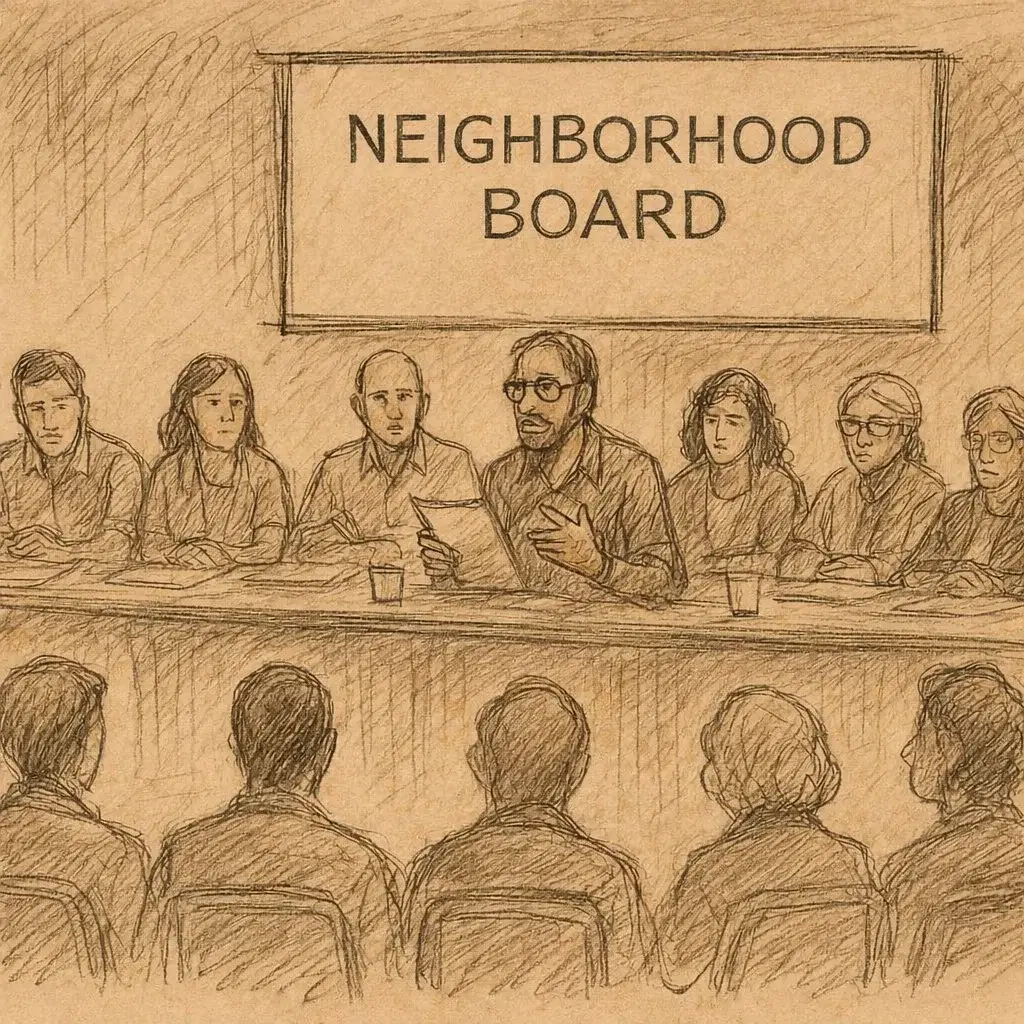
No 30 Kāneʻohe Neighborhood Board Regular Meeting May 2026
Listen to this article:
30 Kaneohe Neighborhood Board Meeting – May 23, 2026
Board Vacancies and Representation
The meeting opened with an announcement that four board seats remain vacant: Sub-District 2 (Crown Terrace), Sub-District 9 (Keapuka), Sub-District 13 (Kokokahi), and Sub-District 14 (Yacht Club Terrace). No one present or attending remotely volunteered to fill the openings. The continued vacancies mean several parts of Kāneʻohe remain without direct representation in board discussions on local infrastructure, safety, development, and public services.
Honolulu Fire Department Report and Wildfire Preparedness
Captain Vieira of the Kāneʻohe Fire Station reported the Honolulu Fire Department’s May activity totals: one structure fire, nine activated alarms, 120 medical calls, one motor vehicle collision involving a pedestrian, and five motor vehicle crashes. The department’s monthly safety message focused on wildfire prevention as Hawaiʻi enters a period of elevated fire danger associated with dry conditions, tall grass, and shifting winds. Residents were urged to clear dry vegetation around their homes, avoid parking on dry grass because hot exhaust can ignite it, and avoid activities that create sparks during hot, dry, or windy weather. In response to a board question, Captain Vieira confirmed that even after a wildfire appears extinguished, heat can remain in underground root systems and later rekindle, which is why suppression efforts include digging into root zones and saturating them thoroughly. A board member also referenced a wildfire presentation held earlier that day in collaboration with HFD, underscoring how prominently wildfire risk is now featuring in public education efforts.
Honolulu Police Department Crime Statistics and Traffic Enforcement
Lieutenant Sanford Yu, joined by Captain Campbell and Sergeant Nakagawa, presented Honolulu Police Department District 4 statistics for April. Reported incidents included zero motor vehicle thefts, down from four the previous month; one burglary, down from five; 15 thefts, up from 10; five motor vehicle break-ins, up from three; and zero robberies. HPD responded to 1,690 calls for service during the month. A board member specifically commended District 4 officers for enforcement efforts related to speeding and noisy vehicles on H-3 following concerns raised on May 2. The exchange reflected both a drop in some major property crimes and continued resident attention to traffic behavior and roadway noise.
Marine Corps Base Hawaiʻi: Command Change, RIMPAC, and Bellows Beach Access
Marine Corps Base Hawaiʻi reported that a change of command took place that day, with Colonel Bevin relinquishing command to Colonel Dietrenes. Colonel Bevin will remain on Oʻahu and move to Indo-Pacific Command. The base also advised the board that 2026 is a RIMPAC year, meaning increased aircraft activity is expected from the end of June through July, with training concluding in the first week of August. The community was also informed that Bellows Beach’s city and county section will remain open for most of the summer, unlike in previous years when closures were tied to turtle nesting concerns; this year, data did not indicate turtle nests requiring a season-long closure. However, three RIMPAC-related weekends will still involve beach closures, with exact dates to be forwarded to the chair for distribution. The base also said it is moving ahead with support for the Kalapiko Canoe Regatta as an open-base event, making access easier for paddlers and spectators. In response to a question about the long-closed Officers’ Club, the base said no new funding or reopening timetable was available, and reiterated that the facility’s closure stemmed from major structural issues, including foundation instability and hillside movement.
Castle High School Update and Student Activities
A Castle High School student representative reported that the school had recently completed graduation ceremonies and is now preparing for upcoming activities. When asked for specifics, she described High Five recycling events that raise money for graduating classes, with proceeds supporting class needs such as graduation expenses. Questions from board members expanded the conversation into student safety and academic programs. One board member asked whether the school broadly discusses graduation-season risks such as reckless celebrations, dangerous vehicle behavior, and unsafe riding; the student replied that some teachers address these concerns, but there has not been a full-school discussion. Another board member, a Castle alumnus from the class of 1980, asked about current vocational offerings and compared them to past programs such as carpentry, automotive, Future Farmers of America, and electronics. The student said Castle still offers automotive and FFA, but no longer offers carpentry and likely no longer offers electronics. The exchange highlighted both ongoing student-led fundraising and concern about the shrinking availability of vocational training pathways.
Emergency Preparedness Committee Presentation on Pre-Disaster Planning and Mitigation
A major portion of the meeting focused on a presentation from the board’s emergency preparedness committee arguing for stronger attention to pre-disaster planning and mitigation rather than relying mainly on emergency response after disasters occur. The committee framed the issue in the context of recent Kona low storms and a broad range of risks facing Oʻahu, including floods, hurricanes, tsunamis, wildfires, earthquakes, and mudslides. The presentation distinguished emergency management from proactive mitigation, emphasizing that pre-disaster planning includes structural hardening of buildings and bridges, utility upgrades such as undergrounding power lines and adding redundant communications systems, improved drainage infrastructure, zoning and code changes, and better use of hazard mapping and risk modeling. The committee noted that only one school on the Windward side currently meets hurricane shelter-type standards and said many homes in Hawaiʻi still lack hurricane straps because building practices changed only beginning in the 1970s. The presentation also cited FEMA and National Institute of Building Sciences research showing that every $1 invested in pre-disaster mitigation can save $6 in post-disaster costs, reinforcing the case for investing before events occur rather than paying more afterward.
Resolution Urging Greater Focus on Disaster Mitigation and Resiliency
Following the presentation, the board considered and unanimously adopted a lengthy resolution urging greater focus on visible, measurable, community-informed pre-disaster preparedness, mitigation, and resiliency planning throughout Hawaiʻi. The resolution recognized increasing risks from severe weather, flooding, wildfires, infrastructure disruptions, coastal inundation, and other hazards, while affirming appreciation for emergency responders and emergency management agencies. It stressed that emergency response and pre-disaster mitigation are not the same and called for more attention to sheltering plans, assembly locations, backup communications, continuity of essential services, flood mitigation, evacuation planning, advance supply staging, and planning for vulnerable populations. During discussion, a board member successfully requested that disabled residents be explicitly included alongside kūpuna so that planning language reflects the needs of people who may require assistance during emergencies. Another member emphasized routine maintenance of streams, roadways, and drainage systems as a hazard-reduction tool rather than merely a beautification issue. There was also discussion of preserving alternate access routes, including older roads and corridors, so communities are not cut off when major roads close unexpectedly. The committee chair noted that around 50 residents had signed onto a recent community effort seeking a stronger voice in preparedness planning, reflecting public concern after recent Windward-side emergency events. Certified copies of the adopted resolution are to be sent to the Governor, Hawaiʻi Emergency Management Agency, Honolulu Department of Emergency Management, the Mayor, state legislators, City Council members, Hawaiʻi’s congressional delegation, and all Oʻahu neighborhood boards.
Proposed Private Boat Dock at 45-221 Kahanahou Circle
The board heard a presentation regarding a proposed new private boat dock at 45-221 Kahanahou Circle. Taylor Castor of Integral Consulting and property owner Mike Elhoff said the project has been in development for roughly five years and is intended to be done legally and with minimal environmental impact. Elhoff described himself as a longtime Oʻahu resident, marine engineer, and Kaneʻohe Bay resident who had previously worked on reducing marine plastics and limiting single-use foam and plastics. He said the dock proposal was designed with attention to neighbors, the bay, the reef, and the ecosystem, and that he had worked to resolve long-standing encroachment issues tied to the property. He also read supportive testimony from a neighbor who argued that a permanent dock could reduce reef damage from boat anchoring by providing stable access. The board chair replied that the board’s prior concerns still stand and said the issue was not opposition to private property use itself but whether the project aligns with broader planning documents, including the Oʻahu General Plan, the Kāneʻohe Bay Regional Master Plan, and the Koʻolaupoko Sustainable Communities Plan. The presenters disagreed with the interpretation that these plans preclude a private dock and said no legal conflict had been identified by regulators so far. Board members urged the applicant to present directly to the Kāneʻohe Bay Regional Council, whose chair can place the item on an upcoming agenda, likely in June or July. Additional discussion referenced past enforcement cases in the bay, including permit issues and substantial fines for unauthorized dock work elsewhere, as examples of why the community is cautious. Some board members also noted that because Oʻahu has relatively little mooring and docking capacity, a properly permitted project could help demonstrate a lawful model if it addresses environmental and planning concerns fully.
Letter Supporting Ban on Aquarium Fishing and Opposing New Oʻahu Collection Effort
The board next considered a draft comment letter related to renewed efforts to allow commercial aquarium fish collection on Oʻahu. A board member summarized the issue’s history, explaining that aquarium collection for the pet trade dates back to the territorial era and expanded under the mistaken belief that herbivorous reef fish had little ecological or subsistence value. She said current Division of Aquatic Resources data indicate that 99% of reef wildlife collected in Hawaiʻi for the aquarium trade is shipped to mainland pet markets, with less than 1% remaining in the state, and that many of the fish die within the first year after capture. The board was reminded that in earlier years, especially around 2018 to 2020, collection pressure intensified in Kāneʻohe Bay as herbivore populations declined elsewhere, with yellow tang catch reportedly tripling and other herbivores and crustaceans also being heavily collected. The board had previously taken a stand against the trade, and many Windward organizations later adopted similar positions. The new request was prompted by an Environmental Impact Statement Preparation Notice and a scoping meeting scheduled for May 26 from 5 to 7 p.m. at the BLNR meeting room, with comments due by June 8. The proposed letter reaffirmed the board’s prior position and added two key points: first, that Oʻahu’s herbivore populations are already in peril, based in part on DLNR’s own testimony this legislative session supporting temporary take restrictions on key herbivores such as uhu and kala; and second, that the actual permittees seeking authorization should be publicly identified rather than kept anonymous, because the public and BLNR must be able to evaluate qualifications, compliance history, collection practices, and cumulative impacts. The board approved sending the letter, with one abstention.
Resident Safety Concerns About Storm Damage Near Schools
Two Castle High School students used the community concerns portion of the meeting to report storm-related hazards affecting pedestrian safety. One described large holes near the sidewalk outside Castle High School on Kāneʻohe Bay Drive where utility poles had been reinstalled after a storm; he said the openings were big enough for an adult to step into and get hurt. Another reported that on Pūnāwai Street across from Heʻeia Elementary School, a storm-felled tree had been removed but the stump and roots remained, lifting the sidewalk and leaving a large hole that poses risks to children, pets, and kūpuna. Their testimony drew attention to lingering hazards left behind after emergency cleanup crews restore basic function but do not complete permanent repairs.
Water Main Break, Flooding, and Repeated Infrastructure Concerns on ʻIkeanani Drive
A resident from ʻIkeanani Drive described an April 27 water main break that flooded five properties, including water entering three homes. He said it was the second water main break affecting the area in roughly 10 years and tied the event to broader concerns about aging infrastructure and lack of planned system upgrades. Referencing both the Koʻolaupoko Sustainable Communities Plan and the Kāneʻohe Bay Master Plan, he argued that because no major growth is planned for the area, agencies may not be budgeting for needed upgrades, leaving residents dependent on emergency repairs rather than long-term fixes. He said city crews respond well when failures occur, but temporary fixes remain in place, similar to temporary utility and infrastructure repairs seen elsewhere in Kāneʻohe. He also pointed to unresolved water runoff and drainage issues, including a clogged city storm drain and an ongoing landslide near the blind corner on Kāneʻohe Bay Drive by Mokapu Boulevard that has continued for nearly two months since the storms. The board chair urged him to submit written testimony through the Neighborhood Commission website so the matter could be routed formally to the correct agencies, and the discussion turned to obtaining maintenance schedules for city and state drainage infrastructure.
Neighborhood Security Watch Announcement: Coffee with a Cop
A representative from the Windward Neighborhood Security Watch Coordinators Group announced a “Coffee with a Cop” event scheduled for Thursday, June 18, from 9 a.m. to 11 a.m. at Starbucks in Enchanted Lake. The event was presented as an opportunity for residents to raise concerns, ask questions, or simply meet and talk story with area police officers in an informal setting.
Kaneohe Christmas Parade Scheduling and Banner Rules
Community members requested confirmation in the board’s minutes that the Kaneohe Christmas Parade has permission to proceed on Saturday, December 5, because city road-closure permits require that support to be documented in the official record. The discussion then turned to sign and banner restrictions after organizers reported being told that parade banners could not remain posted for more than one week. The board chair said Honolulu’s sign ordinance does contain time restrictions intended to prevent excessive clutter, though there may be workarounds. Another participant cited Revised Ordinances of Honolulu Chapter 21-7.20, stating that special event banners are limited to seven consecutive days, but noncommercial banners on residential property may not face the same limit, raising potential free speech issues if enforcement is inconsistent. The conversation reflected the practical permitting and publicity challenges that community events face even after they have broad local support.
Na Mele Koʻolaupoko Song Competition Announcement
An announcement was made for Na Mele Koʻolaupoko, a biennial song competition scheduled for September 5 at Windward Mall Center Court. The event will include five categories: professional, amateur, ʻŌlelo Hawaiʻi adult, ʻŌlelo Hawaiʻi youth, and English youth. The deadline for submissions and recordings is August 5. Organizers identified Koʻolau Foundation and Auntie Mahailani as key drivers of the event, with sponsorship from Kamehameha Schools, Windward Mall, Koʻolau Foundation, Koʻolaupoko Hawaiian Civic Club, and others.
Governor’s Representative Report: Maintenance Contacts, Library Reopening, and Keaʻanaeʻole Road Closure
Governor Green’s representative highlighted the Governor’s monthly newsletter and addressed several follow-up issues from prior meetings. In response to a board request for better maintenance of public natural spaces such as medians and streams, she said there is no single owner of all such lands, which may belong to the city, state, federal government, or private parties. She directed board members and residents to use the City and County Real Property Assessment Division website to identify ownership, then report problems to the appropriate agency, noting that contact information for state and county right-of-way and roadside maintenance reporting would be posted on the board website. She also gave an update on Kāneʻohe Public Library, saying it had reopened for limited services beginning May 17, though some construction issues remain. The parking lot still requires steel plates over a drainage swale through a change order, with estimated completion by the end of July if funding is approved in June, and there is still an unresolved odor problem in the lower-level meeting room. She also reviewed a new Hawaiʻi Department of Transportation press release on the continued full closure of Keaʻanaeʻole Road near the H-3 interchange due to sinkhole-related repairs from the Kona low storms. Because unforeseen utilities were discovered in the work area, repairs are taking longer than expected. Utility relocation work is anticipated to start the following week, with daytime work from 6:30 a.m. to 5 p.m. and nighttime work from 5 p.m. to 3:30 a.m. every day of the week to expedite completion.
Mayor’s Representative Report: Handy-Van Detour, City Budget, and Zoo Accreditation
Mayor Blangiardi’s representative, attending remotely after outpatient surgery, added that Handy-Van service will continue using the back route for pickups and drop-offs because of the ongoing road closure associated with storm damage and repairs. He also announced that the City Council is preparing for third reading of the city’s operating and capital improvement budget on June 3, with public participation encouraged once the agenda is posted. He highlighted the Honolulu Zoo’s renewed accreditation by the Association of Zoos and Aquariums, noting that only about 10% of licensed animal exhibitors achieve that benchmark. The update underscored both transportation inconveniences created by road work and the city’s focus on broader operational and capital planning.
Councilmember Esther Kiaʻāina: Emergency Management Staffing, School Speed Zone, Wildfire Planning, Flood Insurance, and Food Systems
Councilmember Esther Kiaʻāina thanked the board for both the emergency preparedness resolution and the aquarium fishing action and tied the emergency planning discussion to the city budget process. She said the Department of Emergency Management has only about 15 staff, which she described as woefully inadequate. During the first round of the budget, the department received eight additional positions, and she is fighting to add five more, backed by approximately $400,000, ahead of the final budget hearing on June 3. She said changes in Washington, D.C. and concerns about federal funding reliability make it important for city and state agencies to build their own capacity to support communities. On transportation safety, she reported progress on a reduced speed zone at King Intermediate School, where signage is expected to lower the speed limit from 30 mph to 20 mph between Pālaʻalaʻani Street and Huinani Place from 6 a.m. to 6 p.m. She also said she is organizing an August town hall on wildfire safety and preparedness in collaboration with the Hawaiʻi Wildfire Management Organization and the Kailua Neighborhood Board’s disaster preparedness committee, and invited participation from Kāneʻohe. She updated the board that Bill 34, related to updating the National Flood Insurance Program framework, is headed for final passage on June 3. She also pointed residents to the city’s draft Oʻahu Food Systems Plan and said public feedback will be accepted through June 30.
Board and Elected Official Discussion on Who Handles Pre-Disaster Planning
In follow-up discussion with elected officials, the emergency preparedness committee clarified that its resolution was not simply asking for more emergency response staffing. Committee members said they had been told directly by the Department of Emergency Management that pre-disaster planning and mitigation is not the same as what DEM currently does, which is why the resolution calls for some additional structure, forum, or agency focused on prevention and resilience. Councilmember Kiaʻāina responded that while she was not excusing the current gap, increasing capacity is part of a broader effort to improve government’s ability to interact with communities and prepare for changes in disaster funding. Board members also raised the question of what authority neighborhood boards have in practice to demand maintenance and coordination among agencies, rather than merely filing reports as ordinary residents. The exchange reflected a larger institutional concern: who is actually responsible for prevention, maintenance, and coordinated resiliency work before disasters happen.
Accessibility and Disability Issues Raised to State and City Officials
Board member Donald Sakamoto raised multiple accessibility issues with state and city officials. He urged support for House Bill 1894, a Braille literacy bill intended to improve access to Braille and comparable instructional materials for blind and visually impaired students, and Senate Bill 2852, a Title III ADA-related bill aimed at improving accessibility of websites, apps, and self-service technology for disabled users, especially blind residents. He also criticized the federal delay in enforcing Title II digital accessibility requirements for counties and states, now extended to April 2027 rather than April 24, 2026. At the local level, he raised a broken pedestrian bridge stair issue on Kinekona or Kaneke Street, sidewalk closures and lack of assistance for a blind woman trying to navigate construction on Kamehameha Highway near Whiskey 808, missing bus stop audio announcements at Kawa Street, and inaccessibility of the city’s 311 app for blind users. These comments highlighted a wide range of barriers affecting mobility, public information access, and safe use of public infrastructure.
Clean Water and Natural Lands Funding and Preservation Opportunities
A resident asked how the community and board could support more projects in Kāneʻohe through the city’s Clean Water and Natural Lands Program. Councilmember Kiaʻāina explained that the fund receives roughly $9 million annually from a dedicated share of real property tax revenues, but that the backlog of potential projects is extensive. She said the process is usually driven by applicants, often with assistance from organizations such as Trust for Public Land or Hawaiʻi Land Trust, and may involve complex financing partnerships among nonprofits and government agencies. She cited examples involving agricultural lands and historic preservation, and said she is trying to amend the charter language to clarify uses that should already be eligible, including historic preservation. In response to concerns that the public may not even know the program exists or how to engage with it, she agreed that better outreach is needed and suggested organizing a dedicated workshop with program administrators and nonprofit groups so communities can better understand how to identify and pursue qualifying land acquisition or preservation opportunities.
Senator Awa Legislative Update
A representative for Senator Brenton Awa reported that the 2026 legislative session ended earlier in the month with 268 bills passed by the Legislature and sent to the Governor, and that 24 had already been signed into law at the time of the meeting. She highlighted four bills signed that day: one preserving most planned tax relief for low- and middle-income families while protecting programs such as SNAP and health care, one providing emergency funding to continue food and health coverage for residents affected by federal funding changes, one lowering the minimum age for inter-island commercial drivers from 19 to 18 with training safeguards, and one improving oversight of Hawaiʻi’s harbor pilot system. She also noted Senator Awa’s support for Senate Bill 2471, a campaign finance reform measure aimed at prohibiting corporate political spending in Hawaiʻi, and Senate Bill 3025, which would create a Hawaiʻi medical debt forgiveness program and was awaiting gubernatorial action. Outside the Capitol, she said Senator Awa continues food security work through community food tree projects in Kahaluʻu and Haleʻiwa, and recently propagated 67 ʻulu trees in Kahaluʻu for distribution to residents interested in home food production.
Representative Kitagawa: Kaneohe Bay Regional Council, School Funding, Community Grants, and Future Preparedness Legislation
Representative Lisa Kitagawa reported that House Bill 2361, relating to the Kāneʻohe Bay Regional Council, passed this session. The bill requires the Department of Land and Natural Resources to provide administrative support to the council and removes DLNR as automatic chair, allowing the chairperson to be selected from among council members instead. She said this was supported by the community and should help the council function more effectively. She also highlighted capital improvement funding secured for several schools, including Castle High School, which will receive deferred maintenance funding and more than $6 million for Title IX improvements to the softball field. Funding was also secured for Ben Parker, Heʻeia, King Intermediate, ʻAhuimanu, Kahaluʻu, and Waiāhole schools. She added that she and Representative Matayoshi helped secure grant-in-aid funding for multiple community organizations, including Pacific American Foundation for Waiākouloko Iʻa, Hina Mauka, and the Bright Kid Foundation for community theater programming. She said constituents will receive an end-of-session mailer and invited the board to work with legislators on future emergency preparedness legislation, noting that successful bills require community participation and testimony.
Representative Matayoshi: Kaneohe Library, Utility Pole Hazards, Consumer Protection Bills, Disability Access, and E-Waste Drive
Representative Scot Matayoshi corrected part of the earlier library update by explaining that Kāneʻohe Public Library is now essentially open after a soft opening on Sunday, with all services available except for the lower-level meeting room that still has an unresolved odor. He explained that the library’s reopening had been delayed by electrical issues, the odor problem, and ADA parking stalls. He said his office learned from librarians that the lack of ADA stalls was the final barrier, and during that conversation his office contacted HPD, which immediately authorized two ADA stalls on its adjacent property. That action allowed the library to open within about a week, and the stalls will remain available until the library’s own ADA parking is fixed, expected around July. Matayoshi also said he had already contacted Hawaiian Telcom during the meeting regarding the hazardous post-storm pole holes reported by Castle students after learning the poles were not HECO’s. On legislation, he highlighted passage of three workers’ compensation bills to speed medical care for injured workers, a “dark money” campaign bill making Hawaiʻi the first state to prohibit unlimited corporate influence in campaigns, a mail fraud bill targeting misleading vehicle and mortgage solicitations, and a cryptocurrency kiosk bill making Hawaiʻi the second state in the nation to ban cash-to-crypto purchases at kiosks because of scam and money laundering concerns. He also credited Donald Sakamoto’s advocacy on Senate Bill 2553, which expands disability access requirements for state and county public websites. In addition, he announced an e-waste recycling drive at Castle High School on June 20 from 9 a.m. to 11 a.m., co-hosted with Representatives Kitagawa and Mike Lee, where residents can bring electronics, flat-screen TVs, computers, non-lithium batteries, and even arrange towing for junk cars by phone. He noted that these drives in Kāneʻohe have historically collected about six times as much e-waste as similar events elsewhere on Oʻahu, and that a High Five collection for Castle clubs will happen the same day.
Representative Mike Lee: Funding for Majano Anemone Removal
A representative for Representative Mike Lee said he was unable to attend because of a school event but wanted the board to know that an additional round of funding will be released the following week for removal of invasive majano anemone in Kāneʻohe Bay. The brief update pointed to continued attention to invasive species management in bay waters.
Additional Legislative Questions: Dementia Care, E-Bikes, and Sensitive Bills
During questions, Donald Sakamoto raised concern about long-term care and dementia services, citing previous bills and the need for more progress because many families are affected by Alzheimer’s and related illnesses. Representative Matayoshi responded that the issue is personally meaningful to him and said he believed a working group had been discussed, while Representative Kitagawa later added that House Bill 1853 passed, establishing the Hānai Memory Network and providing $3 million to open centers for dementia diagnosis and treatment and to assist families with referrals and care options. Sakamoto also asked about the status of e-bike legislation; Matayoshi said his proposal to ban the fastest e-bikes was incorporated into a broader bill that passed, making those level-three style vehicles illegal on public roads, even if enforcement remains a challenge. Sakamoto further raised several socially and politically sensitive bills, including House Bill 1875 related to protections around gender-affirming care and Senate Bill 2151 on limiting the governor’s emergency powers. Representative Kitagawa said HB 1875 passed and described it as a protective “shield” measure for providers rather than something overriding parental consent, while Matayoshi said SB 2151 did not pass.
Approval of April Minutes and Meeting Close
The board approved the April 2026 meeting minutes without opposition. Because the meeting had run about 10 minutes over time, committee reports and assignments were deferred unless any item was vital, and none were raised. The next regular meeting was scheduled for June 18 at the same time at Windward Community College’s Hale ʻĀkoakoa. The meeting then adjourned.