No 22 Waipahū Neighborhood Board Regular Meeting July 2026
Listen to this article:
22 Waipahu Neighborhood Board Meeting – July 24, 2026
Call to Order and Meeting Procedures
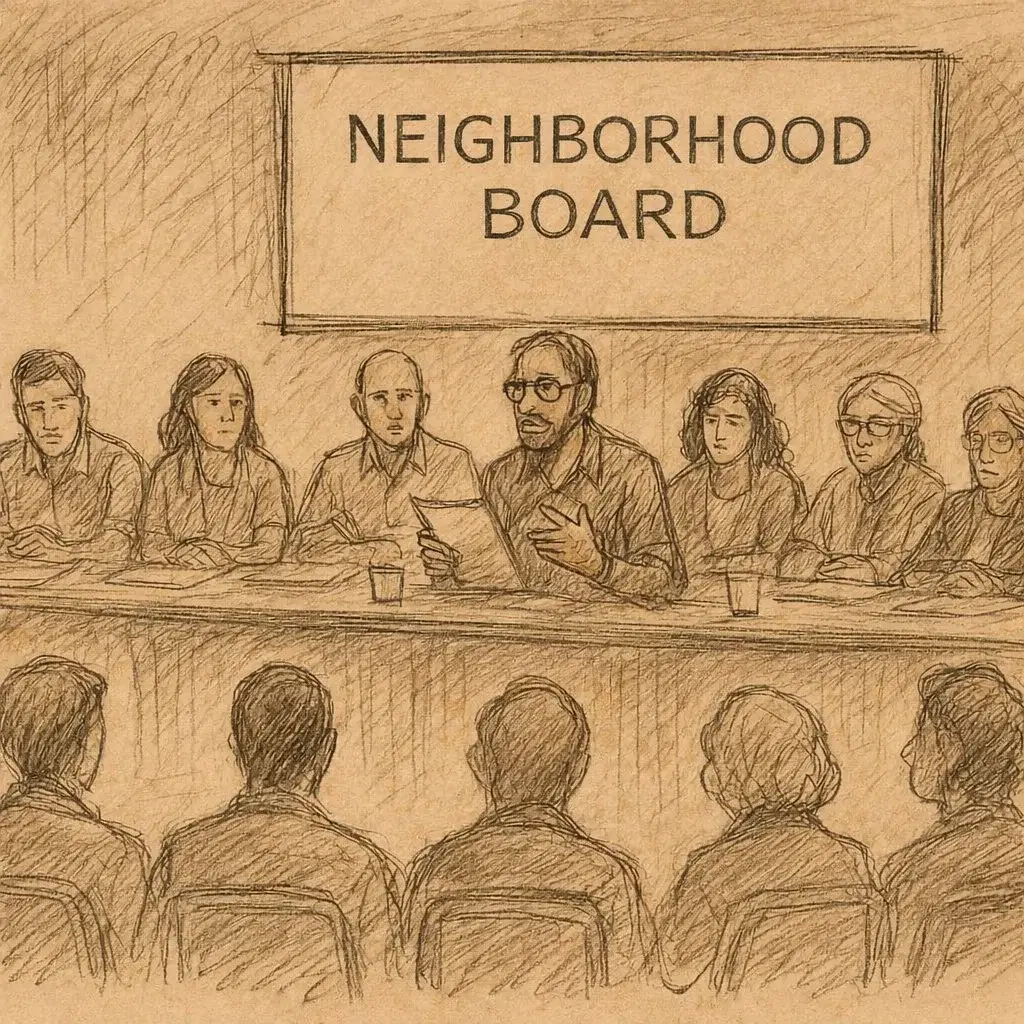
Chair Pro Tempore Darrell Macha called the meeting to order and welcomed the many first-time attendees who had come for the candidate forum. Speakers were instructed to raise their hands, wait to be recognized, address remarks through the chair, and keep comments and reports to approximately three minutes. Attendees were also asked to silence electronic devices and sign in at the front. Board members introduced themselves, and the meeting proceeded with 14 members participating in the officer-election votes.
Police, Fire, and Summer Safety Notices
The Honolulu Police Department and Honolulu Fire Department were unable to attend, but both submitted written reports for the board’s shared drive. The Fire Department’s monthly hiking-safety message advised residents to select trails appropriate to their ability, consult official trail information at hawaiitrails.org, check rain, wind, and ocean-swell forecasts, remain on marked trails, avoid taking dangerous risks for photographs, hike with a companion, tell someone their plans, and leave enough time to return before dark. HPD’s summer safety reminder urged residents to drink water before becoming thirsty to avoid dehydration and heat exhaustion during hot and humid weather.
U.S. Army Community and Training Update
Colonel Tony Newman introduced himself as the new commander of the U.S. Army’s 599th Transportation Brigade and said the brigade intends to maintain a regular presence at Waipahu meetings and assist the community when possible. He announced a public job fair at Helemano Community Center on August 18. He also advised that the 25th Infantry Division would conduct cannon and mortar training beginning the following day and continuing through the weekend, explaining that nearby residents could hear loud explosions. RIMPAC was expected to conclude at the end of July, after which traffic traveling south was anticipated to ease somewhat.
Election of Neighborhood Board Officers
The board elected officers for the term running from July 1, 2026, through June 30, 2027. Maureen Andrade nominated Darrell Macha to continue as chair, and he was elected by roll call with 14 votes in favor, no opposition, and no abstentions. Jaden Chang was elected vice chair by the same 14–0 vote, Richard Oshiro was elected secretary by 14–0, and Nathan Chang was elected treasurer by 14–0. The board clarified that a vote was required even when only one person was nominated for an office.
Meeting Schedule, Format, and Recess Months
The board unanimously retained its existing meeting schedule and format. Regular meetings will continue at 7 p.m. on the fourth Thursday of each month at the Filipino Community Center, with both in-person attendance and WebEx participation. The November meeting will be held on the third Thursday to avoid the Thanksgiving holiday. The board will recess in August, December, and June. The next meeting was announced for September 24, 2026, at 7 p.m. at the Filipino Community Center.
Testimony Rules, Committees, and May Minutes
The board unanimously readopted its existing oral-testimony rules. No special committees were established, although Chair Macha invited members to propose committees for future consideration. The board also approved the minutes of its May 28, 2026 meeting after correcting two references on page two from “Home Depot Road” to “Waipahu Depot Road.”
Speeding and Pedestrian Risks on Lumicola Street
Pearl City resident Susan Fujii spoke on behalf of Jane Fernandez, who operates a foster home at 94-1205 Lumicola Street in Crestview, where Fujii’s husband receives care. Fujii reported that motorists regularly exceed the residential 25-mph speed limit, particularly because the street is on an incline that encourages drivers to accelerate uphill or coast too quickly downhill. Cars are parked along both sides of the street because many homes have multifamily occupancy, while children on summer break walk, play, run, and ride bicycles between parked vehicles. Fernandez had recently been nearly sideswiped while sitting in a parked car, after which the speeding vehicle nearly struck other parked cars. HPD’s Pearl City station placed officers in the area but observed no violations while officers were visibly present. A speed-display trailer initially slowed drivers, but Fujii later saw readings of 33 to 36 mph, with the sign displaying “slow down” at 36 mph. She and Fernandez requested a lasting traffic-calming measure such as speed humps rather than temporary enforcement or signage.
Lumicola Street Traffic Study
A representative from Councilmember Val Okimoto’s office reported that the office had submitted a Request for Investigative Services Report to the city Department of Transportation Services on approximately July 20. The department will conduct a traffic study to determine whether the Lumicola Street segment warrants traffic-calming or speed-control measures. The request has entered the city’s queue, but the representative cautioned that such studies commonly take seven months to one year, depending on the department’s workload. The office committed to continue following the matter while the investigation proceeds.
Pearl Harbor-Hickam Restoration Advisory Board
Francie Whitfield, community co-chair of the Pearl Harbor-Hickam Kalaeloa Restoration Advisory Board, announced that its next meeting would be held Wednesday, September 9, from 6 to 8 p.m. at the Oahu Veterans Center. The advisory board is recruiting members to fill 14 vacancies, including openings associated with six members whose three-year terms are expiring. At least one outgoing member was expected to continue serving. Whitfield stated that the application deadline was April 19 and directed interested residents to redhillern.com, under the community-involvement section, for membership information and applications.
Candidate Forum Format and Election Information
Secretary Richard Oshiro moderated the candidate forum, noting that primary-election ballots had already been mailed and voting had begun. Each candidate received three minutes for an introduction and one minute for each question, with no follow-up questions because of time constraints. The forum covered Senate District 19 and House Districts 36, 37, and 39. Oshiro said the recording would be rebroadcast on ʻŌlelo Channel 49 every second Saturday at 9 p.m. and every fourth Sunday at 9 a.m. He later explained that no City Council candidates participated because Councilmembers Val Okimoto and Matt Weyer had no opponents and therefore were expected to be reelected.
Senate District 19 Candidate Rochelle Lamasao
Senator Rochelle Lamasao, the current appointed officeholder, described herself as a lifelong Waipahu resident and graduate of August Ahrens Elementary School, Waipahu Intermediate School, and Waipahu High School. She earned an undergraduate degree in political science and a master’s degree in public administration from the University of Hawaiʻi at Mānoa while raising a child as a single mother. Her professional experience included four years with the Hawaiʻi Farm Bureau from 2016 to 2020 and two years as a legislative office manager. She was elected to the state House in 2022 and appointed to complete the Senate term vacated by Henry Aquino in 2025. Lamasao said she had visited more than 1,000 homes across the district since January and repeatedly heard concerns about the cost of living, public safety, and homelessness.
House District 36 Candidate Eric Barsatan
Eric Barsatan presented more than 30 years of experience in state government, healthcare, and local business. He helped open The Queen’s Medical Center–West Oʻahu and spent more than a decade leading physician relations and medical staff services. He also served on the Statewide Health Coordinating Council within the Department of Health’s health-planning agency, operated a small business for 20 years, served as a Filipino Chamber of Commerce vice president, and led the governor’s boards and commissions office, which oversees more than 170 constitutional, statutory, and executive boards. He cited additional work in Maui County economic development and service through St. Joseph Church, the Knights of Rizal, and the Filipino Community Center. Barsatan said Waipahu families need relief from high living costs, better healthcare access for kūpuna, less red tape for small businesses, stronger schools and public safety, improved roads and traffic conditions, more affordable housing, and a fairer share of state funding.
House District 36 Candidate Daisy Hartsfield
Representative Daisy Belais Hartsfield said she was raised and educated in Waipahu and continues to live in her childhood home in a multigenerational household. Appointed to the Legislature in January, she emphasized her combined experience as an attorney, administrator, and social worker. She said those roles taught her how to confront opposition, manage budgets and operations, and connect people with services. Hartsfield identified public safety and health, improved infrastructure, responsible development, and support for local businesses as her central priorities. She pledged to seek emergency-service and community-health resources, modernize infrastructure without sacrificing Waipahu’s character, promote sustainable growth, and reduce unnecessary barriers facing local businesses.
House District 36 Candidate Maurice Morita
Neighborhood Board member Maurice Morita described more than 20 years of lobbying experience and proposed a state lottery dedicated to education. Under his plan, students graduating with at least a 3.0 grade-point average could attend a Hawaiʻi college or university without tuition charges, regardless of parental income. Lottery proceeds would supplement, rather than replace, legislative funding for the Department of Education and could support teacher salaries, working conditions, and public colleges. Morita also cited the state’s need for approximately 10,000 housing units per year compared with current production of about 4,000, and said Hawaiʻi could require roughly 60,000 additional units by 2050. He supported affordable rentals, fee-simple homes, and condominiums. For residents age 65 and older, he proposed a $6,000 state tax deduction per person, or $12,000 for married couples filing jointly, as well as exemptions on withdrawals from traditional and Roth IRAs and 401(k)s. His most controversial proposal was a pilot program legalizing cockfighting, which he characterized as a conflict between animal-cruelty concerns and supporters’ claims of longstanding cultural tradition.
House District 37 Candidate Trish La Chica
Representative Trish La Chica joined remotely from Chicago and described herself as a Filipina-American who immigrated to Hawaiʻi nearly 20 years ago after working as an investigative journalist in the Philippines. Her later work included public health, Medicaid, and service as Honolulu’s homelessness and housing director. She also served on the Mililani Neighborhood Board and in Democratic Party positions before entering the Legislature by appointment and subsequently winning election. La Chica said she regularly surveys residents and organizes community discussions involving police leadership, Hawaiian Electric, insurers, transportation officials, and traffic-safety specialists. As vice chair of the House Education Committee and a member of committees dealing with housing, transportation, and higher education, she cited work on free school meals, school-bus accountability, and Hawaiʻi’s first affordable workforce-housing project in Mililani. Her overarching goal is to make Hawaiʻi affordable enough for residents to remain and raise families.
House District 37 Candidate Trevor Nagamine
Trevor Nagamine said he was born and raised in Mililani, graduated from Mililani High School in 2007, and has served on the Mililani Neighborhood Board since 2014. He also worked as legislative session staff for Senator Michelle Kidani from 2009 through 2016. Nagamine identified Hawaiʻi’s housing shortage as his principal concern and supported teacher workforce housing planned at Mililani High School. He also advocated better mobility for residents who cannot own or drive cars, including safer walking and bicycling routes, improved bus access, and greater use of Skyline. He said wide roads and speeding make routine trips dangerous and argued that transportation planning centered almost entirely on private vehicles increases isolation and living costs.
House District 37 Candidate Emil Sprasina
Emil Sprasina, running as a nonpartisan candidate, focused on Hawaiʻi’s primary-election system. He cited the state Constitution’s language protecting ballot secrecy and stating that no person should be required to declare a party preference or nonpartisanship as a condition of voting. He argued that ballot instructions requiring voters to select a political preference are unconstitutional and disadvantage nonpartisan candidates. Sprasina said he had been involved in litigation over the issue for approximately two years and intended to pursue the matter through the federal court system if necessary. Drawing on his experience leaving a communist country 38 years ago, he asserted that the current system unfairly prevents nonpartisan candidates from advancing and pointed to the absence of nonpartisan members in the 51-seat House and 25-seat Senate.
House District 39 Candidate Danny DeGracia
Neighborhood Board member Dr. Danny DeGracia identified himself as a Department of Health program specialist and communications director for a Centers for Disease Control and Prevention grant. Although running as a Republican, he stressed his support for organized labor and said he was the first Republican to chair an Oʻahu division of the Hawaiʻi Government Employees Association’s scientific and professional employees. His campaign emphasized basic government performance, including cutting overgrown grass in Kunia to reduce wildfire danger, repairing damaged refuse containers, and reliably collecting trash. He warned that unmanaged vegetation could create Lahaina-like fire risks. DeGracia also called for free school-bus service, noting that families may pay about $80 per quarter, and described food insecurity among students who take food home for their families. Citing the Hawaiʻi Children’s Action Network, he said more than 111,000 children live in high-cost areas and over 77,000 parents are economically insecure.
House District 39 Candidate Lauren Doctolero
Lauren Kiela Doctolero said he grew up on Hiapo Street in a multigenerational household that at times included approximately 20 people. He attended Waikele Elementary School, Waipahu Intermediate School, and Waipahu High School and described the district as the community that raised him. Doctolero said many classmates moved to the continental United States because they could not afford to remain in Hawaiʻi, and he wants residents who prefer to stay to have viable career and housing opportunities. He emphasized keeping more money in residents’ pockets, expanding local economic opportunities, improving public safety, and strengthening disaster preparedness and community resilience. He framed development and employment policy as tools for allowing residents to work and thrive close to home.
House District 39 Candidate Wayne Kaivi
Wayne Kaivi, a six-year Hoʻopili resident, identified public safety as his principal concern. He founded Back the Blue Hawaiʻi, a law-enforcement advocacy organization with more than 10,000 members, and said he works closely with police and community members on neighborhood safety. Kaivi previously served as executive director of the Hawaiʻi Masons Union and lobbied at the Legislature on construction-industry bills. He also cited a recent stranger-danger incident in Hoʻopili and said the safety of children, including his own, motivates his candidacy. He criticized severe school crowding and claimed some classrooms face ratios as high as 50 students per teacher. Kaivi, who formerly served as a Democratic committee chair under Governor David Ige but is now a Republican, argued that Hawaiʻi needs political change and practical leadership rather than loyalty to one party. He also identified homeowners’ association practices as a concern in growing communities.
House District 39 Candidate Corey Rosenlee
Corey Rosenlee described 30 years as a teacher, including 20 years at Campbell High School, and cited his parents’ careers in special education and social work as early influences. After seeing Campbell classrooms reach temperatures near 100 degrees, he organized teachers, students, and residents to lobby the Legislature. Although the effort initially failed, continued advocacy ultimately contributed to air conditioning being installed in thousands of Hawaiʻi classrooms. Rosenlee later served two terms as president of the Hawaiʻi State Teachers Association, representing approximately 13,500 active teachers and 6,500 retirees. He highlighted additional pay for educators in hard-to-staff locations, special education, and Hawaiian-language immersion as a national model for reducing teacher shortages. As an ʻEwa Neighborhood Board member, he has worked on illegal fireworks and e-bike safety. His campaign centers on affordability, keeping families together, and preventing younger residents from having to relocate.
Proposed Costco Business Center
Asked about the proposed Costco Business Center at the former Don Quijote site in Waipahu, Senator Lamasao said she had met with project consultants and conveyed concerns received from residents and board members. She acknowledged Costco’s popularity but urged the community to remain engaged, insist that the company fulfill its commitments, and seek tangible benefits for Waipahu. She said traffic and safety planning had not yet been finalized and later confirmed that the project was still moving through the approval process rather than having received final approval.
Former Walgreens Storage Facility and Car Wash
House District 36 candidates were asked about the Department of Planning and Permitting’s approval of a public-storage facility and car wash at the former Walgreens site. Barsatan supported productive reuse of the vacant property, arguing that it could create jobs and allow residents to work closer to home. Hartsfield clarified that the approval came from a city department rather than the state, said the community appeared to have been surprised, and questioned whether another storage facility was the best use of central Waipahu land. She requested more information about the project’s benefits and favored stronger public input. Morita said he would have preferred affordable housing but considered an active commercial use better than leaving the land vacant, particularly if it created jobs.
Retaining Young Residents in Hawaiʻi
House District 37 candidates were asked how Hawaiʻi could persuade young people to stay after completing school. La Chica emphasized listening directly to students, providing mentorship, exposing them to local careers, and expanding paid internships, including a proposed 12-week state-supported internship program involving public- and private-sector employers. Nagamine said the economically rational choice for many graduates is currently to leave because housing costs are high and wages are often lower than on the continent. He argued that reducing housing costs is essential if young adults are to remain near their families and support the communities that raised them.
Royal Kunia Housing Expansion and Traffic
House District 39 candidates addressed Haseko’s reported plan to build 2,007 homes in Royal Kunia and the resulting traffic pressure. DeGracia proposed reducing peak travel through expanded online and hybrid University of Hawaiʻi courses, strengthening mass transit, and offering free bus service for children and kūpuna. Doctolero said Haseko should be required to plan and fund supporting infrastructure before construction rather than treating roads and services as an afterthought; he also advocated creating more jobs in Central and West Oʻahu so residents would not need to commute long distances. Kaivi said the already-approved project illustrates the need to hold developers accountable for infrastructure, while also raising concerns about homeowners’ associations. Rosenlee said former plantation land at the site may contain dioxin and reported that he had asked Haseko to provide evidence of Environmental Protection Agency approval. He argued that developers should bear more responsibility for roads, schools, and other infrastructure instead of retaining profits while shifting those costs to taxpayers.
Waipahu High School Pedestrian Improvements
In response to a question about her record since being appointed to the Senate, Lamasao highlighted work with Waipahu High School students and Representative Cory Chun on pedestrian safety near the intersection of Waipio Access Road and Farrington Highway. A resolution requested safer crosswalks, and funding was subsequently secured for intersection improvements. Lamasao said she would work with the state Department of Transportation to bring the project to completion. She also noted that funding had already been appropriated for a broader Waipio Access Road multimodal project.
Kamehameha Schools High-Rise Proposal
A board member raised concerns about Kamehameha Schools’ proposed 18- and 19-story development near Mokuʻola and Hikimoe streets. The project was described as including senior and affordable housing but potentially displacing Times Supermarket, a service station, and other small businesses that serve lower Waipahu. Barsatan viewed the project as a possible response to poor and overcrowded housing conditions but said developers and residents must communicate and seek a mutually beneficial plan. Hartsfield said Waipahu faces the challenge of adding housing while preserving its plantation-town identity and emphasized that Kamehameha Schools could still reconsider project details before groundbreaking, even if approvals had been obtained. Morita likewise called for better communication and said the towers should not exceed existing community landmarks such as the rail structure or the old Waipahu mill smokestack.
Preparing Students for Life and Work in Hawaiʻi
House District 37 candidates discussed what schools should do differently to prepare students for living in Hawaiʻi. La Chica advocated expanded paid internships, private-sector partnerships, mentorship, teacher-retention efforts, childcare support for higher-education students, and “earn and learn” opportunities that connect students to viable local careers. Nagamine supported expanding dual-credit programs such as Waipahu High School’s partnership with Leeward Community College, as well as internships with major employers such as the Pearl Harbor Naval Shipyard. Sprasina argued that the rise of artificial intelligence will replace some jobs and that schools should place greater emphasis on vocational and hands-on training in construction, plumbing, electrical work, healthcare, and other practical fields.
Tax Policy and State Spending
House District 39 candidates offered different approaches to taxes and government spending. DeGracia said his independent review of state special funds dating to 1991 found numerous accounts and revenue streams that officials may no longer closely track; he argued that the state should identify and use existing money before raising taxes and should obtain public support for major fiscal decisions. Doctolero emphasized community participation in budget priorities and tax relief for fixed-income kūpuna and family caregivers. Kaivi opposed general tax increases but said higher taxes could be considered for companies that earn money in Hawaiʻi and transfer it elsewhere; he firmly opposed additional taxes on seniors. Rosenlee argued that Hawaiʻi’s tax structure places a greater proportional burden on poor residents than on billionaires and major landowners, citing Larry Ellison, Jeff Bezos, and Mark Zuckerberg. He supported requiring the wealthiest residents to pay more to fund healthcare, schools, and services for kūpuna.
Forum Conclusion and Adjournment
The board thanked all participating candidates and recognized Richard Oshiro, Tom Phuong, and Dominique Bonifacio for organizing and facilitating the forum. Oshiro emphasized that the limited session could not address every issue and said candidates who win office could be questioned further during future board appearances. Chair Macha welcomed the unusually large audience, encouraged residents to return for regular meetings, repeated the board’s fourth-Thursday schedule and August, December, and June recesses, and announced the September 24 meeting. The meeting then adjourned on schedule.