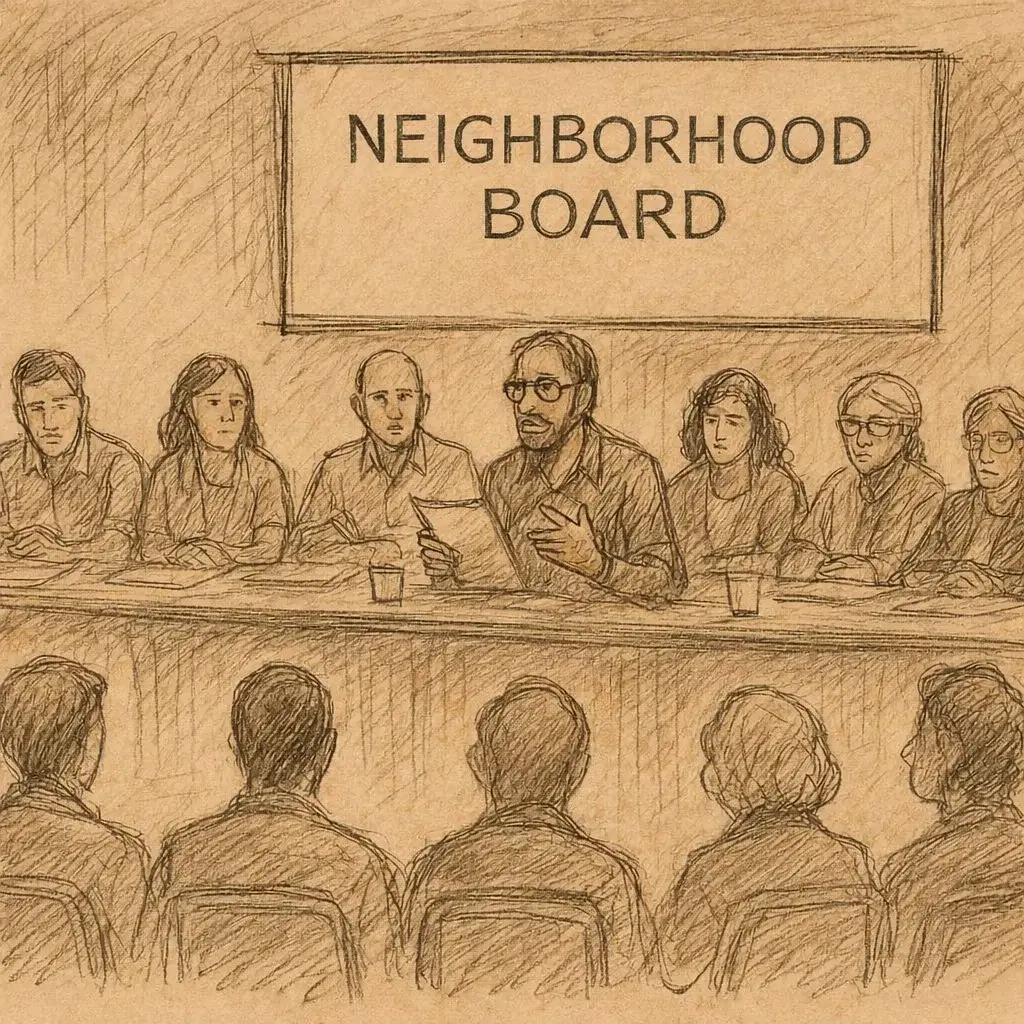
No 32 Waimānalo Neighborhood Board Regular Meeting November 2026
Listen to this article:
32 Waimanalo Neighborhood Board Meeting – November 10, 2026
Opening, Attendance, and Quorum
The meeting began with technical difficulties that prevented online attendees from hearing the early proceedings. After audio was restored, the board declined to repeat all previously covered agenda material but invited questions. The meeting opened with pule, followed by reminders to silence electronic devices, keep cameras on during board action for online participants, and note that the meeting was being recorded. Initial roll call found only five members present, short of the quorum requirement. Ted Ralston arrived at 7:11 p.m., followed by Member Wong at 7:29 p.m.; Hoku Akana and Kukui Akana joined at 7:44 p.m., establishing quorum with nine members, and Member Makaila arrived at 7:50 p.m., bringing the total to ten. Because quorum was unavailable early in the meeting, action to fill the board’s final vacant position was deferred. Interested residents were encouraged to contact the board in advance so their eligibility and application could be prepared for a later meeting.
ʻŌlelo Noʻeau and Community Knowledge
The board shared ʻōlelo noʻeau number 26, “Aia kula paha i Kiolakaʻa,” translated as “Perhaps it is gone to Kiolakaʻa.” The saying refers to something thrown away and later wanted, drawing on the word “kiola,” meaning to throw away, and Kiolakaʻa, a place in Kaʻū. No representative from the kaʻepuni was present to offer a community message, but the board said it would continue reserving space for the ʻike of kūpuna and ʻōpio so that their knowledge can be shared publicly and documented in the board record.
Honolulu Fire Department
The Honolulu Fire Department reported 56 Waimānalo incidents during October: 50 medical calls, three activated alarms, two nuisance fires, and one motor vehicle accident. Its monthly safety message focused on holiday travel. Residents were advised to drive sober and alert, avoid cell phone use and drowsy driving, arrange a designated driver or rideshare when alcohol is involved, ensure all passengers use seat belts, and secure children in age- and size-appropriate car seats or boosters. Travelers were also encouraged to keep medication, identification, itineraries, and emergency contacts readily available and to turn off holiday lights and close doors before leaving home or going to bed. No questions were raised.
Honolulu Police Department
HPD reported two motor vehicle thefts in October, up from one in the prior month; two burglaries, down from three; three thefts, up from one; one vehicle break-in, unchanged; and one robbery, compared with none the previous month. The department handled 454 calls for service in October. Lieutenant Akagi, Captain Michael Campbell, and Sergeant Michael Kreppel warned that package thefts, vehicle break-ins, and other property crimes commonly increase during the holiday season. Residents were advised to remove laptops, bags, spare keys, and other valuables from vehicles; lock vehicle and home doors; promptly retrieve packages and mail; keep gifts out of sight from outside the home; and avoid announcing travel plans on social media. HPD will continue traffic enforcement in Waimānalo and is considering additional holiday DUI checkpoints. Captain Campbell said traffic fatalities and critical incidents were significantly better than the previous year and credited residents for driving more carefully, avoiding phones, signaling, and following speed limits. He also noted HPD’s participation in the Kāneʻohe and Waimānalo holiday parades.
Vehicles Driving on Beaches
The board asked whether HPD’s efforts had reduced trucks and other vehicles operating on Waimānalo beaches, where prior concerns included the possibility of a person or honu being struck. HPD said reports had slowed as the community and others worked to close beach access points, although a truck was reportedly on the beach the previous Friday night. Officers were overwhelmed with calls that evening and could not arrive before the vehicle left. HPD encouraged continued reporting and said it would maintain enforcement pressure to discourage illegal driving on the beach.
Floodwater Discharge and Stream Maintenance
Mayor Rick Blangiardi’s representative, Director Laura Thielen, provided delayed answers to questions from the previous meeting. Regarding reports that a pump truck collected floodwater during a March storm, drove up Hīhīmanu Street, and discharged it into ʻĪnāʻole Stream, the Department of Facility Maintenance determined that the city did not own the affected stream area and therefore was not the enforcing agency. The information was forwarded to the State Department of Health’s Clean Water Branch and Hazard Evaluation and Emergency Response Office. Residents seeking follow-up were directed to the Clean Water Branch at 808-586-4309 or HEER at 808-586-4249. Thielen also explained that material removed during city stream cleaning is taken to a facility or base yard, separated and dewatered, dried, placed in dump trucks, and transported to specialized disposal facilities. The material generally consists of mud and green waste.
Park Ranger Program and Commercial Activity
Director Thielen addressed Ordinance 22-3 and the city park ranger pilot program. Park rangers do not possess arrest, citation, or other law-enforcement authority; those powers remain with HPD for petty misdemeanors and, in some cases, misdemeanors. The ranger project began in late 2022 using temporary funding and was designed to collect data on unauthorized commercial activities in city parks. After gathering islandwide information, the program entered a second phase in August in which rangers educate commercial operators about park rules, permissible activities, available permits, and locations where operations may or may not occur. The department will evaluate whether education changes operator behavior. The program consists of one supervisor and four field rangers working in two-person teams across seven days, including mornings, afternoons, and early evenings. They use city vehicles and wear identifiable gray park ranger uniforms. They are year-to-year city contract employees rather than permanent civil-service workers. Applicants must meet job qualifications, but there is no specific requirement for cultural or historical training. The rangers must understand park policies, communicate rules effectively, establish positive relations with park users, and provide information about allowed activities.
Ranger Presence in Waimānalo
A board member asked how residents could meet the four field rangers and gain access to the data they collected. Thielen said rangers had interacted with neighborhood-watch participants at Hūnānāniho and that Waimānalo remained among the locations on their rotation, although staff were increasingly concentrating on identified commercial-activity hotspots. She agreed to seek a schedule so board members could arrange to meet the rangers when they are in Waimānalo and said the city could share the islandwide data. Board members said the information could assist with future community planning.
Park Maintenance, Fields, and Restrooms
Residents raised concerns that grass at Azevedo Field was so tall that children practicing there could be obscured, and that restrooms at both Waimānalo District Park and Waimānalo Beach Park needed repairs. Thielen said the Waimānalo Beach Park improvement projects were continuing through the Department of Design and Construction. The pavilion work had been completed, the arts and crafts building remained in design, and construction on two restroom facilities was expected to move forward, including the closed restroom near the campsite and canoe hālau. Hūnānāniho also needed maintenance staff to repair vandalized areas. Plumbing crews faced a heavy islandwide workload involving restrooms and irrigation systems. District 4 mowing crews cover an unusually long area from Makapuʻu to Dillingham and generally can mow only every two weeks rather than weekly. Thielen invited a Waimānalo group to consider an adopt-a-park agreement to mow a field during alternate weeks. A resident strongly criticized the deteriorated fields, overgrown grass, unusable baseball areas, and broader loss of community pride, arguing that excessive rules had also prevented residents from improving or using park facilities themselves.
Waimānalo Beautification Project and Bus Service
The mayor’s office reported that the project referred to as the “Waimānalo Beautification Project” did not appear to be a city project. Because the work was apparently located in the state highway right-of-way, questions were referred to the Hawaiʻi Department of Transportation Public Affairs Office at 808-587-2160. A later report from the governor’s representative said information from city agencies suggested that it was a state landscaping project involving a private group and volunteers between city park property and the highway, with Prometheus Construction possibly playing a leading role. Thielen also announced schedule modifications to TheBus service, including the Honolulu–Kailua–Waimānalo line. Weekend routing and service would remain unchanged, but weekday and holiday schedules would be adjusted because of a shortage of bus operators. Riders seeking details were directed to the Department of Transportation Services at 808-768-8369.
Honolulu City Lights
The city announced that Honolulu City Lights would hold its downtown Christmas tree lighting and parade on Saturday, December 5. Families could attend the opening if comfortable with large crowds or visit later, as the display was expected to remain available through the beginning of January.
Board of Water Supply
The Board of Water Supply submitted a written report stating that there were no Waimānalo water-main break updates. It also promoted permanent full-time and contract employment opportunities in business management, engineering, information technology, management, and executive leadership. Applicants were directed to BWSJobs.org. No representative from the State Department of Transportation attended, and the board said it would revisit transportation matters when meetings resume in January.
Waimānalo School Vandalism
Waimānalo Elementary and Intermediate School reported a serious theft and vandalism incident that occurred between approximately 1 and 2 a.m. on Sunday, November 8. Seven male juveniles allegedly entered the campus, completely removed a cafeteria security camera, and smashed another camera on the STEM building. Estimated damage exceeded $6,000. Still images were shown, and anyone able to identify the individuals or provide details was asked to contact HPD or school administrators. The school emphasized that vandalism costs and damaged security infrastructure affect the entire school community.
Mālama Honua Public Charter School
Mālama Honua Public Charter School’s eighth-grade students participated with the Hawaiʻi Center for Youth Philanthropy and other school groups. Students also joined Pilina no nā ʻOhana lei-making activities at Waimānalo District Park. The educational waʻa Kūʻokoʻa Kiʻaloha visited Hui Mālama o Ke Kai for about three days, allowing students to rotate through it as a living classroom. Students represented Waimānalo with Kumu Jazz at a conference centered on food sustainability and ʻāina momona. The school completed its first-trimester hōʻike at Windward Community College, where students presented work on mālama ʻāina, relationships with the ocean, moʻokūʻauhau, waʻa, navigation, internships, pilina, and kuleana within the community.
Hui Mālama o Ke Kai
Hui Mālama o Ke Kai reported 33 students enrolled in its after-school program, which will continue through Christmas break. Recruitment for the second Kūkulū after-school session and the spring-break program will begin in December. Both programs are open to students from fourth grade through high school, and youth may enroll in one or both. The organization also planned a Lā Kūkaʻa celebration with clothing screen-printing or block-printing activities. Its hale waʻa requires substantial restoration, and new funding will help support the work, but volunteers are needed. Volunteer sessions were scheduled for November 15–16 and November 22–23 from 8 a.m. to 2 p.m. No prior skills are required because tasks can be matched to each volunteer’s ability. A November 17 groundbreaking was also mentioned, with the tentative time stated as 9 a.m., subject to confirmation.
Kailua High School and Kaiapuni Programs
Kailua High School reported that its hula club, Nā ʻUi o Kawaialua, traveled for roughly two and a half weeks to London, Belgium, and Greece. Students visited Bishop Museum-related archives in London, offered oli, mele, and hula in honor of Father Damien in Belgium, and performed at festivals in Belgium and Greece. Registration preparations were underway for Kaiapuni and Hālau Hīkili programs. New educational offerings include welding through Honolulu Community College and a maritime pathway pilot planned for spring. Facility projects include a new artificial-turf softball field beginning around mid-November, a baseball field project to follow, a completed football-field design awaiting capital-improvement funding during the legislative session, and continued design work for a girls’ athletic locker room.
Lā Kūkaʻa and Hawaiian-Language Community Events
The Kaiapuni program planned a Lā Kūkaʻa gathering at Waimānalo Beach Park on November 20 for approximately 300 students, down from an initial estimate of 400, with numerous community partners and board members participating. Organizers described it as a youth-conference-style event intended to introduce and reinforce ʻike and practices that help “hoʻokanaka” students and the broader school. In January, Kaiapuni plans a schoolwide event before Onipaʻa in which about 400 of Kailua High School’s 765 students would march from Maunaʻala to ʻIolani Palace. An ʻŌlelo Hawaiʻi Night Market is planned for April to normalize Hawaiian language outside the classroom, including daily marketplace exchanges between vendors and customers. Organizers are seeking Hawaiian-speaking emcees and entertainment centered on ʻōlelo Hawaiʻi, while also welcoming vendors who are learning the language or simply want to support the lāhui.
Windward Community College
Windward Community College announced that spring registration opened on the day of the meeting. The chancellor said the process appeared smoother than the fall semester’s registration experience following changes to the system. Current students were urged to register early for preferred classes, while prospective students could still receive help with applications and enrollment. The University of Hawaiʻi president was scheduled to visit the campus the following day as part of a community-college tour. Theater students were also presenting “Everyday Heroes,” a production about local people who make a difference in others’ lives, during the preceding and following weekends.
Waimānalo Health Center
The Waimānalo Health Center recognized November as Diabetes Awareness Month and encouraged residents to learn their risk factors, check A1C and blood-sugar levels, develop healthier habits, and schedule medical visits if they had not recently seen a provider. The center offers a free, yearlong Diabetes Prevention Program with weekly meetings and a lifestyle coach. People already living with diabetes can attend a monthly Diabetes Talk Story program led by Dr. Catherine Singh, who is board-certified in advanced diabetes care. Additional services include cooking classes on the last Tuesday of each month, nutrition counseling with registered dietitians, and a prepared-meals program. Information is available from Jennifer Conway at 808-954-7162. The center’s Ula Hoʻʻi ka Hula hypertension program will return from January through June 2027, meeting Wednesdays from 5 to 6 p.m. The six-month program combines heart-health education with hula instruction by Kumu Leimoni and does not require previous hula experience.
Pono ʻOluʻolu and Kūī Mahiʻai ʻĀina Kauhale
Pono ʻOluʻolu President Kenani Granberg said the organization brings together Waimānalo residents and families affected by the Kūī Mahiʻai ʻĀina Kauhale project. The group supports humane and dignified housing for people experiencing houselessness while seeking safe conditions, responsible planning, transparency, and meaningful participation for both Kauhale residents and neighboring families. Reported concerns include grading and fill, drainage and standing water, boundary and access changes, traffic, public safety, infrastructure, and possible effects on historic and Native Hawaiian cultural resources. Granberg did not ask the board to treat every allegation as a proven violation; instead, the organization wants agencies to identify the governing plans and permits, conduct coordinated inspections with affected residents, and issue written findings, corrective actions, responsible contacts, and timelines. Pono ʻOluʻolu requested an opportunity to return in January 2027 with updates. Because no new materials were submitted for action, the related board resolution was deferred.
Bellows Air Force Station
Bellows Air Force Station reported that the bridge immediately behind the main Air Force-side entrance gate was approximately 30 percent complete, with a large red crane visible at the worksite. Bellows was also preparing for the Waimānalo Christmas Parade. A Restoration Advisory Board meeting was scheduled for November 18 and open to the public, with discussion expected on upcoming munitions cleanup work at an area known as Parcel 7. Councilmember Esther Kiaʻāina told the Bellows representative that the Honolulu City Council had passed a resolution calling for the return of lands used by the Air Force at Bellows and requested a meeting with appropriate Air Force officials. The representative confirmed awareness of the resolution.
Marine Corps Events and Community Activities
Marine Corps Base Hawaiʻi reported holding the 251st Marine Corps birthday pageant, attended by Korean and Vietnam War veterans and community members. A Makahiki event was scheduled for November 13–15, including a Saturday moʻolelo session with kūpuna Mahealani Cypher, Rocky Kalohiva, and Adrian Keʻokoloʻolō, who would share histories of Kāneʻohe, Heʻeia, and Mōkapu, followed by an evening ceremony. The base planned to host Special Olympics bowling and basketball from November 20–22 for participants from across the state, including the neighbor islands. The Windward Choral Society had also offered to hold a free Christmas concert at the base chapel, with final confirmation still pending.
Late-Night Military Noise and Low-Flying Aircraft
Several members objected to gunfire and aircraft activity occurring late at night. Marine Corps Base Hawaiʻi said noise-generating training must end at 10 p.m., although “quiet” training may continue afterward. A resident reported repeated firing well after 11:30 p.m. on November 4 and said children, kūpuna, and working families had endured such disturbances for years. Another member reported aircraft flying approximately 100 feet over residential homes on the mauka side on November 3 at about 3:23 p.m., as well as other low-flying helicopter activity. Members asked for the formal definition of quiet training, the rules governing flight altitude and distance from homes, and clarification of enforcement procedures. They argued that residents should not bear the burden of policing military compliance. Marine Corps representative Christy Kalohiwa said submitted reports are compiled monthly and sent to leadership, and that units operating beyond authorized hours can face reprimands or other consequences. She agreed to investigate the November 3 and 4 incidents, provide flight and quiet-activity standards, and bring the concerns to range and training managers. The board also noted that most training at Bellows is conducted by Marine Corps Base Hawaiʻi rather than the Air Force. A noise-reporting website appeared to be malfunctioning or directing users to the wrong district, so the board requested a corrected link. The Marine Corps noise line was identified as 808-496-8832.
Return of Bellows Lands
Councilmember Kiaʻāina discussed the City Council resolution urging the return of approximately 1,500 acres used by the Air Force at Bellows to the people of Hawaiʻi. The resolution passed committee on October 22 and the full council on November 5. Amendments called for the federal government to bear the cost of removing unexploded ordnance and remediating chemical contamination and required consultation with the Native Hawaiian community, the broader Waimānalo community, and the Department of Hawaiian Home Lands. Kiaʻāina distinguished the Air Force recreational area from the Marine Corps training area and criticized continued exclusive military recreational uses, including lodging, golf, and beach access, while community access remains constrained. She said she would pursue discussions with the governor, Hawaiʻi’s congressional delegation, Air Force leadership, and military-affairs officials, beginning with Congresswoman Jill Tokuda because Waimānalo is in her district. She recommended that the board chair and vice chair act as board liaisons and that residents form a community coalition capable of participating in negotiations and mobilizing publicly if needed. Board members stressed that any transition should protect Waimānalo residents employed at Bellows. Kiaʻāina agreed that continued operations during a negotiated transition and a change in land stewardship could provide a “soft landing” for workers rather than immediate job losses.
Unexploded Ordnance and Cleanup Standards
Representative Lisa Marten described earlier efforts to prevent the Air Force from permanently fencing off approximately 132 acres between Hūnānāniho and Tinker Road, known as TM-001, because of unexploded ordnance. After community objections and involvement by Hawaiʻi’s congressional delegation, the fencing plan was reversed in favor of cleanup. Initial sampling covered approximately 10 percent of the area and reportedly found more munitions than expected. Current work is focused on the makai portion, with the hope that cleanup will proceed progressively mauka. Marten cautioned that even if the Air Force releases a parcel, federal procedures give other federal agencies priority before the land can return to the state. Board members said the community should help establish the cleanup standard because land intended for housing, recreation, or conservation may require different levels of remediation. Concerns were also raised that detection equipment may reach only about four feet below the surface, potentially missing ordnance buried more deeply by decades of shifting sand and soil.
Waimānalo Christmas Parade
Hawaiʻi Pāʻū Riders President Leʻala Cook announced the 34th annual Waimānalo Christmas Parade, to begin at Hūnūnīkī Street and Kalanianaʻole Highway and end at Waimānalo Beach Park. Waimānalo District Park will be used to stage floats, vehicles, and marching bands, while Hūmūpaʻa Street will stage participating horses. The theme is “Christmas Roots in Waimānalo,” celebrating local people, culture, ʻike, love of ʻāina, ancestors, keiki, and kūpuna. Applications were available through the Waimānalo Christmas Parade social media page or HawaiiPowerRiders@gmail.com, with a November 30 deadline and a mandatory participant meeting at Waimānalo School on December 2 at 6 p.m. The speaker announced the parade as occurring on Saturday, December 12, although she stated the year as 2027 during the meeting. Dry-fit Christmas shirts would be sold to help pay for electronic signage, golf carts, and candy for Santa and helpers.
Hawaiʻi Pāʻū Riders and Rose Parade
Cook also announced that Hawaiʻi Pāʻū Riders had again been invited to represent Hawaiʻi in the Pasadena Rose Parade. The trip is expected to involve 14 riders and 10 to 15 ground-crew members, while transporting a full group of 25 to 30 people can cost approximately $80,000. The group will participate in Equifest and demonstrate the history of pāʻū riding, including its development in the 1800s, the tradition of aliʻi riding in elaborate attire to ranches and social gatherings, and the influence of vaqueros who taught Hawaiian riders ranching and paniolo skills. To offset costs, the group planned to sell $10 breakfast bentos near the Waimānalo gym during the Christmas parade.
Youth Sports, Community Pride, and Boat-Ramp Access
A longtime resident, Mr. Larson, urged the community to rebuild neighborhood-based sports, recreation, music, and cultural opportunities for young people. He said families now spend $1,500 to $2,000 for children to join distant sports programs, weakening relationships among neighborhood youth and families. He cited former athletes who had died from drugs or other causes and called on successful athletes, coaches, parents, and elders to return and mentor younger generations. He criticized park conditions and said the pavilion did not meet earlier expectations for a place where hula groups, musicians, kūpuna, and families could gather. He also called for restoration of the beach boat ramp so fishers, divers, families, elders, and people with disabilities could safely enter and leave the water. He recounted that residents once began improving the ramp themselves but were threatened with arrest by DLNR, although later discussions considered disability access. He connected ocean access with fishing, healing practices, food, and the survival of “Nalo” community identity.
Hōkūleʻo Farms
Karen O’Mahony described Hōkūleʻo Farms, a Waimānalo community horse and farm program focused primarily on approximately 40 children living at the Waimānalo Emergency Shelter. Its curriculum includes horsemanship and occasional riding but emphasizes relationships, self-awareness, trust, confidence, kindness, and emotional resilience. O’Mahony described a young child using a “bowl of light” exercise to symbolically release the hurt caused by classmates before interacting with chickens and horses. The organization wants to expand access to more Waimānalo children but needs community support. Volunteer needs include landscaping, cutting overgrown California grass, physically capable helpers to walk beside mounted children, and assistance feeding and caring for horses. Hōkūleʻo Farms is a 501(c)(3) organization and accepts donations. Its contact information is hokuleofarms.org, hokuleofarms@gmail.com, and 808-224-7296.
October Traffic Near Waimānalo Country Farms
A Huli Street resident reported severe traffic congestion associated with Waimānalo Country Farms’ October activities. Although supportive of local businesses, she said the event traffic made it difficult for residents and local workers to reach their homes. On one occasion, she spent about ten minutes traveling the final 50 yards to her residence, and every alternate route through Huli Street’s connecting roads was also blocked. She asked that future planning balance commercial events with reliable residential access.
Waikupanaha Street and Hīhīmanu Improvements
Councilmember Kiaʻāina reported that repairs to Waikupanaha Street had required coordination among the Department of Facility Maintenance, Department of Agriculture, Board of Water Supply, and Department of Design and Construction to verify utilities and determine the appropriate work. The project remained third in a queue behind two other storm-related road repairs, with completion hoped for by the end of the year. Because residents had reportedly removed barriers and driven around potholes, she asked DFM to place temporary gravel before permanent repairs. On Hīhīmanu Street, a contractor had received the city’s speed-hump design under a master agreement, and a start date was expected soon. Flood-control improvements near 41-236 Hīhīmanu Street, the Job Corps, and Waimānalo District Park remained in planning and design, with bidding not anticipated until 2028. Kiaʻāina invited residents to identify additional flood-prone locations, preferably through one community contact, because some areas may involve both city and state jurisdiction.
Laumilo Street, Park Restrooms, and Stop Sign
The Department of Transportation Services determined that speed humps are warranted on Laumilo Street, but approval requires support from 90 percent of affected neighbors. Board member Ted Ralston agreed to help collect signatures with the council office. Kiaʻāina also reported that a stop-sign issue near the Women’s Community Correctional Center on Kalanianaʻole Highway had been addressed. For large events at Waimānalo District Park, including the November 20 student gathering, her office notified the city that additional restroom servicing and staffing might be needed. When asked whom to call for backed-up toilets during an event, she acknowledged that no clearly effective 24-hour response line appeared to exist. She offered her and her staff’s direct contact information so they could call city staff or contractors immediately and said she would investigate emergency plumbing arrangements beyond the slower 311 process.
City Grants in Aid
The City Council Grants in Aid deadline was announced as November 30. Eligible nonprofits may apply for awards of up to $150,000. Kiaʻāina cited previous or potential beneficiaries serving the area, including Hui Mālama o Ke Kai, Keiki O Ka ʻĀina Preschools, 808 Cleanups, Grow Good Hawaiʻi, Ke Kula Nui o Waimānalo, Partners in Development Foundation’s Tūtū and Me program, and KEY Project. Community organizations were encouraged to apply.
Makai Research Pier
Residents asked about restoring public fishing access at Makai Research Pier. Representative Marten explained that a deteriorating building on the pier was shedding debris and created a safety hazard, preventing public reopening. Earlier restoration funds were sufficient to repair the lower pier but not to demolish the building. During the previous legislative session, she secured approximately $500,000 for demolition and attached the work to an existing permit to reduce delay. Demolition was expected within roughly the next year, after which public fishing access should be restored. The board also noted that it had already approved a letter to relevant leadership regarding the pier.
Coquí Frogs and Invasive Species
Representative Marten described the dramatic growth of the coquí frog infestation in upper Waimānalo, saying the sound now resembled conditions in Hilo and had become deafening. New pumps, tanks, pipes, and other infrastructure allow crews to move citric acid and water under pressure into steep terrain, but more volunteers are needed. No prior experience is required for basic frog-catching work, while regular volunteers can advance to operating hoses and other equipment. Marten planned to increase her legislative focus on invasive species and promote participation through a Windward event. Board members asked the Department of Agriculture and Biosecurity to identify the pathways by which coquí frogs and little fire ants entered Waimānalo, arguing that continued movement of potentially infested plants from Hawaiʻi Island enabled the problem. They emphasized cultural effects, including the possibility that frog noise will obscure calls of ʻelepaio and pueo that are central to Waimānalo’s natural and cultural landscape.
Biosecurity Controls
Marten said individual coquí frogs had arrived on plant shipments from Hawaiʻi Island for years, with nursery operators and officials usually locating and eliminating them. The current infestation likely developed when one or more frogs reached a steep, difficult-to-access valley and reproduced undetected. She contrasted Hawaiʻi’s interisland controls with New Zealand’s stricter biosecurity system, where infested businesses can be shut down and compensated and goods are more aggressively inspected. A board member who had recently returned from Aotearoa likewise observed that bags were carefully screened when entering New Zealand but not when returning to Hawaiʻi. Members urged the newly reorganized Department of Agriculture and Biosecurity to close inspection gaps at airports, harbors, and interisland shipping points. Marten noted that department leadership had changed the previous week and said she would press for stronger action.
Hawaiian-Language Teacher Pipeline
Representative Marten reported visiting the new Kaiapuni teacher at Waimānalo Intermediate School and praised the development of a preschool-through-high-school Hawaiian-language pathway from Waimānalo to Kailua High School. Blanche Pope Elementary had experienced difficulty finding a replacement ʻōlelo Hawaiʻi teacher but had now filled the position. Because some grades are combined at Blanche Pope, Kailua Intermediate, and Kailua High School, more qualified teachers will be required as larger cohorts advance. Marten is working with Windward Community College, the University of Hawaiʻi, educators, and artists to create a pathway allowing students to begin preparation in high school, continue through WCC and UH Mānoa, and obtain teaching credentials through an accelerated and ideally tuition-free process.
Governor’s Office Report
Governor Josh Green’s representative was absent, but a written report noted that federal disaster assistance was helping cover recovery costs after Hurricanes Lala and Lowell. On Kauaʻi, the Hawaiʻi Air National Guard had supplied backup power to a dialysis center and an animal shelter, an example connected to the evening’s discussion of community resilience hubs. The Hawaiʻi Community Development Authority and Kākoʻo ʻŌiwi were restoring wetlands in Heʻeia, revitalizing loʻi kalo, and improving agricultural infrastructure. The Hawaiʻi Tourism Authority planned a November 13–14 East-West Center workshop for businesses and nonprofits on reaching visitors in ways that reflect local culture and communities. Further details were available in the governor’s “Ke Ala Hou” newsletter.
Congressional Follow-Up and Maunawili Concerns
No representative from Congresswoman Jill Tokuda’s office attended. Rosemary Kaleliʻiki-Rollins, a resident with ancestral and family connections to Maunawili dating to the 1800s, requested information on projects underway there and asked how to obtain materials from a recent meeting she had missed. The board agreed to document her concern, collect her contact information, and forward the request to the congresswoman’s office.
East Oʻahu Community Action Network
The East Oʻahu Community Action Network presented its effort to connect communities from Pālolo and Kaimukī through Waimānalo for mutual assistance before, during, and after disasters. The network grew from a climate-resilience symposium and includes a hui of approximately 180 people. Its planning recognizes Kalanianaʻole Highway as the primary corridor linking Waimānalo, Hawaiʻi Kai, Kuliʻouʻou, Kalani Iki, Waiʻalae, Kāhala, Kaimukī, and Pālolo. Residents and board members were asked to complete a survey that will guide activities and strategic priorities and to join working groups.
Resilience and Sustainability Working Groups
Three working groups are active: the Haumāna Youth Sustainability Coalition, the Disaster Resilience and Firewise Working Group, and the Community Resilience and Learning Hub Network. The youth coalition, founded by a Kalani High School student, includes about 38 students and supported the food-security proposal on the general-election ballot. It also planned a high-school sustainability conference at Punahou from 2 to 5 p.m. the following Saturday. The Firewise group is recruiting volunteers to support disaster readiness, while the resilience-hub group is planning a network of facilities and services. Three additional working groups are proposed for food security and local agriculture, renewable energy, and coastal resilience. All six are expected to incorporate ahupuaʻa resource management and cultural preservation.
Proposed Waimānalo Resilience Hub
The network described a potential Waimānalo resilience hub as one of three East Oʻahu hubs, alongside a Maunalua hub serving Hawaiʻi Kai, Kuliʻouʻou, and Kalani Iki and a Mauka-Makai hub serving Pālolo, Kaimukī, Waiʻalae, and Kāhala. The City Council had allocated $18 million for community resilience hubs, with neighborhood boards and nonprofit partners potentially able to request grants of up to $2 million. Hauʻula was identified as the first community to receive such funding. A Waimānalo hub could operate during “blue-sky” periods as a place for community services, coordination, cultural activities, and ʻōlelo Hawaiʻi, while supporting power, device charging, communications, and service coordination during emergencies and recovery. Suggested next steps were for the board to express interest, identify local leaders, inventory existing assets and resources, and agree on a funding plan with government and nonprofit partners. The network offered to help connect Waimānalo with technical support, funders, and neighboring hubs.
Meeting Administration and Upcoming Dates
The board accepted the October 12 meeting minutes without objection. Toys for Tots was collecting new, unwrapped toys through the Neighborhood Commission Office. The board will recess in December, and its next regular meeting is scheduled for Monday, January 11, 2027. Waimānalo Neighborhood Board meetings are generally broadcast on ʻŌlelo Channel 49 on the fourth Monday of each month at 9 p.m. and the first and third Saturdays at 3 p.m., subject to confirmation in January. Upcoming public meetings included the Board of Land and Natural Resources on November 13 at 9 a.m., the Board of Education on November 12 at 10 a.m., and the Oʻahu Historic Preservation Commission on November 24 at noon. The chair also asked for help completing overdue committee minutes. After a closing pule calling for wisdom, strength, unity, and support for Waimānalo’s families and organizations, the meeting adjourned at 9:57 p.m.