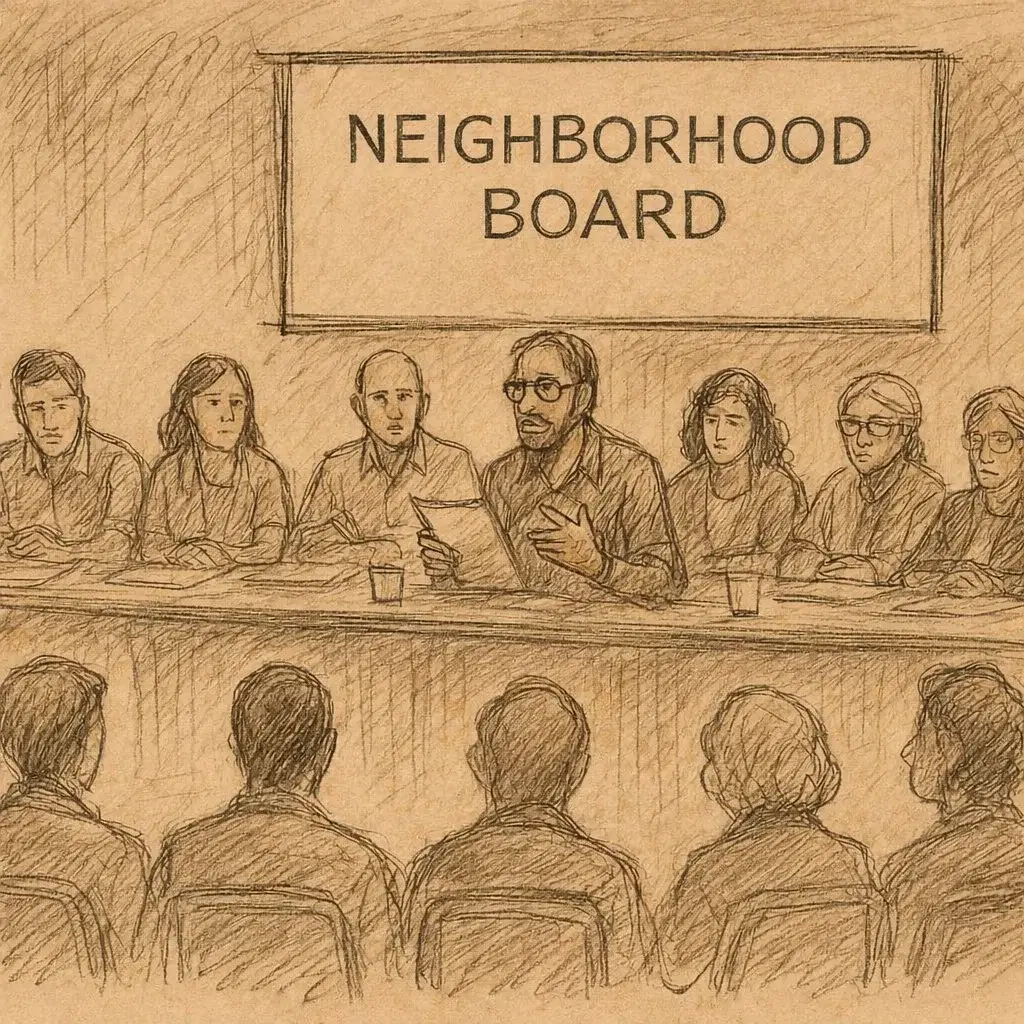
No 32 Waimānalo Neighborhood Board Regular Meeting October 2026
Listen to this article:
32 Waimanalo Neighborhood Board Meeting – October 14, 2026
Storm and Electrical Safety
Following an earlier public-safety update, the board asked that the November meeting include practical guidance for residents during storms and power outages. The requested outreach would cover precautions such as safely powering down a home, determining whether and when to switch off circuit breakers, and protecting household electrical systems until service is restored. The responding captain agreed to gather recommendations and return with safety tips at a future meeting.
Honolulu Police Department
Corporal Santiago reported Honolulu Police Department statistics for September for the district extending from Turtle Bay to Sea Life Park. The district recorded one motor vehicle theft, unchanged from the previous month; three burglaries, up from zero; one theft, down from five; one unauthorized entry into a motor vehicle, unchanged from one; and no robberies in either September or the preceding month. No board or community questions were raised.
Ocean Safety Operations and Rescues
District 2 Lieutenant Aka Tamashiro reported Ocean Safety activity for the zone extending roughly from Hawaiʻi Loa Ridge through the Kailua side of Marine Corps Base Hawaiʻi, with occasional assistance in Kāneʻohe Bay. During September, lifeguards conducted approximately 22,000 preventive actions and 84 rescues. Sandy Beach accounted for about 48 rescues between its two towers, primarily on the shore-break side, while Makapuʻu had 10 rescues. Conditions were influenced by continuing south swells associated with El Niño and east swells generated by hurricanes and tropical storms. Many emergency calls involved bone, spinal, ankle, and knee injuries at Sandy Beach. Rescue and prevention activity at Waimānalo temporarily declined while the park was closed, although the lifeguard tower remained staffed because beach and ocean access continued. Ocean Safety welcomed the reopening of the park.
Waimānalo Near-Drowning Response
Ocean Safety responded to a near drowning involving a 73-year-old man near the beach-lot area of Waimānalo. A bystander initially helped the man out of the water, after which personnel from both nearby lifeguard towers and Lieutenant Tamashiro responded. Emergency Medical Services transported the patient. Ocean Safety credited the bystander and responding agencies for the successful intervention.
Lifeguard Tower Break-In and Equipment Security
Waimānalo Beach Park Tower 6 Alpha was broken into on September 17. Stolen equipment included a new iPad, a public-safety radio and charger, a solar panel, and a solar battery pack used to power electronic equipment. Attempts to locate the iPad through the Find My application were unsuccessful. The estimated loss was between $5,000 and $6,000, including an iPad worth roughly $1,000, a radio system likely worth several thousand dollars, and nearly $2,000 in solar equipment. Ocean Safety notified people in the surrounding community and nearby tents that the specialized equipment had little practical use outside the department and could be returned without repercussions, but staff believed recovery was unlikely. A backup radio restored tower communications within about 30 minutes, while the missing iPad prevented staff from entering statistics for that day and the following day. Administrators obtained a new iPad and replacement radio by late afternoon the next day.
Lifeguard Equipment Storage and Kailua Facility
Following the break-in, Ocean Safety began storing tower equipment overnight in a room behind the Waimānalo Beach Park restrooms. The room’s unreliable electrical service creates about a 50 percent chance that charging equipment will fail, potentially leaving radios without power the next morning. This storage arrangement will also be disrupted when the comfort station is demolished and refurbished, a project expected to begin within approximately the next year. Ocean Safety is preparing to occupy a long-planned Kailua building that has been under discussion for decades. Staff expected to move in by the end of October and hoped to have the facility fully operational during the first week of November. Ocean Safety confirmed that it has a City budget line, with its chief generally submitting budget requests around March before the new fiscal year begins in July.
Division of Conservation and Resources Enforcement
No representative from the Division of Conservation and Resources Enforcement was present, so no DOCARE report was provided.
Water Main Conditions and Outage Conservation
The Board of Water Supply reported no recorded water-main breaks in Waimānalo during September. Its October public message focused on the relationship between electricity and water service. During an outage, the agency has limited ability to pump groundwater from wells into elevated reservoirs and tanks, so the community must rely largely on water already in storage. Residents were asked to restrict use to essential cooking, drinking, and personal-hygiene needs and postpone vehicle washing, pool filling, and yard irrigation. Conservation should continue after electricity returns so pumps can refill reservoirs and normalize pressure. Customers may temporarily see bubbles or white, soapy-looking water caused by air in the lines; flushing the water should clear it.
Watershed Planning and Water Infrastructure Information
A board member asked when the Koʻolaupoko Watershed Management Plan will next be updated, whether it operates on a 10- or 20-year cycle, and what water-system upgrades are planned for Waimānalo. The Board of Water Supply representative agreed to refer the questions to engineer Barry Usagawa. A resident also requested information about obtaining maps of existing pipelines and water mains. Possible resources discussed included Board of Water Supply property and service records, Honolulu’s GIS data, and maps in the Koʻolaupoko Watershed Management Plan. The representative agreed to determine what detailed water-main information is publicly available. The board noted that GIS shape files may require ArcGIS or similar software to view.
Sources of Waimānalo’s Drinking Water
The Board of Water Supply explained that water is generally pumped from underground aquifers into pumping stations and then into higher-elevation reservoirs. Water subsequently flows by gravity to customers. Because pumps rely on electricity, prolonged outages limit the ability to replace water drawn from storage. The board requested a follow-up report identifying whether any water serving Koʻolaupoko comes from treated surface-water sources and, if so, the approximate proportions supplied by groundwater and surface water.
State Highway Maintenance and Encampments
State Department of Transportation Highways representative Kasey Abe reported that crews had corrected previously identified vegetation overgrowth, a missing sign, and graffiti, with the sign and graffiti work completed on September 23. During a field inspection, he observed that homeless encampments appeared to be spreading from Waimānalo Beach Park toward Makai Pier, although bagged trash made removal easier for maintenance crews. Additional vegetation still needed trimming. In response to an April 13 request from the board chair, State crews installed portable concrete barriers at two unpaved driveways on the makai side of Kalanianaʻole Highway near Kaiona Beach Park and the end of the guardrail system. The barriers are intended to stop vehicles from entering, parking near the beach, and leaving refuse, although people and belongings remained outside the highway right-of-way.
Tinker Road Speed Humps, Repaving, and Costs
DOT provided a cost breakdown for improvements near the Tinker Road intersection. The new speed humps cost approximately $79,000, Tinker Road repaving cost about $67,500, and pavement striping cost approximately $20,125, for a total of $166,625. DOT was still awaiting analysis from its traffic branch regarding a westbound speed hump just beyond the Inoaʻole Stream bridge that residents said was too close to the end of a horizontal curve and therefore in a potential blind spot. The agency was also awaiting information about possible effects on emergency-response times. Permanent edge striping, center striping, and a stop bar at Tinker Road remained incomplete because bad weather and higher-priority projects delayed the contractor, with no new return date established.
Ponding and Possible Expansion of the Tinker Road Project
Residents previously reported that the repaved Tinker Road area may have worsened ponding along the unpaved shoulder during rain. DOT construction staff were considering a request for additional funding to fill potholes and regrade the shoulder, work currently outside the project scope. The agency suggested that Senator Chris Lee and Representative Lisa Marten contact Deputy Highways Director Robin Shishido in support of added funds. An expanded project could repair the shoulder and potentially continue repaving to the Bellows Beach entrance. DOT also asked the City’s Department of Transportation Services to repair a damaged bus-stop sign near the Women’s Community Correctional Center.
Pedestrian Access Near Tinker Road and the Health Center
A board member again raised the poor condition of the makai-side shoulder between Tinker Road and the bus stop near Waimānalo Health Center, noting that it is difficult and unsafe to traverse, especially for people with mobility limitations. DOT explained that the intersection work was designed to help pedestrians cross Kalanianaʻole Highway and use the makai-side route, but uncertainty remained about warning signs and how to prevent pedestrians from becoming trapped where the walkway becomes impassable. DOT agreed to inspect the area and report back.
Crosswalk and Speed-Hump Placement Near Bellows
Residents questioned why a newly installed speed hump near the Bellows entrance was not aligned with an existing crosswalk or constructed as a raised crossing. Discussion clarified that separate humps were intended to slow traffic before vehicles reach the intersection and crosswalk rather than serve as crossings themselves. A resident asked whether one hump could be moved and incorporated into the crosswalk. DOT agreed to consult its traffic branch and provide the rationale and relevant traffic-study information. The board encouraged residents to send DOT exact map pins and photographs so the correct location can be evaluated.
Culvert Fence and Highway Beautification Area
The board reported that a chain-link fence along the makai side of a culvert in the highway beautification area had fallen down. The issue was submitted through the Honolulu 311 system, but responsibility may ultimately rest with either the State DOT or the City, depending on ownership of the culvert. The board planned to forward the report if it was assigned to the State.
Proposed ʻIlauhole Street Emergency Extension
A resident asked about reports of a road behind the Waimānalo Hawaiian Homes Association hālau connecting toward another Waimānalo or Maunawili-area road. A board member speaking from professional knowledge explained that the Waimānalo regional plans identify a proposed ʻIlauhole Street extension intended to improve disaster evacuation and emergency resilience. The conceptual route would continue past the hālau and technology building across Department of Hawaiian Home Lands property to Waikupanaha Street or Place near the Cook Ranch area. The road has not yet reached final approval. It would require DHHL funding, a traffic study, master planning, regulatory compliance, and environmental review open to public comment. If built as a through road on Oʻahu, DHHL would generally construct it to county standards so operation and maintenance could eventually be transferred to the City.
Hīhīmanu Street, Bridge, Flooding, and Potholes
Residents described heavy local use of Hīhīmanu Street as an alternative to congested Kalanianaʻole Highway, particularly when good beach weather brings more visitors into Waimānalo. Concerns included large recurring potholes, flooding after rain, narrow roadway conditions, and a one-lane bridge where vehicles must take turns. Residents asked for more consistent maintenance and consideration of widening the road and bridge so two vehicles could pass. The board clarified that Hīhīmanu is a City roadway rather than a State highway. The one-lane bridge and culverts at both the south end and the north end near Hūimālamōkīkai were already listed as board action topics for possible study and improvements.
Ocean Familiarity, Water Safety, and Youth Training
A community program representative discussed declining youth familiarity with the ocean, citing reduced beach access, busy family schedules, transportation barriers, and children’s growing attachment to electronic devices. Hui Mālama’s forthcoming Nā Kiaʻi Kai program will support children and families in earning CPR, first-aid, and lifeguarding certifications. Existing programming uses a culture-based approach rather than focusing only on formal swim instruction. Children learn to kilo, observe conditions, recognize hazards, identify safe and unsafe swimming areas, travel with companions, and become sufficiently comfortable in the water to avoid panic and remain afloat while awaiting help. The current eight-week session was about to begin, with the next enrollment period expected after the Christmas break for a January session. A resident also reflected on earlier generations learning fishing, throw-netting, net sewing and repair, reef reading, and ocean safety from kūpuna and suggested that these traditional skills could support future programming.
Kaiapuni Education and Lā Kūʻokoʻa Event
A representative of Ke Kula Kaiapuni o Kailua reported from Aotearoa, where she was gathering information for a possible kaiapuni student trip within two to three years. She announced a Lā Kūʻokoʻa event at Waimānalo Beach Park on November 20. Approximately 450 Kailua High School students in grades nine through twelve were expected, along with about 25 community speakers. Although hosted through the kaiapuni program, the event is intended to expand ʻōlelo Hawaiʻi use and Hawaiian perspectives throughout the school. The effort follows three professional-development days delivered in July to approximately 75 teachers and is part of a broader effort to integrate Hawaiian knowledge across the campus. Kailua High has about 765 students, meaning roughly half the school was expected to participate. Community adults were invited to volunteer, learn alongside students, and help connect youth with local experts.
School and College Reports
No representatives were available from Kailua High School, Windward Community College’s arts program, or the University of Hawaiʻi College of Tropical Agriculture and Human Resources, so no reports were presented from those organizations.
Hawaiʻi Job Corps Graduation and Employment
Hawaiʻi Job Corps reported that 27 young adults received high school diplomas during a September 24 graduation ceremony. For some graduates, this was the first high school diploma earned in their immediate family, establishing an example for younger siblings. Job Corps also advertised employment openings at its round-the-clock residential operation, including security officers, recreation advisers, residential advisers, an accounting clerk, a work-based learning specialist overseeing internships, and a career and technical training program manager.
Job Corps Community Service
Job Corps students continued assisting with twice-monthly local food distributions at the Waimānalo gym. In November, culinary students planned to continue a more than 25-year partnership with the Salvation Army’s Thanksgiving luncheon, which serves over 2,000 people who might otherwise lack a holiday meal. Students were expected to prepare 25 turkeys and 50 pounds of rice in coordination with other certified kitchens and restaurants. Students and staff would also serve meals and beverages on Thanksgiving Day, an experience intended to reinforce gratitude for the program’s housing, education, safety, and three daily meals.
Waimānalo Health Center Dental Project Follow-Up
Waimānalo Health Center followed up on questions about its dental clinic project. Anyone interested in reusing materials from the portable dental facility, including possible use on agricultural lots, was directed to Chief Executive Officer Mary Oneha at 808-954-7107. Community feedback can be sent to shareyourmanao@waimanalohealth.org. If construction trenching across the highway encounters iwi kūpuna, the Health Center must stop work, contact the State Historic Preservation Division and Department of Land and Natural Resources, and engage an archaeologist or cultural monitor before proceeding. The Health Center also clarified that its properties at 41-1347 and 41-1295 are leased from DLNR under a 65-year lease beginning January 1, 2015, and ending December 31, 2079.
Breast and Cervical Cancer Screening
For Breast Cancer Awareness Month, Waimānalo Health Center encouraged breast self-examinations and annual mammograms beginning at age 40. Its Breast and Cervical Cancer Control Program can help uninsured or underinsured women ages 40 through 64 obtain screening services. Residents seeking assistance were directed to Auntie Luana at 808-954-7147.
Hui Mālaʻai Village and Pono ʻOluʻolu Outreach
Pono ʻOluʻolu thanked participants in recent community and homestead association meetings concerning the Hui Mālaʻai Village development. The organization planned to appear before the Department of Hawaiian Home Lands on October 20, present to the Hawaiʻi Kai Neighborhood Board on October 27, seek time before the Kailua Neighborhood Board on November 5, and request another Waimānalo Homestead Association presentation. Its goal is to explain the development concerns to neighboring communities, encourage collaboration, and build support for further government review.
Emergency-Proclamation Certification Concerns
Pono ʻOluʻolu presented research into whether Hui Mālaʻai Village construction was properly authorized under the governor’s homelessness emergency proclamation. The group said the proclamation does not automatically exempt every kauhale development from ordinary State and county law. Under rules in place from the fourth proclamation in May 2023 through the twenty-fifth proclamation in September 2026, Section 3 limits exemptions to projects certified by the governor’s homelessness coordinator. Section 4 requires project information and review addressing development plans, drainage, construction methods, funding, community input, environmental effects, historic preservation, and floodplain management. Identified adverse effects must still be addressed through standard State development processes. Section 5 requires a fully executed development agreement, filing of a memorandum with the Bureau of Conveyances or Land Court, and public posting of the agreement before a project is considered certified.
Missing Development Agreement and Recorded Memorandum
The State Office on Homelessness and Housing Solutions supplied Pono ʻOluʻolu with a document titled “Certification of Hui Mālaʻai Village Construction Project,” dated August 17, 2026, and signed or acknowledged August 18. However, the group said it did not receive the fully executed development agreement or evidence that the required memorandum had been recorded. A personal search at the Bureau of Conveyances did not locate the memorandum. Pono ʻOluʻolu therefore asked when certification was legally completed, where the development agreement is posted, and what recording number applies. The group also reported being told that the State website had not yet been updated with project agreements required under the proclamation.
Construction Before Certification and Phase Boundaries
Residents said imported fill, backfilling, grading, and berm construction occurred before the August 2026 certification letter. Pono ʻOluʻolu questioned what legal authority permitted that work and whether normal grading, environmental, zoning, and construction approvals were obtained before emergency exemptions could apply. It also questioned whether work in both phases was included within the approved scope. Residents had been told the emergency proclamation covered a proposed second phase toward ʻAlaʻihi Street, yet they observed extensive fill and a large earthen berm in the original first-phase area along Hīlo Street. At an October 6 community meeting, homelessness coordinator Jun Yang reportedly said he had not known about first-phase backfilling and berm construction and that it should not have been occurring.
Flooding, Dust, Cultural Resources, and Archaeological Monitoring
Agricultural and homestead neighbors reported redirected stormwater, standing water, flooding, property damage, construction dust, health concerns, and possible disturbance of culturally significant areas. Pono ʻOluʻolu said State Historic Preservation officials had determined there was insufficient archaeological information for the rear parcel and required an archaeologist to be present during earth-moving work, with reports submitted to the division. The group stated that an attached archaeological report was not completed until March 10, 2026, even though residents believed grading, fill, and wall construction had already begun. The organization thanked Uncle Gary Silva for providing access to an existing cave and announced plans for further discussion concerning cultural preservation. Beneficiaries needing help filing complaints were invited to contact Pono ʻOluʻolu, while technical and subject-matter experts were invited to assist its research.
Project Funding and Public-Records Requests
Pono ʻOluʻolu identified a reported $3 million contract with the AIO Foundation covering July 2024 through July 2026, predating the August 2026 certification letter, and a separate lease or contracting record involving $1.5 million in 2025. The organization requested records dating from 2015 to the present from numerous agencies concerning permits, zoning, grading, building approvals, cultural reviews, environmental analysis, and the project’s decision-making timeline. Some agencies did not respond, while others provided heavily redacted emails showing only names and dates. The Department of Hawaiian Home Lands was described as the most responsive agency and had initiated beneficiary complaint and investigation procedures. A board member advised the group to refer untimely or inadequately explained redactions to the State Office of Information Practices, which can review agency compliance with the Uniform Information Practices Act.
Requested Pause and Further Government Review
Pono ʻOluʻolu said it intends to seek a pause in construction until the project’s certification, permits, development agreement, recorded memorandum, drainage reviews, archaeological requirements, and legal authority are independently verified. The group also wants another public meeting involving the governor and relevant agencies. Board members advised that any proposed resolution should clearly define the requested outcome, include supporting evidence, avoid duplication, and be delivered early enough for members to review under Sunshine Law constraints. The chair explained that agenda material is due by the first Monday of each month at approximately 9 a.m. and asked proponents to submit actionable language by the final Friday of the preceding month.
Military Installation Reports
No reports were presented from Bellows Air Force Station, Marine Corps Base Hawaiʻi, or the Hawaiʻi Army National Guard.
Hunānāniho Camping and Land Conservation Workshop
Councilmember Esther Kiaʻāina reported that Hunānāniho Beach Park had reopened and that camping would resume on October 16, with the online permit portal already available. Materials from a September 29 land-conservation workshop were posted on her website, and ʻŌlelo Community Media was scheduled to rebroadcast the workshop on Channel 49. The meeting also discussed upcoming Honolulu Charter Commission outreach at Windward Community College.
Waimānalo Pump Track
The Councilmember’s office continued discussions with the Department of Parks and Recreation, 808 Skate representative Chuck Mitsui, the Parks and Recreation Board, and Aho Nui Works concerning the proposed Waimānalo pump track. Rising construction and infrastructure costs have increased the project estimate, so the partners planned to reassess costs and determine whether the scale of the project must be reduced.
Honolulu Charter Amendments
Councilmember Kiaʻāina urged residents to review the 20 proposed charter questions, particularly Questions 13 and 14 concerning the Clean Water and Natural Lands Fund. Question 13 would allow the fund to support historic preservation of buildings and structures located on property acquired through the fund, expanding beyond land protection alone. Question 14 would increase the amount available for maintenance from 5 percent to 10 percent. The Councilmember supported both measures. She explained that projects on State-owned DLNR land would not be eligible for direct acquisition through the fund, although a nonprofit and DLNR might potentially pursue a memorandum of agreement to restore an important cultural site such as a cave.
Proposed Return of Bellows Air Force Lands
Councilmember Kiaʻāina announced plans to introduce a City Council resolution urging the United States to return the lands used by Bellows Air Force Station to the people of Hawaiʻi. The draft intentionally would not specify whether the land should go to the Department of Hawaiian Home Lands, Office of Hawaiian Affairs, City parks, or another entity, leaving that question for broader public discussion. She anticipated a hearing on October 22 at 9 a.m. and invited Waimānalo residents to participate.
City Road Priorities and Hīhīmanu Coordination
The board asked the Councilmember to support funding for City roadway improvements, particularly Hīhīmanu Street. She responded that the request needed greater specificity and a designated board or community lead. She proposed meeting with a point of contact and driving the roadway to identify exact trouble spots, while also reviewing existing capital-improvement projects that might overlap. She noted that funding had already been secured for certain speed-hump work and agreed to provide a broader update on Waimānalo capital projects.
Waimānalo Beach Park Restrooms
Community members raised concerns about inadequate restroom conditions at Waimānalo Beach Park, especially during large events such as the regatta and in advance of the November student gathering. Reports included only one functioning toilet and overflowing facilities near the pavilion. Councilmember Kiaʻāina said the comfort-station project was expected to begin in the following year and agreed to obtain a construction timeline from the Department of Design and Construction. She also committed to pressing the administration and Department of Parks and Recreation for better maintenance and staffing during major events.
Hawaiʻi Relief Program
Representative Lisa Marten highlighted the Hawaiʻi Relief Program for low- and moderate-income households with at least one child that have experienced a financial setback, such as job loss or a family medical problem. Qualifying households may obtain substantial assistance covering as many as four months of rent, utilities, and vehicle payments. The program uses Temporary Assistance for Needy Families reserve funds, remains open, and is not restricted solely to the lowest-income households.
Small-Business Recovery Grants
Representative Marten also announced grants for businesses affected by the Kona low-pressure storm system. Microenterprises may qualify for grants of up to $5,000 and small businesses for up to $10,000. Agricultural businesses are excluded, although a nonagricultural enterprise operating on agriculturally zoned land may still qualify.
Conservation District Rule Changes
The Department of Land and Natural Resources’ Office of Conservation and Coastal Lands is proposing amendments to administrative rules governing conservation-district land use and permitting, including beach and marine areas. Proposed changes address drones and other new technology, shoreline hardening, coastal hazards, strengthened conservation criteria, simplified permits for minor activities, restoration of structures, and streamlined treatment of loko iʻa. Public meetings were planned for Windward Community College and DLNR’s downtown office, with opportunities for oral and written comments.
Speed Humps on ʻOluʻolu and Lōmilo Streets
Representative Marten reported progress on speed humps for ʻOluʻolu Street. State DOT was expected to perform the work without charging DHHL directly, although taxpayer-funded crews would still carry out the project. A proposed plan was expected shortly, after which residents of the street would be consulted. DHHL offered to help notify homesteaders through direct postcard mailings. A separate request for speed humps on Lōmilo Street falls under the City’s process, which generally requires a petition signed by a specified percentage of street residents; long-term renters may qualify to sign, while short-term vacation renters would not.
Grid Resilience and Disaster Recovery
Governor Josh Green’s representative, Randy Jung, followed up on the requested update concerning an $11.9 million grid-resilience and hazard-mitigation project for Windward Oʻahu, including Waimānalo. The Hawaiʻi Emergency Management Agency and State Energy Office were aware of the request but could not provide details in time for the meeting. The representative agreed to connect the chair and vice chair directly with those agencies. He also reported that the State was assessing roughly $1 billion in recovery and resilience needs associated with several recent disasters, including reported figures of $463 million from Kona low-pressure storm damage, $1.5 million from a Hawaiʻi Island earthquake, $108 million from Hurricane Lala, and $112.4 million from Hurricane Lowell.
Hybrid Reef and Invasive-Species Mapping
The State Department of Transportation launched a hybrid reef project in Kailua using large concrete reef modules to test a nature-based form of coastal protection. The Department of Agriculture and Biosecurity also introduced an interactive mapping dashboard that allows residents to track control efforts for invasive species, including little fire ants, coconut rhinoceros beetles, and coqui frogs.
Waimānalo Beautification Project Inquiry
A resident asked who authorized the Waimānalo Beautification Project and at what meeting it was discussed, approved, or formally authorized. The governor’s representative did not have the information available and agreed to investigate and report back.
Congressional Update
Congresswoman Jill Tokuda’s written report stated that she voted for a short-term continuing resolution funding federal agencies through December 11, 2026, while Congress negotiates full-year fiscal year 2027 appropriations; the President signed the measure on September 2. She introduced the Rural Emergency Hospital Designation Improvement Act, participated in a House Democratic affordability roundtable concerning food and consumer costs, and again introduced a resolution recognizing Native Hawaiian history, culture, contributions, and the federal trust responsibility during Hawaiian History Month. She surveyed storm damage on Hawaiʻi Island after Hurricane Lala and on Kauaʻi after Hurricane Lowell, supported emergency declarations, led a bipartisan House Agriculture Committee delegation reviewing agriculture, biosecurity and aquaculture, assisted Hawaiʻi Foodbank activities, and held a statewide telephone town hall on Social Security, veterans benefits, housing, affordability, voting rights, and immigration enforcement. Her office was also pursuing Postal Service accountability in disaster-affected areas and working to ensure tariff refunds reach consumers.
September Meeting Minutes
No amendments were offered to the September 14, 2026 regular meeting minutes, and the board allowed them to proceed for completion.
Resolution Supporting a Hui Mālaʻai Community Town Hall
The board considered a resolution supporting a community town hall concerning Hui Mālaʻai Village. Because an October 6 meeting had already occurred, members debated whether the resolution should merely memorialize support for that meeting or seek a follow-up session to answer unresolved questions. The board amended the measure to acknowledge the October 6 meeting, require compliance with Hawaiʻi Revised Statutes Chapters 343 and 6E, request project-specific flood-mitigation, drainage, and engineering reviews tied to the relevant tax-map key, and seek a determination of infrastructure capacity involving water, roads, schools, health services, and electrical systems. Members removed a clause concerning individual DHHL beneficiaries to protect privacy and added support for pausing development until outstanding issues are addressed. The amended resolution passed unanimously.
Pono ʻOluʻolu Resolution Deferred
A second resolution from Pono ʻOluʻolu sought a limited project pause, independent verification, and an urgent governor-led Waimānalo town hall before further expansion. Members debated how to define a “governor-led town hall,” whether it could legally make administrative decisions under Chapter 91, and which agencies should attend. Suggested participants included the Governor’s Office, DLNR, Department of Human Services, State Office on Homelessness and Housing Solutions, DHHL, State Historic Preservation Division, City Department of Planning and Permitting, Department of Environmental Services, Honolulu Fire Department, and Board of Water Supply. Members emphasized that a town hall normally gathers information but is not itself a decision-making body like the Board of Land and Natural Resources. Because the proposal needed clearer objectives and less duplication with the resolution already adopted, the board unanimously deferred it to November for revision.
Letters on Parks, Native Trees, Energy, and Water Systems
The board unanimously authorized preparation of a letter to the Department of Parks and Recreation addressing three agenda items related to native trees. It also unanimously approved sending an invitation to the Natural Energy Laboratory of Hawaiʻi Authority and taking action on two previously discussed water-system matters. The transcript did not state the full wording of those agenda items, but all associated votes were recorded without opposition.
Board Administration and Next Meeting
Members who had not completed their required Sunshine Law review were told they would receive follow-up emails. The next Waimānalo Neighborhood Board meeting was scheduled for Monday, November 9. Meeting broadcasts were announced for ʻŌlelo Channel 49 on the fourth Monday of each month at 9 p.m. and on the first and third Saturdays at 3 p.m. Upcoming public bodies noted included the Oʻahu Historic Preservation Commission, Honolulu Charter Commission, and Board of Land and Natural Resources. The vice chair closed by encouraging residents to vote. After a final attendance clarification, the board corrected the recorded totals for its unanimous actions to 11 ayes, zero nays, and zero abstentions. The meeting adjourned at 10:02 p.m.