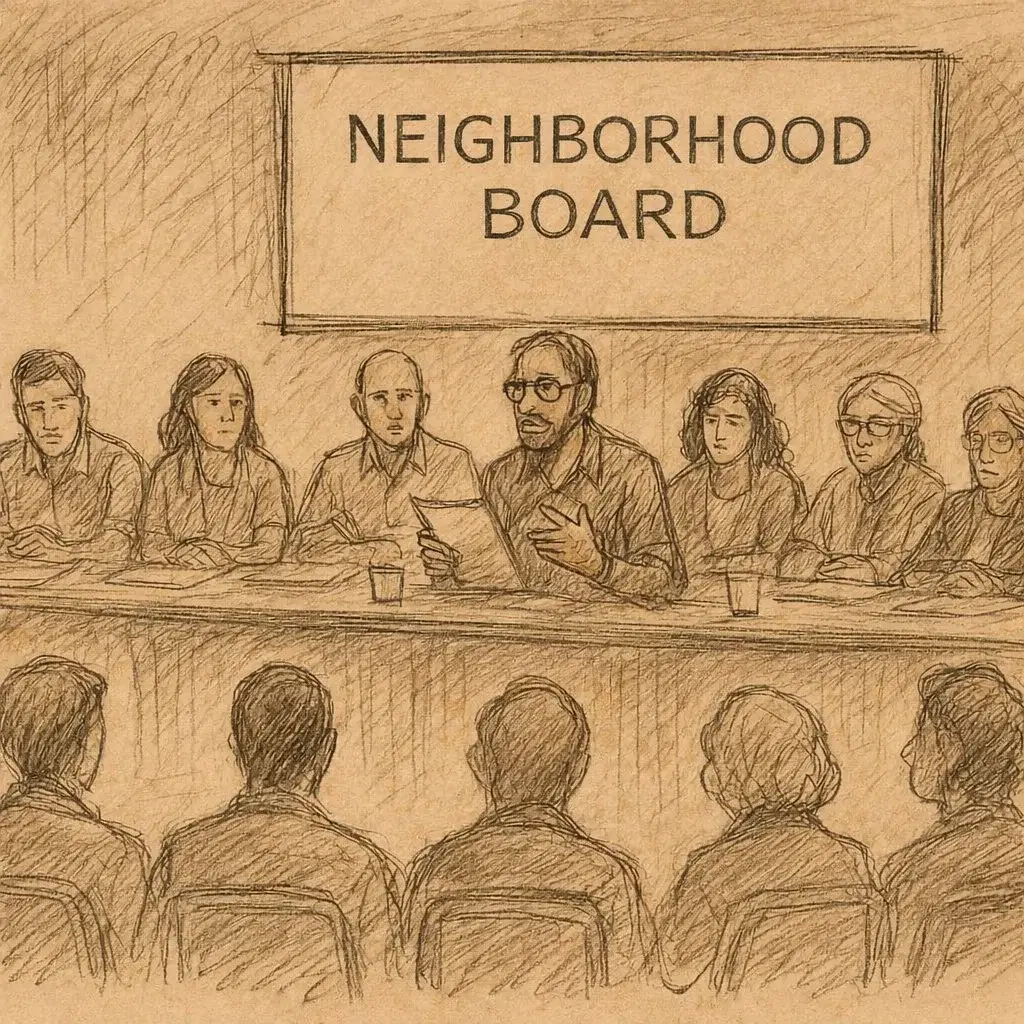
No 32 Waimānalo Neighborhood Board Regular Meeting September 2026
Listen to this article:
32 Waimanalo Neighborhood Board Meeting – September 15, 2026
Hawaiian History Month and Board Vacancy
A youth member of the board noted that September is Hawaiian History Month and shared that students connected with the Hawaiian-language immersion community had recently visited the Liliʻuokalani Trust in recognition of Queen Liliʻuokalani’s birthday. The board then addressed its vacant at-large seat. Waimānalo Neighborhood Board No. 32 is authorized for 13 members but currently has 12 seated members. Any resident interested in serving must attend a meeting and provide proof of residency or contact Neighborhood Board Assistant Melissa in advance for verification. No candidates volunteered during the meeting, and residents were encouraged to contact board leadership if they or someone they know has the interest and capacity to serve.
Honolulu Fire Department
Captain Dave Schubert of the Waimānalo Fire Station reported that August generated 39 medical calls, six nuisance fires, four activated alarms, one brush fire, and one ocean rescue. The department’s monthly safety message focused on the increasing number of fires involving lithium-ion batteries in smartphones, laptops, e-bikes, e-scooters, power tools, toys, and vehicles. Residents were advised to use manufacturer-approved chargers, charge devices on hard and flat surfaces, unplug fully charged equipment, charge larger items outdoors when possible, keep charging equipment away from exits, and immediately stop using batteries that become unusually hot, swell, leak, smell strange, smoke, hiss, or pop. Travelers were advised to keep charging devices visible on aircraft and not charge vapes or e-cigarettes in flight. The department also announced its Fire Prevention Week Family Day, themed “Charge into Fire Safety,” for October 3 from 10 a.m. to 2 p.m. at the Honolulu Zoo.
Crime and Traffic Safety
The Honolulu Police Department reported generally lower crime totals in August than in July. Motor-vehicle theft increased from zero in July to one in August, burglaries remained at zero, thefts declined from seven to five, unauthorized entries into motor vehicles declined from two to one, and robberies fell from four to zero. HPD also reported three traffic fatalities from January through August 2026 in the local reporting area, compared with 14 during the comparable 2025 period. Broader figures cited by the officers showed fatalities falling from 59 in 2025 to 25 in 2026 and critical motor-vehicle collisions declining from 35 to 25. Police attributed part of the improvement to increased enforcement and education during the “100 Deadliest Days” between Memorial Day and Labor Day, when patrol officers increased traffic stops, laser speed enforcement, vehicle pacing, and public outreach.
HPD emphasized pedestrian and driver behavior. In 2025, police recorded 19 pedestrian fatalities and 10 critical pedestrian incidents, with many victims outside crosswalks. Officers urged pedestrians to use marked crossings and asked drivers to slow down, wear seat belts, watch for pedestrians, and avoid cell-phone use. They warned that individual speeding contributes to a faster overall traffic flow, turning a 35-mile-per-hour roadway into traffic moving at 45 or 50 miles per hour and potentially pushing traffic on a 50-mile-per-hour roadway toward 65. Captain Mike Campbell later clarified that the Windward Coast had experienced three fatalities in 2026 compared with approximately 18 by the same point in 2025. One involved a lone driver who struck a tree, while the other two remained under investigation.
Beach Driving Enforcement and Police Talk Story
Captain Campbell said HPD was paying close attention to resident complaints about vehicles driving on beaches. Patrol officers had issued numerous warnings and several citations, and police were prepared to escalate enforcement if the conduct continued. HPD considers beach driving unsafe and recognized its contribution to beach erosion and impacts on honu and other coastal resources. Police believed many offenders were coming from outside Waimānalo and said they were initially trying to resolve the behavior through education and warnings before using stronger enforcement. The community was also invited to a talk-story session with the Honolulu police chief on September 17 from 6 to 8 p.m. at the Waimānalo Hawaiian Homes Association hālau, with food and refreshments provided.
Hūnānāniho Vandalism and After-Hours Safety
A board member raised serious concerns about vandalism at Hūnānāniho, particularly in the comfort stations. Five newly installed toilets reportedly were destroyed within days, continuing a pattern of damage near the side of the park closest to McDonald’s. The member requested that officers who wait for calls near the elementary school instead periodically stage at the Hūnānāniho entrance, especially at night, to deter illegal, violent, and destructive activity. Park staff have reportedly sought stronger gate security, but locks continue to be broken. Captain Campbell said he had not previously been aware of the extent of the vandalism, and Officer Anami recorded the request for follow-up.
Ocean Safety Conditions and Rescue Activity
Waimānalo Ocean Safety Lieutenant Aka Tamashiro reported 73 rescues during the previous month, with most occurring at Sandy Beach and Makapuʻu. Waimānalo Beach Park also experienced a sharp increase in rescues because two persistent rip currents form in front of the field. Lifeguards are directing families, especially those with young children, to the right or Makapuʻu side of the beach park tower and farther toward Kaiona, where conditions are generally safer. Ocean Safety recorded just under 4,000 minor medical treatments, ranging from bandages to care for possible broken ankles that did not require an ambulance, and nearly 23,000 preventive contacts from Sandy Beach through Kalama Beach Park. Sandy Beach and Makapuʻu remained the primary hot spots, while Waimānalo Beach Park, Kaiona, and Hūnānāniho were becoming increasingly busy. The beach park parking lot was reportedly filling as though every day were a weekend.
Ocean Safety also assisted distressed kayakers and swimmers around the Mokulua Islands and Lanikai. Several medical emergencies occurred during paddling practices. Waimānalo coach Duke suffered a heart attack but was revived through coordination among Ocean Safety, the Fire Department, and EMS and had returned to walking around at practice. Another paddler, described as just under 50 years old, died during a Lanikai-area practice, and an additional emergency involved a paddler in his 80s. Tamashiro encouraged older or medically vulnerable paddlers to remain mindful of their physical limits and stay closer to locations where emergency response can arrive quickly.
Shark Sightings, Stranded Vessel, and Storm Operations
Ocean Safety reported increased shark activity islandwide, including more sightings in shallow water. Lifeguards assess whether a reported shark is behaving aggressively or simply passing through and post warning signs when sharks are feeding or otherwise displaying concerning behavior. A recent widely shared incident involved an 18-year-old surfer at China Walls whose board’s tail was bitten by a large shark; the surfer was not injured. Ocean Safety also responded when a roughly 26-foot, partly homemade boat suffered mechanical trouble outside the reef and washed ashore near the beach lots. A rescue watercraft checked the occupants, brought them safely ashore, and directed them to contact insurance and other appropriate parties; no one was injured.
Hūnānāniho had been closed for approximately a week for tree trimming after a community member died from being struck by a falling branch, and Ocean Safety understood that the closure would continue at least through the following day, subject to confirmation by the Department of Parks and Recreation. Tamashiro also explained that during hurricanes or other severe-weather events, closed lifeguard towers do not necessarily mean lifeguards are absent. Personnel may be removed from exposed towers for their own safety while continuing mobile patrols, particularly when the public has been instructed to remain home.
Tour Buses, Weddings, and Illegal Commercial Activity
Residents and Ocean Safety personnel continued to report tour buses, weddings, and other commercial activities at Hūnānāniho and nearby parks. Ocean Safety does not have legal authority to enforce commercial-use restrictions, so residents were advised to call 911, identify the matter as non-emergency, and report what they observe. The board encouraged continued reporting so that agencies can establish a documented pattern and generate enforcement data. A board member also renewed the request for a clearer sign stating that commercial activity is prohibited and listing the applicable laws. Councilmember Esther Kiaʻāina clarified that Public Utilities Commission complaints should be made when licensed tour vehicles enter prohibited park areas, HPD should be called for commercial activity inside parks, and either DLNR or HPD may be contacted for unpermitted commercial activity on beaches.
Board of Water Supply
The Honolulu Board of Water Supply recorded one water-main break in August, involving a six-inch main on Kalanianaʻole Highway installed in 1950. The agency promoted the “Imagine a Day Without Water” event on September 26 from 9 a.m. to 1 p.m. at the Ark of Safety Church in Waiʻanae. Twenty-five city, state, and nonprofit organizations were expected to offer interactive exhibits, educational displays, games, prizes, rain-barrel giveaways, and food for purchase. The event was organized around the “One Water” concept, which treats all forms of water as connected resources that should be managed together.
The agency also followed up on a resident’s question about why tap water sometimes arrives cold. Water in the storage tank is not mechanically chilled; its temperature at the tap depends on outdoor temperature, pipe depth, and other conditions between the tank and the home. The Board of Water Supply had not yet received an answer to a separate question about whether construction personnel at the Hui Mahiʻai development were aware of caves in the area and agreed to report back.
Storm Cleanup and Fallen Trees
Mayor Rick Blangiardi’s representative, Director Laura Thielen, said recent storms had caused an unprecedented number of fallen trees in Waimānalo. City crews prioritized reopening roads and driveways, removing trees from vehicles, and addressing trees that created immediate hazards in parks and other public areas. Lower-priority debris was being cut up and temporarily left in place or marked off while crews handled urgent conditions. Recovery was interrupted by Tropical Storm Lowell, and the city asked for patience as the cleanup continued.
Oluʻolu Street Speed Mitigation
Director Thielen addressed requests for speed humps or speed tables on Oluʻolu Street. Because the roadway is on Department of Hawaiian Home Lands property, the city can perform routine maintenance but will not initiate capital improvements on land it does not own. She said DHHL could request assistance through the State Department of Transportation, after which the state and the city’s Department of Transportation Services could coordinate design and installation. A DHHL employee noted that this arrangement differs from other counties, where DHHL may dedicate roads to a county and work directly with county agencies on improvements. Thielen agreed to provide contact information and relay that concern to city transportation officials.
State Representative Lisa Marten later explained that residents have repeatedly reported speeding, cut-through traffic, moped riding, and e-bike riders performing wheelies on Oluʻolu Street. She had asked State DOT to use its in-house speed-hump crew, which is generally faster and less expensive than city contracting. It remained unclear whether additional DHHL funding would be required; if so, she intended to seek a specific appropriation in the 2027 budget. Before installation, she wanted residents on Oluʻolu Street consulted on whether they support the project, how many speed humps should be installed, and where they should be placed. She also asked that any design meet city standards in case the city assumes responsibility for the road in the future.
Waimānalo Beach Park Comfort Station
The city reported that replacement or repair of the Waimānalo Beach Park comfort station remains in the preliminary design phase. Construction is projected to begin in fall 2027 and take approximately 250 to 270 calendar days. Board members expressed frustration because the campground bathrooms have been intermittently unusable since around 2019 and asked how campers are expected to meet sanitation needs in the meantime, whether they must supply portable toilets, and whether camping fees or procedures have changed. Director Thielen agreed that the delay presents a public-health and safety problem and said she has urged the Department of Design and Construction to develop standardized small, medium, and large beach comfort-station designs so aging facilities can be replaced more quickly instead of being redesigned from the beginning each time.
Park Ranger Program and Ordinance 22-3
Director Thielen confirmed that commercial activities, including tour-bus operations, are prohibited at Hūnānāniho and said the city was working with Corporation Counsel on accurate language for improved signs that can support enforcement. The Parks Department has funding for five contract “rangers,” but they do not have law-enforcement powers, radios, equipment, or direct police backup. Two teams of two circulate among island hot spots during alternating shifts, documenting commercial activity, informing operators about the law, directing them to legal locations, and serving as potential witnesses for HPD. They have received HPD de-escalation training and are instructed to withdraw from dangerous or confrontational encounters.
A board member asked how park staff and residents can contact the rangers, and Thielen offered to connect the community with the program supervisor. The board also requested a fuller explanation of Ordinance 22-3, including all covered parks and coastal easements rather than only Hūnānāniho. The chair recalled that the ordinance and the present ranger concept grew out of Bill 38 and discussions centered on illegal commercial activity in Waimānalo and Kailua. The city was asked to report how many of the five contract employees are from Waimānalo and what cultural and historical training they receive. The board stressed that rangers working in Waimānalo should understand the host culture, community history, local trauma, and relationship to the ʻāina, rather than viewing the role solely as removing commercial operators.
State Highway Maintenance and Safety Projects
State Department of Transportation representative Casey Abe reported that previously identified overgrowth had been cut back and missing signs replaced by September 4. New inspections found additional low branches and vegetation obstructing bicyclists on paved shoulders, another missing sign, and trash bagged near guardrails by people living in roadside encampments. Abe said maintenance crews would address those conditions and thanked encampment occupants for bagging trash in a way that makes removal easier.
New speed humps had been installed on both sides of the Tinker Road intersection, and crosswalk markings that were missing at the prior meeting had since been added. Permanent edge striping, centerline striping, and the Tinker Road stop bar still remained unfinished. DOT had not yet answered questions about whether the westbound speed hump just beyond the Inahole Stream Bridge is too close to a curve and in a driver’s blind spot, how the humps may affect emergency-response times, or the project’s total cost. Abe agreed to continue seeking answers.
DOT estimated that the newly paved portion of Tinker Road extends more than 100 feet from the Kalanianaʻole Highway edge line. The agency was still seeking a right-of-way map to determine the precise state boundary and to evaluate whether paving had worsened rainwater ponding along the unpaved shoulder. Abe also cited Hawaiʻi Revised Statutes Section 264-101, which prohibits vending from vehicles or structures within a highway right-of-way without authorization from the transportation director. He said the board could adopt a resolution identifying desired locations for “No Vending” signs, as another Windward board had done. The chair requested a complete review of the underlying land title and how the land was conveyed before enforcement decisions are made, particularly where DHHL beneficiaries may be operating on Hawaiian Home Lands. Abe agreed that safety and fair enforcement require clarity about ownership and jurisdiction.
Red-Light Camera Program
Abe reported that the state’s two-year red-light camera pilot ended in December 2024 and became permanent in January 2025 under Hawaiʻi Revised Statutes Section 291J-2, which permits both the state and counties to establish permanent programs. The pilot cost approximately $92,000 per month for 10 intersections, excluding the additional costs of police review and Attorney General involvement when citations were contested. The equipment can also identify vehicles speeding through intersections. DOT was still awaiting more information from the program manager about the permanent system and its speed-detection capabilities.
Mālama Honua Public Charter School
Mālama Honua Public Charter School reported an active opening to the school year. Eighth graders participated in a waʻa camp intended to build relationships, hear from community mentors, explore careers, and prepare for their final school defense and transition from the school. They also prepared cover letters and résumés and interviewed with community partners for internships focused on service to the community. Seventh graders began junior lifeguard training in first aid, CPR, pool safety, and ocean safety, while third- and fourth-grade students received swim lessons through a YMCA partnership and grant.
Fifth graders began preparing for their own defense through a mōʻi walk in downtown Honolulu and Waikīkī, visiting culturally significant places and learning how Hawaiian monarchs used leadership, voice, and advocacy. Students also visited an art exhibit illustrating how art communicates culture and history. The school planned its Piko Waena seasonal observance for September 18. Student-led conferences were scheduled from September 22 through October 1, with dismissal at noon each day. Mālama Honua would have no school on October 2 because weekend family and hōʻike activities are built into its calendar, followed by fall break from October 5 through 9.
Hui Mālama o Ke Kai Programs
Hui Mālama o Ke Kai reported that clearing along Hihimanu and construction of a covered deck for educational and community gatherings would be completed during the school year, with contractors secured and the final timeline under development. Repairs and re-thatching of the organization’s hale were underway, and community volunteer days would be announced. Planning and permitting also continued for a school facility in partnership with Mālama Honua Public Charter School.
The organization’s fall intersession program for grades five through 12 was scheduled for October 5 through 9, followed by the after-school Kūkulu program in mid-October. A pilot Ocean Safety Cohort for youth ages 15 to 20 would provide certifications, mentoring, and internship opportunities, with informational meetings scheduled that week. Interest forms were open for all three programs. The organization also encouraged Hawaiʻi residents to visit participating cultural sites, where admission is free with valid state identification and parking costs one dollar. Its first Kaiāulu event, a Lā Waʻa program in partnership with Kānehūnāmoku, was scheduled for October 3 and would feature canoe, stewardship, and wayfinding education.
Windward Community College
Windward Community College announced a family-oriented Paniolo Barbecue on campus from 10 a.m. to 2 p.m. the following Saturday. Most activities, games, horse rides, entertainment, and family programming would be free. Food offerings included five-dollar chili plates and fifteen-dollar barbecue plates, and entertainment was to include hula hālau, a bluegrass group, Hawaiʻi Loa Herbley’s band, and Kamuela Kimokeo and Sons.
The college also reported its largest incoming class from Windward public and public-charter schools in five years. Students receiving Hoʻolei scholarships for their first year would have those scholarships extended through their second year. No new outside appropriation funded the extension; the college increased the share of its institutional money dedicated to scholarships in order to make higher education more affordable and accessible to Windward youth.
Waimānalo Health Center Dental Clinic
Waimānalo Health Center announced plans to replace its aging portable dental facilities with a new single-story dental clinic. Dental services have operated for more than 15 years and are currently split between two buildings. Under the project, Building A on the makai side will remain, while four other structures and the existing parking lot will be demolished to make room for the clinic, a new parking area, and landscaping. The residential-style building will have a low-slope metal roof, exterior finishes resembling a home, 10 dental treatment rooms compared with the current eight, a reception and waiting area, eligibility and dental offices, and a conference room. Dental services will continue during construction.
Permits were submitted in 2025 and had been pending for approximately 10 months. The contractor hoped to receive approval by January 2027, begin construction around February, and complete the project by the end of 2027 after approximately 10 months of work. A new electrical line will require trenching across Kalanianaʻole Highway for an estimated three to four weeks, probably later in 2027. The contractor said the highway would remain open under contraflow, work would avoid morning and afternoon peak traffic, no weekend work was planned, and flaggers, temporary signs, steel trench plates, and pedestrian protections would be used. The center agreed to provide a public point of contact for construction questions and complaints.
A member asked whether materials from demolished structures could be reused for sheds or fences in the agricultural lots. The center said only the current dental building might be reusable because other structures contain hazardous materials; three organizations had already declined the reusable building, but another organization could contact the center and arrange to move it. The board also requested cultural monitoring during ground disturbance and highway trenching because of the area’s history, older stonework associated with the former King’s Highway, nearby plantation-era housing, and the possibility of cultural or archaeological discoveries. The contractor agreed to educate workers and stop work if anything significant is found. The project’s archaeological and environmental assessments require notification of the State Historic Preservation Division and DLNR and the use of a cultural monitor. A future presentation was requested to include the property’s chain of title or lease terms, construction traffic impacts, and additional project details.
Pono Oluʻolu and the Waimānalo Kauhale Project
Pono Oluʻolu reiterated its support for compassionate and dignified housing for people experiencing houselessness while asking for greater safety, legal compliance, and accountability in the Kauhale development behind Oluʻolu Street. Residents have documented standing water, sediment, changed runoff patterns, retaining-wall concerns, mosquitoes, noise, lighting, traffic, and unauthorized access since grading and construction began. DHHL Enforcement reportedly referred the matter to Chair Kali Watson, and drainage plans were requested from the developer, but residents said the issues had not been resolved in writing.
The group reported additional site changes around September 5, when a wall and backfill behind the Parker residence were removed and replaced with a chain-link fence. On September 9, DHHL reportedly photographed the changed Parker boundary and documented a 40-foot container and fuel tank behind the Lafayette residence. Pono Oluʻolu said these conditions could affect drainage, access, property boundaries, fire safety, and evidence needed for the pending review. The group noted that the governor issued a 25th emergency proclamation relating to homelessness on September 8 but argued that emergency authority did not eliminate the need for a controlling site plan, stormwater review, permits, inspections, utility and emergency-access analysis, cultural and archaeological review, and written confirmation of legal boundaries and access.
Pono Oluʻolu submitted proposed resolution language asking the board to support housing while calling for a limited pause on non-life-safety construction and site alteration affecting drainage, access, boundaries, or evidence until an independent review is completed and written answers are supplied. It also continued to request a state-led town hall rather than a community informational meeting, later clarifying that it wanted leadership from the governor’s office because the project is connected to the governor’s emergency proclamations. The chair asked the group to specify exactly which state official should lead, what authority that person should have, and the requested format and outcome.
Marine Corps Base Hawaiʻi
Marine Corps Base Hawaiʻi reported that a recent visit by the Secretary of the Navy included discussion of infrastructure needs. One completed or ongoing project involves military working-dog kennels that support base security and cooperation with HPD. Another involves upgrades to the base’s water-reclamation facility, which is expected to produce R-2 recycled water for the golf course and potentially other locations. The chair asked whether the project would allow the Marine Corps to reduce its potable-water withdrawals from the Koʻolaupoko aquifer, noting that potable water should not be used for golf-course irrigation. The base liaison said conversations were underway and agreed to ask leadership how Waimānalo could participate, particularly because military operations also occupy and use resources in Waimānalo. The liaison clarified that the Marine Corps is measured through one meter covering housing, offices, and all other uses on Mōkapu, making it the area’s largest single customer.
The base had hosted Kalaheo High School JROTC students and planned a Nuʻupia workday on September 26 with base volunteers, Paepae o Heʻeia, and lineal descendants. Because many participants would be students, the program would emphasize moʻolelo and the history of Nuʻupia Pond and Mōkapu. Work would include clearing California grass near Ulupaʻu, where oral histories identify a possible freshwater source that could help support restoration of the fishpond. The commanding officer had also issued a quarterly community letter for neighborhood boards to distribute.
Youth Substance-Use Prevention Strategy
The Hawaiʻi National Guard Counter Drug Program and the High Intensity Drug Trafficking Area prevention team presented a community-based strategy to prevent youth substance misuse. The presenters explained that prevention should promote healthy behavior rather than reinforce the perception that most young people use drugs. They cited data indicating that 86 percent of Hawaiʻi high school students do not use marijuana and said positive community norms can reduce harmful behavior by correcting exaggerated assumptions about youth substance use.
The strategy has three tiers. The first consists of community workshops explaining evidence-based prevention and helping residents, educators, public-health professionals, and public-safety agencies identify their roles. The second is a statewide youth summit intended to bring five students in grades 10 and 11 from every public, private, and charter high school. Originally scheduled for October 26, the summit was postponed indefinitely because of funding and memorandum-of-agreement issues between the Department of Health and Department of Education involving opioid-settlement funds. The third tier would bring workshop participants and summit youth together to identify community strengths, resources, local concerns, and sustainable actions. The University of Hawaiʻi psychology department is evaluating the overall strategy, and the project’s website is intended to become a hub for local prevention activities.
Board members questioned how the program reflects Native Hawaiian culture and identity, which were not evident in the presentation materials or website. The presenters said a cultural practitioner would participate in the summit and invited further community guidance. The chair also noted that Waimānalo has no high school of its own and that local students are dispersed among Kailua, Kaiser, Olomana, and other schools, creating a risk that Waimānalo’s rural and predominantly Native Hawaiian perspective will not be represented through school-based selection. Councilmember Kiaʻāina asked the presenters to more clearly explain their authority, agency affiliation, and substance-use prevention objective when approaching communities.
Alaula Life Foundation and Aloha Mortuary
The Alaula Life Foundation and Aloha Mortuary presented their work supporting families with funeral education, culturally grounded end-of-life care, and financial assistance. Alaula hopes to establish a funeral-expense fund with organizations such as the Office of Hawaiian Affairs to help families who cannot afford direct cremation. Presenters cited approximately 14,000 deaths statewide and said many families, including Native Hawaiian families and relatives of houseless or unclaimed decedents, struggle to pay for final arrangements. Aloha Mortuary described itself as the only Hawaiian-owned and locally operated mortuary on Oʻahu and said its founder had personally spent nearly $100,000 helping families who could not pay, a level of uncompensated support the business cannot sustain without partners.
The organizations also discussed alkaline hydrolysis, or water cremation, which they helped legalize after approximately two and a half years of advocacy. Unlike flame cremation, the process allows families to preserve the iwi and creates alternatives that use less burial land. Their educational work helps families discuss wishes in advance, understand after-death options, prepare kūpuna and younger relatives, and navigate grief and cultural responsibilities without selling insurance or pre-need plans. Aloha Mortuary can be reached 24 hours a day at 808-470-3445 or through alohamortuary.com, while foundation information is available at alaulalife.org.
Home Permitting and Flood-Elevation Concern
A longtime Waimānalo resident reported receiving a Department of Planning and Permitting letter concerning renovation work completed approximately 14 years ago. The letter stated that the department lacked documentation verifying the home’s elevation for flood-zone purposes and gave the resident 30 days to respond or risk permit revocation. The resident could not confirm whether the inquiry was connected to nearby Kauhale development activity but worried that other DHHL beneficiaries along Oluʻolu Street might receive similar notices. The board agreed to refer the issue to the appropriate agencies.
Affordable Housing, Hihimanu Speed Humps, and Public Services
Councilmember Kiaʻāina reported that applications were closing that day for a 40-unit affordable-housing project in Kailua, the first such project there in approximately 40 years. Units were available at several area-median-income levels. She also reported that the city had completed plans for six speed humps on Hihimanu Street, funded through the city budget, and had submitted them to a contractor for scheduling.
A new vehicle-registration kiosk had opened at Foodland in Kailua, reducing the need for Waimānalo residents to travel to Kāneʻohe or Hawaiʻi Kai. The kiosk is available from 6 a.m. to 10 p.m. and can complete a registration transaction in under two minutes. Kiaʻāina also announced that a land-conservation workshop canceled because of Tropical Storm Lala had been rescheduled for September 29 from 10 a.m. to 12:30 p.m. at Windward Community College’s Hale Akoakoa. The workshop would explain city, state, and federal funding available to nonprofits and communities seeking to protect private land for conservation or agriculture.
Hawaiian-Language Education and DHHL Development
Representative Marten reported that design for the Hawaiian-language immersion building at Blanche Pope Elementary School had been completed and construction bids opened in April, but bids exceeded the available budget. The Department of Education was reducing the project’s scope to fit within a roughly $5 million appropriation for two classrooms. Blanche Pope’s principal had contributed $100,000 from the school’s own budget to ensure water service. Items such as landscaping could be deferred, and the representative hoped to restore them through additional funding in the next legislative session.
The immersion pathway now extends into Waimānalo Intermediate School, where a former Blanche Pope teacher serves seventh graders, including two students who had previously traveled to a Kāneʻohe immersion program. Because recruiting kumu is difficult, the representative was discussing a teacher pipeline with Windward Community College and Kamehameha Schools that would combine ʻōlelo Hawaiʻi training with a teaching degree. She invited residents to submit legislative ideas for the 2027 session and also reported working with DHHL on preliminary funding for approximately 400 currently unfunded leases associated with future homesteads behind the existing community on the former Wong Farms property.
Critical Customer Hub and Emergency Preparedness
The governor’s representative reported that Waimānalo is one of three Windward communities, along with Kāneʻohe and Kailua, selected for a major electric-grid resilience investment. A total of $11.9 million is planned for “critical customer hubs” intended to keep essential community services operating during extended outages caused by wildfire, flooding, hurricanes, or other disasters. The board requested a future report identifying Waimānalo’s specific share, the planned location, the services to be supported, and the project-selection rationale. The representative also said a Waimānalo community meeting originally planned for September 8 would be rescheduled and that state emergency proclamations remained active as storm preparedness and recovery continued.
Board Resolution and Meeting Business
The board considered taking up a proposed resolution clarifying its position on the Waimānalo Kauhale project at Hui Mahiʻai ʻĀina. However, the draft had not been distributed to all members before the meeting, so the board concluded it was not adequately prepared to debate or vote. Board leadership agreed to circulate the proposal before the next meeting, and action was deferred. The board did approve the minutes of its August 10, 2026 regular meeting without amendments, while all remaining board business was postponed because of time.
The next regular meeting was scheduled for October 12, 2026. Waimānalo Neighborhood Board meetings are broadcast on ʻŌlelo Channel 49 on the fourth Monday of each month at 9 p.m. and on the first and third Saturdays at 3 p.m. The meeting adjourned at 9:56 p.m. following a closing pule.