No 32 Waimānalo Neighborhood Board Regular Meeting August 2026
Listen to this article:
32 Waimanalo Neighborhood Board Meeting – August 11, 2026
Opening, Participation Rules, and Quorum
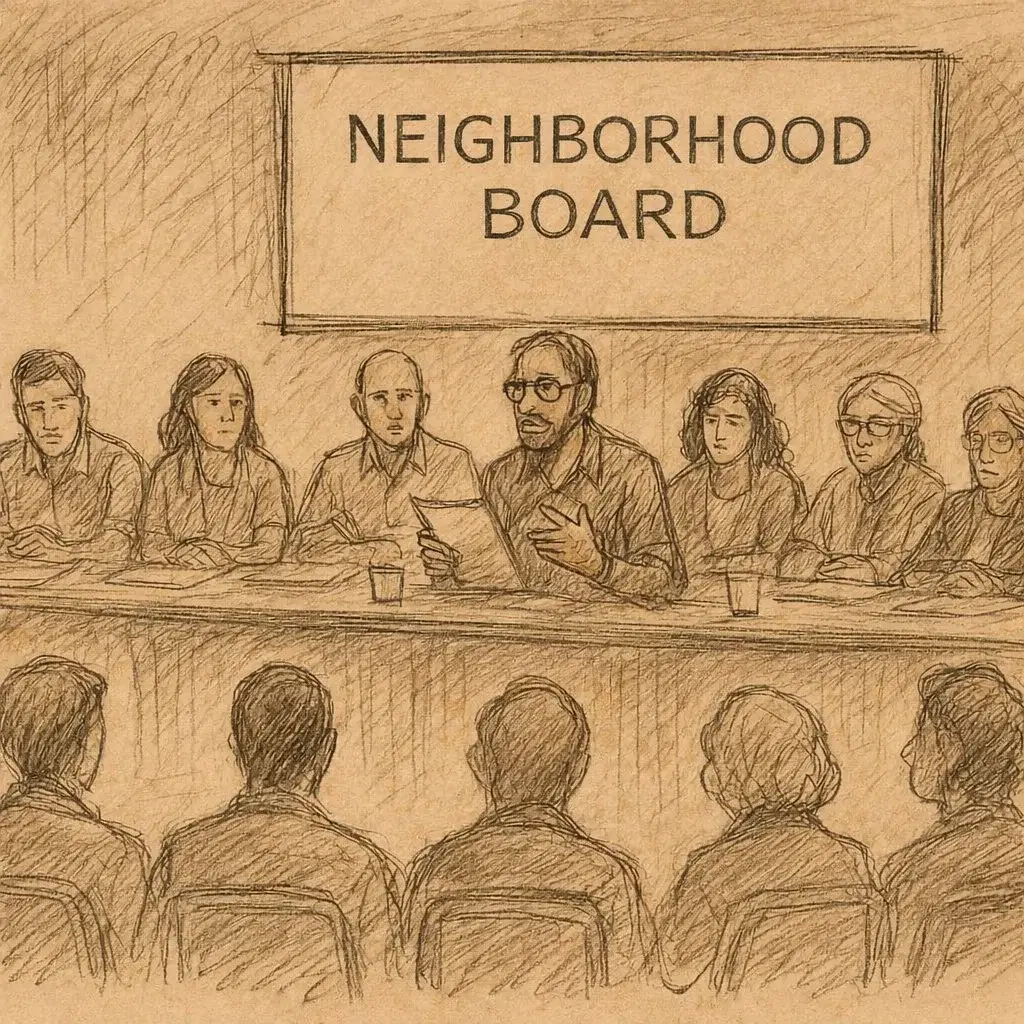
The regular meeting was convened in person at the Waimānalo Public Library, 41-1320 Kalanianaʻole Highway, with Webex participation available online. Although the meeting title identifies August 11, the chair announced the date as Monday, August 10, 2026, called the meeting to order at 7:01 p.m., and adjourned at 10:01 p.m. Chair Kimiona Kane explained that the Neighborhood Board exists to increase effective citizen participation in government decisions and asked speakers to identify themselves, address remarks through the chair, and generally remain within three minutes. Written testimony could also be submitted through the Neighborhood Commission Office. Participants were asked to observe the values of aloha, including kindness, unity, agreeableness, humility, and patience. The chair reviewed Sunshine Law restrictions, explaining that the board generally cannot act on matters not listed on the agenda and that adding a qualifying matter requires a two-thirds vote, or nine votes on the 13-member board. Emergency exits, restrooms, school-campus rules, recording procedures, and online camera requirements for board votes were also reviewed. Ten members were initially recorded as present, establishing a quorum, and Member Lulu Milan later joined online.
Pule, Cultural Protocol, and Community Reflection
The meeting opened with a mele concerning the disturbance and movement of multiple waves, taught to the presenter by his kūpuna. The board also shared ʻōlelo noʻeau number 23: “One can think of life after the fish is in the canoe,” interpreted as a reminder not to celebrate or make plans before first securing the result. The chair invited ʻōpio and kūpuna to offer reflections, emphasizing the board’s continuing effort to preserve a documented place for elders’ teachings, memories, and messages as kūpuna are lost. No additional kūpuna message was recorded during this portion of the meeting.
Traffic Enforcement and Automated Citations
The transcript resumed near the end of a public-safety discussion concerning whether law enforcement could cite a vehicle rather than having to identify its driver. A community member argued that issuing a citation to the registered owner would simplify enforcement, attach fines to the vehicle owner, interfere with registration until penalties were resolved, and encourage families to police vehicle use internally. The responding official acknowledged the concern but said there are legal and operational differences between that approach and the Department of Transportation’s automated camera program, which was established through specific legislation. The matter later generated requests for further information about how red-light and speed cameras operate, which government entity administers citations, and what laws authorized those systems.
Ocean Safety Calls, Rescues, and Beach Hazards
Ocean Safety Lieutenant Aka Tamashiro reported a major summer increase in beach use, saying Waimānalo Beach Park’s Tower 6 Alpha had become nearly as busy as Sandy Beach. District 2, covering roughly Kauaikū Beach Park near Hawaiʻi Loa Ridge through Kāneʻohe Bay, handled 967 calls for service during July. These included 141 rescues, nearly 2,000 preventive actions, 382 minor medical responses, and 15 major medical cases. Preventive actions involve lifeguards intervening before someone enters dangerous shore break, currents, or other hazardous conditions. Major incidents included a 74-year-old man who suffered a stroke near the shoreline area reached from the road beside Waimānalo McDonald’s, several near drownings, a blown eardrum, a dislocated shoulder, a broken wrist at Hūnānāniho, a moped crash in Kailua, overdue paddlers, and multiple rescues at Hūnānāniho, Waimānalo Beach Park, Makapuʻu’s Beach 5, Spitting Caves, Allen Davis, and Maunalua Bay. Ocean Safety stressed that anyone uncertain about a possible medical emergency should call 911 early rather than wait until a person’s condition worsens.
Rip Currents, Foil Boards, and Water Recreation
Lifeguards warned of two persistent rip currents to the left of the Waimānalo Beach Park tower near the comfort station. These currents become stronger during high tides and strong trade winds. Staff are directing beachgoers arriving by the wheelchair-access route farther to the right, toward the guardrail, where the sand profile creates safer conditions, especially for families with young children. Ocean Safety also saw approximately 15 to 20 calls concerning foil-board users during preparations for the Maui-to-Molokaʻi and Molokaʻi-to-Oʻahu races. Some calls resulted from observers mistaking the difficult process of getting a board onto foil for distress, although actual foil and stand-up paddle foil emergencies also occurred as far as one-and-a-half to two miles offshore. Ocean Safety said it is limited to safety education and does not create boating or foil regulations with the Division of Boating and Ocean Recreation. Staff encourage motor-assisted foil users to operate farther away from paddlers and swimmers when an area is crowded.
Commercial Weddings and Photography at Waimānalo Beach Park
Ocean Safety personnel reported increasing commercial photography, weddings, bands, and vehicles carrying Public Utilities Commission markings at Waimānalo Beach Park. Lifeguards have attempted to educate operators but do not have direct legal enforcement authority over unauthorized commercial activity. Residents were advised to document suspected violations through photographs or video and report them to police through the appropriate emergency or non-emergency channel so an enforcement record can begin. The board noted that Waimānalo residents have historically been vigilant in documenting commercial misuse of public beach spaces.
Conservation Enforcement
No representative from the Division of Conservation and Resources Enforcement, or DOCARE, was present, so no conservation-enforcement report was given.
Water Main Break and Water Conservation Event
The Board of Water Supply reported one July water-main break involving a six-inch pipe installed in 1950. It also announced a free “Imagine a Day Without Water” event scheduled for Saturday, September 26, from 9 a.m. to 1 p.m. at Waiʻanae Mall. The event will feature interactive exhibits, educational displays, games, giveaways, a rain-barrel workshop, food, and refreshments. Its “One Water” theme emphasizes that all water systems are connected and should be managed safely and collectively. Questions can be directed to Board of Water Supply customer relations at 808-748-5041.
Warm Tap Water and Subsurface Water Concerns
A resident reported that Waimānalo’s traditionally cold tap water had become extremely warm and asked whether aging or damaged pipes might be responsible. The Board of Water Supply representative requested the resident’s street or address so staff could investigate without requiring the full address to be spoken publicly. Another resident asked whether the agency knows of caves or subsurface water features beneath or near the Māhiʻai Development LLC construction area discussed at the previous board meeting. The representative agreed to consult technical staff after receiving a precise address or map pin. Both concerns were accepted for follow-up.
Mayor’s Office Updates and Community Questions
Because the mayor’s representative was absent, the board read a written city update. Honolulu driver’s licenses and state identification cards are receiving a new appearance and enhanced security features for the first time in 17 years. Other city highlights included advancement of the Iwilei-Kapālama transit-oriented development vision, the swearing-in of David Lazar as Honolulu’s 13th police chief, observances for America’s 250th anniversary, lower school-zone speed limits, and national recognition for greener city parks. The Youth Climate Action Fund is accepting applications from July 27 through September 7, 2026, offering Oʻahu youth up to $4,999 to design and implement climate projects through the Office of Climate Change, Sustainability and Resilience and the Honolulu Youth Commission. Pono ʻOluʻolu asked the mayor to encourage the governor to convene a town hall on the Waimānalo shelter development. An online resident also requested an estimated completion date for repairs to Waimānalo Beach Park bathrooms and information on how long they have been out of service. Both matters were to be forwarded to the administration.
State Highway Maintenance and Sign Repairs
The State Department of Transportation reported that maintenance crews addressed several missing signs and overgrown vegetation concerns identified during earlier inspections. The rapid rectangular flashing-beacon sign on Manōle Street, missing since March, had finally been replaced. However, inspections on July 31 and again on the morning of the meeting found additional overgrowth, graffiti, knocked-down signs, and missing signs requiring maintenance follow-up.
Tinker Road Speed Tables and Crosswalk Work
DOT provided an update on the makai shoulder of Kalanianaʻole Highway from Tinker Road to the bus stop near ʻInoaʻole Street, where residents had reported an unpaved shoulder and missing crosswalk markings. Plans include speed tables on both sides of the Tinker Road intersection, new crosswalk striping, and signs prohibiting pedestrians from using the makai shoulder. During the July 31 inspection, signs had been installed but remained covered. By the morning of the meeting, the contractor had installed the speed humps, uncovered the speed-hump warning signs, and added temporary pavement markings. Permanent crosswalk striping still needed to be completed before pedestrian-crossing signs could be uncovered. DOT agreed to confirm the completion schedule.
Nālū Street Erosion
DOT reported progress on three erosion locations along the makai side of Nālū Street, where runoff from Kalanianaʻole Highway has been washing away soil. An in-house geotechnical engineer previously designed a temporary repair, and the district office installed that repair at the worst of the three locations before the July 31 inspection. The remaining two sites still require work, and DOT will continue following up with maintenance crews.
Number and Placement of Speed Humps
A board member questioned the placement of speed tables near the curved Hale Aupuni–Tinker Road area and asked whether there is traffic data supporting the number of installations. The member counted approximately 11 speed humps between the entrance to Waimānalo and Kaiona and asked whether more are planned, observing that repeated traffic-calming features have changed the character of the highway. DOT said installations typically begin with speeding complaints from residents, proceed through a traffic study, and receive Neighborhood Board support. Additional concepts include converting the McDonald’s crosswalk into a raised crosswalk and placing another speed table near the preschool once the board identifies the preferred side. DOT agreed to ask its traffic branch why a table was placed near a curve and to provide supporting information.
Red-Light Cameras and Tinker Road Repaving
A board member asked DOT to research how the automated red-light camera program operates, whether the state or county is responsible for issuing citations, and how the governing laws and ordinances were enacted. The member also requested details on how far repaving extended into the Tinker Road entrance, which agency or contractor paid for it, and the project’s cost. The board agreed to send the questions in writing so DOT could provide a complete response.
Oluʻolu Street Speeding and Cut-Through Traffic
A resident described Oluʻolu Street as a dangerous cut-through whenever Kalanianaʻole Highway is congested, alleging that motorists sometimes travel close to 60 miles per hour and create a risk of crashing into homes or striking children and families. The resident asked how to initiate speed humps or tables. Although the road’s jurisdiction was initially questioned because of its location in Hawaiian Home Lands, it was clarified that Oluʻolu Street is a city street. Requests must therefore proceed through the city, although state DOT could coordinate because highway congestion contributes to the cut-through traffic. The board agreed to help connect the resident with the appropriate city representative.
Flock Cameras and Surveillance Devices
A resident asked whether DOT is involved with Flock camera systems or listening devices reportedly mounted near residential areas, utility poles, Blowhole, and Makapuʻu. DOT said its current automated camera program consists of red-light and speed enforcement at 10 intersections in downtown Honolulu and that it did not know about the other devices. Because locations such as Blowhole may fall under the Department of Land and Natural Resources, the question could be directed through the governor’s representative. The chair also suggested that the devices may be part of an Honolulu Police Department program and said HPD could be asked to explain where such technology is used in Waimānalo.
Mālama Honua Public Charter School
Mālama Honua Public Charter School celebrated its fifth- and eighth-grade students, including eighth graders advancing to high school and fifth graders completing a kīhei ceremony and defense before entering sixth grade. The school continued its partnership with Alaska Native students and Kamakau, sending a small cohort to Alaska for science, technology, engineering, and mathematics work. Students built computers, studied energy grids, and developed relationships with Native Alaskan peers. A Hawaiʻi-based health and wellness program modeled after the Alaska initiative included visits to the John A. Burns School of Medicine and Waikīkī-area loko iʻa, along with work involving Windward Community College and other community partners. Students explored Native Hawaiian approaches to health, food, wellness, and possible careers. The school also welcomed its new kindergarten Papa Hōkū class with an ʻohana gathering and huakaʻi to Hūnānāniho and opened the school year with sunrise protocol.
Hui Mālama o Ke Kai Campus and Youth Programs
Hui Mālama o Ke Kai is moving forward with a kindergarten-through-eighth-grade campus in partnership with Mālama Honua Public Charter School. Permits are being finalized, and site clearing was expected around mid-September or October. Current improvements include painting, roofing, deck completion, and re-thatching the hale waʻa. The organization reported full funding for the coming year, allowing it to restore regular programming and add pilots. Fall and spring intersession programs will be offered for the first time, the after-school program will run from October through May, and the summer program will return to four weeks after being reduced to two weeks the previous year. Other offerings include a multigenerational lāʻau lapaʻau program centered on ʻohana and Hawaiian cultural education, plus an ocean-safety and stewardship pathway through which ʻōpio and young adults can pursue lifeguard, first-aid, and CPR certifications. The program is based on the understanding that community members are often the first responders during floods, storms, fires, and other emergencies.
Hanauma Bay Education and Native Hawaiian Rights
Hui Mālama o Ke Kai has assumed responsibility for Papahana Hanauma, the city partnership that provides education at Hanauma Bay. The organization encouraged Kānaka Maoli and kamaʻāina to return to Hanauma, describing it as a wahi pana rather than merely a visitor attraction and emphasizing that it remains a city park available to local families and school groups. Staff will help residents understand access procedures and coordinate educational visits. A board member asked whether future programming will specifically include Article XII, Section 7 of the Hawaiʻi Constitution and education about traditional and customary Native Hawaiian gathering rights. The organization agreed to return with an answer. Residents were also invited to volunteer, donate, enroll in programs, and assist with stewardship at the Hui’s site.
Hawaiʻi Job Corps Recruitment
A Waimānalo-raised Job Corps representative appealed for more community referrals and success stories. Job Corps serves eligible youth ages 16 through 24 who meet income guidelines and may participate as residents or nonresidents. Young adults can earn a high school diploma, learn a trade, obtain industry credentials, or participate in a college pathway. Two Waimānalo graduates were highlighted: Justin, who earned automotive service certifications and has worked at Goodyear since 2019, and Jade. The program is creating a hall of fame and wants to feature additional Waimānalo alumni. Job Corps had already contacted Hui Maikaʻi ʻĀina to identify young people who might benefit and encouraged families with out-of-school or unemployed youth to seek enrollment information.
Waimānalo Health Center and Community Health Center Week
Waimānalo Health Center marked Community Health Center Week, an annual nationwide observance intended to increase awareness of health centers and their missions. The center thanked its patients, community partners, staff, and the broader Waimānalo community for their support. The remainder of its report focused on school-based health services.
School-Based Health Services
The health center’s Kui Kaimana Youth Program operates from a classroom at Waimānalo Elementary and Intermediate School, behind the music room. Intermediate students can use the room during morning drop-in hours, recess, lunch, and after school as a safe place to decompress, talk, receive help, or work on school assignments. Elementary students currently cannot access the drop-in room because of campus location and supervision restrictions. Health educators also participate in the school’s Uplink after-school program, combining short lessons on nutrition, body systems, health careers, and other wellness topics with outdoor physical activity. Behavioral-health services are offered at the school on Tuesdays, and a registered nurse is on call on Mondays and Fridays when the school health assistant is absent or needs support. Registered school-based patients can receive vaccinations, sports physicals, annual physicals, and well-child visits at the health center, with registration packets available through the school office. These school-based services are not yet offered at Blanche Pope Elementary because of staffing shortages, although Blanche Pope students may receive regular patient services at the health center. Expansion to Blanche Pope may be considered later in the school year or the following year.
Pono ʻOluʻolu and Opposition to the Shelter Development
Pono ʻOluʻolu presented an extensive update concerning the proposed expansion or redevelopment of the Waimānalo homeless village. The group identified Māhiʻai Development LLC and associated developers, engineers, contractors, and architects and disputed a newspaper account stating that 188 participants would be from Waimānalo. Based on a plan for 155 units and an estimated total population of approximately 500 people, the group argued that only a portion would likely be Waimānalo residents because the program must accept participants statewide. Pono ʻOluʻolu held roadside sign-waving and outreach on Ala ʻIhi, Oluʻolu, and Kalanianaʻole Highway and thanked neighbors, volunteers, and those who provided food, water, and safety assistance. The group said work trucks left or were stopped on August 3 and that residents had been submitting complaints to the Department of Hawaiian Home Lands, whose inspectors were visiting affected properties. Petition forms and informational flyers were made available at the meeting.
Request for a Governor-Led Town Hall
Pono ʻOluʻolu hand-delivered a town-hall demand to the governor’s office on the Friday before the meeting and distributed it to the governor, lieutenant governor, developers, DHHL, the Departments of Human Services, Health, Land and Natural Resources, Agriculture, Business, Economic Development and Tourism, and Law Enforcement, as well as county agencies, the City Council, Board of Water Supply, emergency-management and public-safety departments, and elected representatives. The group asked the Neighborhood Board to endorse the demand and separately request that Governor Josh Green convene a town hall before the rainy season. Members clarified that the requested event should be led by the governor’s office and attended by all responsible agencies and stakeholders. The chair reported direct communication with the governor’s communications office, which said the developer and project operator expected to call a public meeting and that the governor’s office and state agencies would attend once a date was set. The chair responded that a developer-led meeting was not the same as the larger community’s request for a governor-hosted town hall. The governor’s office said that message would be passed upward. During later public comment, the chair answered directly that the board intended to help pursue the requested town hall.
Sunshine Law and Board Participation in a Town Hall
The board cautioned that it cannot automatically attend an outside town hall as a full board because gathering a quorum to discuss board business could trigger Sunshine Law requirements. If the community expects official participation by the full board, the event may need to be properly noticed as a regular or special meeting. Individual members may attend to listen, but the board cannot deliberate or act outside an agendized meeting. Pono ʻOluʻolu was encouraged to be specific about what type of board representation it wants. The chair added that the board could consider a new or amended resolution if the community drafts language and submits it in time for proper placement on an agenda. The board had previously supported only the project’s original presentation and could revisit that position based on subsequent developments.
Community Division and Treatment of Shelter Residents
Pono ʻOluʻolu said its objections concern the health and safety of Hawaiian Home Lands beneficiaries, neighboring families, and future shelter residents rather than an attack on houseless people or the existing Hui Mahiʻai ʻĀina program. Speakers acknowledged that houselessness, addiction, and displacement are longstanding parts of Native Hawaiian experience and rejected efforts to portray the controversy simply as “Hawaiian versus Hawaiian.” One board member countered that the project has in fact created conflict among Hawaiians, while attributing that division primarily to outside decision-makers and development processes rather than residents themselves. Several speakers asked for a process that protects both current neighbors and people needing housing, provides complete information, and avoids rushed placement under emergency authority.
Bellows and Marine Corps Community Activities
No Bellows Air Force Station representative attended. Marine Corps Base Hawaiʻi reported hosting Pacific Century Fellows on July 29 as part of the organization’s military education day. On July 30, Paipai interns participated in a Nuʻupia Fishpond stewardship day and visited areas on Mōkapu, including Puʻu Hawaiʻiloa and Kuau. The base also operated a junior lifeguard program for children and continued its monthly public race program. A public triathlon was scheduled for September 12, with August 30 identified as the deadline for registration and base-access requests.
Flooding Coordination with the Military and Army Corps
Marine Corps environmental and community-relations personnel toured flood-prone areas with Representative Lisa Marten. The Army Corps of Engineers had to cancel its participation but was rescheduling. A family associated with Saddle City Road, where homes have flooded, asked to be included because it is directly affected. The Marine Corps representative agreed to inform the organizers, although no replacement meeting date had yet been announced.
Low-Flying Military Aircraft
Residents reported Ospreys and other military aircraft flying extremely low over homes near Saddle City Road, in some cases estimated at only 100 to 150 feet, every two minutes for more than half an hour. The representative was uncertain whether the applicable minimum altitude was 300 or 500 feet and promised to provide the correct rule at the next meeting. Residents were advised to submit detailed online noise reports, which are logged, shared with the air-traffic tower, and reviewed by Marine Corps Air Station leadership. Photographs and videos can be included, and direct calls may also be made when aircraft appear to be operating outside established rules.
RIMPAC Concerns
A resident challenged the military to address harms associated with Rim of the Pacific exercises, including effects on climate, marine animals, Native Hawaiian communities, and women. The speaker said those impacts are particularly visible in Waimānalo and asked for a response beyond descriptions of beneficial military programs. The Marine Corps representative said she was not authorized to announce policy changes but regularly includes such concerns in reports to leadership and would continue forwarding the comments. The chair also said the issue would be raised with the federal congressional delegation.
Makapuʻu Restoration Project
Global Preservation Initiative reported on the first year of its two-year Adopt-a-Park agreement with the City and County of Honolulu at Makapuʻu Beach Park. The organization conducts restoration days every other month, focusing on litter removal, invasive-plant clearing, and native planting. Since September, approximately 300 volunteers have contributed around 600 service hours over six workdays. They removed more than 800 pounds of litter, cleared approximately 7,000 square feet of invasive vegetation, and planted nearly 90 native plants. Work included removing dense koa haole, clearing green-waste dumping areas that were smothering existing naupaka, planting pōhinahina and naupaka to stabilize soils, improving drainage and vegetation near the showers, and beginning to reopen a heavily overgrown coastal area along the roadway. Future plans include continued bimonthly workdays, additional hala and possibly niu for shade and ecological restoration, improved pedestrian access away from the road, and a community survey documenting residents’ relationships with Makapuʻu and the changes they have observed. The agreement is eligible for renewal in September 2027.
Waimānalo Community Baby Shower
The Waimānalo Early Childhood ʻUpena announced a community baby shower for Saturday, September 12, from 10 a.m. to 1 p.m. at Waimānalo District Park. The professional network supports a continuum of care for children from birth through age five and for expectant parents. Dozens of local organizations are expected to provide resources, programs, activities, free items, giveaways, and raffle prizes. Waimānalo residents who register using the flyer’s QR code can receive a baby basket containing essential supplies. Community Navigator Mia Janjic can be contacted at 808-829-1145 or mjanjic@pidfoundation.org, and residents can also visit the Nā Pono office near Shima’s.
Sherwood Forest Safety and Houseless Encampments
A longtime Waimānalo resident said his daughter no longer feels safe fishing in the Sherwood Forest area where she was raised because of rubbish, hidden encampments, and people emerging unexpectedly from dense vegetation. He asked government land stewards to clear vegetation and debris back to the fence line so people cannot conceal themselves close to public-use areas. The concern was framed as a loss of safe cultural and family access to a place used for fishing over generations. The board said it would forward the matter to the city administration and Bellows.
Public Concerns About the Shelter’s Scale, Location, and Oversight
Numerous residents criticized the lack of detailed public information about the 155-unit shelter proposal and its proximity to Hawaiian Home Lands families. Speakers questioned why an emergency proclamation could be used to accelerate more than 100 units while the community struggled to secure a town hall. They requested clear disclosure of which permits, laws, environmental reviews, and ordinary procedures are being waived or expedited, why emergency authority has continued for years, how “temporary” is defined, how long residents may remain, and what prevents the project from becoming permanent. Concerns included the type and level of mental-health, addiction, security, and case-management services; who would be admitted; the possibility of people wandering through nearby residential areas; and whether a comparable project would be placed in Kailua, Kāhala, or the Waimānalo beach lots. One resident who visited Kahauiki Village described it as grim and questioned whether the same developer should receive a long-term lease at little or no cost. Another speaker emphasized that any final project will require decades of management and monitoring to ensure that promised limits on population, building configuration, operations, and services are maintained.
Flooding, Fill Material, and Neighboring Homes
Residents said homes along Oluʻolu Street had already experienced flooding and sediment entering their properties after construction altered drainage. One speaker stated that plants died after a Kona storm, suggesting the material entering the yards was not merely rainwater, and questioned whether backfill had been tested. Residents demanded immediate action before the next major rain. Representative Lisa Marten later explained that runoff historically flowed from Oluʻolu Street into the agricultural parcel, but a newly built retaining wall trapped water in several backyards. Four homes have retaining walls in the affected area. She said she asked the developer to restore drainage regardless of where the runoff originates. Engineers met with neighbors twice and designed a system intended to carry water through the roadway and back into the agricultural parcel. She had been told work was ready to begin but had heard that protest activity may have blocked access. The representative also said the developer agreed to replace a planned four-foot chain-link fence with a six-foot fence after neighbors raised privacy and security concerns about people standing on land approximately four feet above their yards.
Broader Waimānalo Flood-Control Planning
Representative Marten distinguished the immediate retaining-wall problem from Waimānalo’s larger watershed flooding risks. A prior federally funded Army Corps study calculated water flow across the watershed but did not identify detailed construction solutions. A newly approved follow-up study is intended to produce engineering specifications for projects at specific bottlenecks and choke points, although it does not include construction money. Those specifications could help the community prioritize projects according to cost, location, and expected benefit before seeking appropriations. Potential measures include improved drainage behind the homestead and a larger highway bridge opening to move stormwater toward the ocean. The representative said severe “100-year” storms may become more common, making watershed-scale improvements increasingly necessary.
Councilmember Kiaʻāina’s Wildfire and Land-Conservation Updates
Councilmember Esther Kiaʻāina announced a Windward Wildfire Preparedness Town Hall at Kailua Intermediate School, with participation expected from the Honolulu Fire and Police Departments, the city Department of Emergency Management, State Fire Marshal, Hawaiʻi Wildfire Management Organization, Hawaiian Electric, Kamehameha Schools, and private landowners. She noted that wildfire is more likely to directly affect many families than a hurricane or tsunami and that both public and private lands require coordinated fuel breaks and buffers. She also announced a land-conservation workshop at Windward Community College’s Hale ʻĀkoakoa from 10 a.m. to 12:30 p.m. to explain city, state, and federal acquisition funds. The city has approximately $50 million available and recently approved two parcels totaling about $21 million, including land in Kahuku and land in Wailupe associated with iwi kūpuna protection. She is also exploring acquisition of 19 acres in the Kawainui–Kaʻelepulu watershed area to reduce rubbish and runoff entering Kailua waterways.
Aquarium Collection and Waste-Site Proposals
Councilmember Kiaʻāina reported that a resolution supporting a prohibition on commercial aquarium collection from Hawaiʻi’s marine waters passed committee on July 16 and was scheduled for another hearing. Oʻahu is the last county considering such support, following Maui, Kauaʻi, and Hawaiʻi counties, and a significant Department of Land and Natural Resources hearing was expected near the end of August. She also addressed proposals for waste-management or landfill-related sites, saying five of six city-identified locations had been on the Windward side, including one in Waimānalo. She said the Waimānalo option would not proceed and opposed using Kapaa Quarry, pledging to resist city funding and the required public-infrastructure-map approval. She stressed that Windward communities have already hosted 11 sites from Waimānalo to Kaʻaʻawa and continue to host an active site in Kāneʻohe.
Councilmember’s Position on the Shelter Meeting and Land Transfer
Councilmember Kiaʻāina said she had tried behind the scenes to bring all parties to a meeting tentatively planned for August 18 at the Waimānalo Homestead Hālau, but learned that state homelessness officials and DLNR preferred a later date. The city’s Department of Planning and Permitting and Department of Community Services remain ready to attend. She said the state should lead the process and that she was stepping back from facilitating. She also suggested that transferring the parcel from DLNR to the Department of Hawaiian Home Lands should remain an option. In her view, DHHL’s mission and its experience with rental, homeownership, and homelessness programs could provide a framework more closely aligned with Hawaiian Home Lands beneficiaries, although she acknowledged that a land transfer would not resolve all objections to the project itself.
Renewable Energy Community Meeting
KEY Project announced a Hawaiʻi State Energy Office community meeting for Thursday, September 3, from 5:30 to 7:30 p.m. in the Grace Advento Multipurpose Room at Waimānalo District Park. The state has a statutory goal of reaching 100 percent renewable energy by 2045 and is gathering public views on the tradeoffs associated with fossil fuels, solar facilities, wind turbines, land use, and other forms of energy development. The meeting is not tied to a specific Waimānalo project; it is intended to let residents say what types of development they support or reject and where such infrastructure should or should not be located. Bentos will be provided, and questions can be sent to hui@keyproject.org.
Campaign Contributions and Special Legislative Session
A representative of the Clean Elections Coalition called for a special legislative session to close Hawaiʻi’s government-contractor campaign-contribution loophole. The request followed indictments connected to an alleged 2022 COVID-testing bribery scheme involving contractor Toby Salida, Lieutenant Governor Sylvia Luke, her campaign treasurer, and a staff member for Senator Donovan Dela Cruz. The speaker emphasized that the accusations remain allegations and all defendants are presumed innocent, but placed the matter in the context of prior federal bribery convictions involving former lawmakers Ty Cullen and J. Kalani English and reports of a separate alleged $35,000 cash bribe. Hawaiʻi’s 2008 law bars contracting companies from directly contributing to elected officials but still allows owners, executives, officers, and family members connected to those firms to donate. Reform bills reached late stages in 2025 and again in 2026 but failed to pass. Ten House members from both parties had signed a request for a special session. Residents were urged to contact Governor Green, Senator Chris Lee, and Representative Marten before fundraising resumes after the general election. The speaker also noted that legislators received a 32 percent pay increase to approximately $97,000 annually.
Governor’s Statewide Update
The governor’s written report announced that the University of Hawaiʻi Cancer Center opened the state’s first facility dedicated to early-phase cancer clinical trials, allowing some patients to pursue promising treatments without traveling to the continental United States. Three years after the Maui wildfires, debris removal is complete, 667 building permits have been issued, and 577 homes have been completed across Maui, while community consultation continues to shape Lahaina’s rebuilding. DHHL offered more than 1,000 project leases in July on Hawaiʻi Island and Oʻahu, including 400 residential project leases in Waimānalo, where the last lease offering occurred 10 years ago. DHHL is reportedly on track to award nearly 3,000 leases statewide, compared with approximately 2,500 in 2025. The State Judiciary and advocacy organizations also launched the anonymous Hawaiʻi Safety Survey for residents who have experienced stalking, harassment, domestic violence, or sexual violence in romantic relationships. The five-minute survey remains open through the end of September.
Congressional Update
Congresswoman Jill Tokuda’s office reported two bipartisan rural-health bills. The Rural Hospital Cybersecurity Enhancement Act would require a federal plan to train rural hospital personnel in basic cybersecurity, while the Reimbursing Emergency Services for Critical Urgent Care Act would align Medicare payments for air and ground medical services more closely with actual costs. Tokuda also led more than 60 members of Congress in asking the Centers for Medicare and Medicaid Services to improve telehealth reimbursement for community health centers and rural clinics. Although language allowing military condemnation and acquisition of Hawaiʻi lands was blocked, Tokuda voted against the fiscal year 2027 National Defense Authorization Act after unrelated provisions were added; the bill passed the House 216–212 and moved to the Senate. Her office also highlighted more than 800 residential leases awarded to Native Hawaiian beneficiaries in Nānākuli, Waimānalo, and ʻEwa, visits concerning earthquake damage, bovine tuberculosis, Lahaina rebuilding, and food distributions, and the October 18, 2026 deadline for students seeking congressional nominations to the military service academies.
Public Library Solar Charging Station Consultation
The board considered a response under Section 106 of the National Historic Preservation Act for a proposed solar charging station at Waimānalo Public Library. A member questioned why the Department of Hawaiian Home Lands was conducting consultation for a project on another state agency’s property but supported responding because DHHL beneficiaries use the library. The member asked that the letter explain how the Hawaiian Home Lands trust frequently brings resources and public benefits to the entire community through infrastructure, parks, utilities, roads, and federal funding, while retaining the state’s primary obligation to beneficiaries. The board incorporated that concept into its draft response and unanimously approved sending the amended Section 106 comments, with no opposition or abstentions recorded.
Board Minutes, Deferred Business, and Next Meeting
The board approved the July 13, 2026 regular meeting minutes without amendments. Because public testimony and agency reports consumed most of the evening, numerous remaining board-business items could not be addressed. The chair said a special meeting might be necessary to complete pending action items. Comments on a revised Neighborhood Board member guidebook were due Monday, August 17. The next regular Waimānalo Neighborhood Board meeting was scheduled for Monday, September 14, 2026. Meetings are broadcast on ʻŌlelo Channel 49 on the fourth Monday of each month at 9 p.m. and on the first and third Saturdays at 3 p.m. Following a closing pule asking for guidance and safe travel, the meeting adjourned at 10:01 p.m.