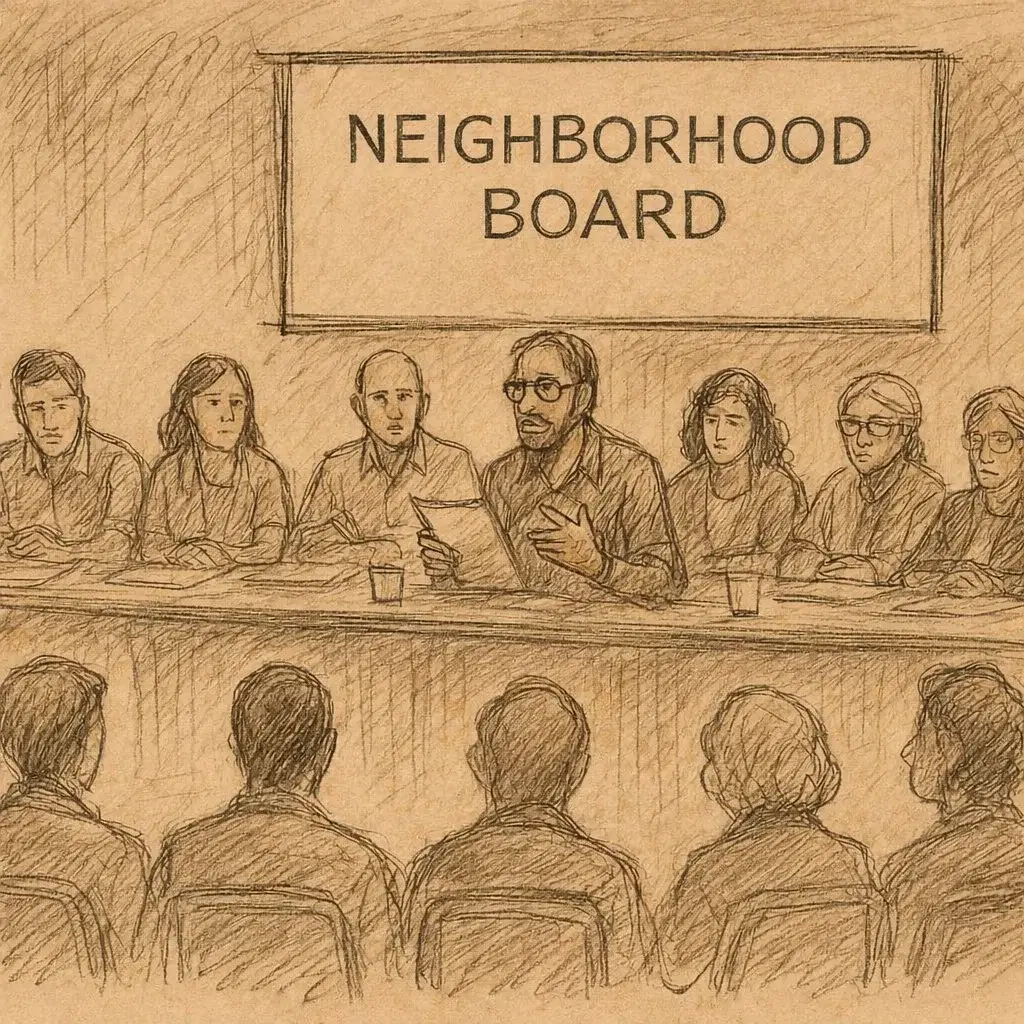
No 32 Waimānalo Neighborhood Board Regular Meeting July 2026
Listen to this article:
32 Waimanalo Neighborhood Board Meeting – July 14, 2026
Board Officer Elections
The board reorganized its leadership for the coming term through roll-call votes. Chair Kane was nominated to continue as chair and was reelected with eight votes. Kuike Kamakeo Ohelo accepted nomination for vice chair and was elected with nine votes. For secretary, Moyata Mokulehua was initially nominated but was not online to accept; Kukui Akana then accepted nomination and was elected with ten votes. The secretary’s principal duties were described as assisting the chair and vice chair with limited paperwork and reviewing draft meeting minutes prepared by the Neighborhood Commission Office before they come to the board. Karen Omahoni was elected treasurer with eleven votes after members clarified the correct pronunciation of her name. The chair explained that the treasurer position is procedurally required even though the board has not recently assigned it substantive budgeting work. Several members joined during the election process, increasing participation as the votes proceeded.
Honolulu Fire Department
Captain David Schubert of the Waimanalo Fire Station reported 39 medical calls, three nuisance fires, and two brush fires during the previous month. His monthly safety message focused on hiking during the summer. Residents were advised to select trails appropriate to their skill and stamina, consult official trail information at hawaiitrails.org, check rain, wind, and ocean-swell forecasts, stay on marked trails, avoid leaving a trail for photographs, hike with a companion, tell someone their plans, and allow enough time to return before dark. No board or public questions were raised.
Honolulu Police Department
Lieutenant Drew Akagi of HPD District 4 reported two motor-vehicle thefts, up from none in the preceding month; one burglary, unchanged from the previous month; five thefts, also unchanged; no vehicle break-ins, down from two; and no robberies in either month. HPD handled 526 calls for service in the community, compared with 462 the month before. Akagi warned that the period from late May through September is considered one of the deadliest times for traffic collisions and fatalities, and he said HPD increases roadway enforcement during that period. Board member Lulu Milan thanked officers for responding effectively to a late-night incident at her farm and for offering future drive-through patrols when suspicious activity occurs.
Public Safety and Houselessness Preparedness
A Waimanalo resident, Kanella, asked HPD how highly it prioritizes community safety and whether officers assigned to the area are prepared for a possible expansion of the houseless population. Lieutenant Akagi said public safety is HPD’s primary responsibility, every call is treated seriously, and the department would learn more about local developments so it could prepare and coordinate with the community. District 4 Captain Michael Campbell was introduced and recalled that Waimanalo had been his patrol beat approximately 20 years earlier, when he worked evening and early-morning shifts. Campbell said he has served about two years as the Windward-side captain, welcomes feedback about how HPD can improve, and intends to remain responsive to residents.
Ocean Safety Operations and Rescues
Ocean Safety Lieutenant Akka Tomashiro reported that summer is the district’s busiest season and that successive south swells had generated significant activity at China Walls and Sandy Beach, even when conditions did not formally reach high-surf-advisory thresholds. Lifeguards responded to numerous incidents involving kayaks near the Mokulua Islands, but none resulted in fatalities or serious injuries. The rescue watercraft based in Kailua, which also covers Waimanalo, has remained active. Tomashiro highlighted a response involving the Waimanalo Canoe Club outside the beach park: after Coach Duke called his personal number, a rescue watercraft was launched and reached the group in roughly ten minutes, brought everyone safely to the beach, and assisted the canoe back to shore. He said communications among Ocean Safety personnel and local water users have improved but that the department will continue trying to shorten response times and strengthen service.
Ocean Safety Technology and Monthly Statistics
Ocean Safety recently deployed iPads to lifeguard towers and mobile response trucks to improve the speed and accuracy of incident reporting and potentially provide real-time statistics. Tomashiro noted that exposure to salt, sun, and other elements threatens the devices, and staff are still learning how the new system categorizes and stores information compared with handwritten records. For June, the district recorded just under 700 calls for service involving 17,854 people. Approximately 15,000 interactions were preventive actions, such as warning beachgoers away from hazardous surf or advising inexperienced kayakers about safer launch choices. The department also recorded slightly more than 2,000 minor medical aids, 145 rescues, ten major medical cases involving ambulance response, fourteen calls involving vessels ranging from kayaks to motorboats, and several missing-person incidents or shoreline searches. Tomashiro praised the coordinated response among Ocean Safety, EMS, and the Fire Department and said response times have improved since an Ocean Safety truck began being housed at the Waimanalo Fire Station.
Missing Father and Son Search
Ocean Safety discussed the four-day search for a missing father and son near the back side of Hanauma Bay. The operation did not locate either person despite sustained support from the Honolulu Fire Department and U.S. Coast Guard. Helicopters alternated so that one aircraft could remain in the air while another refueled, and a C-130 aircraft conducted broad grid searches. Search teams covered waters in both directions, including at least as far as Kailua Bay, and deployed a marker buoy to track the current offshore. In response to a resident’s question about reports that the search extended toward Yokohama Bay, Tomashiro could not confirm the exact western limit but said the C-130 could cover a large area quickly. He described the operation as a learning experience, acknowledged that some aspects could have been improved, and said the overall search proceeded as effectively as possible under the circumstances.
Canoe Swamping Incident
A separate major ocean incident occurred when canoes traveling from Honolulu Bay toward the Waimanalo Regatta encountered difficult conditions. Three vessels carrying approximately 20 people swamped, creating what Tomashiro described as a “yard sale” of people and equipment in the water. Ocean Safety watercraft and the Fire Department responded together, and everyone reached shore safely. One canoe was severely damaged and might not be usable again, but Tomashiro emphasized that rescuing people takes priority over protecting property.
Commercial Kayak Safety at the Mokulua Islands
Board member Ted Alston asked whether commercial kayak operators sending customers to the Mokulua Islands have a greater legal or safety responsibility than private recreational users, especially because the operations depend on DNLR permits and public rescuers. Tomashiro said Ocean Safety has spoken repeatedly with operators and that many suspend rentals during high surf. Some larger groups receive an instructor or guide, but not every rental party is accompanied. Ocean Safety responds whenever an alarm is received, regardless of who owns or rents the vessel, and Tomashiro suggested that questions about the operators’ legal obligations and permit conditions should be directed to the Department of Land and Natural Resources.
Board of Water Supply
Danielle Ornez of the Honolulu Board of Water Supply reported three water-main breaks for May involving one 20-inch main and two 8-inch mains. The affected mains had installation dates of 1960, 1973, and 2016. She explained that the agency conducts thousands of annual tests of its sources and distribution network to ensure municipal drinking water meets or exceeds federal and state standards. Water-quality reports are mailed to households near the end of July and again at year’s end, and address-specific reports are available through boardofwatersupply.com. Ornez also announced the annual Unthirsty Plant Sale on Saturday, August 1, from 9 a.m. to 1 p.m. at the Halawa Xeriscape Garden, 99-1268 Iwaena Road. The event was expected to feature plants for sale, seminars, free gifts, mulch, parking, and shuttles, with purchases limited to credit cards. She provided contact numbers of 748-5335 and 748-5041.
Emergency Preparedness and School-Zone Speeds
Laura Thielen, representing Mayor Rick Blangiardi, reported that the Honolulu Emergency Services Department hosted its third annual two-day mass-casualty incident preparedness conference for approximately 300 attendees. Local and mainland medical, veterinary, fire, and emergency-services professionals shared firsthand experience in preparing for and responding to major casualty events. The department expects to hold a fourth conference the following year. Thielen also said the Department of Transportation Services is working to reduce school-zone speed limits on city streets from 25 mph to 20 mph during school operating periods. The change could apply near Blanche Pope Elementary School; she was uncertain whether the state highway in front of Waimanalo Elementary and Intermediate School would be included.
Hunananiho Ocean Safety Facilities
Thielen reported that the city was discussing improved support facilities for Ocean Safety at Hunananiho. Two containers were already on site, and the Parks Department would support a facility where Ocean Safety could securely store equipment and supplies. She requested that any project include a third unit for park employees, similar to arrangements at other beach parks. The city was also working to provide a golf cart and other operational support, but without secure on-site storage, the cart might have to remain at Waimanalo District Park.
State Highway Maintenance
Casey Abe of the State Department of Transportation Highways Division reported that maintenance crews had trimmed vegetation from private property that was intruding onto the pedestrian sidewalk just beyond Ina Olai Street on westbound Kalanianaole Highway. During recent inspections, he found graffiti, vegetation obscuring existing signs, and two posts missing their signs and said maintenance personnel would address those conditions. Abe thanked a resident at 41-686 Kalanianaole Highway for securing an advance pedestrian-crossing sign after it fell and said crews would retrieve and reinstall it. He also reported that people experiencing homelessness were leaving trash that maintenance crews had to remove and parking bicycles along the paved shoulder. The state’s homeless coordinator has reminded them to keep bicycles behind the guardrail because obstructions on the shoulder could contribute to traffic collisions.
Waimanalo Elementary and Intermediate School
The school submitted a report on instructional planning, teacher preparation, and its developing Kaiapuni pathway. A new-teacher orientation occurred on the day of the meeting and covered the academic plan, a 30-, 60-, and 90-day strategy, and reading as the foundation for learning. The school described learning targets, success criteria, and feedback as parts of its impact checklist and outlined a three-year success plan. Its Kaiapuni graduate vision includes Hawaiian-language proficiency in varied settings, the application of Hawaiian cultural knowledge and practices, responsible family and community stewardship, and preparation for roles beyond the Kaiapuni program. The school had been designated a Comprehensive Support and Improvement school based on elementary data, while the middle-school program had shown growth. Rather than read all 29 presentation slides aloud, the chair said the materials would be placed in the board’s Google Drive. The school also planned an E Komo Mai family event for Friday, July 31, from 4 p.m. to 6:30 p.m.
Kaiapuni School Update
A representative of Kula Kaiapuni o Kailua reported that the school would be expanding its programming to accommodate its own students at additional grade levels. The current seventh-grade group is expected to become the next incoming ninth-grade class in two years, and the school is preparing to build the students into the Kula Kaiapuni o Kailua program.
Tropical Agriculture and Community Programs
Auntie Ilima, representing the University of Hawaii College of Tropical Agriculture and Human Resources, said the summer had been hot and busy, with many visitors participating in site visits. The program had held a hōʻike for goldfish and was welcoming out-of-state visitors, Liliuokalani Trust Kamalei participants, and Summer Research Institute students from high school and college. She provided the email address lipuupu@hawaii.edu for follow-up.
Hawaii Job Corps
Julie Dugan reported that Hawaii Job Corps was open for enrollment and operating at approximately 85 percent capacity, with funding expected to remain strong for the next year. The Waimanalo campus had openings for residential advisers, maintenance employees, food-service workers, and an outreach position, allowing residents to work within the community. Campus tours were available every Thursday at 9 a.m.
Waimanalo Health Center
Jasmine from the Waimanalo Health Center answered a question raised at the previous meeting about minimum qualifications for employment. Applicants do not necessarily have to meet a separately stated age threshold, but they must possess either a high school diploma or GED.
Bellows Restoration Advisory Board
Bellows Air Force Station announced that the U.S. Air Force 18th Wing and Air Force Civil Engineer Center would hold a Restoration Advisory Board meeting on July 29, 2026, at 7 p.m. Hawaii Standard Time. The meeting was scheduled for the Reservation Building, 220 Tinker Road, at Bellows Air Force Station. Registration was required, and the board offered to provide registration information to interested residents.
Marine Corps Base Hawaii
Megan Ostrom introduced Marine Corps Base Hawaii’s new commanding officer, Colonel Steve DeTrennis, and senior enlisted leader, Sergeant Major Don Moreno. DeTrennis said he and his family had lived in Hawaii since 2023 and described the installation’s central missions as preparing tenant units for deployment, protecting military families and infrastructure, and integrating with the Army, Air Force, Coast Guard, police, firefighters, and neighboring communities. He noted that units from Hawaii had recently deployed to Diego Garcia and the Strait of Hormuz amid developments involving Iran. He framed homeland defense as a responsibility extending across the Windward side and said the base’s protection and defense planning includes the surrounding community.
Bellows Closure, Vandalism, and Regatta
Marine Corps Base Hawaii announced that Bellows Beach would close from July 24 through July 27 for a RIMPAC-related event and reopen afterward for camping and recreation. The base also reported vandalism at the Bellows training area, where several sections of fencing had been cut and property within the fenced area damaged. Officials were working with HPD to obtain information and reduce further damage. The base thanked paddlers and community members who attended the Kalpiko Regatta at Marine Corps Base Hawaii in Kaneohe Bay and said organizers hoped to continue it as an annual event.
GROW Food-Waste Recycling Program
Amber Unabia, a recycling specialist with the city’s Refuse Division, presented the GROW program, meaning Green Recycling Organic Waste. The program expands use of household green carts to include food scraps and wasted food for homes with gray, blue, and green curbside carts. Oahu households generate approximately 60,000 tons of residential food waste annually, and the program supports the city’s target of 95 percent landfill diversion by 2030. A pilot began April 1 in Waipahu, Nanakuli, Hawaii Kai, Mililani, Kailua, and Kalihi, with islandwide implementation scheduled for October 1. Accepted material will include meat, seafood, leftovers, loose coffee grounds, loose tea leaves, cheese, yogurt, and ordinary green waste. Coffee filters, tea bags, milk, ice cream, other liquids, plastics, paper products, glass, metal, pet waste, and manufactured compostable takeout packaging will not be accepted. The city is excluding manufactured compostable packaging because of uncertainty about PFAS contamination.
Food-Waste Collection and Composting
Residents may collect food scraps in a kitchen pail, reusable or resealable bag, or repurposed lidded container. Freezing scraps until the night before or morning of collection can reduce pests and odors, while baking soda or coffee grounds may help manage smells. Green-cart pickup days will not change, and no additional collections are planned. The city recommends placing yard waste at the bottom of the cart to absorb residual liquid and alternating layers of green material and food scraps. Residents may also deliver food and green waste free of charge to Waiman Earth Recycling in Wahiawa, with up to two residential vehicle loads per day; city transfer stations and convenience centers will continue accepting green waste only, not food. Collected material will be processed in an in-vessel composting system and sold to individuals, landscapers, and agricultural users. City staff have been checking curbside carts in pilot areas to measure participation and contamination, and program resources are available at honolulu.gov/env/grow.
Honolulu Century Ride and Waimanalo Cleanup
Christopher Salas of the Hawaii Bicycling League announced that the 43rd annual Honolulu Century Ride would take place on Sunday, September 27. He also announced the 14th annual Waimanalo Backroads Cleanup for Saturday, August 15, with participants meeting at Waimanalo District Park.
Dick Evans Memorial Road Race
The board shared notice of the Dick Evans Memorial Road Race, a 112-mile bicycle race scheduled for Sunday, August 23. Approximately 100 racers would start at dawn in Kalama Valley in Hawaii Kai, travel clockwise around Oahu, and finish around midday. The event, first held in 1984 and later renamed in memory of cyclist Dick Evans, is organized by the nonprofit Aloha State Bicycle Racing Association with support from the Hawaii Bicycling League. Approximately 30 HPD special-duty officers were expected to manage traffic and reduce community impacts. Riders were projected to pass through the Waimanalo district between approximately 10:15 a.m. and 12:30 p.m.
Waimanalo Warriors Football
Jenna McCaig announced that the Waimanalo Warriors were recruiting more boys for their eight-year-old and ten-year-old tackle football teams. Practices take place at Waimanalo Beach Park on Mondays, Wednesdays, and Fridays from 4:30 to 6:30 p.m. Organizers want local children to remain in Waimanalo programs and represent their hometown rather than joining teams elsewhere. Additional information was available through the Waimanalo Warriors Instagram page and printed flyers.
Hui Mahiai Aina Project Background
Councilmember Esther Kiaaina organized a multiagency briefing about the Hui Mahiai Aina project in response to conflicting public information and concerns voiced at earlier meetings. She identified three core questions: the legal authority under which construction is proceeding, the environmental and historic-preservation requirements that remain applicable under the governor’s emergency proclamation, and whether future residents could be selected with preference for Waimanalo residents or Hawaiian Home Lands beneficiaries. Kiaaina distinguished Hui Mahiai Aina, Auntie Blanche’s nonprofit organization, from Mahiai Development LLC, the project developer. Hui Mahiai Aina originally sought an agricultural lease from DLNR around 2013 for agricultural and educational opportunities. During the COVID-19 period, the concept shifted toward assisting Waimanalo’s houseless population. Management of the state land subsequently moved by executive order from DLNR to the Department of Human Services, with the Statewide Office on Homelessness and Housing Solutions serving as the managing entity, while DLNR retained title.
Hui Mahiai Permitting and Emergency Proclamation
Department of Planning and Permitting Director Dawn Apuna said the developer is operating under the governor’s emergency proclamation, which expedites or waives certain ordinary requirements but does not remove the need to address health and safety standards. The project had constructed a retaining wall without a city permit and had conducted clearing or grading without a completed permit, although DPP inspectors were monitoring the work. DPP was also working with the developer on FEMA flood requirements. The State Historic Preservation Division had indicated that archaeological monitoring would be required because of concerns about iwi kupuna and other cultural resources. Apuna explained that the normal order would be to receive permits before beginning work, but the emergency proclamation allows work to proceed while approvals are being completed. She said the developer would ultimately need the required permits and a certificate of occupancy before residents could enter the buildings.
Hui Mahiai Public Funding and Homelessness Services
Anton Krucky, director of the city Department of Community Services, said the project is state-led, though the city is interested in supporting homelessness services in the area. The latest point-in-time count identified 192 people experiencing homelessness across the broader Waimanalo, Kailua, and Kaneohe area, with many considered chronically homeless. Reported causes included domestic conflict and inability to afford rent. The newly approved city budget contained up to $2 million for homeless-service operations in the area. The funding would be awarded through a public competitive solicitation expected during the summer. Krucky said the Hui Mahiai project could compete strongly because of its size, leadership, and the development team’s previous work, but no award would be automatic.
Land Management and State Oversight
DLNR representative Seiji Ogawa confirmed that management of the parcel was transferred by executive order to the Department of Human Services and the Statewide Office on Homelessness and Housing Solutions, while DLNR continued to hold the fee title. Jun Yang of the statewide homelessness office said his office manages the land through DHS and monitors project development. He stressed that the emergency proclamation is intended to expedite processes rather than eliminate all review, including historic-preservation and flood-mitigation requirements. He described the undertaking as a joint effort among the state, city, nonprofit organizations, and developer to serve the Windward community.
Hui Mahiai Village Design and Operations
Developer Dwayne Cariso said Mahiai Development LLC is a nonprofit and compared its role to its work at Kahauiki Village, where it constructed the project and transferred it to the Institute for Human Services. Mahiai Development plans to build Hui Mahiai Village and then gift it to Hui Mahiai Aina for operation. The current plan calls for 116 homes, with unit types revised to provide more kupuna housing and more multi-bedroom family units. Planned shared facilities include a library, clinic, live-in nurse or nurse’s station, multipurpose room, classroom building, kitchen, dining room, and laundry. Remaining land around the housing area is intended for agricultural use benefiting village residents. The developer said the project combines private and public financing and would be subject to audits and transparency requirements.
Archaeology, Construction Standards, and Occupancy
Project representative Mel Kaneshi said the emergency proclamation allows certain work to proceed while the State Historic Preservation Division process continues, but the development team must comply with SHPD requirements and provide a report on completed work. Architect Lloyd Sueda repeatedly emphasized that health and safety would not be compromised and that applicable building, mechanical, and electrical codes would be followed. He described the homes as slab-on-grade, stud-wall buildings with pitched roofs, lighting, electrical outlets, and ceiling fans, rather than simple box-like temporary units. The project team reiterated that no residents could occupy the development until the necessary building permit and certificate of occupancy had been obtained.
Flooding, Fill, and Retaining Wall Concerns
Civil engineer Dexter Kubota said grading-permit applications were submitted in early January and remained under DPP review. A newly effective FEMA map and city requirements required the planned site elevation to rise from approximately 11.8 feet to 12.8 feet, adding one foot of freeboard to the design. The team was revising the grading plan and intended to resubmit it to DPP. Residents challenged the amount of fill already placed, questioned why a site previously described as outside the flood zone required substantial elevation, and warned that the retaining wall and raised development could worsen flooding on adjacent Hawaiian Home Lands and agricultural properties. The project team said the larger parcel is within a flood-prone area but that earlier topographic work identified the building area as the portion where federal rules would permit construction. Kubota acknowledged that the cornerstone or wall had accentuated a drainage problem and said a drain line through the wall was expected to be installed within the next several weeks. Developers also said the retaining wall sits about five feet inside the project property line.
Beneficiary Preference and Crown Land Dispute
Community members argued that an emergency proclamation or executive order does not transfer land title and asserted that the parcel remains Crown land subject to public-trust and Native Hawaiian beneficiary interests. They asked whether all future residents would be Hawaiian Home Lands beneficiaries or Native Hawaiians. State representatives responded that the parcel is DLNR land, not a Department of Hawaiian Home Lands parcel, and did not confirm that occupancy would be restricted to DHHL beneficiaries or Native Hawaiians. The exchange reflected broader concern that a project intended to address homelessness could displace or disadvantage Hawaiian beneficiaries already waiting for land or living on neighboring agricultural homesteads.
Need for a Hui Mahiai Town Hall
Because the briefing generated extensive questions and strong disagreement, the chair stopped the discussion before all board members and residents could speak. He said the project, despite its stated intentions, had caused significant turmoil in a predominantly Native Hawaiian community where residents have long struggled to remain on their land. Councilmember Kiaaina reported that she had spoken with the governor’s chief of staff and that the Governor’s Office understood the community’s concerns and would take the lead in arranging a more complete town hall, including the location and timing. At least a month of notice was suggested. Residents were asked to submit written or emailed questions to the chair so agencies and project representatives could begin answering them before the town hall. The chair emphasized that government agencies, developers, Hui Mahiai Aina, Pono Olu Olu, and community members all had responsibilities to verify facts and participate in a fuller discussion.
Candidate Statements
Several candidates briefly introduced themselves. Bobby Silva, a Kailua native who now considers Waimanalo home, said he was running for State Senate District 25, which extends from Kailua through Waimanalo to Hawaii Kai. Steve Humshield, a candidate for House District 51, focused on the high cost of living, the departure of local and Native Hawaiian families, and the relationship between economic insecurity and homelessness. He cited a science background, a master’s degree in business, 23 years in the district, and Native Hawaiian family ties. Micah Kalama emphasized that he was born, raised, and remained in Waimanalo, described his family’s generations-long roots and his mother’s archaeological work, and called for project documents to be made available to the community. He highlighted low voter participation, stating that fewer than 2,000 of more than 8,000 community residents voted in 2024, and urged residents to vote for stronger local representation. Gubernatorial candidate Lauren Kapolei Ahi‘iaka Shem Ko‘oinua described herself as a 45-year-old Hawaii-born Democrat and the only woman on the ballot. Drawing on experience in escrow, title, and real estate, she opposed bypassing laws and supported a town hall on Hui Mahiai Aina.
Aquarium Fish Collection
Councilmember Kiaaina announced two Honolulu City Council resolutions scheduled for the Zoning and Planning Committee on July 16 at 9 a.m. Resolution 26-159 urges the State Board of Land and Natural Resources and DLNR Division of Aquatic Resources to prohibit harvesting aquatic life from Hawaii’s marine waters for commercial aquarium purposes. Resolution 26-160 urges the Legislature to enact a similar statutory ban. She encouraged community testimony at the committee and at the August 12 full council meeting, particularly because BLNR was expected to consider an aquarium-collection permitting proposal later in August. During board business, members voted without opposition to update and reaffirm their earlier position supporting the end of commercial aquarium fishing, especially in light of reports that as many as 15 permits might be under consideration.
Land Conservation and Wildfire Events
Kiaaina announced a land-conservation workshop for nonprofit organizations on August 17 from 10 a.m. to 12:30 p.m. at Hale A‘o Kua at Windward Community College. The event was intended for groups interested in agricultural, conservation, cultural, or historically significant lands and would include city, state, and federal officials. She also announced a Windward Wildfire Preparedness Town Hall for August 13 at Kailua Intermediate School, with expected participation from the Department of Emergency Management, Honolulu Fire Department, Honolulu Police Department, the state fire marshal, major landowners, and other relevant organizations.
Legislative Accomplishments and Community Investments
State Senator Chris Lee reported that 27 of his bills and resolutions passed during the year, compared with an average of approximately eight among senators. He cited measures intended to reduce energy and transportation costs, regulate excessive online ticket resale prices, deploy local personnel for community work, support community events, and establish conservation sanctuaries for native and endangered species. He announced solar and battery-storage support for the Waimanalo Health Center that could reduce operating expenses by as much as $35,000 per month, allowing more money to support patient services. Funding was also moving forward for a Malama Honua administrative building, a new Windward campus consolidating DLNR and invasive-species operations at the former Hawaii Pacific University campus, and approximately $1.5 million for school cooling, shade trees, and related improvements.
Medical Debt Relief
Senator Lee highlighted a newly enacted program expected to cancel unaffordable medical debt for approximately 50,000 Hawaii families, including an estimated 2,000 families in the local area. He credited Representative Lisa Marten for leading the measure in the House through her Human Services Committee. The program targets families burdened by hospital and medical bills that can lead to bankruptcy, housing instability, and other financial hardship.
Beach Cleanup and Invasive Species
Representative Lisa Marten reported on a major Waimanalo Beach Park debris cleanup organized by Kirk Kamanu before the canoe regatta. Motorcycle riders assisted when equipment failed, and the state paid for containers, transport, and disposal while community volunteers performed most of the labor. Marten described the arrangement as a possible model for future cleanups. She also recognized Chair Kane’s invasive-species work, particularly efforts to control coqui frogs in Waimanalo’s valleys. Free coconut rhinoceros beetle prevention supplies remain available, including tree and mulch netting, pheromone traps, organic topical pesticides, and synthetic treatments. Residents can register through CRB Hawaii’s community program to receive supplies, instructions, and assistance organizing neighborhood training events.
SNAP, Medicaid, Vaping, and Kupuna Support
Marten said Hawaii had committed more than $100 million to preserve SNAP and Medicaid services in response to major federal reductions, avoiding interruptions for residents who depend on food and health assistance. She also discussed legislation banning disposable flavored vaping products and most flavors that lack FDA approval, describing youth nicotine addiction, school bathroom closures, and environmental waste as significant concerns. Other measures addressed kupuna care, dementia research, and rental assistance. A kupuna rent-supplement program was made permanent and can provide approximately $500 per month to older adults whose Social Security or pension income is insufficient even for subsidized housing.
Waimanalo Flood Planning
Marten reviewed the long-running effort to improve flood planning in Waimanalo. An earlier federally funded Army Corps of Engineers study updated flood maps and calculated watershed flows but did not identify the specific construction projects she had expected. After approximately two and a half years, a second phase was approved to identify concrete flood-control projects, priorities, engineering scopes, and estimated budgets. The study itself will not construct improvements but is intended to create projects that can later be funded. A House working group is also examining statewide flood prevention, infrastructure, stream maintenance, and fragmented stream ownership. Marten said a coordinated system is needed because some private owners lack the money or physical ability to clear streams even when maintenance is formally their responsibility.
Governor’s Office Update
Randi Jung, representing Governor Josh Green, reported on Operation Ho‘opauahi, a state and National Guard initiative intended to strengthen firefighting capabilities when communities need them. The state is also expanding trauma-informed care training for public employees who interact with people affected by traumatic experiences. Jung said Hawaii had opened its 100th public preschool, enrolled approximately 600 additional three- and four-year-olds during the previous year, and is pursuing universal public preschool access by 2032. Waimanalo has both a federally funded Head Start program and a recently opened public preschool program. Jung also acknowledged the Governor’s Office commitment to take the lead on the future Hui Mahiai town hall.
Approval of Meeting Minutes
The board reviewed the April 13, May 11, and June 8, 2026 meeting minutes. No corrections or amendments were requested, and all three sets of minutes were approved.
Waimanalo Reservoir Environmental Review
The board considered a draft letter responding to the State Department of Agriculture and project consultants concerning a proposed declaration of exemption for miscellaneous improvements at the Waimanalo Reservoir. The draft raised concerns about the affected tax-map-key parcels and the need for responsible environmental review. Members voted unanimously to send the letter strongly urging that the project undergo an environmental assessment rather than proceed under an exemption.
East Oahu Climate and Resiliency Network
Aloha McGuffey reported that the East Oahu climate and resiliency mandate had been presented to all six neighborhood boards covering communities from Kaimuki and Palolo through Waimanalo. The initiative has entered an implementation phase and was renamed EOKAN, referring to East Oahu or agreement and a Community Action Network. It seeks cooperation across communities sharing the Koolau watershed and the Maunalua and Waimanalo Bay regions on flooding, wildfire, invasive species, and community readiness. The framework is being evaluated using the Aina Aloha Economic Futures scorecard and scored well overall, although organizers identified a need for clearer community-engagement and implementation measurements. McGuffey planned to send an updated framework after steering committee review and hoped to work with relevant neighborhood-board committees.
Pono Olu Olu Community Update
Pono Olu Olu announced a Waimanalo informational meeting concerning Hui Mahiai Aina for July 23 at 7 p.m. at the Waimanalo Hawaiian Homes Association. The organization said the meeting would provide more opportunity for questions and transparency than had been possible during the board’s time-limited briefing. It had also consulted DHHL about procedures for beneficiaries who believe they have suffered flooding, encroachment, retaining-wall impacts, or other damage associated with the development. Hard-copy complaint forms and assistance completing and emailing them would be available. Pono Olu Olu reported more than 500 signatures on a petition asking the city, state, and responsible agencies to protect beneficiaries, agricultural leases, cropland, and nearby properties from flooding and safety hazards. The organization maintained that the parcel remains Crown land under DLNR’s public-trust responsibilities and said it would continue gathering public records, emails, and other documentation.
Meeting Conduct and Accessibility
The chair expressed concern about hostile and inappropriate comments posted in the meeting’s public online chat and reminded participants that their written statements are public records and that everyone is accountable for their words. He also asked the Neighborhood Commission Office to investigate providing sign-language interpretation, noting that a Waimanalo resident might be willing to assist. He said meetings should be accessible to blind and deaf residents as well as the wider community.
Next Meeting and Adjournment
The next regular Waimanalo Neighborhood Board meeting was announced for Monday, August 10, 2026. Broadcasts were scheduled on Olelo Channel 49 on the fourth Monday of each month at 9 p.m. and on the first and third Saturdays at 3 p.m. After a closing pule led by the vice chair, the meeting adjourned at 9:45 p.m.