No 32 Waimanalo Neighborhood Board Regular Meeting June 2026
Listen to this article:
32 Waimanalo Neighborhood Board Meeting – June 9, 2026
Opening Protocols, Attendance, and Meeting Framing
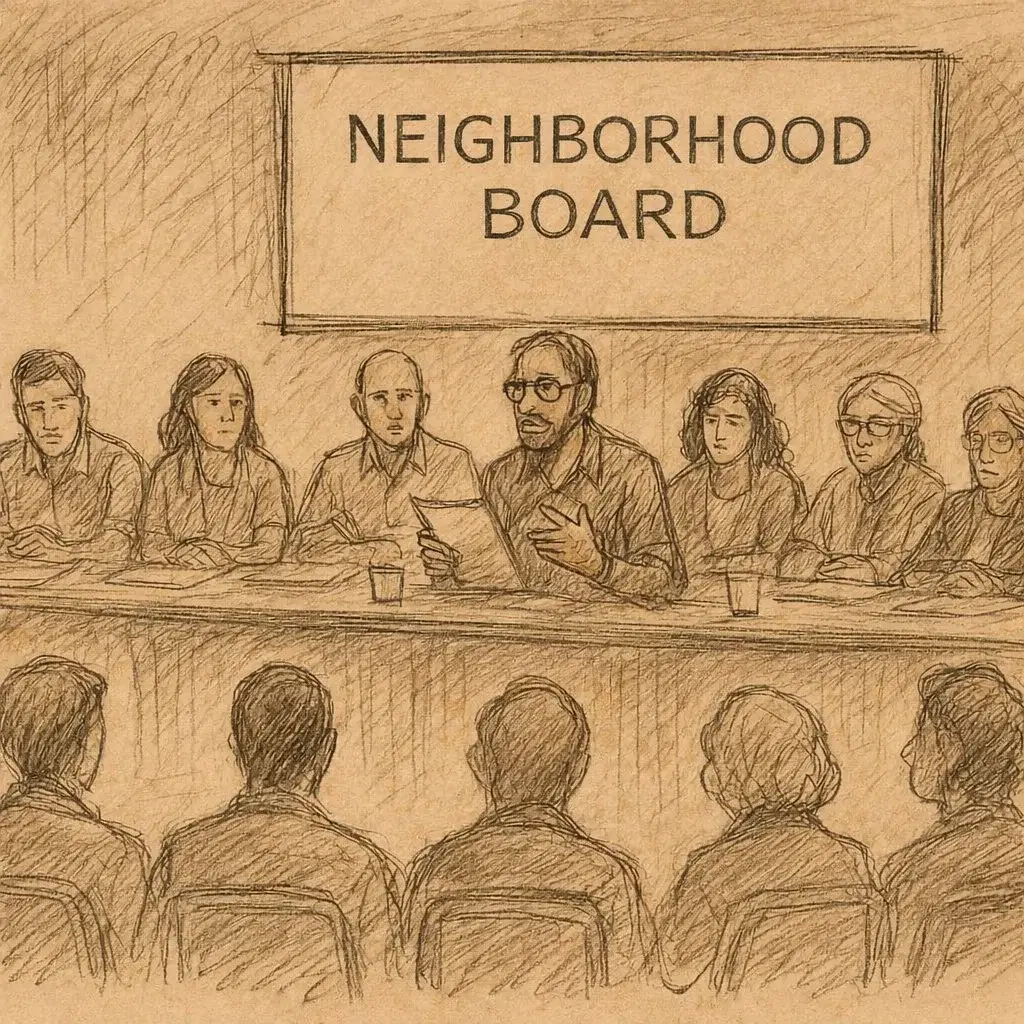
Chair Kimiona Kane called the regular monthly meeting of Waimanalo Neighborhood Board No. 32 to order at 7:00 p.m. at the Waimanalo Public Library, with in-person and WebEx participation available through the Neighborhood Commission Office. The meeting opened with reminders about Sunshine Law requirements, the board’s ability to act only on noticed agenda items unless a supermajority vote allows an addition, and the board’s adoption of aloha values as a governing practice, including kindness, unity, humility, and patience. A volunteer opening prayer was offered by Auntie Brenda. Roll call initially showed eight members present, establishing quorum, and later additional members joined, including Ted Ralston, Kukui Akana, and Vice Chair Kamakeha Ohelo, bringing participation higher as the meeting progressed. Chair Kane also noted the evening’s unusually long agenda and emphasized the need for productive discussion.
Cultural Grounding: ʻŌlelo Noʻeau, Kūpuna Invitation, and Historic Site Reading
The board continued its practice of grounding meetings in ʻike Hawaiʻi. The monthly ʻōlelo noʻeau shared was “Ahu a lena pai pūʻuo Hāʻupukele,” translated as “The row of Hāʻupukele’s hills are in full view,” and explained as a saying used for something exposed or very obvious. The board then invited kūpuna to share manaʻo, though no one chose to speak in that portion of the meeting. A reading from Sites of Oʻahu followed, describing a heiau site on the Waimanalo side of Olomana at the edge of the former cane field facing the Koʻolau range. The reading detailed the likely dimensions of the structure, approximately 250 feet by 130 feet, with two terraces, stone facing, coral scattered through the rocks, and the upper terrace hidden in lantana. The site was documented by E.P. Kaneopil, though its name was unknown. This segment reinforced the board’s regular practice of placing contemporary issues in the context of place-based history and ancestral landscapes.
Youth and Hawaiian Language Participation
After initially being skipped on the agenda, the board returned to invite a youth Hawaiian-language presentation from Kalola Kamahalohanuilai. The speaker introduced herself through traditional place-based genealogy and reflected on the proverb “Pūpūkahi i holomua,” emphasizing that collective effort allows progress. Chair Kane then reaffirmed that the board intends to create space not only for kūpuna but also for ʻōpio, recognizing that board members and public officials are gathered to serve younger generations as well. This segment reflected an intentional effort to center intergenerational participation and Hawaiian language in neighborhood governance.
Honolulu Fire Department Report and Hurricane Preparedness
Captain Steven Granato of the Waimanalo Fire Station reported the Honolulu Fire Department’s calls in the board area for May 2026. The month included one nuisance fire, 45 medical emergencies, one motor vehicle crash, one mountain rescue, and one ocean rescue. The department’s monthly preparedness message focused on hurricane season, which runs from June 1 through November 30. Residents were encouraged to refresh family emergency plans, build or update a 14-day disaster supply kit, review insurance coverage for hurricane-related damage, secure supplies for window protection, and sign up for alerts through hnlalert.gov. The department also directed residents to Honolulu Department of Emergency Management resources at honolulu.gov/dem. No board or public questions followed, but the report highlighted that Waimanalo’s emergency profile continues to be dominated by medical calls rather than structural fires.
Ocean Safety Activity, Fatal Incidents, Summer Crowds, and New Public Information Tools
District 2 Ocean Safety Lieutenant Aka Tamashiro gave a detailed report covering rescue activity across East Honolulu and Windward beaches. For the prior month, Sandy Beach recorded roughly 65,000 visitors and 59 rescues; Makapuʻu had about 21,000 visitors and 32 rescues; Waimanalo Beach Park had just under 18,000 visitors and 9 rescues; Punananijo had just under 22,000 visitors and 5 rescues; Bellows had just over 10,000 visitors and no rescues but a notable increase in first aid cases; Kailua Beach Park had just under 70,000 visitors and 4 rescues; and Kalama’s had just under 20,000 visitors and 8 rescues. Tamashiro described several serious incidents, including CPR cases and the highly publicized early-morning drowning at Beach 5, Makapuʻu. That call came before official staffing hours, with only one lifeguard on duty for opening responsibilities, but Ocean Safety personnel quickly self-mobilized by phone and assembled a response team of roughly nine or ten staff with support from fire, EMS, and others. Although the victim did not survive, Tamashiro said responders took solace in recovering her for the family.
He also reported multiple watercraft breakdowns near Spitting Caves during large south swells, a bodyboarding contest at Half Point, numerous head, neck, and back injuries at Sandy Beach, and a non-water-related CPR case involving a 78-year-old man found in his car near Makapuʻu. Looking ahead, Ocean Safety is transitioning to digital reporting through iPads for mobile responders and towers, which should allow real-time rescue and hazard data. Tamashiro previewed a public website, safebeachday.com, where residents and visitors will eventually be able to select a beach and see conditions, hazard levels, surf, tide-related warnings, and tower-specific information. QR codes will also be placed on towers so users can access local safety information directly from their phones. Chair Kane asked about adding place-based names to towers in addition to number designations and also raised concern over culturally insensitive public sharing of graphic wildlife stranding images, asking whether Ocean Safety could participate in cultural sensitivity discussions about handling marine life incidents. Tamashiro agreed to raise both issues with leadership.
Board of Water Supply: Water Main Breaks, Emergency Communication, and Water Affordability
Board of Water Supply staff Danielle Anellis reported three water main breaks in May 2026 within the board area: one on a 20-inch line installed in 1960, one on an 8-inch line installed in 1973, and another on an 8-inch line installed in 2016. The board also shared its standard water quality reminder, noting that thousands of tests are conducted annually and that water quality reports are mailed by July and December and posted online. Staff addressed a prior concern about overnight valve work during a water main break, explaining that emergency water system operations run 24/7 and sometimes require late-night shutoffs, rerouting, and testing. In response to resident feedback from Banyan Tree and other senior housing complexes, Board of Water Supply representative Kathleen introduced refrigerator magnets with emergency contact information for water outages, power outages, and natural disasters. She offered to deliver them directly to senior housing managers and other facilities in Waimanalo so residents would have quick access to assistance contacts during future service disruptions.
Board of Water Supply and Charter Amendment P-177
The most substantial water discussion concerned the Board of Water Supply’s opposition to a proposed Charter Commission amendment related to water shutoffs. Board Manager and Chief Engineer Ernie Lau attended in person at the board’s invitation to explain the agency’s position and discuss possible future collaboration. Lau acknowledged the significant community effort behind the charter proposal and said he wished there had been an earlier opportunity for dialogue. He framed the issue around the agency’s mission to provide safe, dependable, and affordable water now and into the future, while maintaining infrastructure and safeguarding resources for future generations. He said the Board of Water Supply’s annual budget combines roughly $311 million in operating costs and about $286 million in capital improvement work, placing the total near or above $570 million annually.
Lau explained that for more than 80 percent of customers, the monthly bill combines both water and sewer charges, even though the sewer portion belongs to the Department of Environmental Services and is often larger than the water portion. Because the charges appear on one bill, the Board of Water Supply is obligated to collect on the full amount. He said the agency is working with Environmental Services to separate the two bills, a change he hopes can be implemented in about two years, though it will require additional postage and system changes. If achieved, this would allow water collections to focus only on water charges, which he said would improve affordability.
He also discussed the experience during the COVID-19 shutoff moratorium, when shutoffs were suspended from March 2020 into 2022. During that time, unpaid balances rose from about $2.7 million to about $5.7 million. As of May 2026, total delinquencies across residential, commercial, and government accounts stood at about $5.3 million, including roughly $3.7 million in residential accounts, about $900,000 in commercial accounts, and approximately $750,000 in government accounts. Lau said the average customer uses around 9,000 gallons a month and currently pays about $77 monthly for the water portion alone. He argued that a total ban on shutoffs for nonpayment could shift financial burdens onto paying customers and threaten long-term system maintenance, but he also stressed that water is a human right and that the board is actively considering some type of customer assistance program. He referenced Environmental Services’ CARES assistance model and said the Board of Water Supply wants community feedback, especially on how to make applications easy and how to distribute help equitably. Board and public questions touched on who would control data if billing is separated, whether government accounts should be held more accountable for late payment, and whether Environmental Services can realistically enforce sewer-only collections without shutting off service. Lau said shutoff remains a last resort, that the agency offers payment plans from six months to a year, and that there are no late-payment penalties.
Follow-up Maintenance Concerns on Water Infrastructure
During questions, community members raised several unresolved field issues. Chair Kane asked about an uneven asphalt restoration near Lukanela after a previous break, and staff said Board of Water Supply crews would return to repair it once permitting for non-emergency restoration is completed. Another board member asked staff to recheck Hehe Manu Street, where a previously addressed problem area near a cover was reportedly still wet and leaking around the structure after earlier repair work. Staff agreed to investigate. These comments showed continued concern with the quality and completeness of infrastructure restoration work after repairs.
Mayor’s Office Announcements and Oʻahu Food System Plan
No representative from Mayor Rick Blangiardi’s office attended, but a written update was entered into the record. It highlighted federal aid deadlines tied to storm recovery, the naming of David Lazar as Honolulu Police Chief, city initiatives on homelessness, the passing of former Managing Director Mike Formby, and a microloan program for local small businesses. The office also promoted public review of the draft Oʻahu Food System Plan, developed by the Office of Climate Change, Sustainability and Resilience. The draft outlines a five-year strategy with 70 proposed city actions to improve food production, distribution, access, and waste management across Oʻahu. Public comments are due by June 30, 2026. Board members also noted that some prior concerns submitted to city departments had been partly addressed, with more response still pending from the Department of Facilities Maintenance.
Department of Transportation Follow-up and Roadway Hazard Concern
No state Department of Transportation representative was present, and no written report was discussed. One board member flagged what appeared to be a low-hanging communications line at Huli and Kalanianaʻole Highway, estimated at roughly six and a half to seven feet above the ground, and warned that it could become a safety hazard. The issue was noted for follow-up. Although brief, the exchange reflected continuing resident dependence on the board to route unresolved roadside and utility concerns to the appropriate agency.
Kula Kaiapuni Continuum and Local Education Updates
A board member reporting on behalf of Ke Kula Kaiapuni ʻo Kailua and Kailua High School said the class of 2026 had graduated and noted that a recent hula recognition event had honored graduate Kalola. The board also heard that efforts are continuing to strengthen the Hawaiian-language immersion continuum. Most notably, the seventh-grade kaiapuni class at Ke Kula Kaiapuni ʻo Waimānalo is expected to continue forward at Waimanalo Intermediate School. Although there is still a search for a teacher, a backup plan exists in which a teacher from the lower grades could move up to preserve the pathway. This update reflected the community’s long-running concern with keeping Hawaiian-language educational progression intact locally rather than allowing gaps that could weaken enrollment and continuity.
Windward Community College: Graduation, Middle College Expansion, and New Scholarship Support
Windward Community College Chancellor Ardis Eschenberg joined remotely from Arizona, where she was participating in instruction for incarcerated Hawaiian studies students at Saguaro Correctional Center. She reported that Windward’s most recent commencement was the largest graduating class ever to walk across the stage, though the ceremony had to be moved indoors with only 45 minutes’ notice because of lightning and storm conditions around campus. She thanked the public for patience and support. Eschenberg also highlighted the Halau Heikili middle college program, a partnership allowing students in grades 9 through 12 to split time between Kailua High School and Windward Community College while also doing community internships. The upcoming academic year will produce the program’s first graduating senior class, and she said one or two slots may still be available for incoming ninth graders.
She then announced an expansion of the Hoʻolei scholarship model. Previously, Hoʻolei covered tuition not met by financial aid for first-year students from public and public charter schools on the Windward side. Windward has now set aside institutional funds to extend a “second year” version for those same students entering their sophomore year, addressing concerns that the first year of support alone may not be enough to keep students enrolled through completion. Eschenberg explained that the goal is to prevent tuition from becoming a barrier to higher education on the Windward side. Discussion also touched on a possible future reuse of an underutilized building on campus as shared early college and middle college space for immersion and partner programs, potentially including makerspaces open to students and community use.
College of Tropical Agriculture and Human Resources: Student Research and ʻŌlena Distribution
Auntie Ilima from the University of Hawaiʻi College of Tropical Agriculture and Human Resources reported the start of a new cohort of three Aloha ʻĀina Scholars through Alu Like. Because federal funding had been reduced, the program is smaller this year and could not accommodate returning participants, which she described as disappointing for former students. The new participants include one rising senior at Kailua High School, one recent Kailua graduate, and one student entering sophomore year in college. All three are also involved in the Summer Research Institute, where Ilima and Dr. Radovich are co-mentoring them over eight weeks. The students are expected to complete poster presentations and final research projects by July 24. She also reported that the recent ʻŌlena Workday distributed more than 1,000 pounds of turmeric, with a limited amount still available for those who contact her quickly. The update highlighted ongoing efforts to connect local youth to agriculture, research, and ʻike-based food systems work.
Hawaiʻi Job Corps: Federal Funding Relief, Community Service, and Hiring
Julie Dugan of Hawaiʻi Job Corps reported positive news after uncertainty about the program’s future. She said the House Appropriations Subcommittee on Labor, Health and Human Services had included Job Corps funding in its fiscal year budget proposal, signaling that Congress is again rejecting attempts by the federal administration to eliminate the program. While not final, the direction was described as encouraging. Dugan also said that, as of June 8, two young adults had already completed their high school diplomas this month. She reviewed several recent community service projects, including helping supply plumeria for Memorial Day lei draping at Punchbowl, painting and restoring facilities for Kailua High School’s imu fundraiser, and continuing twice-monthly support for food distribution at the district park next door. She reminded residents that tours for potential applicants are held every Thursday at 9 a.m. and announced multiple job openings at the campus, including residential staff, security officers, cooks, an admissions administrative assistant, and on-call registered nurses.
Waimānalo Health Center: Housing Assistance Program and Hiring
A representative from Waimānalo Health Center announced that the center is accepting applications for the Hale Hōkūa Waiwai Program, which provides rent and mortgage assistance for Native Hawaiian individuals and families on Oʻahu. The program is aimed at those demonstrating financial need, including people seeking first month’s rent or security deposit support for rapid rehousing or homelessness prevention, as well as those already behind on rent or mortgage payments and at risk of losing housing. The center also continues to recruit for various positions across its operations, with details available through its online careers page. One board member asked whether applicants for employment must be at least 18 years old; the representative said she would check with human resources and follow up. The report tied health care services directly to housing stability and local employment in Waimānalo.
Marine Corps Base Hawaiʻi and Bellows: Command Transition, RIMPAC, Public Access, and Stormwater Permit Review
A representative from Marine Corps Base Hawaiʻi reported several updates despite connectivity issues. In May, the base hosted Hōkūleʻa-related educational engagement through the canoe Kanehunamoku with students from Mālama Honua Public Charter School. On May 21, the base held a change of command, with Colonel Stephen Detrinis taking command from Colonel Jeremy Beaven, who moved to Indo-Pacific Command at Camp Smith. Looking ahead, the new commander and sergeant major are expected to participate in the Kailua Fourth of July parade. The annual canoe regatta at Bellows will still be hosted July 12 despite earlier rumors it would be canceled during RIMPAC. The speaker also confirmed that RIMPAC activity will run from late June through early August, bringing additional training and air noise, including Coast Guard humanitarian rescue helicopter training at MCTAB during the next two weeks. Bellows campgrounds will be closed on three weekends for RIMPAC-related training: June 20–21, July 11–12, and July 25–26. The public was also informed that the Department of Health is seeking comments from June 24 through July 24 on renewal of the base’s stormwater management permit, which affects runoff into surrounding waterways.
Saddle City Flooding and Bellows Drainage Concerns
Board member Karen O’Mahony raised a serious ongoing flooding problem affecting 17 families in Saddle City. She said two homes were completely flooded on March 13 and again on March 20, and residents later identified a bridge on Bellows property that was clogging with debris and backing up water into Olomana Golf Course and then into the neighborhood. Although the bridge was cleaned after residents raised the issue, O’Mahony said the area came within about an hour of flooding again on April 10 and that multiple calls and emails to officials, including military and political offices, had not produced a proactive solution. She argued that monitoring alone is not enough and asked what changes would be made before another storm, such as a spillway or equipment to keep water flowing around the bridge. The base representative said only that staff were aware and monitoring the issue. Chair Kane said the board would continue pursuing the concern through board business and follow-up. The exchange underscored the high stakes for homes and families in low-lying areas when drainage maintenance is delayed or fragmented across agencies.
Hui Mahiʻai ʻĀina / Pono ʻOluʻolu Concerns: Permits, Drilling, Tree Removal, Flooding, and Community Trust
A lengthy resident presentation was given by Mialisa Ores on behalf of Pono ʻOluʻolu, a community-based advocacy group focused on research, public education, and engagement regarding activities at TMK 4-1-008-008, associated with the Hui Mahiʻai ʻĀina development. The group requested continued agenda space at neighborhood board meetings for transparency and public accountability. Ores asked the Department of Health to clarify drilling activity observed that day at Hui Mahiʻai ʻĀina, specifically whether a National Pollutant Discharge Elimination System permit had been issued, what the purpose of the drilling was, how deep it went, whether it reached groundwater, and what agencies authorized the work. She also asked for explanation of observed tree extraction activity behind the HECO generator site at Hīhīmanu and ʻOluʻolu, including what permits allowed it and how it fit into the broader development. Another major concern involved a four-foot retaining wall behind neighboring homes; Pono ʻOluʻolu sought follow-up from the Department of Human Services and the developer regarding the wall’s safety, engineering assessment, and visible deformation.
The presentation also stated that the group has requested records from state and county agencies about whether a Kapaʻakai analysis was completed for the project and whether agencies were informed such an analysis would be part of review. Ores argued that the project raises major concerns because a development presented as a response to homelessness may instead be increasing housing instability for nearby families through flood risk, insurance problems, and obstacles to home improvements, while also damaging agricultural land and mature trees cultivated by residents over many years. She further asserted that, because Hui Mahiʻai ʻĀina and Mahiai Development LLC are nonprofit or public-facing entities, the names of personnel, relevant companies, and licenses to operate should be available to the public. She also announced a petition seeking to stop the development. During public testimony, community members raised whether the Department of Hawaiian Home Lands had been approached, given that Hawaiian homestead lessees are among those being affected. Ores said the group is scheduled to appear on a DHHL agenda on June 16 and believes DHHL should act as a landlord defending residents.
Serene and the Hub Learning Community: Resilience Hub Network Development
Eli Warren, an intern with Serene and the Hub Learning Community, presented an update on efforts to build a network of resilience hubs on Oʻahu. The Hub Learning Community was described as a community of practice supporting resilience hubs and micro-networks through coordination, training, and shared best practices. The effort is a joint project of Lihue and Serene, which is based at Kapiʻolani Community College, and works alongside community members, advisory groups, next-generation leaders, and working groups. Leadership team and advisory council nominations are currently open, and the network is also seeking new hubs. Warren said the group recently held an Oʻahu Resilient Hub Summit where participants learned about the core components of a resilience hub, heard a youth panel, worked on community emergency action plans, discussed the Hawaiʻi Hazards and Resilience Program, reviewed lessons from kona storm response, and prepared for hurricane season. Questions from board members focused on whether local groups in Waimānalo could form or join hubs, what kinds of support Serene provides, and whether technical assistance is available to start new hubs. Warren invited participation in monthly Hub Learning Community meetings and shared contact information for follow-up.
State Military and Community Relations Office: Community Conversations on Military Presence and Land Use
Randy Jung of the State of Hawaiʻi’s Military and Community Relations Office introduced a new outreach process called “Community Conversations,” intended to gather public input on the future of military activity in Hawaiʻi. He said the office, which is roughly two years old, is organizing small-group discussions of five to ten people across the islands and asking two main questions: what a suitable approach to military training in Hawaiʻi would look like if shaped by community input, and what it would take to meaningfully improve the relationship between the military and the community. Input is being gathered both through in-person sessions and an online survey, with survey responses in Waimānalo due by 3 p.m. Thursday and the broader conversation process running through the end of July. Jung said the feedback will go to the Governor’s Military Lands Advisory Committee and ultimately to Governor Green.
This presentation drew some of the strongest reactions of the evening. Community members and board members argued that the framing was inadequate and misleading because the lands in question are not “military lands” in a broad sense but public trust lands leased to the military, many tied to Native Hawaiian dispossession and public trust obligations. Speakers said the process lacked sufficient factual background, failed to explain the state’s fiduciary responsibility to trust beneficiaries, and risked reducing decades of community struggle to a short survey window and small-group process announced with minimal notice. Some also questioned how faithfully community perspectives would be summarized when moved up the chain to the governor. Others nevertheless acknowledged that small-group formats can be culturally appropriate and potentially useful if properly structured and genuinely transparent. The discussion revealed deep frustration over land history, state obligations, military lease renewals, and longstanding mistrust around consultation processes.
Councilmember Esther Kiaʻāina: Budget, Flood Projects, Food Assistance, Wildfire Planning, and Hui Mahiʻai ʻĀina Follow-up
Councilmember Esther Kiaʻāina gave an extended report, beginning with criticism of how the military-community consultation item had been introduced and saying more groundwork should have been done before bringing such a serious issue to the board. Turning to city business, she said the City Council had passed the budget and, although the mayor has threatened a veto over parts of it, many items will remain in place. For Waimānalo, the budget includes $410,000 for flood control work on Hīhīmanu Street. She also said Hui Mahiʻai ʻĀina had city funding in place for its project, and the Nation of Hawaiʻi would receive support from the Climate Resiliency Fund through the Mayor’s Office of Culture and the Arts for projects on its property. On grants-in-aid, she said she was unsuccessful in securing an additional $1.5 million that would have allowed about ten more organizations to receive support, including Ke Kula ʻo Waimānalo, Partners in Development, and the KEY Project.
Kiaʻāina announced plans to work with the Hawaiʻi Wildfire Management Organization and interested neighborhood boards on a Windward wildfire preparedness town hall likely to be held in Kailua in August. She also highlighted the draft Oʻahu Food System Plan and shared information about the Hawaiʻi Foodbank’s “Kaukau 4 Keiki” summer food assistance program, which is providing weekly food boxes and still has a waitlist families can join. On transportation issues, she reported that speed humps on Hīhīmanu Street are being pursued under a master agreement now being finalized, after which a contractor would be procured. She said the unexplained closure at Waimanalo Bay Road remained unresolved because relevant agencies had claimed no knowledge of it, so her office had sent photographs and requested a Department of Transportation Services assessment.
On homelessness and the Hui Mahiʻai ʻĀina controversy, Kiaʻāina said she had not yet succeeded in assembling all relevant agencies for this month’s meeting, but the Governor’s Office on Homelessness, Department of Planning and Permitting, and Department of Land and Natural Resources had committed to attend the July 13 meeting. She stressed that the key issue is not simply the project’s footprint or the developer’s description, but the actual legal and procedural basis for approvals under state and city law, including grading, cultural review, and compliance with environmental requirements. She said those answers must come from agency decision-makers, not just project advocates.
She also responded to a separate concern about planned sweeps of houseless families at Makapuʻu. Board member Kanela relayed that several families had been warned by police that a sweep was coming and wanted to know what to expect and how to prepare, especially since there were no shelter openings for their large households. Kiaʻāina said her office would follow up with the city’s homelessness staff both to verify timing and to make sure outreach and assistance were offered.
Finally, in response to questions about future landfill siting, Kiaʻāina said she is concerned that after sites such as Wahiawā and Māʻili/Makaiwa Hills have effectively been taken off the table, pressure may shift toward Windward Oʻahu. She warned that if the state Legislature changes the current half-mile coastal buffer prohibition, several previously identified Windward sites, including in Waimānalo, could come back into consideration, with Kapaʻa Quarry appearing especially vulnerable.
Representative Trish La Chica Martin: Emergency Shelter Expansion, Summer Food Access, and Coconut Rhinoceros Beetle Response
Representative Trish La Chica Martin closed the elected officials section with updates focused on homelessness response, youth food access, and invasive species management. She said the Waimānalo emergency shelter had recently been expanded and renamed Hale ʻŌluhia, adding space for 20 more individuals through tiny-home units placed in the parking area of the existing site. She explained that this may free up more of the larger self-contained houses with kitchens and bathrooms for families, including potentially large families with children. In response to board member Kanela’s description of multiple houseless families at Makapuʻu, including one family of nine with autistic children, Martin said she would contact the shelter to ask whether family capacity had increased and whether those units could help.
Martin also announced that starting the next day, Blanche Pope Elementary School would serve free breakfast and lunch during the summer to anyone under 18, regardless of school enrollment, registration, or income. She also promoted the Kaukau 4 Keiki food box program, noting that distribution at Punananijo takes place on Friday mornings and that families can sign up online. On coconut rhinoceros beetle, she reported that residents can now obtain not only free traps and netting but also free pesticide treatments through crbhawaii.com. One treatment is safer for trees used for food production, while another requires keeping trees trimmed to avoid pollinator impacts. She emphasized that she had secured funding for these resources and wants residents to use them. In response to concerns from board member Kuʻike about the state’s treatment of niu and other culturally significant plants, Martin acknowledged both the ecological threat and the cultural importance and invited collaboration on future legislation that could better align invasive species response with constitutional obligations to protect Native Hawaiian traditional and customary practices.
Meeting Strain, Deferred Board Business, and Closing Reflections
By the end of the evening, the meeting had run past 10:00 p.m., and Chair Kane acknowledged that the board had failed to reach major portions of its posted board business agenda. He apologized to presenters and participants whose items could not be heard, including time-sensitive matters and at least one community member who had prepared testimony for board action. Kane took responsibility for meeting management but also reminded both board members and the public that everyone shares responsibility for staying focused on the agenda and making space for all voices without personal attacks. He said changes may be needed in future meetings if the board cannot manage time more effectively. Vice Chair Kamakeha Ohelo then closed the meeting with prayer. The next regular meeting was announced for Monday, July 13, 2026, and viewers were reminded that board meetings are broadcast on ʻŌlelo Channel 49.