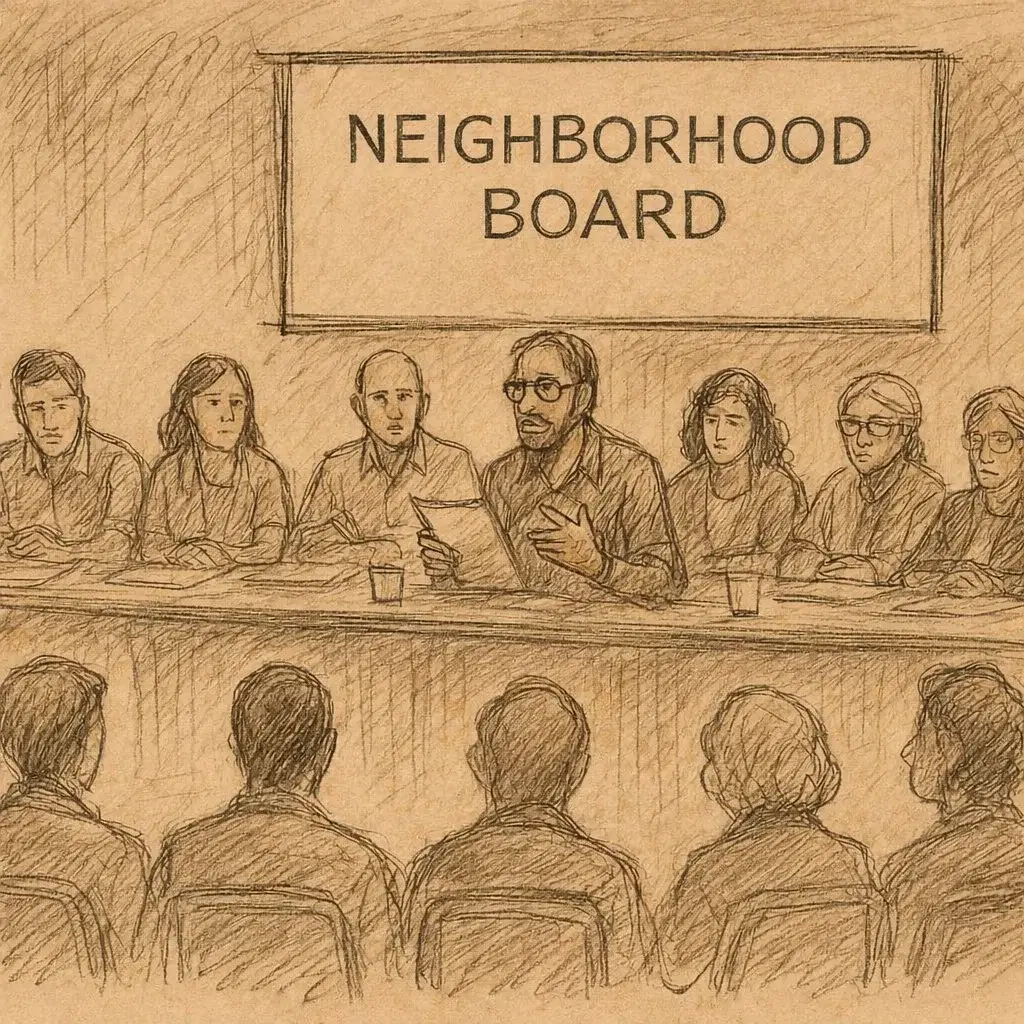
No 09 Waikīkī Neighborhood Board Regular Meeting June 2026
Listen to this article:
9 Waikiki Neighborhood Board Meeting – June 10, 2026
Meeting Opening and Attendance
The Waikīkī Neighborhood Board opened its June 10, 2026 regular meeting with roll call and introductions of board members, committee members, and staff, including Chair Bob Finley, Vice Chair Lou Radoshek, and Neighborhood Assistant Anson. Members from all three sub-districts were present in person and online, including board and committee representatives involved in public safety and legislative matters. The meeting then moved directly into agency reports and community testimony, with several agenda items reordered to accommodate presenters with time constraints.
Honolulu Police Department Crime Statistics and Enforcement Update
Honolulu Police Department representatives from District 6 presented Waikīkī crime and enforcement statistics for May 2026. Reported robberies increased to 6 from 2 the previous month, burglaries rose slightly to 7 from 6, thefts increased to 145 from 126, unauthorized entry into motor vehicles rose to 9 from 8, and assaults increased significantly to 51 from 38. Sex crimes declined to 8 from 14. Enforcement data showed 1 citation for bike or skateboard use on the sidewalk, 12 speeding citations with no arrests compared with 19 previously, and 1,498 parking citations compared with 1,556 in the prior month. Loud muffler and prohibited noise citations increased to 5 from 2. Park closure enforcement resulted in 45 citations and 11 arrests, compared with 38 citations and 16 arrests previously. Total calls for service rose to 4,332 from 4,160, while OVUII arrests fell to 4 from 6. HPD also noted uncertainty over enforceability regarding fire dancing in parks or public spaces, citing possible ceremonial and First Amendment concerns, but referenced Hawaii Administrative Rules 13-2211-3 as potentially applicable, along with possible parks rules on open flame.
Resident Concerns About Park Safety, Sidewalk Riding, and Zoo Area Traffic
Board and community members raised concerns about bicycles, electric bikes, and motor scooters traveling through Kapiʻolani Park and on sidewalks near the zoo, especially around closing time when children are present. Specific concern was expressed about fast-moving electric bikes being nearly silent and creating collision risks for families exiting the zoo in the late afternoon. HPD confirmed that riding in the park is prohibited and said enforcement would be increased, particularly in front of the zoo. The issue centered on pedestrian safety and conflicts between recreational traffic and heavily used family areas at one of the neighborhood’s busiest public spaces.
Parking Signage on Tusitala Street
A resident reported recurring ticketing on Tusitala Street where no-parking signage appears incomplete or unclear, particularly on the side of the street opposite a sign mounted high on a pole. The resident stated that cars are regularly ticketed despite a lack of visible signage on that side and argued that enforcement without clear notice is unfair. HPD agreed to look into the condition and placement of signs, particularly on Tusitala near Liliʻuokalani Avenue, and said they would coordinate with the relevant authority if replacement or additional signage is needed.
Noise Complaints, Boombox Cars, and Summer Enforcement
Residents described a renewed rise in nighttime noise from boombox cars, loud stereos, yelling, and street activity in the Kaiolu and Kūhiō area, saying conditions had improved for a time but were now worsening again. HPD explained that amplified sound from a vehicle can be cited if audible from 30 feet away and that loud mufflers are separately enforceable. For disorderly conduct tied to noisy individuals or businesses, police said enforcement is more difficult because it requires a complainant willing to pursue prosecution and a high threshold of unreasonable conduct. HPD attributed some of the increase to summer activity and more youth in Waikīkī while school is out, and said an enforcement project targeting these conditions had already been conducted in the prior week, with citations issued and results to be reported later.
America 250 Events and Waikīkī Fourth of July Fireworks
The board took up a special presentation from Lynn Mariano, one of the commissioners for Hawaiʻi America 250, on upcoming patriotic events tied to the 250th anniversary of the United States. He highlighted three free public events. The first was the June 14 “Massing of the Colors” at the Pearl Harbor Visitor Center beginning at 10 a.m., with attendees advised to arrive by 8 a.m. for free parking. The second was the July 4 parade in Kailua beginning at 10 a.m., with spectators encouraged to arrive between 8:30 and 9 a.m. The third and most relevant to Waikīkī was a major July 4 capstone celebration at the Waikīkī Pavilion area near the beach, running from 10 a.m. until around 8 or 8:20 p.m. The event will include vendors from 10 a.m. to 6 p.m., family activities, children’s events, food vendors, and fireworks donated through support from the Waikīkī Improvement Association and Southwest Airlines. The Honolulu Symphonic Band, described as an 80-piece ensemble, will perform patriotic music, with plans to time the finale around Tchaikovsky’s “1812 Overture,” followed if necessary by “Stars and Stripes” and “America the Beautiful.” Fireworks are expected to be launched offshore near the beach volleyball and sunset-on-the-beach area where Kapahulu meets Kalākaua, near the surf break known as the Walls. Organizers said they were also trying to arrange radio broadcast of the symphonic performance and emphasized coordination with police, fire, and EMS for public safety.
Kuhio Beach Bathroom Closure, Shower Area Sanitation, and Standing Water
During citizen concerns, residents requested an update on the long-closed bathroom near Kūhiō Beach and described unsanitary conditions around the adjacent shower and drainage areas. They said pooling water near the showers and in the landscaped or waterfall-like area behind the bathroom is dirty, foul-smelling, and potentially contaminated, with tourists sometimes allowing children to play there. Speakers warned of health risks including staph infection, especially where people with cuts or bare feet come into contact with the water. Another concern was that with the bathroom closed, some people have been using surrounding bushes as a toilet, further worsening sanitation. Suggestions included better cleaning methods, warning signs to discourage children from entering the water, and reopening the restroom as soon as possible. Board member Nate Sirota said “Simple Green” is used by parks staff and that the most recent estimate still pointed to reopening the Olohana-area bathroom sometime during the summer, though he would seek a more precise update.
Faded Lane Markings Behind the Zoo
A separate concern was raised about severely faded lane striping on Paki Avenue behind the zoo, particularly over a stretch of roughly 300 feet heading ʻewa from Monsarrat. The speaker said markings are so worn that drivers can no longer clearly tell which side of the road they should be on. The board asked that the responsible city agency be contacted to repaint the lanes, framing the issue as a basic traffic safety problem that affects everyday driving near a heavily visited park and zoo corridor.
Rental Scooters, Sidewalk Obstruction, and Safety Hazards
Multiple residents complained about rental scooters being abandoned on sidewalks, roadsides, and in bushes throughout Waikīkī, often in the early morning hours. Speakers described the scooters as old, noisy, dangerous, and a tripping hazard, with some saying children ride them unsafely and that the business model effectively allows users to dump them anywhere. One resident said the scooters had briefly disappeared in the past but were returning in large numbers, while another said he had confronted a worker who repeatedly staged several in front of a hotel before dawn. Board members discussed the legal distinction between earlier Lime scooter operations and the current vendor, noting that private scooter companies cannot lawfully park vehicles on city property and that the current operator is supposed to use designated private locations and retrieve scooters through GPS tracking. Another resident claimed homeless users exploit a mechanical glitch by rolling scooters backward to activate them and then leave them scattered around the neighborhood. The board identified the operator as Go X scooters and discussed gathering evidence, contacting customer service, and asking the city to address abandoned units more aggressively.
Public Candidate Announcement
A member of the public, Jason Liang, briefly announced that he is running for City Council and invited residents to a June 20 talk-story event at Kuliʻouʻou Park from 10 a.m. to 3 p.m. to share concerns and questions. No board discussion followed.
Upcoming Parades, Street Events, and Liquor License Notices
The board announced upcoming major Oʻahu parade and street events expected to affect traffic and neighborhood activity. These included the annual King Kamehameha Floral Parade on Saturday, June 13 from 8:30 a.m. to 1 p.m., the 43rd Annual Pan Pacific Parade on Sunday, June 14 from 3:30 p.m. to 7 p.m., and the Family Day Parade on Saturday, July 11 from 9 a.m. to 11 a.m. The board also announced a special liquor license application for Highgate Hotels at the Twin Fin Hotel while it seeks a regular license, and a liquor license hearing for Big Island Burger on Seaside Avenue scheduled for Thursday, July 9 at 4 p.m.
Representative Adrian Tam’s Legislative Update
Representative Adrian Tam reported that his office’s end-of-session newsletter was delayed because legislative printing and mailing were being handled in-house and had backed up due to demand from many legislators. He discussed a recent meeting on possible teacher housing development tied to either Jefferson Elementary or Kūhiō Elementary, explaining that the concept remains in a very early stage and Jefferson may not ultimately be selected. In response to a board question about state funding for Ala Wai Canal wall repair, he said the approximately $5 million appropriation was intended for overall Ala Wai repair design and maintenance rather than one single location, and also highlighted upstream debris management funding intended to reduce material flowing down into the canal. He said no construction timeline is available until the governor signs the state budget and the Department of Transportation can move forward with planning, design, and release of funds. He also acknowledged concern about missing sidewalks around Jefferson Elementary and pointed to recently enacted Safe Routes to School legislation as a possible path toward future funding, though no specific capital improvement money is currently set aside for those sidewalks.
Mayor’s Office Update: Police Chief, Homelessness, FEMA, and Small Business Loans
Mayor Rick Blangiardi’s representative Nola Miyasaki reported that incoming Honolulu Police Department Chief David Lazar of San Francisco is expected to begin in early July and was presented as part of a broader “transformational change” for HPD. She also said the city’s latest homelessness survey showed a reduction in unsheltered homelessness and an increase in sheltered residents, while the total count had not significantly fallen. The city viewed this shift as a positive development. Residents were reminded that the deadline to apply for FEMA assistance related to recent severe weather was June 14, using oneoahu.org or disasterassistance.gov. Miyasaki also highlighted a new city-backed microloan program through the Office of Economic Revitalization and Feed the Hunger Fund offering loans from $5,000 to $50,000 to early-stage entrepreneurs facing barriers to traditional credit. The program uses character-based underwriting, has no minimum credit score, and offers below-market rates of 6% to 8%, backed by up to $200,000 in lending capital. Eligible users include artisans, gig workers, informal businesses trying to formalize, and those who completed technical assistance programs.
Ena Road Demolition and Affordable Housing Redevelopment
The mayor’s office announced impending demolition at 436 Ena Road, formerly known as the Ena Motoy Building, in preparation for future affordable housing redevelopment. The city said permits and site preparation were underway and warned neighboring properties to expect periodic noise, dust, truck traffic, equipment staging, and vibration. Questions from the board established that this is the same building the city had previously acquired with Community Development Block Grant funds and attempted to use for housing formerly homeless individuals, but that it proved to be in such poor condition that demolition is now necessary. Council Chair Tommy Waters later added that because CDBG money was used, future redevelopment will likely need to meet affordability targets such as 60% area median income or below. The board also heard that planning continues on 1615 Ala Wai, with no major new developments beyond ongoing project work.
Responses to Prior Board Questions: Beach Boys, Crosswalks, and Ala Wai Bridge
The mayor’s office also delivered responses to prior month questions. On town halls canceled earlier due to the Kona low storms, the administration said the mayor and staff would continue visiting communities when issues warrant direct involvement and that neighborhood boards and 311 remain the main channels for engagement, while Mayor Blangiardi also appears weekly on Rick Hamada’s radio show Wednesday mornings on AM 830. Regarding Beach Boy surfboard stands on Kūhiō Beach, the city said the nonprofit associations operating the stands pay 30% of gross receipts to the city and are each allowed one outrigger canoe on the beach. A request for installation of a crosswalk signal on Kapahulu near Lemon Road was referred to the Department of Transportation Services, which said it would investigate the best pedestrian safety improvements. Questions about Ala Wai pedestrian bridge stipends, costs, and profile remained unanswered because DTS requested more time for research and will return with responses later.
Additional Mayor’s Office Follow-Up: Promenade Lights, Street Surface Conditions, and Hurricane Preparedness
Board members and residents used the mayor’s office segment to flag additional local maintenance and infrastructure problems. One board member reported that lights along the Ala Wai promenade makai of the convention center toward the Ala Wai Bridge are failing and flickering, making the route look erratic and reducing nighttime quality. Another resident returned to concerns about the poor road surface on the prominent side of Tusitala near Kaiʻolu, saying the street has been repeatedly patched, floods easily, and remains among the roughest road surfaces in Waikīkī despite earlier assurances that work was beginning in phases. An online participant asked whether the Department of Emergency Management is actively preparing for hurricane season in Waikīkī, including drills and coordination with the hospitality and tourism sector; the mayor’s representative said she would follow up. Another beach user again questioned the oversight of surf stands and canoes near the Duke statue and asked for more transparency about permit terms and stronger enforcement of set-up boundaries.
City Council Chair Tommy Waters: Disaster Preparedness, Bathrooms, Shopping Carts, and Street Noise
Council Chair Tommy Waters expanded on several city issues. He confirmed details about 436 Ena Road and said he would monitor any future redevelopment process. Responding to concern about disaster readiness, he said the administration had requested 8 additional Department of Emergency Management positions and the City Council added 5 more, for 13 total new positions. He also said the council included seed money in the budget for a resilience hub in every council district so residents have a place to go during major storms, though he acknowledged the funding was only a start and that one administration estimate put a single hub in Hauʻula at about $2 million. Waters also discussed after-action reports for both the Kona low storm and a previous tsunami warning, saying he was still waiting for the tsunami report despite earlier assurances that it was ready. He cited predictions of a “super El Niño” year with 5 to 10 storms as further reason for increased emergency management resources. For Waikīkī Beach facilities, he said the city budget includes $200,000 for a temporary restroom at Waikīkī Beach because existing restrooms frequently fail and families need dependable access. He also said he is awaiting HPD comments on a proposed shopping cart ordinance that would make it illegal to take shopping carts outside shopping center property, giving police a clearer enforcement tool. On street noise and disorder, he described firsthand the repetitive drum noise from a street performer in Waikīkī and said he has asked HPD to consider sidewalk obstruction laws and is also pursuing a bill that would designate where performers can go, potentially with input from the neighborhood board and Waikīkī Improvement District.
Building Energy Benchmarking Dispute and Planned Follow-Up
A major portion of the meeting centered on the city’s building energy benchmarking requirement. Council Chair Waters invited Director Kealoha Fox of the Office of Climate Change, Sustainability, and Resiliency and Energy Program Manager Marissa Kunsch to explain Ordinance 22-17, signed in July 2022. They said the law requires all commercial and multifamily buildings over 25,000 square feet to report annual energy and water use through the EPA’s free Energy Star Portfolio Manager system by June 30 each year. Larger buildings began reporting in 2023, buildings over 50,000 square feet in 2024, and smaller buildings over 25,000 square feet started in 2025. Officials said buildings account for about 30% of island emissions and the program is expected to reduce greenhouse gas emissions by 3% to 7% through voluntary action, while also improving data transparency and supporting better decisions by building owners and government. They reported Waikīkī compliance rates of 68% in 2024 and 66% in 2025, compared with an islandwide average around 55%, and said the city offers free training, weekly workshops, and a daily help desk.
That explanation was strongly challenged by board member Catherine Henske and another condominium representative, who said their 44-unit building spent about $6,600 and over 40 billable hours at $150 per hour to complete a 23-page report because management companies would not do the work and outside consultants had to be hired. She said the submission was repeatedly returned for what she described as trivial reasons, including a 135-square-foot discrepancy in building area, a high Energy Star score based on utility data, and failure to report gas use in a building with no gas service. She argued that the program imposes high costs on condominium owners without practical value and asked why the city was targeting condominiums instead of much larger users like hotels and timeshares. Director Fox responded that the ordinance applies broadly to commercial and multifamily buildings across Oʻahu, not only Waikīkī condos, and said any prior suggestion otherwise from a city hotline was incorrect. Another online participant asked whether noncompliant buildings would be fined. Fox replied that no fines are currently being imposed for lack of reporting and emphasized that the city is seeing record compliance this year. The exchange ended with agreement to schedule a fuller formal presentation in August so the board and residents can focus specifically on what the collected data is used for and whether its benefits justify the burden.
Senator Sharon Moriwaki’s End-of-Session Report
Senator Sharon Moriwaki reviewed legislation and budget items advanced during the 2026 legislative session that align with priorities frequently raised by Waikīkī residents. On homelessness, she said the state budgeted $18 million for the Kauhale tiny-home initiative. On housing, she reported more than $180 million in affordable housing funding through the Hawaiʻi Housing Finance and Development Corporation. On crime, she said HB 2078 did not become permanent but its sunset was extended another five years, preserving the habitual violent crime act while the state gathers data to measure its effectiveness. She noted that loud vehicle and garbage truck noise bills did not pass this year but remain ongoing concerns for future sessions. On mental health and substance abuse, she said the Legislature increased oversight of behavioral health resources and contractor performance after concerns about some Kauhale operations. On elder care, she highlighted $29 million for kupuna supportive housing in Kakaʻako, envisioned as a smaller 40-to-50-unit pilot where case managers help frail seniors age in place before needing assisted living. She said a contractor is now in place and the hope is to replicate this model in other communities if successful.
Waikīkī Beach Restoration, Sand Replenishment, and Property Owner Responsibility
Senator Moriwaki spent substantial time on Waikīkī shoreline restoration and sea level rise response. She said the Legislature adopted a resolution clarifying that the state will take responsibility for restoring Waikīkī’s coastline, including sand replenishment and groins, in a more systematic way rather than responding piecemeal through lawsuits. She reported $7 million for one sector of Waikīkī beach restoration and $8 million for Ala Wai Regional Park sand restoration, the latter tied to a project already designed and permitted. She explained that future beach work is intended to proceed comprehensively from Ala Wai Small Boat Harbor to Kaimana Beach, with annual funding potentially directed sector by sector once the plan and design are in place. She described the current urgency at Kavehevehe and near the deteriorating Halekūlani-facing seawall area, where beach width has been lost entirely in places. Her account distinguished between state responsibility for sand and groins, private owner responsibility for stabilizing their own seawalls and on-property structures, and planning responsibility now shifting away from DLNR toward the Office of Planning and Sustainable Development, which she said is better suited to lead implementation. In response to concerns that previous state agencies had failed to follow through, Moriwaki said the money is now specifically appropriated for these purposes and that she is personally overseeing progress.
Legislative Process, Noise Bills, and Committee Bottlenecks
The discussion of failed noise legislation led to a broader explanation of how bills die at the Legislature. In response to a question from an online participant, Moriwaki confirmed that a garbage truck noise bill had stalled in the House Judiciary Committee and noted that committee chairs have broad control over whether bills are heard at all. Residents and board participants expressed frustration that important urban quality-of-life bills can be effectively killed without a vote if chairs decline to schedule them, especially when many neighbor island and rural legislators do not experience Waikīkī’s noise conditions directly. Moriwaki encouraged strong public testimony and repeated testimony year after year, noting that chairs and committee memberships change over time and that visible engagement helps lawmakers gauge whether an issue is urgent.
Governor’s Office Comments on Energy Efficiency and Preparedness
Governor Josh Green’s representative, Yvonne, gave a brief update while recovering from bronchitis. She said hundreds of bills passed by the Legislature are still awaiting the governor’s action and that she expects most to be signed. She also said the state is focused on hurricane preparedness and county coordination. Addressing the benchmarking issue from the state’s perspective, she acknowledged that the reporting process can feel onerous but stressed that benchmarking larger buildings is considered an important part of meeting renewable energy and affordability goals. She said the state has benchmarked six state facilities and analyzed potential savings from solar, batteries, water conservation, and other improvements, and she linked these efforts to Governor Green’s emphasis on energy affordability alongside housing and healthcare, particularly amid steep electricity bill increases of 20% to 30%.
Waikīkī Improvement Association Transition and Beach Funding
In what was described as his final appearance before the board after 27 years, Waikīkī Improvement Association President Rick Egged announced that he will retire at the end of June. He said Waikīkī Business Improvement District Executive Director Trevor Abarzua will become president of the Waikīkī Improvement Association and that the BID will return under the WIA umbrella. Egged also explained that the Beach Special Improvement District Association will continue to exist and continue helping fund beach improvement work. He said it was created so beach restoration costs borne by private landowners could be spread across Waikīkī’s business property owners, noting that it paid for half of the Royal Hawaiian groin that preserved Kūhiō Beach Park and also contributed to the environmental review work for the current Kavehevehe restoration effort. He emphasized that the Kavehevehe project will use offshore sand already in the littoral system rather than imported material and framed current shoreline efforts as a partnership between the state, the community, and the business sector.
Egged also said Waikīkī’s tourism significance remains widely recognized, estimating that Waikīkī alone accounts for nearly half of the state’s tourism industry. He announced that the university is updating an economic study funded by the organization and noted that the beachfront sunset movie program is entirely privately sponsored, with Southwest Airlines serving as a lead sponsor and no government money supporting the event. He said the Kūhiō Beach Hula program, however, remains dependent on Hawaii Tourism Authority support and is facing uncertainty because HTA contract solicitations have been delayed. He also noted that Aloha Festivals is marking its 80th anniversary and said more than 100,000 people attend Aloha Festivals events. In closing, he described the business community’s mandatory improvement district assessments as a major source of funding for visible neighborhood services such as ambassadors, cleaning crews, security, and district maintenance, and said the millions spent through those efforts have been essential to Waikīkī’s present condition.
Kuhio Beach Shower Improvement Project
The board received a presentation from the City and County of Honolulu Department of Facility Maintenance and consultants on the Kūhiō Beach Shower Improvements project. City staff explained that in 2017 the Hawaiʻi Department of Health identified beach shower runoff as an environmental and regulatory concern because shower wash water was discharging into nearshore waters. The project is split into two phases. Phase 1, covering showers 7 through 11 and including the Kaimana Beach shower, is already in design and moving through permitting and environmental review. Phase 2, now in conceptual development, covers showers 1 through 6 along Kūhiō Beach from the Kapahulu groin westward toward the police substation. Officials said the primary project goal is regulatory compliance under water quality rules, specifically preventing shower runoff from entering the ocean untreated. Secondary goals include protecting nearshore water quality, conserving potable water, exploring potential water reuse, improving maintainability and durability, increasing sustainability education, and improving the user experience for residents and visitors.
The consultants emphasized that the project is still at the concept stage and that the city deliberately began community outreach early rather than waiting until design was far along. They conducted public engagement from fall through spring, including outreach at neighborhood board meetings and tabling at the Hula Mound on February 7 and February 10. A community survey open from February 1 to February 20 received 91 responses, largely from residents, business owners, and frequent beach users. Survey findings showed top concerns were standing water and drainage problems, protecting beach views, and ensuring showers remain durable, easy to use, and have strong water pressure. Nearly 90% of respondents said they use the showers for less than two minutes, which the project team said supports quick, efficient, water-conscious designs. Conceptual options under review include connecting shower water to the sanitary sewer, relocating shower sites farther from the shoreline, capturing and treating water for nonpotable reuse, and coordinating designs closely with city maintenance crews. During board discussion, some participants objected to the premise that rinse water from beach users should be treated as graywater needing sewer disposal, especially because users bring sunscreen and sand into the ocean before showering anyway. Others argued the real problem is poor drainage and standing water, suggesting alternatives like French drains, stronger rules against soap use, or subsurface irrigation systems. The board cut off the discussion for time but the presentation made clear that more public review is expected later in 2026 before any final conceptual report is completed.
Public Safety Committee Report
Public Safety Committee Chair Tim Hike reported that the committee met on May 26 at the Waikīkī Business Improvement District office with HPD Major Okamoto, Captain Toma, and a night watch lieutenant. He said HPD told the committee that crime categories were generally down at that time except for assaults on officers, which had increased. The meeting generated two issues he later referred to the prosecutor’s office: an exception in the sit-lie ordinance for persons in wheelchairs and ongoing concerns about street performers. He also referred these items to the board’s legislative committee for possible action. Hike said another concern involved business owners refusing to press charges against suspects, which makes enforcement and prosecution harder for police. He contacted the Waikīkī Business Improvement District and said it is willing to assist in addressing that problem. He added that he is finalizing details for the next committee meeting.
Legislative Committee Plans
Board member Jillian Anderson reported that the City and State Legislative Engagement Committee is expected to hold its first meeting in the latter half of June. She invited board members and community members to send state or county legislative ideas as soon as possible if they want those items included on the formal agenda.
Board Administration and Attendance Review
The board addressed required attendance review under neighborhood board rules stating that any member missing three meetings must be asked whether they wish to continue serving. Two members, including Sarah Worth, confirmed that they do wish to continue. The board then approved the May 12 meeting minutes by unanimous consent, subject to audit, with one abstention requested.
Meeting Adjournment
With no further subdistrict reports and no remaining business, Chair Finley adjourned the meeting and asked for help putting away tables and chairs. The meeting had covered a broad range of practical neighborhood concerns, from crime trends and noise to sanitation, beach facilities, emergency readiness, coastal preservation, and the evolving relationship between public agencies, private organizations, and residents in managing daily life in Waikīkī.