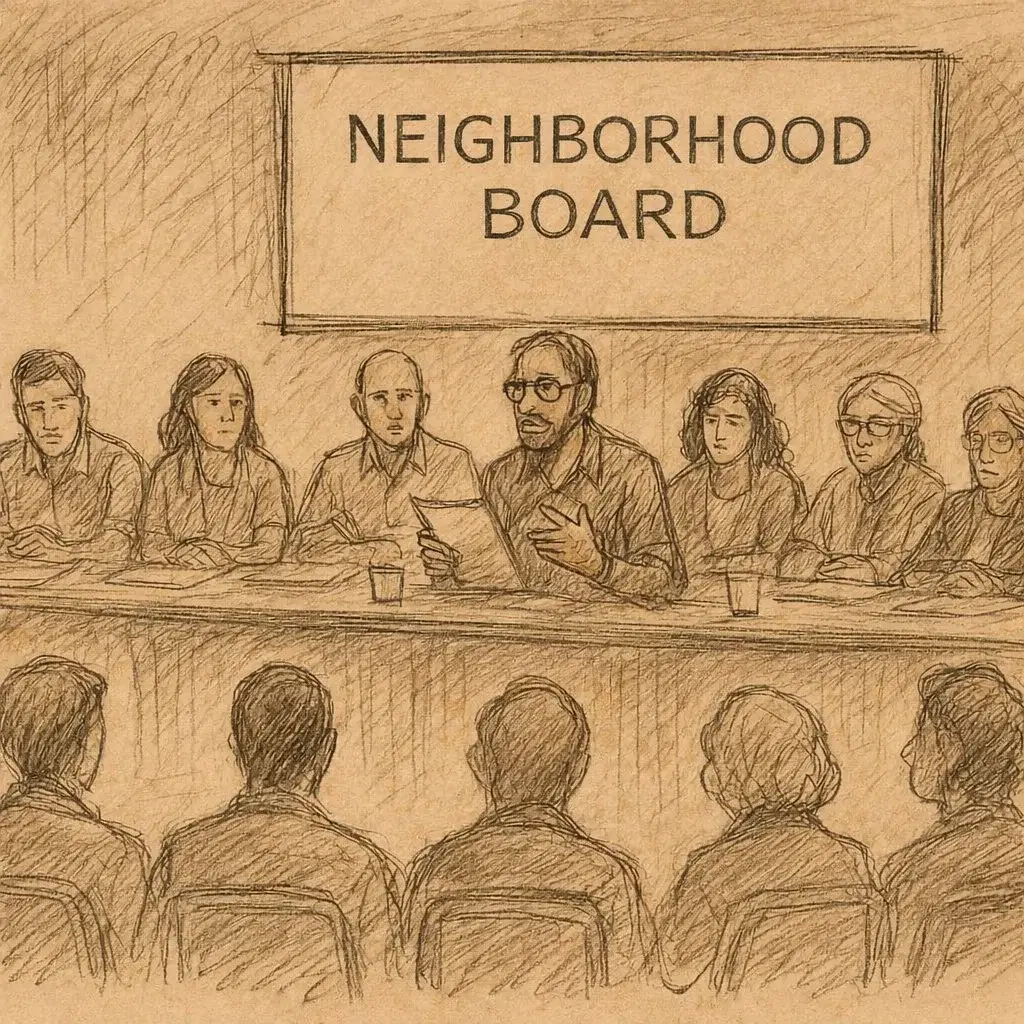
No 24 Wai'anae Coast Neighborhood Board Regular Meeting September 2026
Listen to this article:
24 Waianae Coast Neighborhood Board Meeting – September 2, 2026
Oxygen-Dependent Seniors During Power Outages
A resident of the senior housing complex across from Pili Lawa Park described how the property remained without electricity for six days during the recent storms, even though surrounding areas had power. Two residents depend on oxygen, including one who requires it continuously and reportedly had to contact the Fire Department for assistance. The resident asked whether HFD could provide advance support, coordinate oxygen supplies, or establish another emergency remedy for medically vulnerable tenants. The response explained that HFD has no authority over electrical service or the complex’s internal power system and recommended that residents raise the prolonged outage with the property owner. Anyone unable to breathe or access essential oxygen during an outage should call 911, at which point emergency personnel can respond. No broader backup-power or oxygen-support plan was established during the discussion.
Police Crime and Service Statistics
Honolulu Police Department District 8 Community Policing reported August statistics through Corporal Cory Makino, with Sergeant Fumi Moroka also online. District 8 recorded 14 motor vehicle thefts, including four in Waianae; 22 burglaries, including five in Waianae; 100 thefts, including 25 in Waianae; and 11 unauthorized entries into motor vehicles, including one in Waianae. Officers issued one speeding citation, 297 moving-violation citations, and 208 parking citations, with 874 total citations issued. District 8 received 8,452 calls for service, of which 1,640 came from the Waianae area. A board member asked whether burglaries increased during recent nighttime power outages. HPD said September showed an increase, but it had not yet determined whether that increase was connected to the outages and agreed to follow up at the next meeting.
Abandoned Vehicles, Firearms, and Gun-Violence Data
A resident again reported an abandoned van in the Waianae Kai area that had remained for approximately two or three months and was being stripped for parts. The concern was identified as a matter for the city’s abandoned-vehicle process. Board Member Nani also relayed a request from the Housing and Public Safety Subcommittee for better information on gun violence and firearms recovered in the community. HPD explained that crimes involving guns are investigated, often with detective involvement; recovered firearms are confiscated and held as evidence, serial numbers and registered owners are checked, and officers determine whether a firearm was stolen or is an unserialized “ghost gun.” Firearm recoveries are not included in the standard monthly neighborhood-board statistics. The board requested that HPD explore adding firearms-related cases and recovered-gun data to future reports on an ongoing basis.
Mental-Health Crises and Traffic Enforcement
A community member described an apparent increase in people experiencing mental-health or substance-related crises in public places, including individuals entering traffic near Waianae Mall and a man at the McDonald’s drive-through who allegedly pounded on vehicle windows, blocked cars, and harassed customers. The resident said the McDonald’s manager had stopped calling HPD because officers reportedly did not respond. HPD said patrol officers normally respond to these incidents, assess the person’s condition, and may consult a contracted psychiatrist or arrange hospital evaluation. The department has also formed a task force that partners with the city’s CORE program to conduct in-person assessments and determine whether people should be taken to a hospital, shelter, or treatment setting. Residents were urged to call when someone is entering traffic or creating a danger. The same speaker praised an increased motorcycle-officer presence and enforcement against speeding and red-light violations, which HPD attributed to continued work by the Traffic Division.
Encampment Cleanup and Displacement
Board Member Dana Newman asked about an upcoming cleanup or sweep in the Sewers area and whether HPD would participate, as well as what happens when people are displaced into neighboring communities. HPD said warnings were expected to be issued the following morning and that the cleanup itself was anticipated Thursday. Officers would attend for safety, while outreach workers would offer services and placement options such as HONU. HPD acknowledged that it has little control over where people relocate if they decline or leave available services, and no system for tracking their movement or evaluating effects on surrounding neighborhoods was described.
Ocean Rescues, Sharks, Storm Operations, and Junior Lifeguards
Ocean Safety Captain KK of Leeward Operations reported that two swimmers were in distress at Mākua Beach on August 14 and were recovered by a rescue team. A patient from a scuba boat at Mākua was also transported to EMS after suffering a severe jellyfish sting around the neck. Multiple shark sightings were reported around Mākua and Pōkaʻi Bay, and Ocean Safety is monitoring the area because sightings may increase during October and November. During the recent hurricane and tropical-storm conditions, towers were closed during part of the morning but remained open for much of the day; lifeguards concentrated on preventive actions and reportedly completed only two rescues, including incidents at Nānākuli and another west-side location identified in the transcript as “Tumbland.” Crews also removed trees and storm debris from beaches. The Westside Junior Lifeguard team placed third in the state championships.
Dolphin Harassment and Marine Enforcement at Mākua
A resident reported seeing two boats follow and split a pod of dolphins in Mākua Bay, with vessels approaching from opposite sides. While the resident recorded and reported the conduct, people aboard one boat allegedly laughed and one man exposed himself. Ocean Safety advised submitting the video to the Department of Land and Natural Resources and, if necessary, elevating the wildlife complaint to federal authorities. Board Member Maile Tesoro said vessels must remain at least 50 yards from dolphins, not 50 feet, and that serious cases may be forwarded to NOAA, potentially jeopardizing a captain’s license or vessel. The DLNR enforcement number provided was 808-643-3567. Residents were advised to record the vessel’s HA registration number, because only four enforcement officers reportedly cover the area from ʻEwa Beach to Keawaʻula and may not arrive immediately. Another speaker suggested reporting the alleged exposure to 911 and asking officers to meet the vessel at the harbor. Ocean Safety clarified that the Mākua rescue response was called in and personal watercraft were launched from the harbor rather than from an on-site lifeguard station.
Ocean Water Quality and Washed-Out Access
A board member asked whether washed-out road conditions after the Kona low had hindered emergency response to Mākua. Ocean Safety indicated that response times remained approximately the same, particularly because rescue watercraft could be launched from the harbor and sea conditions had been flat. In response to a separate question about bacterial contamination after storms and runoff, Ocean Safety said the Department of Health conducts sampling, especially around Pōkaʻi Bay and the area identified in the transcript as “Polina.” No separate pre-shift testing program conducted by lifeguards was described.
Water-Main Failures and Water Conservation
The Board of Water Supply reported two water-main breaks during the previous month on Hale Ahi at the end of Waianae Valley Road. The representative stated that the pipe is in poor condition and that another break is likely. BWS also promoted its free “Imagine a Day Without Water” event scheduled for Saturday, September 26, from 9 a.m. to 1 p.m. at the Arch of Safety at Waianae Mall. Organized with Representative Chris Muraoka’s office and more than 25 government, nonprofit, and community organizations, the event was to include educational exhibits, activities, games, prizes, a rain-barrel workshop, food, and refreshments. Its “One Water” theme emphasizes managing interconnected water resources as a single valuable system. Board members responded that Waianae needs planning focused on securing and replenishing water, slowing development where supply is limited, and supporting planting and watershed restoration, rather than merely imagining a day without water. Members again requested an answer to a prior water-supply question and asked for an update on an application to designate Waianae as a water-conservation area, noting that the moku was reportedly one of the only areas on Oʻahu without such a designation. The BWS representative did not have those answers at the meeting.
Army Job Fair and Upcoming Military Exercise
Major Nathan Siderly, executive officer for Lieutenant Colonel Shawn Straw’s battalion in the 25th Infantry Division, announced a public U.S. Army Garrison Hawaiʻi job fair on September 15 at the Helemano Military Reservation gym from 8:30 a.m. to 2 p.m. Applicants may walk in or seek information through himwr.com. He also announced the annual Joint Pacific Multinational Readiness Center exercise planned for October and November. The exercise will involve the 25th Infantry Division, joint-service units, and multinational partners, producing additional traffic and noise around the Kahuku Training Area, Dillingham Airfield, East Range, and Schofield Barracks. More details were expected as planning was finalized.
Military Noise, Cultural Protocols, and Training Impacts
Residents and board members raised longstanding objections to military bombing, artillery, aircraft, and nighttime training audible in Lualualei and Waianae valleys. Dana Newman said 55 years of living with military noise had affected residents, pets, sleep, and Hawaiian spiritual practices, including culturally significant nighttime periods. Major Siderly apologized and said some night training is unavoidable, though the Army tries to limit weekend activity. He anticipated fewer artillery impacts in Mākua Valley and on the Leilehua Plain during the upcoming exercise, with rotary-wing aircraft likely to be the most noticeable source of noise. Residents also recalled a historic incident in the 1980s in which military ordnance crossed into the Waianae side and damaged a home. Several speakers called for cleanup, reduced occupation of Hawaiian lands, respect for Native Hawaiian protocols, and restoration of access to places once used for hunting and gathering.
Military Cultural Education and Social-Media Conduct
A resident asked how authentic Hawaiian history and cultural education could be incorporated into military employment and training programs. Major Siderly said incoming Army personnel receive approximately four to six hours of cultural education during reception, but acknowledged that this is not sufficient and that the Army is considering improvements. The board requested a future report identifying who provides the training and exactly what is taught. Another speaker objected to 25th Infantry Division personnel performing haka and chants on social media without authorization or appropriate consultation and said outreach to the command had been met with online backlash. The resident asked the Army to meet with cultural practitioners and correct the social-media post.
Military Runoff, PFAS, Air Quality, and Marine-Animal Deaths
Multiple speakers asked the Army to investigate whether military lands contributed to contaminated runoff during the Kona low and whether pollutants from Mākua and Schofield may be affecting community health. Concerns included PFAS “forever chemicals,” unexploded or residual military materials, elevated cancer rates in ZIP code 96792, runoff reaching the ocean, and the recent discovery of a dead monk seal near ʻŌhikilolo and Mākua. Residents requested independent water testing conducted with the Department of Health rather than reliance solely on military reports. Another resident asked whether the Army monitors air before and after explosives training to determine whether residues or chemicals cross the Waiʻanae Range. Major Siderly said the Army can test potable water but did not have information about marine-water testing or post-training air monitoring and agreed to investigate. A separate concern about the Navy’s Lualualei facility, stream channelization, wildfire management, and water pumping was recognized as a Navy matter, with the chair agreeing to seek answers from the appropriate agency.
RIMPAC, Marine Life, and Sexual-Assault Accountability
Residents requested information on marine animals allegedly harmed or taken during RIMPAC and asked how military personnel and visiting forces are held accountable for sexual assault, particularly before they leave Hawaiʻi. Major Siderly explained that he could speak only for the Army, not the Navy, Marines, Coast Guard, or allied forces. He said the Army treats sexual assault and harassment seriously and maintains restricted and unrestricted reporting procedures from company through division level. For foreign allied personnel, consequences may include being declared persona non grata and facing proceedings in their home country. No statistics on RIMPAC-related sexual assaults or marine-animal impacts were provided.
Mākua Cleanup, Cultural Sites, Access, and Disaster Assistance
Residents asked why Army personnel were not visibly helping clean Mākua after the Kona low, especially when approximately 1,000 people reportedly helped clean Mākaha Beach. They asked the Army to remove logs and debris, inspect damage to archaeological sites, petroglyphs, and other cultural resources, and provide the next date for community access into the rear of Mākua Valley. Major Siderly said his battalion had supported storm response elsewhere and stood ready during the latest storm and power outages, but he was not aware of substantial Army involvement in Mākua cleanup. He also lacked information on damage to cultural sites and said he would provide a future access date. In response to a direct question, he said he knew of no realistic current plan to end the military presence in Hawaiʻi. An online participant urged the military to acquire portable solar-battery generators for kūpuna and disaster response, citing the need for backup energy during hurricanes and outages.
GROW Food-Waste Composting Program
City Recycling Branch Acting Chief Julie Eliano presented the Green Recycling Organics Waste, or GROW, program. Oʻahu households generate about 60,000 tons of food waste annually, and the city aims to divert 95% of waste from landfill by 2030. A pilot began April 1, 2026, in Waipahu, Nānākuli, Hawaiʻi Kai, Mililani, Kailua, and Kalihi, with islandwide expansion scheduled for October 1. Residents receiving automated curbside service will be able to place food scraps directly into green carts with yard waste. Accepted food materials include fruits, vegetables, solid or semi-solid dairy products, bread, baked goods, pasta, rice, grains, cereal, beans, nuts, seeds, meat, poultry, seafood, bones, shells, eggshells, leftovers, spoiled food, plate scrapings, loose coffee grounds, and tea leaves. Existing green-waste items such as grass, leaves, branches, hedge trimmings, palm fronds, and natural Christmas trees will remain accepted.
GROW Restrictions, Collection, and Processing
Liquids, paper, plastic, metal, glass, grease, oils, pet waste, cups, takeout containers, pizza boxes, fast-food packaging, cork, soil, rocks, bricks, and plant pots cannot go into GROW carts. Products marketed as biodegradable or compostable are also prohibited because of concerns about PFAS in manufactured compostable materials. Residents were advised to collect scraps in sealed reusable containers, freeze them until collection if odor is a concern, and place them loose into the cart without bags or liners. Baking soda, coffee grounds, and layers of green waste may help absorb moisture and reduce odors. Collection will remain biweekly with no schedule or traffic changes. Residents may make up to two free noncommercial self-drop-offs per day at Hawaiian Earth Recycling’s Wahiawa composting facility; city transfer stations will continue taking green waste but not food scraps. Hawaiian Earth, described as USDA-trained to handle coconut rhinoceros beetle host materials, converts the waste into compost sold to homeowners, landscapers, farmers, and other users.
Community Requests for Local Composting and Agricultural Education
Residents broadly supported reducing food waste but questioned a system in which households provide organic material that a contractor processes and sells back to the public. Farmers and educators asked the city to prioritize community-scale composting classes, school education, worm bins, home gardens, and direct access to locally produced soil. Speakers described simple composting methods using alternating brown material, green material, soil, and water, with regular turning, and suggested that storm debris and unmanaged vegetation could also become soil. Others noted that high residential water rates discourage food production. Residents asked about the city’s capital investment in Hawaiian Earth, whether other food-waste processors exist, and whether an equivalent facility could be established in Waianae and run by local people, since Wahiawa is too distant for convenient self-hauling. The presenter said Hawaiian Earth is the city’s contracted processor but did not have immediate answers on capital costs or other facilities. The chair noted that Island Topsoil operates locally but does not accept food scraps and agreed to share future workshop information.
Proposed Charter Amendments for the November Ballot
Honolulu Charter Commission Chief of Staff Kalil Pauvaris announced that voters will see 20 city-charter amendment questions on the November 3 ballot. The charter functions as Honolulu’s local constitution and governs the city’s structure, including the mayor, agencies, and neighborhood-board system. The 13-member Charter Commission convenes every 10 years, with appointments divided between the mayor and City Council. Topics on the ballot include food security, Native Hawaiian and cultural stewardship, ethics and accountability, formation of an LGBTQ+ commission, and creation of an office related to resources and cultural stewardship. Explanations, testimony, proposals, translated materials, and an informational booklet are available through honolulucitycouncil.org/commission and the Oʻahu Votes page. The commission planned another Waianae-area meeting near the end of September, possibly at Waiʻanae Comprehensive Health Center, Waiʻanae High School, or an elementary school, beginning around 7 p.m., plus an islandwide Zoom session. The effective date of any approved amendment will depend on the specific measure.
Requests for More Charter and Election Information
Residents asked for an open primary system that would allow voting across party lines, arguing that the existing partisan ballot limits voter choice. A board member asked whether the large council district would receive a meeting on the Waianae side rather than requiring residents to travel to Kapolei, and the commission confirmed that a west-side meeting was planned. An online participant specifically asked for public explanations of questions 2, 3, 16, and 17 because of their relevance to ZIP code 96792. The commission declined to review them in detail during this meeting but agreed to email the material to the chair and return for a dedicated community presentation. The chair committed to distributing the booklet and announcing the follow-up meeting.
Proposed Andamira Mākaha Luxury Development
The dominant community concern was a reported luxury residential and resort project called Andamira Mākaha on the former Sheraton and golf-course lands in Mākaha Valley. Residents said online materials, later removed, described approximately 600 units over multiple phases, detached homes, hotel or short-term-rental uses, resort-style pools, extensive glass architecture, and reopening of the former golf course. Speakers identified the project’s reported participants as Mākaha Development Company, Mākaha Golf and Resort 3 LLC, Korean design firm Y Group, real-estate broker Healy Realty Homes, and architectural planner Bowers + Kubota, although these details were presented by community members rather than confirmed by the city. One resident said the developer had recorded condominium documents and received a public report, while the project website still characterized the master plan as subject to approval. Residents asked for permit and application numbers, copies of studies and plans, a complete list of approvals already granted or pending, and a clear schedule for public testimony.
Water, Infrastructure, Traffic, and Emergency Risks from Mākaha Development
Opponents argued that Mākaha lacks the water, roads, electrical capacity, wastewater systems, and emergency routes needed for a large luxury project. Speakers cited existing Waianae water use of approximately nine million gallons per day—about four million from Waianae sources and five million imported from Honouliuli—and alleged that the project could require more than one million additional gallons per day, especially if individual pools are included. They questioned whether groundwater wells exist on the property, who monitors pumping, and whether importing water from Puʻuloa or Honouliuli would transfer resources from already burdened communities. Farrington Highway remains the only principal route in and out, with residents already describing commutes of up to two hours. Additional vehicles could worsen congestion, air pollution, evacuation risks, and access for emergency services. Speakers also cited failing power lines, wildfire-prone guinea grass, and lessons from the 2023 Lahaina fire, where limited roads, water constraints, and surrounding vegetation intensified disaster risks.
Cultural, Environmental, and Housing Objections to Mākaha Development
Residents said the development would accelerate gentrification, raise property values and taxes, displace Native Hawaiian and multigenerational local families, and change the rural character of the coast. Speakers emphasized that the coast has one of the world’s highest concentrations of Native Hawaiians, while Native Hawaiians comprise less than 17% of Hawaiʻi’s population and, according to one speaker, less than 12% of Oʻahu’s population. They objected to luxury housing, celebrity-oriented marketing, vacation rentals, invasive ornamental landscaping, golf-course pesticides, and foreign design themes rather than restoration of Native Hawaiian habitat and culture. Questions were raised about burials, archaeological resources, family access, cultural protocol, stream management, wildfire prevention, dust, runoff, marine impacts, and compliance with the Clean Air Act. Residents requested an environmental impact statement, a cultural-impact or Ka Paʻakai analysis, enforceable environmental protections, local hiring and living-wage commitments if the project proceeds, and rezoning from resort and golf-course uses to conservation, food production, affordable housing, or community-serving uses.
Community Alternatives for Mākaha Lands
Speakers proposed using the land for affordable homes, food-security projects, community farms, a cultural center, swimming facilities, youth programs, health and obesity prevention, and Native Hawaiian habitat restoration. Residents stressed that households in apartments or Section 8 housing need land where they can grow food. A descendant of longtime Mākaha Valley caretakers said the ahupuaʻa historically supported abundant fishing and productive agriculture and should again support community survival rather than a luxury enclave. Another resident recalled successfully organizing against a prior golf-course proposal in 2012 and brought records from that campaign. Community members called for sustained attendance at neighborhood-board, watershed, City Council, and kūpuna meetings rather than relying on a single gathering. They also requested a dedicated future agenda item and direct presentation by the developer. The chair clarified that the widely circulated flyer suggesting a developer presentation had not been produced by the board and that no such presentation was on this meeting’s agenda.
Other Mākaha and Waianae Land-Use Concerns
A landowner warned that attention should not be limited to the eastern side of Mākaha Valley. He identified another 249-acre area on the northwest side, reportedly involving about 40 acres for agricultural use connected to MAʻO Organic Farms and 209 acres potentially subject to residential or “gentleman estate” development around the towers, plantation area, and Keaʻau. Residents asked the city to give the board early notice of all planning and permit activity rather than waiting until projects are advanced. Another speaker discussed Lāhīlāhi, described as a culturally significant mountain that holds water, and invited the community to monthly stewardship cleanups on the first Sunday from 8 a.m. to noon. The speaker called for recognition of underground water systems, restoration of mauka-to-makai flow, and greater accountability for private landowners.
Alleged Elder Exploitation by an Auto-Repair Business
A resident alleged that a Waianae auto-repair shop charged his Native Hawaiian father, a Vietnam veteran and retired federal employee, approximately $19,000 for brake-related work, including about $12,000 in labor, $6,000 in parts, and $200 for two nuts. He said his father’s cognitive condition made him vulnerable and alleged that the business owner used intimidation and tried to prevent another mechanic from working on the family’s vehicle. The resident asked where to report the matter and how to protect other kūpuna from similar practices. No agency referral or formal response was provided before the discussion moved on.
Ranch Management, Cattle, and Drilling Concerns
Michael Eli raised repeated concerns about management of land in Punanaʻula and Waianae Valley Ranch. He said cattle and horses were escaping onto roads, entering areas around the Manini family property and graves, and damaging culturally sensitive land. He questioned oversight of the entities Hoʻo Mau Ke Ola and Kahala Farms, which he described as holding dual leases, and asked whether drilling was planned on historic-preservation land. The city later explained that the Department of Planning and Permitting does not issue drilling permits and would need to research which agency has authority, potentially depending on ownership. Eli also invited volunteers to help maintain a firebreak during a second-Saturday stewardship event.
Illegal Dumping, Social Security, and Youth Employment
Online testimony called for illegal-dumping signs at Piliuka Place, described as a recurring dumping hotspot that city maps allegedly misidentify as “Upper Nānākuli 1.” The speaker also warned that, absent congressional action, Social Security benefits may be reduced by 22% in approximately six years, around 2032. Another online participant publicized HPD employment pathways for young adults and kūpuna, including Public Service Officer cadet positions for ages 18 to 21 and Public Communication Officer dispatch positions. The speaker cited approximate starting salaries of $71,000 for cadets, $91,000 upon later progression, and $56,000 for entry-level communications staff, though those figures were not independently confirmed during the meeting.
Mayor’s Office and City Follow-Up Reports
Mayor Rick Blangiardi’s representative, Dawn Takeuchi Apuna, reported that HPD policies are reviewed and updated continuously through coordination between the Information Technology Division and element commanders. Regarding conflicts at Chinatown liquor establishments, HPD has increased police presence and the Liquor Commission is focusing on service to intoxicated customers, crowd control, and compliance with license conditions. The city also reported that driver’s-license and state-ID renewals are up approximately 54% from the prior year because the first generation of REAL ID credentials is expiring. About 7,500 credentials are expected to expire monthly through January 2027, with wait-time pressure potentially easing closer to fiscal year 2028. Residents objected that reports to the Waianae board should prioritize Waianae concerns rather than Chinatown matters.
Abandoned Property on Waianae Valley Road
The mayor’s representative reported on 85-157 Waianae Valley Road, where overgrowth and accumulated trash had prompted complaints. DPP issued Notice of Violation PI0089812 on January 20 and mailed it to the owner’s address listed with the Real Property Assessment Division, but the U.S. Postal Service returned it as undeliverable. DPP will continue attempting to identify or locate the owner. HPD reportedly could not proceed against the property without a known responsible owner.
City Status of the Andamira Proposal
Dawn Takeuchi Apuna said DPP had not received formal development applications for the Andamira Mākaha project. The developer had requested zoning verifications and was exploring a joint development agreement, which can combine parcels for development planning. Those actions were characterized as preliminary information gathering rather than approval of a zone change or discretionary permit. The city agreed to report if an application is filed. In response to requests to rezone Mākaha resort lands to conservation or preservation, DPP said a zone-change application would be required and would be evaluated for consistency with the area’s development plan, the city’s general plan, and potential impacts, with opportunities for public participation.
Mayor’s Town Hall, Development Transparency, and Energy Concerns
Residents asked the mayor to reschedule a west-side town hall canceled because of the Kona low and demanded earlier public disclosure of development activity. A speaker also asked for clarification of an online clip suggesting that Mayor Blangiardi had a plan to choose his successor. The representative affirmed that voters determine the next mayor and agreed to review the post if provided. Another resident asked about a possible state agreement to import liquefied natural gas from Japan and expressed concern that an LNG vessel or facility near the Waianae coast could create explosion and environmental risks. The mayor’s representative said LNG was likely a state-level matter and referred the question accordingly.
Council Member Tupola’s Office
Kika Tapeni, representing Council Member Andria Tupola, said no Andamira application or permit had reached the City Council because no formal matter had yet proceeded through DPP. The office promised to notify the board and community if that changes. Residents asked whether both the Waianae Coast and Nānākuli-Māʻili neighborhood boards should adopt resolutions opposing the project or requesting rezoning, citing past City Council action on the gondola proposal and private development near PVT. Other concerns included delayed implementation of Resolution 42-151, insufficient action on dumped and feral dogs near beaches and Keaʻau, and the need to publicize fall park field-use permit meetings. An online participant asked why Council Chair Tommy Waters, rather than the district council member, introduced a prior resolution involving land near Farrington Highway and again requested updates on illegal dumping and replacement of school-zone signs with 20-mph signage. The office took the concerns under advisement but provided no detailed responses before time expired.
Landfill Law and Fire-Mitigation Funding
State Senator Samantha DeCorte announced that Papahana O Kaiona had closed and recorded the acquisition of its permanent property on St. John’s Road the previous Friday. The next phase will include demolition and an environmental impact study, with further community support expected. She also reported that Mayor Blangiardi had publicly ruled out Makaiwa Hills as the next landfill but intends to ask the Legislature to repeal Act 73. DeCorte cautioned against a complete repeal because it could reopen two potential landfill locations in Waianae. She recommended instead creating a site-specific exemption for Kapaʻa Quarry Road and urged the board to consider a resolution supporting that narrower approach. She also announced that the state allocated $300,000 to Mālama Learning Center for firebreaks, vegetation-fuel reduction, and related work and offered to connect the organization with community volunteers.
Representative Muraoka’s Storm, Traffic, and Utility Updates
Representative Chris Muraoka reported that the U.S. Vets program had opened a new training center focused on helping participants gain skills rather than relying only on emergency services. The planned left-turn signal project remained delayed beyond its expected late-August completion because the contractor was awaiting parts and programming work for interconnected traffic-control boxes, potentially using adaptive or artificial-intelligence-assisted traffic management. Muraoka offered personal dumpsters for storm-related green waste and described a partnership with Island Topsoil, a certified Waianae Valley processor, to accept debris from the recent storm. He thanked Team Rubicon for cutting large kiawe trees and helping clear storm damage in Māʻili. He also reported that Hawaiian Electric work remained incomplete, with utility lines still on the ground in parts of Māʻili and portable classrooms at Waiʻanae High School still lacking power.
Harbor Waste, Business Costs, and Commercial Property Taxes
A resident reported mattresses and debris piled near the Waiʻanae Small Boat Harbor dumpster. Muraoka said the debris may be connected to an encampment cleanup and explained that mattresses often cannot be mixed into ordinary dumpster loads, requiring separate disposal. He praised DLNR Chair Ryan Kanakaʻole for visible cleanup work as encampments are cleared. A local business owner then said commercial properties in Waianae pay tax rates comparable to Waikīkī, contributing to high rents, vacant storefronts at Waianae Mall, and difficulty sustaining locally owned businesses. Muraoka linked the broader affordability problem to the use of a single area median income standard for communities as different as Hawaiʻi Kai and Waianae and said he intends to continue challenging that framework.
Representative Muraoka’s Position on Andamira Mākaha
A young resident directly asked whether Representative Muraoka, his family, or any landscaping business connected to him had a financial relationship with HK Group or the Mākaha development. Muraoka stated on the record that he has no ownership, financial interest, family connection, or support for the proposed project. He said he opposes the reported 104-unit initial luxury-home phase and had previously acted to prevent the project from presenting to the neighborhood board when it met at the satellite city hall. He distinguished the proposal from MAʻO Organic Farms projects, which he said involve community-focused development. He invited the student to visit his office for further discussion.
Road Damage and Coastal Safety
Residents again asked when the damaged coastal road would be repaired. Representative Muraoka said a permanent repair would not occur soon because the roadway must be shifted inland and stabilized rather than simply rebuilt in its current location. He said he had asked the state Department of Transportation for advance yield signs, including signs near Mākaha Beach and ʻŌhikilolo Road, along with flashing nighttime warnings so drivers receive notice before reaching the constrained section.
Meeting Administration and Announcements
The chair repeatedly reminded participants to maintain decorum, avoid profanity, wait to be recognized, and use the microphone. A brief recess was called so attendees could move double-parked vehicles. Because the meeting ran past 9:30 p.m., remaining board business and another agenda item were deferred. Announcements included Hot Kūpuna Nights, a stormwater-program community meeting at Kapolei Hale on September 3 from 6 to 7 p.m., and the next regular neighborhood-board meeting on October 6 at 6:30 p.m. The meeting was then adjourned.