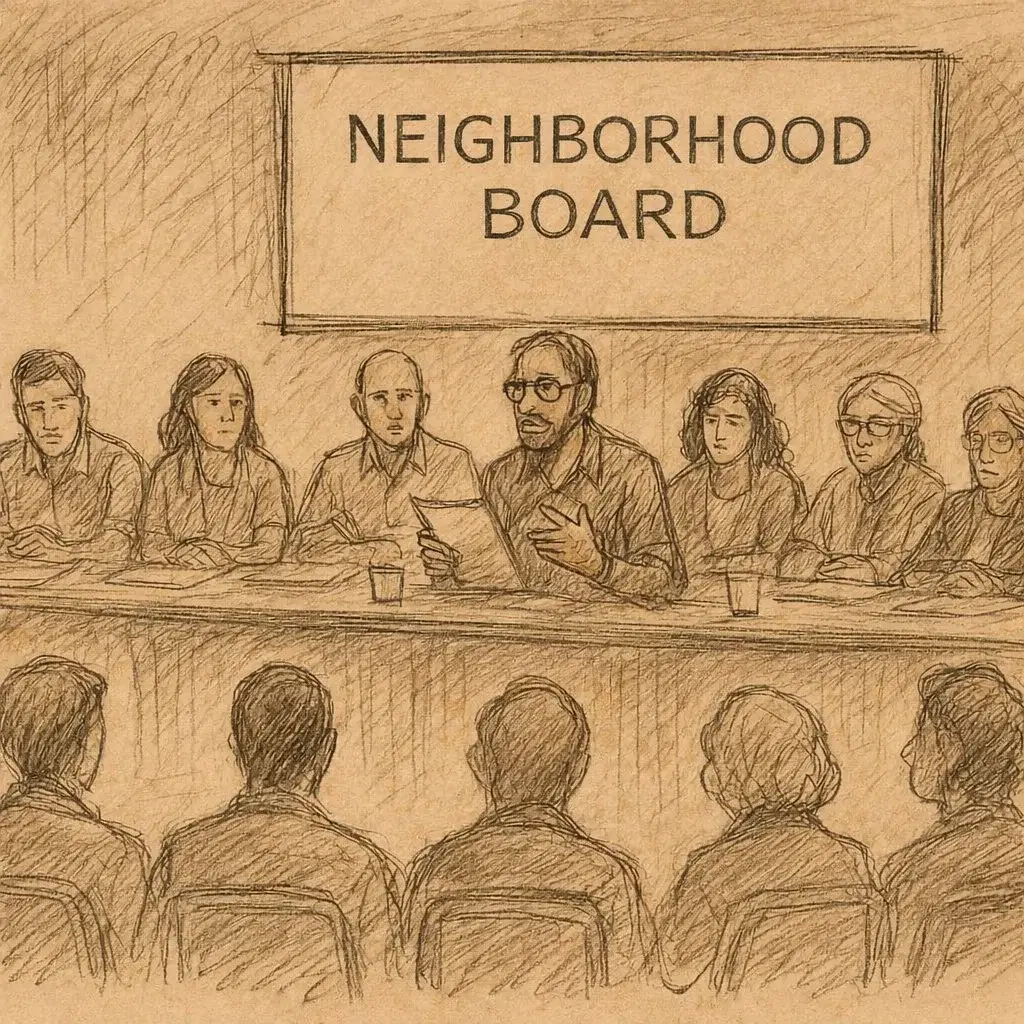
No 24 Wai'anae Coast Neighborhood Board Regular Meeting August 2026
Listen to this article:
24 Waianae Coast Neighborhood Board Meeting – August 6, 2026
Opening and Meeting Procedures
Neighborhood Board No. 24 called the regular meeting to order, and Vice Chair Haupu delivered a pule asking for guidance for the first responders, presenters, board members, and community participants working on behalf of the Waianae Coast. Later in the meeting, board members were asked to disclose any conflicts of interest requiring disclosure or recusal under the Neighborhood Board Plan; none were declared. Because discussion extended to the scheduled 9:30 p.m. ending time, the board deferred its remaining board business and approval of prior meeting minutes before adjourning.
Honolulu Fire Department Activity and Emergency Preparedness
Waianae Fire Station Captain Keo Galwin reported no structure fires, three wildland or brush fires, 14 nuisance fires, and two alarm activations without fire during the reporting period. Nuisance fires include outdoor rubbish and vehicle fires. The station co-responded to 130 medical emergencies, one motor-vehicle collision, one mountain rescue, and one hazardous-materials incident; it reported no pedestrian collisions and no ocean rescues. The department’s safety message focused on receiving reliable emergency notifications through HNL Alert, official government social-media accounts, the Emergency Alert System, Wireless Emergency Alerts, and outdoor warning sirens. Residents were urged not to wait for official instructions when danger is apparent, but instead to develop, rehearse, and regularly update household emergency plans, particularly because the Waianae Coast can become isolated or difficult to evacuate during a major incident.
Brush Fires, Arson Questions, and Firefighter Safety
Residents asked whether anyone had been identified in connection with several recent brush fires around Makaha, Keaau, and Kaena Point or Keawaula. Captain Galwin said there had been reports of passersby observing possible suspicious activity, but he could not confirm whether those reports led to identification of a perpetrator. HFD generally determines a fire’s origin and cause, while a suspected arson case would involve HPD; HFD does not independently conduct the type of enforcement investigation used to locate and arrest suspects. A resident also asked how injuries to firefighters in city vehicles are reviewed. Galwin explained that accidents involving city vehicles or equipment receive internal review, with more extensive investigations when injuries occur; EMS and HPD may participate, and HFD’s occupational safety and health section would be involved. The resident later contrasted those procedures with the experience of his son, a federal firefighter who suffered a career-ending spinal injury, and requested community support for the family’s legal expenses.
Drones and Fire-Response Technology
A board member asked whether HFD now deploys drones. The department confirmed that it does, although the discussion did not include deployment criteria, equipment specifications, or the types of incidents for which drones are used. Later comments about shark monitoring also noted that privately operated drones can help identify shark species and estimate their size, reflecting broader community interest in aerial technology for public safety and environmental observation.
Feral and Loose Dogs
Feral and uncontrolled dogs were a recurring concern throughout the meeting. Residents described packs around Makaha, Keaau, Kili Drive, Pokai Bay, mountain areas, and agricultural properties, with reports of puppies being born in the wild and dogs attacking livestock. One resident cited a friend’s loss of goats and approximately 200 ducks on the Windward side, while others described losses or threats on Waianae Coast properties. Community members said the Hawaiian Humane Society appears overburdened and HPD’s authority and facilities are not designed for capturing or holding dogs. Some called for a coordinated task force involving the city, HPD, state agencies, land managers, and animal-control organizations before attacks on people occur. The mayor’s representative later advised residents to contact the Hawaiian Humane Society at 808-356-2250 for emergencies involving non-aggressive animals or 808-356-2200 for general information, and to call 911 when a dog presents an immediate safety hazard. Councilmember Andria Tupola’s office reported that Bill 16, concerning dog regulation, was moving through the City Council; it would make it unlawful for owners to allow dogs to become strays and would direct the city’s animal-control contractor to enforce the requirements. Committee discussion was anticipated during the last week of August, with possible final reading on September 9. Residents emphasized that truly feral dogs have no identifiable owners, raising questions about whether owner-focused legislation alone can resolve the problem.
Police Calls, Parking Enforcement, and Abandoned Properties
Discussion of HPD statistics included 1,585 reported 911 calls and 57 parking violations in the Waianae area, compared with 639 parking violations reported for the Makakilo board area. HPD said its available data did not separate emergency from non-emergency calls or identify the exact streets associated with parking complaints, so officers could not determine whether Makakilo’s number included Department of Hawaiian Home Lands property. A resident suggested that better use of 311 and publication of non-urgent call totals could reduce pressure on 911. Participants also raised concerns about an apparently abandoned home at 85-157 Waianae Valley Road, where police had reportedly responded and trash and activity continued to accumulate. Corporal Pagan explained that HPD can investigate illegal activity but cannot remove people from private property without the owner’s participation. The Department of Planning and Permitting may be able to address property conditions, and HFD may assist when accumulated material creates a fire hazard, although identifying the owner remains essential.
Public Restrooms, Homelessness, and Park Safety
A resident reported that the restroom at the recently reopened Middle Park or “Sewers” area near Pokai Bay had closed repeatedly after approximately a year and a half out of service. He attributed the blockages to unhoused people and described people occupying restrooms or using drugs where children could enter. HPD said patrol officers are expected to make routine park checks and encouraged residents to report suspicious or illegal conduct. Kaylene Kahau of the Waters Group, which conducts homeless outreach along the coast, said she had used the restroom that day and believed intermittent plumbing failures could be a city infrastructure problem rather than intentional damage by unhoused residents. She also reported that outreach organizations and community partners were moving some area residents into shelters or permanent housing. Representative Darius Kila later said the restroom had suffered severe damage almost immediately after its reopening and that the damage might require excavation or pipe replacement. Other speakers urged the community not to blame unhoused residents without evidence and emphasized the need for community policing and relationship-based outreach.
HPD Use of Force and Community Evidence
A resident asked whether a District 8 officer had shot a dog in Kalaeloa. HPD acknowledged that an officer apparently had fired at a dog during the prior month but could not confirm at the meeting whether the animal died. Residents also discussed the value of photographs and video when reporting burnouts, vandalism, or other violations. One speaker said evidence submitted to HPD had helped obtain a response and encouraged the public to “see something, say something,” while recognizing that officers generally must witness a traffic violation or have usable evidence before issuing a citation.
Ghost Guns, Burnouts, and Roadway Disorder
Residents expressed concern that teenagers can obtain components online and assemble untraceable “ghost guns,” including weapons potentially brought onto school campuses. HPD did not provide detailed enforcement statistics on illegal firearm manufacturing during the recorded discussion. Another resident reported chronic tire burnouts near Waianae Valley Homestead and Pohonu Waianae, including an incident that obstructed traffic and filled the area with smoke and rubber debris. HPD explained that burnouts are citable traffic violations when witnessed by an officer but could not confirm whether anyone had been arrested or cited during the reported incident. Senator Samantha DeCorte later reiterated that burnouts are illegal and may carry increasing consequences when accompanied by speeding. Residents requested stronger enforcement and possible legislative action.
Suspicious Vehicles, Beverly’s Creek, and Illegal Activity
Community members reported abandoned vehicles and a van left for roughly two months near Waianae Kai, along with suspicious tow trucks, vehicle movements, farming, and possible renewed chop-shop activity near a gated area below Kahala Farm known locally as Beverly’s Creek. Speakers said the area may be on DHHL land and expressed fear of confronting occupants who might be armed. HPD asked for a precise address or nearby location to help patrol officers investigate. Illegal dumping at the end of Piliuka Place was also reported, and the Neighborhood Commission Office requested confirmation of the location for follow-up.
Hawaiian-Language Access
A board member spoke in Hawaiian and declined an immediate request to translate, prompting a discussion about language access. Some participants asked that Hawaiian remarks be interpreted so all attendees could understand, while others argued that government should provide an Olelo Hawaii interpreter rather than place the burden on Hawaiian speakers. The chair noted that the agenda directs anyone needing interpretation in a language other than English to contact the Neighborhood Commission Office in advance during business hours. The issue was recorded for the NCO, and participants also emphasized the responsibility of institutions operating in Hawaii to support Hawaiian-language access.
Unattended Deaths and Community Policing
A resident asked whether HPD tracks people found deceased in bushes, tents, beaches, or other public places along the Waianae Coast. HPD said unattended deaths are tracked at the district level but are not routinely published as a separate Waianae Moku statistic. Officers explained that some deaths may be treated as medically attended if a physician signs the death certificate, while suspected assaults or other unusual circumstances are investigated differently. The speaker emphasized that people living on beaches are long-term members of the community whose deaths should be recognized rather than overlooked. HPD also explained that neighborhood security watches are community-led: residents can contact community policing officers to organize neighbors, learn reporting rules, and establish a watch.
Ocean Safety Incidents and Seasonal Readiness
Ocean Safety Captain Kelly Crone summarized July activity in the Leeward district. Lifeguards assisted two paddleboarders stranded about half a mile offshore at Makua, conducted multiple swimmer rescues at Station 50 and during a south swell at Yokohama or Keawaula, and brought in a stable patient who had fainted aboard a tour boat. At Pokai Bay, a 70-year-old man fell from rocks and was packaged for EMS transport, while another man around age 50 was struck in the head by a rock near the swing sets. A near-drowning occurred near Tower 41 at Nanakuli Beach Park. Two shark sightings were reported at Makaha and two at Keawaula; the animals were believed to be tiger sharks. Crone said the department would report results from the Oahu and statewide Junior Lifeguard competitions at a future meeting and would soon begin preparing for winter surf. He also recalled a previous “condition black” event in which dangerous conditions closed state harbors and large shoreline areas, including Waianae Boat Harbor.
Ocean Warning Signs and Rescue Tubes
A resident asked whether the fall at Pokai Bay would prompt a warning sign at the jetty. Ocean Safety believed signage had previously been present but agreed to verify current conditions. Discussion also addressed donated rescue tubes or flotation devices. Ocean Safety said a map had been submitted and approximately 60 devices were expected to be installed, similar to Kauai’s program, with support associated with the Waianae Lions Club. A proposal was also raised for an OHA-supported military-community barbecue at a West Side beach, potentially using a nonprofit grant of up to $15,000; Ocean Safety said management would need to review whether the agency could participate. Ocean Safety was not believed to have handled a recently stranded baby nai‘a, and federal personnel were said to have handled a monk seal incident at Nanakuli.
Board of Water Supply Operations and Public Education Event
The Board of Water Supply reported no water-main breaks during the preceding month, although a break had occurred the prior night at Haleahi and would appear in the next report. The agency announced an “Imagine a Day Without Water” event scheduled for September 26 from 9 a.m. to 1 p.m. at Ark of Safety in Waianae Mall. More than 25 city, state, nonprofit, and community organizations were expected to participate. The free family event would feature educational displays, hands-on activities, games, prizes, and a rain-barrel workshop, although rain barrels would not be distributed. Food and refreshments would be available for purchase. The event would emphasize the “One Water” concept that all water sources are connected and should be managed as a single valuable resource.
Black Rock Water Main and Sinkhole Risk
A Nanakuli resident raised concerns about repeated water-main failures and sinkholes along Farrington Highway at Black Rock. Because the highway runs beside a cliff and serves as the primary route into and out of the Waianae Coast, participants requested a coordinated vulnerability assessment involving the Board of Water Supply, state Department of Transportation, senators, and representatives. The requested review would examine the pipe system, sinkhole stability, and possible structural reinforcement, including whether concrete or another method is needed. The resident warned that a major failure could sever highway access for the entire coast.
Water Conservation, Watershed Restoration, and Desalination
Residents asked what long-term planning exists to prevent severe water shortages and whether high-volume users such as hotels would face restrictions before residential communities. They advocated reforestation and restoration of mountain ecosystems so rainfall can infiltrate aquifers and return moisture to the atmosphere through plant transpiration. Others proposed desalination to allow natural aquifers time to recharge. The Board of Water Supply said a desalination facility exists in Kapolei behind Costco near Ace Hardware but is not operational. Desalination remains technically possible but is expensive and could substantially increase water rates. Residents argued that the Navy and military should bear costs because of Red Hill contamination and military use of desalination aboard ships. Speakers also requested public education about water as a public trust, the Paakai analysis, and protections for Native Hawaiian water rights.
Military Report
No military representative responded when called for the scheduled military report. The absence was notable because military responsibility for water contamination, watershed costs, land use, and treaty or trust obligations arose repeatedly during public testimony.
Waianae High School School Resource Officer Pilot
Corporal Pagan introduced HPD’s School Resource Officer pilot. Three SROs are assigned at Waianae High School, three at Nanakuli, and three at Kapolei, with a fourth school also participating islandwide. The officers’ primary responsibility is campus safety, but their intended role also includes mentoring, advocacy, relationship-building, and serving as liaisons among students, families, schools, and HPD. Routine criminal cases will generally remain with patrol rather than being automatically handled by SROs. HPD said success should not be measured only by arrests or fights; indicators include reduced Chapter 19 violations and students voluntarily approaching officers, sharing concerns, and building trust.
Officer George Silva and SRO Community Connections
Officer George Silva, a Waianae High School graduate and lifelong community resident, described returning from retirement for the voluntary pilot after more than 35 years with HPD and 32 years in the Air Force. He said the SROs want to make a meaningful difference even if they reach only one student at a time. The pilot began in January and continues to work through the jurisdictional challenges of city police operating on state DOE property. Officers are visible during arrival, class changes, activities, and dismissal rather than remaining in an office. HPD cited an example in which officers helped a student who was considering self-harm obtain hospital care and later welcomed her back with a pizza gathering for her and her friends. Officers are also receiving training to recognize warning signs of trafficking, abuse, and other risks. Community members encouraged the program to include younger and female officers, incorporate Hawaiian culture, support bullied students, and show local youth that policing is a possible career. HPD said women may apply, but no female SRO assignment was announced.
SRO Funding, School Safety, and Community Concerns
The duration and funding source of the SRO pilot remain unresolved. The program is currently city-funded even though schools are state facilities, and its future depends on city-state decisions about financial responsibility. Supporters cited school lockdowns, fights, social-media conflicts, ghost guns, and disorder at athletic events as reasons for maintaining a police presence. Others asked whether the DOE should strengthen its own mentoring and cultural relationship-building systems rather than relying on police. Some participants warned that students may perceive HPD as an opposing force, while HPD responded that consistent, genuine contact has already led many students to seek out officers. Speakers also emphasized that online disputes can rapidly escalate beyond the face-to-face conflicts common in earlier generations.
Proposed Waianae High School Shoreline Fence
Environmental Communications representative Taeyong Kim and Russell Echeverry of AM Partners discussed a proposed aluminum security fence along Waianae High School’s shoreline boundary, estimated at nearly $957,000. The fence would use permanent footings and is intended to deter outsiders rather than confine students. The presenters said barbed wire or other harmful features were not proposed. Reported reasons included fires on the field and near science classrooms, debris left by people entering from the shoreline, and discarded syringes. The fence would require maintenance and replacement as needed, and the project was entering environmental review and permitting. The presenters said it was initiated by DOE policymakers but could not confirm whether Waianae High School teachers, staff, and local administrators had formally requested it.
Fence Alternatives, Coastal Access, and Environmental Review
Residents proposed lower-cost or less institutional alternatives, including hiring kupuna as monitors, planting thorny bougainvillea, adding no-trespassing signs, coordinating with DLNR, or using a fence design that bends outward to discourage climbing. The project representatives said human monitors would not address nighttime and weekend incidents, while vegetation could be removed or fail to grow consistently, although bougainvillea might supplement the fence. A resident said unsheltered occupants were expected to move from the small boat harbor in October and suggested that DOE coordinate with DLNR if adjacent land is transferred. Several participants opposed making the school resemble a prison and objected to permanent construction in the Special Management Area without a thorough assessment of effects on the shoreline, reef, cultural practices, and public access to the kai. Questions were raised about an environmental impact review, Native Hawaiian land rights, and the cumulative effect of fencing off coastal areas. The presenters said the environmental review process would address impacts and that community consultation was an initial step.
Amazon Kalaeloa Distribution Proposal
An Amazon distribution facility in Kalaeloa was listed for presentation, but Jacob Aki of GTL Hawaii was not present when called. During community concerns, a resident objected to the project and asked what direct benefits Amazon would provide to Native Hawaiians and West Oahu residents beyond jobs. Concerns included shipment costs under the Jones Act, Amazon’s potential use of Hawaii as a broader Pacific distribution hub, packaging waste, cardboard disposal, and pressure on landfill capacity. No project representative was available to respond to these questions.
Fire Access Road and Waianae Kai Reservoir
A resident asked for follow-up with Eric Enos and forestry officials regarding a deteriorated mountain road needed for fire prevention and reservoir access. Rain damage reportedly prevents water trucks and firefighting vehicles from reaching an existing reservoir developed for fire mitigation. The resident said the original concept was to keep the reservoir filled so HFD could draw water close to mountain fires rather than transporting it from farther away. He requested road repairs and continued coordination among land managers, forestry officials, and emergency responders.
Eku Stream Damage from Firebreak Construction
Several residents criticized a firebreak project begun around July 20 by the state Department of Transportation in collaboration with a landowner identified as The Shelter, mauka of Kalawaha Road between Maiu Road and Makaha Valley Road. They said bulldozers crossed Eku Stream, moved bedrock and large pohaku, altered the watercourse, and created possible downstream flooding and runoff risks. Community members reported approximately 150,000 views of social-media documentation and a petition signed by 32 nearby residents. Although work stopped and the firebreak was relocated, speakers said attempted repairs were not engineered and may have left rocks obstructing the natural flow. They requested a DOT investigation, fact-finding, professionally designed restoration, application of the Paakai analysis, and accountability for work allegedly performed without adequate notice, permits, or community consultation.
Firebreak Phase Two and Makaha Valley Debris Removal
Representative Kila agreed that the first firebreak had good intentions but poor planning and said the state had apologized and completed repairs. For the second phase behind Makaha Elementary School and Manuku Street, advance changes were made: a 20-foot buffer behind homes would be cleared only with weed trimmers and chainsaws; mechanized firebreak work would occur beyond that buffer; trees 20 feet or taller would remain; and vegetation near the Kili Drive stream would be cut only with hand tools. Residents remained concerned that declaring the first project complete did not resolve possible flooding hazards. Kila also addressed reports of a helicopter removing trees or debris in Makaha Valley. Plantation security had indicated that a private company was clearing material washed into a stream during Kona low storms, but Kila had not received official confirmation.
Paakea and Lualualei Flood Mitigation and Emergency Access
Jermaine Myers of the Nanakuli Neighborhood Board invited officials and residents to a Transportation, Housing, and Zoning Committee meeting at Nanakuli Library to discuss the Lualualei flood-mitigation plan and proposed capital improvements. Paakea Road is considered a critical mauka emergency route because it can connect residents to Kolekole Pass and Lualualei when Farrington Highway is blocked between Nanakuli and Waianae. Residents said repeated Kona lows expose longstanding drainage problems made worse by illegal dumping, clogged ditches, and poorly maintained streams. They called for implementation of projects identified in plans dating back roughly 20 years and in the 2017 final mitigation plan, with federal, state, city, and Navy funding and shorter construction timelines. Congresswoman Jill Tokuda’s office was asked to report on federal drainage funding she had said she would pursue after touring Paakea Road following the Kona low.
Mayor’s Office Responses
Mayor Rick Blangiardi’s representative, Donna Puna, reported that a work order had been submitted to repair a gate at Keaau Beach Park damaged by Fourth of July fireworks, with the welding crew previously aiming for completion by July 24. Staff were also coordinating with HPD to block unauthorized vehicle entrances, although residents said concrete barriers continued to be moved. Regarding a dry-brush complaint identified only by “HPD log 1543,” HPD could not identify the location and requested a specific address or tax map key. DPP also investigated allegations that Ahmad Ramadan was drilling a well without permits. A July 20 inspection found no grading or drilling activity; the property owner’s agent provided possible DLNR authorization for well construction and pump installation, and DPP said it does not regulate those activities. Residents continued to request advance review of new well permits because of potential effects on springs and groundwater in Waianae Valley.
Driver Licensing, Temporary IDs, and Airport Screening
Residents complained about long waits for driver’s licenses and state identification documents and asked whether staffing shortages were delaying service, although another participant reported completing a reservation-based Waianae renewal in under 15 minutes. A board member described being allowed to fly from Honolulu using a city-issued temporary ID but encountering difficulty returning from Hawaii Island and being told that payment was required to proceed. Participants questioned why a temporary or paper REAL ID document accepted by banks and city agencies would not be consistently recognized at airports, particularly for interisland travel. Councilmember Tupola’s office and Congresswoman Tokuda’s representative explained that TSA and Department of Homeland Security rules are federal and agreed to seek clarification about the applicable policy and the reported $45 payment option. Speakers also connected airport access and identification requirements to ceded lands and Native Hawaiian beneficiary rights.
City Council Agenda, Public Conduct, and Chinatown Safety
A resident asked when City Council agendas become available for testimony and complained about the application of public-decorum rules during prior testimony. Councilmember Tupola explained that the full Council agenda is normally released on the Thursday before the meeting; for the September 9 Council meeting, publication was expected on September 3. Another resident raised concerns about recurring fights in Chinatown nightlife areas and asked for closer oversight of bars that may overserve customers. The mayor’s representative took the matter back for review. A board member separately requested information on when HPD policies were last reviewed, who performed the most recent legal and constitutional analysis, and how those policies protect First Amendment speech and political expression; Tupola referred the questions to Public Safety Committee Chair Tyler Dos Santos-Tam.
Councilmember Tupola’s Community Initiatives
Councilmember Tupola introduced a new staff member who will work with Kika and distributed reports from Cohorts 7 and 8 of the R3 program. The next R3 activities were scheduled at Paradise Chapel on Mondays and Wednesdays from 5 to 6 p.m. Tupola also reported that the Ending Landfills Task Force had held its first organizational meeting. Future agendas and information will be posted through HonoluluCityCouncil.com, and a public forum planned for February 2027 will feature companies offering technologies intended to reduce dependence on landfills. She was also asked to organize a Waianae Coast version of an August 17 Windward Community College workshop on how nonprofit and community organizations can work with city, state, and federal partners to acquire land for conservation or agriculture.
Landfill Law and Kapaa Quarry
Senator DeCorte reported that the mayor intended to seek changes to Act 73, the law governing landfill siting restrictions. She said she had requested a special exemption protecting Kapaa Quarry Road because repealing the act without a specific destination could again expose Waianae to landfill siting. Community comments strongly opposed placing another landfill on the Waianae Coast and supported holding officials accountable for ensuring that any legal change directs waste infrastructure away from vulnerable West Side locations.
Federal Matters and Military Academy Nominations
Congresswoman Jill Tokuda’s representative announced that applications were open for nominations to the United States military service academies. Schools in the district had been notified, and students could obtain eligibility and application information through the congresswoman’s office. Residents asked Tokuda to address federal matters including Amazon’s distribution plans, JERA’s liquefied natural gas proposal, Medicare’s long-term stability, federal war spending, solar tax credits, TSA identification rules, and drainage funding for Paakea Road. The representative agreed to relay the questions and provide policy information where available.
JERA Liquefied Natural Gas Proposal
Residents raised concerns about JERA’s proposed liquefied natural gas operation, referencing Makakilo Neighborhood Board Resolution 2026-31 opposing the proposal. Concerns included the stationing of an LNG vessel at Barber’s Point for decades, explosion and environmental risks, long-term dependence on imported fuel, and skepticism that LNG would lower utility bills. Councilmember Tupola announced that JERA would hold an open house at the Blaisdell Center the following day from 4 to 8 p.m., with information stations rather than a formal presentation. She said she was still studying the proposal and noted that companies and community organizations were beginning to take public positions.
Hawaiian Home Lands Legislation and OHA Funding
Senator DeCorte reported that Governor Josh Green had signed HB 2309, expanding Hawaiian Home Lands successorship to include siblings, nieces, and nephews. The change still requires federal approval through the Department of the Interior or congressional action. She also reported that SB 903 provided a one-time $55 million appropriation to the Office of Hawaiian Affairs for Native Hawaiian education, health, economic development, and related programs. DeCorte said she had asked OHA how much of that funding would reach Waianae, noting that ZIP code 96792 contains the world’s largest Native Hawaiian homestead population.
DHHL Development and Voice of America Lands
Residents questioned why the Hawaii Housing Finance and Development Corporation appears to receive more legislative support than DHHL and asked for stronger executive action on the Hawaiian Home Lands waiting list. Senator DeCorte acknowledged that DHHL has awarded leases but argued that Waianae has received too little, including abandoned homes in Nanakuli rather than substantial new development. She cited approximately $35 million associated with a 2020 beneficiary plan for an estimated 180 lots at the former Voice of America site. According to DeCorte, DHHL declined to proceed because of environmental-study concerns but had not provided her with the cited study. A board member noted that historical military contamination may affect the site and said records from the Lingle administration could explain DHHL’s caution.
Mauna Kea Stewardship Authority
Senator DeCorte reported that the Mauna Kea Stewardship Authority received a two-year extension, moving the transition deadline to 2029 because its management plan remains incomplete. The authority will need to generate enough revenue to sustain operations, potentially through fees or other mechanisms, although a final plan has not been submitted. DeCorte cautioned that further extensions may not be granted.
Youth Identification Access and Papahana o Kaiona
A newly enacted state measure will allow young people to obtain identification cards without parental consent, beginning in 2027. Senator DeCorte said the change will help youths whose parents are absent or unable to provide support, allowing them to access school trips, services, and other activities requiring identification. She also announced that Papahana o Kaiona had left the Kalaniho‘okaha Learning Center and begun classes at Kahumana Farms. The arrangement is temporary; the organization expected to close by the end of August on a permanent site along St. John’s Road at the former Kaiser property, followed by soil remediation and demolition.
Pokai Bay Jetty Funding
Representative Kila said funding for the Pokai Bay jetty had already been encumbered and therefore should not lapse. Additional procedural steps must be completed before the money can be released and construction or repair can proceed. He referred residents to Kingdom Pathways, an organization actively following the project and expected to hold a related community event.
Beach Management and Unsheltered Residents
Representative Kila described a July 10 effort with the Suzuki Family Foundation and volunteers to work collaboratively with people living on the beach rather than immediately conduct a sweep. Participants were given responsibility for cleaning and managing their areas. Nearly one month later, some residents had made visible efforts by cleaning, working, watering plants, and planting palms, while others had not complied. Kila said the city’s position remained “100 percent or zero,” meaning partial compliance might not prevent broader enforcement, potentially penalizing people who had made substantial improvements.
Additional Environmental and Public-Space Concerns
One participant warned that toxins from overseas warfare can enter the ocean and travel through currents, while others raised concerns about tree cutting along Farrington Highway, public loitering, changes to fast-food seating or drink service, and the cumulative burden placed on residents when businesses and agencies alter operations in response to unlawful conduct. Another resident requested an after-meeting survey for the Waianae board similar to surveys used by other neighborhood boards. Concerns were also raised about proposed geothermal activity near Haleahi Road and future well permits, with requests that any project affecting mountain water sources come before the board and include accountability if springs or streams lose flow.
Meeting Close
With the meeting reaching 9:30 p.m., the chair directed residents with remaining questions for elected officials to contact their offices by email or telephone. Board business and approval of minutes were deferred, and the meeting was adjourned.