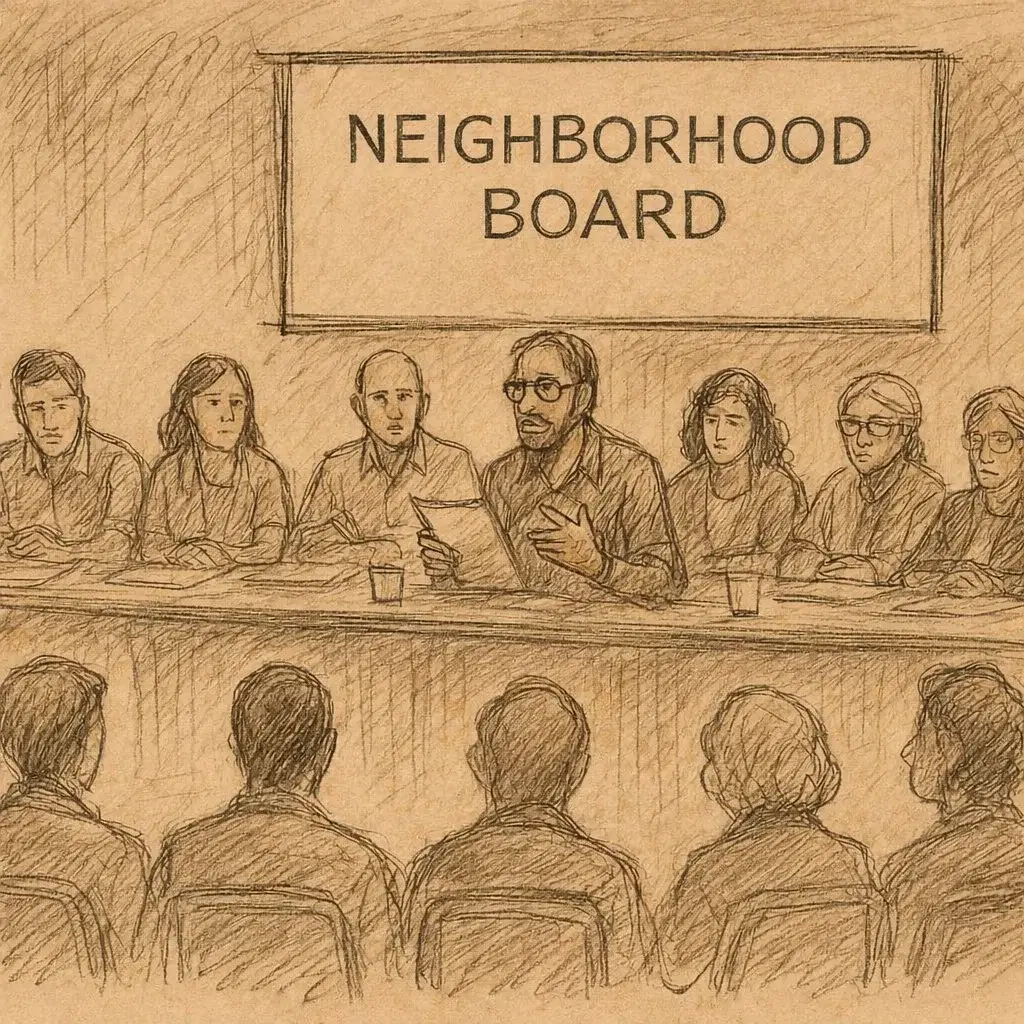
No 24 Wai'anae Coast Neighborhood Board Regular Meeting July 2026
Listen to this article:
24 Waianae Coast Neighborhood Board Meeting – July 8, 2026
Loose Dogs, Hunting Dogs, and Agency Responsibility
Residents raised serious safety concerns about loose dogs in mountain and shoreline areas, including hunting dogs lost during hunts and dogs associated with houseless encampments. Speakers warned that the problem could grow if it is not controlled and questioned whether incidents and animal populations are being documented. The board discussed contacting the Hawaiian Humane Society, the Department of Land and Natural Resources, and the Board of Water Supply, which owns property in one of the affected areas. A resident criticized DLNR’s responsiveness and said HPD appeared to be carrying responsibilities that should be shared by other agencies. The resident thanked police officers for serving as first responders across a broad range of incidents and urged the community to advocate for better pay, staffing, and equipment for HPD. A later request called for a coordinated city, state, Board of Water Supply, and neighborhood-board meeting to address feral dogs and explore contracting a vendor to remove them.
Penalties for Driving Without a License
A community member objected to a new law that could make repeated unlicensed driving a felony. He argued that the law unfairly treats drivers who have not caused a collision, injured anyone, driven drunk, or sped in the same manner as dangerous drivers whose conduct has caused death or serious injury. He said he carries insurance and is paying approximately $200 per month toward resolving financial or administrative barriers preventing him from obtaining a license. He acknowledged having driven without a license since age 15 and said a prior phone-related charge had been dropped while the unlicensed-driving charge remained. His testimony emphasized the difficulty working residents may face when trying to clear license stoppers and the potential long-term consequences of felony status.
HPD Response and Derelict Vehicles on Hawaiian Home Lands
Residents asked how HPD responds to persistent problems that do not fit neatly into emergency calls or existing task forces. Particular concern centered on derelict, unregistered, and illegally parked vehicles throughout Waianae Valley homestead areas, including Kaniaki, Kaniileo, and Kipaula. A resident said the roads are so obstructed that buses and emergency vehicles must zigzag through the neighborhood and described the condition as a decades-long threat to public access. HPD explained that vehicles on city streets may be cited or towed for expired tax and safety requirements, but vehicles on Department of Hawaiian Home Lands property generally fall under DHHL jurisdiction. Police and the board agreed the conditions were unacceptable, said patrol officers could inspect specifically identified areas, and committed to reaching out to DHHL about enforcement and removal.
Ocean Safety Incidents and Narcan Use
Ocean Safety reported responding to 16 emergency 911 calls during June. Significant incidents included a double rescue at Pai Point involving a roughly 16-foot inflatable vessel more than half a mile offshore; administration of Narcan at a beach park, after which the patient was taken for medical care and appeared stable; a broken knee at Makaha Beach Cabanas; breathing difficulty involving a 56-year-old man at Makaha Beach; a 15-year-old who fell and sustained a serious head injury at Pokai Bay; and a spinal injury at Maile Beach Park. Ocean Safety also responded to two unresponsive men found in a truck at Makaha Beach, both of whom were deceased, as well as a stabbing at Nanakuli Beach Park. An individual at Maile Beach Park was brought ashore while foaming at the mouth, transported to the hospital, and later reported to be recovering. Multiple shark sightings were recorded at Makaha Beach Park over approximately four consecutive days, with another sighting reported on the meeting date.
Fentanyl Exposure and Incident Tracking
Ocean Safety used Narcan approximately four times during the month, prompting questions about fentanyl and overdose trends. Lifeguards have been advised not to touch abandoned baggies or wipe their faces after contact with suspicious material because of concerns about potent drugs and accidental exposure. Ocean Safety said the newly installed Watchtower program began operating on June 15 and will create a more complete incident database. The system records the location of drownings and other emergencies, equipment used, and associated HPD, Honolulu Fire Department, and EMS case numbers. The agency said monthly Narcan use and other trends will be monitored through this system.
Water Main Break and Drinking-Water Quality
Board of Water Supply representative Kauai Hilo reported one significant June incident: a 16-inch water-main break in Waianae near the bridge by Pakpua on June 16. BWS also reminded residents that it conducts thousands of tests annually across water sources and the distribution network to ensure municipal water meets or exceeds federal and state drinking-water standards. Customers receive semiannual water-quality reports, with the first mailed by July 1 and the second in December. Reports and additional information, including a large-print booklet explaining water sources and listed substances, are available at boardofwatersupply.com/WQR or by calling 808-748-5041.
Water Conservation, Storage Drums, and Wildfire Preparation
BWS distributed wildfire-prevention information during the height of the dry summer season, noting that reducing brush fires also preserves water otherwise needed for firefighting. The agency no longer distributes 55-gallon water-storage drums, but residents were told that drums purchased through Amazon may qualify for a $40 rebate. The representative agreed to determine the precise reimbursement procedure, including whether residents must submit a receipt and application form, and the chair offered to print forms for public distribution. BWS was still researching which water main was being refurbished in response to an earlier board inquiry. Work to remove iron plates near Pili Lao Park was also delayed because of unforeseen construction circumstances.
Rainwater Catchment and Desalination
Residents discussed whether people who collect rainwater for household farming could eventually be taxed or charged for using it. BWS had not heard of such a proposal but agreed to investigate. The chair referenced reports from mainland jurisdictions where rainwater collection has been restricted or fined, illustrating why residents wanted local rules clarified. Another speaker proposed that Hawaii begin investing in seawater desalination in response to climate change, aquifer pressure, and concerns related to Red Hill, arguing that ocean water could supplement drinking supplies while allowing mountain aquifers to recharge. A separate speaker connected water planning to king tides, dredging, cultural water protections, and the military’s environmental review process.
Pearl Harbor Dredging Environmental Review
The community was advised of an upcoming military environmental impact review concerning a large Pearl Harbor pier and dredging project. A public meeting was announced for July 13 at the Oahu Veterans Center, and residents were encouraged to submit online comments in advance. Speakers said the review should account for king tides, dredging-related water movement, trust resources, Native Hawaiian water rights, and broader cultural and environmental effects. The discussion reflected concern that major harbor construction and dredging could affect coastal systems beyond Pearl Harbor.
Board Conflicts and Election of Officers
No board member declared a conflict of interest concerning the evening’s business. The board then elected officers for the term running through June 30, 2027. Terry Sava‘i Na‘e was selected as chair, Kimberly Haupu as vice chair, Jordan as secretary, Maile DeSoto as treasurer, and Koko‘o Hu Vahilani as sergeant at arms. Uncle Richard was initially nominated for sergeant at arms but declined.
Makua Former Training Area and Unexploded Ordnance
Lieutenant Colonel Sean Straw reported that the Makua Beach Assault Training Area had not been used for many years, although military activity there extended from the 1920s through the 1990s. The Army conducted an area-wide cleanup in 2016. Boundary and danger signs have recently been vandalized, and the Army asked the public to respect them even though it had received no current reports of munitions within the marked area. Anyone who sees a suspected explosive should not approach it and should call 911 so the Army can assist. Questions may also be directed to the U.S. Army Garrison Hawaii cleanup program.
Makua Runoff, Water Testing, and Cancer Concerns
Board members questioned whether heavy rainfall could have washed contaminants or unexploded ordnance through the Makua fence line and into nearshore waters. One member said the coast had received more than 80 inches of rain in approximately three months, comparable to the prior year’s total, and asked the Army to inspect beyond the fence because drainage flows directly toward the ocean. The Army said a fence-line reconnaissance was completed in January and, to the representative’s knowledge, found nothing, but agreed to request a nearshore inspection. Residents also asked for water testing and renewed searches around Makua and Kaena Point, linking their requests to community concerns about cancer among surfers, children, and other shoreline users. These statements were presented as resident concerns rather than confirmed findings.
Lualualei Bay Military Debris and UXO
A resident reported that items believed to be old unexploded ordnance debris or flare capsules had recently appeared near Lualualei Bay and Maile Beach. The resident asked how long ocean-dumped military containers remain intact, when deterioration might release their contents, whether the community can expect military cleanup, and which agency should receive reports. The Army representative did not have immediate answers but agreed to send the questions to Army Garrison for follow-up.
RIMPAC Activity and Environmental Review
The Army announced that the Rim of the Pacific exercise began June 24 and would continue through July 31. RIMPAC involves approximately 25,000 personnel from 31 nations and may bring increased military aircraft, ships, personnel, noise, traffic, and other activity around Oahu. Board members asked for the environmental impact documentation governing the recurring exercise, particularly in relation to marine mammals and other ocean life. The Army representative agreed to direct the request to the Navy and provide documents to the board when available. Later, Representative Darius Kila said jurisdiction may depend on where state waters end, but agreed to seek further information. He also noted that Naval Magazine Lualualei continues to play a significant national-security role despite a public perception that it had been largely decommissioned.
Military-Community Relations and Hawaiian Sovereignty
One resident proposed an informal community barbecue involving West Oahu residents, military leadership, kupuna, and children, suggesting activities such as volleyball and kickball at Pokai Bay or Nanakuli Beach. The speaker viewed shared meals as a way to build relationships even when political and historical disagreements remain and suggested planning several months ahead, possibly for January. Another resident directly called for an end to the U.S. military presence in the Hawaiian Islands and characterized it as an occupation. The Army representative received both comments without entering into a political debate.
Army Job Fairs
The Army announced two job fairs at Aliamanu Military Reservation. The first was scheduled for July 21 and the second for August 24, both beginning at 8:30 a.m. The events were presented as employment opportunities connected to the military community.
Coconut Rhinoceros Beetle Infestation
A University of Hawaii-affiliated presenter gave a detailed briefing on the coconut rhinoceros beetle, or CRB, which is heavily established across Waianae and most of Oahu. Adult beetles bore into the crowns of palms and feed on sap, causing large holes and characteristic cuts. Coconut and fan palms are preferred, but the beetles also damage native loulu palms and may shift to hala, sugar cane, banana, and other plants when preferred hosts decline. Eggs and larvae develop in mulch, compost, green waste, and other decaying plant matter, while only the adults feed directly on living trees. High populations are commonly associated with agricultural, mulched, and unmanaged areas.
CRB Prevention and Physical Control
Residents were advised to reduce unnecessary green-waste and mulch piles while recognizing that mulch remains essential for farming and soil health. Breeding materials can be searched, chipped, ground, heated above approximately 115 degrees, treated chemically, or covered with fine netting. Netting placed around the crown of a short palm can entangle beetles as they attempt to feed, while larger sheets can cover compost or mulch piles and catch beetles entering or leaving. Panel traps using pheromone lures are useful mainly for detection and capture only a limited share of beetles. Barrel traps combining mulch, netting, and pheromone lures may provide layered attraction and capture. Residents who take home traps are responsible for checking them, killing captured beetles, and reporting only unusual findings because the UH program lacks capacity to collect data from every private trap.
CRB Pesticides and Safety
The state-funded outreach program made netting, traps, lures, and foliar insecticides available to meeting attendees. Canopy sprays kill beetles on contact and are most suitable for accessible, non-food palms rather than coconuts intended for consumption. One synthetic treatment may remain effective for roughly three months, while an organic option may require monthly application. The presenter explained that natural pyrethrins come from chrysanthemum extracts and synthetic versions mimic the same compounds. Although the distributed products were described as generally compatible with households when properly used, they can harm pollinators, so flowering material should be trimmed or avoided during treatment and label instructions must be followed. The program itself is not treating all beach parks, although the city may be treating some public properties.
CRB Biological Control, Predators, and Origin
UH research is testing a virus previously used to suppress CRB elsewhere in the Pacific. A strain collected from Palau and American Samoa produced much better laboratory results than initially expected, with nearly all exposed test beetles reportedly dying. Wider host testing and regulatory approvals are still required before broad release. Hawaii has few effective natural predators, although chickens, pigs, cattle egrets, mongoose, and rats sometimes consume larvae or beetles. Residents discussed using pigs in natural farming systems and even proposed harvesting larvae as food, citing insect consumption in parts of Asia and the Pacific; these were community suggestions, not an endorsed control program. Although CRB has often been said to have arrived from Guam through Hickam Air Force Base, the presenter said genetic and virus-susceptibility evidence has not conclusively established its origin. Military funding has supported some trapping and treatment work.
CRB Effects on Agriculture and Community-Wide Management
Participants said CRB is affecting not only coconut palms but also farms, hala resources, traditional building materials, and replanting programs. The presenter emphasized that individual action alone will not eliminate the pest: a well-managed property can continue receiving beetles from neighboring green-waste piles and unmanaged land. Successful suppression requires broad community participation using several methods at once. Replanting is also necessary because larger tree populations increase the number of trees likely to survive even when a percentage is lost. After the presentation, the meeting recessed for ten minutes so attendees could receive traps, netting, lures, pesticide products, and educational materials.
Flood Mitigation and Paakea Road
A community announcement urged residents to attend a forthcoming meeting about longstanding flood-control plans that have existed since approximately 2001 but have not been fully implemented. Organizers said the plans should be “taken off the shelf” and put into action. Paakea Road was identified as a critical mauka emergency route if Farrington Highway becomes blocked between the Nanakuli McDonald’s and the Waianae Coast Comprehensive Health Center. Residents were encouraged to support elected officials willing to implement flood-mitigation measures and to learn about a proposed 90-day advocacy and implementation plan.
Emergency Preparedness and Community Responsibility
A resident emphasized that disaster readiness begins with individuals, families, neighbors, and community networks. The speaker warned that residents will suffer more severely if preparations are delayed until after a disaster and encouraged more people to organize in advance so they can assist one another. Questions later focused on the limited number of evacuation shelters, backup communications, access around flooded portions of Farrington Highway, and the need to include residents who lack smartphones or are uncomfortable with technology.
Community Concerns About Crime and Public Participation
Public testimony included concerns about fentanyl, drug trafficking, human trafficking, threats against kupuna, and the need for residents to report dangerous conduct despite fears of retaliation. Another resident urged board members to actively question agency representatives, listen to community-proposed solutions, and remember that many kupuna still use flip phones or cannot rely on online systems. Residents thanked the board for serving but stressed that public concerns about houselessness, safety, infrastructure, and government accountability should not be allowed to fall on “deaf ears.”
Military and Community Relations Office Listening Sessions
Randy Chung, representing the State of Hawaii Military and Community Relations Office, invited residents to participate in small-group “Community Conversations.” Governor Josh Green initiated the sessions to collect views on what Hawaii’s future relationship with the military should look like and what would be required to improve it meaningfully. More than 30 conversations had been conducted during the preceding three months, including one with the Waianae Moku Kupuna Council. Participants have discussed land stewardship, emergency preparedness, cultural access, economic opportunity, healthcare, and other community priorities. The office said notes would be shared with participants for review before being submitted to the governor and his advisory committee, with the intention of informing state discussions with federal decision-makers over military training-land leases.
Geothermal, Water Use, and Historic Resources
A resident questioned whether proposed geothermal development on Hawaiian Home Lands would consume water needed to cool the system at a time when the region already faces water constraints. The speaker asked how such development would benefit homestead residents and urged scrutiny of drilling, groundwater use, and possible impacts on agricultural lands below the site. Concerns were also raised about rock movement and construction at Mauna O Kiole, with a request that archaeological monitors be present where historic stones or subsurface resources may be disturbed.
Alleged Excavation Above Leihoku Elementary
Several residents reported renewed excavation on conservation land above Leihoku Elementary School and nearby housing. They alleged that a property owner was cutting into the mountain, removing and selling rock, and worsening runoff onto downhill properties. Mayor Rick Blangiardi’s representative, Dawn Puna, said the Department of Planning and Permitting had previously issued millions of dollars in fines and placed a lien on the property, preventing its sale while the lien remains. She asked residents to report new violations and committed to sending an inspector the following day. Residents requested a complete shutdown of the activity and asked DPP to determine whether a well had been drilled on the property with proper permits.
Makua Valley Historical Testimony
During public comment, a resident delivered a symbolic statement describing Makua Valley as having endured decades of bombardment, live fire, aerial bombing, land dispossession, and environmental injury. The speaker referenced approximately 65 years of military use and called for restoration and freedom for the valley, with August 16, 2029, identified as a future date of significance. The testimony reflected continuing cultural and historical opposition to military occupation and training in Makua.
EMS Participation at Board Meetings
The mayor’s representative reported that Honolulu Emergency Medical Services does not currently have enough staff or overtime capacity to attend Waianae Coast Neighborhood Board meetings regularly. EMS acknowledged the value of stronger community communication and said ongoing attendance could be reconsidered through future staffing and budget planning. In the meantime, the board may forward specific EMS questions and concerns for written response.
Makaha and Waianae Sewer Projects
The city provided an update on the proposed Makaha Sewers Section 5 Improvement District, covering an estimated 134 unsewered lots. The fiscal year 2027 six-year capital-improvement budget includes planning money in fiscal year 2032, meaning the project has not started and remains years from implementation. A separate Waianae sewer improvement project involving an estimated 121 unsewered lots was not included in the city’s fiscal year 2027 six-year capital budget. DHHL is planning a Waianae sewer project, but the city could not determine whether the referenced lots fall within it without a map; inquiries concerning lots on Hawaiian Home Lands must be directed to DHHL.
Removal of Deceased Monk Seals
The city clarified that Ocean Safety is generally not responsible for handling or disposing of injured, stranded, or deceased protected marine animals. Lifeguards notify the Hawaii Marine Animal Response network and appropriate federal or state wildlife agencies. Ocean Safety may move a carcass temporarily if it creates an immediate hazard to beach users, vessels, or rescue operations. Personnel do not receive formal training in Native Hawaiian cultural protocols for handling deceased marine animals, although the department said it seeks to act respectfully and with cultural sensitivity.
City Budget and Federal Project Permitting
A resident discussed the city budget, citing figures rising from approximately $4.8 billion to $4.97 billion and arguing that the combined operating, executive, and capital budgets require greater public scrutiny. The speaker planned to testify before the City Council regarding Bill 22 and the mayor’s veto. The same resident asked whether DPP could stop a federal Navy dredging or port project through local permitting. The mayor’s representative explained that the federal government generally proceeds separately from DPP and would not normally require city approval for such work.
Park Vandalism, Fireworks, and Encampments
A resident reported aerial fireworks and renewed vandalism in an undeveloped park area during the Fourth of July period. Gates were allegedly cut, concrete barriers moved, and members of the public entered dry brush areas despite no-trespassing signs. The resident cited HPD log number 1543 and warned of wildfire risks to nearby mountain slopes and homes. He argued that City Council Resolution 22-151 remains incomplete because the installed cattle gate has repeatedly been vandalized. The resident requested completion of the security work, removal of encampments, and stronger coordination with the Department of Parks and Recreation.
Park, Beach, and Sidewalk Sanitation
Residents repeated concerns about safety and sanitation at parks, beaches, and sidewalks throughout ZIP code 96792. Specific complaints included human waste, animal feces, loose dogs, and inadequate enforcement of leash and cleanup rules. One speaker said kupuna and children had slipped near waste at beach parks and demanded that Parks and Recreation staff carry out their assigned responsibilities. The community also renewed its request for a mayoral town hall in Waianae so residents could present solutions directly.
Gondola Ban and Papahana o Kaiona Property
State Senator Samantha DeCorte reported that the governor signed legislation prohibiting gondolas in Hawaii, ending the proposed gondola project associated with Kaala. She also said the purchase of the former ALPS School property for Papahana o Kaiona had been delayed from July until August. Once closing occurs, demolition and soil remediation can proceed.
Puuhonua O Waianae Extension and Evacuation
The scheduled move-out date for the Puuhonua O Waianae homeless community at the Waianae Boat Harbor was extended from June 25 to October 16, 2026. Residents questioned the evacuation plan for the site during flooding, high winds, storm surge, fallen trees, or other emergencies, particularly because many occupants are kupuna who use walkers or need additional assistance. Representative Chris Muraoka said resources should focus on moving residents to a more permanent valley facility rather than repeatedly extending a temporary shoreline arrangement. A Puuhonua representative clarified that the community had declined the representative’s evacuation assistance during a prior event because most residents had already been transported to Waianae Station; the group said it has its own emergency plan and does not force residents to evacuate against their will.
Speed Humps and Drainage Effects
Representative Muraoka reported that speed humps on Lahaina Street had been completed and more were planned in Waianae Valley, Jade Street, and the Makaha Beach area. The devices are intended to reduce speeding and nighttime drag racing, but residents have reported that some humps divert stormwater from the road into private properties. The representative said the concern had been referred to the appropriate agencies for mitigation, although no solution was yet available.
Keaau Beach Park, Meadow Park, and Traffic Improvements
Keaau Beach Park reopened shortly before the Fourth of July. The Meadow Park restroom project was completed, and an opening or dedication ceremony was being planned. Representative Muraoka also said a left-turn signal at Leihoku remained in progress. The Department of Transportation was coordinating with Waianae and Makaha Valley golf courses to clear firebreaks and reduce wildfire fuel, with a site visit scheduled for the following day.
Fentanyl Town Hall and Naloxone Availability
Representative Muraoka thanked residents who attended his fentanyl town hall, where more than 120 doses of Narcan were distributed free of charge. Residents can also obtain Narcan from the Waianae Coast Comprehensive Health Center. Because naloxone expires, residents were advised to check dates and exchange doses nearing expiration at the health center. The representative linked the concern to the two recent deaths at Makaha Beach, which were suspected, but not confirmed during the meeting, to involve fentanyl. A board participant added that alcohol, tobacco, and vaping also remain major forms of substance dependence.
Emergency Shelters and Alternate Routes
Residents said Nanakuli High and Intermediate School appeared to be the only designated evacuation site serving the entire coast and asked that Leihoku Elementary or another mauka facility be opened. Representative Muraoka said his office was instead pursuing Makaha Community Park because its pavilion, restroom, size, and location could support emergency sheltering, as it had during Hurricane Iniki. Waianae Intermediate could be another option for wind or rain emergencies but may not be suitable for a tsunami. If Farrington Highway and Paakea Road are impassable, the representative said an agreement with the Navy could permit emergency access through a gate at the top of Maileili Road and onward toward Kolekole, although vegetation and access work remain necessary.
Emergency Radio Communications
The board discussed communications during power and cellular outages. Representative Muraoka said his office has access rights to a mountain antenna in Nanakuli and is working with emergency-management personnel on a radio plan. Residents asked how to become licensed amateur-radio operators and were told that free online training information is available. The representative clarified that official emergency channels would be restricted to trained personnel, although other residents could monitor information. Participants also questioned what had happened to the former civil-defense structure and were told that its responsibilities now operate under different emergency-management names and agencies rather than the old local civil-defense office.
Managed Cleanup and Temporary Standards at Sewers
Representative Muraoka described a planned cleanup at the area known as “Sewers.” Rather than conducting an immediate sweep or relocation, organizers intended to work with occupants and require compliance with a strict checklist. Those following the requirements could remain in 90-day increments, but the arrangement would not be permanent and noncompliant occupants would have to leave. The representative said the approach attempts to balance compassion, the shortage of alternative places for houseless residents, and the surrounding community’s safety and sanitation concerns. He suggested that, if successful, it could become a model for other areas.
Education, School Leadership, and Resource Officers
Representative Darius Kila said additional education work would follow the recent community talk-story event. Nanakuli High School was expected to undergo a leadership transition before the new school year. The school resource officer pilot program will expand to Nanakuli High School, an action the board and community had reportedly requested for approximately three years. One commenter expressed disappointment that a local school needs a sworn police presence and argued that underlying family and community problems should be addressed. Representative Kila acknowledged the concern but said the expansion responds to sustained public demand.
E-Bike Safety Legislation
Representative Kila reported that an e-bike safety bill he had worked on the previous year, but which had been vetoed, was expected to be signed into law. The measure is intended to give HPD and community organizations stronger tools to address young riders engaging in unsafe conduct on public roads.
Food-Origin Labeling
A resident confirmed that Senator DeCorte had received a proposal for future legislation requiring clearer origin labeling for meat. The idea follows existing disclosures identifying where fish used in poke is imported from and would seek similar transparency for beef products. The senator agreed to review and respond to the proposal.
Waianae Public Library Repairs
A board member noted that February has been designated “Love Your Library Month” but said the Waianae Public Library’s main door remains boarded and has not been replaced. The comment called attention to an unresolved repair at a central public facility.
Committee Assignments
The chair designated board committee leadership for the new term. Mr. Langford accepted responsibility for Transportation and Zoning, Kimberly Haupu accepted Hawaiian Affairs and Natural Resources, Water and Land, Maile DeSoto accepted Parks and Public Safety, and Joe Jordan accepted Education and Health. Nani Johnson was proposed for Housing and Public Safety, but the appointment remained unresolved because she was absent and had not formally accepted.
Approval of May and June Minutes
The board approved the May 5, 2026 minutes with corrections. Maile DeSoto’s name was to be corrected throughout, Board of Water Supply representative Kauai Hilo’s name was to be corrected, and references to “Yokohama Bay” were to use the proper name Keawaula Bay. The June 2 minutes were also approved with corrections showing Maile DeSoto as present, correcting Kauai Hilo’s name, and clarifying that Lloyd’s first-Monday training meeting is for neighborhood-board chairs and vice chairs rather than all board members.
Announcements and Next Meeting
An open house was announced for Monday, August 3, at the University of Hawaii–West Oahu multipurpose room from 4:00 to 8:00 p.m. Because the October 16 Puuhonua move-out date had already been publicly announced, a related item was removed from further action. The next regular meeting was announced for Tuesday, August 4, at 6:30 p.m. at the Waianae Public Library. The board formally extended the meeting to complete its remaining business before adjournment.