No 24 Wai'anae Coast Neighborhood Board Regular Meeting June 2026
Listen to this article:
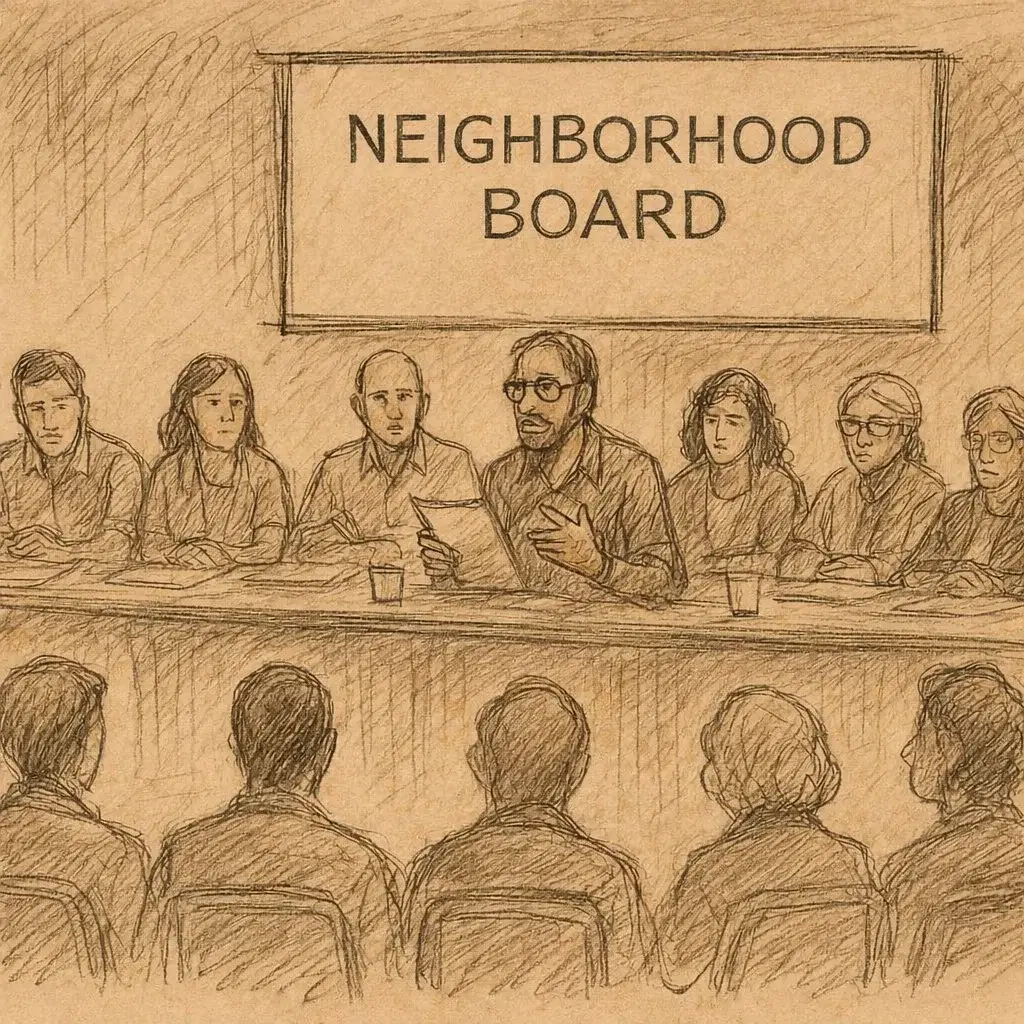
24 Waianae Coast Neighborhood Board Meeting – June 4, 2026
HPD Traffic, Noise, and Parking Complaints
The meeting opened with a community discussion involving Honolulu Police Department procedures for reporting nuisance and traffic problems, including reckless riding of e-bikes or motorcycles on residential streets. One resident described calling 911 about someone repeatedly riding recklessly up and down the street and said the dispatcher responded dismissively, prompting concern about whether nuisance calls are being taken seriously. HPD’s representative said such situations should still be reported and explained that callers should describe the activity as a traffic complaint, reckless driving, or a noise nuisance, depending on the behavior. The officer emphasized that dispatch decisions are influenced by the level of detail provided, such as whether the rider is speeding, driving recklessly, or creating excessive noise. Another resident asked about cars parked on public roads with expired registration or safety stickers and no visible sign of compliance. HPD said officers can cite or tow such vehicles, but acknowledged that officers generally are not proactively patrolling for these violations unless they are responding to other calls. Residents were told to report specific vehicles through 911 or the 311 app, including possible abandoned vehicles. One participant pushed back against relying on 911 for these quality-of-life issues and asked whether HPD could periodically enforce parking and registration laws within the community rather than waiting for complaints.
Lahaina Street Speed Humps
In response to concerns about speeding and repeated vehicle activity on Lahaina Street, board member Joe Jordan announced that the city and state are jointly planning to install eight speed humps on Lahaina Street during the summer. He said the road has already been marked, providing a visible sign that the traffic-calming project is moving forward. The announcement gave residents a concrete timeline and indicated that state and city agencies are coordinating on roadway safety improvements in the area.
Ocean Safety Operations, Rescues, and Hazards
Honolulu Ocean Safety reported 26 total 911 calls in May for the Waianae district. The department described a CPR incident involving a dolphin tour boat, where rescue personnel boarded and assisted with lifesaving efforts. Ocean Safety also handled several surf and dive rescues, including a four-person rescue at Keaʻau Beach Park and a three-person kayak rescue after the group was swept out. Staff also assisted the Coast Guard in a search connected to the North Shore, though the search location was too far for Ocean Safety to contribute directly in that case. The department reported two trauma cases at Pokai Bay, including two people who passed out, and an overdose case involving methamphetamine in which lifeguards used Narcan, apparently for the first time in that context. The person was transported and appeared to stabilize. Ocean Safety also responded to multiple shark sightings at Maʻili Point and Māʻili Beach Park and noted a dangerous lightning strike that hit the road near Mākaha Beach, prompting guards to leave their towers and take shelter. Staff said the road closure at Waipio? No—the closure referenced was at Waipomo/Keaʻau area, and they were unsure when DOT would reopen it. The department also announced that its junior guard program had begun and would run through roughly the second week of July, and that a new “watchtower” tablet-based monitoring system would be deployed to all lifeguard towers by the end of June, with demonstrations scheduled for June 11 and June 15.
Monk Seal Handling Questions
A board member raised concerns about the recent handling of a deceased monk seal in Nānākuli after seeing that it had been towed by its fins. Ocean Safety said NOAA Fisheries had been consulted and that the options discussed were towing the animal out or bringing it back for biopsy and pickup. The department explained that moving a large monk seal is physically difficult in the water and lifting one onto a jet ski would require several people, which shaped the method used. The discussion later returned in a broader cultural context during the mayor’s representative’s segment, when a board member questioned whether responders handling deceased marine animals are trained in cultural protocol or know how to coordinate with community practitioners.
Board of Water Supply Main Breaks and Water Quality Reporting
The Board of Water Supply reported two water main breaks in May, both involving a 4-inch main on Kulauni Street near the Waiʻanae KFC, and both occurring on May 1. BWS also used the meeting to announce its semiannual water quality report process, explaining that the agency conducts thousands of tests each year on water sources and the distribution system to ensure compliance with federal and state safe drinking water standards. The first report is mailed to customers by July 1 and the second in December. Residents can also access the report online at boardofwatersupply.com/WQR or request more information by phone. The agency said a large-print booklet is also available describing the origin of the water and the substances listed in the report.
Leak Detection, Pipe Relining, and the Farrington Transmission Line
BWS answered follow-up questions raised at a prior meeting about infrastructure maintenance and pipe failures. The agency said it uses multiple tools to identify leaks before they become major breaks, including a dedicated team using satellite leak detection technology and acoustic methods. In response to questions about whether BWS is exploring pipe relining to extend the life of existing infrastructure, the agency said it is considering pipelining where appropriate and is in the early design phase of a project to rehabilitate an inactive 24-inch water transmission line along Farrington Highway into the Leeward Coast. The concept involves cured-in-place pipelining in some areas combined with limited open-cut construction, with the goal of creating a redundant transmission line and improving water service reliability along the Waianae Coast. BWS also said pipelining is not always the preferred option, and in many cases the agency still favors replacing deteriorated pipe with epoxy-coated ductile iron and cathodic protection, targeting an approximate 100-year service life. Board member Joe Jordan asked whether this planned rehabilitation involved the same line that had been installed years earlier from Ko Olina to Black Rock and then toward Waiʻanae, noting that a number of recent main breaks had involved that newer line and that the community wants clarity on whether BWS is effectively replacing relatively recent infrastructure again.
Rain Capture, Stormwater, and Community Rain Barrel Questions
Board members also pressed BWS on water scarcity and stormwater management following recent Kona low storms. One member asked how much rainwater was actually captured and whether the storms had a measurable positive effect on water supply within the Waianae moku, especially given chronic concerns about limited water. BWS replied generally that heavy downpours can saturate the ground beyond its absorption capacity, causing large amounts of runoff to flow into the ocean, though the agency agreed to seek more specific information about whether the rains materially benefited local water resources and whether there are better tools for capturing stormwater. The board also asked BWS to provide more information at a future meeting about the city’s rain barrel or water catchment container program, particularly the use of 55-gallon drums for household rainwater collection. The chair said many community members are interested in this option but lacked clear information after attending another meeting where the program had been mentioned without handouts. BWS confirmed that the department does have such barrels stockpiled in Halawa near the Xeriscape area and agreed to bring back details on public access and program logistics.
Army Training, Job Fair, and Community Day
The Army representative, a lieutenant colonel, reported that June training at Schofield Barracks and East Range would include artillery, mortar, and demolition exercises conducted both day and night, including late evening and early morning periods. Residents near those areas were warned to expect increased noise and vibrations. The representative emphasized that the training is considered critical and provided the Garrison Concern Line, 808-787-1528, for community questions or complaints. The Army also announced two upcoming job fairs for U.S. Army Garrison positions focused on Child and Youth Services, with on-the-spot job offers and benefits including retirement, discounted child care, and access to post facilities. The first job fair is scheduled for June 24 at the AMVETS West Oahu Veterans Center and the second for July 21 at the Helemano Military Reservation gym, both from 8:30 a.m. to 2 p.m. In addition, the Army promoted a free community day at Fort DeRussy on June 12 from 10 a.m. to 4 p.m. A resident later asked whether Schofield Barracks would be open on July 4, and the representative said he did not have specific event information but believed normal gate hours and access rules would apply and promised to send more details to the board chair.
Recognition of Board Staff Service
The board took time to recognize the service of outgoing neighborhood assistant Jeffrey Jones and also mentioned Calvin Endo, who was not present and would receive his certificate later. Jones was thanked for more than two years of service supporting the Waianae Coast Neighborhood Board. The chair highlighted his reliability and support for board operations, and the board presented him with a certificate and lei in appreciation of his work. Jones said it had been a pleasure to serve the board and community in that role, especially as someone born and raised in the area, and noted that he would remain active in the community through his new position as Child and Club Safety Coordinator with Boys & Girls Club of Hawaii.
Housing and Homelessness Committee Report
Board member Nani Peterson briefly summarized a recent Housing and Homelessness Committee meeting, describing it as informative and detailed. She said the committee had reviewed the upcoming coastal permit proposal thoroughly, including community questions about the shoreline setback requirement, and that the proposal had met the applicable requirement. She also emphasized that the owners themselves attended and spoke directly with the committee, which she said was the kind of engagement the board wants to see more often on future proposals. Peterson reported there had been no objection from the committee to move the project presentation forward.
SMA Major Permit for 84-909 Moua Street Single-Family Dwelling
Consultant Fran Palama of Mauna Kai and Associates presented an application for a Special Management Area major permit for a new single-family dwelling at 84-909 Moua Street, TMK 8-5-008. She explained that the permit is required because the property lies within the shoreline Special Management Area, is subject to a 60-foot shoreline setback, and the project cost exceeds the threshold for a major permit. She said the permit process has taken about a year so far, with additional public hearings still ahead before final authorization to build. According to the presentation, the project involves a three-bedroom, three-bathroom home with three uncovered parking spaces on a concrete slab, fronting the shoreline and oriented so that the lanai faces the ocean while parking is located toward the street side. The surrounding zoning is R-10 residential. Palama said sea level rise exposure for the site is estimated at 0.2 to 3.2 feet, with 3.2 feet projected by the year 2100. She also noted that a certified shoreline survey was completed as required and that approximately 1,800 square feet of the property has already been lost to erosion, with photographs documenting shoreline impacts. The environmental review process has been completed and the project has been posted in the environmental notice system.
Ownership Structure, Non-Rental Use, and SMA Clarifications
The proposed house drew questions from residents about whether the property could eventually become a vacation rental or function as a multi-family investment. Palama said the home is intended strictly for family use and is not a bed-and-breakfast, vacation rental, or other rental property. She described the owners as related local families with long-standing ties to the Waianae Coast who pooled resources to purchase the formerly vacant lot after years of looking for property in the area. When asked whether the project was effectively a group living facility, she said the owners are related by blood and are not unrelated parties. Questions also arose about whether the permit should instead be a conditional use permit, but Palama and board members clarified that the SMA major permit requirement stems from the site’s shoreline location and the construction valuation rather than the family relationship. Board member Dana Newman added that the project crossed into SMA major territory because construction costs have now risen above $750,000; an earlier filing years ago had been considered as a smaller matter, but the incomplete earlier effort and rising costs changed the permit category. The board discussion reflected continuing concern that new shoreline homes not become illegal short-term rentals later, and city staff later confirmed that such use would not be permitted under the zoning and that DPP can enforce against it.
Neighborhood Commission Guidance on Board Governance and Training
Neighborhood Commission Vice Chair Larry Varee joined remotely and delivered an extended address focused on board operations, meeting decorum, committee work, legislative priorities, and the value of neighborhood boards. He praised the Waianae board as one of the city’s most challenging because of the range and intensity of local issues, from development pressure to transportation and community character. He stressed that neighborhood boards must maintain order, respect, and professionalism, and said the chair and vice chairs play a crucial coordinating role before and during meetings. He encouraged members to support the chair by helping with time management and by avoiding lengthy preambles before questions. Varee also encouraged the board to track legislative priorities systematically across city, state, and federal levels and to hold lawmakers accountable over time while allowing them to choose which requests they will pursue. He explained that community concerns raised during meetings should be noted and assigned to committees, and reminded members that committees must follow Sunshine Law requirements, including agendas and minutes. He also discussed ongoing Neighborhood Plan revisions, invited board input on possible boundary changes or policy improvements, and encouraged neighborhood boards to continue recognizing local achievements publicly. In response to board member Joe Jordan, Varee acknowledged the continuing need for formal training for new and long-serving board members and said he would raise the issue again with the Neighborhood Commission Office and Chair Lloyd.
Accessibility and Interpretation Requests
During the exchange with Neighborhood Commission leadership, a board member pointed out that the agenda already contains language advising residents how to request auxiliary aids, disability accommodations, or interpretation services in languages other than English through the Neighborhood Commission Office at least three business days before a meeting. The board emphasized the importance of written requests by email so that such requests are documented.
Oahu Pentathlon Proposal and Community Opposition
The board heard a presentation from Tara Mayo, race director for the Oahu Pentathlon, regarding the sixth annual event scheduled for August 8 and 9, 2026. She described the event as a fundraiser for Point One Vision, a faith-based 501(c)(3) nonprofit, and said it consists of a 135-mile team adventure race around Oahu involving swimming, running, paddling, sandbag carrying, and biking. The portion affecting the Waianae Coast would involve competitors coming off the trail around Kaʻena Point carrying sandbags, proceeding southbound on Farrington Highway, and then transitioning to bicycles at Keaʻau Beach Park before continuing south. The event is expected to involve about 150 athletes, but because many are in teams, organizers estimated 40 to 50 units spread over roughly 3 p.m. to midnight on Saturday, August 8. Mayo said no traffic lanes would be coned off and the checkpoint would be moved outside the park after 10 p.m. if participants were still on course, in accordance with city recommendations. She also said no staging would occur there beyond immediate transfer of sandbags and bicycles.
Safety, Road Closures, Cultural Concerns, and Kaʻena Access
The proposal met immediate resistance from residents and officials once board members and community participants pointed out that the route involved areas still affected by major storm damage. Multiple speakers noted that road access near Keaʻau and toward Keawaʻula/Kaʻena has been compromised by Kona low erosion and washouts, with sections of roadway reduced or controlled and with beach and trail closures still in place. A resident and lifeguard questioned how injured participants would be evacuated if the area remained restricted. State Representative Chris Muraoka strongly criticized the proposal, saying the organizers had not done sufficient due diligence about current closures, safety conditions, or the sensitivity of the area, and said he would contact state officials involved in permit approvals to oppose the event under current conditions. Additional community concerns included loose dogs near encampments along the route, the likelihood of litter left behind by competitors, and the deeper cultural significance of Kaʻena Point. Board member Dana Newman urged the organizers to understand the sacred and spiritual significance of Kaʻena before planning a physically demanding event there. By the end of the discussion, the organizer acknowledged the seriousness of the issues and said the team would revisit the route, research conditions further, and determine whether an alternative was necessary before returning to the board.
Community Concerns: Budget, Police Leadership, and Emergency Communication
During the community concerns portion, one speaker criticized the city budget process and said he planned to testify against both the operating and capital improvement budgets, which he described together as nearly $6 billion. He also criticized city spending priorities, including the proposed panda program for the Honolulu Zoo, and raised distrust about the incoming police chief and broader national political issues. Another community member raised concern about emergency communication after seeing a fire rescue helicopter operating in Waianae Valley for several hours without clear public explanation. When the resident called 911 for information, dispatch reportedly did not know about the helicopter activity, prompting concern about communication between emergency services and the public during active operations. The chair responded that the board had received notice of military exercises during June, though the resident said the helicopter in question did not appear to be military-related.
Geothermal Concerns and Community Meeting
A board member announced that community concern is building around geothermal exploration tied to Department of Hawaiian Home Lands activity and said a community informational meeting organized through Kingdom Pathways would be held in the board meeting room on Friday at 5 p.m. to help residents prepare for a larger geothermal meeting that was expected the following week in Kapolei. The speaker questioned why a discussion affecting Waianae should be held outside the community and urged residents to become informed. Later in the meeting, state Senator Samantha DeCorte reinforced the warning, saying DHHL had sought $5 million during the legislative session to conduct a geothermal study focused on areas including Lualualei and the Waianae Coast, but had not first conducted beneficiary consultation. That funding request did not advance. Residents and board members referenced reports and community experiences from Puna as cautionary examples and said all sides of the issue should be heard before state money is committed.
Community Perspective on Board Service and Civic Participation
Resident Johnny May used the community concerns section to encourage board members and residents to remain active beyond this single meeting. He said he has attended neighborhood board meetings since 2003 and now watches seven or more meetings per month by Zoom, calling the experience educational and useful for understanding how city government functions across the island. He encouraged board members to review city agendas, watch other boards, and view neighborhood board service as training for broader civic leadership. He described the neighborhood board as more than a volunteer advisory panel if members fully engage with the system and use available information.
Mayor’s Office Responses on Parks, Flooding, Waste, and Panda Questions
Mayor Rick Blangiardi’s representative, Donna Puna, delivered a long list of follow-up responses to previous board questions. On Farrington Highway near Keaʻau, she said storm damage there falls under the state Department of Transportation rather than the city and directed questions to HDOT. On Keaʻau Beach Park cleanup and maintenance, she said the Department of Parks and Recreation has assigned two dedicated groundskeepers to the park and is trying to fill vacancies and reallocate workers to larger parks, describing park safety and upkeep as a city priority. Responding to criticism of the city’s interest in panda bears for the Honolulu Zoo, she said the mayor’s trip to China focused on economic diversification, strengthening partnerships, and conservation efforts and that hosting giant pandas could improve attendance, revenue, and visitor experience at the zoo. On solid waste, she said the city does not view landfill expansion as the sole long-term answer and pointed to an integrated system that includes recycling, green waste diversion, composting, food waste diversion, and H-Power waste-to-energy. On vape shops, she said these are treated as general retail uses under the land use ordinance and therefore do not require neighborhood board presentation before opening if they are located in zoning districts where general retail is already allowed. On flood prevention, she identified two city projects with very long timelines: Kulaʻaupuni Street drainage improvements, tentatively set to advertise for bids in 2028, and Ulehawa flood control improvements, tentatively scheduled for bid in 2030. On mayoral town halls, she said the administration continues to prioritize whole-of-government response to severe weather and FEMA-related work rather than holding town halls in every area. She also clarified that neighborhood boards cannot meet entirely virtually because Sunshine Law requires physical attendance accommodations, though hybrid participation remains optional.
DHHL Permitting and DPP Coordination
A major portion of the mayor’s report discussion turned to DHHL and development permitting. Board members asked whether DHHL projects are separately identifiable within city permitting and whether the department has begun using its own self-authorized permitting authority rather than relying on the Department of Planning and Permitting. Puna said DPP can filter permit information by applicant if needed and identify DHHL-related permits, but there is no regular separate report unless one is requested. She also said that although DHHL at one point discussed taking over more of its own permitting, later discussions with DHHL leadership indicated that the department had decided to continue working through DPP rather than fully bypassing city review. She said DHHL can in some cases claim sovereign authority and avoid certain city permitting, but generally still seeks permits because certificates of occupancy and related approvals remain important for practical reasons such as insurance and infrastructure turnover. Board members pressed on whether city procedures continue to slow beneficiary housing projects and whether roads and utilities built under DHHL processes meet city standards before transfer. Puna said compliance with city standards remains important, especially where infrastructure will eventually be dedicated to city maintenance.
Landfill, Makaiwa Hills, and Cultural Resource Questions
Questions also returned to the city’s landfill planning and the previously floated Makaiwa Hills site. A resident asked whether the Department of Environmental Services had approached DPP about permitting for Makaiwa Hills when the landowner had reportedly said ENV had never contacted them. Puna said ENV had submitted a request for a public infrastructure map symbol, which is required to advance a government facility project and secure funding, but the request requires City Council approval and the council never held the hearing, so the proposal has stalled. Board member Dana Newman asked whether the city had investigated petroglyphs or other cultural and historical resources in the Makaiwa Hills area. Puna said that level of work would be required if the project moved forward, but had not yet been completed because the proposal had not advanced.
Cultural Protocol for Marine Animal Response
A board member also asked the mayor’s representative whether agencies involved in recovering deceased monk seals, turtles, or seabirds are trained in cultural protocol or know how to work with cultural practitioners. The question stemmed from a video showing a seal being dragged by the tail after death. Puna said she was unsure and would take the question back to the administration, noting that DLNR likely plays a role in that process.
Councilmember Tupola’s Budget Priorities and Landfill Opposition
Councilmember Andrea Tupola reported that the full City Council was set to vote the next day on Bill 22, the city operating budget, and Bill 23, the capital improvement budget. She identified several Waianae-related items she said she had included in the budget, including recommendations from the HPD vacancy task force report, funding for the Kalpuni Park gate sought as part of the Jan Mākaha Firewise effort, and funding for the sign associated with the Waianae District Park renaming. In the capital budget, she said she included funding for Kulaʻaupuni Street drainage and for a long-reach excavator used to clear stream mouths, noting that the city currently has only two such machines and one is aging. She also highlighted what she considered one of the most important actions in the budget: removing $30 million that had been intended for landfill land acquisition. She said that without the funding, the city cannot acquire the land, and added that the Council’s zoning committee had declined to schedule the PIM hearing needed to move the Makaiwa Hills proposal forward after administration officials requested a rushed emergency meeting. Tupola said the first time she heard “Makaiwa Hills” mentioned was during a March 16 budget hearing and that from then on there was an aggressive push to make the site happen, but that it was no longer moving. She said the mayor would have 10 days after the vote to issue any veto, but that the Council had enough support to override if necessary and that after that 10-day period she would feel more certain that the proposal had truly been stopped.
Waianae District Park Renaming and Sustainable Planning Questions
Tupola also fielded questions about the renaming of the Waianae gym portion of the district park after Shinyei Nakamune, an honored veteran of the 100th Battalion. She said the ceremony had already taken place and noted the family’s connection to the area, including ties to teacher Kimie Korinaga. Other questions touched on the status of the Waianae Sustainable Communities Plan and the possibility of future community events such as concerts at Waianae District Park, though Tupola said she would need to bring more detailed answers back later. She also mentioned a canceled resolution involving a public infrastructure map symbol near the old post office that might still be of interest for uses such as a community garden.
Ending Landfills Task Force and Community Input
Responding to a question from a resident about alternatives to landfill dependence, Tupola described Resolution 26-7, which established an Ending Landfills Task Force. She said the task force is limited in size and includes 15 designated participants, but that she continues to meet with community members and subject-matter experts almost weekly to gather ideas on waste-to-energy, disposal alternatives, and long-term solutions. She said one challenge is that not every agency involved shares her goal of ending landfills, so the process includes assembling research, technology assessments, and possible funding paths. Tupola said a public forum is planned for late January next year to gather broad public and business input that will then help shape the task force report, which is due in November of next year. She made clear that the task force itself will issue recommendations rather than make final decisions, but promised that community input would continue to be part of the process.
Homelessness, Dogs, Encampments, and Park Safety
Several exchanges with Tupola centered on the impact of encampments, stray dogs, and public safety on beaches and parks. One resident described ongoing problems with unleashed dogs moving from encampments into agricultural lands, attacking livestock and entering yards, and asked whether the city would be held responsible if dogs living on city land caused harm. Tupola said each incident should be reported immediately so HPD and the Humane Society, which operates under city contract to handle strays, can respond with enough location-specific information to act. She also said she has been working with state representatives and HPD on park cleanups and safety improvements. The same resident said that after livestock were killed, city agencies had pointed fingers at each other instead of taking responsibility, and stressed that agricultural families depend on their animals to feed themselves. Another resident added that HPD should also be acting on the issue because dogs living in camps pose a threat to the public.
Governor’s Office Absence and Broader Concerns About Energy Policy
The governor’s representative was absent, but a resident used the opportunity near the end of the meeting to criticize Governor Green’s approach to major energy decisions, arguing that the administration should not use executive authority to speed projects forward without full public process, especially after prior examples where state commitments did not work out as promised. The resident specifically linked this concern to the evening’s announcement about JERA and liquefied natural gas, arguing that residents should hear multiple perspectives, not only official project presentations, before state policy effectively commits public resources or support.
Senator DeCorte on Flooding, Geothermal, and Food Support
State Senator Samantha DeCorte gave updates on several matters. She first responded to concerns raised the previous month, clarifying that a bill to increase the retirement age for chief justices had died and would not become law. She then addressed flooding, particularly on Paakea Road, saying the state acquired responsibility for the road in 2024 and that the Department of Transportation is working on additional drainage infrastructure there. She cautioned, however, that until the Navy’s upstream impacts are addressed, flooding from Navy property will continue to overwhelm roads in the area. She said she is waiting for a change in Navy leadership before revisiting those conversations. DeCorte also strongly encouraged residents to attend the Kingdom Pathways geothermal meeting because DHHL has identified parts of the Waianae Coast and Lualualei as geothermal hotspots and had sought $5 million this session for a study without first conducting beneficiary consultation. She said that was a serious concern. On a more immediate community issue, she announced that Kahumana Farms had launched its “Kaukau for Keiki” initiative, providing weekly meal boxes for public school students on the Waianae Coast. She said the program was already distributing 600 to 700 boxes a day and that each child can receive seven breakfasts and seven lunches each week with a valid ID or pickup by an authorized person.
Cesspool Conversion Prioritization
DeCorte also reported that the Waianae Coast is the number one priority area for cesspool conversion under the relevant working group process. She said she had secured the appointment of Carmen “Simi” Simpliciano to the cesspool working group so that Waianae would have direct representation in conversations about how these conversions will be handled. The senator acknowledged that the practical path for widespread conversion remains uncertain, but said having local representation at the table is critical as policy and implementation discussions continue.
Representative Muraoka on Speed Humps, Road Access, and Fentanyl
Representative Chris Muraoka highlighted several district issues, beginning with transportation safety improvements. He thanked state transportation director Ed Sniffen and said speed humps had now been installed near the Boys & Girls Club and that additional speed hump projects are expected on Lahaina Street in late June or early July and on Farrington Highway between “J” and Water Street. He also gave a progress update on Pokai Bay concerns and said DLNR had reassured him that previously allocated funds would not lapse while hydraulic studies continue. Turning to access concerns, he clarified that although the beach itself remains closed in some areas and there are still washout-related restrictions, the road past Waikomo toward the Kaena side is in fact open to traffic with one-way control at the damaged section, requiring drivers to use caution and yield. Muraoka then promoted a joint town hall with Representative Darius Kila on fentanyl scheduled for June 24 at the Waianae Mall Community Safety Center. He said fentanyl is arriving in forms that resemble candy, Skittles, and gummies and described it as a serious threat to children and families. The event will include guest speakers and a limited supply of Narcan to be distributed on a first-come, first-served basis. He said the town hall would begin at 6:30 p.m., with doors opening earlier.
Amazon Fulfillment Center Concerns
A resident asked Muraoka about the proposed Amazon facility in Kapolei and whether its scale and anticipated traffic would worsen commutes for Waianae Coast residents using the already constrained highway corridor. Muraoka said he supports the project because Amazon has committed to giving right of first refusal for many jobs to residents of the Waianae Coast and nearby communities, with expectations of more than 1,000 jobs. He acknowledged that there is a height-related permitting issue and said he had not been directly focused on that because it lies outside his district, though he offered to investigate further. The chair added that Amazon had already requested to present to the board in August and that DPP materials indicate the company is seeking to amend the project height from 60 feet to 100 feet. She anticipated significant community interest and said the presentation may need a larger venue.
Boat Harbor, Sewers Beach, Homelessness Response, and “PILAU”
Board member Dana Newman asked Muraoka about people living near the boat harbor and at “Sewers” and whether a plan existed as deadlines approach for them to move out. Muraoka said there is a tentative date involved, but added that he and Kupuna Council members have been discussing alternative plans and stressed that no one should be removed without being offered shelter, treatment, or other support. He also drew a distinction between being homeless or houseless and what he repeatedly called “pilau,” meaning crime, disorder, trash, and open drug use. He argued that the community’s objection is not to poverty itself but to the destructive behavior that prevents residents from safely using beaches and public spaces. Newman responded that without a real relocation and cleanup plan, the same disorder will simply shift from one area to another and said she has personally seen debris and neglect left behind in spaces after people are removed. Muraoka said that in the enforcement efforts he has personally joined, cleanup has been part of the process, and he stressed again that police can only effectively enforce after sites are cleared. Another board member urged more collaboration with cultural practitioners, saying the process should be done “kākou” rather than through standard enforcement alone.
Representative Kila on Legislative Session and Traffic Safety
Representative Darius Kila closed the elected officials’ reports with a short update emphasizing public safety and transportation. He said the legislative session had been productive and highlighted bills aimed at improving traffic safety, especially around e-bikes. He said one key measure awaiting the governor’s signature would help cities adopt updated e-bike ordinances and called it a major change. Kila also noted a resolution directing DHHL to explore an indigent pathway so that underserved beneficiaries are not excluded from services. He praised his working partnership with Representative Muraoka, saying they do not always agree but work effectively together. When residents thanked him for helping secure long-awaited speed humps in areas including Plantation Road and Waiʻanae Valley Road, Kila said he was glad to assist through his committee role even when the projects were outside his district boundaries. He also mentioned another bill before the governor that would expand the traffic camera program, acknowledging it is controversial but saying he is willing to support contentious measures when he believes they improve safety.
LNG and JERA Informational Outreach
Near the end of the meeting, Lynn Miyahira announced upcoming public outreach related to JERA’s proposal involving liquefied natural gas and a new power plant for Hawaii. She said the effort is being framed as part of a strategy to lower electricity costs, reduce dependence on oil, and serve as an intermediate step toward the state’s 2045 clean energy goals. An informational open house is planned for August 3 at Blaisdell, and organizers are seeking a West Oahu or Kapolei location for a similar event in July to make the discussion more accessible to Leeward residents. The chair asked for the July date to be sent in time to place it on the next board agenda. Discussion from residents immediately underscored that any such proposal will face scrutiny over process, public transparency, and whether energy decisions are being pushed forward before residents have full information.
Additional Announcements and Upcoming Dates
The meeting concluded with several administrative announcements. The board noted that information from the University of Hawaiʻi coconut rhinoceros beetle response team would be shared separately because the presenter was absent. The chair reminded attendees that the full City Council would meet the next day, Wednesday, June 3, at 10 a.m. to consider Bills 22 and 23 and that testimony could be submitted in person or via Zoom. She also announced that the board’s next regular meeting would be on Tuesday, July 7, 2026, at the Waiʻanae Public Library, and that the board would elect its officers at that meeting for the new term period beginning July 7. The meeting adjourned at 9:26 p.m.