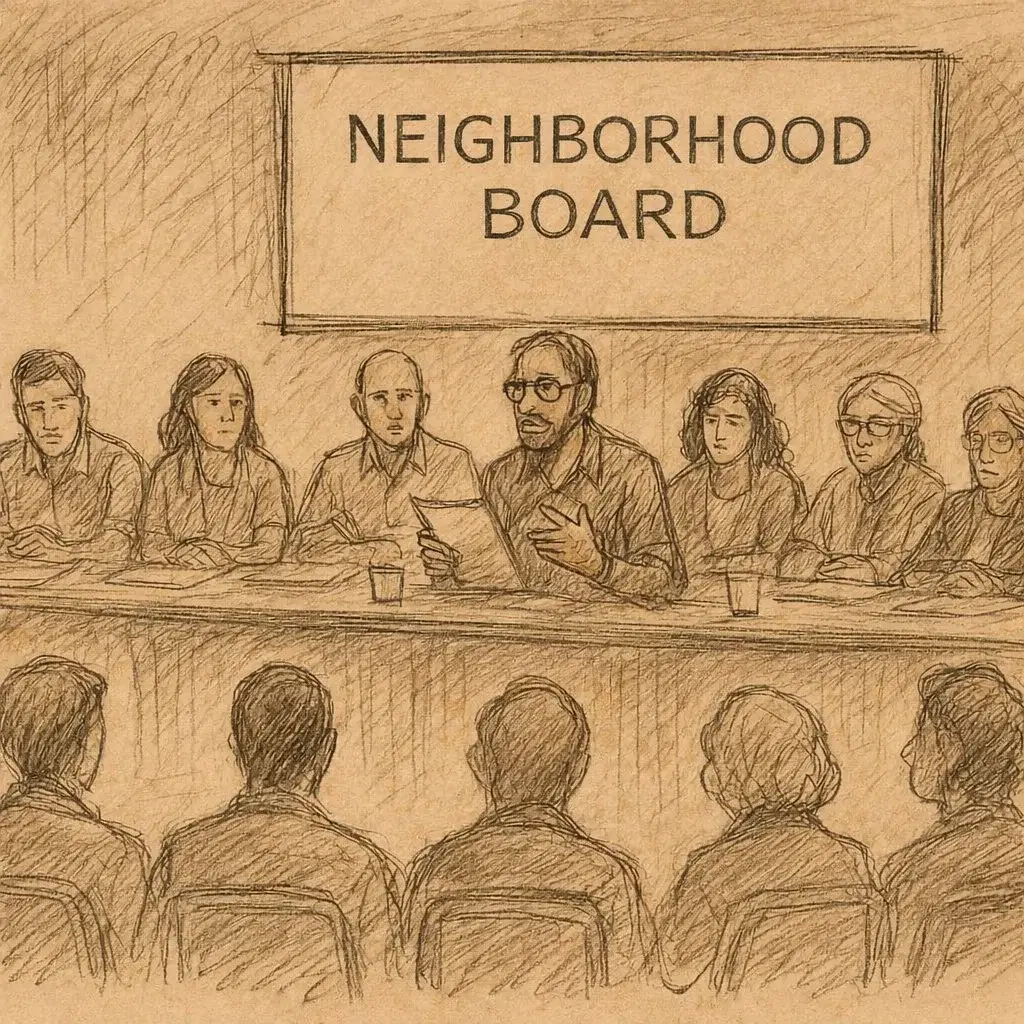
No 03 Waiʻalae-Kāhala Neighborhood Board Regular Meeting October 2026
Listen to this article:
3 Waialae-Kahala Neighborhood Board Meeting – October 16, 2026
Public-Safety and Crime Report
Honolulu Police Department Lieutenant Muir reported five motor-vehicle thefts, four burglaries, 16 thefts, three unauthorized entries into motor vehicles, and 5,808 total calls for service during the previous month. A board member added that month-to-date data for Subdistricts 3 and 4, covering roughly Diamond Head to the Kāhala Post Office, showed only three reported incidents: one assault, one theft on Hunakai Street, and one theft on Kāhala Avenue. The member also reported that HPD data no longer appears on the crime-mapping tool used by local Neighborhood Watch volunteers since 2018. To continue monitoring neighborhood incidents, the member now downloads islandwide information from Honolulu’s open-data system and uses a custom macro to extract relevant streets. Lieutenant Muir had not received an explanation for the change but said he would reiterate the concern to HPD leadership.
Halloween Safety
With Halloween approaching, HPD recommended bright or reflective costumes, reflective tape or striping, flashlights, and discreet emergency identification containing a child’s name, address, and phone number. Parents were advised to know who is accompanying their children, obtain contact information for the other parents involved, accompany young children, and inspect candy before it is eaten, discarding anything with a questionable wrapper. Homeowners were asked to eliminate tripping hazards such as flowerpots, low tree limbs, support wires, and garden hoses and to provide adequate lighting along porches and walkways.
Surveillance-Camera Concerns
The chair asked whether the city, county, state, or HPD had any relationship with Flock, a company associated with surveillance and license-plate-reading cameras. He had noticed a new roadside camera installation with what appeared to be a transponder while traveling from Kāhala toward Kaimukī. Lieutenant Muir said the question was news to him and that, to his knowledge, HPD neither had an affiliation with Flock nor used the company’s equipment.
Water Supply and Power Outages
Board of Water Supply representative Lorna reported no water-main breaks during the preceding month. She explained that electrical outages restrict the agency’s ability to pump groundwater into reservoirs, leaving only the water already stored in those reservoirs available to serve customers. During an outage, residents should limit water use to essential cooking, drinking, and personal-hygiene needs and refrain from washing vehicles, irrigating yards, or filling pools. Conservation should continue after power returns so electrically powered pumps can restore reservoir levels. Water service and pressure may recover slowly following prolonged outages or widespread damage, and residents were directed to the Board of Water Supply website and official social-media channels for updates.
Fire Department Activity and Seasonal Safety
Although no Honolulu Fire Department representative was initially available in person and the remote microphone was malfunctioning, Kaimukī Fire Station later provided September statistics for Engine 53. The station responded to four nuisance fires, four activated alarms, 29 medical emergencies, one motor-vehicle collision, and one mountain rescue. Seasonal safety guidance called for using electronic decorations, appliances, and devices certified by nationally recognized testing laboratories and following manufacturers’ instructions. Residents were also advised to remain present and alert while cooking, keep flammable objects away from heat and open flame, and be especially attentive while walking or driving during low-visibility periods such as dusk and dawn.
Agency and Elected-Official Attendance
No representatives appeared from the Hawaiʻi Department of Transportation, the governor’s office, the mayor’s office, Representative Mark Hashem’s office, Representative Tina Grandinetti’s office, Senator Stanley Chang’s office, or Congressman Ed Case’s office. The board also reported no member attendance at outside meetings for the month. The lack of agency and elected-official participation drew criticism from the chair, who emphasized the value of officials appearing before residents and noted that Council Chair Tommy Waters had consistently attended many meetings despite representing six or seven neighborhood boards.
Unpermitted Fence at 949 Kealaʻolu Place
The chair again raised the unresolved unpermitted fence at 949 Kealaʻolu Place, describing it as a severe eyesore that the Department of Planning and Permitting has confirmed in writing is not permitted. The resident who originally reported it, Mr. Nikolai, had reportedly been waiting nearly a year for corrective action. A board member stated that approximately $40,000 in fines had been assessed since 2023, the original permit application had been denied, and the matter had remained in an appeal process since December 2024. Board members criticized the prolonged lack of enforcement and asked anyone with DPP contacts to press the agency to act.
Proposed Shopping-Cart Ordinance
Council Chair Tommy Waters reported that he had introduced a bill prohibiting possession of shopping carts outside the commercial premises where they belong. The proposal was developed after discussions concerning homelessness with supermarkets and other stakeholders, as well as with Major Okamoto of HPD’s Waikīkī district. Waters said Public Safety Committee Chair Augie Tulba was expected to schedule a hearing the following week and encouraged board members and residents to testify in person, online, or in writing. The Waikīkī Neighborhood Board had already adopted a resolution supporting the measure.
Shopping-Cart Costs, Enforcement, and Homelessness
Waters said individual shopping carts cost stores approximately $250 to $1,000, and retailers ultimately pass losses from stolen or abandoned carts on to consumers. Under his proposal, possessing a cart away from the commercial property would be a petty misdemeanor rather than a felony based on the cart’s value. He characterized the measure as a practical tool allowing police to take carts that are visibly marked as belonging to Safeway, Foodland, Times, or another retailer; currently, officers may treat the carts and their contents as personal property and decline to remove them. Police could return a cart to its owner or call the city, which already collects and returns abandoned carts in large numbers. Waters said the intent was not to criminalize homelessness but to prevent carts from being moved one street away during cleanups and then returned with accumulated trash. He also hoped the measure would encourage people to accept available shelter and social services.
Alternative Cart-Recovery Policies and Street Safety
A board member described another city’s policy of charging stores a recovery fee and daily holding costs when abandoned carts are collected, but Waters said the retail industry had strongly opposed a similar proposal in Honolulu and that an earlier version had failed to advance from committee. Another member supported Waters’ approach and cited a shopping cart and belongings that frequently obstruct the sidewalk and roadway near the Hawaiʻi State Library on Punchbowl Street, creating hazards in an already constrained commuter lane. The member connected that situation to broader concerns about reduced traffic capacity and the difficulty of reaching downtown Honolulu. Waters confirmed that his bill would create strict liability for possessing a cart outside commercial premises and give officers a clear basis for removing it.
Council Chair Waters’ Service and Cost-of-Living Issues
Board and community members thanked Waters for his regular meeting attendance, responsiveness, and service to the district. He was also thanked for a resolution that placed a resilience hub in the city budget; East Oʻahu community participants are reviewing that measure to determine how a hub might be implemented locally. A resident thanked Waters for attending a cost-of-living summit involving young people. Waters said childcare emerged as a major expense for young professionals and pledged to use his remaining two months in office to pursue ways to reduce living costs. His staff initially had no update on the shopping-cart bill, but Waters later joined the meeting personally and supplied the detailed report.
Election Mailers and Political Spending
Resident Kahi Pakara cautioned voters about glossy, matte, and otherwise professionally produced election mailers, particularly those not issued directly by candidates. He encouraged residents to read the legally required sponsorship disclosures and investigate the unions, political action committees, and special-interest groups financing the materials rather than assuming a friendly-sounding organizational name reflects voters’ interests. He estimated that a single mailing can cost roughly $7,000 to $20,000 and said voters should consider the financial motives behind repeated attempts to influence them. He acknowledged that not all independent mailers are improper and that he had used some himself, but urged residents to research candidates beyond campaign advertising.
Approval of September Meeting Minutes
The board unanimously approved the minutes of its September 17, 2026 regular meeting following a motion, second, and recorded voice and hand vote. A board-correspondence submission process was listed on the agenda, but no substantive discussion followed.
People Living in Vehicles on Kīlauea Avenue
The board discussed multiple complaints about vehicles parked along Kīlauea Avenue that appear to be used as living quarters. The chair had observed several near Kāhala Mall and others across from a school. One member said a former judge had advised Neighborhood Watch participants that removing people from occupied vehicles could be unconstitutional when shelter or housing space is unavailable; police may issue only a small fine, and the judge reportedly dismissed such cases. Other members disputed that interpretation and referred to recent federal court rulings involving public-camping enforcement, including Grants Pass v. Johnson and a Boise-related case. They said the governing principle permits enforcement when shelter or another appropriate place is available. The discussion also touched on state efforts to authorize intervention for severely mentally ill or psychotic unsheltered people. Members agreed that the legal debate underscores the need for a practical approach that considers both public-space impacts and the availability of shelter or treatment.
Hawaiʻi Food & Wine Festival Event at KCC
Grant Itamitsu, chair of Kapiʻolani Community College’s Culinary Arts Department, announced that a major Hawaiʻi Food & Wine Festival event normally held at the Hawaiʻi Convention Center would move to KCC because the convention center is undergoing an expected two-year renovation. The college has supported the festival for decades by assigning culinary students to assist visiting local and international chefs. The relocated event was originally planned for KCC’s Great Lawn, Makahīʻāpō, but uneven terrain prompted organizers to move it to a parking lot near Leʻahi Hospital off Makapuʻu Avenue. Because this site is closer to neighboring homes, KCC notified the board about possible traffic and noise effects.
Festival Schedule, Attendance, and Traffic Controls
The sold-out event was expected to draw approximately 1,100 guests, 20 guest chefs, 25 or 26 winemakers, several mixologists, and more than 100 KCC culinary students, with Kauaʻi Community College students also potentially assisting. Tent setup was scheduled for Thursday, November 5, from 4 to 9 p.m., followed by staging and lighting work on Friday, November 6, from 8 a.m. to 7 p.m. The main event was scheduled for Saturday, November 7, with about 600 guests arriving at 5 p.m. and another 500 beginning at 6 p.m.; activities were expected to end around 9 p.m. Guests would park in the main campus area commonly used for the farmers market, and shuttles would take them to the event site. There would be no valet service. Protective barriers, private security, and HPD personnel were planned, and arrivals were staggered to reduce congestion near Leʻahi Hospital and adjacent residences.
Festival Tickets and Culinary-Program Support
Tickets began at approximately $295 and had already sold out. Itamitsu explained that the Hawaiʻi Food & Wine Festival financially supports culinary programs at KCC, Kauaʻi Community College, Hawaiʻi Community College, Maui College, and Leeward Community College. The relocated Saturday-night event was identified as the festival program sponsored by Hawaiian Airlines. KCC agreed to host it on a trial basis, and the college will use community response and event operations as a test of whether it should return during the convention center’s renovation. Itamitsu said KCC would notify the board earlier if the event returns so residents have more opportunity to obtain tickets.
Culinary Institute of the Pacific
Itamitsu reported that most of the Culinary Institute of the Pacific project on the slopes of Lēʻahi was expected to be turned over to the college the following week, although window tinting and other contractor punch-list work remained on the restaurant portion. The restaurant was targeted to begin operations sometime in 2027. An innovation center had already been open for more than a year, and a state-of-the-art studio auditorium had been used periodically since earlier in 2026. The board expressed interest in holding a future neighborhood board meeting at the new institute, and Itamitsu agreed to discuss the possibility with administrators, emphasizing that the state-, donor-, and community-supported facility should serve broader community purposes.
KCC Culinary Education and Partnerships
Board members praised KCC’s culinary program as one of the leading programs in Hawaiʻi and the nation. Itamitsu confirmed a partnership with the Culinary Institute of America, developed with help from Chef Roy, that recently completed a three-year professional workforce-training project and may connect to future workforce-development programs. The chair promoted KCC’s short community culinary classes, including instruction in tempura, sushi, fish preparation, and bread baking, generally costing around $120 for one or two days of instruction with professional chefs. The board also recognized KCC’s 80th anniversary and the 88th Ruby Gala and highlighted the college’s culinary and hospitality programs.
Review of Regional Development Plans
The board approved creation of a permitted interaction group to evaluate the two city planning documents that govern the Waiʻalae-Kāhala Neighborhood Board district: the East Honolulu Sustainable Communities Plan, which ends at Waiʻalae Nui Stream, and the Primary Urban Center Development Plan, which begins there and extends toward Diamond Head. Sponsor Aloha McGuffey said the current plans contain very little specifically addressing Waiʻalae-Kāhala, leaving the district in a border area between two planning frameworks. The group will develop recommendations for the Department of Planning and Permitting before the next update cycle, which occurs only about once every 10 years.
Membership and Goals of the Planning Group
The permitted interaction group includes board members Aloha McGuffey, Colin Fujiki, Brian Wong, and Jason Liang, along with community members Dalen and Mark McGuffey. McGuffey said some residents do not believe Waiʻalae-Kāhala belongs in the Primary Urban Center Development Plan because they do not want major urban development in the district. After an earlier effort to move the planning boundary was unsuccessful, the group’s new approach will be to identify beneficial provisions in the East Honolulu Sustainable Communities Plan and seek their application or implementation within Waiʻalae-Kāhala. The resolution establishing the group passed unanimously. McGuffey also noted that the Kāhala Hotel & Resort, one of Kāhala’s largest private employers with approximately 500 workers, sponsors the East Oʻahu Community Action Network and has provided meeting space for related community work.
DOE Property at 475 22nd Avenue
A proposed permitted interaction group concerning the Department of Education property at 475 22nd Avenue was postponed until the following meeting because sponsor Barry Francis was absent and had not yet finalized the group’s membership. The proposed resolution was already on file. A board member who had toured the site with Francis described the facility as being in severe disrepair, including an accessibility ramp overgrown with weeds, and said the surrounding community had been very patient while waiting for improvements.
Wilson Community Park Hours and After-Hours Activity
The board reviewed a resident request concerning Wilson Community Park hours. Although the resident was absent, members familiar with the issue said the primary concern was not necessarily the official closing time but the number of people who remain in the park after it closes. Residents of nearby townhomes reportedly experience late-night noise, while darkened areas may host other unwanted activity after the baseball floodlights are shut off. Wilson Community Park is adjacent to Wilson Elementary School and is shared with the school for recess and related programming, adding concern about activity near children’s facilities.
Park Enforcement, Homelessness, and Lighting
Members who live near or regularly walk through Wilson Community Park confirmed limited police presence after closing. One member said unsheltered people sleep near the Waiʻalae Nui drainage easement once the floodlights go off, while another reported witnessing drug use followed by the person leaving on an electric scooter. The employee who closes the restrooms was described as securing the facilities without necessarily clearing people from the grounds. Members distinguished Wilson from Kāhala Community Park, where a past restroom assault and a proposed gate had generated separate safety concerns, though they noted both parks face similar after-hours issues. The board favored stronger HPD patrols, consistent Department of Parks and Recreation closure procedures, and actual enforcement of park hours. Members did not believe replacing the park’s older orange-toned lighting with LEDs would necessarily resolve the underlying problem. The chair planned to contact Lieutenant Muir and revisit the matter at the next meeting.
Proposed Expansion of Dog-Friendly Parks
The Department of Parks and Recreation asked the board to consider a second phase of its dog-friendly parks initiative. Phase one, announced in February, designated 36 additional on-leash dog-friendly parks and effectively doubled the number available across Oʻahu. DPR said the expanded privileges had generally been used responsibly and cited a Hawaiian Humane Society estimate that more than 40 percent of island households include dogs. The department’s goal is for more than one-third of the city parks in each neighborhood board district to allow leashed dogs.
Parks Under Consideration for Leashed Dogs
DPR proposed adding ʻĀina Koa Neighborhood Park, Waiʻalae Beach Park, and Operation Red Wings Medal of Honor Park to the list of parks where leashed dogs are permitted. Members clarified that “dog-friendly” does not necessarily mean construction of a fenced, off-leash dog park; it means dogs may enter if they remain on leash. Waiʻalae Beach Park is already informally used by many dog owners, while some members questioned whether Operation Red Wings Medal of Honor Park was a suitable location. The board also discussed adding Wilson Community Park, which is already widely used by dog owners, including some who allow dogs off leash. Members said increased responsible use by dog owners could bring more activity and informal supervision to a park that otherwise has after-hours concerns.
Request for DPR Presentation and Community Input
The board decided it lacked sufficient information to take a formal position on the proposed dog-friendly parks. Members requested that DPR attend the next meeting to explain whether any fences, gates, signs, waste-bag dispensers, or other improvements would accompany the designations and to answer community questions. DPR intends to announce phase-two results in early 2027 and has requested either a formal board resolution or documented notice of a completed vote and community discussion. The matter will remain on the agenda pending a department presentation and additional public input.
Education Law Clinic at Richardson School of Law
Education attorney and William S. Richardson School of Law graduate Dora Dome announced a new pilot Education Law Clinic planned for January 2027. Dome said only one attorney in Hawaiʻi currently works full-time representing families in education matters, particularly special education and student discipline, and that the attorney is 85 years old. There is no established pipeline preparing replacement attorneys for this work. Under Dome’s supervision, law students will assist families in Individualized Education Program meetings and school-disciplinary proceedings, gaining practical legal experience while addressing an acute shortage of representation.
Parent Education and Student Rights
A second component of the clinic will provide parent-education sessions on Oʻahu, Hawaiʻi Island, Kauaʻi, and Maui. Dome said many parents enter IEP meetings without understanding that they may ask questions, participate meaningfully, challenge incomplete information, and advocate for services. Families are sometimes spoken to rather than included in the decision-making process. The clinic plans to create a one-page frequently asked questions guide summarizing major rights and available resources. It will also educate families about disciplinary due process, because Hawaiʻi families may have to affirmatively request hearings rather than receiving them automatically. Dome emphasized that the clinic intends to work collaboratively with the Department of Education while ensuring that families understand and can exercise their legal rights.
Community Partnerships for the Law Clinic
Dome asked the board to help identify special-education and discipline concerns experienced by local families, publicize future training dates through neighborhood networks and newsletters, and identify trusted community locations where parents would feel comfortable attending sessions. She is contacting community organizations, including Kōkua Kalihi Valley, to reach families through groups they already trust, while also asking advocacy organizations to send referrals to the clinic. Aloha McGuffey offered connections with the Native Hawaiian Legal Corporation and the Haumāna Youth Sustainability Coalition. Dome said she already knew attorney Angela Correa-Pay and had discussed the clinic with her, although the Native Hawaiian Legal Corporation does not currently focus on education cases.
Barriers to Education-Law Representation
In response to a question about whether bar-exam reciprocity or multistate admission could attract more specialists, Dome said Hawaiʻi’s centralized state education agency creates a different legal environment from places such as California, where more than 1,000 autonomous local school districts operate under their own boards. Education cases in Hawaiʻi are defended by the state attorney general’s office, and private attorneys may wait a long time to receive court-awarded fees even when they prevail. Families who cannot pay fees in advance therefore have difficulty finding counsel. Dome nevertheless described strong student interest: approximately 40 law students enrolled in a one-week education-law course she taught two years earlier, and their enthusiasm helped lead to the clinic proposal. She hopes the pilot will secure funding and become a permanent clinic that builds a lasting education-law bar in Hawaiʻi.
Local School Context and Board Support for the Clinic
One member observed that the board had rarely received complaints of this type, possibly because many district families use private schools and because public schools such as Waiʻalae Charter School, Wilson Elementary, Kāhala Elementary, and Kaimukī Middle School are generally well regarded and sought after by transfer applicants. The member referenced landmark Hawaiʻi special-education litigation and agreed that the difficulty of earning a living in education law contributes to the shortage of attorneys. The board unanimously voted to support the Education Law Clinic. The chair also agreed to write a formal letter of support to Richardson School of Law administrators and to place a request for community feedback on the next meeting agenda.
Sunshine Law Training
Board members were reminded to complete required Sunshine Law training through the emailed video modules. Completion certificates must be submitted to the Neighborhood Commission Office within 60 days of the original request. Because the request had apparently been issued the preceding month, members were told they had roughly 30 days remaining.
Neighborhood Board Elections and Next Meeting
Neighborhood board elections were announced as beginning Friday, December 18, 2026. Residents were encouraged to vote, participate in neighborhood leadership, and seek representation that reflects the community. The next regular meeting was scheduled for Thursday, November 19, 2026, at 7 p.m. at the ʻĀliamanu Golf Course venue identified in the meeting as “Alloa Golf Course,” with Webex participation also available. The meeting then adjourned.