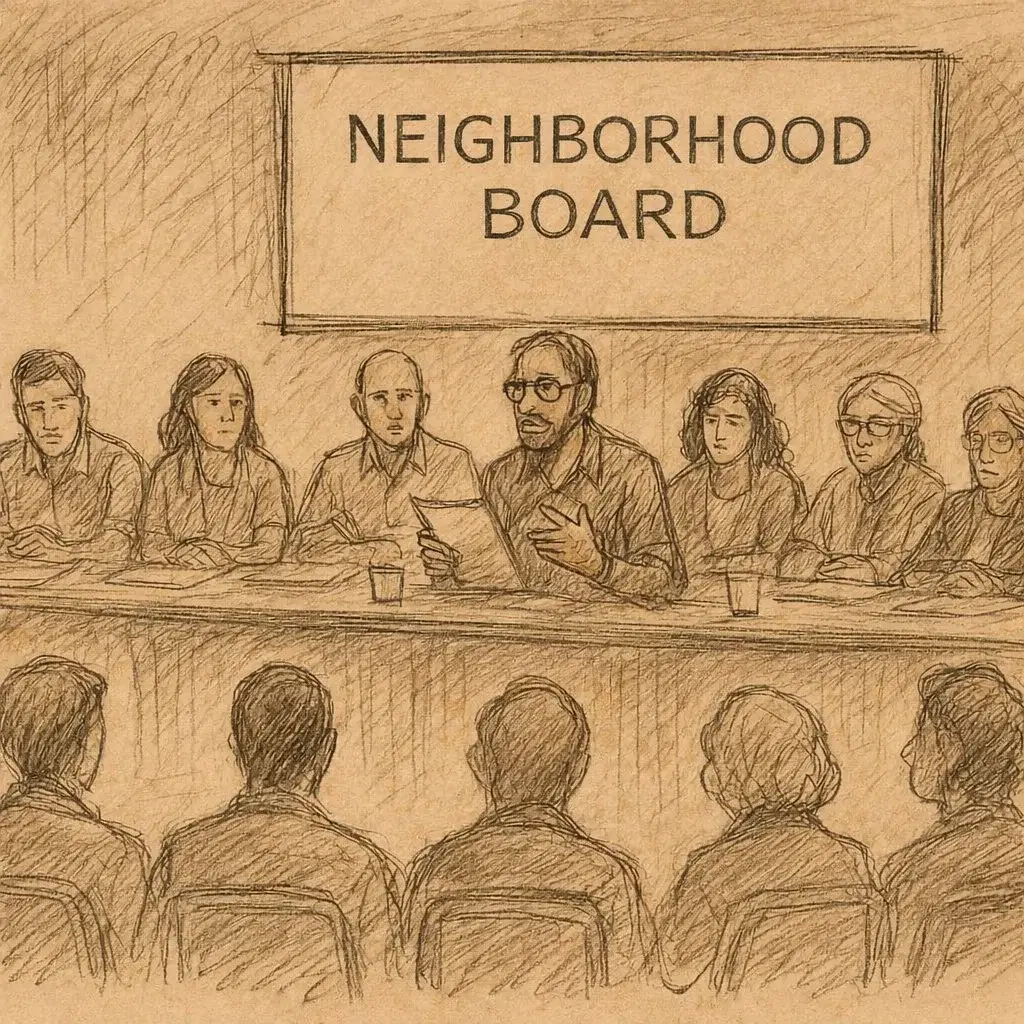
No 03 Waiʻalae-Kāhala Neighborhood Board Regular Meeting September 2026
Listen to this article:
3 Waialae-Kahala Neighborhood Board Meeting – September 18, 2026
Honolulu Fire Department Activity and Charging Safety
Kaimukī Fire Station representative Kermit Kiyo reported one structure fire, seven activated alarms without fires, 34 medical emergencies, one ocean rescue, and six hazardous-material incidents during the previous reporting period. The department’s monthly safety message focused on preventing fires while charging phones and other electronic devices. Devices should be charged on hard, flat, heat-resistant surfaces such as tables, desks, or bare floors rather than on pillows, sofas, or other soft materials that can trap heat. Residents were advised to unplug fully charged devices and stop using any device that becomes hot, emits an unusual odor, smokes, or catches fire. Questions may be directed to the Fire Department at 808-723-7166.
Police Statistics and Active-Shooter Preparedness
Lieutenant Taro Nakamura of the Honolulu Police Department reported district statistics showing increases in several property-crime categories compared with the previous month. Motor-vehicle thefts rose from zero to four, burglaries from two to five, and general thefts from seven to 23, while thefts from vehicles declined from four to three. The district recorded 5,475 total calls for service. A board member separately noted that, during the first 17 days of the month, Sub-Districts 3 and 4, covering roughly Diamond Head through Kahala Mall, had recorded one theft, one vehicle break-in, and one indecent-exposure incident. HPD’s safety presentation addressed active-shooter incidents and the “Avoid, Deny, Defend” approach. Residents were encouraged to remain aware of exits and hard cover, move away from threats, create barriers and distance when escape is impossible, turn off lights, remain quiet, silence phones, and be fully committed to self-defense if necessary. People should call 911 as soon as safely possible and, when officers arrive, keep their hands visible and comply with commands. Nakamura said mainland data indicate an average law-enforcement arrival time of approximately three minutes, making immediate personal-safety decisions critical.
Illegal Parking on Alakea Street
A board member raised recurring illegal parking on the east side of Alakea Street near the Vineyard Boulevard freeway access and St. Andrew’s Priory. Although the area becomes a tow-away zone after 3:30 p.m., vehicles reportedly continued parking there nearly every weekday, forcing drivers in the right lane to merge abruptly into adjacent lanes and worsening afternoon congestion and collision risks. Lieutenant Nakamura explained that the location is in HPD District 1 rather than his district but agreed to notify District 1 personnel. He also advised motorists to call 911 when they observe vehicles parked in an active tow-away zone so enforcement and towing can be requested.
Police Drones and License-Plate Readers
HPD discussed Chief Arthur “Joe” Logan’s drone-as-first-responder initiative, which was being tested in District 1 and, reportedly, District 5 in Kalihi. A recent deployment involving District 5 crime-reduction personnel was described as successful. Nakamura said HPD hopes eventually to expand the program islandwide and allow each patrol district to direct drones according to local conditions. He clarified that the drones are intended to respond after an incident is reported, not to conduct continuous neighborhood surveillance. HPD patrol divisions also have automatic license-plate readers mounted in patrol vehicles, although the limited number of units and equipment outages mean they may not always be deployed. Additional readers can be borrowed for major events such as the Honolulu Marathon. Nakamura could not explain the technical or policy differences between vehicle-mounted readers and stationary Flock cameras installed at intersections or other fixed locations.
Water-System Report and Kahala Wastewater Spill
The Board of Water Supply reported no water-main breaks for the previous month and promoted an “Imagine a Day Without Water” event scheduled for September 26 from 9 a.m. to 1 p.m. at the Arc of Safety in Waiʻanae Mall, 86-120 Farrington Highway. Organized with State Representative Chris Muraoka’s office and more than 25 government, nonprofit, and community organizations, the free family event was to include educational displays, hands-on activities, games, workshops, prizes, and food for purchase. It was designed around the “One Water” concept that all water resources are connected and should be managed together.
A resident then questioned the report because a September 11 break near 4925 Kahala Avenue reportedly released wastewater. Approximately 37,000 gallons were contained and recovered, but about 1,500 gallons reportedly entered what was described as a canal, possibly Waiʻalae Nui Stream, before reaching Maunalua Bay. The event began around 5:30 p.m. and cleanup continued until after 11 p.m. The resident was concerned that water testing apparently was not performed because brown-water warning signs had been posted, yet few signs were visible and swimmers regularly use the shoreline between the Kahala Resort and Waiʻalae Beach Park. Board of Water Supply representative Lorna agreed to determine whether follow-up testing occurred, how frequently water is tested after wastewater enters coastal waters, and which waterway received the discharge. The board noted that a wastewater release may fall under another city department’s jurisdiction and asked that the incident also be checked through city channels.
Department of Transportation and Meeting-Site Reports
No Hawaiʻi Department of Transportation representative attended. During reports on other meetings, the vice chair described visiting Kahala Elementary School to investigate whether school facilities could serve as a future neighborhood board meeting site. The visit was abbreviated but provided information about the application process for using school property. The board planned to continue exploring a location closer to the neighborhood because the current Ala Wai Golf Course Clubhouse venue is distant from much of Waiʻalae-Kāhala.
Storm Recovery, Power Outages, and Emergency Generators
Mayor’s representative and city deputy director Hong Li summarized city activity related to Tropical Storm Lala, including activation of the Emergency Operations Center and Joint Operations Center. In response to a previous question, the Department of Emergency Management explained that it does not provide generators to individual households or neighborhoods after storms. Emergency generator support is prioritized for life-safety operations, critical facilities, emergency response, and essential public services. The city coordinates with Hawaiian Electric during outages but does not control utility restoration work; its role is to assess community impacts, identify public-safety concerns, and coordinate response measures. Residents were urged to prepare to live without electricity for at least 14 days.
Alakea Street Signal Timing
The Department of Transportation Services reported that traffic signals along Alakea Street at Queen, Merchant, South King, and South Hotel streets had been checked and were operating as programmed. A board member responded that the problem was not equipment failure but poor programming, particularly at South King Street, which disrupts the progression of afternoon traffic trying to reach the Vineyard Boulevard freeway ramps. He argued that eastbound King Street receives disproportionate priority even when Alakea Street has heavier commuter demand. The board requested that DTS reassess the timing pattern rather than merely confirm that the existing program is functioning.
Unpermitted 30-Foot Net at 949 Kealaʻolu Place
The Department of Planning and Permitting reported that multiple notices of violation had been issued for a nonpermitted approximately 30-foot pole-and-net structure at 949 Kealaʻolu Place, with enforcement dating back to at least June 2023. Accumulated fines were approximately $40,000 as of September 10, 2026. DPP denied a zoning variance for the pole and netting in December 2024, but the applicant appealed to the Zoning Board of Appeals, and the appeal hearing had not yet begun. Board members questioned why the appeal remained pending for so long and when enforcement could proceed, but the city representative did not have details about the appeal date or scheduling process. Near the end of the meeting, a community member submitted a written comment that neighboring residents were concerned they had not been notified of the appeal.
Kahala Avenue Backhoe and Blocked Canal Bridge
A board member reported an old, heavily rusted trailer-mounted backhoe parked on Kahala Avenue near the entrance to Waiʻalae Beach Park, where part of the bridge over the canal was also blocked. He suggested that the machinery might be used to clear sand from the canal outlet and reduce flooding during storms but said its continued presence could create traffic and pedestrian hazards. Hong Li agreed to determine whether the equipment belonged to a city department or a private contractor. If privately owned, the operator would ordinarily need a street-use permit to leave machinery in the roadway.
Hunakai–Waiʻalae Intersection Safety
The board again raised the lack of a dedicated left-turn phase for mauka-bound traffic on Hunakai Street turning left onto Waiʻalae Avenue near Kahala Mall. Long pedestrian crossings, heavy opposing traffic, and the width of Waiʻalae Avenue can prevent any vehicles from completing the turn during a signal cycle. Some drivers avoid the intersection and continue to Kīlauea Avenue before turning, adding traffic elsewhere. Members recalled a serious pedestrian-vehicle collision in the area that left a person paralyzed and said the problem had been raised repeatedly for 20 to 25 years. The city representative clarified that the intersection is under state Department of Transportation jurisdiction. State Representative Mark Hashem agreed to raise the issue with the administration and state DOT, while the board proposed placing a resolution on its October agenda formally requesting a dedicated left-turn phase and other safety improvements.
Traffic-Signal Modernization and Artificial Intelligence
In response to a question about using artificial intelligence for traffic management, Hong Li said the city and state had begun an islandwide signal-modernization effort. Many Oʻahu traffic signals were installed in the 1980s and 1990s, are more than 40 years old, and cannot communicate with the Joint Traffic Management Center. The first phase was scheduled to begin in October 2026 and replace 28 signals along Farrington Highway between Nānākuli and Mākaha Valley. Rather than installing costly underground fiber through areas with possible archaeological and historic concerns, the project would use cellular wireless connections. Once linked to the management center, staff could adjust timing in real time, and newer timing systems could use AI-based algorithms.
Express-Bus Service to Kahala Mall
Resident Dallin Cam asked DTS to reconsider routing the 80, 82, and Pearl Harbor 6 express buses from Hawaiʻi Kai under the H-1 viaduct with a stop at Kahala Mall before continuing downtown. He said the existing routing can require 30 to 45 minutes to reach downtown and that the proposed change could substantially reduce travel time while providing Kahala residents with more direct express service. Hong Li, who also regularly rides the bus, agreed to refer the request to DTS and encouraged residents to submit service requests through HNL 311.
CERT Training Availability
A board member asked the Department of Emergency Management to offer more Community Emergency Response Team training sessions. The existing format was described as three consecutive Saturdays, generally from 8 a.m. to 4 p.m., which may limit participation. The request included additional class cycles and Sunday options. Hong Li agreed to send the suggestion to DEM.
Shared Micromobility Vehicle Enforcement
Tasha Luke, representing City Council Chair Tommy Waters, reported on Bill 58, which would change how improperly parked shared micromobility vehicles are handled in the Waikīkī Special District. These vehicles include bicycles, electric bicycles, electric scooters, and some mopeds. Current law requires police to notify the operator and provide a four-hour grace period before removal, even when a vehicle blocks a sidewalk. Bill 58 would authorize police officers and city officials to remove obstructing vehicles immediately from city property and roadways, place them in secure storage, and notify operators about retrieval. Board members characterized sidewalk obstruction by these devices as a safety concern.
Hawaiʻi Gas Pipeline Work
Hawaiʻi Gas planned to replace utility pipelines along Hunakai Street and Kahala Avenue beginning in September and continuing through the end of 2026. Work was scheduled Mondays through Fridays from 8:30 a.m. to 2:30 p.m. The project was intended to upgrade aging infrastructure and expand capacity for increased energy demand. Hawaiʻi Gas said crews and contractors would attempt to minimize disruptions to adjacent residential areas.
Hawaiian Electric Power-Outage Town Hall
State Representative Mark Hashem announced a Hawaiian Electric town hall for September 23, 2026, from 5:30 to 7:30 p.m. at Niu Valley Middle School. The meeting was organized after repeated East Honolulu outages and a storm-related interruption that reportedly left Niu Valley without power for four days. Hashem said he had received many constituent messages asking why the outages occurred and arranged for Hawaiian Electric to address public questions directly.
Oʻahu Resilience Hub Learning Community
Sage, speaking for the Oʻahu Resilience Hub Learning Community and Kapiʻolani Community College’s Sustainability Lab, invited the board and residents to join a city-funded network developing resilience hubs across Oʻahu. The initiative is coordinated with the Lāhui Foundation and multiple state and community partners under a contract funded by the City and County Office of Climate Change, Sustainability and Resiliency. The network was entering a decision-making phase focused on coordinated learning, shared best practices, and stronger regional preparedness. Upcoming training was expected to include CPR and first-aid certification, FEMA emergency-management instruction, and collaboration with CERT to adapt training to community needs. A board member reported that the East Oʻahu Community Action Network was already using the group’s information to design a three-hub network extending from Waimānalo through Pālolo.
Approval of August Meeting Minutes
The board reviewed the minutes of its August 20, 2026 regular meeting. The vice chair requested correction of the recorded adjournment because he did not believe he had formally adjourned that meeting. With that adjustment noted, the board approved the minutes.
Kīlauea Avenue Roundabout Proposal
Dallin Cam presented a detailed proposal for six roundabout conversions along Kīlauea Avenue, concentrating on the corridor from Pueo Avenue toward 18th Avenue and including major intersections such as Hunakai Street, ʻElepaio Street, and Pupunini Street. Three proposed locations had documented crashes involving, respectively, a pedestrian, cyclist, and motorcyclist, with one classified as a serious-injury collision. Cam described Kīlauea as an approximately 80-foot-wide roadway with a posted speed limit of 30 mph that is often exceeded. He said its width, heat, limited shade, long pedestrian crossings, turning conflicts, and lack of continuous bicycle facilities discourage walking and cycling. At some intersections there is no legal crosswalk, requiring pedestrians to walk roughly a quarter mile to another crossing.
The conceptual designs would reduce Kīlauea to one through lane in each direction, preserve or reconfigure parking, add protected bicycle space, shorten pedestrian crossings with refuge islands, and create landscaped center islands that could hold trees or public art. Cam said a temporary pilot using paint and flexible bollards might cost approximately $15,000 to $20,000 per intersection, compared with millions of dollars for permanent reconstruction involving curbs, wider sidewalks, drainage work, landscaping, and other improvements. He argued that roundabouts would continue functioning during power outages, unlike traffic signals, and would slow vehicles without relying on speed humps, automated cameras, or continuous enforcement.
Cam cited Federal Highway Administration information indicating that roundabouts can accommodate approximately 20,000 to 26,000 vehicles per day. Previous corridor data reportedly showed about 8,000 to 9,000 daily vehicles near 18th Avenue, rising to somewhat over 20,000 near Kahala Mall. He also contrasted the 32 potential vehicle-conflict points at a conventional intersection with eight at a roundabout, noting that roundabout collisions usually occur at lower speeds and less severe angles. A Dutch-style design could provide distinct paths for motorists, bicyclists, and pedestrians.
Board members generally supported further study but raised questions about reducing Kīlauea from two lanes to one, school pickup congestion, residential parking, cost, and the need for attractive, high-quality implementation rather than a poorly designed low-cost installation. Cam said historical parking observations suggested only about seven to 10 of more than 80 curb spaces between 18th Avenue and Pueo were typically occupied except during park events. He suggested that reclaimed roadway space could accommodate pickup areas, parking, trees, benches, or protected cycling facilities. Residents near Kīlauea and Pueo supported the proposal, stating that pedestrians still face turning drivers who look away from the direction of travel and that roundabouts in places such as New Zealand have improved both safety and traffic flow. The board discussed incorporating the concept into the Primary Urban Center Development Plan review and possibly adopting a resolution asking DTS to study roundabouts along Kīlauea Avenue.
Review of Urban and East Honolulu Development Plans
The board began forming a permitted interaction group to review the Primary Urban Center Development Plan and the East Honolulu Sustainable Communities Plan. A draft resolution had been uploaded to the board’s shared drive, and volunteers were requested before the October 15 meeting, when the board expected to vote on the group’s formation. The review could address Complete Streets, roundabouts, transportation, resilience, and other long-range land-use policies affecting Waiʻalae-Kāhala. Cam was invited to contribute his Kīlauea Avenue work to the process.
DOE Property at 475 22nd Avenue
Resident Barry Francis presented a draft resolution to establish a permitted interaction group concerning the Department of Education property at 475 22nd Avenue. Neighbors described long-standing property-management problems, including neglected exterior areas, deteriorated or unusable buildings, potholes, partial paving, and difficulty monitoring the large approximately 6.5-acre site. A vacant homeless tent had been removed from the property on the day of the meeting after residents notified officials. The proposed group would gather information and return with specific recommendations rather than continue addressing individual complaints without a coordinated plan.
Discussion covered both immediate maintenance outside the property fence and possible future uses. Some members cautioned that the board should focus on exterior conditions unless activities inside the property endangered the neighborhood, while others said an investigative group could appropriately examine long-term options and communicate community preferences before a formal project is proposed. Potential uses mentioned included teacher housing, a preschool, sale of the site, or a retirement community modeled on the Star of the Sea land arrangement that led to Kahala Nui. The state budget reportedly included $200,000 for the School Facilities Authority to explore teacher housing and preschool uses, although the money had not yet been requested or disbursed. Prior engineering information reportedly indicated inadequate sewer and water infrastructure, with possible improvement costs in the tens of millions of dollars. Francis planned to recruit a broader group of community participants and at least two board members before returning with a revised resolution. Members were reminded that participants cannot be added after the board formally establishes a permitted interaction group.
Resilience Hub Funding Proposal
An agenda item called for a resolution supporting the release of resilience-hub funds for East Honolulu, but no presenter or clear sponsor was identified. A board member who had previously presented on resilience hubs said she would consult with another member and consider placing a fuller East Oʻahu resilience-hub presentation on the next agenda.
Youth Food Security Charter Amendment
The board briefly revisited a student presentation from the prior month concerning City Charter Amendment Question 1 and youth food security. No second presentation was given. The earlier request had been for voters to support Proposal 1 in the November 3 general election. Members were reminded that the ballot would contain numerous city charter questions as well as two state constitutional questions and were encouraged to review them before voting.
GROW Food-Scrap Recycling Program
Amber from the city Refuse Division presented the Green Recycling Organic Waste, or GROW, program, which expands the use of existing green compost carts to include food scraps and wasted food. Oʻahu households generate approximately 60,000 tons of residential food waste annually, and the initiative supports the city’s goal of diverting 95% of waste from landfills by 2030. The pilot began April 1 in Waipahu, Nānākuli, Hawaiʻi Kai, Mililani, Kailua, and Kalihi, with islandwide implementation scheduled for October 1. Homes already served by gray, blue, and green automated carts will use the same green cart; no additional container will be issued, and collection schedules will remain unchanged.
Accepted materials include normal yard waste, meat, bones, eggshells, leftover food, cheese, yogurt, and other solid or semisolid dairy products at room temperature. Liquids such as milk and melted ice cream are prohibited, as are plastic or paper bags, cart liners, and manufactured items marketed as compostable, including takeout containers and utensils. The city is not accepting manufactured compostable materials because of concerns about PFAS contamination and will require further testing and regulation before considering them. Food and yard waste should be placed loose in the green cart. Residents can limit pests, odors, and mess by freezing scraps until collection day, burying food beneath yard waste, and ensuring that the cart lid closes completely. Damaged lids can be reported to the city.
Collected material will be processed by Hawaiian Earth Recycling into compost for sale to residents, landscapers, and agricultural users. Residents may also deliver up to two personal-vehicle loads per day at no charge to the company’s Wahiawā facility, although city convenience centers and transfer stations will continue accepting only green waste, not food. City inspectors have been monitoring pilot neighborhoods for participation and contamination to guide public education. In a separate refuse-service issue, a resident on the corner of Kahala and Pueo said manual garbage collection had repeatedly been missed and automated carts had not been delivered because large trucks historically could not make the turn. He was directed to call the collection branch at 808-768-3200 and select option two.
Honolulu Marathon Clinic Turkey Trot
Jeff Beard, chair of the Honolulu Marathon Clinic, requested approval for the organization’s annual Turkey Trot, an event conducted for more than 50 years. The program includes 2.5-kilometer, 5-kilometer, and five-mile courses beginning and ending near the Queen Kapiʻolani statue and park pavilion. The 2.5-kilometer route circles Kapiʻolani Park once, the 5-kilometer route twice, and the five-mile course continues through the Triangle/Fort Ruger Park area and along Diamond Head Drive before returning to Kapiʻolani Park. The five-mile race was scheduled to begin at 7:30 a.m., followed by the 5-kilometer event 10 minutes later and the 2.5-kilometer event after another 10 minutes.
Participation would be capped at 2,000, compared with just under 1,800 the previous year. Organizers expected all participants to finish by 9 a.m. and planned to use course sweepers on foot, bicycles, and in vans so police and traffic-control contractors would know when routes were clear. Only the right lane along affected roads would be closed. Cleanup crews would remove cones, signs, and paper cups, particularly near Triangle Park, with the goal of leaving Kapiʻolani Park by 11 a.m. The board unanimously approved the event.
Next Meeting
The next regular meeting was announced for Thursday, October 15, 2026, at 7 p.m. at the Ala Wai Golf Course Clubhouse. The meeting was then adjourned.