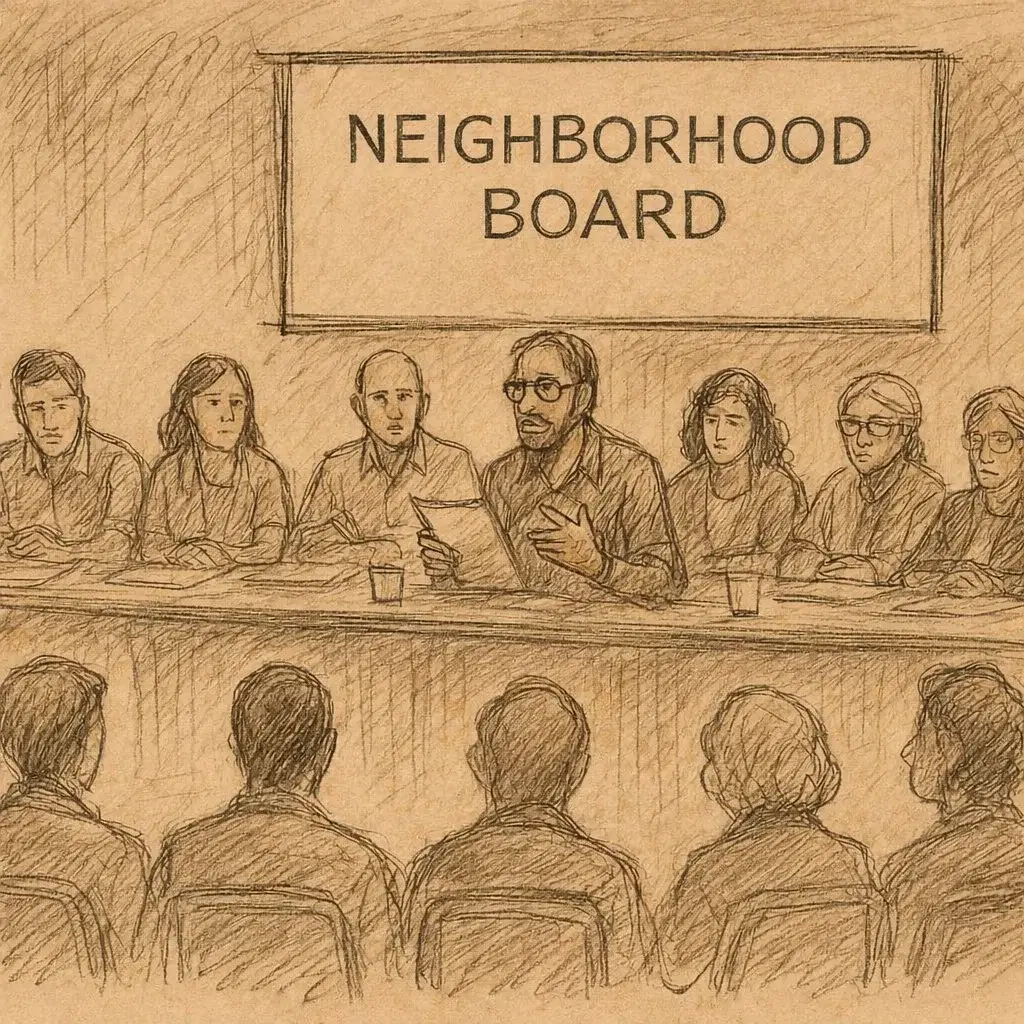
No 03 Waiʻalae-Kāhala Neighborhood Board Regular Meeting August 2026
Listen to this article:
3 Waialae-Kahala Neighborhood Board Meeting – August 24, 2026
Storm Conditions and Emergency Readiness
The meeting opened amid continued concern about hurricane-season weather after a recent storm brought damaging winds, widespread power and communications outages, fallen trees, and hazardous driving conditions across East Honolulu. Board members and agency representatives noted that another storm was approaching, with a possible additional system behind it, and emphasized that hurricane season continues through November. Although East Honolulu experienced relatively little flooding compared with past storms, much of the area lost electrical power, some major intersections remained without working signals for several days, and residents faced disruptions to communications, businesses, transportation, and access to food. Later discussion connected these experiences to the need for resilience hubs, clearly identified shelters, stronger homes, community emergency training, better evacuation communication, and reliable public infrastructure.
Honolulu Fire Department
Firefighter Juan Akiyono of Engine 5, Third Watch, at the Kaimukī Fire Station reported July 2026 activity consisting of two nuisance fires, one activated alarm with no fire, 32 medical emergencies, one motor-vehicle collision, and one ocean rescue. Nuisance fires can include rubbish fires, but he did not have details about whether the two incidents occurred on public or private property because statistics are divided among three watches. The department’s safety message focused on knowing how official emergency warnings are delivered and where to obtain reliable information. Residents were encouraged to register at HNLAlert.gov for opt-in text, email, or app notifications and to follow official government social-media accounts. The department also reviewed Hawaiʻi’s broader public warning systems, including the Emergency Alert System, Wireless Emergency Alerts, and outdoor warning sirens, any combination of which may be activated depending on the emergency.
Honolulu Police Department Crime Report
Lieutenant Miura reported four motor-vehicle thefts, five burglaries, 23 thefts, three unauthorized entries into motor vehicles, and 5,475 total calls for service during the previous month. A board member supplemented those figures with a month-to-date update for subdistricts 3 and 4 showing one burglary, two thefts, and one vehicle break-in. In response to a Kahala resident whose trash and green-waste carts had twice been entered from about 25 feet inside her property and filled with similar bags of refuse, Lieutenant Miura said she could report the incidents to HPD and agreed that installing a camera could help identify the responsible person.
HPD Storm Response and Public Safety Priorities
Lieutenant Miura said officers did the best they could during the recent storm despite limited staffing, difficult weather, soaked vehicles, and the simultaneous need to answer ordinary police calls. Board members praised officers for quickly staffing major intersections and managing traffic where signals remained out for two or three days. HPD’s priorities during outages depend on conditions but begin with public safety, including emergency and routine calls, major intersections, important roadways, flooding, and road closures. Officers cannot staff every intersection or crosswalk islandwide, and personnel may need to be diverted to hazards such as flooded freeways. Police radio and dispatch systems reportedly continued functioning during the storm, although officers’ personal cellphones were vulnerable to the same carrier outages experienced by the public.
Household Hurricane Preparedness
HPD urged households to know the locations of water, electricity, and gas shutoffs and to establish evacuation routes, family meeting places, and plans that remain workable if cellular communications fail. Residents were advised to inspect flashlights and batteries rather than assume stored equipment still works, check first-aid supplies, and keep cash available because prolonged outages can disable card-payment systems even when businesses remain open. People who rely on refrigerated medication, breathing machines, oxygen, or other powered medical devices were encouraged to arrange generators, fuel, oil, battery packs, or backup assistance from family and friends. HPD also reiterated the recommendation to maintain a 14-day supply of food and water.
Airport Access During the Storm
A resident described driving family members to the airport around 3:00 to 3:30 a.m. while wind shear struck the area and traffic signals were out. Although flights were still departing, the regular airport exit was blocked by several police vehicles without an explanation or signs directing motorists to an alternate route. The resident knew to use the Tripler exit but warned that visitors or less experienced drivers might not know how to proceed. Lieutenant Miura did not know why the closure occurred because the airport is in another police district and also involves state sheriffs, but he said roadways would not normally be closed without a safety reason such as flooding, structural damage, or another hazard. He agreed that detour signs and clearer instructions would be helpful but could not guarantee that similar closures would not occur during future emergencies when resources and communications are strained.
Happy Days Restaurant Building Collapse
The roadway near Happy Days Seafood Restaurant in Kaimukī remained blocked after the building’s roof collapsed and raised broader structural-integrity concerns. HPD continued to station an officer nearby to keep people away in case a wall or another part of the privately owned structure failed. City engineering and Department of Planning and Permitting personnel had inspected or entered the area, but Lieutenant Miura had no update on the building’s disposition or when the road would reopen. The board specifically asked whether the closure near a freeway on-ramp would remain in place during the approaching storm; HPD had no immediate answer but offered to forward an update by email.
Board of Water Supply
Board of Water Supply representative Lorna reported one water-main break during July: a 12-inch main on Kīlauea Avenue that failed on July 12. Asked about possible threats to the water system from the approaching storm, she said she was away from the office and did not have current operational details, although BWS personnel were conducting damage assessments and checking facilities. She offered to seek an answer from the communications office and directed residents to the agency’s published contact information. The board also confirmed that BWS continues to offer a $50 rain-barrel credit or rebate, encouraging residents to capture rainwater and reduce potable-water use.
Imagine a Day Without Water Event
BWS announced its “Imagine a Day Without Water” event, scheduled for Saturday, September 26, from 9:00 a.m. to 1:00 p.m. at the Arc of Safety at Waiʻanae Mall, 86-120 Farrington Highway. Organized with State Representative Chris Morikawa’s office and more than 25 government, nonprofit, and community organizations, the free family event will include educational displays, interactive exhibits, hands-on activities, games, prizes, a rain-barrel workshop, and food for purchase. The program will promote the “One Water” concept, which treats drinking water, wastewater, stormwater, and other water resources as connected parts of a single system requiring coordinated management.
Department of Transportation Services Transition
The board recognized longtime Department of Transportation Services representative Casey Abe, who had moved into a more administrative position or promotion within the department. His replacement was unable to attend, and the board said it looked forward to meeting the new representative at a future meeting. Later, Deputy Director Hong Lei clarified that the city agency is called the Department of Transportation Services, while the State of Hawaiʻi transportation agency is the Department of Transportation, and asked that the agenda be corrected to reflect that distinction.
Election of Board Officers
The board reelected Christian DeQuevedo as chair for another year. Brian Wong was elected vice chair, Aloha McGuffey remained secretary, and Peter Dudgeon remained treasurer after confirming his willingness to continue in the position. Voting was conducted by roll call, with some brief audio and muting difficulties for remote participants. The board congratulated the officers and thanked them for continuing their service.
Subdistrict 1 Vacancy and Jason Liang
The board considered Jason Liang of Tropic Gardens for the vacant Subdistrict 1 seat, an area generally encompassing Wilson Elementary School, portions of Kīlauea Avenue mauka of the freeway, and the surrounding valley neighborhood. Liang said his daughter attends Wilson Elementary and that, after recently running for City Council, he wanted to remain involved in public service and better understand and represent community concerns. He previously worked in the city’s Real Property Assessment Division and described experience interpreting property-tax law and legislation, while stressing that he was participating as a private citizen and was not an attorney. He planned to introduce proposals that would tie property-tax limits more closely to household income and convert Hawaiian Electric into a publicly owned utility. Later speakers congratulated him as a newly selected board member, and he participated in subsequent board discussions.
Governor’s Representative and Charter Schools
Vanessa Corbea attended her first meeting as the governor’s representative and said the administration was monitoring Tropical Depression 1C, also referred to as Moke, with the hope that it would remain south of the state. Corbea also serves as communications and services director and public information officer for the State Public Charter School Commission, communicating closure and weather information to 40 charter schools statewide. She was not aware of a charter school located within the Waiʻalae-Kāhala district and clarified that she attended the meeting in her capacity as the governor’s representative. A resident asked about Governor Green’s reported interest in publicly funded elections during the next legislative session; Corbea did not have details but agreed to follow up. The board also alerted her to the longstanding condition of the Department of Education property on Puʻupanini Avenue.
Mayor’s Report and City Programs
Mayor’s representative and DTS Deputy Director Hong Lei summarized city announcements, including redesigned Hawaiʻi driver’s licenses and state identification cards with enhanced security features, progress on the ʻEwa transit-oriented development vision, the swearing-in of David Lazar as HPD’s 13th chief, Honolulu’s observance of America’s 250th anniversary, lower school-zone speed limits, and national recognition for greener city parks. He also announced that applications for the Youth Climate Action Fund were open from July 27 through September 7 to support youth-designed climate projects, with information available through ResilientOahu.org.
Kahala Towers No-Parking Sign
Hong Lei followed up on a resident’s request for a legal no-parking sign near Kahala Towers. DTS had issued a work order to the Department of Facility Maintenance, but the sign had not yet been installed and remained in the queue. The tracking number provided was LPSWO38724, which residents may reference when contacting the department.
HNL 311 and Transportation Complaints
Residents raised several downtown traffic concerns, including a removed through lane on Punchbowl Street, shopping carts obstructing traffic lanes, a bike lane on Alakea Street that was reportedly little used and sometimes blocked, congestion from parking garages, and unsynchronized signals at Queen, Merchant, and King Streets that can delay commuters by 20 to 30 minutes. Hong Lei explained that the concerns cross city and state jurisdictions and requested that they be submitted in writing through the HNL 311 app, with locations and photographs when possible. He said HNL 311 creates an official record, routes issues through the appropriate agencies, and requires a response. A board member also thanked Lei and his staff for resolving a long-running traffic-signal problem at Pueo and Kīlauea after approximately two years of complaints.
Kahala Avenue Pedestrian Safety
A board member thanked DTS for responding to pedestrian-safety concerns on Kahala Avenue, particularly around Triangle Park. A rehabilitation project expected later in 2026 is intended to address traffic calming and related conditions in that area. Lei also confirmed that a separate project planned for 2028 would address additional portions of Kahala Avenue, including crosswalks that residents consider dangerous.
Lower School-Zone Speed Limits
The board asked how Honolulu’s reduction of school-zone speed limits to 20 miles per hour on city streets would affect schools located on state roads such as Kalanianaʻole and Kamehameha Highways. Hong Lei said the city is coordinating with the State Department of Transportation and will assess locations individually. The policy will not automatically apply to every roadway near a school, particularly freeways and major arterial routes whose purpose includes moving peak-hour traffic, so the city and state will avoid a uniform, “cookie-cutter” approach.
Property-Tax Relief and Storm Damage
City Council Chair Tommy Waters distributed applications for property-tax remission for homes damaged by the storm. He also promoted the city’s income-based real-property tax credit for homeowners who are on the deed and have household income of $80,000 or less, an eligibility threshold the Council increased from $65,000. The program caps qualifying property taxes at 3% of income, but homeowners must reapply annually. Applications open July 1 and are due September 30; denial notices are scheduled by December 30, with appeals due January 15. Waters distributed guides and refrigerator magnets listing those deadlines.
Shopping Cart Legislation
Waters discussed Bill 53, which would make possession of a retail shopping cart outside the merchant’s premises a petty misdemeanor. He said abandoned and unlawfully removed carts are widespread, obstruct roads and sidewalks, enable people to relocate possessions during city cleanups, and are frequently found in waterways. Police generally do not seize carts because merchants are unwilling to report each theft, identify the property, and appear in court. Retailers support the proposal, in part because ordinary carts that once cost about $500 in bulk can now cost as much as $1,000 following tariff increases, with replacement costs ultimately reflected in consumer prices. Some council members objected that the measure could criminalize homelessness, while Waters said his intent was to give officers authority to require that a cart be surrendered rather than to arrest people. Bill 53 passed first reading and was referred to the Public Safety Committee, chaired by Augie Tulba, but had not yet been scheduled for a hearing. Waters invited testimony, alternative ideas, and amendments.
Homeowner Exemptions and Vehicle Registration Taxes
Waters reported that Bills 45, 46, and 47 passed second reading and returned to the Budget Committee. Bills 45 and 46 would increase homeowner exemptions, including raising the kūpuna exemption to $200,000. Bill 47 would reduce the tax component of vehicle registration fees and was estimated to save approximately $50 per vehicle on average if enacted.
Community Recognition
The City Council presented Secretary Aloha McGuffey with a certificate recognizing her leadership and service in community development, hospitality, cultural education, and organizational leadership. The recognition credited her with strengthening communities while supporting stewardship and preserving Hawaiʻi’s culture, history, and community character.
Resilience Hubs and Emergency Shelters
Waters explained that the city budget contains $2 million for a resilience hub in Hauʻula and, through Council action, an additional $2 million for each council district. The administration was moving forward with Hauʻula but had not yet advanced hubs in other districts. Board members emphasized that East Honolulu has few clearly identified evacuation destinations and is constrained by a single major corridor along Kalanianaʻole Highway. Suggested sites included Wailupe Valley Elementary School, Koko Head District Park, and the James Building, while one community framework envisioned at least three hubs between Kaimukī-Pālolo and Waimānalo. Participants described hubs as useful not only during disasters but also during normal “blue-sky” periods for education, training, resource coordination, and community-building. Waters offered to prepare a resolution asking the mayor to implement the funded hub program and suggested seeking support from neighborhood boards throughout East Honolulu.
Council Chair Waters’ Election Appeal
Asked about his candidacy status, Waters said the Hawaiʻi Supreme Court would hear his appeal the following Tuesday at 2:00 p.m. Two Supreme Court justices and six Intermediate Court of Appeals judges had recused themselves. The dispute centers on whether his approximately three-and-a-half years in office constituted a full four-year term for term-limit purposes. The city clerk accepted his candidacy, but Circuit Judge James Ashford ruled otherwise. Waters criticized the challenge’s late timing, noting that an earlier filing after he submitted candidacy papers in March would have resolved the issue sooner. A separate action was filed on behalf of 40 voters claiming disenfranchisement. Waters received nearly 9,000 votes after being disqualified and said he would accept the appellate court’s decision while continuing to serve through January 2.
East Honolulu Storm Damage and Drainage
Representative Mark Hashem reported that he drove through the district after the storm and found little major flood damage compared with earlier events. Most damage involved strong winds, fallen trees, and a near-area-wide power outage. He thanked Waters’ office and HPD for placing officers at darkened intersections after he requested assistance. A resident credited recent dredging and maintenance of canals and drainage channels with reducing flood risk and urged city and state officials to continue that work, noting that neglected channels contributed to previous major flooding.
Kahala Beach Easements
A board member thanked Representative Hashem and his staff for assisting with three proposed easements near the Kahala Hotel and Resort. Although the proposal advanced through several committees, including Hashem’s water committee, it did not receive a Ways and Means Committee hearing for the second consecutive year. Hashem said he had contacted Senator Donovan Dela Cruz so that the Ways and Means chair’s office would be aware of the matter during a third attempt.
Home and Condominium Insurance
Residents expressed concern that homeowners with storm damage may hesitate to file claims because relatively few companies still provide hazard coverage and some policyholders reportedly fear being dropped at renewal. Hashem cited legislative precedents, including state intervention when insurers attempted to cancel or decline renewals as lava approached homes in Puna, and said he would help if a similar pattern emerged. Jason Liang also asked about the insurance commissioner’s authority and the role of insurance costs in Hawaiʻi’s high condominium association fees. Hashem acknowledged that associations are sometimes dropped from standard coverage and forced into secondary markets, where annual costs can rise from roughly $200,000 or $300,000 to approximately $1.5 million, and offered to discuss possible legislation in greater detail.
Waiʻalae Avenue Repaving
A resident again raised the poor pavement and numerous potholes on Waiʻalae Avenue beneath the freeway viaduct. Previous information indicated that repaving was not planned until 2027 or 2028, even though adjacent sections had already been resurfaced. The resident asked Representative Hashem to pursue state transportation funding or other assistance to move the work forward, and he agreed to look into the issue.
Community Disaster Training and Home Retrofitting
Representative Tina Grandinetti described follow-up work from her July disaster-preparedness and resilience town hall. Her office is helping community groups join the Hawaiʻi Emergency Management Agency’s Hawaiʻi Hazard Awareness and Resilience Program, which trains residents to organize neighborhood networks, identify local resources, and respond rapidly even without a dedicated physical hub. She encouraged neighborhood-watch members, street text-chain participants, and other informal community networks to participate and said another town hall may be held. Grandinetti also stressed the need to make sheltering in place safer by retrofitting older single-wall and post-and-pier homes and roofs that are primarily held down by gravity. The state allocated $4 million from green-fee revenue for a pilot grant program serving low-income and elderly homeowners, but she contrasted that amount with approximately $75 million invested by Alabama over a decade and $200 million by Florida. Stronger roofs could protect occupants, prevent windborne debris from damaging neighboring homes, and improve the likelihood of retaining insurance coverage.
Hurricane Insurance and Fossil-Fuel Liability
Grandinetti noted that the state reactivated the Hawaiʻi Hurricane Relief Fund to address condominium hurricane insurance. She also characterized rising insurance losses as connected to climate change and said she introduced legislation with Senator Jarrett Keohokalole that would authorize the state insurer, the hurricane relief fund, and private insurers to pursue fossil-fuel companies for climate-related damages.
Campaign Finance and Contractor Loophole
Grandinetti signed a legislative letter requesting a special session to close the “contractor loophole,” which allows state contractors and related company officials or family members to make political contributions. The proposal grew from recommendations by the Commission to Improve Standards of Conduct but stalled during House-Senate conference negotiations without receiving a final vote; Grandinetti said the versions had become substantially different and the bill had been weakened. She acknowledged that obtaining the two-thirds support needed for a special session was unlikely but said the request could pressure legislative leaders to commit to campaign-finance and government-ethics reforms in the next regular session. Community member Kahi Pukaro argued that timing was critical because campaign fundraising resumes immediately after the November general election, allowing contributions through the existing loophole before the Legislature convenes in January. The chair requested specific names of lawmakers responsible for blocking the bill, but Grandinetti said its failure resulted from institutional disagreement between the House and Senate rather than a recorded floor vote.
Congressman Ed Case’s Federal Update
Kekoa Kaluhiva, deputy chief of staff for Congressman Ed Case, said the congressman’s local office intends to attend each of the district’s 24 neighborhood boards approximately once per quarter. Case serves on the House Appropriations Committee, which had completed committee action on all 12 annual federal funding bills, and on the Homeland Security Appropriations Subcommittee, which oversees FEMA funding relevant to the recent hurricane and approaching storm. Case’s office had communicated with Mayor Rick Blangiardi, Governor Josh Green, and state and city emergency officials about possible federal support. Kaluhiva also highlighted Case’s bipartisan work through the Problem Solvers Caucus on redistricting reform and his work through the Pacific Islands Caucus on the Pacific Islands Liaison Initiative Act, intended to address transnational crime in the Indo-Pacific. The office is accepting applications for U.S. military service-academy nominations and the Congressional App Challenge and offers constituent assistance with veterans’ matters, Social Security, passports, and other federal agencies at 808-650-6688 or case.house.gov.
FAA Hawaiʻi Airspace Modernization
Case’s office reported that the Federal Aviation Administration’s multiyear Hawaiʻi Airspace Modernization Project has entered the solution-development phase, during which the FAA will design potential changes to airspace and flight procedures. Issues under consideration include safety, low-altitude commercial flights, nighttime operations, congestion around Honolulu, and tour-helicopter routes over residential communities. In response to a board question, Kaluhiva confirmed that helicopter altitude, routing, proximity to homes, and noise are included and encouraged residents to use the FAA project website to submit feedback.
Military Leases and Medicare for All
Asked about military land-lease negotiations, Kaluhiva said Case’s Appropriations Committee role gives him influence over military funding and that he remains in communication with the rest of Hawaiʻi’s congressional delegation and Governor Green, whose administration has taken a leading role in lease discussions. Jason Liang asked Case to support Medicare for All if such legislation reaches the House, citing the United States’ wealth and its status as the only OECD country without universal healthcare. Kaluhiva agreed to provide the board with a written statement of the congressman’s position.
Honolulu Century Ride
Chris Hollis of the Hawaiʻi Bicycling League announced that the Honolulu Century Ride will take place Sunday, September 27, beginning and ending at Kapiʻolani Park. Approximately 1,200 riders are expected to travel routes of up to 100 miles along Oʻahu’s south and Windward coasts. The makai lane of Diamond Head Road will close for roughly one hour in the morning, and the makai lane of Kalanianaʻole Highway will be coned for cyclists for several hours while the group leaves town. Riders will return gradually throughout the day. The finish area will include performances by the Royal Hawaiian Band and the U.S. Air Force Band of the Pacific.
Kīlauea Avenue Roundabouts and Complete Streets
A resident proposed incorporating roundabouts into the planned Kīlauea Avenue Complete Streets redesign, potentially at Hunakai, Pueo, and Puʻupanini, and considering a reduction from four travel lanes to two. The proposal was intended to reduce speeding, eliminate unnecessary waits at red lights, create room for wider sidewalks and landscaping, and improve safety for drivers, pedestrians, and cyclists. The resident prepared a conceptual image but had not yet written a detailed proposal. DTS staff had previously suggested that converting signalized intersections to roundabouts might exceed available funding. The board asked for a written submission and planned to place the matter on a future agenda so Deputy Director Hong Lei could respond. Waters noted that the city had previously approved a roundabout at the bottom of Waiʻalae Nui Ridge, where downhill speeding is a concern, but nearby residents opposed it and the project did not proceed.
Maʻumae Park Cleanup and Hawaiʻi Kai Survey
Jason Liang announced a Maʻumae Park cleanup scheduled for Sunday from 7:30 to 9:30 a.m., weather permitting. He also distributed a community survey from Hawaiʻi Kai Advocates for Responsible Development and encouraged residents to participate.
Proposed Public Ownership of Hawaiian Electric
Liang said he intended to introduce a resolution calling for Hawaiian Electric to become a publicly owned utility. He argued that the privately owned monopoly has insufficient financial incentive to prevent outages, noted that hotels reportedly regained electricity before some residential high-rises after the storm, and cited residents with mobility limitations who were stranded in buildings without power. He also referred to Hawaiian Electric’s major institutional shareholders and executive compensation, stating that the chief executive earns approximately $4 million annually. As a comparison, he pointed to Kauaʻi Island Utility Cooperative, created after Hurricane ʻIniki, which he said has a high share of renewable generation, slightly lower electricity costs, and experienced a lower outage rate during the recent event, while acknowledging differences in population and storm intensity.
CERT Training
Liang asked the city Department of Emergency Management to provide more Community Emergency Response Team training. CERT instruction includes damage assessment, emergency notifications, evacuation, triage, first aid, and light search and rescue. He said expanding free training would build local response capacity and complement future resilience hubs as storms and other disasters become more frequent.
Proposed Property-Tax Cap Expansion
Liang also proposed lowering the city’s income-based property-tax cap from 3% to 1% of household income and increasing the qualifying household-income ceiling from $80,000 to $120,000, approximately the area median income depending on family size. He argued that rising assessments can displace retired homeowners and make it harder for descendants to retain inherited family homes. To replace revenue, he suggested creating an additional tax tier for properties valued at $10 million or more, reasoning that such properties are more likely to function as investment assets and should not be taxed at rates similar to ordinary owner-occupied homes.
Food Security Charter Amendment
Melissa and Haumea, mentors to public- and private-school students working on food insecurity, introduced Question 1 among the 20 proposed charter amendments on the November 3 ballot. The measure, previously identified as Proposal 119, would dedicate 0.5% of existing real-property tax revenue—not impose an additional tax—to local agriculture and food banks, with flexibility to purchase nonlocal items such as canned food during disasters. Supporters estimated it could direct as much as $8 million toward food security. The students requested time for a fuller presentation at the board’s next meeting, and the chair offered to place them earlier on the agenda. A board member proposed connecting the students with the Kīpuka Hui Haumāna Youth Sustainability Coalition and Kalani High School participants. Speakers emphasized that outreach should clearly explain that the proposal reallocates existing revenue rather than raising taxes.
Election Turnout
Community member Kahi Pukaro thanked residents and the board for their participation in the recent election. Statewide turnout was approximately 30%, while the local district reached about 50%, which he described as a strong level of engagement.
June Meeting Minutes
The board approved the minutes of its June 18 regular meeting without opposition.
Primary Urban Center and East Honolulu Planning Group
The board discussed reestablishing a permitted interaction group to review the Primary Urban Center Development Plan and the East Honolulu Sustainable Communities Plan. The previous group had been disbanded so its organization could be aligned with Neighborhood Commission Office procedures. Aloha McGuffey said a new resolution would be introduced in September, with a possible first meeting in October or November. The proposed group would include four Waiʻalae-Kāhala board members and as many as eight community members, for a total of up to 12 participants. Interested residents were invited to contact her, although formal membership would need to be handled under the applicable agenda and procedural requirements.
Department of Education Property on Puʻupanini Avenue
Barrett Francis renewed a request for a permitted interaction group to investigate the approximately 6.5-acre state-owned property managed by the Department of Education along Puʻupanini and Palikaua Avenues. Community concerns have been raised since at least 2014, when DOE obtained the property. The site includes a main building used for DOE curriculum-management offices, but much of the remaining land is underused and contains deteriorated buildings, parked vehicles, debris, and poorly maintained frontage. Conditions along Palikaua are particularly concerning because students from nearby Variety School, which serves students with special needs, walk through the area and may be forced into the street to avoid obstructions. The proposed group would first develop landscaping and maintenance ideas, potentially through a public-private or community partnership that reduces demands on DOE resources. It would then collect public records, expert input, neighborhood testimony, and DOE plans to consider better long-term uses supporting community services and resilience. Any recommendation would return to the full board for possible adoption as a resolution. Board members expressed interest, and Neighborhood Commission staff agreed to provide Francis with procedural guidelines so a membership list and formal proposal could be prepared for the September agenda.
Ongoing Code Enforcement and Street Concerns
The board noted that an allegedly unpermitted golf fence remained at 949 Kealaʻolu Place more than a year after the issue was raised and again called on the Department of Planning and Permitting to act. Discussion of chronic vehicle occupation and street-maintenance concerns along Kīlauea Avenue was postponed, including complaints about vehicles being habitually occupied in ways that make nearby residents feel unsafe. The board also deferred further discussion of homeless encampments along Waiʻalaenui Stream until after the approaching storms and tabled board correspondence and several status reports because of the late hour.
Red Hill Registry
Tara Sutton, director of community engagement for the University of Hawaiʻi-based Red Hill Registry, explained that the registry tracks individual exposure circumstances and long-term health outcomes connected to the Red Hill fuel-contaminated water crisis. The initiative operates through UH’s Office of Strategic Health Initiatives, the Thompson School of Social Work and Public Health, University Health Partners, the John A. Burns School of Medicine, and water-resource specialists. A community advisory work group meets every six weeks and has helped shape eligibility, surveys, branding, and data tools. Baseline enrollment covers people exposed to contaminated Navy drinking water from November 20, 2021, through March 18, 2022, while expanded enrollment includes people who used the Navy water system before or after that window, individuals in surrounding buffer zones such as schools, shopping centers, and Hālawa Correctional Facility, and unexposed household members who can serve as a comparison group. Adults may consent for themselves, minors, or adults for whom they are authorized representatives.
Red Hill Health Resources and Education
The registry’s goals are to document exposures and health over time, connect people with services, and create educational resources for healthcare providers, affected residents, and other communities facing fuel contamination. Through a partnership with Unite Us, anyone can search a vetted nationwide directory of community organizations by ZIP code and preferred language at redhillregistry.org/services. Access is not limited to people exposed at Red Hill, so residents may also use it for storm-related needs, food insecurity, roof repairs, and other assistance. Registry participants can request personalized navigation help from staff. The registry has published seven fact sheets, maintains educational videos and webinars, and offers accredited continuing-education programs for healthcare professionals on exposure, health effects, and clinical care. This national outreach is especially relevant because many affected military households have since moved away from Hawaiʻi. Sutton asked the community to identify additional events and venues where the registry could reach potentially exposed people.
Other Announcements and Adjournment
The board briefly noted the Val Nolasco Half Marathon scheduled for Sunday, November 8, but no organizer was present to provide details. The chair warned members that any email appearing to come from him and requesting money was fraudulent and should not be answered. The next regular meeting was announced for Thursday, September 17, at 7:00 p.m., after which the meeting adjourned.