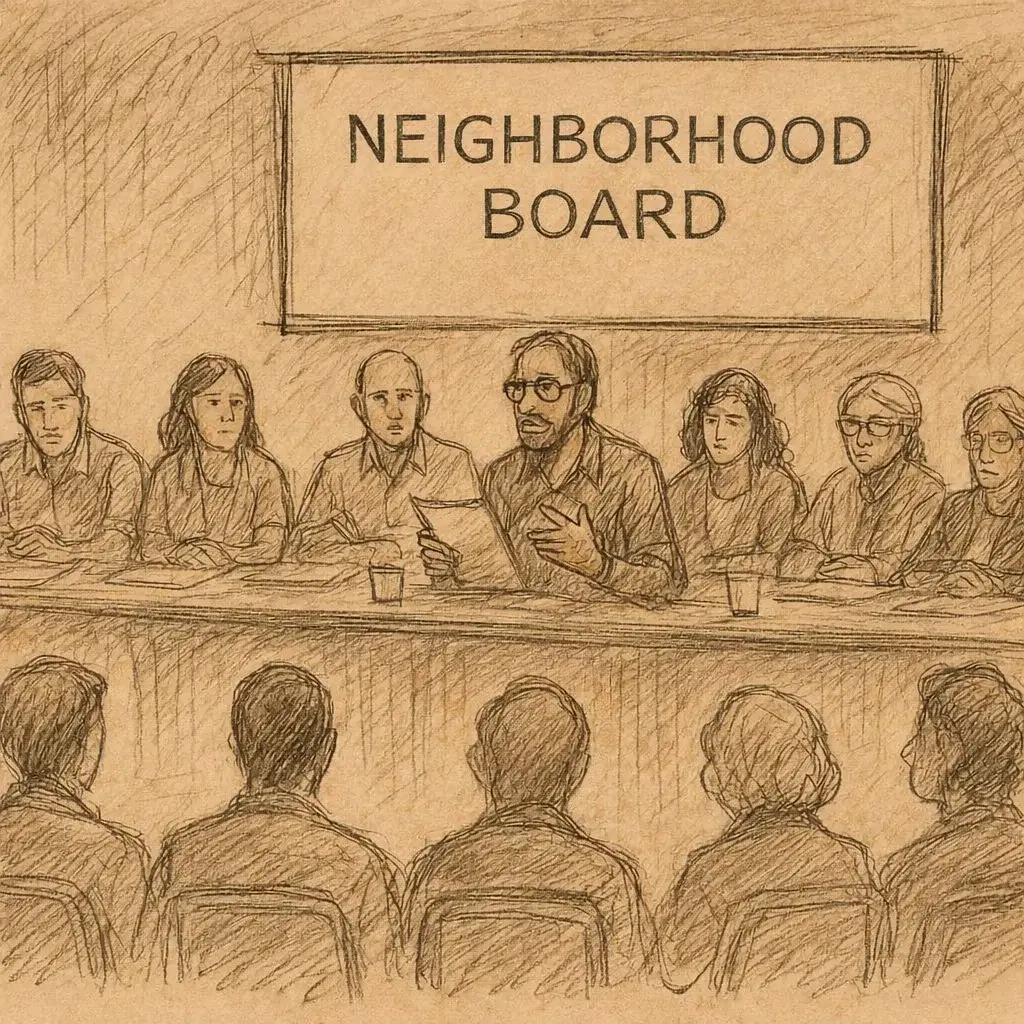
No 26 Wahiawā-Whitmore Village Neighborhood Board Regular Meeting November 2026
Listen to this article:
26 Wahiawa-Whitmore Village Neighborhood Board Meeting – November 17, 2026
Fire Risks, Homeless Encampments, and Holiday Electrical Safety
The Honolulu Fire Department said fires associated with houseless encampments occur throughout the year and are generally cooking fires rather than fires specifically set for warmth during colder weather. During the Veterans Day parade, firefighters responded to a rubbish fire near an apartment building on Oʻahu Street; military personnel staging for the parade arrived first and used extinguishers, and the apartment itself did not burn. Following a recent Kailua fire reportedly caused by arcing in an unused electrical power strip, the department explained that age and physical condition can contribute to power-strip failures. A board member relayed guidance from a fire investigator that power strips bearing a UL label should be examined carefully once they are roughly five to seven years old, depending on wear, and urged residents to inspect surge protectors and extension cords before installing holiday lights. In response to a question about fighting wetland fires with sound waves, the department said its personnel had neither received training nor information on that technique.
Police Statistics and Holiday Shopping Precautions
Lieutenant Romel Baisa of the Honolulu Police Department’s Wahiawā station reported that during the preceding 30 days the area recorded one assault, two burglaries, no robberies, two vehicle break-ins, 49 motor-vehicle collisions, an additional 12 major collisions requiring vehicles to be towed, and 1,052 calls for service. HPD advised holiday shoppers to park near store entrances in well-lighted areas, lock their vehicles, close windows, and conceal purchases and valuables. Shoppers were urged to keep wallets and purses against their bodies rather than leaving them in carts, avoid carrying large amounts of cash, remain alert instead of becoming absorbed in their phones, and use credit cards rather than debit cards when possible because of stronger fraud protections. Online customers were advised to verify that websites are legitimate, use secure payment methods, and be skeptical of unusually attractive offers. A District 2 Coffee with a Cop event was announced for Island Vintage Coffee at 66-111 Kamehameha Highway, Suite 503, in Haleʻiwa, from 10 a.m. to noon. The announced date was December 18, but the stated weekday was inconsistent during the discussion, so HPD agreed to verify the schedule and issue flyers.
Encampment at the Wilikina and Kamehameha Highway Entrance
Board members again raised concerns about the growing encampment and accumulated rubbish near the freeway entrance along Wilikina Drive and Kamehameha Highway. Officials clarified that the parcel in question is under state Department of Transportation jurisdiction, unlike another smaller parcel near Avocado Street. DOT contractors periodically remove rubbish, state crews cut the grass, and Kealahou West Oʻahu conducts outreach, but occupants often disperse when cleanup trucks arrive and return the same day after crews leave. HPD explained that homelessness itself is not a crime and officers can act only on violations they observe or on applicable city laws, although HPD may respond when called and can coordinate with state agencies. The board discussed whether the state might use sheriffs or authorize city enforcement on the property. Concerns were also raised about unauthorized promotional banners along highway fences, overgrown grass, and the movement of tents away from the fence line toward the Wilikina corner, where they create a more visible roadside obstruction. HPD said cleanup operations do not always require police presence, but community-policing officers sometimes accompany DOT or contractors at varying hours, including late at night or early in the morning, based on when occupants are most likely to be present.
Neighborhood Security Watches and Police Drones
HPD confirmed that residents may still organize neighborhood security watches through the department’s Community Policing Team. The direct Wahiawā CPT number given was 808-723-8708, while the Wahiawā station number was identified as 808-723-8700 after an initially stated number was corrected. A resident also asked whether volunteers, Scout Explorers, or other community members might assist with HPD drone operations. Lieutenant Baisa said HPD drone pilots are sworn officers who work with other agencies and must meet licensing and operational requirements; volunteer operation would create supervision and liability issues and was not known to be under consideration. Drones are not routinely deployed from the Wahiawā station for ordinary calls, but specialized units can be brought into the area for major incidents such as Kona low weather events, flooding, or other emergencies.
Abandoned Vehicles and Parking Near the Police Station
Resident Gilbert Kihara described persistent parking problems on the road in front of the Wahiawā police station, especially near the beginning and end of each month when residents visit vehicle-registration and other public-service offices. He said vehicles spill into street and private parking spaces, while large commercial trucks with flat tires, missing plates, expired registration, or other signs of inoperability have remained for months. He had been told that the city lacked tow trucks large enough to remove some of the trucks. Kihara also reported that some used-car businesses may use the roadway as overflow inventory or staging space. Although officers have ticketed vehicles at the end of the road, he said enforcement has not resolved the daytime congestion. HPD agreed to alert daytime patrol officers and increase monitoring.
Navy Ship Tours and Federal Firefighter Recruitment
The U.S. Navy reported that active-duty ship tours are available on Saturdays for interested organizations and groups, with arrangements made through 808-473-2890. Navy Region Hawaiʻi’s Federal Fire Department also announced a two-day, in-person hiring event intended to recruit 40 full-time firefighters. Applicants were told they needed to attend only one day, be no older than 37, and possess at least a high school diploma or GED; EMT and similar certifications could strengthen an application. New employees would enter at the GS-3 level and could advance annually through GS-7. The event was listed for 9 a.m. to 2 p.m. at the Federal Fire Administrative Offices, 650 Center Drive, Building 284, Honolulu. The verbal report referred both to “tomorrow and Wednesday” and to November 16 or 17, creating a date inconsistency that applicants would need to verify. Representatives from Congresswoman Jill Tokuda’s office, the Army, the Board of Water Supply, and DOT were not available when called for their regular reports.
Allegations About Nighttime Houseless Sweeps
Resident Warren Guadarrama alleged that nighttime houseless sweeps have occurred after 9 p.m., midnight, and as late as 3 a.m. without police officers, social-service caseworkers, or visible supervision. He identified HTM and white trucks believed to be associated with state contractors and said he was seeking video showing an HTM vehicle driving over and damaging grass near the military surplus store, becoming stuck, and requiring assistance. He also relayed a particularly troubling report from the ColorTyme or Midas area in which a line was allegedly pulled from outside a tent while attached to a person inside, causing injury. Guadarrama said houseless residents had repeatedly described being hurt during late-night operations and that, after initially doubting the reports, he had begun investigating them personally. He asked for help arranging discussions with HPD, social-service agencies, contractors, or responsible landowners. The chair acknowledged the allegations for the record, expressed concern that he was patrolling alone, and offered to exchange contact information after the meeting to help identify appropriate agencies. It was clarified that HTM is a legitimate contractor that performs landscaping, tree cutting, and related work for multiple entities, but the specific ownership and responsibility for the affected parcel remained unclear.
Community Safety and Dogs Near the Roadway
The board discussed the need for more “eyes on the street,” including a neighborhood watch that Guadarrama said currently meets only about once a month with approximately 10 to 12 residents and a small police presence. He connected his concern to a past killing in which a man was dragged from the bank area toward the freeway. A board member also asked about approximately eight dogs living with a disabled houseless resident near the roadside. The dogs appeared healthy and well treated, but some had entered the road and nearly been struck. Guadarrama said the owner has difficulty managing tangled leashes because of her disability and sometimes loses control of a dog while trying to untangle the animals. The discussion focused on finding a way to move the dogs farther from traffic without disregarding the resident’s circumstances or whatever informal permission may have allowed her to remain at that location.
Potential AI Data Center Development
A board member warned that Wahiawā could become a target for future artificial-intelligence data center development because the area around the reservoir may offer the three resources such facilities typically require: substantial land, large quantities of fresh water that need not be potable, and electricity. The member also noted plans for possible hydroelectric generation associated with future dam upgrades. Citing community opposition to an AI data center on Maui and the absence of clearly established state requirements, he suggested that Wahiawā should define local expectations before a private company acquires property and advances a project. He did not request an immediate formal subcommittee because Sunshine Law requirements could constrain exploratory work, instead suggesting initial coordination with local elected officials before the board decides whether to establish a formal body.
Neighborhood Board Elections
Residents were encouraged to become candidates in the next neighborhood board election cycle. The announced filing or participation period was December 18, 2026, through February 19, 2027. The board emphasized that neighborhood boards provide residents with a direct forum to raise local concerns, advocate for community needs, and communicate with elected officials. Interested residents were directed to obtain information from the Neighborhood Commission Office or its website.
Wahiawā Pedestrian Bridge Project and Ka Paʻakai Review
Honua Consulting announced that the next Wahiawā Pedestrian Bridge Project community meeting would take place Friday, November 20, from 6 to 8 p.m. in the Hale Koa Room at Wahiawā District Park, with additional information available at www.wahiawapedbridge.com. A board member asked when a second round of Ka Paʻakai cultural-analysis outreach would occur, noting that four families had expressed interest since the previous meeting. Project representatives said revisions had been made to the initial draft based on feedback and that the Friday meeting would include updates on community engagement and next steps, but they did not provide a firm deadline for the second outreach. The board member also recommended contacting AECOS, an environmental consulting firm in Kāneʻohe with experience in environmental review and state projects. Honua Consulting agreed to relay that request and the community’s concerns to the Kiewit Infrastructure West team.
Workforce Excellence Center Design and Uses
Kiewit Building Group and the Hawaiʻi State Public Library System presented a detailed update on the Wahiawā Center for Workforce Excellence, being constructed on the former Wahiawā Public Library site and adjacent Department of Education portable-building area. The approximately 43,000-square-foot, three-story building will place the public library on the first floor, Department of Education offices on the second, and University of Hawaiʻi Community College programs on the third. A three-story garage will provide 86 parking spaces. The project is required to achieve LEED Silver certification but is tracking toward LEED Gold through energy-efficient design, LED lighting, efficient mechanical systems, and construction-waste diversion to H-POWER rather than landfills. The approximately 15,000-square-foot library will include around 4,000 linear feet of shelving, a children’s area, a circulation desk with visibility to both entrances, a community programming room, abundant natural light, and an outdoor covered patio. The DOE floor will consolidate administrative functions serving approximately 20 Central Oʻahu schools in the Leilehua, Mililani, and Waialua areas, with open offices, private offices, flexible meeting rooms, and training rooms. The approximately 16,000-square-foot UH floor will contain roughly 10 to 12 classrooms, computer and specialty laboratories, training facilities, and a student lounge, with planned programs in cybersecurity and mechatronics. Presenters said cybersecurity training could help prepare local residents for employment at the nearby National Security Agency facility rather than relying on mainland recruitment.
Architecture, History, and Cultural Representation
The building’s concrete masonry was selected to visually relate to the neighboring civic center, while a perforated exterior screen along Lehua and California avenues will incorporate images and patterns derived from community memories, local plants, sites, sounds, and childhood experiences. Designers said the goal was to create a structure rooted in Wahiawā rather than impose a design developed without local input. Interior graphics will include a historical timeline beginning in approximately the 1100s and continuing to the present, along with quotations from community leaders, including former Representative Marcus Oshiro and Senator Donovan Dela Cruz. The DOE floor’s graphics will emphasize education, while the UH floor will trace technology from plantation-era tools to drones, cybersecurity, and mechatronics. After resident Dean Hazama explained that his family’s oral history in the Līhuʻe and Wahiawā plains extends to a migration from the Tuamotus around 750 A.D., he asked who had served as cultural consultant and how far the research extended. The construction team did not have the consultant’s identity available and agreed to provide it later. The board also stressed that “Wahiawā Public Library” must appear prominently on the building because of the library’s historic community identity, rather than relying solely on the longer Center for Workforce Excellence name.
Construction Schedule, Roadwork, and Opening Timeline
Demolition of the former library began in June 2025, site clearing followed in July, and structural footing work began in August. Masonry stair and elevator towers rose in January 2026, structural steel work intensified in March, major floor and roof work advanced by July, and parking-garage concrete, drywall, mechanical, electrical, and plumbing installation proceeded through August. By the week of the meeting, crews were preparing rooftop mechanical units, installing the bridge connecting the garage to the building, and preparing the garage’s third-level deck pour. Kiewit credited The Queen’s Health Systems with providing an adjacent staging area for the constrained construction site. Utility connections involving sewer and water lines, including the former library sewer connection, were expected to require excavation in Lehua Road near the end of December 2026. Substantial completion was projected for early May 2027, with final construction completion at the end of July 2027. Library and agency representatives explained that public opening would follow later because furniture, equipment, internet systems, collections, and staff would need to be installed after turnover.
Library Collection, Parking, and Community Engagement
The library system retained out-of-print Hawaiiana and Pacific materials from the old branch and continued buying new materials while the temporary pop-up library operated, distributing those purchases temporarily among other branches. As the new shelves become available, the collection will be recalled to Wahiawā. The garage’s 86 spaces will be divided among 21 stalls on the library level, 32 on the second level, and 33 on the third; each level is expected to have approximately two accessible stalls. The project team said the accessible-parking design complies with city land-use and federal disability-access requirements, although some members worried that six accessible spaces may not satisfy actual community demand. The garage was not designed to support additional floors, and any future conversion of standard spaces into accessible spaces could reduce the overall count because accessible stalls require more area. Community engagement has included school-created artwork displayed on the construction fence, a Kūkaniloko cleanup with the Wahiawā Hawaiian Civic Club, a food drive at Kaʻala Elementary School, and painting work at Leilehua High School’s football field. School murals will not be discarded without first consulting the schools, several of which want their panels returned. Kiewit also said federal tariffs and material-cost changes had not altered the state’s price because the project was awarded as a lump-sum contract.
Proposal to Legalize Gambling in Hawaiʻi
Former Representative Marcus Oshiro presented “Legalizing Gambling in Hawaiʻi: A Bad Bet for Our Future,” warning that the 2027 Legislature may seriously consider sports betting, online wagering, lotteries, shipboard gambling, casinos, or integrated resorts. He cited a recent business discussion involving the Hawaiʻi Chamber of Commerce, a University of Nevada, Las Vegas gaming specialist, and members of the Legislature’s Tourism and Gaming Working Group. Proponents portrayed gambling as a way to diversify tourism, attract higher-spending visitors, assist struggling businesses, and create revenue for schools, housing, health care, social services, kūpuna, and keiki. Oshiro countered that gambling does not create wealth but transfers it from households to large, often mainland-based corporations. He cited a 2026 sports-betting proposal projected to generate approximately $5.3 million in annual state revenue while Hawaiʻi already incurs an estimated $26.3 million in gambling-related social costs. Compared with a roughly $20 billion state budget, including about $10 billion in general funds, he characterized the projected revenue as equivalent to approximately five cents per $1,000.
Online Betting, Addiction, and Public-Health Costs
Oshiro focused on the rapid growth of DraftKings, FanDuel, Bet365, prediction markets, and similar platforms that make a casino continuously available through a mobile phone. He said live wagering, personalized promotions, artificial-intelligence targeting, celebrity endorsements, sports-league partnerships, and fear of missing out are normalizing betting, particularly among younger men. While an estimated 1% to 3% of the general adult population may experience gambling disorder, he cited estimates approaching 10% among people aged 18 to 30. A Swedish study of more than 2,000 people receiving specialist treatment for gambling disorder found a suicide risk approximately 15 times higher than normal. Unlike substance abuse, gambling addiction may have no visible smell or physical signs until debt, depression, anger, family disruption, or another addiction becomes apparent. Using Hawaiʻi’s approximately 1.15 million adults, Oshiro estimated that a 1% disorder rate would affect about 11,000 gamblers directly; applying a World Health Organization estimate that six other people are harmed by each person’s disorder would expose approximately 66,000 spouses, children, relatives, or others to the consequences.
Enforcement, Illegal Gambling, and Community Opposition
Oshiro argued that legalization would not eliminate illegal gambling because unlicensed operators could continue offering better odds or payouts while avoiding taxes, licensing costs, consumer safeguards, and regulatory requirements. He referenced a previously exposed illegal gambling operation on Lehua Street near the Wahiawā post office, Queen’s emergency facility, and Kilani Bakery as evidence that existing enforcement has not removed underground gambling. He also questioned whether Hawaiʻi could adequately audit proprietary algorithms, control promotions, identify vulnerable users, and regulate an industry whose technology may outpace state oversight. Prediction markets such as Kalshi and Polymarket were cited as examples of platforms allowing wagers on virtually any event, including politics, war, weather, or other human outcomes. Oshiro said Hawaiʻi joined other state attorneys general in litigation involving prediction markets and noted a separate Hawaiʻi lawsuit seeking recovery of approximately $130,000 allegedly lost on Kalshi, potentially with class-action certification. A working group co-chaired by Senator Lynn DeCoite and Representative Greggor Ilagan was expected to issue recommendations before the 2027 session; based on its meetings and witnesses, Oshiro believed some form of legalization could advance quickly.
Personal Testimony on Gambling Harm
During public discussion, resident Dean Hazama disclosed that he had been gambling-free for 14,919 days and described himself as a recovering gambler. He said addiction had brought him close to suicide, financial desperation, and the destruction of his family before support from his wife helped him recover. Hazama described gambling as embedded in local social and cultural practices through card games and informal betting that can begin in childhood and escalate into more serious wagering. He warned that legalization could lead to more homelessness, divorce, suicide, violence, and family breakdown and offered to speak publicly about the effects of the disorder. Other members urged Oshiro to continue taking the presentation to neighborhood boards and to ask audiences how many had personally known families harmed by gambling, emphasizing that the debate should account for human consequences rather than revenue alone.
City Administration, Septage Facilities, and Public Services
The mayor’s representative reported that the city’s monthly newsletter highlighted a surge in affordable-housing projects, recognition of HPD officers for heroism, construction of three new emergency medical services stations, and preparations for Honolulu City Lights in Honolulu and Kapolei. In response to previous Wahiawā board questions, the Department of Environmental Services said it would not redesign the Honolulu septage-receiving standpipe or create a separate lane for shorter waste-hauling trucks. ENV reported that a December 27, 2024 demonstration showed the concerned hauler’s truck could fully discharge with less than five gallons remaining in the hose, which could be emptied into the floor grate. Measurements showed the truck discharge pipe was 32 inches above ground, the tank bottom was 31 inches high, and the standpipe invert was 27 inches high, allowing gravity discharge. ENV presented those findings to haulers on February 3, 2025, and invited any operator experiencing difficulty to arrange a feasibility demonstration. The mayor’s representative also said the city had previously been approached by a professional gambling company seeking city land, but Mayor Rick Blangiardi declined and directed staff not to pursue the proposal, indicating opposition to gambling.
Rail Ridership Counting and Park Maintenance Questions
A board member asked whether Skyline rail ridership is calculated by treating the required entry and exit HOLO card scans as one trip or two, noting that ridership data can affect federal funding. The mayor’s representative assumed the paired scans count as a single ride but agreed to obtain a formal answer from the Department of Transportation Services. Another resident questioned a report that community volunteers were being sought to cut overgrown grass at Waimānalo District Park because a city mower was unavailable. He raised concerns about volunteer liability from hidden rocks, pipes, or other hazards and asked why heavy mowing equipment from another park, such as Sandy Beach, could not be trailered to Waimānalo. The city representative agreed to ask Parks and Recreation Director Laura Thielen and provide a later response.
Governor’s Office Updates
Governor Josh Green’s representative reported that the governor was not expected to attend the November 20 pedestrian bridge meeting, although relevant state departments generally represent the administration at such events. The Department of Land and Natural Resources confirmed that a $3.7 million University of Hawaiʻi biosecurity project was the only currently confirmed Green Fee-funded infrastructure project in Wahiawā, while other agencies might later identify additional projects. DLNR is developing a public dashboard that could allow residents to locate Green Fee projects geographically. The former gas-station property next to the Wahiawā Value-Added Product Development Center is occupied by the Department of Education’s HiCORE storefront program; repeated vandalism has damaged landscaping and irrigation, vegetation will be cleared after rainy conditions subside, and DOE is trying to fill a janitorial position for long-term upkeep. DOT stated that the Wilikina–Kamehameha encampment parcel is serviced twice weekly, while DOT, DLNR, and the Army planned to coordinate vegetation removal and clearing near the “Welcome to Wahiawā” sign before year’s end, with Kealahou West Oʻahu and law enforcement supporting outreach and safety. The representative agreed to return with details about Wahiawā’s inclusion in the Opportunity Zones 2.0 designations, including any projects in the pipeline, and to clarify Governor Green’s official position on gambling.
State Legislative Updates
Senator Donovan Dela Cruz’s office said DOT was believed to have installed no-trespassing signs at the Kamehameha Highway and Wilikina Drive parcel to support enforcement, although confirmation would be sought. No new information was available on 123 Mango Street. The most recent treatment of royal palms occurred in September, when 88 palms were treated through coordination among the Department of Agriculture, biosecurity officials, and the city’s Urban Forestry Division; if the prior schedule continues, the next treatment would occur in December, with an update expected in January. The senator could not attend the pedestrian bridge meeting because of a site visit. His representative could not state his current position on legalizing gambling but noted that he had introduced a gambling-enforcement measure aimed at illegal game rooms and criminal gambling operations and promised a fuller response in January. Representative Amy Perruso’s office thanked residents who attended a recent listening session held with Councilmember Matt Weyer’s staff and said the resulting community priorities would inform the coming legislative session. Her representative stated unequivocally that Perruso opposes legalizing gambling because of its likely effects on working families.
Adjournment
With the meeting approaching its 9:30 p.m. deadline, the board deferred additional discussion and indicated that any future action related to gambling should be developed carefully rather than rushed. A motion to adjourn was made, seconded, and approved without opposition.