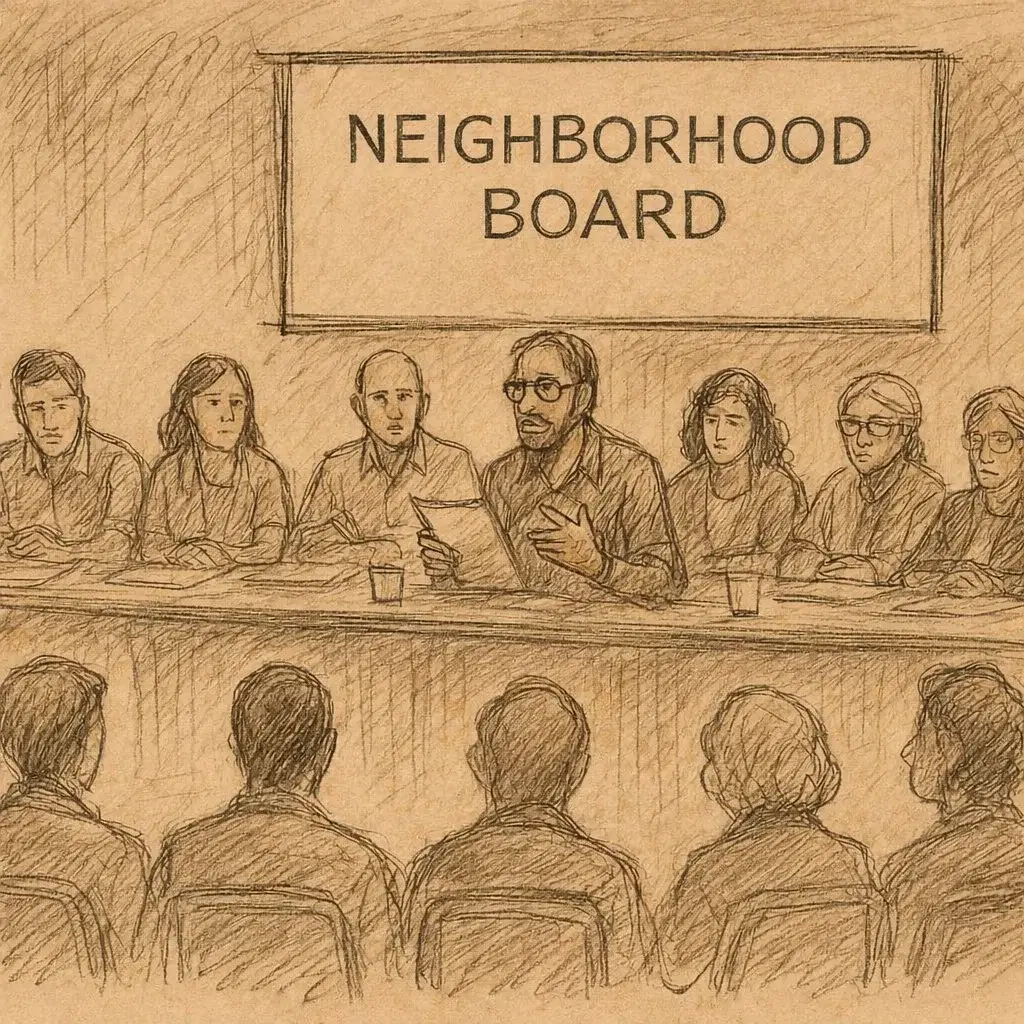
No 26 Wahiawā Whitmore Village Neighborhood Board Regular Meeting May 2026
Listen to this article:
26 Wahiawa-Whitmore Village Neighborhood Board Meeting – May 19, 2026
Honolulu Fire Department Report
The Honolulu Fire Department’s Wahiawa station reported activity for April that included three rubbish fires, one cooking fire, five activated alarms, 87 medical calls, one motor vehicle collision, and two hazardous materials incidents. In response to questions, the HFD representative said the recent hazardous materials calls in the area have more commonly involved methane leaks or liquid propane gas leaks, such as those associated with propane tanks, although he could not confirm whether the two specific incidents occurred at businesses or residences because he had not personally responded to them. HFD used its report to emphasize wildfire prevention as Hawaiʻi enters a season of increased wildfire risk driven by dry conditions, taller grass, and shifting winds. Residents were urged to clear dry vegetation around homes, avoid parking on dry grass because vehicle exhaust can ignite it, avoid spark-producing activities during hot, windy weather, and monitor official fire and weather information through City fire websites. Before leaving, the firefighter also offered congratulations and encouragement to the Leilehua High School graduating class of 2026.
Honolulu Police Department Statistics, Crime Trends, and Public Safety Concerns
Honolulu Police Department Lieutenant Romel Baisel of the Wahiawa station reported crime and service statistics for April 16 through May 16, 2026 for the Wahiawa area, including Whitmore Village. During that period, HPD recorded four assault cases, eight burglaries, 42 motor vehicle collisions, six of them major enough to require towing, zero robberies, two vehicle break-ins, and about 1,160 calls for service. The burglary count represented an increase from the previous month, although HPD said it believes it knows who is responsible for most of the recent burglary activity and had made two arrests in the last month. For community education, HPD highlighted both “Click It or Ticket” month and Bicycle Safety Month, advising bicyclists to wear properly fitted helmets, obey traffic signs, stay visible, and remain alert, while reminding motorists to give bicyclists room, check for cyclists before opening car doors, and respect bike lanes. HPD also shared seatbelt survey data from a 2025 University of Hawaiʻi study showing Wahiawa had a 96.34% observed seatbelt usage rate, with 3,155 of 3,275 drivers wearing seatbelts, compared with 93.65% across Oʻahu overall.
Loud Vehicle Music, E-Bike Enforcement, and School Rules
Board members and residents raised quality-of-life concerns about loud music from vehicles, saying there had been an uptick, though one member noted that much of the disturbance appears to come from only two cars repeatedly driving through Wahiawa, especially through the Heights area. HPD explained that loud music violations generally must be personally observed by officers in order to issue enforcement, but residents should still call 911 if they observe the problem. HPD also confirmed that citations have been issued for electric bike violations and said officers are assigned a couple of times each week specifically to enforce e-bike rules and other traffic violations. When asked whether e-bikes are allowed on school campuses, the lieutenant said his understanding is that the Department of Education has banned them, though he noted that DOE would be the proper agency to answer definitively. The discussion reflected broader concern about unsafe use of newer mobility devices and recurring nuisance behavior in residential streets.
Graffiti, Calls for Service Delays, and Dispatch Staffing Problems
Several board members described seeing more graffiti on buildings and asked whether HPD had noticed an increase. HPD responded that graffiti is a crime that can be reported by witnesses who can positively identify the person responsible, unlike some traffic-related violations that require officer observation. The lieutenant did not have graffiti statistics available at the meeting but said he would check with the misdemeanor follow-up detail. A more urgent issue emerged around police dispatch and 911 hold times. Multiple board members and residents described long waits when calling police, including one resident who waited more than eight minutes on a non-emergency line before using 3-1-1 instead, another who said an emergency call was on hold for more than four minutes, and another who reported being unable to reach police while a violent assault was occurring outside his home. HPD attributed the delays primarily to staffing shortages rather than isolated employee absences, and the lieutenant openly acknowledged that HPD needs more dispatchers and personnel. He encouraged young people to consider joining HPD and noted that 3-1-1 is available by text for non-emergency issues. In especially urgent cases, he said callers should stay on hold with 911 but may also call the Wahiawa station directly so officers can be alerted even though formal dispatch still runs through 911. The exchange underscored serious public concern about emergency response access during active incidents.
Assault Locations, Golf Carts, and Child Safety in Whitmore Village
A resident requested more detail about where the four aggravated assaults occurred. HPD said the reported assaults were felony-level aggravated assaults rather than minor fights, involving severe injury such as lacerations or stabbings, but the lieutenant did not have exact locations available at the meeting and offered to follow up. The same resident and later the board chair raised alarm about golf carts being driven on public roads, especially in Whitmore Village, including by very young children, with one resident claiming that children as young as five or six are driving them in the streets. HPD confirmed that golf carts are illegal on public roads unless they meet legal requirements such as registration and licensing, and reiterated that they are not road-legal in the form commonly seen in the community. The lieutenant acknowledged that officers may sometimes pass violations without stopping because they are responding to more urgent incidents, and said enforcement often depends on officer discretion and circumstances. Members also asked whether Leilehua High School athletic golf carts traveling between campuses might be exempt, and HPD said no blanket exception exists, though practical enforcement decisions vary. Several comments stressed that the issue is also a parental responsibility, while residents asked police to do more to stop and educate unsafe drivers before someone is hurt.
Homeless Encampments Near Sunnyside and Park Safety
The board chair relayed concerns from parents about homeless encampments near the fencing beyond Sunnyside and on the corner by the church, where tents have grown in number and are close to children using nearby park areas, including cheerleaders practicing nearby. HPD responded carefully that homelessness itself is not a crime and that police address specific unlawful conduct rather than status. Officers cannot remove people from public parks during normal park hours if no crime is occurring, and cannot remove people from private property without the property owner’s involvement. The lieutenant said there were no known stored property ordinance actions scheduled for that area but agreed to have the matter looked into, especially where encampments may be within park boundaries after hours. A board member clarified that some tents appeared to be between the fence and sidewalk and asked whether that would still count as park property; HPD said there is normally a setback area from the fence that is still part of the park and indicated enforcement could occur at night if people are unlawfully remaining there. Throughout the discussion, HPD emphasized that whether families feel safe near an encampment is subjective unless specific criminal conduct is observed, while also agreeing that complaints about the area should be followed up.
Outreach Support for Houseless Individuals
Makanaani from Kealoha West Oʻahu offered practical outreach support during the homelessness discussion, telling the board that her organization canvasses Wahiawa and Mililani on Tuesdays and could check specific encampment locations if concerns are reported. She noted that many people encountered are service resistant and reiterated that private property encampments generally need to be reported by property owners. She provided her contact number, 808-745-7880, so residents or board members could connect outreach workers to people in need who may be too shy or reluctant to speak publicly. Later in the meeting, she provided program data for the prior month, reporting 13 community concern reports, 49 people encountered, 38 of them service resistant, and eight new individuals joining the program who are still awaiting shelter or housing placement. She also announced that the H4 project, known in the meeting as Honu, is relocating from Waipahu to Kapolei next to Foodland, and said the organization hopes to offer people at the Karsten Thot Bridge area a chance to enter the program once relocation is complete. She additionally announced an outreach job opening and invited interested applicants to email resumes to sierra.kwo@gmail.com.
Leilehua High School Recognition: Valedictorians and Mighty Mule Award
A major celebratory segment of the meeting honored Leilehua High School’s Class of 2026. The principal announced that the school has 33 valedictorians this year and introduced several of them who attended the meeting, along with the school’s Mighty Mule honoree. Students identified themselves, their college plans, and intended fields of study, reflecting a wide range of destinations and disciplines. Announced plans included attendance at UH Mānoa, Leeward Community College, Oklahoma State University, New York University, Dartmouth College, the University of Florida, Pacific University, the University of Texas at El Paso, and others, with studies spanning molecular biosciences and biotechnology, biochemistry, computer science, business, anthropology, nursing, aerospace engineering, performing arts, creative writing and government, communications, biology, criminal justice, civil engineering, environmental design, visual arts, and animal sciences. Board members responded with encouragement, asking graduates to carry aloha and remain open to learning wherever they go. The ceremony highlighted the academic achievements of local youth and the strong educational presence of Leilehua High School in the community.
Congressional Update from U.S. Representative Jill Tokuda’s Office
A representative from Congresswoman Jill Tokuda’s office delivered a federal legislative and district report. Recent legislative highlights included Tokuda leading House Democratic debate on the Emergency Conservation Program Improvement Act, which would increase upfront USDA disaster assistance so farmers and producers can recover more quickly after disasters such as the recent Konaloa storms; the bill passed 395 to 10 and awaits Senate action. Tokuda also introduced the Farmland for Farmers Act to limit future ownership and leasing of agricultural land by corporate investors, in response to concerns raised during Farm Bill listening sessions. She testified before the House Rules Committee in support of Hawaii-focused Farm Bill amendments and joined debate urging reversal of cuts to food assistance and stronger support for farmers; the five-year Farm Bill passed the House 224 to 200. The office also reported that the House voted to fund most of the Department of Homeland Security, including FEMA, the Coast Guard, Secret Service, and TSA, while not funding extreme immigration enforcement by ICE and Border Patrol under that measure. In district work, Tokuda visited North Shore neighborhoods after the Konaloa storms, met with farmers, business owners, and residents, dropped off food, helped volunteers at the Waialua Community Association, and worked with the Hawaiʻi Foodbank. She also hosted town halls in Lahaina, Lānaʻi, and Molokaʻi, with the Molokaʻi event moved to Zoom because weather prevented flights from landing. The office further announced winners of the 2026 Congressional Art Competition for Hawaiʻi’s 2nd Congressional District, with Linnea Poipoi of Kamehameha Schools Maui winning first place.
Immigration Detention Questions and Concerns About Minors
The congressional update led to an extended and serious exchange about immigration detention in Hawaiʻi. Tokuda’s office said the congresswoman recently made her fourth visit to the Federal Detention Center in Honolulu to speak with immigrants detained by ICE. When asked for current detainee numbers, the representative said she did not have exact figures but estimated the total was in the tens rather than the hundreds, likely around 30 and not more than 50, though she emphasized that this was only an estimate. She said minors are not held at the federal detention center and that when children are involved in raids, families may be temporarily held in hotel-type or other designated spaces before being transferred to the mainland. Unaccompanied minors, according to the representative’s understanding, are also sent to the mainland and later reunified through a guardianship and legal process that is not quick. Board members pressed on the human impact of this process, asking whether unaccompanied minors are effectively being held in unfamiliar places with strangers while legal guardianship is arranged. The office generally agreed that this was a fair characterization. Another board member cautioned that exact facts should be carefully distinguished from estimates and assumptions. Questions also arose about the kinds of violations leading to detention, with the office saying cases vary widely, from immigration issues to minor offenses, and that details often come from detainees’ lawyers rather than the detention center itself. The discussion indicated strong local concern about detention practices, family separation, and the treatment of minors connected to immigration enforcement.
Army Training, Noise, and Kōlekole Pass Emergency Access
The board received a military update from the U.S. Army Garrison Hawaiʻi representative, identified in the meeting as Lieutenant Gogol after a brief name clarification. She announced that East Range, Ranger, and Jungle Tactics small arms blank fire training would continue through May 21 and resume May 26 and 27, while artillery, mortar, and demolitions training would continue through May 19 and then resume May 26 through May 31. Residents with concerns were directed to the Army Concern Line at 808-787-1528 or the garrison community relations email. She also revisited an earlier question about Kōlekole Pass, reporting that a memorandum of understanding has been signed between the Army, Navy, state, and city and county officials to allow the pass to open during emergencies. She noted that it had recently been opened during the tsunami event and after the water main break, but said she had no further information beyond that.
Prescribed Burns, Wildfire Prevention, and Community Distrust Over Environmental Effects
One of the longest and most contentious discussions concerned Army prescribed burns on military land. The Army representative said planned burns had originally been scheduled for late March or early April but were postponed because of weather and then carried out the previous week. She described the burns as a wildfire mitigation tool intended to reduce dry fuel loads and protect endangered species, and said the Army coordinated with state and county partners, the Hawaiʻi Department of Health Clean Air Branch, and the U.S. Fish and Wildlife Service. Burns were monitored around the clock while active. Board members and residents pressed for more information about how burn locations are chosen, historical and terrain data, and whether the removal of vegetation increases the risk of mudslides or runoff during major rain events such as the recent Kona lows. The lieutenant said she did not know the site-selection process herself but would seek answers and follow up.
The public comment that followed revealed deep mistrust and unresolved conflict over military stewardship of the mountainside, especially on and around Mount Kaʻala and Wahine Hāpai. Some speakers argued that prescribed burns have visibly damaged the mountain, left bare mud on the slopes, and contributed to runoff and flooding in places such as the Otaʻake area during severe storms because vegetation was not allowed to recover. Others said the burns have been conducted for many years, are scientifically supported, and are a standard wildfire-prevention practice. Residents also challenged statements suggesting there are no cultural sites in the burn area, insisting that Native Hawaiian cultural practitioners have not been given adequate access to verify conditions and that artifacts, burials, and unexploded ordnance remain a concern in military-controlled lands. One speaker connected the mountain face directly to Kukaniloko and argued that access for cultural practitioners is a matter of kuleana and not simply an administrative request. Another asked whether the Army notifies the public when a controlled burn becomes uncontrolled, arguing that community trust requires full transparency when conditions change. The Army representative agreed to take back requests for clearer answers, including whether public alerts are issued if a prescribed burn escapes control.
Cultural Access, Burial Sites, and Unexploded Ordnance on Military Lands
The discussion on prescribed burns expanded into a broader debate about Native Hawaiian access to military lands and the treatment of cultural sites. Several speakers said that although some consultation has occurred in the past, access remains difficult, lengthy, and restricted, and there is a need for a dedicated military cultural liaison to make it more accessible for Kanaka ʻŌiwi to visit and protect significant places. Questions were raised about whether prescribed burns or military activity could disturb burial sites, sacred areas, or old unexploded ordnance. One online participant asked whether military police canine teams and explosive ordnance disposal units could be deployed to sweep and clear areas believed to contain UXO so that access and safety improve. The Army representative said she would pass that suggestion along. Longtime board member June Miyasato added historical context from prior work with military consultation processes, saying archaeological surveys had identified culturally significant sites during earlier range and road projects, that some of these areas had been restricted after identification, and that Native Hawaiian and civic representatives had been involved in review efforts. She noted that some elders purposely avoid making site locations public to protect them from exposure. Another resident later clarified that the issue is not absolute lack of access but that the process is burdensome and should be improved so cultural rights can be exercised more meaningfully.
Follow-Up Request on Leilehua Military Recognition
Before moving on from the military segment, the board chair asked the Army representative to check whether a Leilehua High School student had been selected for a military-related recognition, noting that such an honoree is usually presented and had not appeared during the evening’s student recognition. The chair asked for follow-up so that the student, if one exists, can still be acknowledged for his or her achievement.
Transit Advocacy and Community Transportation Representation
During resident concerns, Luca Cuniberti introduced himself as a member of the Hawaiʻi Transportation Council, with a term ending in June, and as co-founder of Oʻahu Transit Riders, a nonprofit transit riders union advocating for better sustainability, connectivity, affordability, and overall public transportation conditions. He said he plans to attend upcoming board meetings to listen for transit-related concerns and bring those concerns back through the union’s advocacy network and government connections. He also said another North Shore resident is expected to take over the Hawaiʻi Transportation Council role and may later provide more information directly to the board. His comments suggested an effort to create stronger local channels for residents to influence transportation policy affecting central Oʻahu and North Shore riders.
Wahiawa Pedestrian Bridge Project Meeting Announcement
Patrick Watson of PMN Consulting announced a community meeting for the Wahiawa Pedestrian Bridge Project, scheduled for Friday, June 12 from 6:00 p.m. to about 8:00 p.m. at the Whitmore Community Center. The meeting will be hosted by the Hawaiʻi Department of Transportation and Q&I Infrastructure and is intended to discuss design and construction details of the state project. Watson thanked board members and civic club members who had attended a site visit earlier that day to observe the project location and prepare questions. He said handouts were available and encouraged attendees to email questions in advance so project representatives could be ready to respond. In response to a question, he said Senator Donovan Dela Cruz had been invited, along with Representative Amy Perruso and Councilmember Matt Weyer, but he could not confirm attendance. The announcement showed that the pedestrian bridge remains an active and closely watched project in Whitmore Village.
Trees Cut Near State Housing and Japanese Church
In a late resident comment, concern was raised about trees that had been cut down on the slope between the Japanese church and the state housing area. A resident said workers told him they had only been paid to cut down the trees and not to remove the debris, leaving cut material on a steep slope above a waterway. He also said a man living nearby had already been hurt while climbing among the debris. There was concern that rain could wash the cut trees downhill into the channel, worsening drainage and making cleanup more difficult. The board chair said she would contact HPD the next day to better understand the situation and seek follow-up.
Department of Environmental Services Presentation on the Whitmore Wastewater Receiving Facility
The meeting’s featured presentation came from Michael Cummings, branch chief with the Department of Environmental Services’ Regulatory Control Branch, joined by Deputy Director Dan Brick, who provided a detailed update on the Whitmore wastewater receiving facility and the City’s islandwide liquid waste hauler program. Cummings explained that the City permits 77 liquid waste haulers serving cesspools, septic tanks, portable toilets, grease traps, and some industrial wastewater, organized into Type 1, Type 2, and Type 3 haulers. Type 1 covers domestic wastewater from cesspools, septic systems, and porta-potties; Type 2 is grease trap pumping only; Type 3 covers other domestic or industrial wastewater. He stressed that these haulers provide an essential service for households and properties not connected to municipal sewers and help prevent failing septic systems from overflowing into streams or the ocean.
He described the City’s receiving-site strategy as regional, with facilities intended to keep waste handled near where it is generated. Whitmore functions as the nearest facility for the north and central part of the island, while other sites exist or are planned in places such as Waiʻanae, Honouliuli, Kahuku, Kāneʻohe, and Sand Island. He then walked through the timeline that led to Whitmore’s current use. Pearl City’s discharge site permanently closed on August 31, 2024 because it was unsecured, used at all hours including late at night, associated with illegal dumping in the area, located near homes, and increasingly problematic under EPA and Department of Health requirements that the City monitor what enters its system. Kahuku’s receiving facility then shut down on January 31, 2025 after an unknown toxic load killed the beneficial biological treatment organisms at that site. In response to feedback from haulers who needed a closer alternative for the North Shore, the City opened the Whitmore pretreatment facility for septage receiving on February 18, 2025 as an emergency measure.
Whitmore Facility Operations, Volumes, and Service Area
The City reported that Whitmore currently operates Monday through Friday from 8:00 a.m. to 4:00 p.m., though it temporarily extended hours to 8:00 a.m. to 6:00 p.m. and seven days a week during Kona low storm recovery to speed cleanup for flooded homes and damaged properties in North Shore communities. For 2025, the Whitmore facility recorded 2,933 discharge events, averaging about 14 loads per day and approximately 22,000 gallons daily. This represented roughly 16% of all discharge across the City’s five receiving locations, compared with islandwide daily discharge totaling about 92,000 gallons. Only Type 1 wastewater is allowed at Whitmore, meaning domestic septage but no grease or industrial wastewater. According to the City, 23 different businesses used the site, but four or five companies account for most of the daily traffic, serving Whitmore farm lots and the corridor out through Mokulēʻia, Waialua, and Haleʻiwa. The City expects Whitmore demand to decline once Kahuku reopens, tentatively projected for around July 2026.
Cummings also explained Whitmore’s technical role. Wastewater from Whitmore Village and the nearby Navy installation flows into the Whitmore pretreatment facility, where grit is removed and solids such as wipes are shredded before sewage passes through a siphon and continues toward the Wahiawa wastewater treatment plant. The pretreatment facility exists to protect that system, especially the siphon, from blockages. He noted that a separate project tied to the future DOE regional kitchen will require upsizing a sewer line to accommodate additional flow, though this is not itself a Whitmore septage project. Board members also sought clarification on whether the military contributes to the system, and the City confirmed that sewage from the Navy facility up the road also feeds through Whitmore and eventually to the Wahiawa treatment plant. One board member asked what the military pays the City for that service; City staff said they did not have that figure on hand and would need to return with billing information.
Odor, Traffic, Security, and Community Frustration Over the Whitmore Facility
The strongest public concern about the wastewater facility centered on traffic, odor, and lack of communication. City staff said they had instructed drivers not to queue on Whitmore Avenue and instead wait inside the fenced facility, and believed there was adequate room on site for vehicles to enter, turn around, queue, and exit. For odor mitigation, the City had installed a temporary blower system on December 8, 2025 that pulls foul air back down into the receiving pit, and said it plans to install more permanent odor-control equipment. Security guards check hauler permits and credentials before loads are discharged.
Whitmore residents challenged the City’s account in several ways. They said the community had not been informed in advance that truck traffic would increase after Kahuku’s closure, and that communication only began after residents themselves complained. Multiple speakers described seeing trucks before operating hours, including around 6:00 a.m., and on weekends, contrary to the stated schedule. One resident argued that the City’s assumption that trucks can queue inside the property may no longer hold because access points are being affected by work on the pedestrian bridge project. Another resident said there is still confusion over whether Whitmore is merely a receiving site or some kind of pretreatment and transfer site, and asked for a fuller town hall-style meeting because the issue remains poorly understood. The City responded that the terms “pretreatment facility” and “receiving facility” are being used somewhat interchangeably in this context and acknowledged that more consistent language and better public communication are needed. The board chair and residents repeatedly stressed that while the technical explanation was useful, trust was damaged by the original rollout and a larger follow-up meeting with the community is still needed.
Cesspools, Conversion Pressure, and Long-Term Wastewater Policy Questions
The wastewater discussion expanded into broader policy questions about cesspools and septic systems. Board members asked whether there is an increase in pumping demand and how often an average cesspool should need pumping before it is considered failing. City staff said determining whether a cesspool is officially failing is a matter for the Hawaiʻi Department of Health rather than the City, since cesspool and septic oversight is state jurisdiction. They noted that many homeowners delay pumping for years, which can allow solids to accumulate and ultimately clog leach fields, causing severe backups and expensive failures. Staff expressed support for better data collection and coordination, but said their current monitoring still relies heavily on manual security logs and paper records, making analysis difficult. They welcomed mention of HB 1618, a newly passed legislative measure intended to create an accessible financing program to help eligible homeowners upgrade, convert, or connect cesspools, suggesting that more education around available assistance would be useful.
Questions also revisited a long-standing issue in Wahiawa and the North Shore: why no regional sewage treatment plant has been built despite decades of development. City representatives said plant capacity and sewer expansion are constrained by the enormous cost of extending infrastructure to dispersed properties and by the burden that would place on all sewer ratepayers, especially after recent fee increases. They described current strategy as relying on regional systems and selectively evaluating sewer improvement districts and line extensions where feasible. The exchange made clear that cesspool conversion, service access, and wastewater affordability remain unsettled long-term concerns for the area.
Illegal Dumping, Monitoring, and Infrastructure Maintenance
Responding to questions about how another toxic load like the one that shut Kahuku could be prevented, the City explained that illegal dumping usually occurs not at monitored receiving facilities but through vulnerable sewer manholes in isolated places, often at night. When the City receives tips or identifies an at-risk manhole, crews may weld it shut to prevent unauthorized dumping. Officials said they cannot secure every manhole in the system but do target those most likely to be exploited. They also emphasized that facility modernization is partly about improving accountability and data collection so loads can be better traced. In response to questions about system integrity, the City said it regularly inspects sewer infrastructure using CCTV cameras and smoke testing, and maintains a rehabilitation program that includes both open-cut pipe replacement and trenchless lining. These practices are meant to identify defects, leaks, or structural problems before major failures occur.
Mayor’s Office Update: Kona Low Recovery, Preparedness, and Traffic Response
Near the end of the meeting, Kevin Auger from the Mayor’s Office provided a brief but wide-ranging update. He said cleanup and recovery from the recent Kona low storms continue through coordination among city, state, federal, and community partners. Residents were directed to the city’s recovery website, oneoahu.org, for information on reporting home damage, health and safety, available assistance, and ways to support affected communities. He said debris removal operations remain active across Oʻahu, especially on the North Shore, with dump trucks, heavy equipment, and dumpsters deployed. Storm debris may be taken to city transfer stations and convenience centers, open daily from 7:00 a.m. to 6:00 p.m., while H-POWER is accepting commercial municipal solid waste and Waimānalo Gulch is taking residential construction debris such as dirt, rock, and concrete. He also noted that departments are continuing to work with FEMA, the city’s insurers, and the City Council on budgeting for storm-related costs.
Auger also followed up on a prior inquiry about traffic calming on Circle Drive, saying a speed survey and collision review found most motorists travel near the posted 20 mph speed limit and that collision data for the past three years showed no trend warranting additional speed mitigation at this time. However, maintenance needs were identified for speed-limit signs and pavement markings, and a work order had been issued to the Department of Facilities Maintenance under reference number 393956. On flood preparedness, he said long-term flood control planning is underway with the U.S. Army Corps of Engineers, though it is still too early to identify specific improvements triggered by the recent storms. For emergency preparedness, he highlighted the Community Emergency Response Team training program offered at no cost to residents and invited the board to consider it. He also addressed shelter questions by explaining that emergency shelters are designated only when activated by the Department of Emergency Management and can vary depending on the hazard; residents were encouraged to sign up for HNL Alert at hnlalert.gov to receive direct notifications about shelter openings.
Meeting Close and Unfinished Reports
Because the meeting ran well past schedule, the chair had to cut short the section for elected officials and other monthly reports. The board was only able to hear the Mayor’s Office update before ending the meeting. Reports from other officials listed on the agenda were not completed, and the chair apologized to those offices. The meeting closed with thanks to attendees and a request for help putting away chairs, after a session that combined recognition of student achievement with intense discussion on policing, emergency response, military land use, houselessness, storm recovery, infrastructure, and the future of wastewater management in Whitmore and Wahiawa.