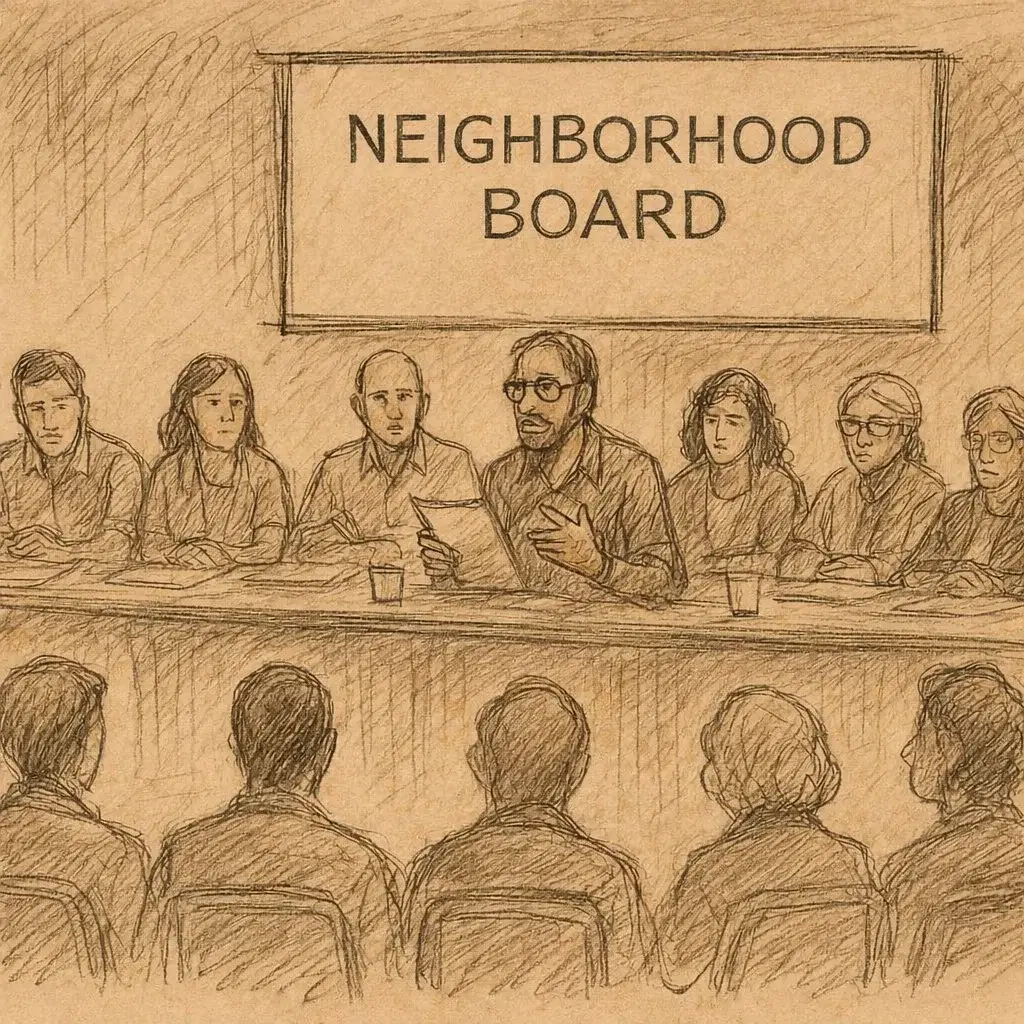
No 06 Pālolo Neighborhood Board Regular Meeting May 2026
Listen to this article:
6 Palolo Neighborhood Board Meeting – May 14, 2026
Meeting Opening and Storm Recovery Acknowledgment
The meeting opened with the chair calling the session to order and noting that the board had canceled its previous two meetings. At the outset, the chair paused to recognize the recent Kona low storms that affected the area over the prior two months and offered thanks to first responders, elected officials, government agencies, community members, and neighbors who helped with storm response and recovery. That acknowledgment set the tone for the meeting by linking many later discussions—such as drainage, infrastructure, emergency response, and public alerts—to the recent severe weather events and their effects on Pālolo residents.
Honolulu Fire Department Report
A representative from the Pālolo Fire Station, Firefighter Perry, delivered the Honolulu Fire Department report for April. He reported one cooking fire and 40 medical emergencies, with no other major incidents noted. He also gave a seasonal wildfire safety message, explaining that Hawaiʻi is entering a period of increased wildfire risk because of dry conditions, tall grass, and shifting winds. He emphasized that most wildfires are human-caused and preventable, and urged residents to clear brush and vegetation around their homes, avoid parking on dry grass because hot exhaust can ignite it, and avoid activities that generate sparks or heat during dry, hot, windy conditions. Residents were directed to fire.honolulu.gov and hawaiiwildfire.org for more information. The report connected local preparedness to broader islandwide hazards and highlighted the way changing conditions can affect homes and neighborhoods even outside traditional fire-prone areas.
Honolulu Police Department Report and Crisis Intervention Question
Lieutenant Muriel of the Honolulu Police Department presented crime statistics for the previous month. Reported incidents included one motor vehicle theft, one burglary, 10 thefts, and one unauthorized entry into a motor vehicle. Total calls for service were reported at 5,614. The department’s public safety message focused on HNL Alert, the City and County of Honolulu’s official notification system. Residents were encouraged to register at hnlalert.gov and customize alerts for severe weather, emergency information, road closures, ocean conditions, and water main breaks, with options to tailor how alerts are received.
During questions, board member Randolph Hack asked about Crisis Intervention Team officers and whether the public is being encouraged to request a CIT officer when assistance is needed for emotionally disturbed persons. He noted that trained CIT officers now make up about 18 percent of the force and added that the optimum level of participation is 20 percent. The police representative responded that, when available, the department does try to acknowledge and provide those services. The exchange highlighted continuing community interest in specialized police response for mental health-related incidents and reflected ongoing efforts to improve the department’s capacity in that area.
Board of Water Supply Report and Illegal Dumping Concern
A Board of Water Supply representative reported that there had been no water main breaks in the previous month. He also said the Pālolo water system improvement project is ongoing, with current work occurring along Pālolo Avenue, and apologized for any traffic delays associated with the work. Despite the recent heavy Kona low rains, he reminded residents that water conservation remains necessary and encouraged leak checks, shorter showers, and watering yards in the early morning or evening.
A board member raised a site-specific concern about repeated illegal dumping near the Board of Water Supply facility by Carlos Long Street and Pālolo Avenue, on the grassy corner outside the fence line. The board member asked whether a “no illegal dumping” sign or another deterrent could be installed because the board has repeatedly had to call to get dumped material removed. The representative said he would check on the request and follow up. The discussion showed how neighborhood maintenance issues can accumulate around utility properties and become recurring burdens for the community if not addressed.
Lack of Quorum and Delayed Board Business
The board announced that it did not have quorum, meaning it could not take formal action on its agenda items despite a full board business calendar. As a result, official votes could not be taken on matters such as minutes, resolutions, or other board business. The chair still proceeded through the agenda to allow invited presenters and community advocates to speak, with the understanding that items would need to return at a future meeting for formal board action. The chair also noted that there are still open board seats and invited interested community members to come forward, though vacancies could not be formally filled that night without quorum. The board is in recess in June and will next meet on July 8, 2026, at 7:00 p.m. at Pālolo Elementary School and online, which means several unresolved items will carry forward to July.
Empty Homes Tax Advocacy and Status of Bill 46
Ross from the Housing Now Coalition returned to speak about the proposed Empty Homes Tax, an issue he had previously presented to the board in November. Because there was no quorum, no vote could be taken on the board’s proposed resolution supporting the measure, but Ross gave a status update and answered questions. He said Bill 46 remains before the City Council and that time is running short to move it forward. He described the proposal as a response to Honolulu’s housing crisis and to the effects of speculative global investment on local housing supply.
In response to a board member’s question about what the community should do to help the measure “get past the finish line,” Ross said residents should get educated, discuss the issue with neighbors and constituents, and communicate with both elected officials and administration appointees. He stressed that the advocacy effort is grassroots and framed the tax as intended to support Hawaiʻi residents. He also reported that seven Oʻahu neighborhood boards had passed supportive resolutions, at least among the boards he had personally attended, and said the response had generally been very positive. He noted that one recurring point of discussion has been the exemptions built into the proposal to protect Hawaiʻi residents and focus the tax more on outside investors. The conversation reflected continued concern over housing availability and affordability and showed how neighborhood boards are being used to build political support for city legislation.
Resolution on Cell Towers, EMF, and Local Control
Community member Liz Satola returned to discuss a resolution concerning cell tower placement, electromagnetic field exposure, and the 5G buildout. She said several other residents attended because they share concerns about the number, location, and density of cell towers, especially towers on top of residences, close to schools, and in culturally or environmentally significant areas. Because quorum was lacking, the board could not vote on the resolution, but Liz outlined its requests: support from Hawaiʻi’s congressional delegation and state legislators for greater local control over cell tower placement, increased regulation of EMF, an updated Department of Health EMF fact sheet, and a halt to further 5G buildout until independent testing demonstrates safety.
When asked to explain health concerns linked to EMF, Liz said questions often arise because some people dismiss the issue, but she argued that conflict of interest can affect industry-friendly studies. She cited reported symptoms such as cognitive difficulty, brain fog, headaches, sleep disruption, insomnia, and mood changes. She referred to California firefighter experiences after cell towers were placed at fire stations, saying firefighters reported memory and concentration problems and that California later enacted protections preventing cell towers from being installed at fire stations. Sun Tok Wong, who joined her, identified himself as someone knowledgeable in EMF and said he shields homes professionally. He cited a 2018 National Institutes of Health study that he described as a 10-year, $25 million independent study finding that wireless radiation causes DNA damage and cancer, and he argued that safety standards dating from 1996 have not kept pace with newer technologies such as 4G and 5G. Liz also referenced a Yale study that discussed a possible link between EMF exposure and autism and argued for a more precautionary approach.
Board members raised concerns about balancing these claims with the need for reliable communication service in the valley and elsewhere on Oʻahu, including emergency communication. Liz responded that most people already had acceptable service before the 5G buildout began in 2019, and she suggested that many new towers may be more about data collection than basic communication needs. Sun added that the issue is not whether coverage matters but where towers are placed, saying vulnerable populations such as children and older adults should not be exposed to towers close to schools or homes. He described 5G as using shorter-range millimeter waves that require denser infrastructure and argued that this can increase exposure without necessarily improving ordinary phone service. He also explained that shielding can be done through specialized paint, fabric, and other materials, depending on the type of electromagnetic exposure involved. The section ended with further remarks from Sun urging residents not to keep charging phones by the bed while sleeping and calling for more public education and updated health guidance from the Department of Health. The discussion showed strong resident concern about technology siting, health standards, and decision-making authority over telecommunications infrastructure.
Revised Resolution on Bus Route 200 and the Return of Route 9 Service
Juanita and Leolani presented an updated resolution related to bus route changes affecting the Kaimukī, Diamond Head, and Pālolo communities. They explained that they have been working on the issue for a year and a half with transportation committees and neighborhood boards and that the resolution was revised after additional issues emerged, including congestion observed in Diamond Head. The central request remains the return of the main trunk bus service previously provided by Route 9 through Kaimukī. They said the Department of Transportation Services has argued that routing changes would be too expensive, but they believe restoring the service is necessary because current routing leaves residents unable to reach destinations in Kaimukī conveniently.
Juanita emphasized that the issue affects all three neighborhoods and gave a detailed example involving Kaimukī Middle School, which she said has 1,000 students. She explained that there used to be a bus stop in front of the school, but with the route changes, students with working parents have fewer options after school, especially since the campus locks down after the school day. She described how students once could independently ride the bus to the library, district park, town, or other destinations, and argued that bus access is part of teaching independence and supporting families who cannot drive children everywhere. She also said the librarian at Kaimukī Library had observed that children are no longer coming in as they used to and had not even realized the route had changed. Drawing on her own family history, she described three generations of bus riders in her family and stressed that the advocates are not opposing transit but instead are “bus lovers” who want service restored to businesses, residents, and visitors in Kaimukī. The board clarified for the record that it had previously adopted a resolution on this issue and that the current item was an update incorporating new data rather than a wholly different proposal. The matter is expected to return in July.
Honolulu EMS CORE Program and Houseless Outreach
Assistant Chief of Operations Jeff Zukernick of Honolulu Emergency Medical Services gave an extended presentation on the city’s CORE program, which stands for Crisis Outreach Response and Engagement and is also known as the “homeless ambulance” operation. He explained that EMS call volume has increased by about 350 percent over the past 30 years while Oʻahu’s population has increased by only 24 percent, and that one of his concerns has been the overutilization of EMS for non-emergency situations. He said he was reassigned to improve CORE’s efficiency and to help develop a community paramedic program aimed at frequent 911 users, noting that some individuals call 911 three or four hundred times a year.
He described CORE as having begun around 2021 with minimal funding, poorly staffed operations, hand-me-down ambulances with 250,000 to 350,000 miles, and an initial focus on Chinatown. The program has since grown to 10 community health workers, 17 EMTs, five nurses including two advanced practice registered nurses with prescriptive authority, and four ambulances. It is now based in Iwilei near the Institute for Human Services, the Behavioral Health Crisis Center, and Mental Health Kokua, and now provides islandwide service rather than serving only Chinatown.
Zukernick described community health workers as the backbone of the program and explained that they function somewhat like frontline, non-credentialed social workers who build trust with people living unsheltered. Because houseless individuals often do not trust institutions, he said it can take five, eight, or ten visits before someone accepts help. CORE’s services include outreach, transport to shelters and medical care, assistance with documents, transportation to doctor’s appointments, connection to respite care, mental health support, and long-term housing work such as Section 8 voucher assistance. The program uses proactive outreach as well as referrals through the Honolulu 311 app, especially under the “homeless well-being check” option, direct phone calls, and requests from elected officials.
He said CORE’s 10 community health workers see about 175 people per month, move about 15 to 20 people monthly into shelter, and help roughly three to five people monthly into permanent housing, a process that can take three to five months. CORE EMTs handle about 65 to 90 calls a month and reduce strain on emergency 911 ambulances. Zukernick said the city plans to send CORE ambulances and outreach teams to more calls involving unhoused individuals, including cases where someone is merely sleeping in public and declines emergency medical transport, so that the response can go beyond “do you want help?” and include efforts to connect people to more appropriate places and services. He also said CORE played a significant role in Waiʻanae during the Kona low storms.
In response to questions, he clarified that the core phone line is generally staffed during business hours, roughly 7:00 a.m. to 7:00 p.m. Monday through Friday, while CORE EMS services operate seven days a week from 7:00 a.m. to 7:00 p.m. He strongly encouraged residents to use the Honolulu 311 app because it creates a timestamped service request and allows follow-up. He said more detailed information is better, including descriptions of movement patterns and photographs, because by the time teams arrive people may have moved. When asked if CORE has been in Pālolo recently, he said the teams had worked up and down Waialae Avenue about two and a half months earlier. The presentation gave residents a clearer picture of how the city is trying to combine medical response, outreach, and shelter navigation to deal with homelessness more effectively and relieve pressure on emergency systems.
Resident Concern About Public Beach Privatization Bills
During the community concerns portion of the meeting, Liz Satola raised a separate issue unrelated to cell towers: proposed state legislation she said would allow public beaches to become effectively privatized. She identified Senate Bill 3148 and House Bill 2328 and said she was alarmed that such measures appeared as part of the governor’s package. She argued that the bills could allow rezoning or exclusive use arrangements that would convert areas now used by the public into resort-serving spaces, and she gave a hypothetical example of a place like Makapuʻu becoming inaccessible for ordinary beach use.
To support her concern, she read from Sierra Club testimony opposing SB 3148. The testimony argued that the bill would allow the Board of Land and Natural Resources to authorize exclusive private use of public and ceded lands, including beaches, without adequate consideration of impacts on public use and enjoyment. It also criticized the Department of Land and Natural Resources more broadly for failing in its public trust responsibilities. In response, the chair noted that legislation can have broad language and unintended consequences and asked whether there could also be legitimate uses of agency authority, such as conservation closures for invasive species, environmental rehabilitation, or endangered wildlife protection. Liz said she supports conservation-related restrictions that already exist under current law but remains firmly opposed to resort-exclusive use or any weakening of the principle that public beaches should remain public. She noted that SB 3148 had been deferred but said the fact that it had been introduced was concerning and suggested continued monitoring and testimony if the bills return.
Albizia Trees, Drainage, and Canal Maintenance on Narcissus Street
Resident Hokoyuki Aku, speaking on behalf of a neighborhood watch effort, described an ongoing problem involving albizia trees, debris, and drainage in the area behind Narcissus Street. He said residents had requested action and received notice from the city indicating the issue had been addressed and the case closed, but according to people living there the wrong location had been cleaned. He said work had apparently occurred on Narcissus Place rather than Narcissus Street. While he acknowledged that one canal segment had been cleaned well, he said the drainage area behind the homes on Narcissus Street remained full of debris including tree material, rocks, and stumps.
He linked the issue directly to flooding during the recent April storm event, saying the uncleared debris came down during heavy rain, blocked drainage, and worsened flooding. He expressed frustration that residents had been working on the matter for about two years and yet the city had closed the case without resolving the actual problem. He referred to dramatic water flow during the storm, including water gushing from sewer pipes and heavy runoff descending near Carlos Long. The board discussed placing the issue on a future agenda and seeking follow-up from Councilmember Scott Nishimoto’s office. This discussion brought storm recovery, vegetation management, and drainage maintenance into sharp focus as unresolved neighborhood hazards.
City Councilmember Scott Nishimoto’s Office: Budget Season and Follow-Up on Infrastructure Requests
Kylie from Councilmember Scott Nishimoto’s office reported that the City Council has been heavily occupied with budget season and that more specific information on city budget allocations should be available after finalization in June. She addressed the albizia and canal issue directly, explaining that two separate requests had been submitted and that one of them appears to fall under the Department of Parks and Recreation’s Division of Urban Forestry. She said she has been following up and that there has been back-and-forth regarding jurisdiction and delays, including weather-related delays. She also said she would verify that the department has the correct location information and would continue communicating with the residents involved.
Board members asked whether a presentation could be arranged from the Department of Parks and Recreation director or a departmental representative because several matters are pending, including the albizia issue and a park lights project. Kylie said that she and the chair had previously tried to coordinate a department appearance and that she would continue trying to make that happen, ideally for the July meeting. The exchange reflected a desire for more direct accountability from city departments on maintenance and neighborhood infrastructure issues.
State Representative Jackson Sayama’s Legislative Update and School Funding
State Representative Jackson Sayama reported that the 2026 legislative session had concluded after five months and said he was pleased to share several outcomes benefiting the Pālolo area. In the state budget, he said he secured $1.359 million for Kaimukī High School for design and construction work including classroom electrical upgrades, gym floor replacement, and repairs to structural damage. He also reported $1.1 million for Jarrett Middle School for design and construction of library improvements and leveling of the outside field so students can use it more effectively. For Pālolo Elementary School, he reported $935,000 for reroofing restrooms, describing roof leaks into the bathrooms as an ongoing problem. These appropriations focused on basic but important school facility improvements affecting student and staff conditions.
He also highlighted two statewide bills passed during the session. Senate Bill 3125 preserved an income tax break passed two years earlier and created a new tax bracket for income above $1 million for joint filers and $500,000 for single filers. House Bill 1890 established automatic step increases for teacher salaries to address long-standing teacher recruitment and retention problems. Sayama said more details would be included in his district newsletter at the end of the month. He also announced that this had been his final legislative session as the House representative for District 21 because he will be running for the State Senate. He thanked the community for allowing him to serve for the past six years and said he hopes to continue serving in the future.
Meeting Schedule, Resources, and Board Member Eligibility Question
As the meeting concluded, the chair noted that there are informational resources available on the board’s Google Drive and at the front table, including material from Kīpuka or “Kiko,” mentioned briefly as something the chair had recently visited. The board announced that it will be in recess in June and that the next regular meeting is scheduled for Wednesday, July 8, 2026, at 7:00 p.m. at Pālolo Elementary School and online, with ʻŌlelo rebroadcast also planned.
Before adjournment, a member of the public asked that the status of the chair and another board member, Andrew, be checked with the Neighborhood Commission Office in light of possible candidacies, suggesting the issue be clarified before the July meeting. The chair said the matter would be discussed with neighborhood staff after the meeting and that an update would be provided. The meeting then adjourned.