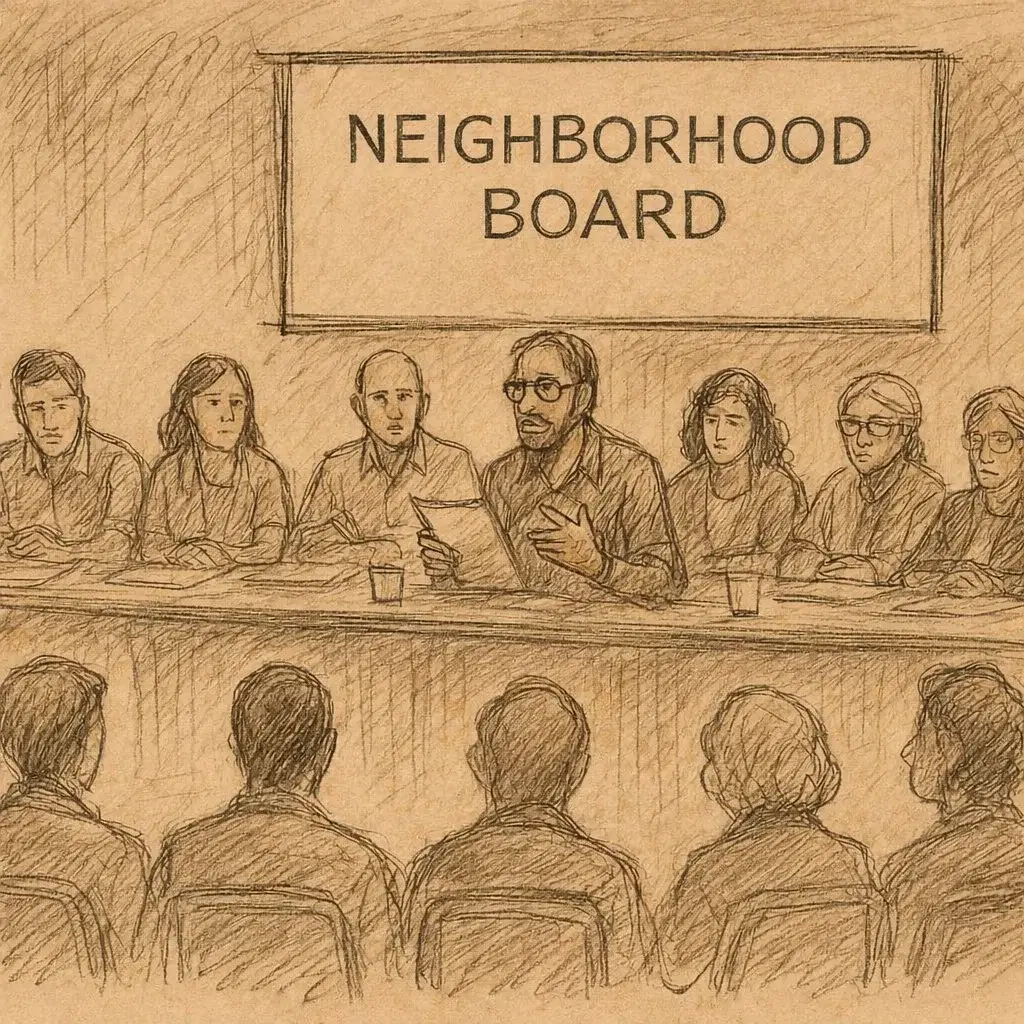
No 36 Nānākuli-Māʻili Neighborhood Board Regular Meeting September 2026
Listen to this article:
36 Nanakuli-Maili Neighborhood Board Meeting – September 16, 2026
Meeting Opening and Procedures
Chair Malia Gustin called the regular meeting of Nānākuli-Māʻili Neighborhood Board No. 36 to order at the Nānākuli Public Library, with WebEx access available; although the meeting title identifies September 16, the chair stated during the recording that it was Tuesday, September 15, 2026, at 7 p.m. She described neighborhood board meetings as monthly public forums connecting residents with government agencies and elected officials and affirmed the public’s right to testify on every agenda item. Public comments were limited to two minutes, official reports to three minutes, and presentations to 10 minutes, with participants instructed to speak respectfully and in the spirit of aloha. Board Member Cowles opened with a pule. Seven members were present, establishing quorum: Tector, Cowles, Myers, Weaver, Rosenholz, Leduc, and Gustin; Ayo and Dela Cruz were absent at roll call.
Fire Department Activity and Lithium-Ion Battery Safety
Firefighter III Michael Morgan of the Nānākuli Fire Station reported that during August the Honolulu Fire Department responded to one brush fire, seven nuisance fires, one cooking fire, four alarm activations where no fire was found, 100 medical calls, and one motor vehicle collision. Chair Gustin noted that 100 medical calls appeared unusually high and asked whether storm-related incidents accounted for much of the total; Morgan said the available report did not include a breakdown but offered to follow up with the department’s statistics unit. HFD’s monthly safety message addressed the increasing number of fires involving lithium-ion batteries in phones, laptops, e-bikes, e-scooters, power tools, toys, and vehicles. Residents were advised to use manufacturer-approved chargers, charge devices on hard and flat surfaces, unplug fully charged devices, charge large equipment outdoors when possible, avoid blocking exits, and immediately stop using batteries that become excessively hot, swell, leak, smell unusual, smoke, hiss, or pop. HFD also announced a Fire Prevention Week family event at the Honolulu Zoo on October 3 from 10 a.m. to 2 p.m., featuring the theme “Charge into Fire Safety: Safe Charging Is a Superpower.”
Police Statistics, Traffic Enforcement, and Community Complaints
Sergeant Fumi Morooka of HPD District 8 Community Policing reported August 2026 crime and enforcement data. District 8 recorded 14 motor vehicle thefts, including two in Nānākuli; 22 burglaries, including three in Nānākuli; 100 thefts, including 13 in Nānākuli; and 11 unauthorized entries into motor vehicles, including three in Nānākuli. Officers issued two speeding citations, 114 moving citations, and 444 parking citations, with 821 citations issued overall. District 8 received 8,452 calls for service, of which 1,233 originated in Nānākuli. A resident asked which trucking company was involved in the September 1 Waiʻawa overpass accident; Board Member Cowles later identified it as MC Trucking. The same resident asked HPD to investigate signs reading “hey sexy” attached to a utility pole on the makai side of Farrington Highway and supplied the telephone number printed on them, 808-863-5053. Sergeant Morooka agreed to inquire about removal, while the chair confirmed that she had also seen the signs.
Hurricane Lowell Road Closures and Emergency Communications
Board members raised serious concerns about communications during Hurricane Lowell, particularly when sand and ocean water closed Farrington Highway between Māʻili and Nānākuli and residents experienced uneven power and cellular service. Board Member Cowles asked who authorized the opening of the emergency access gate between Sea Country and Hakimo Road, how the opening was communicated, and whether the directive came from the mayor, the council member, or another emergency authority. He said he subscribed to HNL alerts but did not recall receiving notice that the gate was open, while many residents learned of conditions through Representative Darius Kila’s Facebook posts. No siren announced the highway closure, and traditional media could not initially access the affected area. Particular concern was expressed for residents needing dialysis, emergency care, or 911 assistance who might not know which roads remained usable. Sergeant Morooka explained that road and shelter notifications generally come from the city’s emergency operating structure rather than HPD, although police and emergency management personnel were present to direct traffic once the road closed. She agreed to investigate whether additional communication methods could reach residents during power and cellular outages.
Speeding Enforcement and Zablan Beach Patrols
Board Member Cowles thanked HPD’s chief for sending motorcycle officers to the Waiʻanae Coast but said a single four-hour deployment was insufficient because officers cited many drivers during that brief period. Sergeant Morooka said the chief had committed to approximately one enforcement day per week because the unit must cover the rest of the island, but she would relay the request for more frequent enforcement. Chair Gustin also asked why numerous officers had recently been seen at Zablan Beach Park and along the coast at night with flashlights. Morooka said HPD had received complaints about disorderly behavior on the reef side, within the park, and on the sidewalk outside the park. Patrol officers assigned to the Nānākuli beat had therefore been instructed to conduct checks whenever their workload allowed. The checks are not scheduled at fixed times but are part of the beat officers’ responsibility, particularly when complaints are active.
Governor’s Office: Energy, Vaccination, FEMA, Housing, and DHHL
Riley Eel of the Department of Agriculture and Biosecurity attended on behalf of Governor Josh Green but had no prepared report and committed to return with responses. A resident criticized the governor over more than $17,000 in alleged campaign contributions associated with a company seeking to introduce liquefied natural gas to Hawaiʻi and argued that LNG would not deliver the promised savings; the resident also raised allegations concerning Lieutenant Governor Sylvia Luke and the timing of a future trial. Board Member Tector requested clarification from Governor Green, in his roles as governor and physician, concerning vaccination requirements imposed through DOE, colleges, and healthcare employers. She also asked whether FEMA or emergency funds could finance additional sweeping of storm-deposited sand from roads because lingering sand can worsen puddling and damage vehicles. She called for more affordable housing, including Department of Hawaiian Home Lands homes, and criticized prices approaching $700,000 as inaccessible to Native Hawaiian families and young couples. Chair Gustin separately requested an explanation for why self-build homes planned behind Sack N Save in Nānākuli reportedly increased from an advertised $350,000 to $500,000 after qualified families had entered the process. She also asked the governor to assign a regular DHHL representative to the board because the area has the state’s largest Native Hawaiian population and residents need consistent access to departmental updates and answers.
Emergency Shelter Capacity for House Districts 44 and 45
Board members asked the governor’s office why only one hurricane refuge, Nānākuli Elementary School in the back of Nānākuli Valley, was opened for residents of both House Districts 44 and 45. Residents in Waiʻanae and Mākaha, including unsheltered people, would have needed to travel through Nānākuli to reach it, an option that became impractical when Farrington Highway was blocked by sand and ocean water. The board requested a future plan identifying shelters accessible within District 45 and addressing transportation when the coast’s sole main highway is closed. The discussion emphasized the need to prepare for hurricanes, tropical storms, and kona lows rather than relying on one location for the entire Waiʻanae Coast.
Representative Darius Kila: Storm Recovery and State Funding
Representative Darius Kila thanked residents, agencies, transportation partners, and community organizations for their storm response, including Alapaʻi Social Services for quickly organizing food distributions. He said West Oʻahu communities were significantly affected even though damage on Kauaʻi and Maui received substantial attention. He reported that the governor was considering a broader disaster declaration covering multiple weather events, including the kona low, Lala, and Hurricane Lowell, so the federal government would understand the full scope of required repairs. Kila explained that the governor may draw from the state Rainy Day Fund without convening a legislative session, although any amount used would need to be replenished during the next session. In response to questions about FEMA, he said reimbursements can take five to seven years and may involve federal-state cost shares ranging from 90-10 to 60-40, depending on the declaration and program. Some Lahaina wildfire reimbursements remained outstanding. However, work on Farrington Highway may qualify for full federal reimbursement because it is designated a critical roadway, while other agencies may have to advance funds and await FEMA repayment. Kila added that outside utility workers or contractors may sometimes be needed because Hawaiʻi’s local workforce and nonprofit response capacity are heavily strained, although local organizations remain the preferred first line of response.
Lualualei Naval Road Ownership and Repairs
Representative Kila addressed the deteriorated condition of Lualualei Naval Road, which also functions as an emergency route when Farrington Highway is blocked. He explained that the road remains owned by the Navy and was originally intended to serve the military base, although the public and adjacent landowners now use it. Property owners with permitted easements already pay the Navy monthly for access and do not believe they should bear additional repair costs. Planned repaving was delayed following a federal government shutdown, and although a legislative measure passed in 2026, the state cannot begin regular maintenance until the next fiscal year. Kila said the state lacks authority to enter Navy property and perform work independently, making a memorandum of understanding, ownership clarification, and a regular maintenance schedule necessary. Board members argued that the military and heavy-truck users should share costs because the road’s potholes and poor surface damage tires and vehicle alignments. They also asked that West Oʻahu infrastructure receive attention comparable to improvements around Kapolei and Makakilo.
Houselessness, Coastal Hazards, and Residential Safety
The board discussed the dangers of allowing houseless encampments to remain on beaches exposed to storm surge, especially between Ulehawa Canal and Hakimo Road, at Māʻili Point, and near depots. Board Member Myers noted that Hurricane Lowell’s waves overtopped sections of the coast and could have trapped residents attempting to protect pets and belongings. She also questioned the state’s reliance on communal kauhale villages, arguing that shared bathrooms and kitchens are difficult to maintain and that unused buildings in Honolulu, Kapolei, Pearl City, or Waipahu could instead be converted into individual units near jobs, schools, services, and rail. She opposed concentrating additional homeless infrastructure along Farrington Highway, which already has limited transportation and emergency capacity. Kila said outreach teams had attempted to move people from Black Rocks and Māʻili Point, but some declined services despite the hazards. Board Member Weaver reported that people displaced from land behind Sack N Save were crossing private yards on Mikana Street, leaving nearby families afraid to sleep, while fires and uncertainty over the nearby cattle gate added to safety concerns. Kila said the emergency road and gate involve overlapping landowner, Navy, state, and city jurisdictions; he agreed to contact Lualualei Green Homes, the Navy, police, and other partners to clarify enforcement and seek relief. Chair Gustin also thanked Kila and Senator Kurt Fevella for a bed distribution at Nānākuli High School that assisted local families.
Senator Samantha DeCorte: Storm Refuge Standards and Cleanup
Senator Samantha DeCorte thanked state and city agencies, particularly HDOT, for clearing Farrington Highway and emphasized that each storm in 2026 had affected the Waiʻanae Coast differently. She explained that Nānākuli Elementary was used during Hurricane Lowell because it was the only identified structure in ZIP code 96792 capable of withstanding Category 3 wind conditions. Other schools might be usable for a tsunami or less severe event but were not considered safe for winds approaching 80 miles per hour. She acknowledged the difficulty created when Farrington Highway closed and residents in Waiʻanae or Mākaha could not reach Nānākuli. DeCorte said she was working with DOE and other state agencies on long-term construction or designation of additional hardened shelters. She also reported that post-storm work continued at coastal homes and streams clogged by debris. At the board’s request, she agreed to seek data for Senate District 22 on damage and response during the kona low, Lala, and Lowell; highway closure and reopening times; shelter operations; and the number of teachers at coast schools who live outside House Districts 44 and 45.
Landfill Policy and Responsibility
A resident asked Senator DeCorte why Oʻahu should rely on one principal landfill while development continues across the island and the Waiʻanae Coast bears the burden of both the legal landfill and alleged illegal dumping operations. The resident argued that government agencies awarding contracts to companies should also be held responsible if contractors violate disposal laws. DeCorte responded that she was unaware of any statute requiring the island to have only one landfill and agreed with the principle that communities should take greater responsibility for their own waste.
Beach Barriers, Marine Protection, and Storm Damage
Chair Gustin asked about large concrete blocks found displaced on beaches after Hurricane Lowell, including at Kaʻena Point/Keawaʻula and Nānākuli Beach Park. Senator DeCorte said strong winds moved barriers at Keawaʻula that had been installed before she took office. The blocks are intended to prevent mud bogging and vehicles from driving on sand used by nesting turtles, but many residents oppose their appearance and placement. DeCorte said she directly requested their removal and was refused; the agency planned to reinstall them. She was exploring alternatives such as park-ranger enforcement, which could require three full-time rangers for rotating coverage. Because Nānākuli Beach Park is under city jurisdiction, she offered to coordinate with the city to determine how those barriers were removed and what future safeguards are appropriate. Chair Gustin also asked HI-EMA and state officials to use historical events such as Hurricane Iniki to anticipate when surf will overtop Farrington Highway and to open emergency routes before the main highway becomes impassable. DeCorte supported improving geographically targeted HNL alerts and other communications because social media, text messages, and word of mouth are inadequate when utilities fail.
Deferred Emergency Management and DLNR Presentations
The scheduled presentations by the Hawaiʻi Emergency Management Agency on preparations for and response to Hurricane Lowell in West Oʻahu and by DLNR Division of Conservation and Resources Enforcement Chief Jason Redulla were tabled until the October meeting. The State Department of Transportation representative and Honolulu Ocean Safety Department did not deliver monthly reports during the meeting. The absence of the HI-EMA presentation left several questions unresolved concerning shelter selection, emergency road activation, warning systems, and coordination during Farrington Highway closures.
2026 Candidate Forum
Austin Saucedo announced a community-sponsored, nonpartisan general election candidate forum for House Districts 44 and 45 on Thursday, October 8, at Kamaile Academy Public Charter School, 85-180 Ala Akau Street in Waiʻanae. Doors were scheduled to open at 5:30 p.m., with rules reviewed at 5:45 p.m. and the program beginning at 6 p.m. District 44 incumbent Darius Kila and challenger Sharla Weaver were allotted 6 to 7 p.m.; District 45 incumbent Chris Muraoka and challenger Kalehua Kaʻapua were allotted 7 to 8 p.m.; and closing remarks were planned through 8:15 p.m. Candidates would receive the same questions on housing, houselessness, education, health, Native Hawaiian issues, emergency preparedness, sustainability, public safety, land, water, ocean resources, and other community concerns, with Jermaine Myers serving as moderator. Organizers said the event took two months to coordinate among residents, organizations, homestead leaders, and Hawaiian civic clubs, and that an indoor, wheelchair-accessible venue was selected to protect kūpuna and other attendees. A later reminder gave slightly different overall hours, but the detailed announcement identified 5:30 to 8:15 p.m. as the public schedule.
MAʻO Organic Farms’ Mākaha Project
Kaui Arsi, director of Kaulu Strategic Initiatives and Innovation at MAʻO Organic Farms, introduced the organization’s proposed work on 249 acres in the Mākaha ahupuaʻa. MAʻO, founded 25 years ago by Kukui and Gary Maunakea-Forth, received the land through a 2023 grant. The organization is in a due-diligence phase involving five technical studies, including soil monitoring, flood-control planning, a flora and fauna survey, and an archaeological inventory survey. The findings will eventually be incorporated into an environmental assessment. Arsi emphasized that MAʻO does not view itself as a conventional developer and intends to continue its focus on ʻāina stewardship and youth development, including farming programs, college support, and assistance to young adults. She invited residents to ask questions as planning advances.
Mayor’s Office: Zablan Beach History and Convenience Center Closure
Mayor Rick Blangiardi’s representative, Tricia Deng, followed up on prior board questions. Research indicated that Zablan Beach was named for Benjamin Zablan, the Waiʻanae District magistrate in 1916 and an early Nānākuli Hawaiian homesteader. Zablan built a home near Nānākuli Stream in 1916, later moved to a nearby Hawaiian Homes lot, and local children began referring to the swimming area by his family name. Deng also explained that the Waiʻanae Convenience Center temporarily closed after Lala because storm debris arrived faster than waste could be hauled away and empty containers returned. The city tries to maintain normal operating hours but may close facilities when incoming material exceeds capacity; Deng acknowledged that closure communications could be improved.
City Storm Response and Preparedness
The mayor’s office reported that after the kona low and before Lala, the city pre-positioned equipment, cleared streams and drainage areas, secured facilities, and strengthened coordination among fire, police, ambulance, emergency management, state agencies, and federal partners. The city’s call center handled more than 200 resident calls and could route emergency concerns. Published response figures included 562 calls requiring 911 response, 180 downed trees, 85 damaged or blown-off roofs, 660 tons of debris hauled, 35 streams cleared, and 12 stream mouths opened. Forestry and DLNR crews triaged fallen trees by severity, used licensed chainsaw operators to cut them into safe sizes, and sent follow-up teams to clear roads and debris without repeatedly moving equipment across the island. Residents were directed to OneOahu.org for recovery information and reporting and to HNL Alert for emergency notices. Board members requested consolidated reports describing the effects of recent storms, preparedness guidance, and hazard maps. Deng said the mayor had no additional town halls planned for the remainder of 2026 because his office generally schedules them around what it identifies as significant active issues, though she would continue forwarding the board’s request and provide information on the mayor’s public schedule.
Parks, Debris, and Storm Evacuation Enforcement
Residents reported that woody debris remained at Māʻili Beach Park even after a city truck and chipper had been present and asked whether the city needed more equipment to prepare for repeated storms. A resident also urged the city to notify campers and permit holders earlier when hurricanes or severe storms approach, reschedule camping permits, and clarify what enforcement action will be taken if people refuse to leave coastal parks. The concern was that delayed or inconsistent action could endanger campers and expose taxpayers to liability. Deng agreed to follow up with city facilities about Māʻili Beach Park and relay the need for earlier Parks and Recreation coordination.
City Homeless Services and the R3 Program
Deng said Department of Community Services Director of Homeless Solutions Roy Miyahira was available to brief the board or a committee later in the year. The city could also seek permission to enter private property behind Sack N Save to evaluate encampment conditions, although access depends on the landowner. Council Member Andria Tupola’s representative, Kika, described the Restore, Reconnect, Revive, or R3, program operating from August through November 25 out of Paradise Chapel. Outreach initially focused on houseless residents near Kaupuni Street, the guardrails, and the makai side of Farrington Highway, where nearby families had reported road crossings, theft, and other safety concerns. Workers warned residents about the storm, although some chose to remain with their belongings. The program connects participants with Catholic Charities, UNICEF, Kealahou West Oʻahu, mental-health providers, and other services rather than focusing solely on housing. Representatives also recognized Alapaʻi’s food distributions and volunteers who delivered supplies to kūpuna who had been without power for four or five days.
Māʻili Point, Pākea Road, and Community Cleanup
Board Member Cowles described Pākea Road as increasingly tunnel-like because weeds and trees were overhanging the roadway and asked the city to deploy tractor-mounted brush cutters before the narrowing becomes more dangerous. He also reported four or five encampments at Māʻili Point, some apparently abandoned, with deteriorating tents and rubbish piles, including one estimated at roughly five feet seven inches high. He said the encampments prevented residents from safely accessing traditional fishing areas. Kika said approximately 21 tents had been counted along the guardrails and that R3 participants had agreed to help clean their own rubbish on the last Monday of each month through November. A city-supported special operation was tentatively planned for November 13, followed by a community cleanup on November 14, subject to coordination with the Department of Facility Maintenance, Parks and Recreation, and HPD.
City Council Measures and Other Follow-Up Requests
A resident asked Council Member Tupola to address prior emails and criticized Resolution 26-189, concerning the use of ash in asphalt, on the grounds that contaminants such as PFAS could be dispersed into the environment. The resident also raised Resolution 26-168, involving a special management area at 87-18-1817 Farrington Highway, and questioned whether a towing company observed at the location had been included in the approval. Additional requests concerned an MOU with DHHL for removing vehicles from homestead lands, completion of the Waiʻanae Sustainable Communities Plan, and historical disposal of cesspool waste into a manhole near the beach that the city has reportedly capped. Another resident asked why Council Member Tupola had not responded to a September 2 email supporting opposition to changing the name of Piliokahi Avenue; Kika agreed to check with the council member. The council office also said it learned after the fact that the city had cleared only the city-controlled canal portion behind Sack N Save following a request connected to the private owner and would distribute a fuller update when available.
Board of Water Supply and Water Education Event
The Board of Water Supply reported no water-main breaks for the month. It announced an “Imagine a Day Without Water” event in partnership with Representative Chris Muraoka’s office and more than 25 government, nonprofit, and community organizations. The free family event was scheduled for Saturday, September 26, from 9 a.m. to 1 p.m. at the Arc of Safety at Waiʻanae Mall, 86-120 Farrington Highway. Activities were to include interactive and educational exhibits, hands-on games, giveaways, a rain-barrel workshop, and food and refreshments for purchase. The program emphasized the “One Water” concept, under which drinking water, wastewater, stormwater, and natural water systems are treated as interconnected parts of a single resource.
Approval of Minutes and Board Participation Reports
The board unanimously approved the minutes of its July 22, 2026 special meeting and August 18, 2026 regular meeting. Members then reported August participation in the regular board meeting, Waiʻanae Neighborhood Board, Hawaiian Affairs Committee, Water and Land Committee, joint Transportation and Housing and Zoning Committee, Education Committee, health and safety and transportation meetings, and the Nānākuli High and Intermediate School PTSA. Board Member Leduc said he looked forward to becoming more involved.
Nānākuli High School Homecoming Parade
The board unanimously voted to participate in the Nānākuli High and Intermediate School homecoming parade on Wednesday, September 30, from 3 to 5 p.m., beginning at First Road and ending at the school. Members discussed walking the uphill route, distributing candy or water, wearing board shirts, and possibly obtaining a golf cart for members with mobility limitations. The homecoming theme was described as “Guardians of the Decades,” with classes representing the 1980s, 1990s, 2000s, and other periods. Members who participated or donated candy would be recognized as supporting the event, and several indicated they intended to attend.
Piliokahi and Haleakalā Street Names
The board considered a joint recommendation from its Transportation, Housing and Zoning, and Hawaiian Affairs committees opposing proposed spelling changes to Piliokahi Avenue and Haleakalā Avenue. Board Member Myers explained that the streets lie on Hawaiian Home Lands and have carried their existing names since leases were awarded around 1930 and 1931, when Hawaiʻi was still a territory. She argued that changing even one letter would disrupt nearly a century of family history and force residents to update deeds, leases, licenses, certificates, and other records. HDOT representative Jacqueline Chong said the department’s newer Energy Security and Community Outreach division had received extensive oral and written historical information from residents and committed that Piliokahi Avenue would not be renamed. She also said HDOT would address Haleakalā Avenue, document the community history in its master street-name records, and did not intend to revisit the same names. The board amended and unanimously adopted its motion imploring HDOT to retain Piliokahi Avenue and Haleakalā Avenue in perpetuity and exclude them from future four-year name-change reviews.
Transportation, Housing, and Zoning Committee
Committee Chair Jermaine Myers reported that members attended Representative Kila’s transportation town hall seeking answers about Lualualei Naval Road, flood mitigation, Piliokahi Avenue, Haleakalā Avenue, and other transportation concerns. She said the responses did not fully resolve the committee’s questions, so members would continue working with residents and agencies on Lualualei flood mitigation, emergency routes, road maintenance, and related infrastructure. No separate housing and zoning action beyond the joint discussions was reported.
Education Committee and School Accreditation
The Education Committee reported that the Nānākuli High and Intermediate School Community Council had not yet met and still needed to elect a parent representative and a teacher representative. The committee planned to request a meeting with the principal to discuss the schools’ Strive HI performance data, particularly low English and mathematics scores and strategies to improve student proficiency. A community participant also briefed the committee on the school’s accreditation status, reporting that Nānākuli High and Intermediate was in a two-year corrective or probationary period and needed to satisfy federal standards. The committee was told that close to 30% of funding supporting teachers, facilities, programs, and other school expenses came from the federal government, making accreditation compliance a major concern. The next joint Transportation and Housing and Zoning meeting was announced for October 1 at 5:30 p.m. at the library, followed by the Education Committee at 7 p.m.
Hawaiian Affairs and Other Committee Updates
The Hawaiian Affairs Committee reported success in advancing the Piliokahi and Haleakalā street-name issue and continued work on a resolution concerning DHHL beneficiaries. Chair Mapuana Tector said the committee wanted DHHL held accountable for providing beneficiaries with required information and benefits arising from historical commitments, while distinguishing beneficiary matters from the department’s commercial land leases. Its next meeting was announced for the following evening at 6 p.m. The Parks and Recreation Committee had no additional report. Parks and Recreation and Public Health and Safety meetings were identified as taking place on the last Tuesday of each month at 6:30 and 7:30 p.m. at Nānākuli Beach Park, and the agenda location was to be corrected. No Water and Land report was presented.
Upcoming Community Events and Meetings
The board announced the Kūʻōla Kāne Cancer Prevention event at the Kamehameha Schools Learning Resource Center in Māʻili, the September 15–17 Hawaiian Homelands Sovereignty Conference at the Ala Moana Hotel, and a September 21 special board meeting at 6 p.m. at Nānākuli Public Library to develop legislative priorities. A Kalaeloa Partners community outreach meeting was also scheduled online for September 21 at 6 p.m. Council Member Esther Kiaʻāina’s Land Conservation Workshop was announced for September 29 from 10 a.m. to 12:30 p.m. at Windward Community College. The Waiʻanae Readiness Review originally scheduled for September 30 was moved to October 14. Nānākuli High and Intermediate School’s homecoming football game against Radford was scheduled for October 2 from 5:30 to 10 p.m. The next regular neighborhood board meeting was set for Tuesday, October 20, at 7 p.m. at Nānākuli Public Library.
Veterans’ Thanksgiving Luncheon
Board Member Cowles announced that VFW Post 849 in Waiʻanae, together with VFW members from Kapolei, ʻEwa Beach, and Makakilo, would host a free Thanksgiving luncheon on November 26 from 10 a.m. to noon at the Akaka VA Clinic behind Costco. Food would be prepared in an imu at Our Lady of Keaʻau the previous evening and transported to the clinic. Veterans, families, children, and any community members without another place to gather were invited to attend and fellowship.
Adjournment
Chair Gustin thanked residents attending in person and online, repeated the October 20 date for the next regular meeting, and adjourned the meeting.