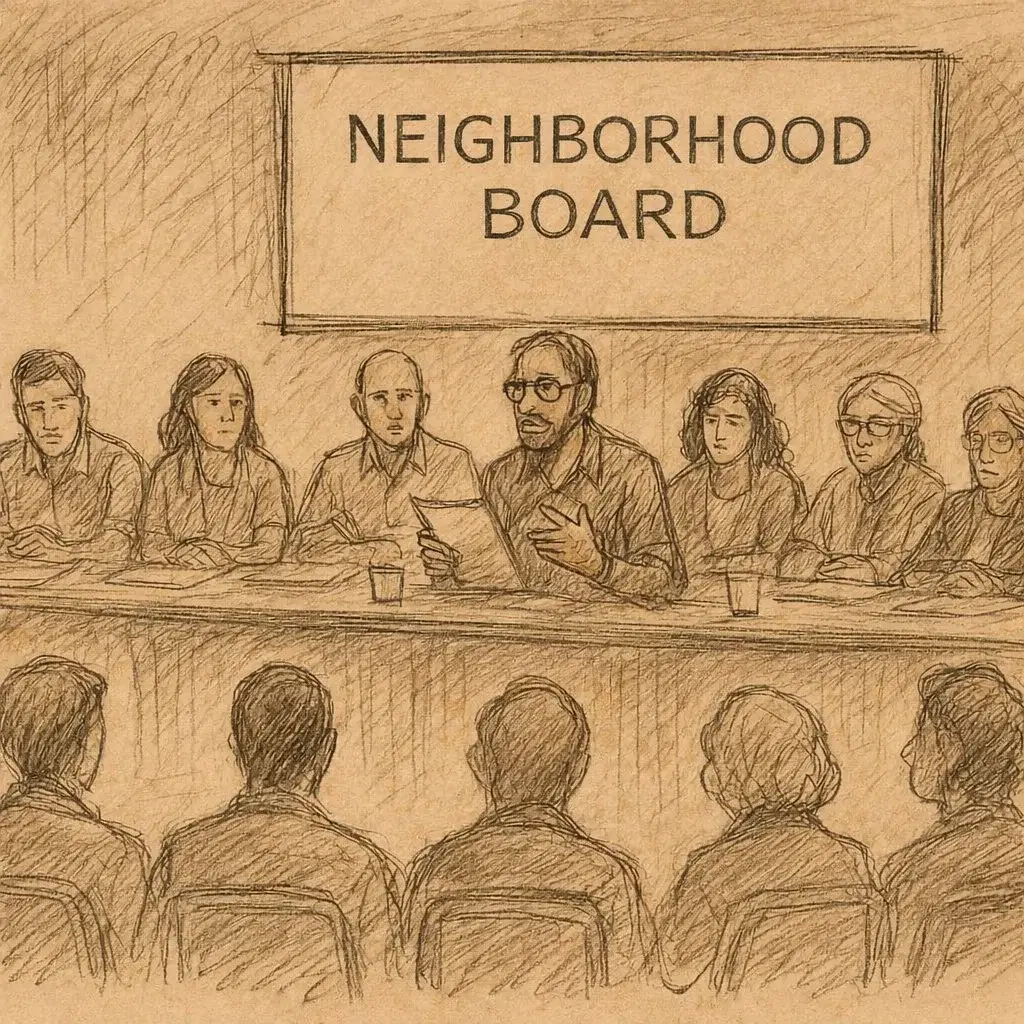
No 36 Nānākuli-Māʻili Neighborhood Board Regular Meeting August 2026
Listen to this article:
36 Nanakuli-Maili Neighborhood Board Meeting – August 19, 2026
Fire Response and July 28 Arson Concerns
Residents thanked the Honolulu Fire Department and other first responders for their work during three fires on July 28 near Māʻili, Mākaha, Keaʻau, and Keawaʻula/Yokohama. Salvador reported that one fire began near Farrington Highway just beyond Mākaha Beach and moved toward the mountains, while another burned nearly two acres of a neighbor’s property at Keaʻau and a third occurred near Keawaʻula. He characterized the incidents as intentionally set fires rather than naturally occurring wildfires and said a person on a moped had reportedly been seen setting one of them. He asked whether anyone had been arrested. The HFD representative explained that the incidents fell within Waiʻanae Station 26’s area and promised to forward the inquiry to the department’s Community Relations Office because no arrest information was immediately available. Kalei Salcedo also thanked firefighters for responding during a period of heavy demand and emphasized that firefighter safety must remain the highest priority.
First-Responder Assistance and Moment of Silence
Board Member Jermaine Myers expressed gratitude for first responders who assisted her mother after an in-home fall shortly before her death on July 16. Her mother had chosen home hospice, and responders lifted her from the floor and placed her in bed while respecting her wish to remain at home with her family. Myers said their assistance preserved her mother’s dignity at the end of her life. The board recognized Myers’ continued community service while caring for her mother and observed a moment of silence in her mother’s memory.
Public Assistance at Traffic Collisions
The board asked HFD how residents should respond when they encounter head-on collisions or other serious crashes. Fire personnel advised bystanders to prioritize their own safety, avoid entering dangerous areas, and give responders enough room to assess patients and conduct extrications. Although witnesses and relatives may be highly emotional, maintaining a clear perimeter helps firefighters and emergency medical personnel work safely and prevents additional injuries or conflict at the scene.
July Police Statistics
District 8 Community Policing Corporal Corey Makino, joined online by Sergeant Fumi Moroka, presented Honolulu Police Department statistics for July. District 8 recorded 22 motor vehicle thefts, one of which occurred in the Nānākuli-Māʻili area; 11 burglaries, with none locally; 109 thefts, including 18 locally; and 20 unauthorized entries into motor vehicles, including three locally. Officers issued seven speeding citations, 219 moving-violation citations, and 44 parking citations, with 414 total citations issued. District 8 received 8,758 calls for service, of which 1,422 came from the Nānākuli-Māʻili area.
Police Support During the July 28 Fires
A resident asked HPD to convey appreciation to Major Gail Beckley for being present during the July 28 fires and overseeing evacuations and road closures. Police reportedly evacuated residents on the mountainside, cleared or restricted access to coastal areas and encampments, and dealt with people who were reluctant to leave. HPD agreed to pass the message to Major Beckley.
Abandoned Vehicles and Illegal Dumping
Board Member Cowles described a damaged pickup truck filled with rubbish that was repeatedly left on St. John’s Road. Police initially had the vehicle towed, but it returned less than a week later after someone associated with the owner reportedly paid a tow company to place it back on the street. An officer traced the vehicle and warned that additional citations for dumping, littering, and abandonment could make it increasingly difficult for the owner to reclaim it if it were towed again. The vehicle was removed within approximately two hours. HPD advised residents facing similar circumstances to call police rather than confronting the responsible person, allowing officers to identify the owner, arrange towing, and issue applicable citations. Board Member De La Cruz separately thanked HPD for its sensitivity in handling an ongoing torture and abuse case.
Clearing Behind Sack N Save
Board Member Myers asked about a planned enforcement action behind Sack N Save, where people were living along a dirt path on land needed for the Self-Help Housing Corporation of Hawaiʻi’s Nani I Ke Ola development. Sergeant Moroka said HPD would work with the Department of Facility Maintenance to clear the path so construction could proceed. Notices were scheduled to be issued on August 25, with the clearing planned for August 26. HPD explained that shelter assistance is offered during stored-property ordinance cleanups, including referral and free transportation to HONU, where clients may receive priority access to housing. Participation is voluntary, however, and officers said many people decline assistance. The Blue Ocean Safety Department was called next on the agenda, but no report was given.
At-Large Board Vacancy Filled
The board considered candidates for its one at-large vacancy. Melissa LeDuc was nominated; another proposed nominee was not online, and Antipua of Haleakalā, Nānākuli, declined nomination. LeDuc, who goes by Mel, said she was new to Māʻili but had a long record of service. She is an Hawaiʻi Pacific University graduate, served 20 years in the Air Force, worked in higher education, and is now a science specialist with the State Department of Education. She expressed a desire to apply her experience and commitment to keiki and community service. The board elected her without opposition, administered the oath of office, and restored the board to its full nine-member complement.
Rural Health, Telehealth, and Military Academy Applications
A representative from Congresswoman Jill Tokuda’s office reported that Tokuda co-introduced bipartisan legislation addressing rural health gaps. The Rural Hospital Cybersecurity Enhancement proposal would help train rural hospital personnel in cybersecurity safety, while the RESCUE Act was described as supporting access to urgent and emergency services, including for people far from hospitals and clinics. Tokuda also co-led a bipartisan letter signed by more than 60 members of Congress urging the Centers for Medicare and Medicaid Services to improve reimbursement rates for telehealth visits. Applications were also open for students seeking congressional nominations to the military service academies, with an October 18 deadline; the office had contacted schools across the Second Congressional District.
Pā‘akea Road Drainage and Emergency Access
Tokuda’s office reported that it had sought information from the Navy and State Department of Transportation concerning the Pā‘akea Road drainage project. According to the state transportation director, funding had been secured and federal money was not currently needed, although Tokuda remained willing to pursue federal support if that changed. A resident argued that the entire 96792 area urgently needs reliable emergency access because fires, crashes, floods, and other incidents on Farrington Highway can isolate the coast. The resident called for substantially greater investment in roadway safety and compared the need with millions of dollars directed to housing and nonprofit programs. The board asked Tokuda’s office to provide a ten-year record of federal allocations connected to Pā‘akea Road and local flooding so residents could understand what funding had been provided and how it was distributed.
Army Hiring Fairs and Training Advisories
Lieutenant Colonel MacArthur, representing U.S. Army Garrison Hawaiʻi, announced public hiring fairs on August 24 at the Helemano Military Reservation training room and September 15 at the reservation gym, both from 8:30 a.m. to 2 p.m. Employers expected to make job offers and provisional hires at the events, and advance applicants were directed to the MWR employment website. The Army also advised residents to expect East Range small-arms blank fire and jungle and ranger training from August 17 through 20, along with daytime aviation training from August 17 through 20 and August 24 through 28. Artillery, mortar, and demolition training at Schofield Barracks was scheduled from August 14 through 31 during both daytime and nighttime hours, including late evenings and early mornings. Concerns could be reported at 808-766-7778. The 25th Infantry Division’s annual Joint Pacific Multinational Readiness Center exercise was planned for October and November 2026, bringing increased traffic and noise. A resident asked whether the Army was connected to large rigs offshore, but no substantive answer was provided. Cowles also asked that the incoming commanding general preserve the West Side engagement established under Major General Bartholomew; MacArthur said the current commander had served in Hawaiʻi for several years and that continuity was expected.
Nānākuli Homecoming Parade
Nānākuli High and Intermediate School student government representatives Promise and Vivian announced that the 2026 homecoming theme would be “Guardians of the Decades,” with grade levels representing eras from the 1950s through the 2000s. The parade was scheduled for Wednesday, September 30, from 4 to 5 p.m., beginning on First Road and traveling along Huʻa Avenue and Nānākuli Avenue to the school. Schools and community organizations wishing to participate were asked to contact Robin Kitsu at the Department of Education. A pep rally and the homecoming football game against Radford were scheduled for Friday, October 2. The board unanimously approved a motion supporting the parade so the request could be submitted to the Department of Transportation for road closures. Board participation in the annual parade was also discussed, although no separate final vote was recorded in the transcript.
Neighborhood Commission Guidance
Neighborhood Commission Vice Chair Larry Varee, a retired Navy veteran and longtime Pearl City Neighborhood Board chair, described the commission’s role in setting policy and overseeing the 33-board neighborhood system. He emphasized respectful, cohesive board conduct; clear communication through the chair; prompt referral of issues to committees; and written resolutions that can be elevated to city, state, or federal officials. He recommended that boards develop ranked annual legislative priorities and use resolutions, white papers, or issue papers to document problems and proposed solutions. Varee said the Neighborhood Plan undergoes review roughly every ten years and that boards with nine or 11 members often function more efficiently and maintain quorum more reliably than very large boards. He also encouraged the Nānākuli-Māʻili and Makakilo boards to create a memorandum of agreement or understanding for jointly addressing Ko Olina and other overlapping development matters without altering election boundaries.
Board Conduct, Complaints, and Conflicts of Interest
Residents raised concerns about board members attacking chairs after meetings, disrespect toward officials and first responders, the use of Hawaiian without English interpretation, and possible conflicts involving nonprofit affiliations or personal financial interests. Varee said disruptive residents may be removed and microphones may be turned off when speakers refuse to follow the chair’s direction, while misconduct by board members should be monitored and addressed early. He confirmed that members must disclose and recuse themselves when a conflict of interest is identified. Board members suggested requiring incoming members to file written disclosures listing businesses, paid relationships, nonprofit positions, city employment, and development interests. Varee said this was a useful recommendation for the Neighborhood Plan review. He also reported that the commission had spent six months revising its complaint process, reducing the initial stage from what could take three months to a target of ten days and placing more emphasis on early mediation rather than allowing complaints to be used for intimidation or political retaliation.
Youth Participation and Special Board Meetings
Board Member Myers proposed reserving a board seat for a 17-year-old, noting that the Waiʻanae Coast has 11 schools—nine public and two charter—with approximately 8,000 students, including about 5,000 Native Hawaiian students. Varee explained that boards may currently seat two high school students as nonvoting delegates and expressed support for expanding youth involvement and mentorship. Myers said the Education Committee would prepare a resolution. The board also asked about convening special meetings to develop legislative priorities, Charter Commission proposals, and sustainability plans. Varee explained that the Sunshine Law still requires agendas, reports, and public access, but offered to help the board structure its work efficiently by circulating draft resolutions and likely questions in advance.
Alternative Education and School Resource Officers
Senator Samantha DeCorte reported that Pāpaʻ Hanaʻo Kaiona had relocated from Kamehameha Schools’ Kalanihoʻokaha site to a temporary home at Kahumana Farms. The planned purchase of the former Kaiser building on St. John’s Road, intended as the program’s permanent location, was expected to close by the end of August. DeCorte described the program as an alternative learning option for at-risk youth and compared it with the Storefront School in Wahiawā, where she earned her diploma. She also credited a community concern raised in 2023 and subsequent neighborhood board and governmental resolutions with helping establish school resource officers. Nānākuli High School and Waiʻanae High School each now have three officers, making the 96792 area the only part of the state described as having resource officers at both of its high schools.
Teacher Pay and Accountability
DeCorte reported that legislation authorizing negotiations over a teacher step increase had passed after approximately ten years of unsuccessful efforts. The law does not itself provide an automatic raise; the bargaining unit must negotiate the amounts and return through the legislative budget process. She clarified that the potential increase applies statewide rather than only to hard-to-staff schools. Several residents and board members argued that raises should be tied to student outcomes, academic improvement, or merit, while others asked whether her office had evaluated the advantages and disadvantages of merit-based incentives. DeCorte said the current measure is not merit-based and suggested that the Board of Education and Hawaiʻi Teacher Standards Board should be included before future proposals reach the Senate. She attributed many school-performance problems to higher-level Department of Education leadership and questioned whether administrators earning salaries in the range of $200,000 to $400,000 were being held sufficiently accountable.
Wildfire Mitigation Funding
The state awarded $1.8 million to the Department of Land and Natural Resources’ forestry division for wildfire mitigation, of which $298,828 went to Mālama Learning Center. DeCorte said the local funds would be used to reduce fuel loads, improve emergency access, and construct or maintain firebreaks. She emphasized that Mālama Learning Center already has an established record of field work and wildfire planning along the coast.
Youth Identification and Commercial Driver Licensing
DeCorte reviewed Act 22, formerly HB 1696, which lowered the minimum age for obtaining a commercial driver’s license from 19 to 18 while increasing training, regulatory, and qualification requirements. Board Member Cowles, a retired truck driver and licensed CDL instructor, strongly opposed putting 18-year-olds behind the wheel of vehicles weighing up to 80,000 pounds, citing a fatal crash he had witnessed involving a young driver. DeCorte responded that reckless driving occurs at many ages and said stronger requirements were intended to address the risks. She also discussed Act 132, formerly HB 1667, which will allow 16-year-olds to obtain state identification without parental consent beginning in 2027. She cited approximately 600 documented houseless youth in the most recent count and said the law was intended to prevent lack of parental availability from blocking education, employment, field trips, or services. She later clarified that the law concerns state identification cards, not learner’s permits or driving privileges.
OHA Funding and Hawaiian Homes Successorship
Under Act 32, formerly SB 903, the state made a one-time $55 million transfer to the Office of Hawaiian Affairs to address gaps caused partly by reduced federal support. The law limits the money to critical health, education, economic development, and community programs rather than development projects. It also requires an independent third-party review of state land inventories and revenues to calculate OHA’s constitutional 20 percent share. In response to an online question, DeCorte said lawmakers intentionally restricted how OHA could use the funding and favored education and workforce investments over proposals such as purchasing a media station. She also discussed HB 2309, which would broaden the pool of qualified successors to Hawaiian Home Lands interests beyond spouses, children, grandchildren, and other close relatives to include nieces, nephews, and other qualified family members. Because the Hawaiian Homes Commission Act is federal law, congressional approval remains necessary even after state action.
Mauna Kea and Landfill Legislation
DeCorte began an update regarding the Mauna Kea Stewardship Authority, but the discussion was curtailed by the presentation time limit before details were completed. She then addressed the mayor’s plan to seek repeal of Act 73 in the 2027 legislative session to facilitate a new landfill outside the West Side. DeCorte opposed a full repeal because it could remove protections that presently limit additional landfill locations in Waiʻanae. Instead, she favored a narrowly written special exemption allowing consideration of a designated Kapaʻa Quarry site, where proximity restrictions involving Le Jardin Academy were described as the principal obstacle. She argued that a site-specific exemption would narrow the legislative dispute rather than reopening the West Side to more landfill proposals. Some residents opposed any reopening of Act 73 and warned that nonprofit organizations could benefit financially while nearby communities continued to bear health and environmental burdens. Myers supported examination of Kapaʻa Quarry and said waste responsibility should not repeatedly be shifted to Waiʻanae simply because a majority of Oʻahu senators oppose facilities in their own districts.
Zablan Beach and Park Enforcement
Ramona Olivera of the Nānākuli homestead reported persistent violations around Zablan Beach and the nearby cul-de-sac. Although signs state that the park is closed from 10 p.m. to 5 a.m., people reportedly camp there on weekends and around holidays, hold loud late-night parties, discharge fireworks, and park in prohibited areas. Large gatherings can block residents’ access, and residents who ask visitors to move vehicles have sometimes faced aggressive confrontations. Olivera said HPD is frequently called but may have only one officer available to deal with dozens of people. Enforcement before the Fourth of July temporarily removed tents, but camping resumed the following day. She said the area’s omission from nighttime beach-closure enforcement has left surrounding residents feeling ignored, especially since the pandemic. The board referred the concern to the Parks and Recreation Committee.
Piliokahi Avenue Name Dispute
Members of the Holu family again opposed an HDOT proposal to change the name of Piliokahi Avenue, where four multigenerational families live. They said the issue had first arisen approximately four years earlier and had returned despite prior neighborhood board action and a more recent resolution. A July 22 HDOT letter was reportedly not mailed until July 26 and reached residents two days later. The family disputed the department’s suggestion that “Piliokahe” might be historically correct, arguing that the claim was described only as possible or potential and was not supported by established facts. They warned that changing a nearly century-old address would force elderly residents and relatives to update identification, leases, financial records, and other documents. They also questioned whether the proposal was being confused with existing Piliokahi-named streets in ʻEwa. The family asked the board, legislators, and council office to act collectively and guide them toward a permanent resolution. The concern was referred to the Hawaiian Affairs Committee.
Offshore Rigs and Undersea Cable Questions
Kalei Salcedo asked for an explanation of two large rigs offshore and whether they were associated with a privately operated undersea cable project. She argued that residents should have been informed in advance about any major offshore work and should know which company and government agencies authorized it. The question was also raised during the Army report, but no agency provided an answer during the meeting.
State Transportation Projects
HDOT Oʻahu District Engineer Mel Chung provided five project updates. A work order for an interim left-turn signal at Farrington Highway and Leihoku Street had been completed, with construction awaiting execution of an electrical contractor agreement. Replacement of the Farrington Highway bridge over ʻŌlehāwa Stream remained on track for bid advertisement in December 2026 or January 2027. Widening of Farrington Highway between Mohidini Street and Nānākuli Avenue was expected to go to bid in late August or early September, with work adding left-turn capacity at several intersections and improving the mauka sidewalk; construction was expected to begin in early 2027 and last about two years. Traffic-signal modernization projects at Farrington Highway and Piliokahi Street and at Farrington Highway and Haleakalā Avenue were in design, with bid advertisements anticipated in 2027 and 2028. A separate islandwide controller-replacement project would begin in Mākaha and move toward town, with seven Nānākuli-Māʻili intersections receiving additional sensors and adaptive traffic technology beginning as early as September 2026.
Transportation Safety, Cameras, and Street Names
Residents and board members asked HDOT for a written, chronological schedule showing which West Side roads would be repaired and requested priority attention to the unstable Black Rock hill area, especially given heavy-truck traffic, storms, previous water-main failures, and the risk of losing the coast’s only major access route. The board asked HDOT to identify who requested changing Piliokahi to Piliokahe and Haleakalā to Heleakalā, whether Representative Darius Kila, the Hawaiian Homes Commission, or another official supported the changes, and why beneficiaries named in Hawaiian Home Lands leases were not consulted. The chair also asked why cameras had been installed along Farrington Highway facing mauka toward Hawaiian Home Lands residences, who receives the footage, and why residents were not notified. Chung was invited to the Transportation Committee’s first-Thursday meetings and asked to return with written answers. A resident again requested a mayoral town hall for the entire 96792 area.
Youth Climate Action Fund and Storm Recovery
Mayor Rick Blangiardi’s representative, Tricia Dang of the Office of Climate Change, Sustainability and Resiliency, announced the Youth Climate Action Fund. Residents ages 15 through 24 may apply for grants of up to $5,000 for projects involving art, communication, cultural activity, sustainability, gardening, planting, or related climate work. Projects must be associated with a school or legally recognized nonprofit, and applications close September 7. Dang also directed residents to OneOahu.org for storm-damage reporting, FEMA-related documentation, and debris-disposal assistance after the recent hurricane or tropical storm. Extra curbside debris pickups were scheduled for August 22 and August 29. The city’s Oʻahu Hazard Explorer allows residents to search addresses for evacuation zones, wildfire risk, and other hazard information.
Mayor’s Responses to Prior Community Questions
The mayor’s office said the mayor and administration visit communities when significant, specific issues require attention and encouraged residents to use neighborhood boards, 311, the mayor’s radio program, and public events. Board members nevertheless requested a dedicated Waiʻanae Coast town hall before the end of 2026. The Department of Environmental Services confirmed that Makaʻīwa Hills was not being pursued as a landfill site. The city said an ʻEwa plantation-home restoration program resulted from unique city ownership arrangements dating to the 1990s and would not be expanded to Nānākuli. A complaint about overgrown vegetation on ʻAkowai Road could not be enforced under the city’s overgrowth ordinance because the affected land is agriculturally zoned; an inspection occurred June 23. Regarding nighttime noise near St. John’s Road, Farrington Highway, and Māʻili Beach Park, officials said checks had not confirmed the reported noise but that monitoring would continue as caseloads allowed.
Sweep Planning and Refuse-Center Closure
The board asked the mayor’s office for the date, number of affected residents, service plan, and likely relocation impacts associated with the August clearing behind Sack N Save. Members also requested the origin and history of the name “Zablan” for the Nānākuli beach park. Another question concerned whether the Waiʻanae refuse convenience center had closed on the Monday immediately following the storm. Residents had truckloads of storm and community-cleanup debris and wanted to know why a disposal site would be unavailable precisely when demand was highest. Dang agreed to seek answers and provide the board with a written copy of her report and resource links.
R3 Homeless Outreach and Storm Food Distribution
Stephanie Nojima, representing Councilmember Andria Tupola, reported that the ninth cohort of the Revive, Reconnect and Restore program began August 10 and would operate Mondays and Wednesdays through November. Outreach workers visit guardrail encampments and invite people to Paradise Chapel for assistance obtaining identification, Social Security cards, employment, housing, and other services. A Monday session was canceled because of the storm, but Tupola’s office, Representative Kila, the Salvation Army, and ʻElepaio instead organized food assistance for approximately 150 families affected by power outages. The board asked Tupola’s office to provide details on the Sack N Save sweep and resulting outreach strategy.
Kauhale and Waiʻanae Boat Harbor Safety
Myers reiterated the board’s opposition to kauhale-style housing and raised sanitation and safety concerns about shared toilets and showers, particularly for children and residents vulnerable to infections such as MRSA if facilities are not properly cleaned. She also said the Waiʻanae Boat Harbor encampment was moving mauka into an unlit area and asked how children or women could safely reach shared restrooms at night. Tupola’s representative promised to obtain information about lighting, sanitation, health protections, and the planned sweep. Cowles additionally asked for help resetting the timer at Māʻili-Nānākuli Community Park because field lights remained on throughout the night despite a 10 p.m. shutdown time.
Board of Water Supply Events and Main Break
Board of Water Supply representative Kathleen Pahinui announced an “Imagine a Day Without Water” event at the Ark of Safety at Waiʻanae Mall. More than 30 government agencies, nonprofit groups, and state and city organizations were expected to participate, along with family activities and food trucks. She also reported a four-inch water-main break on July 15 at 87-920 Hoʻokele Place.
Kaukama Road Fire Hydrants and Easements
Pahinui updated the board on the Kaukama-area fire-hydrant project. A design contract was in procurement and was expected to be executed around September, but design and topographical surveying cannot begin until the Board of Water Supply obtains easements from the many private owners associated with the road. More than 60 easement grants may be required. As of the late-July update, three had been mailed or were in the mailing process by certified mail with return receipts. The agency was preparing documents for owners it could identify and would ask the neighborhood board for help locating grantors when mail was returned or ownership information was incomplete. The chair requested a sample of the easement letter to track the process and help with outreach.
Water-System Resilience
Following the recent storm and islandwide power failures, Pahinui explained that water reservoirs generally hold approximately 24 hours of capacity when electrical pumps stop. The system currently has limited generator support in the Waiʻanae area, while Board of Water Supply Manager and Chief Engineer Ernie Lau is pursuing approximately ten additional portable generators and longer-term resilience improvements. Because diesel fuel itself may be difficult to deliver when Farrington Highway is blocked, the agency is also examining alternatives and redundancy. One proposal would rehabilitate an older water line along Farrington Highway through Nānākuli so service could continue if the primary line failed. Residents emphasized that nearly 60,000 people live in the 96792 area, including many kūpuna, and asked that West Side pumps and backup power receive priority before additional storms.
Black Rock Water-Main and Foundation Concerns
Board members asked which agency should study the ground and roadway beneath Black Rock, where a previous water-main break caused a sinkhole and may have weakened Farrington Highway. A resident said water from the break had also entered lower-lying properties and may have shifted the foundations of several Hawaiian Home Lands houses, leaving families uncertain about who should pay for repairs. Pahinui agreed to investigate responsibility for a structural or geotechnical assessment and to coordinate information before the September 2 transportation town hall with Representative Kila and Councilmember Tupola.
Water Meter Relocation and Water Reuse
Cowles said several St. John’s Road neighbors had received letters indicating that water meters would be moved from the corners of their properties to locations in front of their homes. His meter sits close to the roadway and is vulnerable to large vehicles, so he asked whether his property would be included. Pahinui agreed to investigate. Board Member Ayo discussed remaining on a cesspool or installing a septic treatment and leach-field system that could reuse treated household water for landscaping on Hawaiian Home Lands, along with collecting roof runoff in rain barrels. Pahinui said sewer policy was outside the Board of Water Supply’s authority but supported water conservation and noted that the Honouliuli recycling facility can produce up to 12 million gallons of recycled water per day.
July Resolutions Confirmed
The board reviewed resolutions unanimously adopted at its July 22 special meeting. These opposed continued operation and extension of the Waimānalo Gulch Sanitary Landfill special-use permit and called for environmental justice, stronger monitoring, public accountability, and equitable waste management. Another opposed Public Infrastructure Map Amendment 2026-PIM-2 and further landfill expansion into Makaʻīwa Hills. The board also recognized Kuleana Coral Restoration for surpassing 10,000 corals planted and supported continued community-based reef restoration. A fourth resolution supported implementation of the Lualualei flood-mitigation studies to protect homes, farms, emergency access, public safety, and community resilience. Approval of the July special-meeting minutes was postponed until the written minutes were available.
Empty-Home Tax Removed
A proposed resolution supporting an empty-home tax in Honolulu was withdrawn. A board member said that, after following the proposal at the City Council and state levels, the board should not endorse it. With no further discussion, the item was removed from consideration.
Māʻili District Park Rules and Lighting
The board unanimously approved a resolution asking the City and County of Honolulu to install clear signage at all entrances, exits, restrooms, basketball courts, and fence lines at Māʻili District Park. The signs would identify park hours as 5 a.m. to 10 p.m. and prohibit all-terrain vehicles, e-bikes, mopeds, dirt bikes, alcohol, loud music, and unauthorized community parties in fenced fields and other restricted park areas. The resolution also asks the city to shut off or otherwise properly control field lighting at the 10 p.m. closing time.
Legislative Priorities Special Meeting
The board unanimously scheduled a special meeting for Monday, September 21, 2026, at 6 p.m. at Nānākuli Public Library to establish priorities for the 2027 legislative session. Committee chairs were directed to use upcoming meetings to develop proposed bills, budget requests, and resolutions. At least five members must attend to establish quorum, and absent members were asked to notify the chair in advance. Senator DeCorte and other elected officials would be invited to participate.
Committee Meeting Schedule
The Transportation and Housing and Zoning committees planned a joint meeting for September 3 at 5:30 p.m. at Nānākuli Public Library, followed by the Education Committee at 7:30 p.m. Members were asked to bring legislative and budget proposals. Hawaiian Affairs was scheduled to meet the following evening at 6 p.m., followed by Land and Water at 7 p.m., both at the library. Parks and Recreation and Public Health and Safety discussed a joint meeting at the Aliʻi Mākaha Community Center at 89-200 Lepeka Avenue, but the date needed adjustment because of board-member scheduling and quorum concerns.
Board Member Community Attendance
Members reported July participation in Mālama Mākua activities at Leeward Community College’s Waiʻanae Moku campus, a Kolekole Pass drive-through, the Nānākuli High and Intermediate School PTSA, the Waiʻanae Coast Neighborhood Board meeting, a July 22 Nānākuli-Māʻili special meeting, a disability-related event, an Office of Hawaiian Affairs Board of Trustees meeting, and a July 30 Kuleana Coral event with Mālama Learning Center. The chair also attended the July 30 school PTSA meeting.
Community Announcements and Upcoming Meetings
The Department of Environmental Services’ Oʻahu Clean Water Survey remained open through August 23. Registration was available for the 2026–2027 Waiʻanae Coast National Board Candidate Cohort for teachers seeking National Board certification. Pālehua restoration activities in the Waiʻanae Mountain Range were announced for August 15 and 16 from 9 a.m. to 1 p.m. A “Meet the Chief” Waiʻanae talk-story session with the new HPD chief was scheduled for August 26 from 6 to 8 p.m. at the Waiʻanae Coast Comprehensive Health Center. Representative Darius Kila and Councilmember Andria Tupola planned a transportation town hall with transportation officials on Wednesday, September 2, from 6 to 8 p.m. at Nānākuli Public Library. The board’s next regular meeting was scheduled for Tuesday, September 15, 2026, at 7 p.m., both at the library and online through Webex.