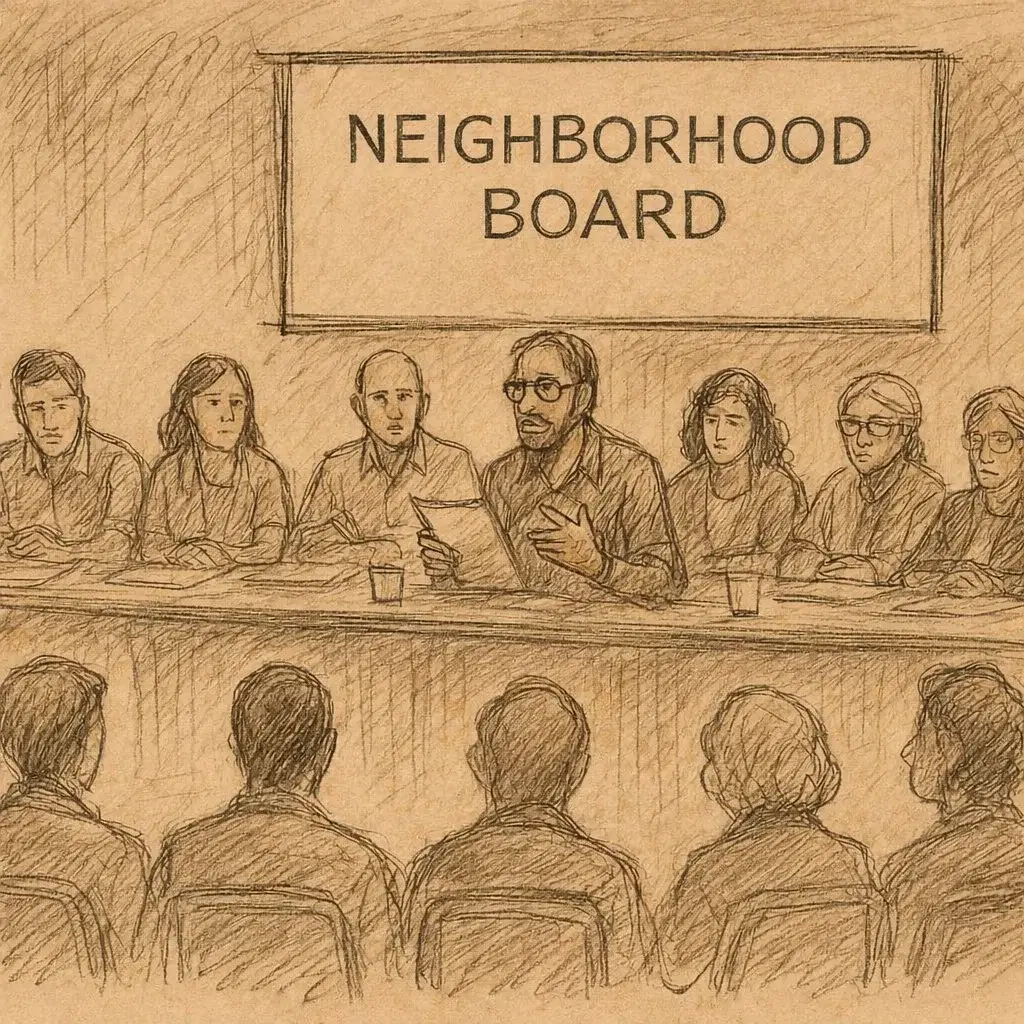
No 07 Mānoa Neighborhood Board Regular Meeting September 2026
Listen to this article:
7 Manoa Neighborhood Board Meeting – September 3, 2026
Call to Order and Quorum
Chair David Nogachi called the meeting to order at 6:30 p.m.; although the meeting title identifies September 3, the transcript records the chair announcing September 2, 2026. Roll call established a quorum with 10 members initially present, allowing the board to conduct official business.
Fire Department Report and Lithium-Ion Battery Safety
Honolulu Fire Department representative Chris Edwards of Engine 22 reported Mānoa response statistics for August: seven activated alarms where no fire was found, 47 medical incidents, and one motor-vehicle collision. The department’s September safety message focused on the growing number of fires involving lithium-ion batteries used in smartphones, laptops, e-bikes, e-scooters, toys, and automobiles. Residents were advised to use only the charger and cord supplied with a device or approved by its manufacturer, avoid inexpensive or unapproved chargers, charge devices on hard and flat surfaces rather than beds or upholstered furniture, and unplug devices once fully charged. The HFD representatives left the meeting after being dispatched to a call.
Police Statistics, Hurricane Readiness, and Assault Reporting
Honolulu Police Department Lieutenant Miura reported seven motor-vehicle thefts, two burglaries, seven thefts, and two unauthorized entries into motor vehicles during the prior month, along with 6,251 calls for service. His community safety message concerned continued Pacific hurricane threats and the hurricane season lasting through November. Residents were urged to maintain a 14-day emergency kit, identify shutoffs for water, electricity, and gas, arrange evacuation plans with relatives or friends, and obtain items such as batteries, battery packs, and generators when possible.
Member Fox described an incident in which a woman reportedly verbally confronted one person and then assaulted an unrelated elderly woman on the street. According to Fox, police declined to take a report because the reporting party did not know the alleged assailant’s condominium unit number. Lieutenant Miura said he could not explain the response without knowing the full circumstances, but confirmed that a victim should be able to make an assault report regardless of whether the suspect’s precise residence is known. Fox said the matter would be pursued at the police station.
Timekeeper and Public Speaking Rules
Member Fukamoto voluntarily relinquished the timekeeper role, and Member Fox self-nominated and was appointed without opposition. The board reaffirmed that questions and comments are generally limited to two minutes, while invited agenda presentations may be given longer periods such as five, 10, or 15 minutes. Member Armstrong asked that speakers not be allowed repeated turns until everyone wishing to speak has had an opportunity, noting that repeated comments at recent meetings contributed to the board failing to reach roughly one-third to one-half of its agenda. Community speakers are requested to identify themselves by name but are not required to disclose where they live. Member Watson noted that the agenda still stated a one-minute limit; staff agreed to correct future agendas to reflect the board’s previously adopted two-minute rule.
August 13 Special Meeting on Mānoa Stream Clearing
Chair Nogachi summarized the board’s August 13, 2026 special meeting, which was held at members’ request after concerns arose about the Mānoa Stream clearing project. The proposed letter considered at that meeting would have asked the state and city not to place a culvert or concrete in the stream and to protect fish during the work. State Department of Transportation Director Ed Sniffen and City Department of Facility Maintenance Director and Chief Engineer Gene Albano attended and stated that neither agency intended to install concrete or a culvert. They also explained that stream-clearing personnel were coordinating with community members to handle fish safely. Because those assurances addressed the letter’s principal concerns, the proposed language was viewed as largely moot.
The roughly 90-minute special meeting also covered broader subjects, including flood safety, the March 2026 flooding at Noelani Elementary School, possible flood-mitigation measures, the responsibilities of private streamside property owners, drainage and flooding at Mānoa Valley District Park, and whether the state had conducted sufficient public outreach. Thirteen members participated in the final vote: 10 supported a motion not to send the critical or conditional letter, two opposed it, and one abstained, so the motion passed. Member Russell said the special meeting was useful because agency leaders could explain the project and answer questions directly.
Member Sofio clarified the record concerning flooding in the Mānoa Valley District Park parking lot. She said the drain had already overflowed because it was chronically clogged and inadequately maintained, filling the parking lot approximately 20 minutes before the first flash-flood warning. The city’s dumping and spreading of rock near the drain occurred after the flooding and therefore was not its original cause.
Thank-You Letter to Stream Project Officials
Members Armstrong, Watson, Fukamoto, and Koff supported thanking Directors Sniffen and Albano for attending the special meeting and providing information. Armstrong described such correspondence as a way to maintain working relationships with government officials. Member Fox expressed reservations because she believed the agencies had begun the special meeting confrontationally and had threatened to withdraw their work if the board approved the proposed letter. Nevertheless, no member formally objected to the chair proceeding. Chair Nogachi said he would draft and send a thank-you letter within approximately five to 10 days, or within the following week or two, and share it with board members. He also stated that information provided at the special meeting had satisfactorily addressed the project concerns raised previously.
Approval of Special-Meeting Minutes
The board considered the five-and-a-half-page minutes from the August 13 special meeting. A proposed amendment reflecting Member Sofio’s drainage clarification did not receive a second, so the minutes were put to a roll-call vote as written. The special-meeting minutes were approved.
Be Ready Mānoa Preparedness Fair
Be Ready Mānoa announced its annual Disaster Preparedness Fair for Saturday, September 19, from 10 a.m. to 2 p.m. in the Mānoa Marketplace courtyard where the farmers market is usually held. The free public event was expected to include city, state, and nonprofit organizations with emergency-preparedness expertise. Sponsors and partners included Bank of Hawaii, Starbucks Mānoa, Mānoa Marketplace, Mānoa Valley Church, and Roosevelt High School Junior ROTC. Additional information was made available through signs, email notices, and bereadymanoa.org.
Emergency Water Distribution
Be Ready Mānoa reported discussions with Board of Water Supply Chief Engineer Ernie Lau about reviving a previously developed emergency water-distribution plan. Mānoa is one of the few neighborhoods, and possibly the only one, with some gravity-fed water lines. The plan identified strategic locations where the Board of Water Supply could connect manifolds to fire hydrants and distribute water during a major service interruption. Water obtained through this emergency arrangement would need to be treated before drinking, including by boiling because it might not be chlorinated. Resident Alan Lau noted that households unable to boil water during power or gas outages could consider commercially available backpacking filters, often costing about $40, or properly measured disinfectants such as bleach, while following safe treatment instructions.
Mānoa Coconut Wireless and Flood Notifications
Be Ready Mānoa continues to recruit residents for the “Mānoa Coconut Wireless,” a neighborhood network using walkie-talkies supplied through AARP. Participants receive the radios free if they learn to operate them and join scheduled practices. More than 120 residents throughout the valley are participating. The system was used while Tropical Cyclone Lala passed Oʻahu, enabling residents near Mānoa Stream to report water levels and whether the stream appeared likely to overflow; it ultimately remained within its banks.
Members asked how information could reach schools, the Mānoa Public Library, and residents outside the radio network. Be Ready Mānoa said principals, librarians, and other key streamside contacts could be invited to participate, and a telephone tree could connect people along the stream with institutional contacts. Updates might also be posted on the organization’s website while power and internet service remain available. Chair Nogachi recalled that National Weather Service personnel reportedly knew Mānoa Stream was flooding during an earlier incident but did not notify Noelani Elementary School staff, reinforcing calls for a direct local notification system.
University Laboratory School Agreement
The board reviewed a University of Hawaiʻi announcement dated July 17, 2026 concerning the University Laboratory School. UH and ULS finalized a facility-use and occupancy agreement with an initial three-year term ending June 30, 2029, and a goal of extending it for another five years through June 30, 2034. UH will continue to provide the land and facilities without standard rental charges, while ULS will begin paying direct operating costs that UH formerly subsidized, including utilities, internet service, and custodial services. The agreement provides near-term stability for the school while shifting more of its recurring operating expenses to ULS.
Lowry Avenue Pedestrian Safety Resolution
The board discussed, but did not vote on, a draft resolution addressing the approximately 0.3-mile, or roughly 482-meter, section of Lowry Avenue between Mānoa Road and East Mānoa Road that lacks sidewalks. The draft described Lowry as the principal east-west connector through the valley and noted that children traveling to Mānoa and Noelani elementary schools, park and marketplace users, bus riders, runners, families with strollers, older adults, and people with mobility limitations regularly use the corridor. It cited the city’s Vision Zero Plan adopted in January 2025, the Oʻahu Pedestrian Plan adopted in December 2022, the Complete Streets Program enacted in 2012, and Americans with Disabilities Act requirements dating from the early 1990s. The draft also noted that 19 percent of Mānoa residents were age 65 or older in the 2024 primary urban core demographic profile.
The resolution acknowledged longstanding concerns about neighborhood character, shade trees, and a petition signed by approximately 300 residents in 1928, before thousands of vehicles used Lowry daily. It cited Metcalf Street’s painted pedestrian pathways and no-parking signs as a possible compromise. Its operative language asked the City and County of Honolulu to fund and immediately address pedestrian risk and ADA compliance through the means deemed most effective by city engineers in consultation with the community. Copies would be sent to the mayor, city managing director, transportation and facilities officials, corporation counsel, City Council members, the governor, state transportation director, attorney general, and Mānoa’s state legislators.
Lowry Avenue Parking, Green Space, and ADA Concerns
Several members opposed the draft or questioned its assumptions. Member Fox said Metcalf-style striping could eliminate curbside parking and argued that parking is already scarce in Mānoa. Members Moylan, Fukamoto, and Watson questioned whether the current condition actually violates the ADA and requested legal or technical analysis before the board implies that the city is out of compliance. Fukamoto suggested removing language that could be read as accusing the city of breaking federal law and replacing “most effective means” with “least invasive means,” while prioritizing existing permeable green space. Member Sofio said parked cars can slow traffic and expressed concern about encouraging pedestrians to walk within the roadway when grassy space is available.
Members Watson, Boesel, and Fox argued that prior pedestrian and sidewalk proposals had already failed after substantial opposition from Lowry residents and other community members. They characterized the draft as another attempt to revisit a settled question and objected to the absence of a named author or board sponsor. Member Carter added that sidewalk construction might require the city to acquire private property and questioned whether Lowry homeowners would sell land for a project they do not want. Other members cautioned that the board is not a court and lacks the expertise to determine ADA liability.
Support for Improved Lowry Walking Access
Member Armstrong supported continued discussion and the draft’s flexible language, arguing that the board may examine any government policy affecting residents and should hear from subject-matter experts about how streets are maintained and improved. He requested that the proposal eventually be placed on an agenda for a vote and suggested a presentation from the city’s Complete Streets program. Member Moylan offered to contact the city official leading Complete Streets, with whom he had previously met.
Residents Noelle Grace and Amy Grace supported further consideration, describing Lowry Avenue as heavily used by schoolchildren, parents with strollers, pet owners, runners, and kūpuna with canes or walkers. They argued that lower Mānoa has fewer sidewalks than upper Mānoa and that unsafe or disconnected pedestrian routes encourage short automobile trips instead of walking. Resident Ray Tabata, who said he has lived on Lowry for 40 years, reported that people he has spoken with favor some form of safer walking facility. He said grassy shoulders can be muddy and uneven and require users to cross irregular driveways, and emphasized that a safer route need not necessarily be a conventional concrete sidewalk or require a complete parking ban.
Next Steps for the Lowry Proposal
Chair Nogachi said the board’s comments were broadly negative and that placing the measure immediately before the board could consume another full meeting only to produce a likely rejection. Because Member Armstrong made a formal request, the chair proposed an October vote on whether the draft should be scheduled for an actual decision in November. The chair asked supporters to clarify whether they seek conventional sidewalks, painted walking lanes, or another defined improvement, rather than leaving implementation entirely open-ended. He also encouraged outreach or a survey of Lowry residents to document preferences for sidewalks, lane markings, another alternative, or no change. Members were invited to submit proposed revisions and testimony before the October discussion.
Competing Infrastructure Priorities
Member Sofio argued that the board’s immediate focus should instead be the Mānoa watershed following the recent storm. She cited streambank erosion, undermining, possible increased flood risk, downstream effects on loʻi at Kānewai, and threats to Mānoa Valley District Park. Member Armstrong responded more generally that the board has spent too much time in circular discussions and should make greater use of its meetings to address capital improvements and other concrete policies, particularly with the upcoming city capital-improvement planning cycle.
Approval and Correction of Meeting Minutes
The board approved the June 3, 2026 regular-meeting minutes after correcting the attendance record to show that Member Boesel was present. Consideration of the August 5 minutes generated extensive discussion about accuracy and Sunshine Law obligations. Member Armstrong cited the meeting video and said the first recorded motion did not match either version actually stated during the August meeting. His proposed correction concerned a request for city representatives and Gavin Thornton to coordinate with stream advocates and allow approximately 48 hours to remove species from the stream. Armstrong also sought a fuller record of discussion surrounding a second motion and a possible Sunshine Law concern.
The amendment to the August minutes passed by 11 votes in favor, none opposed, and four abstentions. Additional corrections reversed the recorded votes in the vice-chair election, identified Member Kawano rather than Boesel as the person who nominated Moylan for second vice chair, and changed a reference from “Member Adams” to “resident Adams.” Chair Nogachi noted that AI-generated draft minutes can contain errors. The transcript does not clearly record a final completed vote approving the August 5 minutes after all amendments.
Wastewater and Stormwater Infrastructure Planning
Mayor Rick Blangiardi’s representative, Gavin Thornton, reminded residents to monitor the approaching storm south of the islands. He also announced Department of Environmental Services meetings on the city’s integrated plan for wastewater and stormwater infrastructure. The sessions were intended to explain the plan, report results from the recent Oʻahu Clean Water Survey, and receive public input before major decisions are made. Meetings were scheduled from 6 to 7 p.m. on September 2 at Kailua Elementary School, September 3 at Kapolei Hale, and September 10 at Mission Memorial Auditorium.
Youth Climate Action Fund
The Mayor’s Office of Climate Change, Sustainability and Resiliency and the Honolulu Youth Commission opened applications for the Youth Climate Action Fund. Oʻahu youth could receive grants of up to $4,999 to design and implement climate-related projects. The application period ran from July 27 through September 7, with information available at resilientoahu.org/YCAF.
Stream Fish Coordination
A participant publicly thanked Gavin Thornton for helping stream advocates coordinate with government personnel. The collaboration was expected to allow community members to protect and relocate fish during stream-clearing work. Thornton acknowledged that others also played major roles in arranging the effort.
Bill 17 and Development Impacts
Taylor Date of Councilmember Scott Nishimoto’s office discussed Bill 17, which Nishimoto originally introduced to add protections associated with certain development projects, including parking requirements and resident-manager provisions. Other councilmembers substantially changed the measure as it moved through the Council. Date said the office remained willing to work with area legislators because 40 of the 60 projects currently at issue were located in Council District 5.
Oʻahu Avenue Driveway and Flooding Concern
Member Fox asked Councilmember Nishimoto’s office to intervene regarding 2311 Oʻahu Avenue. She said a proposed driveway extension would remove approximately half of an existing bus-stop area and result in nearly the entire lot being covered with concrete. According to Fox, runoff from the property flooded the home behind it during the latest storm, affecting an elderly resident who did not know how to obtain assistance. She urged the council office to ask the Department of Planning and Permitting to stop or closely review the permit and driveway extension.
Councilmember Attendance and Communication
Member Kawano asked whether Councilmember Nishimoto would personally attend regular neighborhood board meetings, noting that former Councilmember Calvin Say attended frequently. Date said the council office always sends a representative, Nishimoto attends at times, and he can be specifically invited when the board wants his presence. Another member noted that Nishimoto attended the entire August special meeting. Member Moylan suggested that elected officials who attend should be placed near the beginning of the agenda rather than being required to wait through lengthy board business. The chair said he receives competing requests about report placement and generally schedules elected officials earlier during the legislative session.
University of Hawaiʻi at Mānoa Update
UH Mānoa representative Elmer Kaʻai reported that the university continues to monitor federal impacts on research funding and international students and scholars. Although UH received substantial federal research funding during the year, added safeguards and procedural requirements have made administration more challenging. New immigration-related policies have also made attendance more difficult for some international students.
Kaʻai also discussed the Kūlia Nūnū Student Services Center project at the historic Sinclair Library on University Avenue. Historic-design approvals remain part of the process, while much of the visible construction involves new portions of the project. UH was targeting completion by December 2026.
UH Student Parking and Neighborhood Housing
Member Fox raised continuing concerns about UH students parking extensively, and sometimes illegally, in lower Mānoa. She linked limited campus housing and parking capacity to the growth of apartments and alleged illegal “monster homes” serving students, noting that UH has only about 1,600 student residential spaces despite its much larger enrollment. Kaʻai said UH is studying alternative transportation and making use of available campus parking space. He agreed to revisit earlier discussions about expanding parking and bring the issue back to university leadership.
Governor’s Emergency, Tax, and Wildfire Updates
Governor Josh Green’s representative, Lacey Goshi, reported that an emergency proclamation had been issued before Tropical Cyclones Lala and Moke so state resources could be mobilized. The Department of Taxation was waiving penalties from August 20 through October 20 for residents affected by Lala. Emergency information was available at ready.hawaii.gov. The state was continuing preparations for further storms during an intensified hurricane season. Because wildfire season also lasts through November, residents were encouraged to take preventive measures and consult the Hawaiʻi Wildfire Management Organization at hwmo.org.
Mānoa Banyan Court
No new information was reported regarding Mānoa Banyan Court. Member Armstrong asked that the recurring item be removed unless a new development arises, arguing that repeatedly listing old business wastes time. Chair Nogachi said it takes only a few seconds to confirm that there is no report and that he would keep the item on future agendas so unexpected developments can be raised.
Aria Lane
A member reported receiving advertisements offering homes at Aria Lane, suggesting that activity associated with the project may be continuing. Member Armstrong announced that the Honolulu Zoning Board of Appeals was scheduled to meet the following day on what appeared to be a request involving Mālama St. Francis Mānoa. He understood it to be the board’s sole agenda item but could not confirm the exact location and time beyond indicating it was likely an afternoon hearing, possibly at Honolulu Hale. Residents were directed to check honolulu.gov for the official meeting notice.
Ala Wai Flood Mitigation
The board asked for an update on Ala Wai flood mitigation, but none was available during the meeting.
Board Recess Schedule
The board had previously chosen December 2026 and July 2027 as recess months. The Neighborhood Commission Office advised that the current board could not set a July 2027 recess because that month falls in the next board term. The board therefore voted to replace July 2027 with June 2027. The motion passed with 13 votes in favor, one opposed, and one abstention. Member Fox had suggested leaving the summer recess decision to the next board, but ultimately voted for the change.
Food Security Charter Amendment
Haumea Velasco of Hawaiʻi Public Policy Advocates, representing the Coalition for Local Food Security, discussed proposed Honolulu Charter Amendment 1, which was expected to appear at the top of the November ballot. Velasco said food insecurity affects approximately one-quarter of Oʻahu residents. The amendment would dedicate 0.5 percent of property-tax revenue to a sixth city fund specifically for food security, in addition to the five existing dedicated funds. The coalition also hopes to mentor Oʻahu students interested in advocating for food security.
The board initially suggested a November presentation, but resident Tom Heinrich pointed out that the November 4 board meeting would occur after the November 3 general election. Because the subject is time-sensitive, Chair Nogachi agreed to try to schedule the presentation in October despite an already crowded agenda.
Recognition of Tom Heinrich
The board recognized resident and former board participant Tom Heinrich, who was preparing to leave the jurisdiction. Chair Nogachi thanked him for his contributions to Mānoa and the broader community. Heinrich said he expected to remain involved through WebEx, email, and telephone communication and would return periodically.
Mānoa Christmas Parade
Ian Ross, speaking for the Mānoa Lions Club, announced that the Mānoa Christmas Parade would take place Sunday, December 6, beginning at 4 p.m. The route will start at Noelani Elementary School and finish at the Mānoa Valley District Park gym parking lot. Participants will assemble earlier in the day, and temporary no-parking restrictions are expected along nearby roads and the parade route from approximately 2 to 6 p.m.
October Agenda and Board Backlog
The next regular meeting was scheduled for Wednesday, October 7, 2026, at 6:30 p.m. in the Noelani Elementary School cafeteria. Potential October business included a Yellow Lake Canal Theory resolution, a coquí frog presentation, a presentation from the Sex Abuse Treatment Center, discussion of capital-improvement projects, the time-sensitive food-security charter amendment, and a vote on whether the Lowry Avenue resolution should receive a final hearing in November. The chair acknowledged that not every requested item might fit while complying with Sunshine Law requirements, but said both the coquí frog and charter-amendment presentations would be accommodated if possible.
Meeting Broadcasts and Adjournment
Mānoa Neighborhood Board meetings are televised on ʻŌlelo Channel 49 on the fourth Saturday of each month at 3 p.m. and are also available on YouTube through links provided on the board agenda. With no further business, the meeting was adjourned.