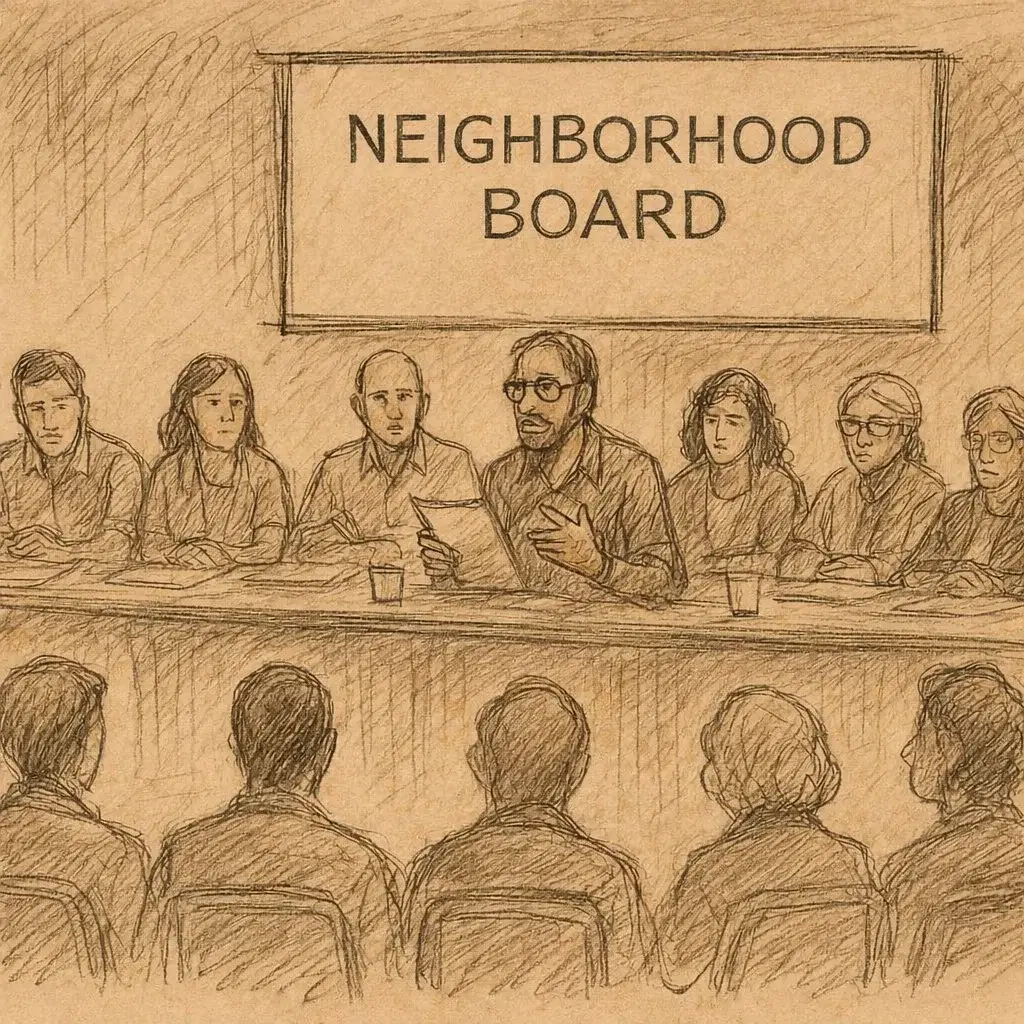
No 07 Mānoa Neighborhood Board Regular Meeting August 2026
Listen to this article:
7 Manoa Neighborhood Board Meeting – August 6, 2026
Call to Order and Attendance
The meeting transcript records the session being called to order at 6:30 p.m. on August 5, 2026, although the meeting is titled and summarized as the August 6 meeting. A chair pro tempore opened the session and roll call established a quorum, with approximately 12 members initially recorded as present and additional members participating later in person or remotely. The board first addressed reports from emergency responders, followed by required organizational business, flooding and Mānoa Stream maintenance, and a state legislative report. Because discussion of the stream project consumed most of the meeting, several remaining agenda matters were deferred to September.
Honolulu Fire Department Report
Jacob Nakajima of the Mānoa Fire Station reported one cooking fire, 11 activated alarms where no fire was found, 43 medical incidents, and two motor-vehicle collision responses during the reporting period. The department’s safety message focused on receiving accurate emergency information. Residents were encouraged to sign up at HNLAlert.gov for opt-in text messages, emails, or app notifications and to follow official city, state, and trusted-partner social-media accounts. Nakajima distinguished those voluntary systems from immediate public warning systems, including the Emergency Alert System, Wireless Emergency Alerts, and outdoor warning sirens, one or more of which may be activated during an urgent threat. Additional preparedness information is available through the Honolulu Department of Emergency Management’s “Stay Informed” webpage.
Honolulu Police Department Crime and Safety Report
Lieutenant Nakamura presented July crime statistics compared with the prior month. Motor-vehicle thefts decreased from seven to six, general thefts fell from 12 to seven, and unauthorized entry into motor vehicles dropped from three incidents to none, while burglaries increased from one to four. The wider police district recorded 5,475 calls for service, with additional data available through HonoluluPD.org. With schools returning to session, Nakamura reviewed the “Avoid, Deny, Defend” response to an active-shooter emergency. He advised residents to remain calm and aware of their surroundings, identify exits in advance, move away from a threat as quickly as possible, and place distance and physical barriers between themselves and the danger. If escape is impossible, people should lock or barricade themselves in, turn off lights and noise-producing devices, and silence mobile phones. As a last resort, individuals have the right to defend themselves decisively. Nakamura said the average police response after a call is approximately three minutes, making actions during the first moments of an emergency especially consequential.
Chamberlain Street Chop-Shop and Abandoned-Vehicle Concerns
Residents near 2119 Chamberlain Street reported a suspected chop shop, unsafe conduct, and activities viewed as inconsistent with the surrounding residential neighborhood. The board also received information about possible abandoned vehicles at the same property. Lieutenant Nakamura advised affected residents to call 911 so officers can meet with them, document the allegations, generate a formal report, and refer the case to plainclothes officers or the Criminal Investigation Division. Board member Robert Fox urged HPD to treat the location as a targeted enforcement project rather than requiring multiple residents to contact separate agencies. Drawing on an enforcement approach used in Long Beach, California, he suggested examining a four- or five-block radius around the suspected operation for patterns of bicycle and moped theft, which could help identify whether thefts are feeding a centralized dismantling or resale operation.
School Fencing and Emergency Egress
A board member raised concerns about the tall perimeter fencing around most of Lunalilo Elementary School, noting that although the fence may have been installed to keep unauthorized people off campus, it could restrict children and teachers trying to escape during an emergency. The limited points of egress and the prison-like appearance of the fencing were specifically questioned. Lieutenant Nakamura said HPD was not in a position to explain a Department of Education facility decision, particularly for a school outside the district covered by his report, and recommended directing the question to school or education officials who could explain the security analysis behind the fencing.
Stray Dogs and Illegal Dumping
A Woodlawn-area resident asked whether HPD or the Hawaiian Humane Society should be contacted when a stray dog is loose on a public street. Lieutenant Nakamura said residents may call police when a dog is loose, aggressive, dangerous, or attacking someone, although the ability of the Humane Society to respond may vary with its annual funding. The resident said a recent 911 dispatcher had given a confusing explanation of agency responsibilities, and Nakamura reiterated that dangerous-dog situations should be reported to police. The same resident described neighbors or landscaping workers dumping green waste, tires, and other material into privately owned preservation land near Melemele Place and a gully connected to Mānoa Stream. Nakamura explained that waste on city property generally falls under the Department of Facility Maintenance, while some state lands are handled by state agencies. When dumping occurs on private land, the property owner ordinarily must report it or arrange cleanup. Police may respond to active dumping reported through 911, but each incident must be evaluated individually and a response or citation cannot be guaranteed in advance.
Board Member Attendance Reviews
Neighborhood Board rules required the board to consider the seats of four members who had accumulated at least three absences during the previous year, even though the members had notified the chair and wished to continue serving. Member Bosel explained that her father had advanced aggressive cancer, had been hospitalized 10 or 11 times during the year, and was highly immunocompromised, making family health the priority. Member Fields also cited family health matters. Member Fox said he had advised the chair that he would be away for approximately two months while inspecting property in California and traveling with his spouse. Member Joseph Mishreki cited family obligations and pledged to make every effort to attend future meetings. No motion was made to vacate any of the four seats, so Bosel, Fields, Fox, and Mishreki remained on the board. During the discussion, members clarified that the formal action would be to “vacate the seat,” rather than to characterize the proceeding as a moral judgment or personal removal.
Election of Board Officers
After a point of order established that officers had to be elected before other business could proceed, the board selected officers for the term running from August 2026 through June 30, 2027. Dave Nagaji was nominated without opposition and elected chair by roll-call vote. Elton Fukumoto and Chris Moylan were nominated for vice chair. Fukumoto emphasized his experience presiding over two meetings for a former chair and his ability to serve simultaneously as timekeeper, while Moylan cited prior experience filling in for the chair, attending chair-and-vice-chair meetings, serving as a vice mayor, and applying Robert’s Rules of Order. Fukumoto won the competitive election by 12 votes to four. Koff was the sole nominee for secretary and was elected, while Patty Kawano accepted nomination as treasurer and was elected without opposition. The board later created or restored the position of second vice chair and elected Moylan to it. Fukumoto also continued as timekeeper without objection.
Meeting Schedule, Format, and Recesses
The board retained its existing meeting arrangements: regular meetings on the first Wednesday of each month at 6:30 p.m., held at Noelani Elementary School with WebEx access. The recess schedule also remained unchanged, with no regular meetings planned for December 2026 and July 2027. Members were informed that neighborhood boards may meet only nine times per year and could have changed the number or timing of recess months, meeting location, format, or time, but no motion to alter the current schedule was made.
Public Speaking Time Limits
The board reconsidered a proposed written rule setting a 60-second limit for public questions and comments, with discretion for the chair or timekeeper to allow additional time. Supporters of flexibility said a shorter fallback could help the board complete crowded agendas within the two-hour period allowed at Noelani Elementary School. Community member Tom Heinrich and several board members argued that a one-minute posted limit could discourage participation and would be less welcoming than the two-minute standard used by nearby boards and the Neighborhood Commission. They also noted that complex subjects such as flooding, monster homes, homelessness, and technical presentations often cannot be addressed meaningfully in 60 seconds. Members suggested that limits should apply equally to board members, who can also consume substantial meeting time, and that presentations should receive a reasonable amount of time determined in consultation with the chair rather than being interrupted arbitrarily. The board settled on two minutes as its standard speaking limit, subject to future revision and the chair’s authority to shorten or extend time depending on the agenda. Chair Nagaji also invited members to raise immediate points of order if they believed speaking rules were being applied unevenly, rather than alleging favoritism by text message after a meeting.
Mānoa Flooding and Stream-Clearing Project
The central discussion concerned an active state-and-city project to clear portions of Mānoa Stream following recent flooding, including the March 2026 event. Participants said contractors had begun work near Mānoa District Park using excavators, fencing off the stream, removing accumulated sediment and vegetation, and potentially reshaping the banks. The Hawaiʻi Department of Transportation was identified as the lead agency, with the City and County’s Department of Facility Maintenance assisting by hauling debris. Residents said they had expected agency representatives to attend the meeting and provide details, but no project subject-matter expert was present. This lack of advance communication created uncertainty about the exact boundaries, methods, environmental protections, hydrological goals, and downstream phases of the work.
Some residents welcomed the long-delayed maintenance. They recalled that nearby homes flooded in 2004 after years of insufficient stream upkeep and that the flood changed the channel, narrowed portions near Kahaloa Bridge, and left a berm or accumulated material near the park. Tom Heinrich described earlier work during the Jeremy Harris administration, undertaken with community involvement, that lowered park-side slopes so high water could temporarily spread into Mānoa District Park instead of accelerating downstream. He also recalled a former memorandum of understanding under which the city and Mālama Mānoa conducted dredging or stream maintenance twice each year, an arrangement that later ended amid permitting difficulties, including federal Environmental Protection Agency requirements. Supporters characterized the present work as overdue flood mitigation between Kahaloa Drive Bridge, Woodlawn Drive Bridge, and adjoining areas rather than a proposal to extend concrete channelization.
Other speakers feared that heavy excavation could destroy the natural character of Mānoa Stream, remove stabilizing vegetation, accelerate water, erode or undermine banks, and eventually create pressure to harden the stream with concrete. One member described this as an “engineering trap” in which dredging speeds flow, increases erosion and flooding, and then produces repeated demands for deeper dredging and channel hardening. Residents also questioned whether the park-side stream wall had actually been overtopped in March or whether flooding on Lowrey Avenue resulted instead from saturated ground, runoff from the paved parking lot, blocked drains, and an overgrown drainage ditch along the park boundary. The city had recently placed rock and asphalt near drains in the lower parking area, which prompted additional concern about how stormwater is being routed.
Stream Ecology and Native Species
Stream biologists, educators, and residents urged agencies to consider native aquatic life before operating heavy equipment. Representatives of Paepae o Waikolu said students have monitored Mānoa, Pālolo, and Makiki streams for approximately a decade, documenting fluctuations in native ʻoʻopu populations and observing strong returns of juvenile hinana after Kona low storms. Speakers also identified hīhīwai freshwater snails and ʻōpae freshwater shrimp as species that could be affected. University of Hawaiʻi stream biologist Cory Yap said trained personnel could relocate animals upstream before excavation if they received advance notice, but previous work in lower Kaimukī had proceeded without sufficient warning and animals were bulldozed. The current Mānoa project was reportedly learned about only shortly before equipment arrived, forcing education programs to consider canceling activities through December.
Participants argued that streams are being managed too narrowly as drainage infrastructure under engineering agencies, without adequate ecological expertise or recognition of their cultural and educational roles. A UH hydrologist who lives on ʻĀlani Street and whose home flooded in March supported sustained stream maintenance and protection of human life and property but said the project’s communication did not match its stated public purpose. Speakers asked that hydrologists, fisheries experts, the Department of Land and Natural Resources, forestry staff, the Board of Water Supply, environmental educators, and residents along the stream be included in planning. They also requested that vegetation be removed selectively, that large bank-stabilizing trees and historic bluestone walls be protected, that the stream bottom not be scoured, and that less destructive tools such as chainsaws, cane knives, and erosion netting be considered where feasible.
Long-Term Watershed Planning
Several participants called for a community-based plan extending beyond emergency clearing. They asked agencies to examine the full stream corridor downstream of Mānoa Marketplace, through the University of Hawaiʻi area, to the confluence with Pālolo Stream and the vicinity of Kaimukī High School, where overgrown vegetation, trash, dogs, and homeless encampments were reported. Speakers advocated a watershed-wide approach that considers stormwater systems, impervious surfaces created by homes and parking areas, street-tree canopy, bank stability, ecological health, public access, and safe walking and bicycle routes. Board member Dylan Armstrong described Mānoa Stream as a defining community asset and favored landscape planning that frames and provides safe access to the stream rather than obscuring it. Others proposed neighborhood walking assessments to document where flooding has occurred, where it may occur in the future, and what locally informed measures could reduce risk. A resident living near the stream cautioned that future meetings must include homeowners and other directly affected streamside stakeholders, not only outside specialists and advocacy groups.
Environmental Review Concerns
One member said Governor Josh Green’s emergency proclamations had suspended or weakened normal review under the Hawaiʻi Environmental Policy Act, potentially eliminating the environmental assessment and formal public-comment process that otherwise might be triggered by the use of state or county funds. The member argued that earlier environmental policy required consultation with interested parties at the earliest possible stage and that the current process deprived residents and environmental specialists of that opportunity. The same speaker said Woodlawn Bridge had not been dredged for seven or eight years and Woodlawn Ditch had not been cleaned for at least two years, suggesting that deferred routine maintenance contributed to both the 2004 and March 2026 flooding.
City Response and Request for a 48-Hour Pause
City representative Gavin Thornton contacted the director of the Department of Facility Maintenance during the meeting and agreed to seek a knowledgeable agency representative for a future session. Based on preliminary information, Thornton said the work was intended to clear the stream back to its original condition rather than dredge or deepen it indiscriminately. He described much of the material being removed as accumulated sediment along the banks that had supported unwanted vegetation and said concrete lining was unlikely without an extensive hydrological study. He also stated that he personally did not support concrete-lined channels.
The board formally requested a 48-hour pause in work so Paepae o Waikolu, UH researchers, and other qualified stream specialists could attempt to rescue and relocate aquatic species. The motion did not require a guaranteed number of animals to be saved; it asked the city to provide a short window for the work to be attempted. Thornton supplied his telephone number to the specialists and agreed to relay the request immediately. With no objection from board members, the motion passed uncontested. A subsequent question broadened concern to native birds and other inhabitants, although the adopted request centered primarily on species within the stream.
Proposed Special Meeting
Because of the urgency and lack of technical information, the board agreed to pursue a special meeting devoted to the Mānoa Stream project. Possible dates discussed included August 13, 14, or 20, with Noelani Elementary School or another available location considered. Neighborhood Commission Office staff explained that the meeting would have to comply with the seven-day public-notice requirement and that the exact date depended on venue availability and timely posting of the agenda. The board did not need to select a date immediately; it only needed to establish its interest in holding the meeting. No board member objected, and staff agreed to arrange the earliest compliant date and notify the public by email and postal mail. Members asked that Hawaiʻi DOT, the Department of Facility Maintenance, contractors, hydrologists, environmental specialists, and affected residents attend so they could explain the project’s objectives, geographic scope, methods, schedule, and safeguards.
Robert Fox also proposed a smaller group that could communicate directly with agencies and follow the matter over time. Staff advised that a formal permitted interaction group could not be created immediately because its purpose and membership must appear on a properly posted agenda. Formation of such a group was therefore slated for consideration at the next regular meeting.
Senator Carol Fukunaga’s Report
Senator Carol Fukunaga explained that the current clearing effort arose from the June 17 community flooding forum, attended by more than 160 people, where state and city officials heard strong demands for immediate removal of vegetation and obstructions. She said the Department of Transportation and Department of Facility Maintenance appeared to commit at that forum to assembling a project quickly. Her written report also summarized earlier flood-control studies. A 2008 study followed the 2004 and 2006 floods and offered multiple scenarios, many of which were never implemented. A major Army Corps of Engineers proposal introduced around 2018 generated extensive opposition throughout the Ala Wai watershed. The Honolulu City Council then created a permitted interaction group and retained Oceanit as a technical consultant, leading to a 2020 engineering documentation report that reexamined the watershed’s problems and alternatives.
Discussion also addressed a conceptual tunnel alternative developed in response to the Army Corps’ request for a different way to move water out of the valley. Fukunaga said the tunnel concept was intended to demonstrate that other technical solutions were possible, not to serve as a final construction proposal. The most recent Army Corps plan carried a cost substantially above earlier estimates, reportedly approaching $1 billion, while an alternative figure of roughly $600 million was mentioned during the discussion. The larger plan is effectively off the table for now, although previously appropriated federal funding may remain encumbered. Fukunaga said any future watershed project should be developed collaboratively with the community and relevant agencies.
Unsuccessful Motion to Halt All Stream Work
Member Bosel moved to ask the city and state to halt the entire stream-clearing project until the special meeting could provide details about the work’s purpose and scope. The motion received a second, but members raised concerns that taking action under an agenda item labeled as a “community update,” rather than noticed board business, could violate the Hawaiʻi Sunshine Law. Former board member Tom Heinrich advised that adding an unposted action item would require at least 12 affirmative votes on the 17-member board and would still have to be reconsidered at a properly noticed meeting. Several members emphasized that they supported obtaining more information but would abstain because of the procedural risk. The motion received seven affirmative votes, with numerous abstentions, and failed. The previously approved 48-hour species-relocation request remained in effect as the board’s formal action.
Adjournment and Deferred Business
With the facility deadline approaching, the board ended the meeting without completing the remaining agenda. Chair Nagaji acknowledged that the stream discussion and procedural questions had taken far more time than anticipated. Items not related to flooding or stream work, including other anticipated community issues, were deferred to the next regular meeting, scheduled for Wednesday, September 2, 2026, at 6:30 p.m. at Noelani Elementary School and via WebEx. That date was separate from the proposed August special meeting. The public was reminded that Mānoa Neighborhood Board meetings are broadcast on ʻŌlelo Channel 49 and are also available through YouTube links included in meeting announcements.