No 07 Mānoa Neighborhood Board Regular Meeting June 2026
Listen to this article:
7 Manoa Neighborhood Board Meeting – June 4, 2026
Meeting Opening, Attendance, and Quorum
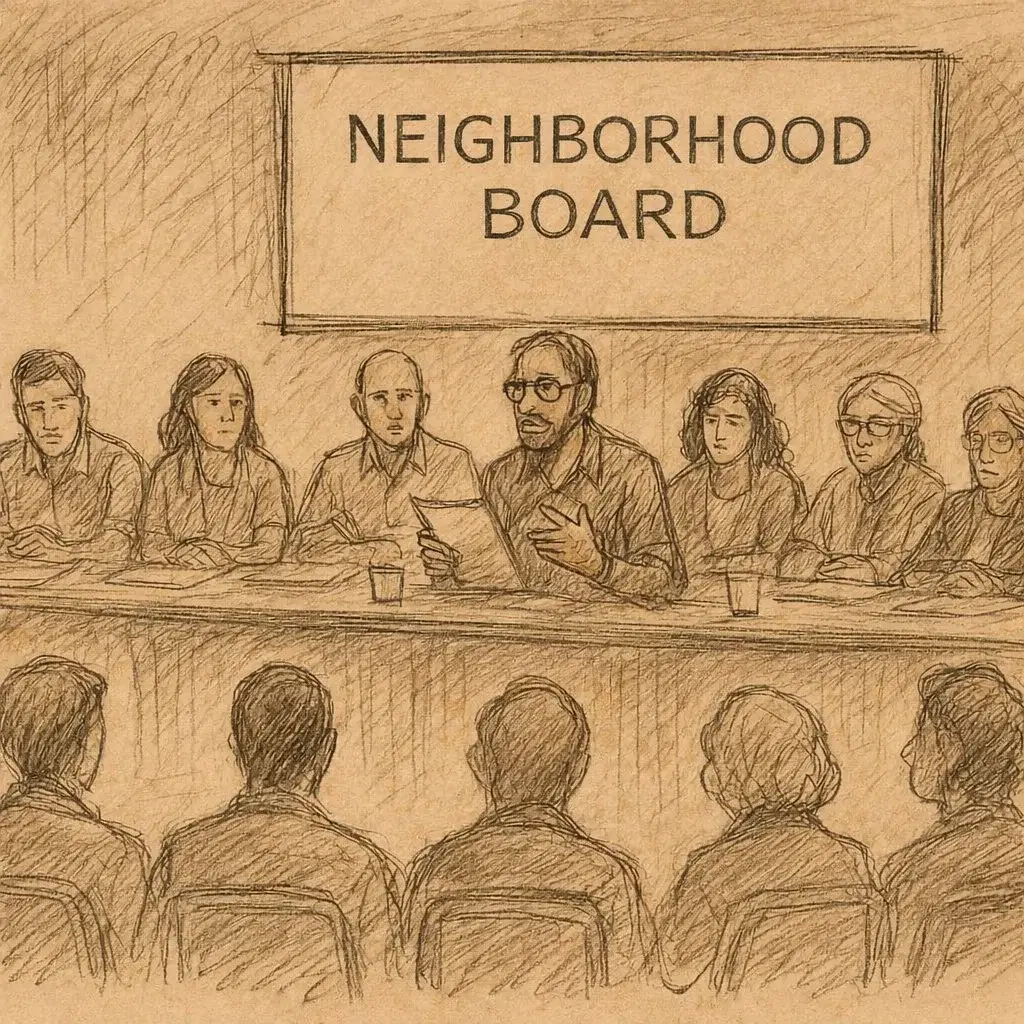
Chair David Nogaji called the meeting to order at 6:30 p.m. and began with roll call. The board initially had only eight members present, which was not enough for quorum, so the meeting proceeded first with informational reports that did not require board action. Quorum was later reached, allowing the board to move into official business, including filling vacancies. By the end of the evening, after two new members were sworn in, all 17 board seats were filled, a notable development for the board’s ability to conduct business consistently in future meetings.
Honolulu Fire Department Report and Hurricane Preparedness
The Honolulu Fire Department reported that in the previous month it responded in the Manoa area to six activated alarms with no fires, 31 medical calls, one motor vehicle crash, and one mountain rescue. The department used its monthly safety message to emphasize that hurricane season began June 1 and runs through November 30. Residents were urged to build or refresh a 14-day disaster supply kit, check insurance coverage because standard homeowner and renter policies typically do not include hurricane or flood coverage, obtain window protection materials in advance, and sign up for alerts at hnlalert.gov. HFD also answered a previously raised question about why it responds to medical calls, citing the City Charter, specifically Section 6-1004.C, which requires the fire chief to provide emergency medical care and general safety measures. The department explained that fire units are dispatched to medical emergencies when HFD can arrive faster than EMS or when the call is life-threatening or potentially life-threatening, while still trying to preserve core fire response capability. During public questions, a resident asked about HFD’s role during the recent storm flooding near Woodlawn Bridge. HFD described responding to motorists who became stranded in floodwaters, rescuing people from stuck vehicles, and helping clear and move vehicles as waters receded while other city and state personnel worked on debris and drainage issues.
Honolulu Police Department Report
Honolulu Police Department Lieutenant Amir reported crime and service statistics for the prior month: 10 motor vehicle thefts, four burglaries, nine thefts, three unauthorized entries into motor vehicles, and 5,573 total calls for service. HPD’s public safety message also focused on hurricane season. Residents were advised to think in advance about whether their homes are suitable for sheltering in place, especially if they live in older single-wall homes built before 1995 that may not have been retrofitted to withstand hurricane-force winds. The department encouraged households to make evacuation arrangements early, including identifying friends or family members they could stay with, and to consider obtaining generators before storm threats arise, particularly where residents rely on power-dependent medical equipment such as oxygen systems or breathing machines.
Filling Board Vacancies in Subdistricts 1 and 4
Once quorum was reached, the board took up the filling of vacancies out of order because candidates were present and one might have needed to leave early. The board first addressed the Subdistrict 1 vacancy created when longtime member Robert Zane left the district. Two interested candidates introduced themselves: Makana Hicks-Ku and Seth Kamemoto. Hicks-Ku described himself as a fourth-generation Manoa resident with multigenerational family ties in the valley who had recently moved back, was starting a family there, and had been active in local housing policy discussions, including minimum parking requirements. Kamemoto described himself as a third-generation Manoa resident whose family had farmed near the cemetery area and said he became engaged in board matters after seeing projects affect Manoa without enough community-side information or communication.
Board members noted an important procedural requirement: although quorum had been achieved, appointing a member required nine affirmative votes. In the roll-call vote, Kamemoto received nine votes and Hicks-Ku received one, so Seth Kamemoto was appointed to the Subdistrict 1 seat.
The board then turned to a vacancy in Subdistrict 4. Corey Kataoka expressed interest in serving and spoke about his work as director of Beata Home Healthcare, his commitment to seniors, community-building, and neighborhood participation. After staff checked his address, however, it was determined that he lived in Subdistrict 3, not Subdistrict 4, so he could not be appointed to that seat. The chair encouraged him to seek appointment if a Subdistrict 3 vacancy arises or to run in the next election cycle in March 2027. Former board member Dylan Armstrong then volunteered online to fill the Subdistrict 4 vacancy. Armstrong said he had served on the Manoa board from 2015 to 2022, including several years as chair, and had professional experience in environmental management, urban planning, and disaster preparedness. He was nominated, ran unopposed, and received 10 affirmative votes, enough for appointment. After a brief recess, both Kamemoto and Armstrong were sworn in, bringing the board to full membership.
Chair’s Warning on Decorum, Respect, and Internal Conflict
After seating the new members, Chair Nogaji delivered an extended statement addressing worsening conduct among some board members. He said the board had experienced repeated personal attacks, disrespectful comments, hostile tones, and escalating conflict over the past year, and especially in the previous 30 days. He described several incidents that prompted the warning. At a contentious committee meeting two weeks earlier, one board member covertly recorded the full meeting on a phone without other attendees knowing until afterward. He also said he had received reports of board members arguing in parking lots on two separate occasions, describing the behavior as confrontational and berating. In addition, multiple board members had approached him requesting that other members be expelled from meetings for disruptive behavior, and others had expressed interest in asking the city to pursue formal accusations of legal violations against fellow board members.
Nogaji said he had sometimes let minor disrespect slide in the past, but believed that approach had contributed to escalation. He announced that he would begin enforcing decorum more aggressively, not only against overt personal attacks but also against profanity, disparaging remarks, disrespectful conduct, and abusive language. He quoted the neighborhood board rules requiring speakers to confine remarks to the subject under discussion while avoiding personalities and abusive language. He also recommended that the Proactive Solutions Committee be allowed to sunset in August rather than be renewed, saying that many of the board’s worst internal conflicts had emerged around resolutions and topics coming out of that committee. He emphasized that neighborhood boards are advisory bodies with no direct legal power and said the board’s credibility depends on maintaining enough dignity and civility that city and state officials will take its recommendations seriously.
Board members responded in different ways. Member Koff said open disagreement is healthy in a community and argued that differences in values are inevitable, but the board and society more broadly need better ways to bridge conflicts while respecting each person’s right to express beliefs. Newly appointed member Dylan Armstrong, drawing on his prior service as board chair, said some of the tension appears tied to misunderstandings in the community about the actual power of neighborhood boards. He stressed that board resolutions are advisory only and do not themselves create law or directly implement changes, and suggested that exaggerated perceptions of the board’s “threat level” had fed unnecessary conflict.
Presentation on Hawaiʻi’s Environmental Review Process
Senior planner Tom Eisen of the state’s Environmental Review Program, part of the Office of Planning and Sustainable Development, gave a detailed presentation on Hawaiʻi’s environmental review process under Chapter 343, the law often informally referred to simply as “343.” He explained that the program, formerly known as the Office of Environmental Quality Control, exists to improve planning by ensuring that environmental effects are disclosed early enough in project development to inform decision-making. He emphasized that the environmental review process is a disclosure process, not a permit or project approval. Its purpose is to present objective information about a proposed action and its effects, not to determine whether a project is “good” or “bad.”
Eisen explained that not all projects go through environmental review. A proposed action must trigger the law, most commonly by involving the use of state or county land or funds. Other triggers include work in the conservation district, shoreline area, historic sites, the Waikīkī area, certain county general plan amendments, reclassification of conservation land, helicopter facilities, and some industrial facilities such as power plants or landfills. He clarified that private activity on private land usually does not trigger Chapter 343, so many developments residents might assume require an environmental assessment do not.
He outlined the three main levels of review: an exemption, an environmental assessment (EA), and an environmental impact statement (EIS). An EA is used when an agency believes a project will not have a significant impact, while an EIS is required if one or more significance criteria are met and the project is likely to have a significant impact. Those criteria include effects on natural, cultural, or historic resources and other broad dimensions of the environment. Eisen noted that significance is the key threshold in the system. EAs generally rely on existing information and are more limited “desktop” analyses, whereas EISs require much deeper study, including original fieldwork such as archaeological or botanical investigations.
Public participation was presented as a central feature of the system. Draft EAs carry one 30-day public comment period. EISs involve two public comment opportunities: a 30-day scoping period after publication of an environmental impact statement preparation notice, including a required public meeting, and then a 45-day comment period on the draft EIS. Agencies must respond to timely submitted comments, and those responses become part of the public record available to decision-makers. Eisen also noted that final determinations can be challenged in court, though in those cases the agency, not the private applicant, is usually the party sued.
During questions, board members asked whether only one significance criterion is enough to require an EIS, and Eisen confirmed that it is. He was also asked about differences between an EA and EIS in practice; he said EISs are richer, more detailed, and more time-consuming because they require original studies. He acknowledged that the environmental review process can be used by opponents of projects to slow or challenge them, but reiterated that this is not what the process was designed for. Member Fukumoto requested that the presentation slides be made available electronically, and Eisen agreed to send a PDF. A resident asked about the environmental review of flood-control projects such as possible Army Corps of Engineers work on Manoa Stream. Eisen said his office does not itself review such projects but that the relevant agency would handle the environmental review. A final comment from the audience stressed the ongoing and worsening impact of flooding in Manoa, including comparisons to the 2004 flood that caused roughly $98 million in damage and destroyed the University of Hawaiʻi’s Hamilton Library.
Board of Water Supply Report
Board of Water Supply representative Dominic Diaz reported that there were no main breaks in the area during the prior month and no active BWS construction projects in Manoa. He reminded residents that BWS conducts thousands of water quality tests each year on both source water and the distribution system to comply with federal and state drinking water laws. Residents should receive the next water quality report by July 1, and reports can also be accessed online at boardofwatersupply.com through the water quality report tool by entering an address. He noted that these reports now include not only the chemical analysis but also explanations of the various constituents found in the water.
Mayor’s Office Report and City Follow-Ups
Deputy Director Gavin Thornton, reporting for Mayor Rick Blangiardi, announced that the city’s Office of Climate Change, Sustainability, and Resilience had released the first-ever Oʻahu Food Systems Plan in draft form. The five-year plan outlines more than 70 actions the city could take to improve food production, distribution, access, and waste handling while supporting community health, the economy, and the environment. Public feedback is being accepted through June 30, 2026, at resilientoahu.org/foodsystemsplan.
Thornton also returned with a lengthy follow-up regarding the Ala Wai bridge project. Residents had previously questioned why the Department of Transportation Services sought a contractor before obtaining a finding of no significant impact and more broadly why the city was pursuing the bridge at all. The city’s response was that the request for qualifications was issued before completion of the NEPA process in order to maximize time for potential design-build teams to develop and evaluate alternatives, which federal law allows in certain circumstances. DTS said that multiple opportunities for public involvement had occurred and that these included a no-build alternative. An alternatives analysis conducted in 2018 and 2019 considered a new bridge, enhancements to existing bridges, other crossing types such as an aerial tram, and doing nothing. A new bridge near University Avenue was identified as the preferred alternative. Public outreach reportedly included three open houses with 304 attendees, 180 live polling responses, 900 in-person traveler surveys around the canal, and 100 online survey responses. At public design charrettes in November 2024, participants reviewed 19 city-provided bridge concepts in addition to the current cable-stayed concept, and the city said the suggestion to hold charrettes came from the community. Thornton also reported that DTS could not identify the source of spray paint markings along Lowrey Avenue that residents had asked about, and that the department would investigate concerns about pedestrian signals at University Avenue and Metcalf/Maile Way to ensure they are functioning properly. He closed with the announcement that Manoa District Pool reopened on May 18, 2026.
Residents raised additional questions for follow-up. One asked why two trees at Manoa District Park near the stream had been banded and why pink flags had been placed on an old rock wall along the stream, saying Urban Forestry had no information and a 311 inquiry had not yet been answered. Thornton said he would relay the question. Dylan Armstrong asked whether the Department of Emergency Management had completed an after-action report on the recent flooding or the prior summer’s tsunami-related traffic problems in Waikīkī; Thornton said he was not aware of one and would ask.
City Council Report and Budget Actions
Council Member Scott Nishimoto’s office, represented by Kate Williams, reported that the City Council had passed both the city operating budget and capital improvement budget that day. For Manoa-related matters, the office highlighted the inclusion of $1.4 million for a comprehensive watershed debris management and flood risk reduction strategy, to match state funds for similar work. Williams also reported that a prior request for Manoa sidewalks had been withdrawn from the capital improvement budget because the board had not reached consensus on that proposal. When asked whether the sidewalk project might have been budgeted had the board maintained support, Williams confirmed that the office had made a budget request but later withdrew it.
Senator Carol Fukunaga’s Report and June 17 Flood Forum
Hector Venegas, representing Senator Carol Fukunaga, distributed a newsletter and summarized several budget items relevant to Manoa and emergency preparedness. He highlighted state funding through the Hawaiʻi Emergency Management Agency to retrofit public buildings with hurricane protective measures and for statewide siren maintenance and modernization. He also pointed to state funding for Manoa Stream watershed risk reduction and debris management, as well as Ala Wai watershed debris management. Another major item was FEMA assistance for residents and businesses affected by the Kona low storm, with an application deadline of June 14.
Venegas emphasized an upcoming community forum scheduled for Wednesday, June 17, at 6:00 to 7:30 p.m. in the Noelani Elementary School cafeteria. The event is being sponsored by Senator Fukunaga, Representative Andrew Garrett, and Council Member Scott Nishimoto and is intended to help the community learn from the March Kona low flooding and storm impacts. Scheduled participants include Transportation Director Ed Sniffen, Hawaiʻi Emergency Management Agency Administrator Jim Barros, Honolulu Department of Emergency Management Director Randall Collins, Department of Facility Maintenance Director Gene Albano, and other officials. The event was described as an opportunity for residents to ask questions directly about the recent disaster and emergency preparedness.
During questions, resident Brett Kishiige asked about Senate Bill 2544, the Hawaiʻi Builds Pilot Program, which he said could expedite affordable housing projects while reducing county review authority. He expressed concern that the measure could increase the likelihood of projects like Manoa Banyan Court and asked why the legislators representing Manoa had supported it. Venegas said he did not recall the bill details well enough to answer on the spot and asked that the question be submitted in writing so he could research it and report back at a future meeting.
Representative Andrew Garrett’s Legislative Update and Flooding Discussion
Representative Andrew Garrett said his legislative newsletter, delayed by a breakdown at the House print shop, had just been mailed and should soon reach residents. He reviewed the session broadly and then focused on flooding and resilience. He echoed the June 17 town hall announcement and said it would serve both as a postmortem on the March Kona low flooding and as preparation for what forecasters expect to be a heavier hurricane season due to El Niño patterns.
Garrett discussed the long-running Ala Wai watershed flood mitigation effort, including earlier Army Corps proposals and Manoa-specific concerns. He said many engineering studies have already been completed and suggested that the central issue now may be whether the community is willing to accept some of the proposed solutions. He referenced prior detention basin ideas at Manoa Valley District Park near the dog park and noted that both the board and he had opposed them in the past because they would affect heavily used recreation facilities such as baseball fields. However, he said worsening flood risk may require reconsideration of previously unpopular options, including either a full detention basin or berms along tributaries feeding into Manoa Stream.
He described walking the flood-affected areas after the March storm and seeing how water near the dog park and along Manoa Stream had overflowed because the channel could not carry the volume, diverting into backyards on Lowrey Avenue. He said the newly funded $1.4 million state appropriation for a Manoa Stream debris management study, matched by $1.4 million from the city, would support nearly $3 million in study work, though procurement and consultant selection would take time.
Board members and residents used Garrett’s report to press broader stream and flood-control concerns. Member Koff suggested creating a paid conservation-type work program to employ young people or other residents to help clean streams. Garrett said such efforts might help, but he believed governance and structural problems were deeper, including property-owner responsibilities and the need for a coherent agency framework. He described finding cut logs in the stream during post-flood walkthroughs, suggesting some upstream residents had dumped debris directly into waterways. He said the House is setting up an interim working group to study stewardship and governance issues and noted that he had previously introduced legislation to make the Department of Land and Natural Resources responsible for all waterways maintenance, though DLNR opposed that idea due to resource constraints.
Member Watson argued that better routine stream maintenance, dredging, and aggressive control of albizia trees might significantly reduce flood risk without requiring huge engineered projects. She said the same type of debris clogging that contributed to prior flooding, including at Woodlawn Bridge and during the Hamilton Library disaster, remains a known issue. Garrett responded that the city had attempted pre-storm maintenance under Woodlawn Bridge but had faced equipment problems. He also credited local volunteer efforts such as Malama Manoa’s albizia removal work and said both the city and state need a long-term maintenance strategy. Member Chong observed that the geometry of the stream itself is a problem, especially two 90-degree turns near Lowrey Avenue and Longs, arguing that “water does not know how to turn 90 degrees.” Garrett said the Army Corps had similarly identified those trouble spots and had proposed flood walls there. Member Bosell added that historic stream corridors were once wider and more natural and that impermeable surfaces on private property worsen downstream flooding; she urged residents to reduce pavement and direct runoff more responsibly.
Garrett was also asked whether a special legislative session might be needed before the board next meets in August. He said the most likely issue was concern from the solar industry over tax credit changes in SB3125, but he believed the Department of Taxation and governor were working toward an interpretation that would avoid retroactive harm. He noted the governor’s June 30 deadline to notify the Legislature of intended vetoes and the July 15 final veto deadline, saying a special session would only be needed if an override became necessary.
Flooding, Manoa Stream, and Upcoming Community Discussion
Beyond the specific reports, flooding remained a recurring concern across the meeting. The board noted again that a June 17 emergency preparedness and flooding town hall would be held at Noelani Elementary and that Chair Nogaji planned to attend and take notes. Discussion during the meeting reflected deep neighborhood concern about repeated serious flooding in Manoa, especially after the March 2026 storm and in light of memories of the devastating 2004 event. The conversation touched on debris management, stream ownership and maintenance responsibilities, engineering alternatives such as berms and flood walls, tree removal, and the possibility that long-rejected solutions may need to be revisited.
University of Hawaiʻi EVA Parcel and University Laboratory School
Using an emailed update from University of Hawaiʻi community liaison Elmer Kaʻai, who was unavailable to attend, the chair reported that demolition of the vacant PBS Hawaiʻi building at the Manoa EVA parcel at 2320 Dole Street had been completed and that site work is expected to continue through summer 2026. A redevelopment feasibility study for the 15.43-acre parcel is underway, with background studies and preliminary planning in progress. The update also said UH is in active negotiations with University Laboratory School over a facilities use and occupancy agreement. According to a separate presentation to the UH Board of Regents, University Laboratory School currently uses about 64,297 gross square feet of UH facilities, and the two sides have been meeting weekly since January 7, 2026. A key proposed term is a three-year agreement running through June 30, 2029.
During public comment, Laura Ruby raised concerns about how the property planning is being framed and about the scale of land involved relative to University Lab School’s footprint, though the chair interrupted when the comment appeared to move into accusatory language toward unnamed parties and reiterated the new decorum standards.
Proactive Solutions Committee Notice Problem and Possible Sunset
In board business, Chair Nogaji reported that a Proactive Solutions Committee meeting had been held on May 20, 2026, but afterward a complaint was filed alleging defective notice because the meeting had been emailed and mailed but had not been posted to the NCO website at least a week in advance as required. Because of the notice defect, the board was advised that the remedy was effectively to treat the meeting as though it had never happened. As a result, no discussion or action from that meeting could be considered valid or carried forward. This procedural failure was especially notable given the chair’s earlier recommendation that the committee be allowed to expire in August due to the conflict surrounding its work.
Senate Bill 2397 and Neighborhood Board Quorum Reform
Community member Tom Heinrich gave an update on Senate Bill 2397, a measure related to neighborhood board quorum rules. He credited Member Moylan and Senator Fukunaga for helping to advance the bill but said that, in his view, the final conference draft now pending before the governor “accomplishes nothing.” Heinrich explained that the bill as originally introduced would have lowered quorum calculations when vacancies exist and, more importantly, would have allowed voting to follow Robert’s Rules once quorum had been established so that a majority of members present could approve actions. He said this would have fixed the recurring problem where a motion can attract overwhelming support among members present yet still fail for not reaching nine votes, the majority of all authorized seats.
According to Heinrich, the conference committee removed the Robert’s Rules component without public explanation, leaving only language that allows discussion without quorum in circumstances already permitted elsewhere in the law, while preserving the existing full-majority voting threshold. He argued this means the bill changes nothing meaningful. Heinrich also said the executive secretary of the Neighborhood Commission Office had opposed the proposal in a way he believed was inconsistent with the majority view of the Neighborhood Commission itself. He urged board members to review the bill on the legislature’s website and said he personally intended to advise the governor to veto it so the issue could be tackled again cleanly in January 2027.
Approval of Prior Meeting Minutes
The board approved the minutes of the May 6, 2026 meeting with a correction raised by Member Moylan. On page five of eight, a line attributing a procedural point to Moylan was corrected to reflect that the point had actually been made by Member Fukumoto. The correction was handled as part of the approval process.
New Agenda Requests: Ala Wai Ferry Proposal and ADA Resolution
In the closing portion of the meeting, board members discussed two potential future agenda items. One involved a proposal by community advocate Laura Ruby for a ferry crossing on the Ala Wai. Member Sofio formally requested that the ferry proposal be placed on a future agenda, arguing that any project affecting University Avenue and circulation across the Ala Wai could affect Manoa. Members Moylan and Koff supported giving Ruby time to present the idea. Member Watson disagreed, arguing the matter is more properly led by the Moiliili Neighborhood Board and remains too premature because there is no sign the city is seriously considering such a project. The chair said that because a board member had made a formal request, the item would be scheduled in August or September as time allows, though he signaled it would not be a high priority.
The second possible item was a draft resolution on ADA compliance in the Manoa area that had been distributed on tables before the meeting. Chair Nogaji said the resolution appeared very similar to another one the board had recently considered and rejected, but he was willing to place it on a future agenda for discussion so its drafters could present their reasoning and possibly revise it before any later vote. Member Moylan formally requested that it be put on a future agenda for discussion. He also suggested that proposals from Manoa residents should receive priority over those from nonresidents, though the chair noted the formal ferry request had been made by a sitting board member.
Recess, Next Meeting, and Officer Elections
The board announced that it will be in recess for July 2026. The next regular meeting is scheduled for Wednesday, August 5, 2026, at 6:30 p.m. at Noelani Elementary School cafeteria and online via Webex. Because August begins a new officer term, all board officer positions will be up for election at that meeting. The chair also reminded viewers that Manoa Neighborhood Board meetings are broadcast on ʻŌlelo Channel 49 on the fourth Saturday of each month at 3:00 p.m. and are also available on YouTube. The meeting adjourned with only about a minute remaining in the scheduled time.