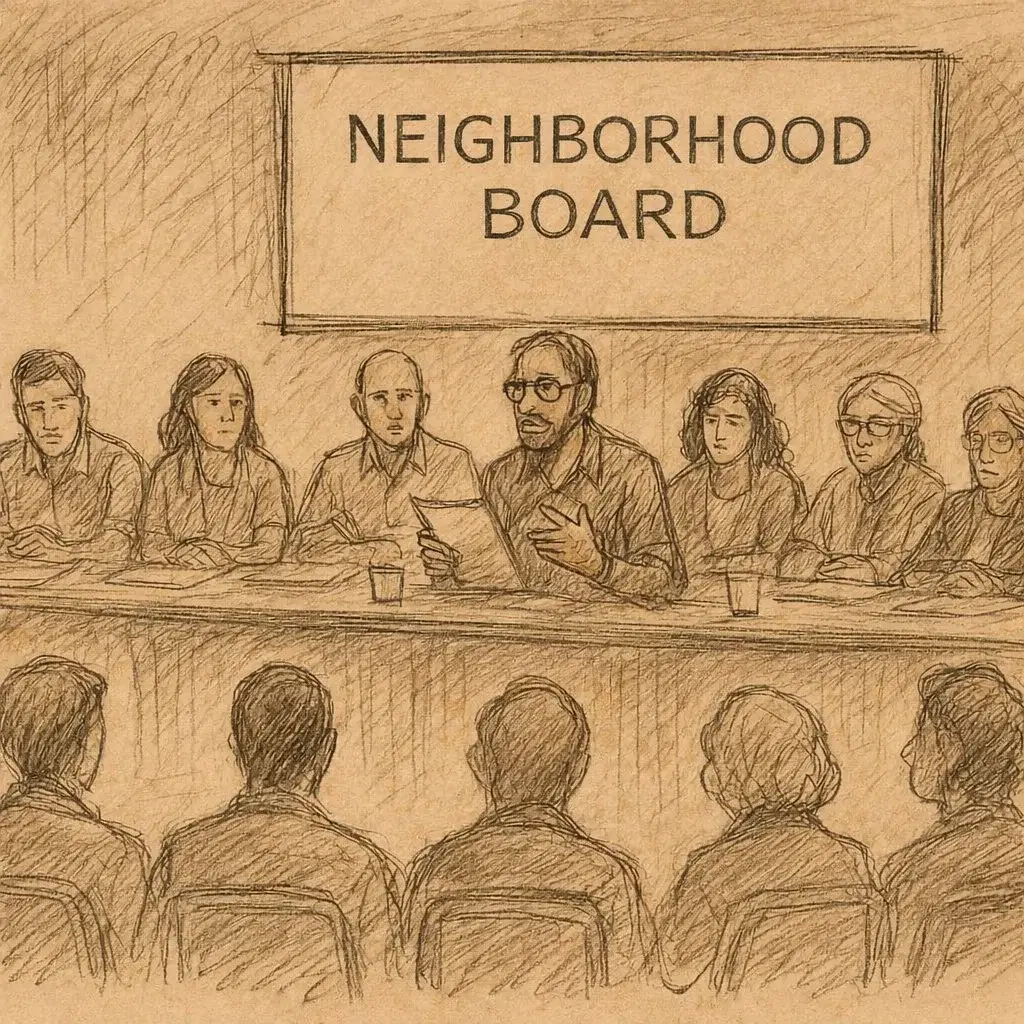
No 10 Makiki-Tantalus Neighborhood Board Regular Meeting September 2026
Listen to this article:
10 Makiki-Tantalus Neighborhood Board Meeting – September 18, 2026
Quorum and Meeting Administration
The meeting opened with a roll call and confirmation that members attending remotely needed their cameras on to count toward quorum. Eleven members were present, allowing the board to conduct official business. Police and fire representatives were accommodated near the beginning of the agenda because of their operational responsibilities, while attendees waiting outside the meeting room were admitted.
Police Crime and Service Statistics
Honolulu Police Department Sergeant Brian Morris reported August 2026 statistics, noting that the figures lag by one month because September was not yet complete. Makiki-Tantalus recorded 11 motor-vehicle thefts, up from six in July; four burglaries, down from five; 28 thefts of all degrees, up from 23; five unauthorized entries into motor vehicles, up from three; 10 assaults, up from four; one sexual assault, compared with none; seven drug cases, up from four; and 94 motor-vehicle collisions, compared with 93. The official report showed no graffiti cases, but Morris said that figure appeared incorrect because he personally made one graffiti arrest. HPD handled 1,987 calls for service, slightly more than in the prior month.
Traffic Enforcement and Intersection Safety
HPD has been monitoring the intersection of Wilder Avenue and Pensacola Street, where motorists may turn left from the two designated lanes only when the left-turn arrow is active and may not bypass traffic by turning from the wrong lane. Officers issued five citations in one day for turning against the signal and another citation earlier in the week for improperly jumping lanes. The board also thanked HPD for enforcement at the five-way Alapai–Iolani–Prospect intersection, where a fatal crash killed Mr. Milikini approximately two years ago. City restriping began just before the meeting to improve visibility, and flashing stop signs were still awaited; officers have meanwhile cited motorists who chronically run the stop signs. The chair also asked the state to examine illegal U-turns on Punahou Street near the freeway entrance, noting that a moped rider was killed there several months earlier. State representative Russell Pang said barriers had been installed to prevent illegal left turns, but motorists were driving past them and making U-turns instead; he agreed to ask whether the area is being monitored.
Vehicle Dwelling, Illegal Parking, and Encampment Enforcement
Sergeant Morris said HPD continues to address people living in vehicles on Davenport and other streets, with nighttime enforcement generally more effective than daytime activity. Residents reported illegal parking and overnight camping along Iolani Avenue and Magellan Avenue, as well as an apparent encampment at an abandoned property at 540 Iolani Avenue. One resident suggested using civilian or contracted parking-enforcement personnel equipped to photograph vehicles and issue citations, similar to practices at the University of Hawaiʻi, because police resources are limited. The mayor’s representative agreed to ask HPD or another city department whether such an arrangement is possible. A separate concern involved a gold-colored station wagon repeatedly parked near the water tower on Makiki Heights Drive, where a woman reportedly walks through the park and loudly directs profanity at neighbors throughout the day and night. HPD advised residents to call when the noise is occurring, especially at night, and said officers could also act if the vehicle’s registration or safety inspection is expired or if it is illegally parked. Because the roadside parcel may be state land, Governor Green’s representative requested the tax map key so the state could determine ownership and possible enforcement or signage options.
Noise Complaints and Lower Makiki Nightlife
Residents asked whether people using loud portable sound systems in Makiki Park can be cited when they turn the volume back up after officers leave. HPD said officers generally begin with a warning and do not carry decibel meters, but repeated or directly observed violations can potentially lead to citations or arrest depending on the circumstances. Residents were encouraged to continue calling so officers can document and respond to recurring activity. Another resident reported a dramatic reduction in noise, racing, and disturbances around Gypsy Pig and three nearby bars in Lower Makiki and thanked HPD, particularly the night-watch team. Some problems remain, including patrons drinking beer outside the establishment, but attempts to involve the Liquor Commission have been difficult because violators often leave before inspectors arrive.
Stream Bridge Encampments and HNL 311 Reporting
A resident reported that discarded furniture, bedding, tarps, and other material had accumulated again beneath a local bridge despite a state cleanup approximately two or three months earlier. Multiple HNL 311 reports had been submitted without a visible status update. Sergeant Morris said HPD checks bridges and stream areas regularly, including at least twice on the day of the meeting, but people are often absent during hot daytime hours even though their property remains. Police cannot remove couches, beds, and similar debris themselves, so they notify the responsible state agency; bicycle officers also inspect the area because they are better equipped to enter it. Residents may use either HNL 311 or call 911 when people are actively present, and HPD records its findings in the 311 system.
Fire Department Statistics and Lithium-Ion Battery Safety
The Honolulu Fire Department reported 29 activated alarms, 118 medical emergencies, and four motor-vehicle crashes or collisions for September to date. The monthly safety presentation focused on the growing number of fires involving lithium-ion batteries used in phones, laptops, scooters, e-bikes, toys, tools, vehicles, and other devices. HFD advised residents to use the manufacturer-provided charger, avoid charging on beds or other soft surfaces, unplug devices when fully charged, charge large devices outside when possible, and never block an exit. A device should no longer be used if it becomes hot, swells, smells unusual, leaks, smokes, or makes popping or hissing sounds. Airline passengers should keep charging devices visible and should not charge e-cigarettes or vapes aboard aircraft. HFD also announced Fire Prevention Week Family Day on October 3, 2026, from 10 a.m. to 2 p.m. at the Honolulu Zoo.
Lithium-Battery Fire Tracking and Extinguishers
HFD confirmed that it tracks fires identified as involving lithium-ion batteries, although current data may not distinguish among scooters, tools, phones, cars, or other products. A board member requested monthly Makiki-specific figures, particularly incidents causing damage inside homes or apartments, and the fire captain agreed to ask the Fire Prevention Bureau whether that information could be provided at future meetings. Standard condominium extinguishers rated approximately 2A10BC can address ordinary electrical fires and may contain a very small lithium-battery incident, but HFD cautioned that consumer fire-suppression technology has not fully caught up with lithium-battery hazards. Residents should call HFD even when an extinguisher appears to have put out the fire because damaged battery cells can reignite. The department will also examine whether it can recommend specialized products such as blankets or foam systems for larger residential buildings.
Repeated Fire Alarms and Building Emergency Planning
HFD reported responding seven times during the preceding month to nuisance alarms at 1427 Ernest Street. The captain said the building manager had been contacted repeatedly and the property was referred to HFD’s code team for further review. The department can issue notices of violation but has limited enforcement tools beyond that. A nearby resident manager who had recently upgraded a building’s alarm system asked about emergency preparedness. HFD encouraged buildings to update lists of residents requiring evacuation assistance approximately every six months, although many buildings do so less often. The Fire Prevention Bureau will also be asked to provide resources that can help property managers develop evacuation plans without transferring plan-design liability to HFD.
Elevator Failures in Senior Housing
Board members raised concerns about prolonged elevator outages in senior housing, particularly where wheelchair users or residents with medical appointments cannot leave upper floors. HFD said firefighters can physically carry residents downstairs when an immediate life-safety emergency requires evacuation, but hotel placement and landlord obligations are outside the department’s authority. A former American Red Cross responder noted that the Red Cross may offer temporary vouchers for shelter, food, and clothing after qualifying disasters, although an ordinary long-term elevator outage may present a different issue. The board asked the mayor’s office to investigate whether city- or state-run senior housing providers have obligations under landlord-tenant law to relocate residents when elevators remain unusable for extended periods and whether the shortage of elevator technicians is contributing to lengthy repair timelines.
Water Main Breaks and Board of Water Supply Projects
The Board of Water Supply reported one August main break, involving a four-inch pipe on Piʻikoi Street on August 15. A resident thanked BWS for shutting off water at the street after a building’s main valve failed and then restoring service only seven minutes later than scheduled despite another water-main emergency. BWS also said it had received a detailed set of questions from board member Janelle Fujinaka concerning Kala Wahine and would prepare written responses for the board and Councilmember Scott Nishimoto. Questions about prolonged work around Pensacola Street, Wilder Avenue, and Kinau Street were deferred to the forthcoming comprehensive response; residents said construction had reduced three lanes near Kinau to one and created a confusing traffic maze despite an earlier expectation that work would be finished in September. A resident also complained that years of water-infrastructure work had severely degraded Auwaiolimu Road and asked whether BWS would coordinate with the city, which owns the road, on final repaving. BWS agreed to investigate the project schedule, responsibility for restoration, and whether an end to the disruption is in sight.
“Imagine a Day Without Water” Event
BWS announced a free “Imagine a Day Without Water 2026” event on Saturday, September 26, from 9 a.m. to 1 p.m. at the Arc of Safety at Waiʻanae Mall. More than 25 partner organizations were expected to provide exhibits, games, giveaways, educational activities for keiki through kūpuna, and a rain-barrel workshop. The event promotes the “One Water” concept connecting groundwater, oceans, and stormwater and emphasizes shared responsibility for protecting all parts of the water system. Food and refreshments would be available for purchase, and BWS explained that the event travels to a different region each year.
Storm Recovery, Disaster Preparedness, and SNAP Replacement Benefits
The mayor’s September newsletter focused on city storm response and household preparation for future disasters. Governor Green’s representative separately announced extended deadlines for Supplemental Nutrition Assistance Program beneficiaries who lost food because of power failures or home damage during recent storms. Claims related to Tropical Cyclone Lala were due September 23, while claims related to Hurricane Lowell were due September 28. Information was available through the Department of Human Services website or the public-assistance line at 1-855-643-1643. Following discussion of severe flooding on the Waiʻanae Coast, Kauaʻi, and Hawaiʻi Island, the board expressed interest in a broader briefing on what would happen if a Category 3 hurricane struck Oʻahu. The governor’s representative offered to invite the Hawaiʻi Emergency Management Agency, and the board tentatively identified November as the next practical opportunity because October would be occupied by its candidate forum.
Flooding, Makiki Ditch, and Watershed Reporting
Residents raised several flood-mitigation concerns after the recent storms. The state-owned section of Makiki Ditch between the uncovered channel near Keʻeaumoku Street, Makiki Towers, the Korean Methodist Church, and the next covered section reportedly retains two to three inches of standing water because the flat channel does not drain well. Vegetation has already regrown after a recent cleaning, and mosquitoes are returning. The governor’s representative agreed to ask the Department of Land and Natural Resources whether cleaning could occur more than once a year and whether the state and city could better coordinate maintenance after frequent storms. Community advocate Laura Ruby invited residents to document surface flooding and stream overtopping along Makiki Stream and its tributaries by marking problem areas and possible preventive improvements on maps. She described this as a community-driven effort to identify mitigation measures before flooding occurs and offered to share prior work involving Koale Road and another affected area. Senator Carol Fukunaga also pointed residents to the Be Ready Mānoa dashboard for ongoing stream-height information, explaining that a four-foot reading is currently manageable in channels where sediment has been cleared, while an eight-foot level would be much more dangerous.
Dangerous Signs, DPP Responsiveness, and Building Enforcement
A resident described a large damaged sign at 1254 South King Street near a pre-kindergarten school and Gypsy Pig that cracked during Tropical Cyclone Lala. Part of the sign fell onto the sidewalk, while another sharp metal section remained suspended over pedestrians by wires for approximately two weeks. Although the building manager knew about the hazard, the owner reportedly said an electrician could not arrive until September 29. The resident said repeated attempts to reach the Department of Planning and Permitting through telephone calls, email, the permit portal, and HNL 311 produced no timely response. She thanked staff from Representative Kim Coco Iwamoto’s and Councilmember Nishimoto’s offices for helping but urged the mayor to improve DPP’s response to imminent public hazards, not only routine permit backlogs. The mayor’s representative agreed to convey the complaint and recommendation.
City Cleanups, Public Litter, and Restroom Concerns
Councilmember Scott Nishimoto’s office announced a cleanup at Ala Wai Park near the playground by Ala Wai Elementary School on Sunday, September 27, at 2 p.m., followed by an Ala Moana Beach Park cleanup near the tennis courts on Saturday, October 10, at 9 a.m. The office and board agreed to coordinate with the Department of Parks and Recreation’s Adopt-a-Park program on a Makiki Park cleanup later in the year. A resident asked that future activities extend beyond parks to trash-heavy sidewalks and streets around Makiki schools, although the office noted that equipment, traffic exposure, and volunteer liability would need to be addressed. Councilmember Tyler Dos Santos-Tam’s office reported planned legislation assigning a specific city department, likely Environmental Services or the Department of Facility Maintenance, to remove persistent litter and illegal dumping from sidewalks and other public rights-of-way. A resident also asked why Honolulu has not adopted mobile public toilets like those being used in other cities; the question was referred to the mayor’s office.
Parks, Lighting, Stairways, and Open-Space Maintenance
Councilmember Dos Santos-Tam’s office continued following up on lighting problems at Makiki District Park, a deteriorated stairway near Iolani Avenue, and the lack of grass around Downtown Community Park. Only the park landscaping question had received an agency response, and it had been transferred from the Department of Parks and Recreation to the Department of Facility Maintenance. The office was still awaiting answers on the lighting and stairway concerns. The office also promoted a Downtown Honolulu night market scheduled for the day after the meeting.
State Highway and Road-Paving Updates
The state’s H-1 rehabilitation project was continuing near the Canal Street off-ramp and toward the Kapiʻolani Boulevard on-ramp, after which similar work was expected in the westbound direction. The project includes guardrails, lighting, electrical work, overpasses, and portions of on- and off-ramps. Work planned during July and August had been delayed by storm preparation and recovery. Residents again asked for firm schedules for resurfacing the Ward and Keʻeaumoku overpasses, and the governor’s representative promised a more definitive timetable. A separate paving complaint at the Punahou–Nehoa intersection was referred to the city because it is a city-controlled location. A Papakōlea resident also continued seeking a community meeting about resurfacing and restriping Auwaiolimu, saying additional repairs appeared likely to delay the project and that residents live with the traffic configuration daily.
Aloha Tower Centennial
Governor Green’s representative announced that Aloha Tower reached its 100th anniversary on September 11, 2026. Because painting and renovations were still underway, public centennial activities were scheduled for October 15 and 16. Additional details were forthcoming, but the celebration was expected to invite the community to recognize the tower’s role in Honolulu and Hawaiʻi’s harbor history.
Condominium Governance and Financing Concerns
Senator Carol Fukunaga announced October condominium-governance training sessions organized with the Hawaiʻi Association of Condo Associations. The first session, on October 17, was expected to address owners’ rights, financial transparency, and how condominium funds are spent, while a second session would focus on dispute resolution. The programs were planned as in-person, morning-to-afternoon events with condominium attorneys and live questions; they were not initially expected to be recorded. If demand is high, the senator may organize a follow-up session at the State Capitol Auditorium where recording would be possible. The discussions are also intended to inform condominium legislation for the 2027 session. A board member raised new Fannie Mae and Freddie Mac lending standards that examine whether condominium associations have adequate reserves and insurance, warning that owners in older Makiki buildings may have difficulty selling or refinancing if lenders determine that a project is financially underfunded. Senator Fukunaga said she and Senator Angus McKelvey had requested an update from the insurance commissioner and would consider further legislation or Insurance Division action.
Resilience Hub Training
Sage Murakami provided an update on the Oʻahu Resilience Hub Learning Community, a joint effort involving Kapiʻolani Community College’s Serene Lab, the Lāhui Foundation in Lāʻie, and funding from the City and County Office of Climate Change, Sustainability and Resiliency. The program supports a network of community resilience hubs that can exchange training and best practices for emergencies, flooding, kūpuna assistance, and neighborhood preparedness. Membership remained open, and upcoming opportunities included American Red Cross first aid and CPR instruction and Federal Emergency Management Agency emergency-management training.
“Follow the Drop” Rainwater Program
Hawaiʻi Green Growth operations manager Cyrus Howe presented “Follow the Drop,” a Hawaiʻi Community Foundation-sponsored program offering free rainwater assessments throughout the Ala Wai watershed, including Makiki. The watershed extends from Diamond Head to Punchbowl and from the Koʻolau ridges to the reefs beyond Waikīkī and Ala Moana. Using an application licensed by the city Department of Facility Maintenance and developed with 3R Water, assessors photograph downspouts and map the roof areas draining into them to estimate annual runoff volume. Those calculations help determine the appropriate size and type of rain barrels or other green stormwater infrastructure, which can reduce brown-water runoff, moderate flood risk, and support groundwater recharge. The project completed more than 100 assessments in 2024 and has installed upcycled rain barrels, including at the Mokulani property on Keʻeaumoku Street and in support of a community garden. A new grant will provide 100 gray rain barrels across the watershed at no cost, and residents completing an assessment during 2026 can enter to win a hand-painted barrel. Condominium properties can participate with coordination from their associations and property managers. Participants also referenced a related rain-barrel project at Liliʻuokalani School and clarified that the broader Ala Wai watershed includes multiple streams beyond Makiki Stream.
Proposed Bill 7 Apartments at 1441 Liholiho Street
Environmental Communications consultant Taeyoung Kim and architect Brian Fujiwara presented a proposed workforce rental project at 1441 Liholiho Street, a vacant 7,800-square-foot A-2 apartment-zoned parcel formerly occupied by two single-family homes. The surrounding area has buildings ranging from two to 12 stories, although the current zoning height limit is 40 feet. The proposal, developed by a Lam Capital affiliate under Ordinance 19-8, commonly called Bill 7, would contain 39 apartments over ground-level parking and support space. The second through fourth floors would contain studios and one-bedroom units, with community laundry facilities on each residential floor. The project would provide 18 parking stalls even though projects in the Primary Urban Center are no longer required to include parking. It would have an elevator, packaged in-unit air-conditioning systems rather than central air, required setback landscaping, no dedicated on-site manager, and 24-hour off-site management. Savio Realty was identified as the anticipated property manager.
Unit Sizes, Rents, Utilities, and Affordability at 1441 Liholiho
The proposed studios would be approximately 256 square feet, while one-bedroom units would range from 355 to 425 square feet. The project would be restricted to households at or below 80% of area median income, equivalent at the time of the presentation to approximately $86,000 for one person and $98,000 for two people. The maximum allowable monthly rent was estimated at about $2,100 for a studio and $2,300 for a one-bedroom, although the developer said actual rents had not been established and were expected to be lower. Utilities would be included in a single rent rather than separately metered. Parking spaces would be rented separately. The precise minimum income level, parking charge, and affordability-control term were not yet confirmed; presenters said the restriction was believed to be either 15 or 30 years and would adjust with future affordability indexes rather than freeze a tenant’s rent at the initial amount. The project would not provide separate rental subsidies. Section 8 voucher holders could apply because source-of-income discrimination is prohibited, but the development is not specifically designed as a Section 8 project.
Financing, Permitting, and Neighborhood Oversight at 1441 Liholiho
The developer is considering the Hawaiʻi Housing Finance and Development Corporation’s relatively new Mixed-Income Rental Program, which can lower project borrowing costs and make rents more affordable. The proposal remained in DPP review, had received agency comments, and had not yet secured final permits, but the architect said the design shown was expected to remain substantially unchanged. Water and wastewater connection approvals were reportedly obtained. Board members asked for the presentation slides, development contacts, and a direct construction hotline so neighbors would not have to rely solely on HNL 311, DPP, or emergency services when problems occur. The development team agreed to supply available contact information and written answers. Residents also urged the developer to consider an on-site manager because alarms and other emergencies may require an authorized person at the building.
Concerns About Bill 7 Housing and 1427 Ernest Street
Several participants said their concerns about 1441 Liholiho were shaped by continuing problems at another Lam Capital-related property at 1427 Ernest Street. Residents described repeated fire alarms, police visits, alleged drug activity and prostitution, and inadequate responses from Savio Realty; HFD had already confirmed seven nuisance-alarm responses during the prior month. Participants warned that small, high-rent units may be difficult to lease and may not provide the family-sized housing the neighborhood needs. They also questioned whether a 256-square-foot studio at an allowable rent near $2,100 genuinely meets local workforce needs. The project representatives said they were unfamiliar with the full history of 1427 Ernest but would relay the testimony to the developer and HHFDC. The chair ended the discussion because of time constraints and planned to leave room for further review at a later meeting.
Renovation of 1420 Wilder Avenue
Stephen Lam, who clarified that he is not related to Lam Capital, appeared on behalf of the team renovating the older apartment building at 1420 Wilder Avenue. He said recent storms and high winds damaged wooden railings, with pieces reportedly falling onto residents’ vehicles, prompting urgent weekend repair work. The project team apologized for noise affecting surrounding buildings and said crews had been instructed not to work late or create disruptive weekend noise. Current tenants are generally expected to remain, with rents staying near or somewhat above their existing levels, although Lam was not responsible for setting rents and could not provide exact figures. Residents challenged the project’s lack of clear communication, questioned whether permits and noise variances had been secured, and asked what authority Lam’s team had relative to owner Kai Hawaiʻi Associates LLC and the on-site manager. Lam said an architect was addressing permitting requirements and agreed to provide a property-management contact. The board requested a single reliable point of contact for complaints and asked for continued project updates.
2059 Keʻeaumoku Street
The board revisited concerns at 2059 Keʻeaumoku Street. Although the mayor’s written report indicated that the city believed conditions were acceptable, a participant said newly reviewed contractor information raised additional questions. “Pro Building Hawaiʻi,” associated with another nearby property, and “Pro Build Hawaiʻi,” associated with the house next to 2059, appeared to be separate entities, and online license searches reportedly showed one or both as not in good standing. The chair requested that the documentation be emailed for distribution to the board and possible further referral to the city.
Parking Proposal Near Pensacola Street
During the Oʻahu Metropolitan Planning Organization update, a board member reported recommending that an unused city-owned lot on Pensacola Street near the freeway be evaluated for managed public parking. The lot could potentially serve nearby businesses, transit users, existing apartment residents, and new Bill 7 developments that may provide fewer parking spaces than units. The suggestion had been submitted to a company involved with parking-meter or parking-management services and was under consideration.
October Candidate Forum
The board’s permitted-interaction group proposed holding a candidate forum during the October meeting recess at approximately 7 p.m. Candidates from State House Districts 23 and 26 and City Council District 6 would be invited, for an anticipated total of six participants. Each candidate would receive the questions in advance and be allotted two minutes for an introduction, two minutes for each of three questions, and two minutes for a closing statement. The format follows the board’s 2022 and 2024 forums. The event would be recorded through the Neighborhood Commission Office rather than broadcast by PBS.
Approval of August Meeting Record
The board approved the written summary of its August 20, 2026 meeting with two corrections. On page two, item 12, and page six, item two, references to member Kawano were corrected to member Ching.
Recognition of Tom Heinrich
The board recognized Tom Heinrich, described by members as a highly knowledgeable and patient resource for the neighborhood board and Neighborhood Commission. The meeting was expected to be his last regular in-person appearance before a period of travel, although he planned to continue participating remotely when possible and to remain involved with Neighborhood Commission and Charter Commission projects.
Next Meeting and Public Access
The next regular meeting of the Makiki–Lower Punchbowl–Tantalus Neighborhood Board was scheduled for Thursday, October 15, 2026, at 6 p.m. at the second-floor Old Makiki Community Library in Makiki District Park, with Webex participation also available. Recorded meetings air on ʻŌlelo Focus 49 on the first Friday of the month at 9 p.m. and the third Sunday at 3 p.m. Board information is available through its Facebook page and the Honolulu Neighborhood Commission Office website.