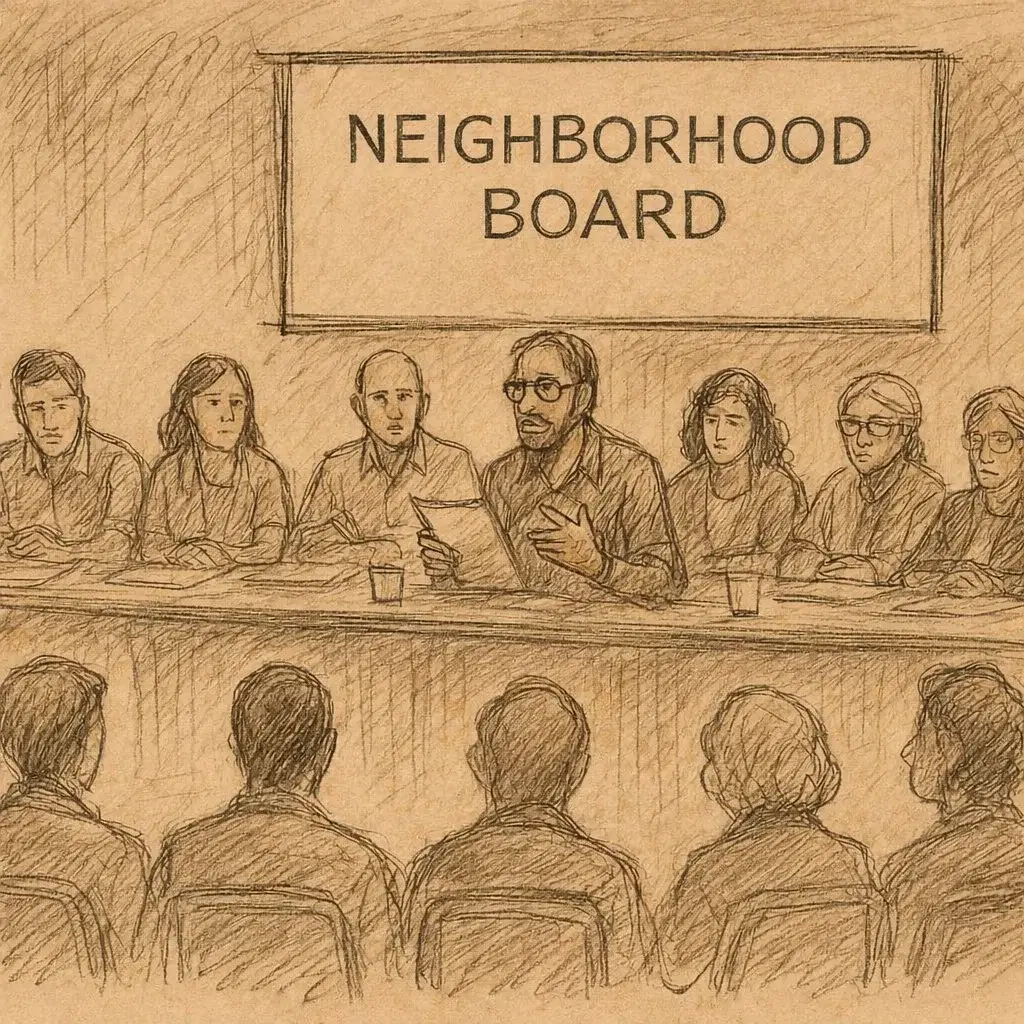
No 10 Makiki-Lower Punchbowl-Tantalus Neighborhood Board Regular Meeting July 2026
Listen to this article:
10 Makiki-Tantalus Neighborhood Board Meeting – July 18, 2026
Call to Order and Attendance
Chair Nathan Char called the regular meeting of the Makiki–Lower Punchbowl–Tantalus Neighborhood Board No. 10 to order at 6:01 p.m. A quorum was certified with nine members present at the start, with additional members participating later in person or online. The meeting concluded at 8:05 p.m.
Honolulu Fire Department Report and Hiking Safety
Makiki Fire Station Captain Goh and Firefighter Hanohano Hong reported 114 medical calls and two hazardous-material incidents for July. Their monthly safety message focused on summer hiking: residents were advised to select trails appropriate to their skill and stamina, check rain, wind, and ocean-swell forecasts, remain on marked trails, avoid taking risks for photographs, hike with a companion, tell someone their plans, monitor the time, and return before dark. A resident thanked the department for its service and noted the approaching September 11 anniversary and the ties between Hawaiʻi and New York. Captain Goh added that the Honolulu Fire Department is celebrating its 175th anniversary in 2026 and has held events throughout the year.
Honolulu Police Department Crime Statistics
District 1 Sergeant Wakabayashi presented June crime and service statistics for Makiki. Motor-vehicle thefts fell from 21 in the prior month to nine, theft cases declined from 19 to 14, assaults dropped from eight to four, motor-vehicle collisions declined from 101 to 84, and calls for service decreased from 1,825 to 1,752. Burglaries rose from four to five, unauthorized entry into motor vehicles increased from five to seven, graffiti increased from zero to one, and drug cases rose from zero to four. Sexual-assault cases remained at zero.
Parking, Speeding, Noise, and Intersection Enforcement
Temporary District 1 Major Paul Okamoto reported targeted enforcement in response to earlier neighborhood concerns. HPD issued four parking citations around Iolani and Magellan and seven citations near the new high-rise at Alapaʻi and Prospect, where construction trucks continued to create problems. A review dating back to June 2025 found three documented motor-vehicle collisions at Prospect and Magazine, although a nearby resident said that some serious-looking crashes may not have generated formal reports. On H-1, officers made one excessive-speeding arrest, issued five excessive-speeding citations and three regular speeding citations, and gave three warnings. On Pali Highway, HPD issued one excessive-speeding citation, three regular speeding citations, and four warnings. Enforcement on Ala Moana Boulevard resulted in two citations and two warnings. Officers also issued 45 citations for blocking the intersection at Piʻikoi and Lunalilo and nine citations during loud-muffler operations.
Additional Traffic and Public-Safety Concerns
Bridget Scott asked HPD to review crashes at Wilder and Kīnaʻu/Kīamoku after a recent collision in which a person reportedly left without making a report; Major Okamoto agreed to provide information at the next meeting regarding Wilder and Kīamoku. A resident of Prospect and Magazine said she has photographs of multiple collisions that left vehicles disabled and asked whether HPD’s statistics could understate the problem when drivers only exchange information or no formal report is completed. HPD confirmed that an incident can occur without a written police report and agreed to discuss the location and available call data outside the meeting. The board also reported that residents of Kolo Nahe Place, below a Tantalus lookout, found bullets on their rooftops after someone reportedly fired a gun from above. The chair agreed to provide HPD with the date so the department could locate the report and investigate.
Homelessness and Shelter Use
A board member observed that fewer unhoused people appeared to be gathering around Kīnaʻu/Kīamoku and Lunalilo and asked whether they had entered shelters. Major Okamoto said HPD does not have precise tracking data and acknowledged that enforcement can displace people to other locations. However, city shelter-bed occupancy has increased, suggesting that at least some people may be accepting shelter. He said services are offered during encounters but are refused in the overwhelming majority of cases, although some individuals eventually accept assistance.
Mobile Camera Trailers
Assistant Chief Brian Lynch discussed HPD’s mobile surveillance and deterrence trailers. A prior deployment at scenic lookouts addressed an area that had experienced approximately 40 to 80 vehicle break-ins per month. After the trailers were installed, HPD recorded no break-ins over more than six months; Lynch said the visible presence of the equipment appeared to be a major deterrent even without relying on camera evidence. HPD wants to expand the program to locations such as central Makiki and the Makiki Shopping Center area, but procurement and funding have delayed the effort after an identified vendor could not satisfy city compliance requirements. HPD is now searching for another eligible vendor.
Drone as a First Responder Pilot
Assistant Chief Lynch announced that HPD is developing a pilot “Drone as a First Responder,” or DFR, program. Drones would be dispatched to selected priority-one or in-progress 911 calls, giving responding officers early visual information while patrol vehicles are still traveling to the scene. Examples included traffic collisions, fleeing vehicles, robberies, burglary suspects, fires, missing kūpuna, lost hikers, and reports of gunfire. A drone could reach winding Tantalus roads more quickly than a patrol car, identify a suspect vehicle, locate evidence, or use infrared imaging at night to find missing people or suspects hiding in vegetation. The drones would be relatively compact, have four propellers, cameras, recording capability, infrared sensors, navigation lights, and visible blue police lights. HPD described the initiative as a limited pilot rather than continuous islandwide operation, with a longer-term goal of developing broader coverage after procedures, funding, and public safeguards are established.
Drone Privacy, Fireworks, and Federal Access
HPD emphasized that DFR drones would not conduct unrestricted patrols or search for violations without a call; they would respond to 911 incidents under constitutional and departmental restrictions. HPD plans public outreach and a webpage on honolulupd.org explaining the program and providing a way to raise concerns. Fireworks enforcement would be handled somewhat differently because a state law enacted in January permits drones to search for illegal fireworks activity, particularly on New Year’s Eve and the Fourth of July. Lynch said Fourth of July fireworks activity was substantially lower than the previous year and noted HPD’s partnership with the state Department of Law Enforcement, which has authority at the ports. He cited a prior seizure of approximately eight shipping containers of fireworks as evidence that interception at the docks can reduce illegal supply. In response to another question, Lynch said he did not expect HPD to loan DFR equipment to federal agencies and stressed that doing so would conflict with the program’s community-focused restrictions and risk public trust.
Reports of Suspected Illegal Activity
An online resident reported possible illegal activity on the second floor of 1272 South King Street, near the Tipsy Pig. She said people had asked her for an access code and referred to parties or activities that made her uncomfortable. HPD advised calling 911 when criminal activity is observed and otherwise contacting the district so community-policing or patrol officers can investigate recurring patterns; Major Okamoto invited her to email specific information before his temporary District 1 assignment ends. Another resident, Selina from Young Street, described years of suspected illegal activity in or below her building, including odors or fumes entering her unit and making her ill. She said she had called police many times and had unsuccessfully sought building-camera assistance from management. HPD clarified that drones cannot look through curtains or windows and arranged for her to speak privately with an officer so the department could collect details and report back.
District 1 Leadership Transition
A resident thanked Major Okamoto for his temporary service in District 1 and noted improvements around a nearby business. Okamoto confirmed that he would return to Waikīkī after approximately one more week and that the regular district major would return during the week of July 26. The transcript referred to the returning official as both Major Henry and Major Roberts, with Okamoto ultimately stating that Major Roberts would return.
Board Officer Elections
The board elected officers for the term running from July 2026 through June 30, 2027. Nathan Char nominated himself for chair and was elected with 11 votes and one abstention. John Steelquist nominated himself for vice chair and was elected by the same margin. Chair Char nominated Adam Kirchman for secretary; Kirchman also received 11 votes with one abstention. Members explained that the secretary acts when neighborhood commission staff are unavailable, including taking notes at special meetings, and that the treasurer is fourth in the line of succession. No member accepted nomination for treasurer; Chuck Lee declined after being nominated, and the board postponed that election until a future meeting. Members were reminded that a board member elected to the state House would have to vacate the neighborhood-board seat.
Mayor’s Office and School-Zone Speed Limits
Mayor Rick Blangiardi’s representative, Megan Johnson, submitted written responses to issues raised in June and highlighted city work on disaster preparedness, Honolulu Zoo leadership, a managing director’s office transition, enclosed refuse containers in Waikīkī, Kailua infrastructure, and Honolulu’s high ranking among U.S. public-transit systems. She announced implementation of Ordinance 24-32, which lowers speed limits on city roads bordering schools from 25 mph “when children are present” to 20 mph from 6 a.m. to 6 p.m. on school days. The city will install or replace signs within 1,000 feet of schools where signs are missing, faded, or below current federal standards. Because more than 200 schools and thousands of signs are involved, implementation will occur in phases over several years, beginning with public schools. Priorities will be based on enrollment, Title I status, the number of students within walking distance, grade level, crash history, and speeding concerns. DTS will ask other roadway owners to make equivalent changes where the city lacks jurisdiction. A board member also asked the mayor’s office to identify and replace missing speed-limit signs throughout Makiki, not only near schools, and Johnson agreed to forward the request.
City Council Reports and Community Events
Council Member Scott Nishimoto’s representative announced the Shinshu Kyokai Bon Dance for the upcoming Friday and Saturday, with free parking at Central Union Church; “Cycle This Summer” at Sheridan Park that Saturday; and a free Mānoa emergency-response training on July 25 at Mānoa District Park Pavilion covering disaster preparation and basic first aid. A board member thanked Nishimoto’s office for installing fencing around the garden at Makiki District Park and requested additional lighting. No oral report was presented from Council Member Tyler Dos Santos-Tam’s office.
State Transportation Signage and H-1 Work
Governor Josh Green’s representative, Russell Pang, followed up on traffic concerns around Kīwalo, Lunalilo, and Kīamoku. A faded 25 mph sign near Kīwalo after the Lunalilo off-ramp was placed under a replacement work order and may already have been replaced. A yellow 25 mph advisory sign is also posted on H-1 before the exit. A missing speed-limit sign along Kīamoku before it turns into Lunalilo was referred for reinstallation. Trees blocking a one-way sign and an underpass walkway sign were also identified for trimming, along with overgrown vegetation. Pang said the H-1 improvement project from the Miller Street overpass to the Kapiʻolani interchange is continuing, focusing on guardrails, electrical work, and related improvements rather than freeway resurfacing. The Ward Avenue eastbound on-ramp was scheduled to close nightly from 8:30 p.m. to 4:30 a.m. from Sunday, July 19, through Thursday, July 23, with drivers detoured to the Piʻikoi on-ramp. Later work will close the Piʻikoi on-ramp for guardrail improvements, while postponed Kīnaʻu off-ramp work will likely be rescheduled for August. All dates remain weather-dependent.
Public and Private Road Responsibilities
Residents asked whether government maps identify every traffic sign and private road so community members can report missing or damaged signs. Pang agreed to investigate whether such public maps exist. One resident from Pensacola and Davenport said 311 classified Davenport as private and told him that a missing no-parking sign was his responsibility, leading him to replace the sign and repaint curbs himself. He asked how a neighborhood might transfer a private road to city jurisdiction so sign and curb maintenance would become a public responsibility. Pang agreed to refer the issue to the city Department of Transportation Services. The state also agreed to ask engineers whether pedestrian space or accessibility could be expanded on the Kīamoku overpass.
Roosevelt High School Gym and Emergency Shelter
Pang reported that Roosevelt High School’s new 55,000-square-foot gymnasium was dedicated June 24, followed by a July 11 community open house. In addition to athletics and school gatherings, the facility was built as an enhanced hurricane-protection area capable of serving as an emergency shelter for the school and surrounding community. A resident asked whether it includes an emergency generator and photovoltaic panels. Pang believed it has solar photovoltaic equipment but could not confirm the generator and shared a state news release for further details.
Roosevelt High School Principal Kimberly Fuller
New Roosevelt High School Principal Kimberly Fuller introduced herself after beginning the position on July 1. She previously worked for about 16 years as a Kaiser High School special-education teacher, served as a McKinley High School vice principal, helped establish off-site alternative-learning programs for Honolulu District high-school students, became principal at Linapuni Elementary, and temporarily led Kahala Elementary. A Pauoa Valley resident, she said she sought the Roosevelt role to return to high-school education and serve her home community. Fuller praised the multigenerational turnout at the gym open house, including alumni from 1960, and committed to attending neighborhood-board meetings and working with residents. She invited Oʻahu Resiliency Hub representatives to coordinate with the school and the state emergency branch before publicizing shelter arrangements. Fuller also discussed the new high-school financial-literacy requirement, explaining that schools have autonomy to incorporate it through advisory programs, electives, or other coursework; she did not yet know whether similar instruction would extend to middle or elementary schools.
Legislative Reports and Capitol Renovations
Representative Kim Coco Iwamoto’s office reported that work has begun on proposals for the next legislative session and invited residents to submit ideas. Capitol renovations beginning around July 29 will leave the office without physical space for approximately one to two months, although staff will remain reachable by telephone and email. The “Nice Neighborhoods” meetings normally associated with the office have been suspended through the end of 2026 and are expected to resume in 2027. Representative Ikaika Olds likewise said his office would temporarily close during the first renovation phase for approximately a month, with phone contact remaining available.
New E-Bike and High-Speed Electric Vehicle Law
Representative Olds highlighted Act 259, signed the previous day, which creates three classes of e-bikes and distinguishes them from faster electric vehicles. Qualifying e-bikes must be rated below 750 watts and unable to exceed 28 mph. Riders under 18 must wear helmets, and children under 15 may not operate them. Electric vehicles exceeding 750 watts or 28 mph are classified as high-speed electric vehicles rather than bicycles and may not be operated on public roads, bike lanes, bike paths, sidewalks, or other public rights-of-way until further regulation is established. Mopeds and electric motorcycles are also prohibited from bike lanes and paths, including protected routes such as King Street. Olds acknowledged that enforcement will create a substantial task for HPD but said the law responds to repeated community complaints about groups riding fast electric vehicles, running lights, and performing wheelies.
Washington Middle School Music Facility
A board member asked Representative Olds to investigate whether Washington Middle School students are adequately using the school’s multimillion-dollar music or studio facility and whether it could support music and STEM-related programs. Olds said he had already spoken with Principal Ranaw for a separate reason and understood that the studio may be approaching use, but he agreed to seek a clearer answer from the Department of Education and report back.
Ala Wai Ferry and Flood Mitigation Proposals
During community concerns, resident Laura Ruby asked the board to consider a future presentation and resolution supporting ferries across the Ala Wai. She said pedestrian ferry crossings could remove some vehicle trips from surrounding roads, provide accessible transportation options, and preserve broad views over the water. She also urged Makiki to create a flood-mitigation committee similar to efforts in Moʻiliʻili–McCully and potentially Mānoa and Pālolo. She encouraged participation in the Ala Wai Watershed Collaboration so residents with direct knowledge of neighborhood flooding and stream conditions can contribute to planning. Later, she asked the board to use the traditional or proper names of local streams rather than referring generically to a “Makiki Canal.”
Community Identity, Disaster Resilience, and Board Leadership
Former board member Claire Tam reminded current members that serving on the board includes a willingness to accept officer responsibilities, noting that secretary and treasurer duties are generally manageable. She also objected to identifying a newly erected structure at 1615 Alapaʻi as being “in the heart of Makiki,” emphasizing that Makiki, Lower Punchbowl, and Tantalus are distinct communities within Board District 10 and that the structure is in Punchbowl. Tam reported that she now serves on the leadership team of the Oʻahu Resiliency Hub and expects to bring future information about disaster preparation and mitigation.
Wilder Avenue and Upper Piʻikoi Safer Streets Initiative
Honolulu Complete Streets planner Renee Espiau presented an early-stage safety initiative for Wilder Avenue and Upper Piʻikoi Street under a federally funded Safe Streets for All grant worth several million dollars. The broader project examines seven high-injury corridors in urban Honolulu. On Wilder, the principal study area extends from Pensacola to Punahou, with Wilder–Piʻikoi, Wilder–Kīamoku, and Wilder–Makiki identified as especially concerning intersections. Both Wilder and Upper Piʻikoi have 25 mph limits and parking along much of both sides, but neither currently has bicycle facilities despite inclusion in the Oʻahu Bike Plan and Pedestrian Plan. The corridors show an overrepresentation of serious crashes, with pedestrians, bicyclists, motorcyclists, and other unprotected travelers suffering disproportionate injury severity.
Proposed Complete Streets Improvements
Existing problems include deteriorated or discontinuous sidewalks, pathways that shift around roadway-widening setbacks, inaccessible routes for wheelchair users, long crossings, uncontrolled crosswalks without traffic signals or stop signs, inadequate bus-stop amenities, left-turn conflicts, bicycles and scooters using narrow sidewalks, and irregular parking within building setback areas. Potential solutions include sidewalk and curb-ramp upgrades, accessibility improvements, curb extensions, raised traffic-calming treatments, safer crosswalks, bus-stop improvements, protected bicycle facilities, dedicated left-turn arrangements, altered signal timing or protected turn phases, revised lane configurations, and other speed-management measures. Espiau emphasized that a pedestrian struck at 20 mph has roughly a 90% chance of survival, while survivability falls much more sharply than a simple proportional reduction as speed rises to 40 mph.
Repaving Timeline, Public Meeting, and Parking Effects
Wilder, Beretania, Pensacola, and Piʻikoi are expected to be repaved within approximately the next year, creating an opportunity to install near-term striping and signage changes before more expensive concrete work is funded. City complete-streets law requires transportation and repaving projects to incorporate safety improvements. A public meeting was tentatively scheduled for August 18 from 6:30 to 8:30 p.m. at Makiki District Park, pending final confirmation, and residents were invited to submit location-specific comments through an online map. The city plans neighborhood mailings and direct outreach. Board members warned that the removal of on-street parking will be a major concern and requested exact counts. Espiau said Wilder may lose some spaces, while Upper Piʻikoi may gain spaces through organized angle parking in setback areas. The city has parking-utilization data and will seek to preserve spaces where possible, but it will prioritize public safety. Residents also requested stronger education and enforcement for bicyclists, e-bike riders, and moped users who make illegal U-turns, cross against signals, or ride unpredictably.
Resolution Honoring Eddie Cruz Ochoa Jr.
The board considered a revised resolution honoring Eddie “Cruz” Ochoa Jr., who was killed in a traffic collision near Kīwalo and Lunalilo, and calling for immediate pedestrian-safety improvements. Janelle Salasa moved to substitute the updated draft prepared with Ian Ross and the Ochoa family for the version attached to the agenda, and the motion was seconded. Cruz’s parents described the continuing grief caused by the loss of their firstborn son and urged the city to act before another family experiences the same tragedy. They specifically requested a rapid safety treatment, such as a hump or comparable traffic-calming device on Kīwalo, arguing that drivers exiting the freeway retain excessive speed and that waiting for a lengthy study could expose more pedestrians to danger. The family reported that a locally circulated petition had gathered more than 500 signatures in two days.
Community Testimony on the Ochoa Resolution
Ian Ross urged the board to transform community discussion into urgent action and praised the family for channeling private grief into a public effort to protect others. Bridget Scott, who heard the fatal collision, described repeated dangerous conditions at Kīwalo and Wilder and at Kīamoku and Wilder, including drivers turning against red lights and failing to yield. She suggested immediate placement of portable radar-feedback signs that display approaching vehicle speeds. The board agreed without objection to attach the petition and its signatures to the resolution for transmission to elected officials. No objections were voiced when adoption of the amended resolution was raised, although discussion continued concerning the police report and no separate roll-call tally was announced before the board moved on. Members also requested the collision report and noted that communication between HPD investigators and the family had initially been limited.
Metropolitan Transportation Planning Concerns
Board member Adam Kirchman, who serves on the Oʻahu Metropolitan Planning Organization’s Citizen Advisory Committee, said he was frustrated that a community road concern he raised at his first committee meeting was deemed outside that forum. He argued that a federally required transportation-planning body covering roads, buses, bicycles, and other modes should meaningfully receive neighborhood-level input. In connection with the Ochoa resolution and the Complete Streets presentation, he said he would write to OMPO and the city’s safer-streets program to request clearer communication and stronger consideration of community testimony.
Other Board Business
The board approved the written summary of the June 18, 2026 meeting without corrections. The candidate-forum permitted-interaction group had not yet met, and Vice Chair Steelquist said members would try to convene after the meeting. There was no oral Board of Water Supply presentation because its representative was unavailable, and no substantive discussion occurred under the listed Makiki stream-improvements item.
Next Meeting and Public Access
The next regular meeting was scheduled for Thursday, August 20, 2026, at 6:00 p.m. at the Old Makiki Community Library on the second floor of Makiki District Park, with online participation available through Webex. Recordings are scheduled for ʻŌlelo Focus 49 on the first Friday of the month at 9:00 p.m. and the third Sunday at 3:00 p.m. Board information remains available through its Facebook page and the City and County of Honolulu Neighborhood Commission Office website.