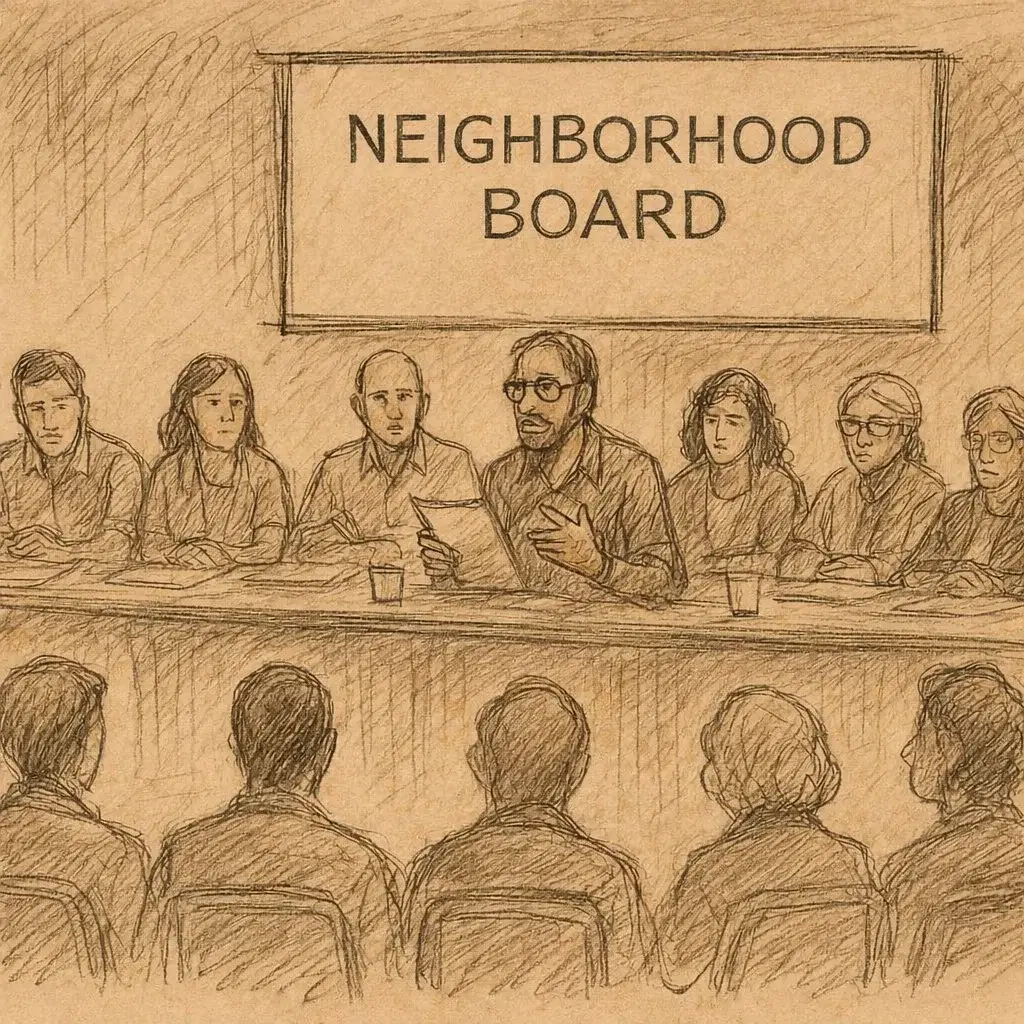
No 10 Makiki Lower Punchbowl Tantalus Neighborhood Board Regular Meeting May 2025
Listen to this article:
10 Makiki-Tantalus Neighborhood Board Meeting – May 22, 2026
Meeting Opening, Roll Call, and Attendance
The meeting was called to order at 6:00 p.m. A roll call established that 12 members were initially present, constituting a quorum, with at least one additional member arriving shortly after. The board proceeded with agency reports and public testimony, covering neighborhood crime, traffic safety, homelessness near canals and streams, wildfire preparedness, liquor-licensed establishments, water infrastructure construction, storm recovery, housing development impacts, and upcoming board business. The meeting adjourned at 8:16 p.m.
Honolulu Police Department Crime Statistics and Public Safety Apps
HPD Sergeant Brian Morris presented District 1 statistics for April 2026, noting that the department’s reporting now runs about one month behind. The district recorded 11 motor vehicle thefts, down from 13 the previous month; 3 burglaries, unchanged from the prior month; 22 thefts, up from 16; 4 unauthorized motor vehicle entries or car break-ins, down from 8; 10 assaults, up from 8; 3 sex assaults, up from zero; zero graffiti cases, unchanged; 2 drug cases, down from 3; and 77 motor vehicle collisions, up from 68. He also distributed information on the city’s 311 app for reporting issues and requesting police services, and on Honolulu Alert, which sends emergency notifications such as flooding and severe weather warnings. The discussion reflected both continuing concern about property crime and a sharper rise in collisions, which residents connected to worsening driving behavior and difficult street design.
New Moped Law Enforcement
HPD highlighted recent changes to moped laws and said enforcement has begun. Riders are now required to wear a helmet fastened under the chin, cannot carry passengers, and must be at least 16 years old and licensed to drive a moped. Police described the changes as overdue and said residents should expect visible enforcement. The issue directly affects a neighborhood with heavy two-wheeled vehicle use, dense traffic, and recurring concerns about speeding and crashes.
HPD Follow-Up on Prior Neighborhood Complaints
Interim Major Paul Okamoto gave a detailed follow-up on issues raised at the previous meeting. Regarding homeless encampments in canals around Makiki, officers logged 150 checks over the past month, issued 9 citations, requested new state trespass signs, and were planning another cleanup with partner agencies. On the malfunctioning pedestrian crosswalk near Times Supermarket, he said the site falls in District 7 rather than District 1, but HPD followed up with the Department of Transportation Services, which reported that repairs are underway and parts were on order. On cars racing on Tantalus, HPD increased presence and issued 2 loud muffler citations, with a promise of more attention next month. At Lunalilo and Pensacola, where speeding and red-light running had been reported, HPD conducted 10 operations and issued 87 citations for various violations. On nighttime loud mufflers and speeding around Beretania, especially between 10 p.m. and 1 a.m., HPD issued 23 loud muffler citations and 22 speeding citations in and around District 1. At 1617 Alapai, where construction crews had been parking illegally, HPD contacted Structural Contracting, whose supervisor agreed to be more diligent, and officers cited 2 vehicles for blocking driveways and related violations. The report showed repeated use of directed enforcement in direct response to resident complaints, especially in areas where daily quality-of-life disruptions have been persistent.
“Tipsy Pig” Enforcement and Liquor Commission Activity
One of the longest discussions centered on disturbances linked to Tipsy Pig. Major Okamoto said HPD conducted a zero-tolerance operation after a major event there, issuing 22 citations, including 4 for loud mufflers and 2 for parking, while towing 2 cars and 1 motorcycle. He also mentioned a criminal littering citation. He credited Lieutenant Lee and officers for the enforcement and said HPD intends to send a message when events at the establishment spill into the neighborhood.
Liquor Commission Supervising Investigator Glenn Nishigata reported that the Commission conducted a joint inspection with HPD on April 25. Investigators issued two regulatory warnings, one for employee records and one because a manager lacked the required registration card on his person. A follow-up compliance inspection on May 14 found both issues corrected. Investigators also checked IDs of patrons drinking inside with HPD support and found them to be 21 or older. Nishigata said the Commission would continue random inspections and urged residents to use HNL 311 to route complaints to the proper city agencies.
Board members and residents described the establishment as an ongoing source of loud driving, reckless behavior, fireworks, disorderly conduct, and fear for nearby residents. Several speakers argued that repeated warnings and isolated enforcement have not changed behavior. A resident recounted a March 21 incident involving a drunken and belligerent employee who was allegedly allowed back into the bar after drinking from a bottle pulled from nearby bushes. Another described fireworks lit by bar patrons or associates across the street on Cedar, with witnesses available. Residents said the pattern has worsened over the last several years and stressed that the issue is not normal nightlife but a repeated disregard for neighbors. Major Okamoto responded by reiterating that officers have been instructed to use zero-tolerance enforcement when staffing allows and asked residents to continue calling 911 when major events occur, since public posting of events may become less obvious on social media. Discussion also turned toward the establishment’s upcoming liquor license renewal in June, with one resident saying materials would likely be submitted for review of whether the business should continue operating there.
Other Late-Night Establishments: Vintage Harbor and Makani
Residents expanded the nightlife discussion beyond Tipsy Pig. Concerns were raised about Vintage Harbor at 1269 South Beretania, described as a retail space hosting events with alcohol, loud noise, and young patrons moving into neighboring properties with drinks. A newer venue called Makani on Wilder was also identified as becoming disruptive, with reports of loud music until 2 a.m., Thursday through Saturday activity, trespassing, parking on private property, and a nightclub-like atmosphere despite social media advertising indicating operation until 11 p.m. The Liquor Commission agreed to check what type of liquor license Makani holds, and the board discussed reaching out to the owner. A procedural caution was later raised that neighborhood boards should communicate through appropriate government channels rather than act as independent regulators of private businesses.
Questions About HPD Response Practices and 911 Delays
A board member raised concern about what she viewed as an excessive police response to a call near Queen’s, where four police cars allegedly blocked a state driveway and caused her to be late for work. She said she understood officer safety but felt the response was disproportionate. She also reported community complaints about long waits on the 911 or non-emergency line, including one report of an eight-minute wait, and noted that frustrations had appeared on social media. Major Okamoto said HPD would discuss over-response at its next staff meeting, acknowledging that some calls warrant a large police presence while others do not. He also said he would forward the concerns about call handling to communications. The exchange reflected resident expectations that emergency services remain both responsive and minimally disruptive.
Street Fight on Pensacola
A resident reported a large early morning street fight on Pensacola shortly after the previous board meeting, involving roughly 12 or 13 teenage boys in two groups, with one youth reportedly knocked unconscious and paramedics responding. He said many neighbors had talked about it, but there appeared to be little public follow-up. HPD said they were not familiar with the specific call and were unsure whether a formal police report had been made if everyone fled. The resident described the incident as dangerous and emblematic of disorder that undermines neighborhood safety.
Traffic Congestion and Lane Design Near Safeway, Piikoi, and the Freeway
Several residents described confusing and dysfunctional traffic patterns near Beretania, Piikoi, and freeway approaches. One board member said drivers turning right from Beretania toward Piikoi near Safeway often block through lanes because they wait too long before trying to merge, causing backups at all times of day. Major Okamoto suggested this may be a traffic design problem and said he would speak with DTS contacts about possible delineators to force earlier merging. Another resident raised conditions on Piikoi near the park and freeway-bound lanes, suggesting a study of lane assignments to reduce conflict between motorists heading uphill and those entering the freeway. HPD emphasized that such redesign issues belong mainly to DTS, although the department continues to cite intersection-blocking and related violations there.
Prospect and Magazine Intersection Safety
A resident living at Prospect and Magazine said she sees frequent crashes at that blind, three-way convergence, often involving mopeds, and noted a recent incident where a vehicle ended up parked sideways after a crash. She described the area as hazardous for both drivers and pedestrians because of poor visibility and the lack of sidewalks. HPD again referred the matter to DTS, suggesting that crash patterns and engineering remedies such as signage or street changes should be studied by transportation officials. The intersection was one of several examples in which residents linked enforcement issues to deeper street design shortcomings.
Illegal Parking, Construction Access, and Safety at 1617 Alapai
Residents from 1617 Alapai thanked HPD for increased patrols and citations but said construction-related parking remains a serious problem on the narrow street, which lacks sidewalks and is heavily used by adults, children, and pets. They said the five-way intersection nearby has become chaotic and reported progress with DTS on flashing stop signs expected in June. One speaker described a recent incident in which construction workers blocked a responding fire truck from entering Alapai, forcing firefighters to approach from another direction during an alarm response. HPD said it would speak again with Island Structural Contracting and continue enforcement as trades intensify in July. This was presented as both a daily quality-of-life issue and an emergency access problem.
Illegal Parking and Trash Collection on Keawe and Leiloke Streets
Residents from upper Keawe and Leiloke described illegal corner parking that interferes with garbage pickup and limits large vehicle access in very narrow streets near Catholic Charities and Pono Hale. One resident said the neighborhood has resorted to setting out cones because by the time police issue citations the garbage truck has already gone. Another said new construction of seven houses on a nearby lot will intensify access problems further. Board members and city representatives repeatedly pointed them toward DTS for signage and curb-marking solutions and to the 311 app for photo-based complaints, while HPD’s role remained focused on enforcement once restrictions are posted.
Malfunctioning Crosswalk Buttons and Other DTS Issues
Residents said multiple pedestrian crosswalk buttons on Beretania and King do not activate walk signals when pressed. They asked who is responsible for these failures and were told that DTS handles signal maintenance, with 311 also available for reporting. The meeting repeatedly returned to similar complaints about crosswalks, lane striping, no-parking signs, and road design, leading a board member to ask that DTS attend the next meeting. The chair confirmed DTS had already been invited.
Homeless Encampments Near Canals and Streams
Homelessness in waterways and canal corridors remained a major concern. Residents described a recurring pattern in which agencies clean up encampments, close cases, and then see the camps immediately reappear. One speaker referenced Liholiho Village and said he had reported conditions through 911 and HNL 311, with a cleanup completed April 23 before people returned almost immediately. Major Okamoto said enforcement, cleanup, replacement of signs, and barrier repair are currently the only available tools, even though the process can feel futile. He said shelter and services are routinely offered during enforcement, but most people decline. He urged continued reporting, arguing that frequent intervention may eventually change the culture of the area and push people either into services or elsewhere.
Detailed Presentation on the Makiki–Liholiho Bridge Encampment and Flood Risk
Resident Winston Sung gave a photo-based presentation focused on the encampment beneath the Makiki–Liholiho bridge and its implications for flooding. He connected current conditions to the severe Manoa flooding two years earlier, stating that flood damage then exceeded $80 million. He showed images taken after recent Kona Low storms that he said depict debris, dirt, bicycles, boards, fencing, stairs, and other materials being accumulated under the bridge, including new materials brought in immediately after storm flows cleared earlier piles. He also described seeing a dog and a knife at the site, and reported calling police without receiving a report back. He said a cleanup ticket was marked closed on April 23, but the encampment resumed almost immediately with plants, logs, and more fill material.
Sung argued that the cycle of cleanup and reoccupation is not enough given the danger of obstruction during future heavy rain. He proposed a multi-agency response involving human services outreach, stronger law enforcement tied to stream protection rules, physical barriers to make access harder, removal of dirt and fill under the bridge, and possibly structural interventions downstream to maintain water in a way that would discourage rebuilding beneath the bridge. The chair noted that the Department of Facility Maintenance had been invited to a future meeting for a fuller discussion. The presentation underscored resident fear that unmanaged encampments in stream channels could turn a chronic social issue into a major flood hazard.
Honolulu Fire Department Incident Statistics and Wildfire Warning
Honolulu Fire Department representatives arrived later in the meeting and reported April 2026 statistics. The district experienced 1 wildland fire, 2 cooking fires, and 20 activated alarms where no fire was found. HFD also responded to 120 medical emergencies, 2 motor vehicle crashes involving pedestrians, and 4 crashes involving vehicles only. Firefighters emphasized that Hawaii is entering a period of elevated wildfire risk due to dry conditions, tall grass, and shifting winds, and said most wildfires are human-caused and preventable. Residents were urged to clear dry brush around homes, avoid parking on dry grass because hot exhaust can ignite it, and avoid spark-producing activities during hot, windy weather. They were directed to fire.honolulu.gov and hawaiiwildfire.org for more information.
April 30 Fire Near Round Top / Mauna Laha
A resident asked about a fire deep off Round Top Drive near the hairpin turn and whether it had involved a home, garage, or vehicle. HFD said it was likely the incident off Mauna Laha Road and described it not as a house fire but more as a large rubbish and auto fire involving a dilapidated carport, a couple of vehicles, and accumulated rubbish. The clarification mattered because residents had been unsure whether nearby trees or homes were threatened.
Fire Mitigation in Brush-Adjacent Neighborhood Areas
A board member asked whether HFD and other agencies are proactively identifying and clearing hazardous overgrowth in Punchbowl, Papakolea, and Tantalus areas where homes interface with brush. She noted increasing roadside foliage near condominiums and overgrown roads in higher areas and asked whether departments are coordinating before a larger fire occurs. HFD responded that it identifies areas such as Punchbowl and Papakolea where homes meet brush as “target hazards” during brush fire season and incorporates them into pre-planning. The fire captain had to leave abruptly on a 911 call before fully addressing interagency coordination, but promised a more detailed answer next month. The exchange highlighted concern that the district may not be a traditional high-fire zone but still contains vulnerable edge conditions.
Board of Water Supply: Pensacola Hydrants and Pipeline Work
Board of Water Supply representative Jimmy Anos responded to a previous concern about fire hydrants on Pensacola covered in plastic bags. He said those are newly installed hydrants connected to a new 24-inch water line that is not yet in service. Several stages of work remain before the line and hydrants can be activated. He clarified that older hydrants in the area remain operational and will not be removed until the new ones are in service, so fire protection capacity remains available in the meantime. He also reported no water main breaks in the previous month. The issue tied directly into both fire safety and the long-running, disruptive Pensacola construction project.
Water Conservation Rebate Program
BWS also announced an expanded WaterSense toilet rebate program offering up to $200 per toilet. WaterSense-labeled toilets use 1.2 gallons per flush or less and can reduce water waste by 20 to 60 percent, saving as much as 13,000 gallons annually. Rebate amounts cannot exceed purchase price, and the increase in rebate value was supported by the city’s Department of Environmental Services. Dye tablets and informational flyers were made available at the meeting. While less contentious than other topics, the announcement related to utility costs and water conservation on Oahu.
Frustration Over the Pensacola / Kalawahine Pipeline Project
The strongest utility-related criticism came from a Pensacola resident speaking about the Kalawahine Pipeline Project. He said public timelines originally projected completion in late 2024, but the project has continued far beyond that with little clear communication to residents. He described years of noise, vibration, lane shifts, congestion, and restricted access, saying construction has disrupted both daily life and his ability to conduct professional virtual training and client calls from home. He criticized outdated public information, saying Mitunaga Associates claims constant communication with residents though he has received none, and that BWS website updates are technical and not meaningful to impacted households. He reviewed prior meeting records and found only one progress discussion, in March 2026, when the project was said to be 54 percent complete. Given that pace, he suggested the actual completion date could slide toward 2030 rather than the currently stated March 2027. He also complained about steel road plates near Davenport and Pensacola, saying the noise repeatedly wakes him overnight.
Board members echoed related concerns about lane closures stretching farther than active work zones, pressure impacts from major development, and the need for more accountable communication. BWS agreed to bring back monthly updates and to request attendance from more senior staff at a future meeting.
Water Pressure, New Development, and Utility Capacity
Residents asked whether the new Pensacola water line had been sized with additional housing projects and Bill 7 developments in mind, and whether growing numbers of residents or high-rise buildings affect water pressure. A resident manager said yes, pressure does decline as more buildings tap into the line and reported that his building had to install an expensive booster pump system. He said many older buildings nearby cannot afford similar upgrades and urged the board to press BWS for a plan to supplement pressure for lower Pensacola properties. BWS said these questions would be taken back to the department. The discussion linked infrastructure strain directly to ongoing densification in the corridor.
Halawa / Kalawahine Water Tank Concerns
A resident asked about the Halawahine water tank project and whether it would ever proceed. Board members said the project had effectively been stopped after strong opposition from Papakolea residents who feared slope instability could render homes unlivable. The resident then asked where the extra water for the new pipeline would come from if the tank was not built. BWS said it would check what alternate plans, if any, exist for another reservoir. The exchange showed how infrastructure projects in hillside areas remain entangled with concerns about land stability and displacement.
Concerns About Steel Plates and Construction Methods
Beyond schedule complaints, residents raised practical issues about temporary steel plates in the roadway. One resident with construction experience said the plates appear not to be properly pegged or welded down, causing them to bounce and create loud noise whenever cars pass over them. Another noted that the 311 app does not currently provide an obvious category for reporting noise caused by steel plates, making it unclear how residents should seek relief in the middle of the night. The board recognized this as a gap in both contractor practice and complaint routing.
Mayor’s Office: Kona Low Recovery and Town Hall Postponement
A representative for Mayor Rick Blangiardi submitted a written report and highlighted the city’s continuing recovery response to the Kona Low storms. She directed residents to OneOahu.org for information on home damage reporting, health and safety guidance, available assistance, and ways to support impacted communities. She also announced that previously planned mayor’s town hall meetings have been indefinitely postponed while city departments focus on storm damage response and future storm mitigation.
This drew criticism from a board member who said town halls are one of the few direct ways residents can question city leadership. He also objected to the mayor’s office relying on written reports and not always appearing in person. The representative said the written format had been requested to save meeting time and that the town halls were postponed rather than canceled, though she could not say when they would resume. The exchange reflected broader frustration with communication from city leadership.
Calls for Better DTS Communication and Accountability
Several board members used the mayor’s report to press for stronger city communication, particularly from the Department of Transportation Services. They argued that DTS has not kept communities adequately informed about lane changes, road work, or practical solutions to repeated parking and signage problems in places like Papakolea and along Pensacola. One board member said projects have degraded infrastructure from Papakolea down through Lunalilo and Pensacola without enough resident input. The mayor’s representative said those comments would be passed along and noted that DTS had been invited to the next meeting.
No-Parking Sign Enforcement on Iolani
A resident complained that no-parking signs all along Iolani are routinely ignored and said the city should either enforce them or remove them, because the current situation is confusing and ineffective. The mayor’s representative replied that while DTS handles signage, enforcement after posting and curb marking falls to HPD. The issue was another example of residents feeling stuck between agencies when regulations exist on paper but not in practice.
Seven-House Development on Keawe / Keaumoku and Permit Questions
A resident described a property at 2006 Keawe or Keaomoku, saying the lot has changed hands multiple times and is now being developed with seven houses after earlier claims that five could not be approved because the old sewer line could not handle more connections. She said heavy excavation is causing vibration in her 106-year-old house and questioned how the permit was granted. The mayor’s representative asked for the address and said the question would be referred to the Department of Planning and Permitting. The concern combined older infrastructure limits, neighborhood character, and the impact of intensified development on longtime homeowners.
Papakolea Traffic Congestion and Calls for Restriping
A Papakolea resident followed up on prior discussion about traffic on Hawaii Limo and nearby streets, saying congestion has become critical at certain times of day, stretching from the Nehoa intersection down to Lusitana and back up into Papakolea. He argued that people routinely violate existing striping and that the larger issue now is not speed but traffic frustration and resulting driver behavior. He said community members are ready to testify in support of restriping and urged the city not to wait for a future repaving project before acting. The comments highlighted escalating traffic pressure in hillside access corridors with few alternatives.
Makiki Community Garden Fence Project
Councilmember Scott Nishimoto’s office reported a major update on the long-discussed Makiki Community Garden fencing project. After a KITV story and subsequent discussions between the councilmember and Mayor Blangiardi, the administration confirmed that the Department of Parks and Recreation will put up the fence during the current fiscal year, with work anticipated to begin in mid to late June. The councilmember’s office said it had been in close communication with Amanda Kirby of the community garden. This was one of the clearest concrete outcomes reported during the meeting and reflected sustained community advocacy.
Requests for Lighting and Safety Improvements at the Garden
A board member said the garden fencing is important but not enough, arguing that lighting near the restrooms in the area also needs attention because it feels unsafe. This broadened the garden discussion from perimeter security alone to overall nighttime usability and safety in the park environment.
Bill 7 Housing, Parking Shortages, and Poor Siting
Board members spent considerable time criticizing the impacts of Bill 7 affordable housing projects in Makiki. One cited the new building at Wilder and Pensacola, saying it contains around 90 units but only about 20 parking stalls. Another said a new 53-unit project at 1617 Alapai will have perhaps 10 stalls despite there being no nearby shopping, jobs, transit service, sidewalks, or basic support infrastructure. Another resident pointed to the Makiki Banyan project with roughly 19 units and 32 stalls as a different example, but still stressed how development is changing the neighborhood. Speakers argued that residents of these buildings still own cars because bus service is not frequent enough and daily necessities are not within easy walking distance, so the projects push parking demand into already full streets. Council staff were asked to revisit Bill 7 zoning and parking rules.
The chair added that Councilmember Nishimoto had in fact introduced an amendment to Bill 7 to require more parking, but the rest of the council rejected it. The discussion made clear that density itself was not the only issue; siting, access, sidewalks, transit quality, and realistic parking assumptions were central concerns.
Need for Affordable Parking Solutions
A resident suggested that if the district is going to keep absorbing affordable housing projects with little on-site parking, the city should also look for locations for a low-cost public parking lot. She said residents are competing intensely for street parking and that requiring additional parking floors in new buildings may be more fair than pushing the burden onto existing neighborhoods.
State Response: Makiki Cemetery Storm Cleanup and Drone Surveying
Governor Josh Green’s representative reported follow-up on concerns about Makiki Cemetery after the Kona Low storms. The state cemetery office inspected the site and determined that a damaged kiawe tree needs removal and that some fallen branches remain from storm cleanup that crews were not previously able to reach. Cleanup is scheduled for June. He also announced that the Department of Accounting and General Services is surveying the state’s eight cemeteries to clarify property lines and that a drone survey at Makiki Cemetery will likely occur the following month. Residents were advised that if they see drones and workers there, it is part of that boundary work. The office also welcomed public comments and historical information about people interred in the cemeteries.
Public Input on Bills Awaiting the Governor’s Signature
The governor’s representative said the legislative session had ended and that the governor was reviewing close to 200 bills passed by the legislature. He encouraged residents to submit comments on whether those bills should be signed or vetoed and provided links to both the comment portal and the list of pending bills. This gave residents a direct route to weigh in on statewide policy at the executive stage.
Memorial Day Lei Donations for Veterans Cemetery
Residents were informed that the State Department of Defense was seeking fresh flower and lei donations for the Memorial Day ceremony at the Hawai‘i State Veterans Cemetery in Kāneʻohe. Donations would be collected Saturday, May 23, from 10 a.m. to 2 p.m. at Windward Mall, with the goal of placing a lei on every marker in a tradition similar to Punchbowl. This was offered as a community service announcement tied to the holiday.
State Resurfacing Projects Affecting Makiki
A significant transportation update came from the governor’s office regarding a new H-1 resurfacing project. Work is set to begin in the first week of June on the eastbound corridor from the Miller Street pedestrian overpass to the Kapiʻolani on-ramp. The project includes more than repaving the freeway itself; it also covers on- and off-ramps, overpasses, frontage roads, guardrails, street lighting, and signage. In or near Makiki, resurfacing is expected to include the Ward overpass, Keeaumoku overpass, Punahou overpass, Kalakaua-related overpass reference, and the long-awaited Lunalilo Street corridor from Keeaumoku to the H-1 on-ramp, along with Bingham Street from Punahou to Isenberg. Work is planned mainly for evening hours, roughly 8:30 p.m. to 4:30 a.m., and is expected to last about a year and a quarter to a year and a half.
Residents immediately asked for coordination with existing Board of Water Supply work, especially on Lunalilo near Pensacola, warning that overlapping projects would create traffic chaos. The state representative said such coordination normally occurs and promised to bring the concern back to the project team. Another board member asked for detour information and signage in advance so residents can plan alternate routes.
Senate Update: Storm-Related Budget and Flood Mitigation Funding
Senator Carol Fukunaga’s office distributed a newsletter and summarized House Bill 1800, which had passed conference and was awaiting the governor’s signature. The bill’s budget provisions include funding for storm repairs and strengthening of public facilities, retrofitting public buildings for hurricane protection statewide, siren maintenance and modernization, Alawai watershed flood prevention, Manoa Stream watershed risk reduction and debris management, debris management tied to the University of Hawaiʻi Mānoa area, and statewide traffic operational improvements. The office also circulated information on FEMA assistance deadlines and Small Business Administration disaster recovery loans. These items connected state budget decisions directly to recent storm damage, flood control, and resilience.
Representative Reports and Legislative Wrap-Up
Representative Kim Coco Iwamoto’s office asked residents of House District 25 to complete the representative’s annual constituent survey. Representative Ikaika Olds briefly highlighted House Bill 1890, which creates automatic step payment increases for public and charter school teachers, with the goal of reducing the roughly five-year, 50 percent teacher attrition rate. Although these updates were brief because of time, they added state-level context on outreach and education policy.
Banyan Tree Removal at the Makiki Banyan Project
During community concerns, a resident said she had spoken with an engineer for the contractor on the Makiki Banyan development at Wilder and Pensacola. She was told the banyan tree was removed because its roots extended into the area required for the building’s foundation and could not be divided. The engineer reportedly did not know whether cuttings had been saved. The resident noted that neighbors continue to feel insulted that the development is called “Makiki Banyan” after the tree’s destruction. The remarks reflected ongoing resentment over the symbolic and physical loss of a landmark tree during redevelopment.
Ala Wai Ferry Proposal Instead of a Bridge
Resident Laura Ruby presented a concept for an inexpensive, quickly deployable ferry across the Ala Wai Canal in place of a bridge. She argued that a ferry would preserve view planes toward Diamond Head, the Koʻolaus, and the city skyline, while avoiding a large visual structure. She described a vessel about the size of a bus, open-air, ADA accessible, using simple docks already feasible along the canal, and potentially partially subsidized through the Holo card system. She said it would be peaceful, low cost, adaptable to changing water levels, and less invasive than a bridge. Although outside the board’s core area, the proposal was framed as relevant because the neighborhood borders the canal and would be affected by any crossing choice.
Discussion of Candidate Forum Planning
Under board business, the board moved to establish a Permitted Interaction Group, or PIG, to organize a future candidate forum. The chair explained that the PIG allows a small group of board members to meet outside the usual public meeting structure to develop the forum’s format, invited participants, and questions. Four board members volunteered: John Steelquist, Nancy Depicolzuane, Adam Kirchman, and Grant Dubiak. The chair said the group would report back in June, with the aim of approving the plan then and holding the forum in July.
Kawailoa / Keeaumoku Hit-and-Run Death and Traffic Safety Resolution
The board briefly discussed traffic safety following the hit-and-run death of Cruz Ochoa on Kawalo Street. A former board chair who had attended the funeral said the family is especially interested in exploring a speed hump on the street, while understanding that other traffic-calming options may also be considered. He also said the family supports some kind of community petition that could align with a future board resolution. Another board member said she wanted to work on such a resolution and believed speed humps should be installed not just on the immediate block but on adjacent streets where slowing traffic is necessary. DTS is expected at the next meeting, where the issue will likely receive fuller discussion.
Procedural Reminder on Neighborhood Board Authority
Former board chair Tom Heinrich cautioned board members against directly contacting businesses in their official board capacity in ways that exceed the neighborhood board’s role. He said the city charter positions neighborhood boards as mechanisms for effective citizen participation in government decision-making, meaning their proper role is to communicate concerns to agencies and departments that have the legal authority to act, rather than acting as regulators themselves. His comments were prompted by discussion of writing to local establishments and served as a reminder about boundaries on board action.
Board Announcements and Next Meeting
The board announced that its next regular meeting is scheduled for Thursday, June 18, 2026, at 6:00 p.m. at Makiki District Park, in the old Makiki Community Library second floor meeting room, with Webex participation also available. Meetings are broadcast on ʻŌlelo Focus 49 on the first Friday at 9:00 p.m. and the third Sunday at 3:00 p.m. Residents were also reminded of the board’s Facebook page and city webpage for information and records. The meeting ended after more than two hours of discussion heavily focused on enforcement follow-through, traffic hazards, utility construction disruptions, housing growth, and repeated calls for city departments to improve communication with Makiki, Lower Punchbowl, and Tantalus residents.