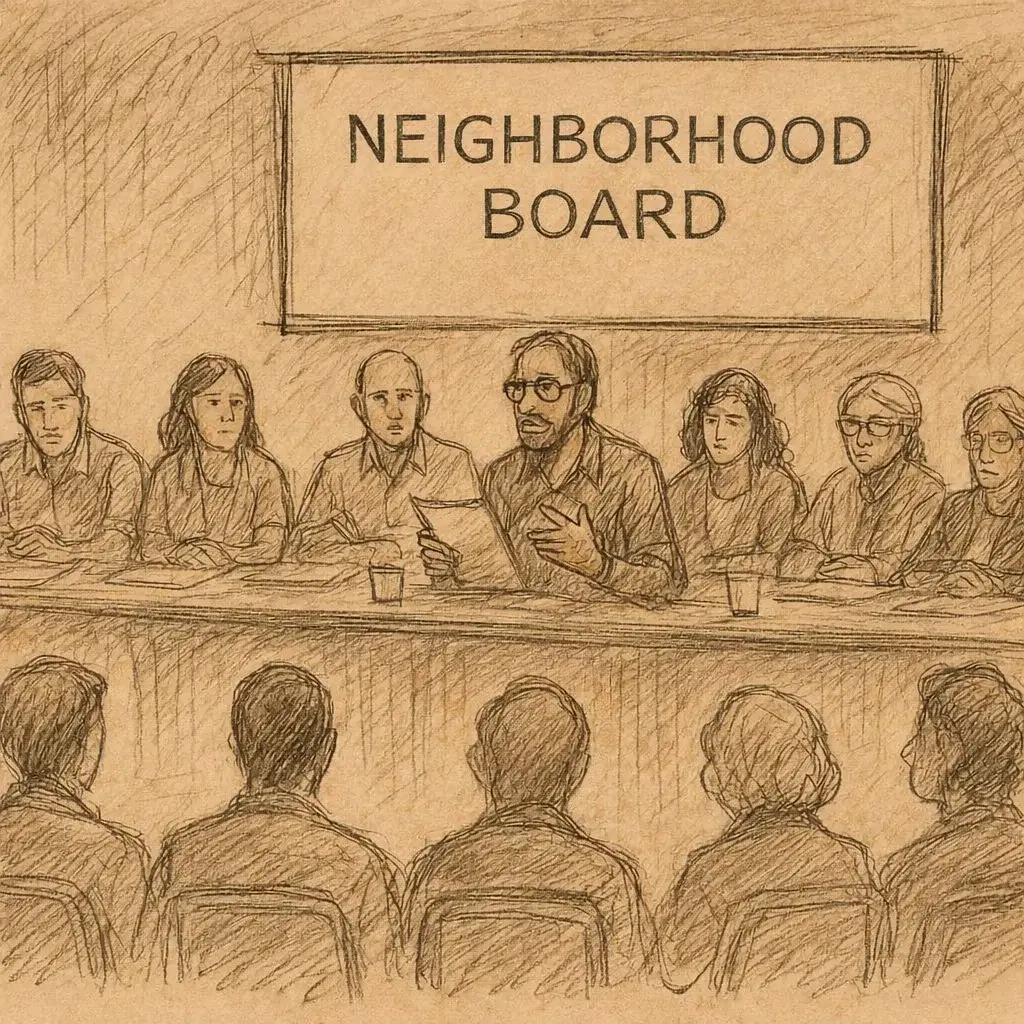
No 34 Makakilo - Kapolei - Honokai Hale Neighborhood Board Regular Meeting October 2026
Listen to this article:
34 Makakilo-Kapolei-Honokai Hale Neighborhood Board Meeting – October 29, 2026
Meeting Opening and Hybrid Arrangements
Chair Anthony McConnell-Parris called the regular meeting to order as a hybrid community forum, with most participants attending through Webex and an in-person location at Kapolei Hale. Kapolei Hale was also being used for the 2026 general election, affecting the meeting arrangements. Neighborhood Board Assistant Melissa Uribio supported the in-person site. Speakers were limited to three minutes, agency presenters to 10 minutes, and participants were asked to address comments through the chair, remain muted when not speaking, and debate respectfully in the spirit of aloha. Roll call established a quorum with seven members present. The Honolulu Fire Department, Board of Water Supply, and Office of Hawaiian Affairs did not present reports; the chair suggested the fire and water agencies might have been responding to weather or emergency demands.
Police Crime and Enforcement Report
District 8 Community Policing Sergeant Fumi Morooka, joined online by Lieutenant Robert Kennedy and Corporal Chris McGarren, reported September crime and enforcement statistics. Districtwide totals included 15 motor-vehicle thefts, 16 burglaries, 85 thefts, and 11 vehicle break-ins. Kapolei accounted for eight motor-vehicle thefts, five burglaries, 36 thefts, and four vehicle break-ins. Police issued 42 speeding citations, 698 citations for miscellaneous moving violations, and 295 parking citations, with 1,354 total citations in the board’s area. District 8 received 7,255 calls for service, including 2,412 in Kapolei. Sergeant Morooka also announced that future neighborhood board meetings would generally be attended by patrol supervisors and officers rather than the current community-policing representatives.
Makakilo Drive Visibility, Parking, and Speeding
HPD followed up on vehicles parked along Makakilo Drive near side streets and driveways, where they can obstruct drivers’ views of approaching traffic. Officers had issued parking citations, but Sergeant Morooka said the worst conditions might occur at night when residents return home and parking fills up. HPD planned to ask the night watch to check the area. Board member Keoni Dudley described leaving an apartment driveway near Palailai Parkway and being unable to see downhill traffic because of parked cars, even though the cars may have appeared legally parked. Sergeant Morooka noted that vehicles must remain at least four feet from a driveway. HPD had also recovered its speed trailer from repair and intended to place it on Makakilo Drive, accompanied by speed-enforcement activity. Later discussion characterized Makakilo Drive as an especially hazardous corridor because of speeding, limited traffic calming, blocked sightlines, and repeated crashes.
Streetlights and Holiday Parade Traffic
HPD submitted a request to the appropriate facilities-maintenance personnel to inspect streetlights on Kealanani Drive or Avenue, although no repair date was available. Sergeant Morooka also announced that the Kapolei tree-lighting celebration and Christmas parade would be held Saturday, November 28, 2026. The block party was scheduled for 5 p.m. and the parade for 5:30 p.m., following the usual route from Fort Barrette Road to Kapolei Hale. Residents were advised to expect street closures and detours and, if possible, avoid Kapolei Parkway and the parade area during the event.
Illegal Signs and the HNL 311 System
Beautification Committee member Thad Sprague reported that the HNL 311 application had failed to produce action on illegal signs, banners, and advertisements attached to poles or placed in roadway medians. Signs reported two or three months earlier remained in place, additional signs had appeared, and one had merely fallen to the ground. Sprague said the proliferation was harming neighborhood appearance and asked for another enforcement route. Sergeant Morooka described one successful Nanakuli case in which HPD contacted Hawaiian Electric and called the telephone number printed on a sign; either the utility or the business then removed it. HPD nevertheless continued to recommend 311 as the normal method for routing complaints to the responsible public agency or private property owner. Sprague later asked the mayor’s representative for help identifying the city department responsible for signs in city-owned medians and received contact information for follow-up.
E-Bikes, Juvenile Enforcement, and School Safety
Community member Mike raised concerns about teenagers riding electric bikes on residential streets, performing tricks, and creating hazards, as well as reports of bullying in Hawaiʻi schools. Sergeant Morooka said HPD had received many e-bike complaints and was giving school presentations using an educational PowerPoint. District 8 school resource officers were serving Kapolei, Waiʻanae, and Nānākuli high schools, visiting classrooms and addressing bullying, mentorship, social-media dangers, and related safety issues. HPD has cited parents who acknowledged allowing children to ride illegal electric motorcycles, potentially under child-endangerment or related laws. Juveniles must attend court with an adult, and proof of ownership or purchase may be required to recover an impounded bike. Board member Kara England asked whether residents should use 911 or 311. HPD advised calling 911 with a detailed description and direction of travel, but explained that officers generally would not pursue fleeing e-bike riders for traffic violations because a chase could cause a collision, serious injury, or death.
Mayor’s Office Report and City Updates
Honolulu Ocean Safety Department Chief Kurt Lager delivered the mayor’s report. City highlights included expanded crisis-response work through CORE and MH3, selection of new HPD deputy chiefs, city assistance on Kauaʻi, progress in Oʻahu’s Kona low recovery, and upgrades to the Honolulu Zoo’s penguin and hippopotamus exhibits. The mayor’s October 26 newsletter was available online. Residents were reminded that the November 3, 2026 general election would be conducted primarily by mail and that active registered voters began receiving ballot packets around October 16. The Department of Transportation Services had no update beyond its previous March response concerning the Makakilo Drive environmental report. DTS agreed to study whether flashing warning signs could be installed on Makakilo Drive near St. Jude Church and expected to report findings by the January 2027 board meeting.
Vehicle Enforcement and Post-Inspection Modifications
The mayor’s report included HPD follow-up regarding buses, boats, and other vehicles parked along Makakilo Drive. On October 2, officers monitored the road at several times during the day, issued five citations for expired tags, and marked one vehicle for towing. Police said monitoring would continue as caseloads allowed. HPD also clarified that passing a vehicle safety inspection does not legalize every modification. A vehicle may still be cited if a modification was made after inspection, violates another law, or was not part of the inspection checklist; the inspection sticker is not a blanket exemption from enforcement.
Overgrown Fort Barrette Walkway and 311 Delays
Board member Amy Bosler reported that an overgrown walkway along Fort Barrette Road, across from Kapolei High School near the new Sonic restaurant, remained unresolved after at least two months of repeated 311 submissions. She had run along the route several times and found blind spots, thorny vegetation, and narrowing that made daily travel difficult for students walking to and from school. Bosler deleted and reinstalled the application without success and wondered whether there was an issue affecting Apple users. She stressed that the board had been distributing 311 information cards and encouraging residents to photograph and report problems, making the lack of response especially frustrating. The chair noted that repeated Kona lows and unusually heavy rainfall had accelerated vegetation growth throughout the district. Keoni Dudley added that a complaint about dying trees on Makakilo Drive took approximately six months before 311 notified him that the trees would be inspected.
ADA Sidewalk, Removed Crosswalks, and Pedestrian Liability
Board member Sheila Medeiros requested a milestone update on a long-standing, apparently noncompliant ADA sidewalk that city representatives had acknowledged dated to the 1970s. She also renewed questions about marked crosswalks removed from Makakilo Drive while pedestrian-crossing signs were left in place. She had recently watched a kūpuna get off a bus near Watercolors around 5:30 p.m. and cross through rush-hour traffic without painted markings, forcing drivers to react. Board member Mick Ferreira explained that seven crosswalks were removed when Makakilo Drive was repaved after a Complete Streets study concluded they were insufficiently used. The city reportedly described the remaining locations as “unmarked crosswalks,” but members argued that motorists may not understand this designation and that leaving signs without markings creates confusion and possible city liability. The mayor’s representative agreed to seek a clearer explanation and review possible corrective action.
Makakilo Drive Crashes and Traffic-Calming Deficiencies
Ferreira described Makakilo Drive as “Blood Alley,” citing the removal of crosswalks, lack of speed humps because of the road’s steep grade, loss of a radar-speed sign after it was struck, and limited traffic calming outside signalized intersections. He suggested rumble strips as one possible measure. He and his wife had been T-boned approximately three weeks earlier by a vehicle leaving Makakilo Gardens 3; their car was heavily damaged, his wife sustained minor injuries, and he remained in physical therapy. He said raised pavement caused by median-tree roots can slow cars but presents a hazard to motorcyclists. Medeiros similarly reported complaints from drivers and riders about roots protruding into the roadway. The city was asked to examine root-related pavement damage, restored crosswalk markings, warning systems, and other safety improvements.
Asphalt and Quarry Odor Concerns
Board member Farrah England reported persistent, strong odors near upper Makakilo associated with Grace Pacific and the Makakilo quarry property. She described the smell as gasoline-like, potentially toxic, present around the clock, and particularly strong at night when winds carried it downhill and into bedrooms. She wanted the issue formally recorded after not seeing it reflected in prior minutes. The mayor’s representative agreed to investigate the source and possible city response.
Kunia Interchange Environmental Scoping
Hawaiʻi Department of Transportation Highways representative Henry Kennedy announced environmental-study scoping for the Kunia Interchange Improvements Project. An in-person open house was scheduled for Wednesday, November 18, at Kaleʻōpuʻu Elementary School from 5:30 to 7:30 p.m. A virtual session would follow on Thursday, November 19, from 6 to 7:30 p.m. The project flyer was included in the board packet and circulated through board and community networks. Representative Diamond Garcia later repeated the meeting information and encouraged public participation in the major interchange planning process.
Zipper Lane Extension and West Oʻahu Congestion
Transportation Committee Chair Mick Ferreira asked how to transmit a previously adopted resolution requesting extension of the H-1 zipper lane toward Makakilo. HDOT said the resolution should be addressed to Director Ed Stinson, after which it could be routed internally for an official response. A previous study had found the extension prohibitively expensive, but Ferreira argued that conditions had materially changed. Morning congestion now frequently backs up to the Makakilo on-ramp, compared with earlier backups near North-South Road and Fort Weaver Road. He cited approximately 900 planned housing units across from Walmart and another 3,500 units near Target as sources of additional demand. Amy Bosler suggested a lower-cost reversible coning arrangement similar to Kalanianaʻole Highway, noting that congestion sometimes extends back to the water park. HDOT agreed to receive and reconsider the board’s proposal.
Kapolei Interchange Phase 3
A community member asked about a new connection under construction between the Waiʻanae side of the freeway and the Kapolei Commons or Campbell Industrial Park area. HDOT identified it as Kapolei Interchange Phase 3, involving new on- and off-ramps that will replace the existing Campbell Industrial Park exit. The project was nearing completion, with only contractor punch-list work remaining. HDOT expected the interchange to open near the end of 2026 or in early 2027, offering a significant change to access patterns for Kalaeloa, Campbell Industrial Park, and Kapolei.
Oʻahu Metropolitan Planning Organization Report
Citizen Advisory Committee representative Frank Condaglio reported that Oʻahu Metropolitan Planning Organization Executive Director Mark Garrity continued community outreach promoting bicycling, walking, and transit as alternatives to single-occupant automobile commuting. DTS representative Greg Sugawa presented a traffic-signal optimization and demand-management study covering all island traffic signals. The modeling system simulates road networks, projects, routes, and driver choices and produces maps, charts, and reports. A proof-of-concept analysis had been completed for the Keʻeaumoku Street corridor, and Sugawa confirmed that the model could evaluate the effects of completing Makakilo Drive. The nonprofit Oʻahu Transit Riders also presented its effort to collect rider concerns and bring them into public decision-making, emphasizing affordable fares, frequent and reliable service, safe and comfortable trips, and connected bus-and-rail communities.
Project Savoy Permitted Interaction Group
The board received the final report of the Project Savoy Permitted Interaction Group, created unanimously on May 27, 2026 to study Amazon’s proposed fulfillment center at Harborside Kapolei. The group was directed to collect community input, assess impacts and concerns, explore mitigation and community benefits, and prepare nonbinding recommendations. Although initially envisioned as a six-month effort with up to six principal meetings, it held additional meetings while still completing its work within six months. The group could not make agreements or speak for the board; the full board retained authority over any formal position. Its membership included board members and representatives from homeowner and community associations, Hawaiian civic and cultural organizations, labor, environmental and educational organizations, health providers, and West Oʻahu community groups. Amazon supplied liaison Stephen Matuli-Williams, while the Kapolei Chamber of Commerce, DTL Hawaiʻi, and the City of Fresno served as resource partners. The group thanked the Honolulu Planning Commission for postponing action on the project’s request to increase the allowable building height from roughly 60 feet to roughly 100 feet, allowing more time for review and public engagement.
Project Savoy Research and Public Process
The group used unanimous consent wherever possible and reported that no formal votes were required because members agreed that differing perspectives could be included without every participant endorsing every conclusion. Meetings were open to the public in person and online, including a publicly noticed Sunshine Law meeting on June 19. The final group meeting occurred October 24, and the report was published for the board meeting. Amazon responded in stages on October 2, 11, and 18 to questions originally submitted in July. The group reviewed the zoning application, Department of Planning and Permitting memoranda and presentations, Amazon’s written responses, information about the Sand Island delivery station, logistics and fulfillment-center practices nationwide, regulatory violations and settlements, and new laws adopted elsewhere in response to Amazon operations. Members also toured the Sand Island facility, spoke with employees, and consulted Fresno officials about that city’s fulfillment-center experience.
Project Savoy Community-Benefit Framework
The 146-page report assessed the project through eight community-benefit areas: workforce and local hiring, training and apprenticeships, small-business support, housing, community health and safety, environmental mitigation, community space, and governance and accountability. The group distinguished project-specific commitments from companywide Amazon policies and general industry practices. It repeatedly identified the need for shared baseline data, measurable targets, clear timetables, named responsible parties, public reporting, enforcement, and corrective action. Recommendations included West Oʻahu hiring and training targets, local business opportunities, housing and community-service support, an independent health assessment, worker protections, cleaner vehicles, safer freight routes, pollution monitoring, heat resilience, trees and shade, and remedies for unmet commitments. The group emphasized that many ideas were recommendations rather than commitments Amazon had already accepted.
Traffic, Fire Protection, and Accountability for Project Savoy
Board member Kara England described several specific recommendations based on practices used in other cities. Because the fulfillment center would add employee, delivery, and freight traffic to an already congested area, the group recommended coordinated traffic and intelligent transportation system upgrades, including synchronized signals; Amazon had reportedly contributed as much as $2.5 million toward such improvements elsewhere. Because the proposed building could reach approximately 100 feet, the group recommended that the Honolulu Fire Department assess whether Station 26 requires specialized vehicles, equipment, training, or facility improvements to respond safely at that height, with any request tied to documented operational needs. The group also sought enforceable deadlines, transparent public reporting, and remedies for nonperformance rather than relying on voluntary promises.
West Oʻahu Community Benefits Fund
The group proposed a community-led West Oʻahu Community Benefits Fund or similar oversight entity to negotiate and administer benefits from Project Savoy and future major developments. Members observed that West Oʻahu bears a disproportionate share of infrastructure serving the wider island, including power generation, refining, wastewater treatment, landfilling, recycling, warehousing, and rapid housing growth, while existing city and state processes provide no clear mechanism for affected communities to direct mitigation resources. England cited a utility-related Pearl City arrangement reportedly providing approximately $875,000 annually for 30 years as an example of recurring community reinvestment. Dr. Sylvia Hussey explained that the fund’s design, governance, funding, and legal form—including whether it should be a new nonprofit or use an existing organization—would require a post-group community process. The fund should be controlled by the affected community rather than Amazon and could become a standing model for future housing, retail, industrial, and infrastructure projects.
Disaster-Response Potential of the Amazon Facility
Permitted Interaction Group member Ferreira noted that a large fulfillment center could hold more than a million products, potentially including food, tents, and other emergency supplies. Its warehousing, cargo-air, and distribution systems might provide additional resilience after a hurricane, severe storm, or other disaster, particularly if Honolulu’s airport or normal shipping systems were disrupted and Kalaeloa Airport remained available. He suggested that emergency access to supplies could become part of a negotiated arrangement, potentially involving state purchase or another formal mechanism.
Differing Views on Project Savoy
Keoni Dudley said he had sought membership in the Permitted Interaction Group but was told appointments had already been completed, and Neighborhood Commission guidance had limited his participation in meetings. He expressed concern that the report did not sufficiently address local businesses that could be displaced or harmed by Amazon’s entry. Dudley requested a 10-minute presentation at the next meeting to lay out those concerns. Chair Parris agreed to work with him and invited other board members, organizations, and community participants to submit presentations after reviewing the report. The chair emphasized that the board was not deliberating on the report that evening and would consider a formal position later because the project could influence the community for generations. Report materials were made available through the agenda link and the board’s Google Drive.
Public Running Events in 2027
Aloha Racing event director Dee Wiedemann announced four West Oʻahu running events for 2027, each offering 5K, 10K, and half-marathon distances. Akahai was scheduled for January 16 in support of the Hawaiʻi Parkinson Association; Hoʻomau for May 8 benefiting the Fur Angel Foundation; Lā Leʻa for July 17 supporting Protectors of Paradise; and Makoa for November in support of Sheepdog Impact Assistance. The events use the shoulders of Roosevelt Avenue and Coral Sea Road, begin early, and do not require road or traffic-lane closures. Wiedemann said the races had operated for four years without reported community problems and provided Aloha Racing’s website for questions.
Farrington Highway and Honokai Hale Speeding
Community member Kūʻulei Jolonino reported vehicles traveling approximately 70 mph in a 45-mph section of Farrington Highway and as fast as 65 mph in a 15-mph residential area. She said four people had died in the broader area during her 33 years there and that her daughters were nearly struck by an 18-wheel truck. She also reported one to three crashes per week near a traffic signal, about 40 police-recorded incidents since the beginning of the year, and waits of roughly eight minutes for the light to change, which she believed encouraged red-light running. Existing rumble strips were not effective, so she requested studies of speed humps, roundabouts, flashing warnings, and other traffic-calming measures. She had contacted Councilmember Andria Tupola’s office, which planned to coordinate with Representative Darius Kila, House Transportation Committee chair and the district’s representative. She also reported potholes along Laʻaloa through 311. The board encouraged her to continue coordinating with Kara England and relevant transportation officials.
Kobayashi Housing Project and Requested Fee Waivers
Mayhana resident Leslie Keating thanked Amy Bosler and Kara England for attending a recent marching-band festival, then raised concerns about Kobayashi’s proposed development on Lots 2 through 5 along Kapolei Parkway. At a City Council Planning Committee meeting, she learned that the developer was seeking an approximately $2 million waiver of park-related fees normally required when a project does not provide recreation facilities, along with another approximately $3.8 million waiver associated with stormwater or sewer infrastructure. Keating said existing nearby developments already lack sufficient recreation and designated smoking areas, contributing to incidents in which residents enter Mayhana’s pool or use neighboring amenities. She urged the developer to provide its own pool, play areas, and appropriate smoking space rather than shifting those needs onto surrounding communities. The chair said the board could consider a position opposing waivers where a project neither builds on-site recreation nor contributes to public infrastructure and asked Keating to coordinate with board leadership.
Congressional Report and Disaster Resilience
Congressman Ed Case’s liaison, Nestor Garcia, reported on provisions in the federal Water Resources Development Act, which the House had passed and sent to the Senate. Congressman Case was supporting resilience work to protect Honolulu Harbor, the principal entry point for most goods entering Hawaiʻi, as well as Waikīkī Beach, Kaimana Beach, and the shoreline near the Waikīkī Natatorium. He was also supporting stronger control of invasive species affecting national wildlife refuges. Case was scheduled to interview candidates seeking congressional nominations to the Army, Navy, Air Force, and Merchant Marine academies, with nominations expected to be announced in December. Dudley described a proposal asking the governor to solicit approximately $2 billion each from five billionaires with Hawaiʻi property, creating a roughly $10 billion fund to harden homes, apartments, and public buildings against disasters. The chair suggested the board might later consider a related resolution addressing taxation of extremely wealthy individuals.
State Legislative Reports
Senator Mike Gabbard’s liaison Melanie announced that the senator’s October newsletter was available online. No constituent meeting would be held during the remainder of 2026; the next was expected in January 2027 at the start of the legislative session. Representative Diamond Garcia reiterated the Kunia Interchange scoping meetings and provided his office’s contact number, 586-8500. Asked about the correct route for pursuing Farrington Highway safety changes in Honokai Hale, Garcia agreed that Representative Darius Kila’s office was appropriate because Kila chairs the House Transportation Committee and represents House District 44.
Approval of Minutes and Project Savoy Special Meeting
The board approved the September 23, 2026 meeting minutes by unanimous consent. It then unanimously authorized a special meeting for Friday, November 13, 2026, at 6 p.m. at Kapolei Hale with a virtual option. The meeting would focus on deliberation and possible action concerning the Project Savoy report rather than regular agency reports. Dudley was allotted at least 10 minutes for his presentation, and the chair invited other presentations to be submitted for the meeting packet. Materials could be distributed to all members in advance, although members could not privately deliberate with one another outside a properly noticed meeting.
Board Participation in the Kapolei City Lights Parade
The board unanimously authorized participation in the November 28 Kapolei City Lights Parade. Kara England and Amy Bosler were coordinating the neighborhood board’s parade unit and invited community members to join. Dudley said he could not walk the route but wanted to participate. England explained that a car, driver, or mobility scooter could be registered with the city, provided the required information was submitted in advance.
Community Benefits in Upzoning Decisions
The board unanimously adopted a resolution urging clear and enforceable commitments addressing project impacts and prioritizing affected communities whenever land-use approvals increase private development rights. The measure responded in part to Council Bills 37, 38, and 39, which could allow greater density or multistory development on certain private parcels. The board’s position was that when public action grants greater development value through upzoning, the affected community should receive defined benefits, mitigation, accountability, and enforceable commitments rather than relying on informal promises.
Skyline Extensions and Maglev Technology
The board considered a resolution supporting future Skyline extensions toward Kalaeloa and the University of Hawaiʻi at Mānoa, use of magnetic-levitation technology, and resilient emergency-response stations. Thad Sprague opposed the proposal, arguing that rail construction and operation were already too expensive. Frank Condaglio responded that extending the system with maglev technology would have different capital and operating costs from conventional steel-wheel rail and said he would present detailed figures in December. Dudley said he could support expansion only if maglev were explicitly required because residents should not be burdened by another costly conventional extension. The board unanimously amended the resolution to condition its support more explicitly on maglev technology and then adopted the amended measure by a 7-0 vote.
Hawaiian Electric Rate Increase Proposal
The board unanimously adopted an amended resolution opposing Hawaiian Electric’s rebasing proposal in its current form and urging a thorough, customer-focused Public Utilities Commission review. The resolution asked regulators to require clear and reviewable proof that requested costs are prudent, necessary, reasonable, and properly attributable to regulated electric service. It also urged the commission not to accept corporate financial losses, wildfire liabilities, financing needs, or efforts to restore profitability as sufficient reasons to raise customer rates, particularly where costs may be more appropriately borne by shareholders or corporate leadership. Community testimony emphasized already high living costs, the value of waste-to-energy and distributed solar resources, and frustration with poorly explained rate increases. At Dudley’s request, the board added its previously adopted position favoring underground power lines, citing resilience and wildfire risk.
Saratoga Avenue Electrical Infrastructure
The Hawaiʻi Community Development Authority requested early consultation for a draft environmental assessment covering Saratoga Avenue right-of-way construction and new electrical infrastructure in Kalaeloa. The board unanimously authorized Chair Parris to transmit its existing resolutions concerning Saratoga Avenue, underground power lines, native landscaping, major development projects, and electrical infrastructure. Members noted that preliminary designs appeared to include aboveground components despite the board’s preference for underground utilities. They distinguished the issue from the earlier Ho‘opili dispute, where Hawaiian Electric and D.R. Horton disagreed over who should bear undergrounding costs. The board amended its action to require a cover letter asking HCDA to explain specifically why any portion of the Saratoga system must remain aboveground and what could be done to support underground installation.
Toys for Tots and Meeting Calendar
The Neighborhood Commission Office was collecting donations for Toys for Tots. In-person participants could provide toys through the neighborhood board staff, and donations brought to the November special meeting would be forwarded to the commission. The board confirmed that its next meeting would be the Project Savoy special meeting on Friday, November 13. November was otherwise a recess month, so there would be no regular November 25 meeting. The next regular meeting was scheduled for Wednesday, December 2, 2026. The meeting adjourned at approximately 9:30 p.m.