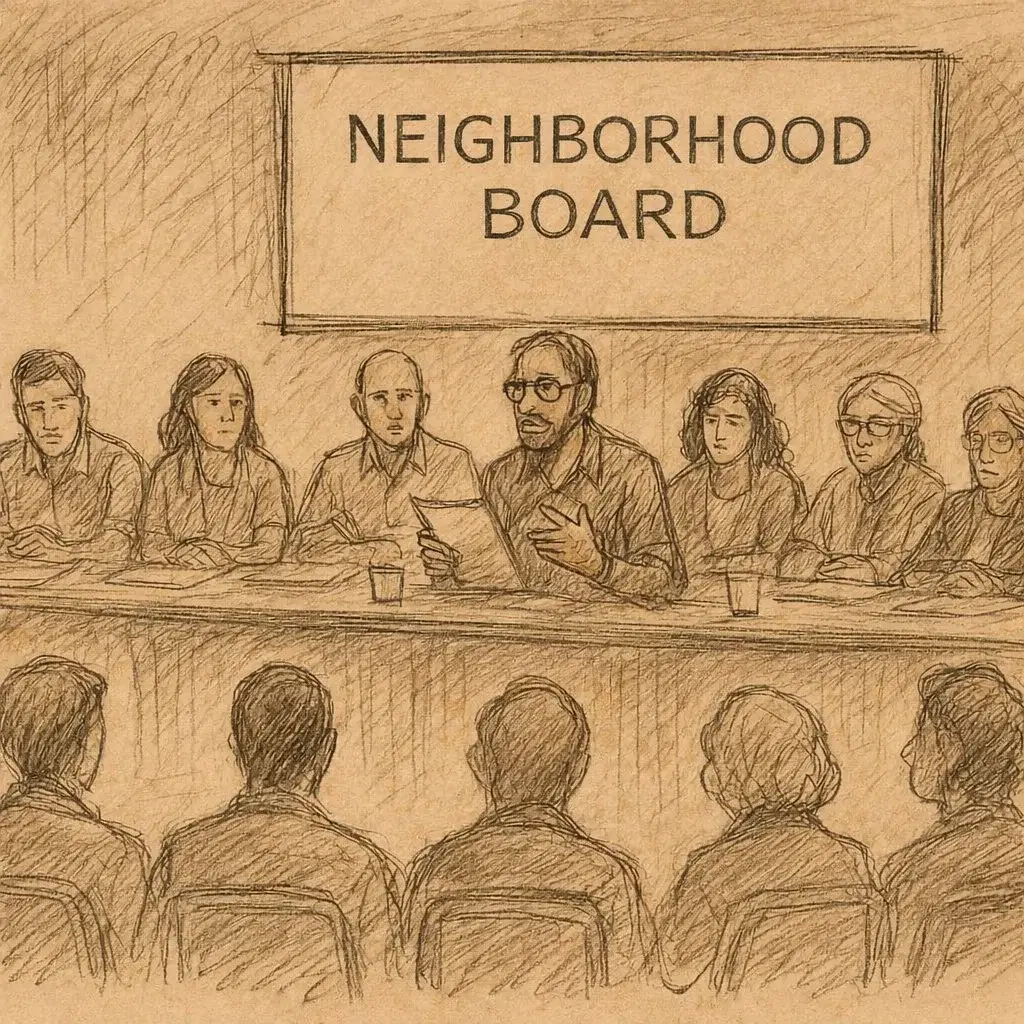
No 34 Makakilo Kapolei Honokai Hale Neighborhood Board Regular Meeting August 2026
Listen to this article:
34 Makakilo-Kapolei-Honokai Hale Neighborhood Board Meeting – August 27, 2026
Meeting Procedures and Committee Membership
Chair Anthony Makana Paris opened the hybrid community forum at Kapolei Hale and through Webex, with six members present and a quorum established; additional members joined or participated online later. Speakers were allotted three minutes, while scheduled presenters could use up to ten minutes, and meeting materials were made available through the board’s public Google Drive. The chair emphasized respectful debate in the spirit of aloha and announced that, under guidance from the Neighborhood Commission, previously elected committee chairs and appointed committee members remain in place and do not need to be reappointed. Residents or board members who wish to join a committee may contact the chair so the appropriate procedure can be followed.
Fire and Emergency Preparedness
The Honolulu Fire Department reported July activity for the East Kapolei and Makakilo service area, including three structure fires, ten wildland or brush fires, seven nuisance fires, no cooking fires, 22 activated fire alarms, 181 medical calls, four motor-vehicle collisions, one ocean rescue, one hazardous-material incident, and no pedestrian collisions or mountain rescues. The department’s safety message focused on knowing how official emergency information will be delivered. Residents were encouraged to register at HNLAlert.gov because those alerts are sent according to user preferences rather than automatically based on location. Other urgent warning systems include the Emergency Alert System, Wireless Emergency Alerts, outdoor warning sirens, and verified city, state, and partner social-media accounts. Additional preparedness information is available through the Honolulu Department of Emergency Management website.
Police Activity and Political Sign Concerns
The Honolulu Police Department’s District 8 Community Policing Team reported 22 motor-vehicle thefts districtwide in July, 13 of them in Kapolei; 11 burglaries districtwide, including four in Kapolei; 109 thefts districtwide, with 54 in Kapolei; and 20 unauthorized entries into motor vehicles, eight of them in Kapolei. Officers issued 98 speeding citations and reported figures of 1,110 and 518 for two categories described in the transcript as moving violations, with 2,112 total citations. District 8 received 8,758 calls for service, including 3,008 in Kapolei. A resident raised concerns about disputes involving political campaign signs, a “Drive with Aloha” banner, the use of a government seal, alleged false reporting, and what she viewed as election interference. HPD explained that officers must remain politically neutral and said the matter could be raised with command staff to determine what assistance or guidance is permissible. Board Member Sheila Medeiros clarified that the “Drive with Aloha” message itself was not the concern; the ethics issue involved including a candidate’s official name and face, which were unnecessary to convey the safety message. The board encouraged a return to fact-based discussion of roads, public safety, emergencies, traffic, and other neighborhood concerns.
Water-System Operations and Community Outreach
The Board of Water Supply reported no water-main breaks in Makakilo, Kapolei, or Honokai Hale during July. It announced an “Imagine a Day Without Water” event scheduled for September 26 from 9 a.m. to 1 p.m. at the Arc of Safety in Waianae Mall. The event is expected to include 20 to 25 city, state, and community organizations, interactive displays, workshops, hands-on activities, prizes, and information on water’s value and the present and future effects of climate change. Board members asked that promotional material be shared for neighborhood social media. The chair also requested that future Board of Water Supply reports identify local construction projects in advance. As an example, he cited work near Farrington Highway and Kualakai Parkway on the East Kapolei 3-million-gallon reservoir project, which supports the nonpotable “purple pipe” system and should not affect household drinking water.
Water Availability and Future Development
Water Resources Program Administrator Barry Usagawa explained that Ewa is a designated growth area with mostly newer infrastructure, but major planned developments cannot receive advance guarantees of water. There is no current building moratorium, yet the Board of Water Supply cannot confirm supply for the entire East Kapolei transit-oriented-development area until new sources are completed. Available water is allocated on a first-come, first-served basis when a project submits a sufficiently developed building permit, receives Board of Water Supply approval, and pays its water-system facilities charge. The agency does not reserve water years in advance. Usagawa said the agency must balance housing and economic development with conservation and protection of the aquifer, and it will not approve development if capacity is unavailable or pump the aquifer at levels that could create shortages for existing users.
Desalination, New Wells, and Recycled Water
The planned Kalaeloa seawater-desalination facility in Campbell Industrial Park is being designed as a 2.5- to 2.55-million-gallon-per-day source serving Campbell Industrial Park and Campbell Business Park. Design was nearly complete, but construction remained dependent on archaeological-preservation requirements and state Department of Health approvals. The agency hoped to begin work in fall 2026 and complete the facility by the end of 2028. Once operational, it would allow groundwater currently serving the industrial and business parks to be redirected elsewhere in Ewa and toward Waianae. Other developing sources include a five-well Ewa shaft project, with the first well being drilled, and Kunia Wells 4 near the Waiahole Ditch. Permitting delays and infrastructure costs that have more than doubled may extend the timeline, with some sources potentially taking three to five years and the broader supply program approaching a decade. The Honolulu recycled-water system has capacity of approximately 12 million gallons per day but currently produces about 7 million. Recycled water irrigates golf courses, schools, major landscaped areas, and much of Kapolei, conserving potable water. The East Kapolei reservoir and a planned 16-inch line along Kualakai Parkway will eventually provide gravity-fed recycled water throughout the day; current irrigation service generally depends on pumps operating from 10 p.m. to 6 a.m. Future possibilities include greater system expansion and toilet flushing with recycled water.
Water Rates, Grants, and Conservation Rebates
The Board of Water Supply described its July 2026 rate structure, including a tiered residential system under which the first 2,000 gallons are charged at an essential-needs rate of $4.92 per thousand gallons and higher use is charged at progressively higher rates. Average household consumption was described as approximately 9,000 gallons per month, with a cited rate of about $7.50 per thousand gallons at that level. The nonresidential flat rate was approximately $7.54 per thousand gallons. Nonpotable water used at Ko Olina was approximately $4.15 per thousand gallons, R-1 recycled water was $2.80, and a subsidized golf-course and agricultural rate was $0.93. To reduce the desalination plant’s effect on customer bills, the project has secured or is pursuing $25 million through the American Rescue Plan Act, $20 million from the U.S. Bureau of Reclamation, and a $100 million EPA Water Infrastructure Finance and Innovation Act loan. Residents were also reminded that rebates are available for efficient toilets, washing machines, dishwashers, and rain barrels. Lower indoor use can reduce both water and sewer bills.
Red Hill Costs and Water-System Protection
In response to a question about whether the military would pay for the costs resulting from the Red Hill fuel contamination, Usagawa said the Board of Water Supply has filed a substantial lawsuit that remains in litigation. Although contamination was reported in the military’s distribution system rather than the city system, both draw from the same aquifer. The Board of Water Supply is incurring costs for treatment, replacement wells, and other protective measures, including work in the Waimano area, and its board has insisted that compensation be pursued. No further litigation details were provided.
Conservation, Climate Change, and Population Growth
Board members and residents debated whether new development should continue when Ewa faces drought, infrastructure limits, loss of agricultural land, traffic, insufficient schools, and changes to community character. One member argued that development should eventually stop rather than relying on desalination, while another resident stressed that population growth and housing demand will continue whether or not homes are constructed, pointing to homelessness and younger families seeking housing. Usagawa said Oahu’s population is growing slowly overall, while growth is concentrated in designated areas such as Ewa and some areas, including Waianae and Koolaupoko, have experienced declines. Despite population change, islandwide water use has fallen from approximately 157 million gallons per day in 1990 to about 135 million gallons per day, reflecting more efficient fixtures, conservation incentives, higher rates, education, and recycled-water use. The Ewa Watershed Management Plan is being updated with new population projections and analysis of drought, wildfire, sea-level rise, flooding, hurricanes, and other climate effects. Several residents urged greater protection of productive farmland and stronger support for local agriculture and food security rather than continued conversion of agricultural land to development or other uses.
Mandatory Water Restrictions and Enforcement
The chair asked what would happen if voluntary conservation requests failed, particularly after earlier discussion of a possible 30% reduction related to the Red Hill and Halawa Shaft situation. The Board of Water Supply explained that its water-shortage plan uses progressively stronger measures. Pump operation approaching 20 hours per day can trigger an alert condition, while operation around 22 hours per day can signal a critical condition because pumps cannot sustain demand beyond 24 hours. Conservation requests may begin around 10% and rise to 30% as conditions worsen. If specified triggers remain critical, mandatory allocations can be imposed; an example was reducing residential use from approximately 400 gallons per day to 300. Deliberate waste or refusal to comply can lead to water rates as high as 20 times the normal rate, followed by meter shutoff. Unauthorized reconnection can constitute a misdemeanor and lead to police involvement. The agency has not previously needed to proceed through all of these enforcement stages, and mandatory conservation would require staffing resources that are currently limited.
Green Infrastructure and Water-Saving Policies
The Board of Water Supply said dual nonpotable systems are already a requirement for certain large developments rather than merely a recommendation. Ho‘opili and other master-planned areas were conditioned to install recycled-water infrastructure, with the city constructing major connecting lines. The agency also supports rain gardens, rain barrels, reduced impervious surfaces, on-site stormwater retention, and other “green infrastructure” that allows rainfall to soak into the ground rather than carrying polluted runoff into streams and coastal waters. Rain barrels are more effective in wetter areas than in arid Ewa, but can still be useful when filled. The Board of Water Supply encouraged support for future legislation involving stormwater fees, incentives, education, recycled water, and climate-resilient design, using a balance of requirements and financial incentives.
Data Centers and Building Water Systems
The Board of Water Supply addressed questions about data centers, estimating that a mid-sized mainland facility may consume about 300,000 gallons of water per day and a large facility about 1 million gallons, roughly enough to serve 2,500 homes. Very large data centers were considered less likely on Oahu because electricity is expensive and such facilities require substantial power. The largest known local data center, DR Fortress near the airport, is served through an airport master meter, so its individual water consumption was unavailable. Another Middle Street data center was estimated to use approximately 14,000 gallons per day, less than some industrial customers in Campbell Industrial Park. Regarding chilled-water air-conditioning systems, the agency said plumbing codes require backflow preventers, air gaps, inspections, and proper maintenance to prevent contamination. Improper cross-connection between chilled-water and potable-water lines could still create contamination, making inspection and building maintenance essential.
Villages of Kapolei Nonpotable System
A Villages of Kapolei resident asked whether the neighborhood’s nonpotable water infrastructure could become an association responsibility when the Hawaii Housing Finance and Development Corporation exits around 2030. The Board of Water Supply explained that Ewa by Gentry uses privately owned shallow brackish wells and irrigation lines, with maintenance incorporated into association responsibilities. Villages of Kapolei is a state development with a nonpotable system serving schools and major landscaped corridors. HHFDC currently maintains elements of the system and has discussed transferring it or connecting it to the recycled-water network once the East Kapolei reservoir is operational. Board of Water Supply responsibility ends at the meter; the division of responsibility for downstream irrigation pipes must be resolved between HHFDC and the community association. The infrastructure dates from roughly the late 1990s or early 2000s and is aging, so repair and replacement costs may become a significant issue even though nonpotable water itself costs less than drinking water.
Asphalt Odors Near Makakilo and Kapolei Knolls
Because the mayor had not yet appointed a replacement neighborhood-board representative after an administrative reassignment, the chair summarized written responses from the Mayor’s Office. The Department of Planning and Permitting confirmed that a 2011 variance allowed the Makakilo quarry to exceed normal height limits and expand a nonconforming use, and a conditional-use permit authorized a hot-mix asphalt plant. The chair said the operation appears to have recently been permitted to run around the clock, unlike earlier operations that generally occurred while many residents were away at work. This was identified as the likely source of asphalt odors noticed around Farrington Highway, Kapolei Knolls, lower Makakilo, and the quarry area, including during evening cooking and sleeping hours.
Transportation Agency Reports and Skyline Expansion
No substantive report was given by the Hawaii Department of Transportation or the Office of Hawaiian Affairs. The Oahu Metropolitan Planning Organization liaison reported that the August Citizen Advisory Committee meeting had been canceled and that the July Policy Board meeting contained no major West Oahu item. He nevertheless highlighted regional plans to expand active transportation, public transit, and Skyline. City Bill 60 authorized HART to study rail extensions east and west, including Ala Moana Center, Waikiki, the University of Hawaii at Manoa, Salt Lake, and West Kapolei. A permitted-interaction-group report examined approximately 15 miles of additional elevated guideway with an estimated cost of $13 billion and the possibility that the general-excise-tax surcharge could continue for at least 30 more years. The liaison supported expansion but advocated magnetic-levitation technology rather than conventional steel-wheel rail, citing a 24.5-mile maglev project in Changsha, China, projected at approximately $1.45 billion and speeds up to 100 miles per hour where station spacing permits.
Kapolei City Lights 2026
The Department of Parks and Recreation presented plans for Kapolei City Lights opening night on Saturday, November 28, Thanksgiving weekend. A block party will begin at 5 p.m. in front of Kapolei Hale with food and craft vendors, a holiday tree, a kupuna seating area, a static car display, additional lighting, and activities along Ala Kahawai, Aloha Kea, and Kama‘aha Avenue. The parade will begin at 5:30 p.m. from Kapolei High School, with staging on Fort Barrette Road from Roosevelt Avenue to Kapolei Parkway beginning around 2 p.m. Traffic from the Lihona neighborhood will be allowed through during breaks in the procession. The route will continue far enough for walkers and vehicles to disembark safely, with participants returning toward the event through designated state property. Street sweepers will follow the parade, roads will reopen progressively, and organizers hope to restore normal traffic by approximately 7:30 p.m. The block party will end at 9 p.m. Kapolei Hale will feature decorated trees, courtyard lighting, community performances or activities, Santa photographs, and extended public viewing hours during the holiday season, generally through 8 p.m. on weekdays and later on Fridays, weekends, and holidays.
City Lights Parking, Decorations, and Participation
Board members praised the prior year’s celebration but asked organizers to make the neighborhood board’s decorated tree more visible on opening night. The previous tree used locally gathered, sustainable natural materials and ornaments created with schools, homeschool groups, kupuna, botanical-garden participants, and other residents, but access was restricted because of stairway safety. Parks staff agreed to review safer public access. Parking was identified as a major concern because formerly vacant areas used informally by attendees have since been developed. Kapolei Regional Park will be available, but members urged consideration of shuttle service from locations such as Ka Makana Ali‘i or other large parking areas, modeled on transportation used for the Prince Kuhio event. Vendor and parade applications were expected to open in September, community and business outreach was planned for October, and participation would be free, although entries would be limited to keep the parade at a manageable length. Santa will appear both inside Kapolei Hale and in the parade, and board members offered to help seek donated gifts for children. The board unanimously endorsed the 2026 Kapolei City Lights parade and event and was invited to decorate a tree again.
Hawaii Youth Prevention Initiative
Zachary Kaluuya of the Hawaii National Guard Counterdrug Program and the High Intensity Drug Trafficking Area initiative presented a youth substance-use prevention strategy. Although HIDTA primarily promotes cooperation among federal, state, and local law enforcement, its prevention team works with community stakeholders to delay and reduce youth use of alcohol, tobacco, and other drugs. The program seeks to replace fear-based messages and broad claims that “all youth” are using substances with positive community norms emphasizing that most young people make healthy choices. Its three-tier approach begins with one-hour community workshops on evidence-based prevention, continues with youth summits where primarily students in grades 9 through 12 learn advocacy, cultural grounding, and how to turn ideas into action, and culminates in district-based working groups led by youth with adult support. Workshops have been held in Kona, Hilo, Lahaina, Wailuku, Nanakuli, and Kakaako, and additional communities can request sessions through HawaiiYouthPrevention.org or info@hawaiiyouthprevention.org.
Youth Engagement, Partnerships, and Foster Youth
Board members asked about incentives for youth participation, potential use of certificates to strengthen student résumés, collaboration with school resource officers and other trusted adults, outreach to youth detention facilities, and coordination with the many organizations already providing similar services. Kaluuya said the initiative works with prevention coalitions and is open to collaboration, while principals currently help identify and register interested students for summits. A member asked whether presenters had law-enforcement or correctional experience that could bring practical examples to youth; the response indicated that no law-enforcement panel was currently part of the summit. A former foster youth asked whether the initiative works beyond schools and with young people in foster care. Kaluuya said the effort is intended for the broader community, is open to foster-youth engagement, and can customize collaboration. Youth and adults may attend community workshops, while youth summits use separate but coordinated tracks to build youth voice, cultural identity, adult support, and evidence-based prevention skills.
Election Procedures and Tie-Breaking
During public input, residents criticized election procedures that resolved a tied primary through a drawing from a lauhala basket rather than a new election or general-election vote. One resident said she felt denied a meaningful vote and supported considering open primaries, broader voter participation, and a warning system before candidate-filing deadlines when a seat is likely to be uncontested. Another resident, who said she had sought to intervene in a Hawaii Supreme Court case involving Council Chair Tommy Waters, raised concerns about ambiguity in term-limit rules, the possibility of a candidate serving what amounts to a third term, and inconsistent treatment of close elections. She contrasted the lauhala-basket outcome with an earlier close contest involving Waters and Trevor Ozawa that proceeded to another election. The board asked Senator Mike Gabbard’s office to explore legislation governing tied elections and possible changes to party-based primaries so that voters have a clearer and more direct role.
Villages of Kapolei Land Transfer and Public Records
A Villages of Kapolei resident continued raising concerns about negotiations to transfer roads and other infrastructure from HHFDC to the City and County of Honolulu before the state declarant’s anticipated 2030 exit. A September 2021 action document reportedly stated that roadway parcels were intended for transfer to the city, while associations, subassociations, or homeowners would assume landscape maintenance along street frontages. She warned that responsibility for mature roadside trees could create substantial liability during hurricanes or tropical storms, including damage to houses, vehicles, roads, and power lines. She also questioned whether any infrastructure not accepted by the city would default to the Villages of Kapolei Association and its approximately 4,000 homeowners. The resident said an initial public-record request cost $25 but produced topographic maps based on 2021 control points rather than the valuation and engineering information she sought, while a further request was estimated at $570. She referenced possible transfer valuations of about $60 million on the city side and more than $100 million on the state side and sought the underlying basis for those figures. The board unanimously created a Villages of Kapolei folder in its Google Drive for relevant public-record requests, maps, water-system documents, and other uncensored source material so residents can review the same information directly.
Disaster Debris and Convenience-Center Rules
A Kapolei Convenience Center security worker described more than 200 vehicles per day arriving with green waste and storm debris after severe weather. Existing rules restrict flatbed trailers, box trucks, and certain commercial vehicles, forcing staff to seek supervisor approval or redirect residents to Kapaa Quarry or another transfer station capable of handling larger vehicles. The worker said customers sometimes become verbally abusive when denied entry even though employees are enforcing city rules. The chair suggested asking the mayor to establish temporary post-disaster rules that clearly identify which facilities can safely accept trailers, box trucks, and unusually large debris loads. Such emergency procedures could prevent residents from renting vehicles they cannot use at a given site, reduce conflict with staff, and better distribute disaster-cleanup traffic.
Liquefied Natural Gas and Energy Projects
A Villages of Kapolei resident expressed dismay over the governor’s public promotion of a liquefied-natural-gas project after community members had voiced opposition. The chair distinguished between LNG as a statewide bridge-fuel policy and the concentrated neighborhood effects experienced by communities located beside ports, pipelines, storage facilities, or other infrastructure. McKinley Addy, representing Atra, Waste to Fuel Hawaii LLC, and Friends of Waimanalo, introduced an early-stage effort to explore energy and waste-to-fuel solutions that could reduce long-term energy and mobility costs on Oahu. He cited prior work with the California Energy Commission and California Air Resources Board and said the organizations intend to consult communities before advancing a specific project, with additional conversations and briefings expected in future months.
Makakilo Emergency Access and Completion of Makakilo Drive
Residents again pressed for completion of Makakilo Drive, stressing that the existing emergency access route is not a substitute for a permanent second public road. City information states that the private emergency route may be activated by first responders for public evacuation, but is not open for routine use. A representative of Councilmember Andria Tupola initially described land-ownership, drainage, bridge-design, and cost complications discussed at a prior “Listen Story” meeting, including an estimate that a project once discussed at roughly $50 million could approach $95 million or $100 million. Longtime residents challenged that account and requested the underlying documents, noting that the community has pursued the road for approximately 50 years and that emergency traffic already overwhelms the single route through upper Makakilo. Oahu Metropolitan Planning Organization liaison Frank Anadio called the emergency road a “red herring,” emphasizing that completion of Makakilo Drive is also a congestion-management project and that the prior environmental document was an environmental assessment finding no significant impact, not an environmental impact statement. The chair clarified that the existing gated emergency route and the planned permanent completion of Makakilo Drive are separate projects and requested written records for the board’s existing project folder. The board’s permitted interaction group is exploring ways to use future development negotiations and other mechanisms to advance the long-promised connection.
Homeless Outreach and Constituent Services
Councilmember Tupola’s new representative, Stephanie Nojima, announced continued Restore, Reconnect, and Revive outreach at the Kapolei Library on Tuesdays and Wednesdays through Thanksgiving. The program brings together service providers and tracks cohorts of residents connected to housing, benefits, and other assistance. Board Member Kara England reported that a homeless client she brought to the event had been connected with Catholic Charities and might obtain housing within approximately 90 days, demonstrating follow-through from the outreach effort. The representative also referenced the completion of program cohorts seven and eight and invited continued community support. The board welcomed her and noted Councilmember Tupola’s work on Bills 37, 38, and 39, which were expected to appear on a future agenda.
Senator Gabbard’s Community Meeting
Senator Mike Gabbard’s liaison announced that his August newsletter was available and invited residents to a “Listen Story” meeting on Saturday, August 29, from 9 to 10 a.m. in the Kapolei High School teachers’ lounge, with a Zoom option available by contacting the office. HART representative Harry Cho was scheduled to discuss Skyline construction, ridership, upcoming milestones, and what West Oahu residents should expect. The liaison also noted that prior meetings are recorded and posted on the senator’s YouTube channel, allowing residents to verify discussions concerning Makakilo access and other issues.
Waste Reduction and a Circular Economy
The board unanimously adopted a resolution urging the Honolulu End Landfills Task Force and the state’s demolition-waste reduction working group to collaborate on a single statewide zero-waste and circular-economy plan focused on prevention, reuse, and resource recovery. The chair explained that both city and state entities recognize the need to change how waste is managed, and coordination would avoid duplicating research and spending taxpayer funds on parallel efforts. The resolution builds on the neighborhood’s long-running concern about hosting a disproportionate share of Oahu’s waste-management, industrial, and energy infrastructure.
Permanent Funding for Hawaiian Home Lands
The board unanimously supported permanent, dedicated funding for the Department of Hawaiian Home Lands. The resolution recognized the large number of Hawaiian Home Lands communities in the district and the state’s public-trust obligations to Native Hawaiians. Rather than relying on biennial appropriations, the board supported a predictable continuing revenue source that DHHL could use for multiyear planning and leverage for housing and infrastructure financing. The resolution did not prescribe a particular funding mechanism; a prior proposal involving conveyance-tax revenue had not passed, but the board’s position was that some stable source is needed so DHHL can plan beyond one-time appropriations such as the earlier $600 million allocation.
Illegal Reservation of Public Parking
The board unanimously approved a public-education and enforcement resolution addressing the use of cones or other objects to reserve parking at city parks and on public streets. The chair cited a recent West Oahu incident that escalated into violence and said many residents may not understand that individuals generally cannot claim a public stall for themselves. The resolution asks police and city personnel to remind residents of the law, encourage the prompt removal of cones when requested, and prevent disagreements from escalating into physical confrontations.
Aquarium Fish Collection and Reef Restoration
The board unanimously adopted two resolutions, one directed to the Board of Land and Natural Resources and the other to the state Legislature, supporting a halt to commercial aquarium-fish collection from local reefs. The chair said reefs near Ko Olina, Honokai Hale, and elsewhere in the district have lost fish, limu beds, and coral health while community groups are working on restoration and aquaculture. Inga Gibson of For the Fishes and Pono Advocacy testified that the district’s coastal zone, roughly from Kahe Point to Maili Point, historically experienced the second-highest aquarium collection on Oahu. Before Hurricane Iniki, collectors reportedly removed approximately 20,000 to 40,000 reef animals per year; afterward, annual take fell to around 14,000 because reef populations had been damaged, not because the industry voluntarily reduced collection. More than 99% of collected animals reportedly leave Hawaii. The measures would target the commercial pet trade while preserving recreational collection and special permits for research, public aquariums, and humane aquaculture.
Submarine Communications Infrastructure
The board reviewed Honolulu Council Resolution 26-165 concerning proposed submarine communications infrastructure near Barbers Point Beach Park. The applicant had previously presented to the board but had not provided additional communication since then. No member moved to adopt a position, so the board’s existing position of no position remained in effect.
E-Bike Transportation Regulations
The board noted that Bill 41 (2026), relating to transportation and e-bike regulation, had already passed the City Council unanimously and had been signed by the mayor, making further board action unnecessary. The legislation was described as a coordinated effort by West Oahu state and city lawmakers, including Representative Darius Kila and Councilmember Tupola, to make state and county e-bike rules consistent and understandable for riders and the public.
City Energy Vulnerability Assessment
The board unanimously supported Honolulu Council Resolution 26-158, calling for a city energy-vulnerability assessment. The assessment would examine current energy use, infrastructure risks, hurricane and climate threats, and the city’s ability to transition to a more resilient system. Discussion referenced facilities such as the University of Hawaii–West Oahu, which has disaster plans that may not yet be fully integrated with surrounding agencies, and the Hawaii Agriculture Research Center in Kunia, which has expressed interest in serving as a community resilience hub. Members favored identifying consistent minimum standards so willing institutions can support emergency power, communications, food, water, and other neighborhood needs without being disqualified by overly restrictive requirements.
Amazon Facility Review and Planning Commission Hearing
The board revisited Amazon application 2026-2CM2, which was scheduled for a Planning Commission hearing on September 2. The board had previously granted conditional support pending Amazon’s participation in a permitted interaction group and completion of the group’s findings. Twelve community organizations or stakeholder groups were participating, but Amazon had not yet answered the group’s detailed questions about the proposed fulfillment or warehouse facility, including concerns related to height variances and neighborhood impacts. Members said Amazon had repeated an earlier presentation rather than responding substantively and had provided no meaningful update as of the day before the meeting. The board unanimously clarified that its conditions had not been met and authorized the chair to ask the Planning Commission to postpone or reschedule action until the permitted interaction group completes its report, expected by the end of September. If the commission proceeds before that process is finished, the board’s position will be opposition. Members stressed that this was a procedural position intended to preserve the agreed fact-finding process; if Amazon does not respond, the group will rely on government reports, research papers, news reports, experiences from other communities, and other publicly available evidence.
Minutes, Community Service, and Adjournment
The board approved the June 24 and July 22, 2026 meeting minutes without correction. Members announced a City and County cleanup in Waipahu on the following Saturday from 8 to 10 a.m. and invited residents to assist neighboring communities. The next regular meeting was scheduled for September 23 at 7 p.m. at Kapolei Hale and through Webex. The meeting adjourned with encouragement for residents, businesses, and community organizations to participate in Kapolei City Lights and other civic activities.