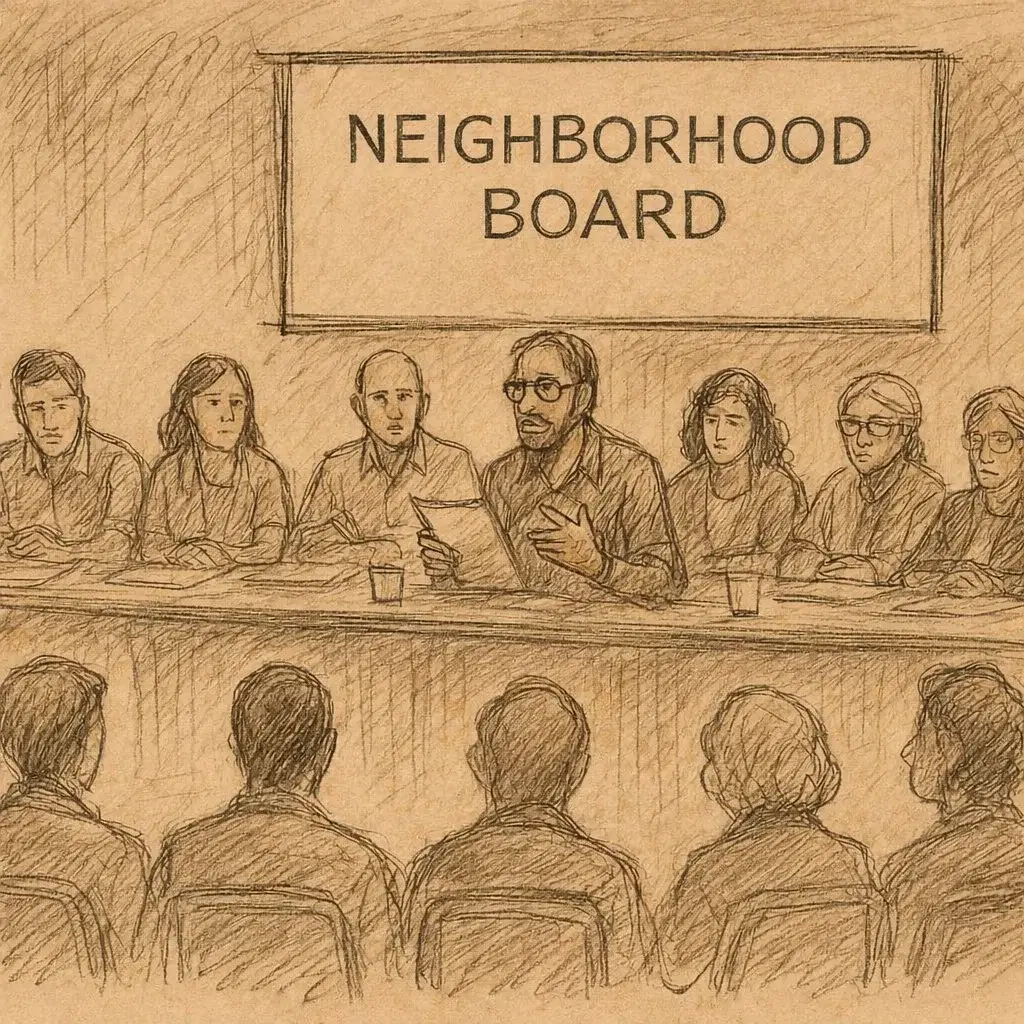
No 34 Makakilo-Kapolei-Honokai Hale Neighborhood Board Regular Meeting May 2026
Listen to this article:
34 Makakilo-Kapolei-Honokai Hale Neighborhood Board Meeting – May 28, 2026
Opening, Attendance, and Meeting Framing
The meeting opened with a reminder that the neighborhood board serves as the community’s forum rather than a platform for government officials, developers, or the board itself. Public speaking procedures were announced, including three-minute testimony limits and ten-minute presentation slots. Roll call established a quorum with seven members present. Chair Makana Paris noted heightened public and media interest because of a major presentation that had drawn front-page coverage in the Star-Advertiser, setting the tone for a meeting centered heavily on development, infrastructure, and accountability.
Honolulu Fire Department Report and Wildfire Readiness
Honolulu Fire Department reported April 2026 activity from the East Kapolei Fire Station. There were no structure fires, brush fires, wildland fires, or cooking fires, but there were seven nuisance fires and 34 activated fire alarms with no fire. Other emergency responses included 168 medical calls, two motor vehicle collisions involving pedestrians, three motor vehicle crash collisions, and three hazardous materials incidents, with no mountain or ocean rescues. HFD used the report to emphasize wildfire preparedness as Hawaiʻi enters a period of elevated fire risk tied to dry conditions, tall grass, and shifting winds. Residents were urged to clear dry vegetation around homes, avoid parking on dry grass because hot exhaust can ignite it, and avoid spark-producing activities in hot, windy weather.
Honolulu Police Department Crime and Traffic Statistics
Honolulu Police Department’s District 8 Community Policing Team delivered April 2026 statistics. District-wide, there were 20 motor vehicle thefts, 14 burglaries, 105 thefts, and 21 unauthorized entries into motor vehicles. In Kapolei specifically, there were 6 motor vehicle thefts, 4 burglaries, 40 thefts, and 9 unauthorized entries into motor vehicles. Traffic enforcement across the district included 24 speeding citations, 643 other moving violations, 65 parking violations, and 1,058 total citations issued. HPD also reported 8,413 total calls for service district-wide, including 2,513 in Kapolei alone. Board members sought clarification on the 643 moving violations, which HPD explained covered non-speeding offenses such as red-light violations, stop-sign violations, unsafe lane changes, and related conduct.
Sonic Drive-In Traffic, Illegal Parking, and Road Safety Concerns
Board members raised concerns about traffic and illegal parking connected to the newly opened Sonic restaurant in Kapolei, especially along Kunehi Street and Kapolei Parkway. The concern was not simply congestion but the creation of unsafe roadway conditions, particularly for kupuna drivers who may not anticipate stopped or illegally parked vehicles near a busy commercial entrance. HPD said it had not yet received a formal parking-related report substantial enough to assess whether Sonic had become an operational burden, but the board requested that HPD follow up at a future meeting with observations, any enforcement issues, and possible recommendations for improving safety in the area.
Homelessness, Visible Street Conditions, and Service Access
A major recurring concern throughout the meeting was the visible increase in homelessness in the Makakilo-Kapolei area. One board member contrasted a reported 91 percent decrease in homelessness in downtown Honolulu with what he described as a large increase in Kapolei and Makakilo, including more panhandling on center medians, people lying near entrances, and gatherings near the library. HPD said it has observed new faces in the area but could not identify a single cause. Officers advised that property owners can request assistance if panhandling or loitering occurs on private property and that residents should call 911 or the non-emergency line if they feel unsafe or are dealing with nuisance conditions. The issue later resurfaced in testimony criticizing the apparent transfer of visible homelessness from urban Honolulu into West Oʻahu without a corresponding increase in local support infrastructure.
School Resource Officers and Campus Safety
A community member asked about the School Resource Officer program, especially in light of concerns following a report that a student had brought a gun to a Kapolei school in a recent month. HPD responded that feedback on the SRO program had been positive and that additional reserve officers were applying for the role, making it likely more schools would receive assigned officers in the future. The discussion connected school safety concerns with broader calls for more visible public safety capacity in growing West Oʻahu communities.
Board of Water Supply Absence and Water Pressure Improvements
Although the Board of Water Supply did not attend, the chair reported on a recent special board action supporting new pumping equipment in the area to improve water pressure. The upgrade was described as a response to low or volatile water pressure affecting the community. The board linked the issue to broader concerns about whether current and future water systems can support rapid residential growth in Makakilo and Kapolei.
Unanswered Water Supply Planning Questions
Board member Sheila Medeiros formally restated questions first asked in August and still unanswered by the Board of Water Supply. The questions sought specific information about how water availability is being tracked as new homes and apartments continue to be built, what strategies exist to ensure supply keeps pace with growth, and whether desalination plants are part of current planning. If desalination facilities exist, the board wants to know whether they are operating; if not, it wants reasons for their absence. This continued line of questioning reflected a longstanding concern that development approvals may be advancing faster than infrastructure planning.
Mayor’s Office Update: Oʻahu Food System Plan
Deputy Director Deborah Zysman, representing Mayor Rick Blangiardi’s office, reported that the Mayor’s Office of Climate Change, Sustainability and Resilience had released the first-ever draft Oʻahu Food System Plan. The plan addresses how food is produced, distributed, accessed, and disposed of while supporting community health, the economy, and the environment. Public input is being sought through June 30 at resilientoahu.org. The announcement introduced food resilience as a citywide planning issue with direct relevance to household costs, local agriculture, and long-term sustainability.
Mayor’s Office Update: Kona Low Recovery
The mayor’s representative also gave an update on ongoing response, cleanup, and recovery from the recent Kona Low storms. She said the city continues to work with state and federal partners and directed impacted residents to oneoahu.org for assistance and information related to FEMA, the Small Business Administration, and other recovery resources. The update underscored continuing weather-related vulnerability across Oʻahu and the role of coordinated government response.
Makakilo Drive Completion, Funding Status, and Classification Dispute
One of the meeting’s most detailed and consequential topics was the future of Makakilo Drive. The mayor’s office relayed that the Makakilo Drive extension is listed in the long-range Oʻahu Regional Transportation Plan as an “illustrative project,” meaning no federal, state, or city funding has been identified for implementation. The Department of Transportation Services indicated that projects of this scale typically depend on roughly 80 percent federal funding, and without a substantial federal source, the project cannot move beyond conceptual planning. Board members and community advocates strongly rejected the framing of the project as an “extension,” insisting it is a long-promised completion of an originally intended roadway link from Makakilo to the freeway. They argued the project has previously had funding identified and then diverted elsewhere, and that its omission from the Transportation Improvement Program is a major barrier to restoring progress. Several speakers said the road is essential to managing congestion and emergency evacuation as housing growth continues.
Questions About How Makakilo Drive Was Classified
Board members pressed for clarification about why the project is treated as illustrative rather than necessary. Although the mayor’s office explained that the designation reflects the lack of funding rather than a judgment on need, board members and residents remained dissatisfied and asked what criteria were used and what steps are needed to secure the federal funding that DTS says is required. The discussion highlighted a mismatch between how agencies classify projects in planning documents and how residents experience the consequences of a single-access hillside community.
Traffic Calming on Makakilo Drive and Community Pushback
The mayor’s office reported that DTS is still working with a consultant on conceptual traffic calming drawings for Makakilo Drive north of Palailai Street. Once those are complete, DTS expects to provide a timeline and gather input. Community testimony urged caution. One longtime resident warned that prior traffic calming discussions had included proposals to remove on-street parking in condo and townhouse areas where guest parking is limited, and criticized ideas such as bike lanes on the steep slope and a roundabout without a traffic signal near routes used by schoolchildren. Concerns were also raised about the lack of mid-block crosswalks despite dangerous crossing conditions near schools. The board asked DTS to consider lower-cost and more visible safety interventions such as a permanent speed radar display sign.
ADA Sidewalk Obstruction Near Makakilo Bible Church
Board member Medeiros followed up on an unresolved ADA issue involving a sidewalk near Makakilo Bible Church where a utility pole sits in the middle of the pedestrian path. She said the city had already acknowledged the condition was not ADA compliant and had committed to fixing it, but the board still lacked a timeline. She requested details on planning status and construction timing so the board can report back to the resident who initially raised the problem.
Emergency Egress From Makakilo and Evacuation Capacity
The board revisited concerns about Makakilo’s emergency escape routes, particularly a memorandum of understanding reportedly needed among a private landowner, the city, and possibly others to ensure use of an emergency egress route during fires or evacuations. Board members said they had heard conflicting reports about whether the MOU had been signed or was still pending and stressed urgency as summer and fire season approach. They also questioned whether anyone has studied how many vehicles the route can safely handle during a real evacuation and asked whether future emergency exercises should include Makakilo to test actual clearance capacity.
Environmental Assessment Status for Makakilo Drive
Questions were raised about whether the environmental assessment completed in 2009 for the Makakilo Drive project is still valid. Residents argued that if the environmental review remains valid, it could help move the project forward more quickly; if it has expired, then a new assessment would be required before planning can advance. Community advocates said they had previously been told the environmental assessment would be released or updated after meetings with city officials but had not seen that happen.
Pickleball Striping at Makakilo Community Park
The mayor’s office reported that the Department of Parks and Recreation stands by its decision not to permit permanent dual striping for pickleball on Makakilo Community Park tennis courts and said there is no formal appeal process for such a decision. Parks cited islandwide conflicts over court use, permit disputes, and incidents requiring HPD intervention as reasons for the policy. It emphasized that Makakilo Community Park already has two lined courts on the volleyball court available for pickleball and that other parks in the region have dedicated pickleball courts. The issue remained contentious, with board members objecting to the lack of a grievance process and later hearing contradictory information from a tennis organization stating that many city tennis courts across Honolulu already have blended striping.
Villages of Kapolei Road and Infrastructure Transfer Issues
A Villages of Kapolei resident questioned the long-term financial viability of the road and maintenance transfer between the state and city. She cited figures from the 2025 state fiscal report indicating projected road rehabilitation costs of approximately $10 million per year over ten years plus $1 million annually for maintenance, while negotiations centered on a $60 million payment over ten years. She argued that this implies a roughly $50 million shortfall and asked what contingency plans exist when the money runs out. She also criticized the fact that residents had paid property taxes for decades with the expectation that some portion would support infrastructure, only to learn that the needed reinvestment was not made. She pointed to interim agreement language suggesting the city could suspend work if state payments lapse and asked how residents would be protected from interruptions in repairs and maintenance.
Makaʻīwa Hills, Act 73, and Opposition to Another Landfill Near West Oʻahu
The same resident raised concerns about amendments to Act 73 that would withdraw the Makaʻīwa Hills site from landfill consideration and said public documents from December 2024 already showed that this was under discussion. She asked how the city could return to that earlier map and keep Makaʻīwa Hills excluded. The discussion reflected wider frustration that West Oʻahu repeatedly ends up absorbing regionally unpopular facilities and uses while other potential sites, including in East Oʻahu, receive less attention. The chair tied this issue to a broader narrative of West Oʻahu carrying disproportionate burdens.
Political Sign Damage Dispute and Questions About Accountability
A community member returned to the board for a third time regarding campaign banners allegedly screwed into her aunt’s wooden fence without permission by State Representative Kanani Souza. She said multiple agencies had failed to provide meaningful resolution, no fence repair or apology had occurred, and the matter had become politicized instead of being handled as a simple property rights issue. She asked the city what recourse constituents have when a complaint involves an elected official damaging private property and what agency ensures proper review and accountability. Her aunt testified directly that she had not granted permission.
Representative Souza then addressed the board, denied wrongdoing as framed, said she had received permission from a male resident at the property, and argued the matter was part of a political smear campaign tied to an election opponent. She said she had apologized for any miscommunication but would not pay compensation absent formal legal action. The chair allowed the response because the original testimony had asked process questions of government, then halted further debate to return the meeting to official business. The exchange exposed tensions around ethics, campaign conduct, and the limits of the board as a dispute forum.
Longtime Resident Testimony on Politics, HOAs, and West Oʻahu Neglect
A longtime resident active in multiple associations and familiar with the neighborhood board system for decades delivered broader testimony criticizing political infighting and urging a renewed focus on community safety and basic needs. She said homeowners associations are forced to enforce rules in the absence of responsive city regulation, objected to political signs where prohibited by governing documents, and argued that West Oʻahu is repeatedly overlooked while money is spent elsewhere on projects like urban bike infrastructure. She tied together concerns over Makakilo access, landfill siting, and the lack of practical improvements for the west side, urging officials to get lawmakers and agencies to take the region seriously.
Oʻahu Metropolitan Planning Organization and Transportation Advocacy
Community liaison Frank Donadio reported that there had been no Citizen Advisory Committee meeting in May and explained that a recent TIP revision removed four projects and added nine for the Hawaiʻi Department of Transportation, again without including Makakilo Drive completion. He said he had opposed the revision and argued that without his earlier testimony, the project would not even appear as an illustrative item in the Oʻahu Regional Transportation Plan. He also noted that a mayoral town hall at UH West Oʻahu where residents hoped to push the project was canceled due to storm recovery demands, and that two state resolutions urging completion of the road had failed to move through the full Legislature. Donadio criticized city references to a limited emergency access route as a distraction from the real need, called for a screen-line traffic counter to document actual roadway use, and urged strong turnout before the AMPO policy board, which controls what goes into the TIP. He said that if the policy board places the road on the TIP, federal funding covering safety and congestion management would likely follow.
Request for Better Mobilization Around Transportation Decisions
Board members asked how the community can help move Makakilo Drive onto the TIP, and Donadio said pressure must be directed at the AMPO policy board. He suggested that even 10 percent of the roughly 3,600 members of the PCA appearing at a meeting and demanding action would likely have an effect. The chair asked to be informed of future policy board meetings so the neighborhood board can mobilize residents to attend.
HONU Homeless Outreach and Navigation Program Returns to Kapolei
The city’s Department of Community Services presented on the return of HONU, the Homeless Outreach and Navigation for Unsheltered Persons program, to Kapolei. HONU is a 24/7 intake shelter and the island’s only around-the-clock intake site, serving as a primary entry point into the homeless services system. It is a mobile emergency shelter model operating in tents, intended to rotate among areas of need. HONU staff described the program as both an emergency response and a navigation hub that moves people from the street into a short-term safe setting where they can receive meals, showers, referrals, and case management. Staff emphasized that the goal is not long-term sheltering but transitioning people into other shelters, treatment, reunification with family, or more stable housing.
HONU Program History and Operational Model
HONU began in December 2019 at the Waipahu Cultural Garden and has since rotated through multiple sites around Oʻahu. Its mobile structure allows it to be placed in parks or lots where homelessness is concentrated. The city said it typically remains in one location for four to seven months before moving to another area. Officials argued this mobility allows the city to target emerging need across the island, although several board members questioned whether a short stay undermines consistency and long-term impact.
HONU Outcomes at Waipahu Plantation Village
At its most recent prior site, Waipahu Plantation Village, HONU operated for about seven months and served 391 individuals. Of those, 208 were navigated into more stable outcomes. According to the city, 158 moved into shelters, 24 reunited with friends or family, 6 relocated to the mainland or another island, 9 entered transitional or boarding housing, and 11 entered further medical or substance abuse treatment. The city presented these figures as evidence that HONU can produce transitions for roughly 50 to 60 percent of participants.
HONU Data From Kapolei’s Previous Deployment
When HONU previously operated in Kapolei, it completed 606 intakes, including 217 people from the Kapolei-Makakilo area. Of those served, 75 came from family groups, 68 were ages 50 to 59, 79 were age 60 or older, and 19 came from reentry programs. Reported outcomes included 258 people placed into shelter, 52 reunited with friends or family, 15 relocated off-island, 41 moved into transitional or permanent housing, and 27 connected to further medical or substance abuse treatment.
HONU Program Totals Since 2019
Since launching in 2019, the HONU program has served 5,029 people and navigated 2,742 to what the city considers a positive next step, including shelter, housing, treatment, or family reunification. Staff highlighted these totals to argue that the model fills a unique islandwide role as a mobile, always-open intake shelter that can accept referrals at any hour from HPD, EMS/CORE, and community organizations.
Questions About IDs, Public Benefits, and Service Navigation
Board members asked whether HONU can help people obtain state IDs and birth certificates, which are often prerequisites for accessing benefits and housing. HONU staff said it can assist as part of case navigation and can use waivers that exempt homeless individuals from state ID fees. Transportation is also sometimes provided for appointments. Additional questioning focused on whether HONU helps clients apply for SNAP, general assistance, and treatment programs such as Hina Mauka or Poʻailani. Staff said the program helps start those processes, though the short average stay means many applications are not completed before clients transition out.
Accessibility Concerns for Wheelchair Users
Several speakers challenged HONU’s ability to serve disabled residents, especially people in wheelchairs. HONU acknowledged that because the shelter uses tents and sleeping space on the ground, it cannot appropriately accommodate people with significant medical needs or those unable to care for themselves independently. Staff said those individuals must be navigated elsewhere. This answer drew criticism because it meant some of the most visibly vulnerable houseless residents in Kapolei may be ineligible for the only local round-the-clock intake option.
Questions About Sleeping Conditions and Program Dignity
One of the strongest exchanges concerned sleeping arrangements. Board members expressed dismay that people entering HONU for help are sleeping on the ground in tents rather than on beds. HONU said cots had been tried in the past but broke easily, were expensive, and were difficult to transport within a mobile program. Air mattresses had also proven unreliable. The board began discussing whether the community could donate sleeping mats, air mattresses, or similar items and asked how such donations could be coordinated. The city invited residents to contact the HONU administrator directly to arrange donations.
Concerns About HONU’s Short Deployment Period
Board members questioned the logic of remaining in an area only four to seven months when homelessness in that area persists. They argued that consistency and long-term presence are essential for trust and program effectiveness. HONU replied that limited funding prevents creating permanent sites in every community and that mobility is necessary to serve the island broadly. A suggestion was raised that Kapolei may ultimately need a more permanent respite or shelter option rather than periodic HONU deployment alone.
Whether HONU Moves Homelessness Rather Than Solves It
Community testimony reflected a widespread perception that homelessness is being shifted geographically, particularly out of Waikīkī and urban Honolulu toward places like Kapolei. One resident asked whether HONU’s site pattern means outlying communities are absorbing people from elsewhere. City staff replied that homelessness is often highly mobile and that there is no deliberate strategy to simply dump people in other districts; rather, the aim is to connect people to services and to places where they may have family or roots. Another resident recounted a past tragedy involving a homeless woman allegedly transported from another area and then killed shortly after being dropped off in Kapolei, using the story to argue against displacing vulnerable individuals into unfamiliar surroundings.
Returning People to the Mainland or Other Islands
In response to questions about whether the city coordinates returns for homeless individuals who recently arrived from elsewhere, the city said the Institute for Human Services had helped 181 people return to the continental United States and the Waikīkī Business Improvement District had funded an additional 12 such returns through a vetted receiver process. A more recent figure of 81 people relocating from Hawaiʻi back to the mainland through IHS was also mentioned. These relocations require a verified receiving person rather than simply sending people away without support.
Chamber of Commerce Support for HONU and Need for a Permanent Respite Option
The Kapolei Chamber of Commerce thanked the city for bringing HONU back, saying businesses around Kapolei Regional Park had been affected before the prior deployment and had seen positive results. At the same time, the testimony suggested the bigger regional need is for a more permanent respite solution in Kapolei rather than relying solely on mobile deployments.
HONU Deployment Timeline in Kapolei
HONU said it expects to remain in Kapolei for about six months this time. The chair asked that in the future the city notify the neighborhood board before arrival so the board can help mobilize outreach and community awareness. The board also requested a clearer explanation of where HONU fits within the broader homelessness service ecosystem and a list of partner organizations so the conversation can become more targeted and productive.
USTA Hawaiʻi Pacific Facility in ʻEwa Beach
Ron Romero, executive director of USTA Hawaiʻi Pacific, presented plans for a new tennis and education center on seven acres acquired in partnership with Gentry Homes near Hoʻokele Elementary and Pūlama School in ʻEwa Beach. The facility has already received a conditional use permit, detailed construction plans were submitted in November, and the project is awaiting final approval to begin building. The site would include eight tennis courts, a large parking lot, green space for multipurpose community use, perimeter fencing, and no lights, meaning activity would end at sunset. Approximately 55 parking stalls are planned. Romero said the center is intended not only for tennis but also as a youth gathering place with educational programming and school partnerships.
USTA Youth and School Programming
The USTA described itself as a 501(c)(3) nonprofit focused on healthier people and communities through tennis. It highlighted after-school and outreach programs in Waiʻanae, Waimānalo, and Pālolo and said it had hired a schools director to bring tennis into schools beginning in the ʻEwa Beach area. The plan is to provide curriculum, train teachers, and supply equipment so schools can offer tennis as an activity.
Tennis Growth and Pickleball Context
The USTA presentation also addressed the tennis-versus-pickleball tension discussed earlier in the meeting. Romero said tennis has 27 million players nationwide, up from 24 million last year, and has grown 24 percent in Hawaiʻi over the past three years. He argued tennis remains strong even while pickleball grows rapidly. He then provided statistics intended to rebut claims that city parks are overly restrictive toward blended use. According to him, Honolulu has about 222 tennis courts, 197 of which have blended pickleball lines, along with 36 dedicated pickleball courts. In West Oʻahu, he said ʻEwa Mahiko District Park alone has eight permanent pickleball courts. The board approved a motion supporting the tennis center project unanimously.
Amazon Project Savoy Overview and Rezoning Request
The evening’s final major presentation came from Amazon and its project team regarding “Project Savoy,” a proposed fulfillment center in the Kapolei Harborside Industrial Park near Barbers Point Harbor. The team included representatives from DTL, G70, Seefried Properties, and Amazon itself. They explained that the proposed use is already allowed in the industrial area, but the company is seeking a height district rezoning for 16.5 acres within the site, increasing the allowable height from 60 feet to 100 feet. The broader site includes consolidated lots in the southern portion and is surrounded by other industrial and business park uses. The zone change application was submitted to the Department of Planning and Permitting in late April and accepted in early May. Public notice has gone to owners within a 300-foot radius, and planning commission and city council review are expected later in 2026.
Amazon’s Cultural Design Narrative
The project team said the facility design is being shaped to reflect local history and culture rather than simply replicate mainland warehouse architecture. A local cultural design firm was retained to develop concepts rooted in the ahupuaʻa of Honouliuli, incorporating themes from traditional pathways and plantation-era rail connectivity. The team said the project would use culturally informed design features, local flora and fauna, and culturally resonant employee spaces similar to those already incorporated inside Amazon’s Sand Island facility. They emphasized that this work came partly in response to earlier board recommendations.
Site Plan, Building Scale, and Visibility
The project team said the site plan has remained largely unchanged since it was first shown in December. The facility would have roughly 598,000 square feet on the ground floor and about 2.8 million square feet total across multiple elevated levels. Renderings were shown from various public viewpoints, including roads leading into and through the area, with emphasis on landscaping and façade treatments intended to soften visual impacts. The board and public remained highly aware that the building would be very large, especially along an approach corridor associated with West Oʻahu’s industrial edge and tourist-facing routes.
Employee Amenities and On-Site Environment
Amazon said the project would include break areas, outdoor plazas, dining spaces, and other employee amenities, reflecting a desire to create a livable internal environment for a workforce expected to number more than 1,000. These elements were presented as part of a broader strategy to support retention, comfort, and workplace culture.
Traffic Study and Transportation Demand Management
Traffic was one of the most scrutinized parts of the Amazon presentation. The project team said it conducted an extensive traffic analysis based on city-approved scoping, covering ten intersections and reviewing impacts from both worker trips and truck traffic. The study reportedly identified one intersection already operating below standard. The team said it would continue coordinating with the city on any needed improvements. To reduce travel demand, Amazon described plans for a transportation coordinator to organize ridesharing, bicycle facilities for nearby workers, on-site food and retail support to reduce midday trips, and eventual coordination with TheBus, since there is not yet a bus route into the industrial park. Community members and board members remained skeptical that these measures would adequately offset the project’s size.
Public Safety, Emergency Planning, and Employee Shelter Areas
Amazon described internal emergency preparedness procedures and said the facility would have designated interior shelter-in-place locations for employees. When asked whether such areas could function as community hurricane shelters, the team said they are currently intended only for employees and could not commit to public use, citing the complexity of the facility and its operations. That answer did not satisfy board members who have been pushing for more hurricane-safe spaces in West Oʻahu.
Water, Sewer, and Power Demands
Responding to recurring infrastructure concerns, the developer said the site lies within a master-planned area where water and sewer capacity had already been allocated by James Campbell Company. The project team maintained that the warehouse would use no more than the previously entitled utility capacity for the parcels and in fact slightly less. It also said the building would use low-flow fixtures and other efficient systems. For power, Amazon has requested 9.5 megawatts from HECO and plans to install a 5 to 7 megawatt rooftop solar system to offset part of that demand. This was presented as evidence that the project is attempting to reduce pressure on the electrical grid.
Employment, Retention, and Education Benefits Promised by Amazon
Amazon said the project would create more than 1,000 full-time jobs with benefits beginning on day one, including medical, dental, and vision coverage. It also estimated several hundred construction jobs, putting the combined employment impact near 2,000 jobs when permanent and construction positions are considered together. The company highlighted its Sand Island operation, where it said employee retention is among the highest in its North American network, and credited local leadership and workplace culture for that result. It said the Kapolei site would aim to replicate that model. Amazon also described a local-hire strategy focused on West Oʻahu zip codes and said it would work with workforce development partners and high schools months before opening.
Tuition and Career Choice Program
Amazon highlighted its Career Choice program, under which employees can receive prepaid tuition support for associate or bachelor’s degrees in fields of their choosing. The company said the annual amount is about $5,250 and that tuition is paid up front rather than reimbursed, helping workers avoid student debt. Amazon said it already has arrangements with educational institutions, including UH and Honolulu Community College, and intended to continue conversations with Leeward Community College and UH West Oʻahu as well. The program was presented as a ladder for employees to move into fields such as healthcare, logistics, trades, or technology.
Claimed Economic Impact and No Tax Incentives
Amazon described the project as a private investment of more than $600 million in West Oʻahu and said it had requested no tax incentives. The company also said the facility would generate property tax revenue for the city and produce multiplier effects through wages, construction activity, and ongoing operations.
Community Investment Framework Proposed by Amazon
Amazon said it sees four pillars of community benefit tied to the project: employment, education, economic impact, and community investment. It identified likely focus areas including food insecurity, youth organizations, educational partnerships, and community infrastructure. The company said it wanted guidance from the neighborhood board on what strategic investments in West Oʻahu might be most helpful, especially investments that improve daily quality of life. This invitation for direction became one basis for later board action.
Skepticism About Amazon’s Values Language and Local Messaging
Despite the polished presentation, board members and residents repeatedly expressed unease. A remote board member challenged local consultants directly, saying terms like pilina and “respect for place” ring hollow when attached to large-scale corporate capitalism and asking whether they truly believe the values language they are using. Another board member said the presentation was excellent but that the community has experienced too many broken promises from previous large projects to be comfortable simply accepting assurances. These comments reflected a deeper trust gap rather than a dispute over a single project feature.
Questions About Automation and Long-Term Job Security
Board member Medeiros raised concerns about the rise of AI and robotics and asked what assurance Amazon could give that the 1,000-plus jobs promised today would remain human jobs by the time the facility opens, projected around 2030. Amazon responded that robotics are already incorporated into its facilities and are used to improve safety and perform repetitive tasks, but that the company does not foresee replacing the planned workforce with machines. It said historical experience at similar facilities suggests staffing remains stable even as robotics are upgraded.
Consumerism, Community Trauma, and Uncertainty About Support
Vice Chair Michaela Lindstone said she remained uncomfortable with the project because Amazon represents large-scale consumerism and because the community has repeatedly been disappointed by developments that promised benefits but failed to deliver them. Her remarks captured a broader tension throughout the meeting: residents want jobs and investment but are wary of accepting another major project without enforceable accountability and real mitigation.
Requests for Specific Community Benefits
During questions, a board member suggested that if Amazon wants to support infrastructure, the company should consider helping advance long-discussed projects like the Skyline extension toward Campbell Industrial Park and completion of Makakilo Drive. Others suggested investments in fishpond restoration, waste reduction and recycling infrastructure, and support for programs dealing with product returns and community services. These ideas reflected an effort to move the discussion from general goodwill to concrete benefit areas.
Criticism Over Waste, Local Business Impacts, and the Broader Economic Model
Community testimony challenged the project from several angles. One resident asked Amazon to invest in fishpond restoration and local recycling systems, arguing that the company generates substantial waste while public systems absorb the burden. Another speaker said Amazon’s presentation was deceptive for not directly addressing how many robots and trucks the facility would involve or how many local businesses might be harmed by its expansion. A Leeward Community College employee also questioned why local educational institutions nearer to the project were not more visibly integrated into planning from the outset.
Permitted Interaction Group Created for Amazon Project Review
Faced with intense concern and limited meeting time, the board adopted a resolution creating a permitted interaction group for Project Savoy. The group is intended to facilitate public participation, fact-finding, and advisory review over the coming months. Its scope includes traffic, housing, workforce, environment, culture, noise, and infrastructure impacts, and it is specifically barred from making binding commitments or agreements. The group will gather information, host discussion, develop factual summaries and options, and report back to the full board. The chair summarized the purpose as creating a more appropriate and sustained process for working through issues raised by such a large project rather than trying to resolve them in a late-night board session.
Community and Organizational Participation in the Amazon Review Process
The chair reported receiving 27 public testimonies in support of creating this process and interest from 13 organizations wanting to participate. The board voted to confirm community partners and four board representatives to serve in the interaction group. The intent is to broaden the review beyond the board itself and give residents, organizations, and the developer a structure for ongoing engagement.
Conditional Board Support for Amazon’s Height Rezoning Request
After establishing the interaction group, the board took action on Amazon’s pending Department of Planning and Permitting application. The chair recommended conditional support for the height district zone change from 60 feet to 100 feet, contingent upon the findings and recommendations of the newly established permitted interaction group. The rationale was to acknowledge Amazon’s good-faith outreach while also recognizing that the community needs a structured process to examine unresolved concerns. After brief testimony, the motion passed with one abstention.
Adjournment
With time exhausted and the final Amazon actions completed, the chair adjourned the meeting at 10:06 p.m. The meeting closed after an extended discussion that centered on how rapid growth, infrastructure strain, homelessness, and major private development are converging in Makakilo, Kapolei, and Honokai Hale, and how the community is trying to build mechanisms to influence what happens next.