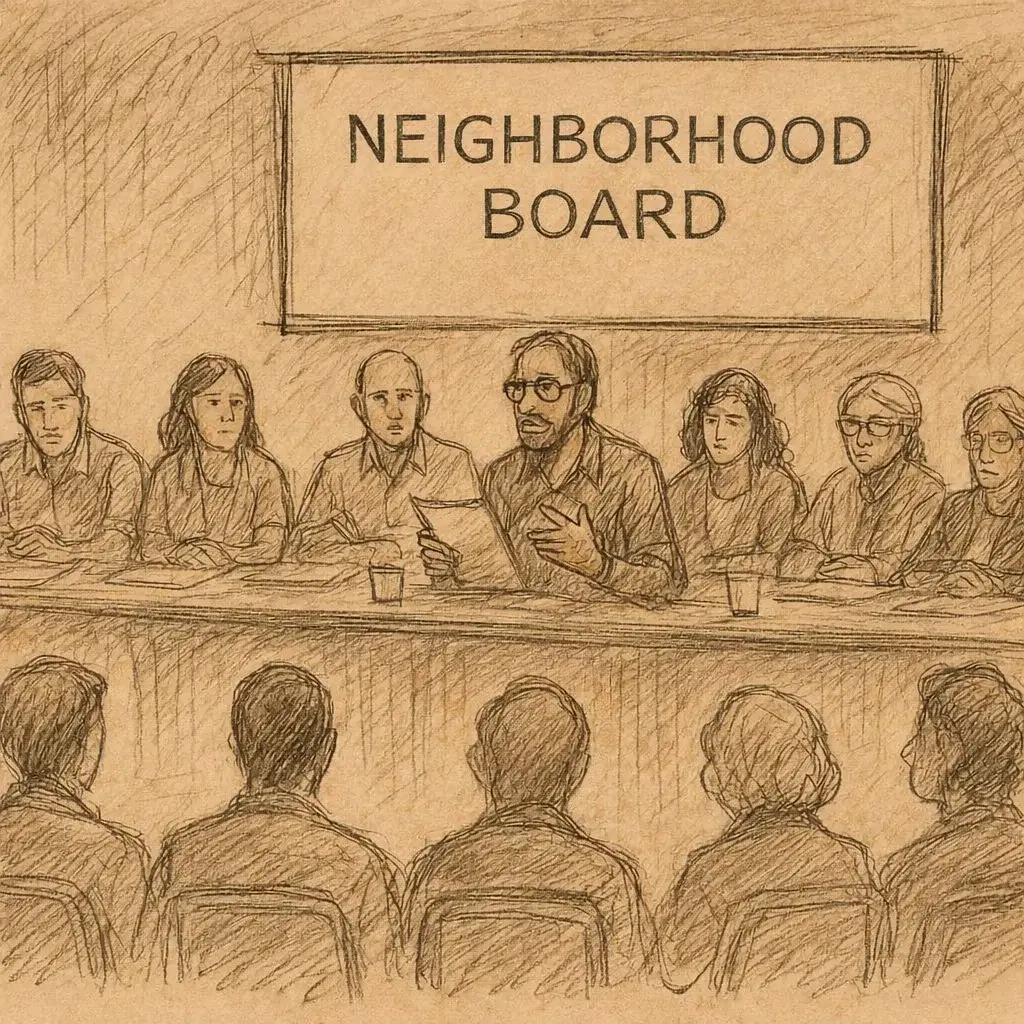
No 14 Liliha Puʻunui ʻĀlewa Neighborhood Board Regular Meeting November 2026
Listen to this article:
14 Liliha-Alewa Neighborhood Board Meeting – November 10, 2026
Call to Order and Attendance
The transcript records the meeting being called to order at 6:30 p.m. on November 9, with the chair setting a goal of finishing by 8:00 p.m., or preferably 7:30 p.m., because of the full agenda. Members and presenters were asked to observe published time limits, remain focused, and avoid repeating prior comments. Roll call established a quorum with nine members present, including members participating through WebEx. The meeting ultimately adjourned at approximately 8:06 p.m.
Fire Department Activity and Holiday Travel Safety
Personnel from the Kuakini Fire Station reported October activity in the neighborhood board area, including one structure fire, two nuisance fires, 118 medical emergencies, one motor-vehicle collision, one mountain rescue, and two hazardous-material incidents. In response to a board question, the firefighters explained that medical calls may receive either a fire engine or a rapid-response pickup truck, depending on the station and circumstances, and that dispatch screens the calls, which range from critical to less severe emergencies. The department’s monthly safety message focused on holiday travel: residents were advised to drive sober and alert, avoid cell-phone distractions and drowsy driving, use designated drivers or rideshare services when alcohol is involved, ensure that every passenger wears a seat belt, and secure children in age- and size-appropriate car seats or boosters.
Board of Water Supply Update
Board of Water Supply representative Iris Ota reported that there were no water-main breaks in the neighborhood board area during October. She also announced permanent full-time and contract employment opportunities in business management, engineering, information technology, and managerial or executive leadership, directing interested residents to BWSjobs.org. Ota confirmed that she plans to retire on December 30 after approximately 20 years of reporting to neighborhood boards. Members thanked her for her long service and familiarity with the Liliha-Alewa and Nuʻuanu communities. She said she hoped to introduce her replacement and might return to visit or participate in community activities after retirement.
Liliha-Pālama Christmas Parade
Vernon Nakamura announced that the Liliha-Pālama Christmas Parade would take place on Friday, November 27, the day after Thanksgiving, beginning promptly at 5:30 p.m. A mandatory safety meeting was scheduled for November 19 at 6:00 p.m. at the United Church of Christ. The city Department of Transportation Services had emphasized parade safety after a child reportedly fell from a vehicle during another parade, although the child was not injured. Participants were reminded that children must be closely supervised, drivers must remain aware of everyone riding on or near trucks, cars, and floats, and all participants must follow police directions. Board members were encouraged to march, with the chair noting that the route is downhill and that transportation arrangements would be available.
Neighborhood Park Noise and Requested Earlier Closing Time
Resident Kanani Young, who lives near the neighborhood park referred to during the discussion as Alewa or Nā Pueo Park, requested that its nighttime closing hour be moved from 10:00 p.m. to 8:00 p.m., or at least to 9:00 p.m. She described recurring evening noise from groups using the volleyball court, including amplified music, yelling, parties, and repeated whistle blowing. Although HPD has responded, she said participants commonly lower the music while officers are present and raise it again after they leave. Young explained that the former quarry’s bowl-like terrain acts as an amphitheater, carrying sound uphill into the surrounding residential area, and said the current hours make it difficult for working residents to sleep. She cited another mini-park where hours were reportedly changed from a 10:00 p.m. closure to an 8:00 p.m. closure after residential noise complaints.
Board members discussed whether enforcement, permits for larger gatherings, or an hours change would be the most appropriate response. One member noted that families, children, and dog walkers also use the park in the evening, particularly after work, while acknowledging that 10:00 p.m. may be too late for the surrounding residential setting. Another resident supported Young’s request and argued that residents should not have to confront noisy or potentially intoxicated groups themselves. The chair said the matter would be placed on a future agenda and asked Young to coordinate with the mayor’s representative. Because the board would recess in December, follow-up would occur no earlier than January.
Accessible Handy-Van Pickup on Bachelor Street
Resident Fatou Golio again raised concerns about the accessible Handy-Van pickup area at 1900 Bachelor Street, near the Care Hawaii or Care Center property. He said vehicles regularly park along the red-marked area needed for wheelchair lifts, forcing riders with disabilities to board or disembark farther down the street, across the street, or in other unsafe locations. He asked for clearer tow-away or no-parking signage covering enough curb space for a Handy-Van and its lift, estimated at approximately three car lengths. He also disputed an earlier explanation that construction was preventing use of the designated pickup area, stating that construction had ended roughly three months earlier and that employees and delivery vehicles continued to obstruct the curb.
Mayor’s representative Edward Las Pinas said the Department of Transportation Services had reportedly contacted Golio twice and that the official Handy-Van pickup location remained inside the property. The city’s information had indicated that construction staging caused the location to be altered without the Handy-Van program being formally notified, so the records and operating arrangement still needed to be reconciled. Golio stressed that the problem persisted after construction ended and that people using wheelchairs remained vulnerable while waiting for transportation. HPD later advised that officers must personally observe an illegal parking condition before issuing a citation. Police also explained that a red curb does not automatically resolve every enforcement question under HPD rules, although vehicles cannot block access points or required clearance. Residents were encouraged to call early if a vehicle appeared likely to remain in the loading area, but HPD warned that parking complaints can receive delayed responses because of staffing and higher-priority calls.
Police Crime Statistics and Staffing
After resolving computer-access problems, Sergeant Cruz presented HPD’s October statistics for the area: two aggravated assaults, eight auto thefts, five burglaries, one sexual assault, five simple assaults, 11 thefts, and four vehicle break-ins. HPD handled 1,340 calls for service in the area. Cruz said only three officers were assigned to the immediate area at the time discussed, while normal full staffing would be five. Across the much larger patrol area extending from the Navy Exchange to Chinatown and from the mountain to the ocean, HPD was operating with 18 officers rather than the full complement of 23. One officer from Chief Arthur “Joe” Logan/Lazar’s broader reassignment initiative had been added to the area. Two newly graduated officers had joined the night watch, and additional officers were expected around November 15 as academy classes completed training.
Cruz acknowledged that understaffing can substantially delay lower-priority responses, including parking complaints, but said the department considers neighborhood quality-of-life concerns important. HPD reviews neighborhood board questions through an after-action process that sends concerns to lieutenants, the major, the assistant chief, and ultimately the police chief. The board was told that the chief was prioritizing patrol staffing as new officers became available.
Police Response to Park Noise
Sergeant Cruz confirmed that officers had repeatedly responded to noise complaints at the park and agreed that the quarry-like landscape amplifies and carries sound into nearby homes. Officers had experienced the same pattern described by the resident: music is lowered when police arrive and raised again after they leave. Cruz found one citation issued in connection with noise at that location and hoped enforcement would discourage further violations. She stated that HPD can address unnecessary or unreasonable noise even before nighttime restrictions apply, while the cited nighttime standard concerns unreasonable noise between 10:00 p.m. and 5:00 a.m. Any formal change to park operating hours would need to be made by the Department of Parks and Recreation; HPD can only enforce the hours posted by that department. Residents also alleged that some park users may be consuming alcohol or marijuana, and Cruz encouraged callers to report activity before 10:00 p.m. if other violations may be occurring.
Holiday Theft Prevention
HPD’s holiday safety advice focused on theft at shopping centers. Residents were urged not to leave purses or wallets unattended in the child seat or front section of shopping carts, because thieves can take them as soon as the shopper looks away. Cruz recommended crossbody purse straps and warned shoppers not to place purchases in a parked car and then return to the mall, because offenders may watch for that behavior and break into the vehicle. Residents were encouraged to remain alert throughout the Thanksgiving and Christmas shopping season.
Crime-Mapping Service
A board member reported that HPD’s online crime-mapping service was no longer displaying neighborhood incidents, removing a tool residents use to monitor burglaries, automobile thefts, and other local crime patterns. Sergeant Cruz said the unit responsible for the service had been dissolved and HPD was attempting to assign its functions elsewhere. She agreed that the tool is valuable to both residents and patrol officers and said the department hoped to restore it by December after the next staffing allocation. The board member offered board support for reinstating the service because of its public-safety value.
Burned Vehicle on Halona Street
The board sought an update on the burned shell of a large van or small school-bus-type vehicle remaining on Halona Street near a freeway entrance. HPD said it had been entered into the abandoned-vehicle database, after which city agencies become responsible for removal. Because the vehicle requires specialized equipment, likely a flatbed tow truck, its removal is more complicated than a routine abandoned car. Representative Reckliff later added that complaints had been made even before the vehicle burned and that HPD, the state Department of Transportation, and the city Department of Customer Services were all aware of it. According to the representative, HPD did not have a vendor under contract to tow oversized vehicles, contributing to the delay. He asked that the removal be expedited because of the vehicle’s prominent and potentially hazardous location.
Traffic Fatality and Pedestrian Safety
A board member asked about a reported traffic fatality on Kuakini Street near a popular restaurant, later clarifying that the incident may have involved a moped rider and a vehicle turning left into a business driveway. Sergeant Cruz had recently returned from vacation and did not have details about that specific collision. She nevertheless urged pedestrians to cross only in marked crosswalks, make direct eye contact with drivers before stepping into the road, and never assume that a driver sees them even when they have the legal right of way. She said many fatalities occur outside crosswalks and noted that slippery road surfaces, speeding, and stopping distance can prevent vehicles from stopping in time. HPD had increased speeding citations in the area in response to continuing complaints.
Oʻahu Metropolitan Planning Organization
Board member Cora Yamamoto reported on the November 4 meeting of the Oʻahu Metropolitan Planning Organization Citizens Advisory Committee. The committee reviewed the Unified Planning Work Program for fiscal years 2028–2029, which prioritizes funding for transportation-planning studies and initiatives. Approximately 10 proposals had been submitted by the city, state, and Honolulu Authority for Rapid Transportation, with differing priority levels. The proposals were expected to be released for public, agency, and Citizens Advisory Committee comment in January. Yamamoto said she would circulate the information when available so residents and board members could review and submit comments.
Scheduled Presentation
The Global Alzheimer’s Foundation, which had been listed for a presentation, was not present. No substitute presentation was given, and the meeting moved to elected-official and agency reports.
Affordable Housing and School Street Senior Development
Mayor’s representative Edward Las Pinas highlighted an increase in affordable-housing activity, including the recently completed School Street development within the neighborhood board area. The project is intended for seniors, and the Hawaiʻi Public Housing Authority was accepting applications. Although the construction fences had briefly come down for the blessing, they were put back while applications and move-ins were processed. During questions, officials clarified that the development is both senior housing and affordable housing: applicants generally must be at least 55 years old and meet an income limit of 60 percent or less of area median income. A board member remained concerned that earlier descriptions had alternated between “senior housing” and “affordable housing” and asked for clearer information about eligibility and priority. The mayor’s representative suggested that HPHA or a state legislator familiar with the agency would be best positioned to provide a definitive explanation.
Mayor Wright Homes and Pedestrian Infrastructure
Las Pinas also reported that redevelopment of Mayor Wright Homes had reached the groundbreaking stage. A board member said news reports suggested that as many as 10 large towers could eventually be constructed and questioned whether sufficient pedestrian and traffic infrastructure was being planned, particularly because future residents may need to cross the major King Street, Liliha Street, and Dillingham Boulevard intersection to reach transit facilities. The member suggested that thousands of daily crossings could result once the development is occupied. Las Pinas said the city had been acquiring parcels in Iwilei and targeting corner properties to improve pedestrian routes, intersection design, traffic flow, and the overall walking environment. The board member suggested that more substantial grade-separated options, such as a bridge or tunnel, may eventually need consideration.
Other Housing Development and Oversight Concerns
A board member raised broader concerns about the financial structure and public oversight of major public-housing redevelopments. He noted that these projects may involve more than $1 billion, long-term development agreements, public land, tax credits, government loans, and other subsidies. He questioned whether resources intended to attract private development on private land might be concentrated on redevelopment of existing public housing and whether the long-term revenue arrangements were receiving enough scrutiny. He referenced prior development difficulties involving Kuhio Park Terrace, Mayor Wright Homes, and the earlier School Street developer, as well as a construction sign at Hale Poʻai senior housing that he said had remained in place for approximately five years. The board agreed to place housing-development funding, revenue, and oversight on the January agenda and to ask the governor’s office to provide someone capable of answering the questions.
Other City Housing, Public Safety, and Holiday Updates
The mayor’s report also referenced a planned Kakaʻako housing partnership involving the Office of Hawaiian Affairs and Department of Hawaiian Home Lands. Seven HPD officers had been honored for heroic actions, with details available in the mayor’s newsletter. New emergency medical service facilities had recently opened in Ko Olina and Kaimukī, and another station was planned for Kahuku. Las Pinas described the additions as significant because Honolulu had not opened new EMS stations in decades. Honolulu City Lights was scheduled to officially open on December 5, with Christmas trees beginning to appear at Honolulu Hale on November 18.
Bates Street Trees, Lighting, and Crossing Safety
Las Pinas updated the board on safety concerns around Bates Street, including lighting, vegetation, and a requested rapid-flashing pedestrian beacon. Four large monkeypod trees had been identified. The city-owned tree outside 2003 Nuʻuanu Avenue was expected to receive routine pruning during November. Two trees growing from the stream were under state Department of Land and Natural Resources jurisdiction, and the matter had been referred to DLNR for arborist review and maintenance. A fourth tree outside 21 Bates Street was on private property, so the Department of Parks and Recreation referred it to the Department of Planning and Permitting’s Residential Code Enforcement Branch for contact with the landowner. The Department of Transportation Services planned to observe the effectiveness of recent area improvements and the effect of the tree maintenance before deciding whether to install a rapid-flashing beacon. A separate idea to eliminate left turns onto Bates Street appeared to be new and was not found in the prior month’s minutes. A resident also asked that the information be shared with the neighboring Nuʻuanu board because Nuʻuanu Avenue forms the boundary between the two board areas.
Lanikila Avenue Fence Repair
The city reported that repair of the fence near Lanikila Avenue and North Kuakini Street had been completed on October 2 for the portion located on city property. A folded or damaged section remained on the state side. A board member thanked the city and the mayor’s representative for finally completing the city-side chain-link fence repair.
Bus Tracking Application
The board had previously asked the city to eliminate a subscription fee associated with a bus-tracking application. Las Pinas explained that the application in question was privately owned, so the city could not control its fees. The former city-developed DaBus2 application had been removed because it did not meet accessibility requirements under the Americans with Disabilities Act. The Department of Transportation Services was procuring access to Transit Royale as a possible city-sanctioned multimodal transportation platform. Until a new app becomes available, riders were directed to hea.thebus.org for real-time bus location and arrival information.
Sewer Lateral Cap on Alewa-Level Drive
The board had requested repair or replacement of a resident’s damaged sewer lateral cap on Alewa-Level Drive after the Department of Environmental Services allegedly cracked it while scoping the sewer line. Las Pinas had not yet received a response but said the matter had been escalated to the Department of Environmental Services for adjustment and follow-up.
City Council District Report
A representative for Councilmember Tyler Dos Santos-Tam reported that Nā Pueo Park is not technically classified as a community garden. The Department of Parks and Recreation invited specific follow-up questions regarding landscaping or park management. The council office’s November newsletter was placed in the WebEx chat and had also been provided to the chair. Board member Yamamoto thanked the office for mailing postcards to nearby residents explaining the status of construction around the park’s basketball court, including delays that had affected the long-awaited work. Representative Reckliff later congratulated Dos Santos-Tam on being elected council chair.
Senator-Elect Tricia Nakamatsu
Newly elected District 13 Senator Tricia Nakamatsu introduced herself after four business days in office and invited residents to contact her at SenNakamatsu@capitol.hawaii.gov. She cautioned that full computer access was still being established, which could delay responses. Nakamatsu invited bill ideas for the coming legislative session, scheduled to begin January 20, 2027, and encouraged residents to attend opening-day activities. Before the session, she planned to meet with agencies, neighborhood organizations, and other community groups. Issues she had heard most frequently included public safety, homelessness, traffic and pedestrian safety, monster houses, affordability, and the broader cost of living.
Seabird Fallout Season
Representative Takenouchi reported that Hawaiʻi was in seabird fallout season, when young seabirds taking their first flights can become disoriented by artificial lighting and fall to the ground. Residents were encouraged to turn off unnecessary lights, reduce light intensity, use seabird-friendly fixtures, and report downed birds to seabird rescue centers or biologists. Contact and reporting links were to be provided through the meeting chat and the representative’s written report.
Koho Go Transportation App
The state Department of Transportation had rebranded its former HiRideshare platform as Koho Go. The free transportation service helps residents locate carpools, vanpools, and transit alternatives intended to reduce traffic. Users can record trips, earn points, and become eligible for prizes when offered. Takenouchi planned to provide the registration website and additional information to the board.
Condominium Education Event
The Department of Commerce and Consumer Affairs was scheduled to hold a free virtual “Condorama” event on Saturday, November 21, from 9:00 to 10:30 a.m. Topics were to include avoiding condominium complaints, flood insurance, board and condominium-management matters, and steps condominium properties should take if federal immigration enforcement officers seek access to residents. Advance registration was required.
Legislative Park Talk
Representative Takenouchi’s final “Park Talk” of 2026 was scheduled for Saturday, November 21, from 10:30 a.m. to noon in the Kawānanakoa Middle School cafeteria. Earlier mailed information had listed the library, but the location had changed, and signs would be posted to redirect attendees. The informal gathering was intended to let constituents share concerns and speak with neighbors, following similar discussions held at Booth Park, Nuʻuanu Valley Park, Nā Pueo Park, and in Alewa Heights.
Chinatown Police Substation and Safe Streets Work
Representative Reckliff said he had written Police Chief Lazar requesting repair of the Chinatown Police Substation, where a broken door had reportedly been covered with plywood for an extended period. He argued that the station should be a safe and welcoming facility for people who live, work, operate businesses, and visit Chinatown. He also attended a community “Meet the Police Chief” event and expressed optimism about the chief’s leadership and commitment to remaining in Honolulu. Reckliff continued to collect responses to a community survey and encouraged residents to participate.
Reckliff also attended a Honolulu Safe Streets event focused on Beretania, Young, and King streets. Repaving of Beretania Street was expected to begin near the end of 2026 and be completed by mid-2027. He said some of his proposed good-government legislation would be based on a resolution adopted by the neighborhood board and emphasized that board resolutions can directly guide state policy.
Legislative Priorities and Bill Ideas
Representative Hussey invited residents and board members to submit legislative proposals to his office and to the other area legislators before the upcoming session. He anticipated that climate resilience and disaster preparedness would be major issues with substantial budget implications but said the delegation remained open to community-generated ideas on other subjects. A board member congratulated Hussey on his election and asked him to continue supporting the Kam Heights area, which the member felt had lacked representation in the past. Hussey affirmed that commitment.
Questions Requested for the Governor’s Office
Because no governor’s representative was present, the board asked staff to transmit questions for the January meeting. In addition to the housing-development funding and oversight issue, a board member requested an update concerning reported legal or investigative matters involving Lieutenant Governor Sylvia Luke, including references to an alleged indictment, target letters, and questioned funding. The chair noted that aspects might be federal rather than state matters, but the member wanted the governor’s office to clarify the status because public attention had diminished after the election. The board made no findings concerning those allegations and requested an official response.
Board Member Attendance and Vacant Seat
Under Section 2-14-106 of the Neighborhood Plan, the board considered whether to declare member Alika Valdez’s seat vacant following three consecutive absences. The Neighborhood Commission Office confirmed that a three-absence notice had been sent by email and mail on November 2 and that no response was received. The absences cited were August 10, September 14, and October 12, with Valdez also absent from the current meeting. The chair noted that Valdez had missed seven meetings over approximately a year.
Discussion focused on the difficulty of recruiting a representative for the affected subdistrict, the importance of allowing another person to fill a seat when the incumbent is not participating, and whether Valdez should first be allowed to explain. Members clarified that the action concerned vacating the seat rather than personally expelling the member and that Valdez could potentially seek appointment or election again. A separate debate arose over WebEx participation. One member argued that in-person attendance was preferable, while remote participants explained that WebEx allows members to remain active while traveling, handling family obligations, attending other meetings, or avoiding exposing others to illness. The member who criticized remote participation apologized to those joining online. The motion to declare the seat vacant passed by nine votes to one.
Approval of October Meeting Summary
The board approved the October 12, 2026 regular-meeting summary with one correction. The record was changed to show that member Cora Yamamoto, rather than member Kaʻapu, attended the Saturday “Talk Story” event with the HPD chief of police. No other amendments were raised.
Lanakila Multipurpose Senior Center
The Lanakila Multipurpose Senior Center announced a Christmas fair on December 4 from 8:00 to 11:00 a.m. Clubs and activity groups would sell goods to raise money for their programs, providing residents with an opportunity to purchase holiday gifts and support senior activities. A Thanksgiving party was scheduled for November 18, and volunteers were needed to help set up before 9:00 a.m. and clean up after 11:00 a.m. Interested volunteers were asked to call 808-847-1322. The center’s various groups were also entering their annual officer-election period.
Community Organization Reports
No report was presented from Maluhia, St. Francis, or other nonprofit organizations called during the agenda. The Friends of Liliha Library representative also stated that there was no report for the month.
Toys for Tots Drive
The Neighborhood Commission Office was collecting new, unwrapped toys for Toys for Tots through Wednesday, December 9. Although the board would not meet in December, donations could be delivered during normal business hours, from 7:45 a.m. to 4:30 p.m., to the Neighborhood Commission Office at Kapālama Hale, 925 Dillingham Boulevard, Suite 160. Toys could also be brought to other neighborhood board meetings occurring before the deadline.
December Recess and Next Meeting
The board will be in recess during December. Its next regular meeting was scheduled for Monday, January 11, 2027, at 6:30 p.m. at Maʻemaʻe Elementary School, with the chair noting that the year printed on the agenda required correction. Monthly meetings are also broadcast on ʻŌlelo Channel 49 on the first Saturday of the month at 9:00 a.m.
Board Holiday Dinner
The board’s holiday dinner remained scheduled for Wednesday, December 16 at Natsunoya Tea House. Approximately 10 people had tentatively responded, which met the venue’s minimum, but participants were asked to RSVP again after receiving the final menu, price, and related charges. A deposit was required to secure the room. Further details were expected to be distributed after the meeting.