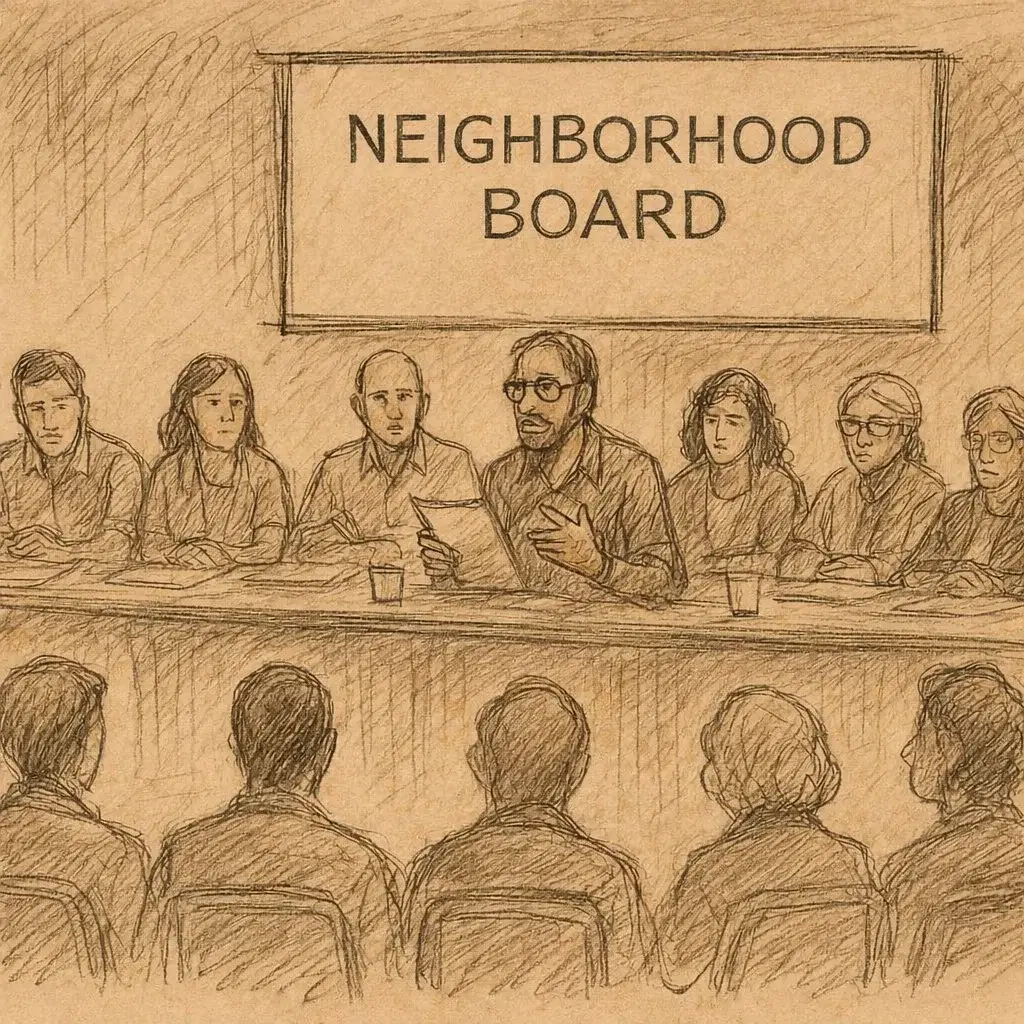
No 14 Liliha ʻĀlewa Neighborhood Board Regular Meeting July 2026
Listen to this article:
14 Liliha-Alewa Neighborhood Board Meeting – July 14, 2026
Meeting Format and Administrative Announcements
Chair Fong opened with meeting instructions, asking attendees to silence cell phones and raise their hands to be recognized. The agenda was modified to devote most of the evening to a candidate forum, so the usual reports from elected officials were omitted. The chair thanked Vice Chair Darren Cantrell, Chance, Cora, and the other organizers for preparing the forum and its questions. State Senator Karl Rhoads, who is retiring, was recognized and thanked for his service and told he would remain welcome at future meetings. A city representative identified as Ed was also thanked for attending to hear residents’ concerns even though elected-official reports were not scheduled.
Honolulu Fire Department Report
Firefighter Recruit Dana Yoshizumi, who had joined the Honolulu Fire Department approximately three months earlier, presented confirmed June 2026 incident data for the board’s geographic area. There were no structure, wildland or brush, or cooking fires; two nuisance fires; and seven activated alarms where no fire was found. Emergency responses included 108 medical calls and two hazardous-materials incidents, with no reported pedestrian collisions, motor-vehicle crashes, mountain rescues, or ocean rescues. Yoshizumi directed residents to HFD’s Fire Response Search tool at fire.honolulu.gov under “News & Info” for incident maps and further details. With summer hiking activity increasing, HFD advised residents to select trails appropriate to their ability, consult hawaiitrails.org for official trails, check rain, wind, and ocean-swell forecasts, remain on marked trails, avoid taking risks for photographs, hike with a companion, tell someone their plans, and leave enough time to return before dark. Questions may be sent to hfdnhb@honolulu.gov or by text to 808-741-8014.
Honolulu Police Department Report
Sergeant King of the Kalihi police station reported June 2026 crime statistics and compared them with May. Aggravated assaults increased from two to three, burglaries rose from zero to three, simple assaults increased from three to five, and unauthorized entries into motor vehicles climbed sharply from two to eight. Auto thefts declined from four to three, thefts fell from 16 to 12, and robberies declined from one to zero. Sexual-assault and rape-type cases remained at zero. Total calls for service increased from 1,221 in May to 1,246 in June. Sergeant King attributed much of the seasonal rise in property crime to more people being out during summer and emphasized that many incidents are crimes of opportunity. Residents were urged not to leave visible belongings in vehicles, to lock homes and vehicles, secure important documents in a safe or lockbox, and keep keys, telephones, and valuables away from doors. He noted that an unlocked-door theft can occur in as little as 10 seconds.
Election of Neighborhood Board Officers
The board conducted its annual officer elections. Chair Fong was nominated for another term and reelected with 11 affirmative votes and no stated opposition. Darren Cantrell was nominated and elected vice chair with 11 affirmative votes. Chance Naota was nominated for secretary and elected with 10 votes in favor and one abstention; although the transcript initially refers to the nominee simply as “Chance,” the result identifies Naota as the new secretary. No one was nominated for treasurer, so the position remained vacant. Chair Fong invited interested board members to seek nomination at the next meeting and congratulated the officers on beginning another year of board service.
Approval of May Meeting Minutes
The board considered the minutes of its May 11, 2026 meeting. No corrections or objections were raised, so the minutes were approved as circulated without a formal contested vote.
Care Center of Honolulu Emergency and Handy-Van Access
Resident Fetu Tawakolio renewed a concern first raised at the May meeting regarding curb access outside the Care Center of Honolulu at 1900 Batchelor Street. Tawakolio explained that the area beside the facility’s wheelchair ramp has a no-parking sign but no red curb, leading motorists to treat it as a legal stall or park partly beyond the sign. This prevents ambulances, fire apparatus, and TheHandi-Van vehicles from reaching the ramp efficiently. When police are called, vehicles may receive citations but often remain in place, leaving wheelchair users to board farther up near the staff driveway and blocking staff access to the rear parking area. Tawakolio requested that the city paint the curb, establish a 24-hour tow-away zone reserved for emergency and disability transportation, and clear approximately two additional vehicle lengths so that a fire truck, ambulance, and Handi-Van could be accommodated. Chair Fong said the city representative had not yet completed action on the matter and directed that a report be returned for the August meeting.
Candidate Forum Procedures
Vice Chair Darren Cantrell moderated the candidate forum. Candidates had received the rules and proposed questions in advance, including questions developed from board and constituent concerns. Each candidate was allotted five minutes, with Cora serving as timekeeper and signaling when one minute remained. State Senator Donna Mercado Kim was reported ill and unable to attend. Lynn Vasquez was called but did not appear to be present. Michael “Cove” Radcliffe was added after a late communication, and Representative Ikaika Hussey arrived later in the program. After the prepared statements, candidates were invited to answer audience questions under shorter response limits.
Tricia Nakamatsu – State Senate District 13
Tricia Nakamatsu described herself as a working mother, attorney, and fifth-generation resident whose two sons are growing up in the house her great-grandparents built in the 1940s. She came from a middle-class family of teachers, retail workers, postal employees, and other public servants and began working at age 15. After her father’s employer closed, she worked three jobs while attending a mainland college, later returned to attend the University of Hawaiʻi law school, and paid off her own student loans. Nakamatsu has worked in county and state public service for 20 years, including 15 years as a prosecutor dividing her time between courtroom work and legislation related to public safety and interagency coordination. She said door-to-door conversations identified public safety and living costs as residents’ leading concerns. Her housing proposals included increasing genuinely affordable housing near rail stations, supporting appropriate urban density with adequate infrastructure, streamlining approvals while retaining enforcement, and enforcing laws against large “monster homes.” She supported diversifying the economy through film, renewable energy, and agriculture while improving education so students can enter emerging industries. In the later discussion, she emphasized diverting people with mental illness or substance-use disorders from jail into treatment, expanding treatment capacity, maximizing newly available Medicaid funding that Hawaii became eligible to use in June, and involving UH medical, nursing, and social-work students in service programs. She opposed legislative term limits, arguing that voters have successfully replaced incumbents and should retain the power to decide when experience remains valuable.
Jordan – State Senate District 13
Jordan, whose surname was not stated, said four generations of the family have lived on Judge Street and described returning to Nuʻuanu after working as a teacher and housing-justice advocate in Los Angeles. Concerns about Red Hill, aquifer contamination, the cost of living, and whether younger relatives could remain in Hawaii prompted the move home, where Jordan now lives with and helps care for parents and grandparents. Jordan later worked as a Capitol policy advocate, an environmental-education program director with Kupu, and an organic farmer serving students at the Kawailoa campus after federal cuts ended the earlier program. Jordan stated that one in three Hawaii households faces food insecurity while residents pay among the nation’s highest rents, utility charges, and grocery prices despite low wages. Proposed measures included eliminating the general excise tax on groceries, medicine, medical care, and diapers and replacing revenue through taxes on large corporate and wealthy assets. Jordan cited Massachusetts’ 4% surtax on millionaires as an example that generated billions in revenue without reducing its millionaire population. To address distrust in government, Jordan supported reducing corporate influence, expanding public campaign financing, imposing campaign spending caps, and refusing corporate donations through the Our Hawaiʻi Pledge, which Jordan said only 33 candidates had signed. Infrastructure priorities included emergency transit planning, harbor resilience, reduced dependence on imports, local food production, and severe-weather preparation. Jordan also advocated trained mobile-care teams and additional staffing for homelessness and mental-health programs rather than relying primarily on police. Jordan supported term limits but said they should be paired with public financing and restrictions on lobbyist and corporate influence.
Waleen Christian – State Senate District 13
Waleen Christian, a Liliha-Alewa Neighborhood Board member since 2024, discussed growing up in Hālawa housing, attending schools in ʻAiea and graduating from Leilehua High School, raising children while pursuing an education, and supporting a spouse serving in the U.S. Navy. Christian, a 58-year-old realtor, said she does not own a home because a new mortgage could extend until age 88. Her three daughters and eight grandchildren live on the mainland because of Hawaii’s costs, while her son remains in Hawaii by sharing rent with friends. She cited a median home price of approximately $1.4 million and said high housing expenses force parents into multiple jobs, reducing family time and increasing reliance on relatives or paid childcare. Christian has testified before the Legislature and City Council since 2020 and said she advocates for all Hawaii residents as well as Native Hawaiians. She identified public distrust, election confidence, corruption, and accountability as major concerns, referencing the unresolved public controversy over cash found in a brown paper bag. She supported agriculture and food security and described suspending work for a week to volunteer in Haleʻiwa and Waialua after Kona low storms, while noting that Liliha-Alewa sustained comparatively minor impacts. In the audience discussion, she said a new legislator must first understand the office, learn legislative procedures, and work across political divisions. Christian supported legislative term limits, public campaign financing, and an age limit for lawmakers, arguing that government needs new members familiar with current technology and artificial intelligence.
Nadia Alves – House District 28
Nadia Alves described immigrating to the United States at age 12 and growing up in a large, working-class, multigenerational family. Her experience included helping her mother clean businesses, working in fast food for minimum wage, supervising a residence for neurodivergent young people and youths with traumatic brain injuries and behavioral conditions, teaching preschool, organizing communities, and managing an office at the state Legislature. Alves said she currently works two jobs despite being a state employee. Her affordability proposals included exempting groceries, diapers, medicine, and incontinence products from the general excise tax, increasing taxes on vacant homes, and protecting consumers against “dynamic pricing,” under which algorithms could charge different shoppers different amounts based on data suggesting their ability to pay. She called for greater support of local agriculture to reduce import costs and vulnerability during emergencies such as the COVID-19 disruption. To rebuild confidence in government, Alves supported robust public election financing, legislative term limits, open meetings, and applying Sunshine Law requirements to the Legislature rather than allowing lawmakers to exempt themselves. Her infrastructure priorities included using green-fee revenue to develop hurricane shelters, noting that Hawaii lacks a shelter capable of withstanding even a Category 1 hurricane, and funding complete-streets projects, road repairs, and pothole crews. In the audience discussion, she described the state budget as a moral statement of priorities and supported funding education, school meals, safe school facilities, paid family leave, senior housing, and broader Medicaid and Medicare access. She also called for more equitable distribution of capital-improvement and grant-in-aid funding among districts. Alves supported term limits.
Michael “Cove” Radcliffe – House District 28
Michael Covenant “Cove” Radcliffe identified himself as the current House District 28 representative, appointed by Governor Josh Green in April after Representative Daniel Holt resigned, with the appointment lasting through November. Born and raised on Kauaʻi, Radcliffe graduated from Kauaʻi High School, studied philosophy and history in the Bay Area, earned a master’s degree in philosophy, moved to Oʻahu during the pandemic to attend the University of Hawaiʻi law school, clerked at the Intermediate Court of Appeals, and worked as a labor attorney representing public-sector unions and their members. He described entering the Legislature during conference committee as a steep learning experience but said he built useful relationships and worked on district needs. Radcliffe identified public safety and homelessness, particularly in lower Chinatown, as major priorities. He supported the proposed Chinatown Community Action Center, CORE, and other programs intended to treat mental illness and address underlying causes rather than relying exclusively on arrests. He also favored entrepreneurship and new industries to reduce dependence on tourism and hospitality. At the neighborhood level, he cited six abandoned vehicles on 60 Lane, parking near Liliha Bakery, requests for sidewalks on Judd Street, and investment in Kuakini Medical Center and Lanakila facilities as examples of issues requiring persistent district work. He described unsafe conditions near Liliha McDonald’s and a Bethel Street crack-seed store whose owner keeps the door locked for safety. Radcliffe opposed term limits but supported public campaign financing and a mandatory retirement age for legislators, while questioning whether the judiciary’s current constitutional retirement age of 70 is the correct threshold.
Chrissy Kikue McPherson – State Senate District 14
Chrissy Kikue McPherson, a licensed clinical social worker and community organizer, said she grew up in Puʻunui, later lived in ʻĀlewa and Nuʻuanu, and has longstanding personal connections to Kalihi. She is director of community development at the Hawaiʻi Appleseed Center for Law and Economic Justice and was a single mother for nine years. While pregnant with her second child, she managed two homeless shelters in Kailua and urban Honolulu, giving her direct experience with families lacking stable shelter. McPherson said she has spent approximately 30 years working with communities and advocating for legislation, including campaigns to raise the minimum wage, close a real-estate-investment-trust tax loophole, provide free school meals, establish paid family leave, and expand child tax credits. She argued that the Legislature’s internal culture needs to become more responsive and open to community members who feel ignored. Her housing proposals included greater Low-Income Housing Tax Credit funding, housing that local families can actually afford, and stronger renter protections. She said Hawaii needs jobs that allow parents to pay for housing, food, and basic needs with one job rather than two, three, or four. During the audience discussion, she identified housing instability, mental-health care, homelessness, crime, affordable health care, and state-agency vacancies as interconnected priorities and said lawmakers should select several measures to champion while building relationships. McPherson supported term limits and public election financing.
Ikaika Hussey – House District 29
Representative Ikaika Hussey, the current House District 29 representative, focused first on lowering utility expenses. He noted that Hawaii has the country’s highest electricity rates because it imports most of the fuel used at plants such as Kahe, despite strong solar, wind, and geothermal resources, including potential geothermal energy on Oʻahu. With federal renewable-energy support declining and state tax credits becoming more constrained, Hussey proposed direct public financing and ownership of renewable-energy resources. He estimated this could reduce electricity costs by 20% to 40%, particularly if Hawaiian Electric’s guaranteed profit were removed from the rate structure. To strengthen trust and participation, he supported giving neighborhood boards actual budgets for local projects and cited recently enacted authority allowing the Department of Land and Natural Resources to partner directly with community organizations. Discussing Kona low flooding in Waialua, Mililani, and Wahiawā, he credited residents who entered streams and removed debris with preventing fatalities and advocated empowering local groups in disaster response. He said the Legislature needs courage and greater openness to unconventional ideas. In the later discussion, Hussey emphasized tax fairness during federal funding reductions, arguing that wealthy landowners should contribute more. He cited Mark Zuckerberg’s extensive Kauaʻi holdings and Larry Ellison’s purchase of Lānaʻi without conveyance taxes as examples of perceived inequities. Hussey supported term limits but said limiting lobbyist money and other outside financial influence was equally necessary.
Candidate Discussion on Homelessness, Mental Health, and Legislative Priorities
In response to an audience question about what candidates would prioritize upon taking office, homelessness, behavioral health, housing, public safety, and state finances dominated the discussion. Candidates broadly agreed that visible homelessness reflects interconnected shortages in affordable housing, treatment capacity, trained behavioral-health workers, and public services. Suggested approaches included filling vacancies at the Department of Human Services and other agencies, expanding treatment facilities, developing mobile-care units, strengthening CORE and existing community programs, establishing alternatives to police responses, involving UH health and social-service students, and increasing coordination among state, county, medical, and nonprofit providers. Candidates also emphasized relationship-building inside the Legislature, equitable budgeting, tax reform, school and family supports, local medical institutions, and providing communities with a stronger role in setting and implementing priorities. A resident cautioned that people with mental illness often retain a constitutional right to refuse treatment, limiting what legislation alone can compel, and argued that candidates would face a deeply established political structure and significant institutional barriers.
Debate Over Legislative Term Limits
An audience member asked each candidate for a clear position on legislative term limits and expressed skepticism that candidates would maintain their position once elected. Hussey, McPherson, Alves, Jordan, and Christian supported term limits, although several said limits must be paired with public campaign financing, restrictions on lobbying and corporate money, and reforms that reduce the advantages of wealth and incumbency. Nakamatsu opposed term limits, arguing that voters should decide whether a legislator remains effective and pointing to recent elections in which challengers successfully defeated incumbents. Radcliffe also opposed term limits but proposed a mandatory retirement age for legislators and supported public financing. Christian additionally favored an age limit, while other candidates cautioned that campaign spending, lobbyist influence, and unequal access to donors may be more fundamental barriers than length of service alone.
Next Meeting and Adjournment
Chair Fong announced that the next regular meeting would be held August 10, 2026, at the same time and venue. The agenda is expected to revisit unresolved community concerns, including matters previously raised in June and the requested city response regarding emergency and Handi-Van access at the Care Center of Honolulu. The board thanked the candidates, forum organizers, and timekeeper, took a group photograph, and adjourned following a motion and second. Attendees were asked to help return the chairs before leaving.