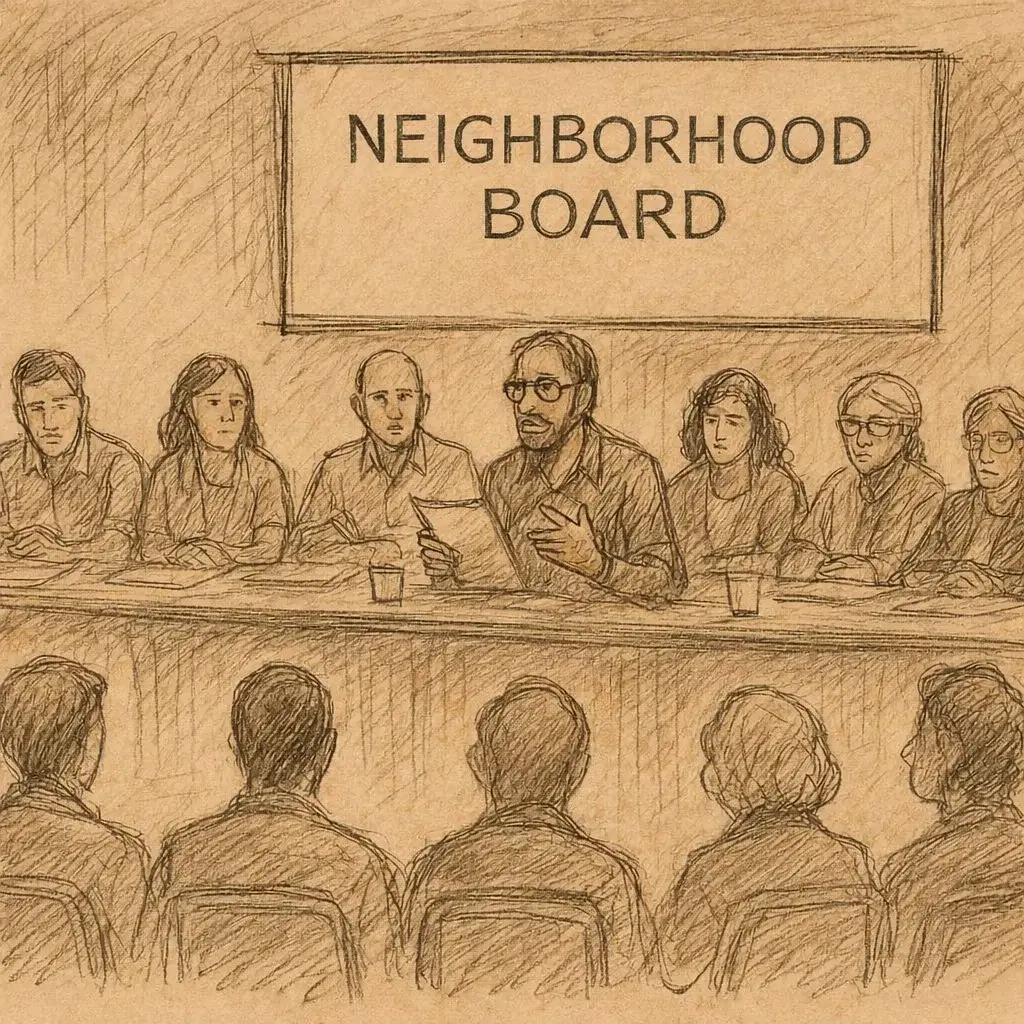
No 02 Kuli'ou'ou-Kalani Iki Neighborhood Board Regular Meeting November 2026
Listen to this article:
2 Kuliouou-Kalani Iki Neighborhood Board Meeting – November 5, 2026
Board of Water Supply Update
Board of Water Supply representative Steven Nordstrom reported that there were no water-main breaks in the neighborhood during October. He promoted permanent full-time openings in business management, engineering, information technology, and managerial and executive leadership, as well as contract positions, with details available at bwsjobs.org. Following up on a question from the prior meeting, he said residents experiencing water-service issues during a power outage should call the Board of Water Supply’s 24-hour trouble line at 808-748-5000 and select option 1. Electricity is needed to operate the pumps that move water through the system, so outages can affect service. Nordstrom also confirmed that the Navy’s ʻAiea-Hālawa shaft has not yet been reactivated. Additional information is available from the Navy Public Affairs Office at 808-473-2926, and he provided flyers directing residents to a Navy Fuel Tank Advisory Committee video containing related updates.
Long-Running Work Near the Laʻokahi Water Tank
A resident asked about extensive activity on the Board of Water Supply access road leading toward the water tank above Laʻokahi, saying trucks, equipment, and construction activity have been present for approximately two years or longer. The resident reported that project trucks have been traveling through the surrounding neighborhood, creating excessive noise and dropping dirt even though nearby residential streets are not part of the worksite. The resident also said workers had reacted angrily when approached for information, raising concern because the community generally regards the Board of Water Supply as a responsive public agency. Nordstrom did not know the project’s exact purpose or completion schedule and apologized for the reported conduct. He committed to investigate and send a response to the board chair, copying the resident, and offered his contact information for direct follow-up.
Placement of State Transportation Reports
Board members reminded the chair that the board had voted unanimously at its previous meeting to move the State Department of Transportation’s monthly report to the beginning of the agenda with other city and state agency reports. The change had not been reflected in the current agenda, where transportation remained grouped with elected officials’ reports. Members noted that neighboring boards, including Hawaiʻi Kai and Waiʻalae-Kāhala, regularly place agency reports early in their meetings so representatives can present information and respond to questions before lengthy board business or presentations. The chair acknowledged that the newly adopted change had been missed and thanked members for the reminder.
Board Vacancies and October Minutes
The board announced one vacancy in each of several subdistricts: Lower Waiʻalae Iki, identified as Subdistrict 1; Mid-Waiʻalae Iki Ridge, Subdistrict 2; the Subdistrict 5 area identified during the meeting as Kainanian/Wailupe Peninsula; Hawaiʻi Loa Ridge and Niu Valley in Subdistrict 7; and Kuliʻouʻou in Subdistrict 8. No prospective candidates came forward, but residents were encouraged to consider serving. The board then reviewed the minutes of its October 7 regular meeting. No corrections were offered, so the minutes were approved as distributed.
Honolulu City Lights Parade
The board considered an invitation from the Neighborhood Commission and the City and County of Honolulu to participate in the Honolulu City Lights Parade. The chair described a roughly one-mile route from ʻAʻala Park to Honolulu Hale, with neighborhood-board participants assembling between 5:00 and 5:30 p.m., the parade beginning at 6:00 p.m., and activities ending around 7:45 p.m. before the tree-lighting ceremony. Participants would distribute candy canes and possibly use or hand out bubble-blowing toys. A motion was offered, but no member seconded it, so the board decided not to participate in 2026. There was an inconsistency in the dates announced: the chair initially referred to Saturday, December 6, while the mayor’s representative later invited the board to the event on Saturday, December 5. The 2026 theme was described as “Christmas in the Country,” with themed displays and a tree competition inside Honolulu Hale.
Liquefied Natural Gas and Renewable Energy
During public input, Kahi Pōhākaro urged the board to invite the Sierra Club to present information about proposals to increase the use of liquefied natural gas, or LNG, in Hawaiʻi. He argued that LNG is being advanced at the statewide level without adequately addressing community concerns and that the state should instead prioritize renewable sources. Referring to an earlier energy town hall, he said Hawaiian Electric had acknowledged that the principal electricity problem is deficient infrastructure rather than a lack of power generation, meaning additional fuel or generation alone would not resolve unreliable service. He said the Sierra Club was willing to speak to the board and was also scheduled to appear before the Hawaiʻi Kai Neighborhood Board. A contact was available, and the chair agreed to arrange a future presentation.
Delayed Highway Projects and HDOT Participation
Members raised concerns about several delayed State Department of Transportation projects that could overlap and severely disrupt east Honolulu traffic. One project was advertised as running from the ʻĀina Koa area of the freeway to the Kapiʻolani exit, with a published start date of September 21, 2026, and work continuing through July 2027, although members said construction had not begun and another December 21 date had also been mentioned. They requested details about the scope, actual start and completion dates, lane and traffic-flow plans, and measures to help commuters traveling west from Hawaiʻi Kai. Members also sought updates on a repeatedly delayed project near Kalani High School at the intersection of Kalaniʻiki Street and Kalanianaʻole Highway, where work was expected on both sides of the highway and around multiple corners and traffic signals. A third anticipated project would resurface Waiʻalae Avenue beneath the viaduct. Members warned that if these projects proceed simultaneously, they could affect nearly every major route through an already constrained highway corridor. They also recalled earlier instances when projects had to be resequenced so the Board of Water Supply could excavate before roadway resurfacing rather than damaging newly completed pavement.
Request for a Regular State Transportation Representative
Several participants strongly objected to HDOT’s practice of requesting written questions and providing answers a month later without appearing for live follow-up. They said other neighborhood boards receive either in-person or Zoom participation and argued that Kuliʻouʻou-Kalani Iki should receive the same access. The chair asked members to provide specific written questions so she could request an appearance, but residents emphasized that written exchanges should not substitute for a representative who can answer questions in real time. Galen Wong, who reportedly attends Hawaiʻi Kai Neighborhood Board meetings for HDOT, was suggested because the relevant projects extend from Hawaiʻi Kai through Kāhala and toward the freeway. Former representative Casey Abe was also mentioned as someone who had attended or appeared remotely at other boards. A resident criticized the suggestion that HDOT “does not like” the board as unprofessional and questioned why the board appeared to excuse the agency’s absence. Later, the governor’s representative offered to coordinate with HDOT and seek a representative, with members reiterating that Zoom attendance would be acceptable.
Coast Guard Property Archaeological Survey
Hialani Sonoda-Pale reported that an archaeological inventory survey and cultural monitoring had begun at the former or transitioning Coast Guard property next to the fire station. Machinery visible on the site is associated with that work. ʻŌʻono Wailupe has been coordinating closely with the Coast Guard and the archaeological contractor because cultural sites are known to exist on the property. Sonoda-Pale explained that cultural monitors, including lineal descendants, are present primarily to watch for iwi kūpuna, or ancestral human remains, during ground disturbance. No remains had been found as of the meeting, which she considered a positive sign. The property’s eventual reuse has not been decided, and people were still living there, but she said the survey reflected an effort to document archaeological and cultural resources before future decisions are made.
Mayor’s Office Report and 666 Lāwāwā Street
Mayor Rick Blangiardi’s representative, Dita Holifield, directed residents to the November 2026 mayoral newsletter at the city’s website and updated the board on 666 Lāwāwā Street. Although most of a burned structure had been removed, a resident had reported remaining hazards such as broken glass and metal fragments, as well as the property owner’s return and apparent camping on the site. Homeless Solutions Director Roy Miyahira had inspected the sidewalk frontage several times and did not observe hazards there, though he acknowledged debris could remain on the western portion of the private property. A tented structure had been erected, apparently by the owner. The city was still seeking a face-to-face meeting involving the new police chief, who had been briefed on the seriousness of the situation. Veterans Administration and city Community Outreach Response and Engagement teams had also visited to encourage the resident, who is a veteran, to accept shelter and available services. The person had at one point appeared receptive to VA assistance but later declined. The city will continue outreach. The mayor’s office was also still investigating whether a civil nuisance-abatement case had been filed or condemnation proceedings initiated and expected to provide an answer at the next meeting.
Hanauma Bay Conservation Video
Holifield also followed up on a request from Mālama Maunalua concerning a conservation video for Hanauma Bay that had been pending for more than three months. She said the city’s concessions director had contacted Mālama Maunalua’s Doug Harper and was exploring a collaboration involving educational content for shuttle buses. The city must ensure that any selection process is fair and that content meets appropriate quality standards. Possible topics include applying Hanauma Bay visitor etiquette across the island, the city zoo’s native-bird conservation work, and community-led conservation initiatives. The discussions represented progress but not yet a final decision or implementation schedule.
Governor’s Office Report on Hawaiʻi’s Business Climate
Governor Josh Green’s representative, David Richmond, responded to a prior question about Hawaiʻi ranking 50th among states for business conditions in 2026. Information from the Department of Commerce and Consumer Affairs indicated that Hawaiʻi scored well in quality of life but faced serious problems involving infrastructure, operating costs, technology, and innovation. The state is investing in shared-use commercial kitchens and manufacturing facilities so smaller businesses can access expensive equipment without bearing the full upfront cost. It is also seeking funds to expand existing facilities, acquire land for additional manufacturing space, support emerging industries, develop and retain workers, and improve access to capital. Richmond said the state recognizes that lengthy permitting and regulatory complexity translate directly into business costs. Governor Green’s Administrative Directive 25-04 requires agencies proposing rules that affect small businesses to consider flexible compliance options and small-business impacts. The Small Business Regulatory Review Board can examine proposed or existing state and county rules and allows businesses to request review of requirements they consider unnecessary or burdensome. The state’s SPEED initiative, the task force for “Simplifying Permitting for Enhanced Economic Development,” is also examining ways to expedite and better coordinate state and county development approvals.
Highway Landscaping Complaint and Oʻahu Data Centers
In response to a prior complaint that contractors were killing vegetation along Kalanianaʻole Highway, the governor’s representative said HDOT had asked the constituent to submit a public-records request to dotpa@hawaii.gov. The governor’s office would also try to identify a direct contact and determine the precise location involved. Separately, board member Kevin Palmer asked how many data centers operate on Oʻahu, where they are located, and what permitting policies govern new facilities, given their potentially substantial electricity and water consumption. Palmer cited an online estimate of seven Oʻahu data centers and said at least one is in Kapolei. Richmond did not have verified figures or policy details at the meeting but agreed to obtain an update for the board.
Kaniwai Spring and Maunalua Fishpond Heritage Center
Maunalua Fishpond Heritage Center Executive Director Chris Kramer presented the organization’s annual update on Kaniwai Spring. A long-awaited new roof has been installed, making the site safer and more accessible for school visits, cultural education, research, kūpuna activities, and community participation. The improved site allows 95-year-old Uncle Andy Young, described as the last keeper of Kūpapa Fishpond/Maunalua Fishpond, to share his knowledge with younger generations. Kumu Kimiona Kane and his students have been leading traditional uhau humu pōhaku dry-stack masonry work to restore walls that had previously collapsed. The organization is also building a dry-stack māla that is intended to become the first functioning loʻi in the area in many years; Kramer said there is currently no loʻi between Waimānalo and Pālolo. The water has not yet been connected, so the area remains a dryland garden for now. Through a partnership involving Waiʻanae High School and Hawaiʻi Sea Grant, juvenile ʻamaʻama, or mullet, were donated to establish a nursery. The project is intended to restore a species historically raised in the bay and associated with abundance and ʻāina momona.
Wailupe Muliwai History and Ecological Role
Kramer explained that a muliwai is the estuarine area where freshwater and ocean water meet, creating brackish habitat that supports fish, shrimp, limu, and other marine life. Historical maps and photographs showed the Wailupe muliwai beside a once-large fishpond situated between Waiʻalae and Wailupe streams. Although homes now occupy much of the former estuarine area, part of the muliwai remains. Kramer shared stories from Uncle Steve Nakayama about his uncle, fisherman George Nakayama, whose tidal fishpond connected to the stream. The area once supported vast numbers of ʻamaʻama, ʻōpae, āholehole, lobster, squid, kumu, limu kohu, and other resources. Families could gather a full seafood menu only a short distance offshore, and Uncle Steve recalled seafood being eaten three days a week despite its abundance because his mother also enjoyed cooking other foods. During World War II, people of Japanese ancestry were forced away from waterfront areas, but Uncle George reportedly remained and shared mullet with military personnel rather than holding resentment. Kramer said the ecosystem’s decline accelerated after upland development on Waiʻalae Ridge increased runoff.
Wailupe Muliwai Ownership, Flooding, and Pollution
The muliwai below the bridge is privately held by Wailupe Stream LLC rather than the city. The makai parcel has been listed for sale intermittently, creating uncertainty about future development and public access. Kramer said private ownership could impede emergency work during a tsunami because the city would need the owner’s permission to enter or alter the waterway. He recalled the April Fools’ Day tsunami that sent water through a kūpuna’s home, knocked over a pillbox near the stream, and sent five people to the hospital, as well as another 1960s event in which waves moved laterally along the shoreline. Current problems include muddy runoff after rains, city bulldozing in the stream, past pesticide spraying, repeated sewage spills involving thousands of gallons, propane stored near adjacent large homes, and floodlights illuminating areas used by nesting honu. Damaged shoreline walls and years of limited stewardship have also affected the site. Because Wailupe Stream has not been concreted like many other Maunalua Bay waterways, it still supports significant life, including large migrations of ʻōpae. Kramer cited restoration work at Anahola where Department of Aquatic Resources surveys reportedly documented a doubling of fish populations, suggesting that active care at Wailupe could also produce measurable results.
Potential Community Acquisition of the Muliwai
Participants discussed whether the privately held Wailupe muliwai parcel could be acquired and protected for public and ecological purposes before it is sold for another large waterfront residence. Kahi Pōhākaro, speaking as chair of the Clean Water and Natural Lands Commission, encouraged the Maunalua Fishpond Heritage Center to develop an acquisition proposal. He said the fund had approximately $70 million available from public tax revenue and had previously helped secure Kaniwai Spring. A funded proposal could allow a community organization to approach the owner with a viable purchase offer and preserve the property in perpetuity. Participants also considered a partnership involving the state Division of Aquatic Resources because ownership of a waterway may involve substantial liability, title, easement, and management questions. A former city Clean Water and Natural Lands Program administrator explained that funded projects generally require a property interest and conservation easement and recalled that Kaniwai Spring had also presented complex water-related legal issues. She strongly endorsed the Heritage Center’s record, noting that the city had once worried the young organization might fail and leave the city responsible for the site, but that Kramer and the organization had instead grown, remained active, and demonstrated long-term capacity. Kramer emphasized that he had raised the concept as a resident and had not yet secured formal approval from his board.
Kuliʻouʻou Stream Conditions
A resident asked whether any agency is actively monitoring Kuliʻouʻou Stream, where a solar-powered device now measures water height. The mouth can become blocked by sand, although rain generally creates enough force to reopen the channel. The resident was concerned that future blockage could cause water to back up. High bacterial counts were also noted, along with a possible investigation, potentially involving the Surfrider Foundation, into whether sewage leakage is contributing to contamination. No agency representative gave a definitive account of who is responsible for ongoing management, but the exchange highlighted concerns about flooding, water quality, and limited attention to the stream compared with Wailupe.
Proposal for Public Ownership of Hawaiian Electric
Jason Liang, Roberta Hickey, and Aaron Butcher, presenting as Citizens for a Cooperative Future, asked the board to support a resolution requesting that the Public Utilities Commission investigate whether Hawaiian Electric has met the management standards required of a utility operating for the public benefit. Their central argument was that people who depend on electricity should have control over utility priorities, leadership, investment, and revenue. The presentation linked Hawaiʻi’s electricity system to the Hawaiian Kingdom, noting that King Kalākaua introduced palace lighting in 1886, government hydropower lit Honolulu by 1888, and Queen Liliʻuokalani approved an electricity law in 1893 that reserved the government’s right to purchase the franchise after ten years. The presenters said Hawaiian Electric’s founders were connected to the 1887 Bayonet Constitution and the 1893 overthrow, after which the provisional government granted the franchise and palace generators were transferred to the company’s Alakea plant. Congress made the franchise perpetual in 1904. The group argued that electricity, like water, is now essential to life and should be governed through public stewardship rather than corporate profitability.
Utility Liability, Disaster Risk, and Accountability
The presenters cited Pacific Gas & Electric’s 2019 bankruptcy from wildfire liabilities and said Hawaiian Electric Industries had exhausted approximately $165 million in excess liability insurance and $25 million in professional-liability coverage. They warned that when insurance becomes unaffordable or insurers withdraw from a state, communities and ratepayers ultimately bear disaster-related costs while electricity service must continue. Public ownership, they argued, could place prevention, grid hardening, storage, essential-service backup, recovery, and executive accountability under community direction. They proposed a public structure able to appoint and remove managers, review performance, demand written answers, compel records, and require attendance before public bodies, using the Honolulu Board of Water Supply as a local governance model. They also cited Hawaiʻi County water-system problems in which public complaints about well failures led to a 2017 County Council resolution, a 2020 audit identifying missing contingency and communication plans, and a public 2022 follow-up review.
Financing a Public Utility
Citizens for a Cooperative Future argued that residents already finance electrical infrastructure through utility bills, taxes, government construction expenditures, and state-certified electrical invoices, citing approximately $51.86 million in documented state spending. Their proposed model would purchase the utility with public debt and repay that debt through electricity revenues, while also funding operations, maintenance, reinvestment, and reserves. As examples, they cited Winter Park, Florida, which municipalized its utility in 2005 and by 2025 reportedly had 81 percent of its power lines underground and rates 32 percent below Duke Energy’s. They also cited Kauaʻi Island Utility Cooperative, whose customers acquired the utility for $215 million in 2002 using federal loans. KIUC members elect the board, and the cooperative reportedly approved another $2.7 million return to members in 2006 after nearly $40 million in earlier returns. The presenters said these examples demonstrate that community ownership is feasible and can return earnings to customers.
Governance Questions and Resolution Development
Board members generally expressed interest but asked who would actually operate a public utility and whether state management might repeat problems seen in other large public projects. Members questioned whether the system should be owned statewide, by each county, by individual islands, or through a customer cooperative. Liang said the group had leaned toward statewide ownership because of the integrated system and concerns that separating Oʻahu could increase neighbor-island rates. He acknowledged that the change would be a long-term effort and that Hawaiian Electric would likely resist losing a profitable asset, but said public ownership would at least create clearer mechanisms for accountability. The chair asked the group to share its presentation and draft proposed resolution language, noting that the historical and policy arguments could be incorporated into a formal measure. Members said a strong resolution might also be adopted by other neighborhood boards, particularly Hawaiʻi Kai. Because board members are subject to the Sunshine Law, any continuing joint drafting process would have to comply with open-meeting requirements or proceed through an authorized committee.
HECO, HEI, and the Public Utilities Commission
Members discussed how Hawaiian Electric Industries’ creation in 1982 complicated lines of responsibility among HEI, Hawaiian Electric, Maui Electric, Hawaiʻi Electric Light, and Molokaʻi Electric. They argued that the Public Utilities Commission has not consistently forced the utility to answer questions, improve performance, or participate in community meetings. Energy advocate Henry Curtis of Life of the Land explained that HEI is now being phased out as a separate layer and that Hawaiian Electric has integrated its former island subsidiaries into one company. He said this makes it difficult to remove only Oʻahu from the existing structure. A statewide public acquisition would likely require the state to use eminent domain and establish that its operation would provide a “superior public benefit.” A cooperative lacks eminent-domain power, so the state would probably have to acquire the utility first and then transfer it to a cooperative, adding time and complexity. Curtis estimated that an acquisition could require 10 to 12 years of litigation and PUC proceedings, followed by another five to seven years before lower rates materialized, placing meaningful rate reductions around 2045 if the effort succeeded. He noted that similar municipalization attempts elsewhere have taken approximately a dozen years, failed outright, or remained unresolved.
Modern Grid Complexity and Reliability Data
Curtis explained that Hawaiʻi’s electrical system has changed radically over the past decade. In the 1990s, Oʻahu had only a few major generators, power flowed one way, and Hawaiian Electric often learned about outages only when customers called. Today, approximately 30 utility-scale generators—including solar, wind, H-POWER, and fossil-fuel plants—operate alongside roughly 85,000 rooftop solar systems, with power flowing in both directions. Smart meters poll approximately 300,000 Oʻahu customers every 15 minutes, producing about 10 billion data points annually, although utilities may use only 1 or 2 percent of the available information. Island grids also lack the stabilizing effect of mainland interconnections serving hundreds of millions of customers, so disturbances cannot be absorbed by a much larger regional system. Hawaiʻi’s lines face additional threats from fast-growing albizia trees, mountain winds, coastal salt and corrosion, flooding, and sea-level rise. Curtis said cybersecurity and physical-security rules now restrict public access to detailed transmission and substation maps, although intervenors under protective orders can review the information.
Community-Level Reliability and a Possible PUC Grid Case
Curtis criticized reliance on a single countywide reliability statistic measuring the average annual outage experienced by a customer. That average can conceal neighborhoods with frequent and prolonged failures. Life of the Land is pressing for granular information by community, circuit, and line so decision-makers can identify where outages occur, what causes them, and which areas should be repaired first. Curtis said Hawaiian Electric’s recent maps showed sub-transmission lines descending from the mountains but did not identify the exact locations where individual circuits fail. He disputed suggestions that the previously proposed Waiʻahila Ridge transmission line would have solved east Honolulu’s current problems. Hawaiian Electric is developing an integrated grid plan for generation and transmission over the next five years, and Life of the Land has asked the PUC to create a separate track focused specifically on grid condition, localized reliability, repair priorities, and cost. The Consumer Advocate supported that concept, and Hawaiian Electric also acknowledged that a separate proceeding might be appropriate. Curtis expected the PUC could open such a case within the next several months and said neighborhood-board resolutions encouraging it would be useful.
Grid-Hardening Options
Discussion covered possible improvements previously mentioned by Hawaiian Electric, including a buried transmission line along Kalanianaʻole Highway and additional mountain transmission routes. Curtis said underground lines cost far more than overhead systems and require disruptive excavation, which is why the party requesting relocation—such as the rail project—generally pays. He recommended installing empty conduit whenever highways and roads are already being rebuilt or resurfaced, observing that H-3 should have included conduit for future cross-island electrical transmission. Other options include steel poles, hollow poles with grounding wires enclosed inside to reduce sparks, structures designed to last approximately 100 years, and sectionalizing long circuits so a single failure can be isolated without shutting down the entire line. Members cautioned that federal design standards can result in tall poles, wide hardscaped bases, industrial visual impacts, and electromagnetic-field concerns. Curtis said no single solution should be selected before a full public proceeding involving multiple perspectives and technical analysis.
Outage Communication and Support for Vulnerable Residents
Hialani Sonoda-Pale criticized Hawaiian Electric’s treatment of residents during prolonged outages, especially kūpuna, people with medical needs, and families unable to purchase generators or replace spoiled food. She suggested the utility should loan generators or work with nonprofit organizations to provide emergency equipment when it knows service may be unavailable for several days. She emphasized that electricity is now an essential service rather than a privilege and that outages can create severe financial and medical hardship. Curtis cited an example from Molokaʻi where Hawaiian Electric initially planned repeated eight-hour shutdowns over two weeks for line work, but community complaints and PUC intervention led the company to bring in additional line crews and complete the work more quickly. He also said Life of the Land has proposed a lower residential rate for low- and moderate-income customers in an upcoming PUC rate-structure proceeding expected to be discussed in summer 2027.
Flickers, Outage Metrics, and East Honolulu Service
Residents described frequent outages and voltage flickers from Hawaiʻi Kai through ʻĀina Haina and the surrounding valleys, along with similar reliability problems in Waiʻanae, the North Shore, upcountry Maui, West Maui, and Puna. Curtis said Hawaiian Electric generally does not count interruptions shorter than five minutes in its primary outage statistics, even though repeated flickers can damage equipment and disrupt households. Life of the Land has proposed three additional reliability measures used in Europe and parts of North America, including a specific flicker metric. The PUC has statutory authority to establish reliability standards itself rather than merely approve utility-developed standards and has hired an engineer and formed a working group in which Life of the Land participates. Curtis did not offer an immediate solution for east Honolulu but said communities with consistently poor service should receive priority once reliable granular data identify the weakest circuits.
Public Purchase of HECO Shares and Existing Debt
A member asked whether a municipality could acquire Hawaiian Electric simply by purchasing shares because it is publicly traded. Curtis said federal securities laws impose disclosure and regulatory obligations once ownership exceeds certain thresholds and that he was not qualified to determine whether a government could gain control through open-market purchases. He cautioned that any buyer would acquire not only the company’s assets but also its substantial debt and potential wildfire-related liabilities. The Legislature has been developing limits and procedures for catastrophic wildfire liability, but related issues remain before the PUC. Life of the Land is the only intervenor in a separate wildfire proceeding examining how to make electrical lines and equipment safer.
Utility Coordination During Roadwork
A participant noted that the city has a one-stop coordination process intended to alert utilities when roads will be opened so water, electrical, telecommunications, and other work can be combined rather than repeatedly excavating and repaving the same street. She asked whether that mechanism could be strengthened to require conduit installation whenever roads are reconstructed. Curtis said the concept was sound but noted that Hawaiʻi Supreme Court decisions have recognized the PUC’s exclusive authority over utility regulation. He cited a Kauaʻi case in which the county attempted to limit utility-pole heights near Hanalei but was found to have been preempted by state law. Any mandatory utility requirement would therefore need to be carefully structured through state law or PUC authority.
Proposed Rate Increases and “Rebasing”
The board asked how the public could oppose Hawaiian Electric’s proposed rate adjustments beginning January 1, 2027, with another change in January 2028, particularly before the company improves unreliable infrastructure. Curtis explained that the pending “rebasing” proceeding is not a conventional rate case. During the previous five-year period, allowable cost increases were based partly on assumptions about inflation, but actual inflation was much higher, leaving the utility with less revenue than the formula anticipated. Rebasing would reset approximately $170 million across three categories and tie future adjustments more closely to actual inflation. Curtis said the public can still challenge amounts associated with efficiencies Hawaiian Electric was expected to achieve but did not. Those avoidable costs could be deducted from requested increases. Citizens for a Cooperative Future committed to provide the board with draft resolution language within approximately one week.
Closing Announcements
The next regular meeting was announced for December 2, 2026. The Neighborhood Commission Office is partnering with Toys for Tots, and attendees were asked to bring a new toy to the December meeting for children whose families may be unable to purchase gifts. The chair wished the community a happy Thanksgiving, thanked residents and presenters for their participation, and expressed the hope that electrical service would remain reliable while families prepared holiday meals.