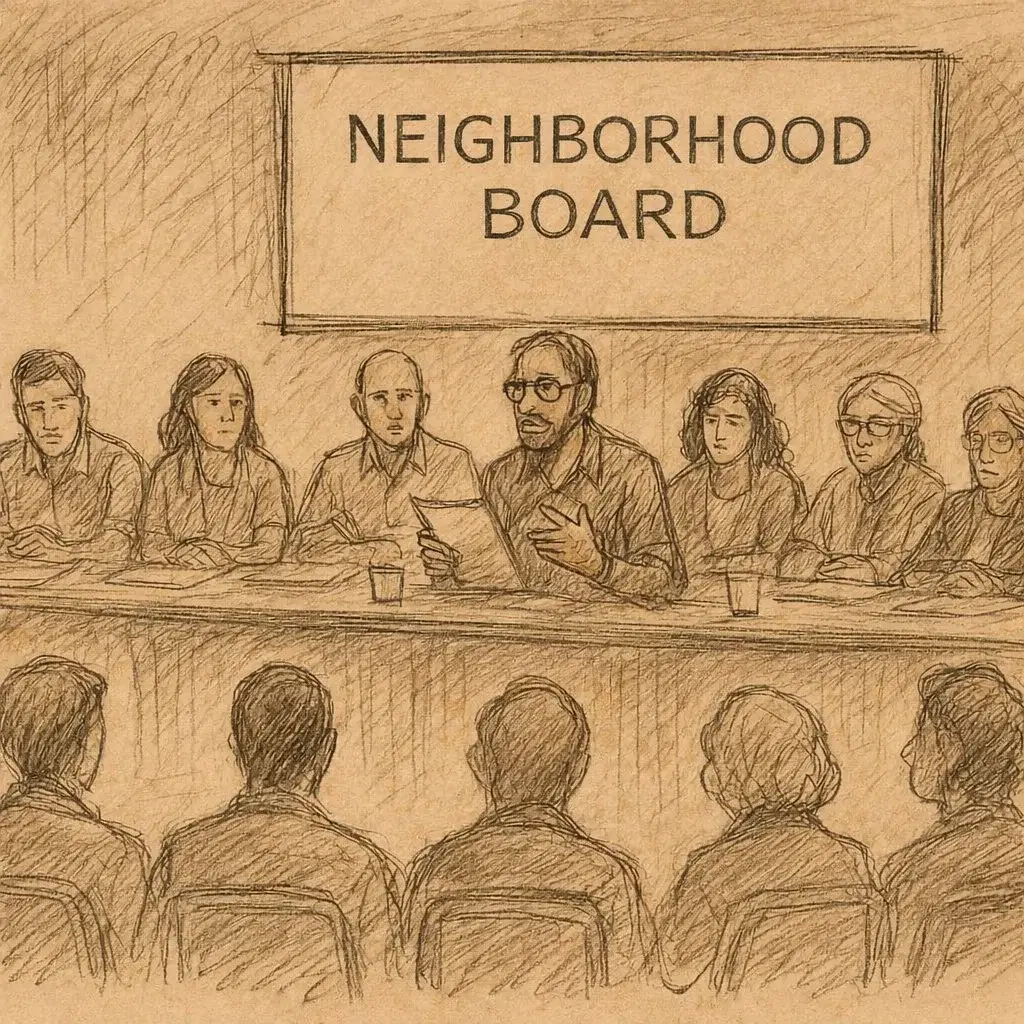
No 02 Kuli'ou'ou-Kalani Iki Neighborhood Board Regular Meeting October 2026
Listen to this article:
2 Kuliouou-Kalani Iki Neighborhood Board Meeting – October 8, 2026
Meeting Procedures and Quorum
The meeting opened with Vice Chair Kaui Lucas reviewing participation rules: speakers were limited to two minutes, report-givers to three minutes, and presenters to five minutes; comments were to be addressed through the chair and kept concise. Webex participants were reminded to remain muted when not speaking, with telephone users instructed to press star-six to mute or unmute. An initial roll call found seven members present, which was not enough for a quorum, so the board began with informational city and state reports. Quorum was established later, allowing the board to approve minutes and conduct official business. The meeting also included discussion about how remote participants are recognized. Online attendees were instructed to use the raised-hand function and keep their hands raised until called, although disconnections and the chair’s limited view of the online participant screen had caused delays.
Fire Department Activity and Holiday Safety
The Honolulu Fire Department reported that during September 2026 it responded in the district to eight activated alarms that did not involve fires and 31 medical emergencies. Its monthly safety guidance focused on holiday decorations and seasonal activities. Residents were advised to purchase electrical decorations, appliances, and devices certified by a nationally recognized testing laboratory, follow manufacturers’ instructions, remain present and alert while cooking indoors or outdoors, and keep combustible materials away from heat and flames. The department also urged pedestrians and drivers to be especially vigilant between dusk and dawn as holiday activities and reduced visibility increase risks.
Police Crime Statistics and Scam Warning
District 7 Lieutenant Thompson reported zero motor vehicle thefts, two burglaries, and seven thefts during September; the transcript cut off before the final reported category was identified. He warned residents about callers impersonating police personnel, including a recent scam involving someone claiming to be retired HPD Sergeant Chris Kim. HPD will not telephone residents to demand money, gift cards, bank information, credit-card details, or Social Security numbers. Residents receiving suspicious calls were advised not to provide information or transfer money, to consult family members, and to call 911 if verification is needed. Lieutenant Thompson emphasized that these scams often target kūpuna and other vulnerable people, and he encouraged families to warn them in advance.
Kalani High School Traffic Monitoring
Board members sought the promised follow-up on August 11 traffic monitoring in the Waiʻalae Golf Course subdivision across from Kalani High School, where morning student drop-offs reportedly create traffic problems. Lieutenant Thompson had not received study results and understood that the City Department of Transportation Services, rather than the State Department of Transportation, was following up. Members clarified the distinction between the city’s Department of Transportation Services and the state DOT. A board participant agreed to investigate and suggested also contacting Representative Mark Hashem, who reportedly helped prompt the police monitoring after personally observing the conditions. The matter remained unresolved, with an update requested for a future meeting.
Police Calls for Service and Response Outcomes
A resident asked HPD to explain the approximately 5,000 to 6,000 monthly calls for service frequently cited in police reports and requested information about the outcomes of those calls. Lieutenant Thompson explained that the total covers a broad range of requests, including barking dogs, alarms, suspicious persons, motor vehicle collisions, and crime reports. The resident described a theft at a Mānoa worksite in which officers allegedly came and left without contacting the available supervisor, requiring a second call while workers tracked stolen property by phone. He argued that a raw response count does not show whether reports were completed, investigations began, or useful action resulted. He planned to submit a more detailed request before the next meeting, while the chair agreed to provide better police contact information.
Illegal Camping, Houseless Outreach, and Property Rights
An extended and sometimes contentious discussion followed a report that police escorted a person with a shopping cart and belongings out of a private residential association but left him near the highway, after which he crossed to the Kalani High School entrance and established a camp with scattered debris. One resident argued that police should coordinate social services rather than merely move someone from one location to another, citing concerns about litter, roadway hazards, trespassing, nudity, use of private water, children, and kūpuna living nearby. Other participants objected to language they felt treated houseless people as disposable and commended officers for offering water. They noted that outreach teams can take significant time to arrive and that people may refuse help because of distrust or concerns that services will create additional problems. Lieutenant Thompson said police commonly offer assistance through programs such as CORE and HONU, with HONU able to provide pickup, temporary shelter, medical evaluation, identification assistance, job services, and pathways toward permanent housing. Participation is voluntary, and police generally cannot compel someone to accept services or leave private property unless the owner or authorized representative makes a complaint. The chair asked HPD to provide a future explanation of its standard procedures when officers encounter a houseless person, including reporting, referrals, response times, and service options.
Water Main Breaks and Outage Conservation
Board of Water Supply representative Jimmy Janos reported four water-main breaks in September. They occurred on September 4 at 5414 Kirkwood Place on a six-inch pipe, September 15 at 1737 Nālulu Place on a four-inch pipe, September 20 at 6114 Summer Street on an eight-inch pipe, and September 27 at 820 West Hind Drive on an eight-inch pipe. He also explained that power outages limit the agency’s ability to pump groundwater into reservoirs, leaving only stored reservoir water available until electricity returns. During outages, residents should conserve water for drinking, cooking, and personal hygiene. Conservation should continue after power is restored so electrically powered pumps can refill reservoirs, because pressure and normal service may take time to recover after prolonged or widespread outages. Updates are available through the Board of Water Supply website and official social-media channels, and Janos agreed to provide a direct office telephone number to neighborhood staff.
Navy Hālawa Shaft Water-Supply Question
A participant asked whether the Navy had reconnected the Hālawa-area shaft to the Joint Base water system serving military residences and schools. The resident described it as a previously contaminated or “poison” well and said the community had received notice that reconnection was expected, but later heard it had not occurred. Janos did not have current information and agreed to consult the Board of Water Supply team. The board requested a clear follow-up on whether the shaft had been returned to service for general water consumption.
Board Vacancies and Recruitment
After quorum was established, the board announced vacancies in several subdistricts, identified during the meeting as Lower Waiʻalae Iki, Upper Waiʻalae Iki, Wailupe Peninsula, Niu Valley, and Kuliʻouʻou. No candidates came forward that evening. Interested residents were invited to attend meetings first, contact the chair to learn the responsibilities, and then present their background and interest to the board. Appointment requires a board vote. The chair encouraged residents who are passionate about community issues and willing to speak publicly to consider serving.
Approval and Correction of Meeting Minutes
The board approved the August 5 and September 2 minutes with corrections. References to “Waiʻalae Golf Course” were to be changed to “Waiʻalae Country Club Golf Course” in two locations. The steward organization for Kalauhaʻihaʻi Fishpond was corrected to Maunalua Fishpond Heritage Center. The spelling of guest Melissa Pavlicek’s surname was also corrected in the September 2 attendance listing. With no objections, the board approved both sets of minutes as amended and clarified that Kilcoyne had seconded the motion.
HECO Reliability and Proposed Resolution
The board revisited a heavily attended Hawaiian Electric town hall in Niu Valley concerning repeated outages, grid reliability, vegetation management, and aging infrastructure. Members discussed preparing a formal resolution with specific accountability measures and reviewing a similar resolution being developed by the Hawaiʻi Kai Neighborhood Board before deciding whether to endorse or expand it. Vice Chair Lucas volunteered to help draft the measure, and community member Jason Liang also offered assistance. The chair hoped to place a resolution on the November agenda. Suggested provisions included measurable commitments, better public reporting, infrastructure improvements, assistance for medically vulnerable customers, and acknowledgment of line workers’ efforts while directing criticism toward corporate executives and decision-makers. Members also suggested inviting Life of the Land Executive Director Henry Curtis to explain the grid, past disputes over the Waʻahila Ridge transmission proposal, the current system’s weaknesses, and possible remedies.
Public or Cooperative Electric Utility Proposal
Participants discussed whether Hawaiian Electric should remain an investor-owned utility or be converted into a public or member-owned system. Lucas said her research indicated that approximately 85 percent of U.S. electricity providers are publicly owned or member-owned cooperatives, making Hawaiʻi’s investor-owned arrangement comparatively unusual. Kauaʻi Island Utility Cooperative was cited as a local model that has integrated renewable energy while reportedly charging lower rates. Supporters argued that a public utility could reinvest revenue in grid resilience instead of shareholder profits, improve transparency, be required to appear before neighborhood boards, and become more directly accountable to ratepayers. One participant estimated HECO’s market capitalization at approximately $1.7 billion to $1.9 billion, compared with about $5 billion in annual city tax revenue, and suggested federal financing or bonds repaid by ratepayers as possible acquisition mechanisms. Members also questioned whether customer rates would fall as the system reduces its reliance on expensive imported fossil fuels and approaches the state’s renewable-energy mandates.
Renewable Energy, Battery Storage, and Transparency
Residents criticized HECO for presenting reliable service and tree trimming as choices that require customers to accept still higher rates, even though Hawaiʻi already has costly electricity and frequent outages. A Civil Beat report was cited in which HECO allegedly declined to release requested studies concerning infrastructure projects, reinforcing concerns about private-company secrecy. Another participant described a Waiʻanae solar facility that allegedly could not sell all of its power to HECO because the utility lacked sufficient battery capacity. Past battery-facility fires and outdated equipment were also raised as evidence of technical and planning challenges. Council Chair Tommy Waters later proposed placing battery storage in individual valleys to provide backup power and constructing an additional, preferably underground, transmission route along Kalanianaʻole Highway instead of relying so heavily on lines descending from the Koʻolau range. He noted that some older underground lines in Hawaiʻi Kai, including Hāhāione and Portlock, were not properly encapsulated and are now deteriorating.
Backup Power for Medically Vulnerable Residents
Residents urged HECO to support people whose health depends on continuous electricity. One board member described caring for someone who requires oxygen around the clock and having only about eight hours to arrange replacement oxygen when an outage began, with the provider advising hospitalization if power could not be restored after business hours. Participants noted that Kuliʻouʻou had experienced outages lasting as long as three days, creating risks for people who use breathing equipment or need refrigerated medications. Proposed solutions included loaner generators, battery backup systems, mobile generators that could serve an affected area, rebates, emergency charging, relocation assistance, and advance outage notifications. A participant cited examples from other states where utilities offer such programs, though not necessarily a free generator to every customer. Waters said he would work with staff on a resolution encouraging HECO to provide backup support to medically vulnerable residents. Participants also pressed HECO to issue more accurate restoration estimates so families can move vulnerable residents or make other arrangements before prolonged outages become dangerous.
Half Marathon Traffic Notice
Shaka Racing and Mid-Pacific Road Runners Club representative Tai announced a half marathon scheduled for November 8. The race will begin at Kapiʻolani Park at 5:30 a.m., follow a route around Diamond Head similar to the Honolulu Marathon course, and turn around near Wailupe. Runners are expected near the Wailupe entrance from approximately 6:00 to 8:00 a.m. There will be no complete road closures, and HPD will manage traffic; drivers may need to pause briefly, generally for about ten seconds at a time, while runners pass. A route map was made available through the board’s shared Google Drive.
Feral Pig Trapping
A resident reported using a private trapping service to address feral pigs on his property. The trap costs about $150 per week, with an additional $75 charged for each pig removed. He said the effort captured a roughly 200-pound female and two pigs weighing approximately 60 to 70 pounds, while at least two others remained in the area. He emphasized that the captured pigs were going to people who would use them for food rather than being discarded, presenting the approach as both property protection and a contribution to local food security.
Community Participation and Official Attendance
A resident revisited an earlier “Strawberries and Onions” idea intended to recognize government representatives who attend neighborhood meetings regularly and call attention to those who do not. He had considered strawberries for officials attending at least half of the meetings and onions for poor attendance, and suggested locally grown bananas as another recognition item. Although he no longer expected the program to increase attendance, he argued that voters should know which officials regularly make themselves available for questions. He also reported meeting Police Chief Lazar and obtaining contact information so unresolved HPD questions could be elevated. The chair acknowledged that follow-up from agencies sometimes takes too long and agreed to provide additional contact information.
James Building Community Survey
The board was informed of a survey by Hāhāione Advocates for Responsible Development concerning future uses for the James Building. Residents were encouraged to respond even if they do not live immediately near the site, because the organization is seeking broader community views. A paper copy and QR-code information were left for the board and public to review.
Kuliʻouʻou Beach Water Pollution
A resident relayed a Surfrider Foundation Blue Water Task Force presentation to the Hawaiʻi Kai Neighborhood Board indicating extremely high bacterial contamination at Kuliʻouʻou Beach, reportedly associated with human waste. Surfrider’s advice was to avoid entering the water; anyone who still goes was advised to consult tide charts and favor high tide. The presentation can be found in the Hawaiʻi Kai Neighborhood Board video at approximately 1 hour, 33 minutes, and 40 seconds, and supporting slides were said to be available online. A board member proposed inviting Surfrider to present directly and sending a letter to the Department of Health. The chair agreed to discuss those options outside the meeting before placing an action item on a future agenda.
Council Chair Waters suggested that the frequently clogged canal draining toward Kuliʻouʻou Beach may contribute to the contamination. Stagnant water can remain for weeks until Department of Facility Maintenance workers manually shovel a trench through the beach to the ocean. A resident questioned the timing and efficiency of this work, describing six workers and two supervisors digging during low tide only for the trench to be submerged at high tide a few hours later. Waters agreed that the current practice is not a sufficient long-term solution and that a better drainage and water-quality strategy is needed.
Wailupe Stream Flood Mitigation and Congressional Report
Congressman Ed Case’s representative reported that the House Appropriations Committee had developed, reviewed, and approved all 12 federal appropriations bills for fiscal year 2027, which began October 1, although full congressional review remained pending. A continuing resolution was keeping the federal government open through December 11 at fiscal year 2026 funding levels. Congressman Case was also working through the bipartisan Problem Solvers Caucus on gerrymandering reform and through the Pacific Islands Caucus on the Pacific Islands Liaison Initiative Act, intended to address transnational crime in the Indo-Pacific. For the district, Case’s office continued coordinating with Senator Brian Schatz’s team on Wailupe Stream flooding and planned to meet Representative Mark Hashem and seek an update from the U.S. Army Corps of Engineers. Applications for U.S. service-academy nominations were due October 9, and entries were being accepted for the Congressional App Challenge. Constituents needing help with the VA, Social Security, passports, or other federal agencies were directed to case.house.gov or 808-650-6688.
A board member argued that members of Congress should lose their pay when Congress fails to enact a timely budget and government operations are shut down, noting that lower-paid federal employees bear the immediate consequences. The representative responded that Congressman Case strongly supports keeping the government open and agreed to seek an official response on whether he would support legislation tying congressional pay to the timely completion of appropriations.
Election Information
The city reminded residents that the general election would be held November 3 and that Oʻahu conducts elections primarily by mail. Active registered voters were expected to begin receiving ballot packets on October 16, with additional information available through the city elections website. Council Chair Waters stressed the need to vote and noted that the ballot would contain 20 proposed Charter amendments. A board member highlighted the board’s previously adopted resolution supporting creation of a city LGBTQ commission and asked Waters to consider that position in relation to the ballot and city action.
Niu Valley Playground Repairs and Park Improvements
The mayor’s representative reported that a work order was submitted September 15 to repair large holes and damaged flooring at the Niu Valley neighborhood playground. The Department of Parks and Recreation estimated completion within three to five months. Council Chair Waters also announced that new play equipment at Nehu Park in ʻĀina Haina was nearly complete. A blessing had been anticipated that week but was postponed because the work was unfinished; he promised to notify the board when a new date is set. Waters further discussed his proposal to require the Parks Department to post an online schedule showing when park play courts will be resurfaced. Although the department opposed the bill, he intended to continue because a public schedule would allow neighborhoods to see their place in the maintenance queue.
Hanauma Bay Shuttle Conservation Video
The city continued reviewing whether a conservation education video produced by Mālama Maunalua could be shown on return shuttle trips from Hanauma Bay to Waikīkī. The city was considering broader conservation and stewardship messaging, potentially incorporating community-produced content, while also determining how to treat similar requests from other organizations fairly. A board member noted that the proposal had already been pending for more than three months and asked for a definite timeline, especially given wider concerns about coastal pollution and stewardship. Because the city concessions director was on vacation, the mayor’s representative committed to providing an answer by the November board meeting.
668 Lāwā Street Nuisance Property
The board continued discussing the serious and unresolved conditions at 668 Lāwā Street, previously raised through a resident’s “horrific experience” and involving HPD, the Department of Planning and Permitting, Emergency Medical Services, the mayor’s office, and Council Chair Waters. Police Chief Lazar had responded by email but was ill and unable to participate in further discussion that day. The mayor’s representative said agencies and elected officials had reached the limits of several existing options and were looking to the new police chief for additional solutions. She did not yet know whether a civil nuisance-abatement case or condemnation process had formally begun but promised an update before the next monthly meeting if possible.
Waters asked the board to consider a resolution supporting condemnation. He explained that condemnation is rarely used because it involves taking private property for a public purpose and paying fair market value, which could exceed $1 million in that neighborhood. The city would need a court filing, legal approval, budget authority, and a determination by Corporation Counsel and the mayor. He cited prior examples involving a blocked beach access in Portlock, the deteriorated 1615 Ala Wai property, and an unsuccessful effort involving the Queen Theater in Kaimukī. A board resolution finding a public purpose could help support the legal element required by the court.
Governor’s Office Updates
The governor’s representative followed up on a request for more laminated, waterproof fish-measurement guides used to educate fishers about state size and catch rules. NOAA currently funds approximately 10,000 guides annually, but demand had exhausted the fiscal-year printing budget. Residents and businesses may fund and print additional copies from NOAA’s downloadable file as long as the guides are distributed free and the original PDF is not altered without approval. NOAA and the Department of Land and Natural Resources were also exploring additional printing options. A resident interested in sponsoring the guides asked whether a thank-you page acknowledging contributing businesses could be added; because modifications require approval, further coordination would be needed.
The governor’s October newsletter also reported approximately $1 billion in recovery and resilience needs following four major disasters over six months, distribution of more than one million eggs through the Hawaiʻi Foodbank as a result of a nationwide price-fixing settlement, and a hybrid reef project at Kalaeloa combining engineered reef structures with living coral to reduce wave energy, protect coastal highways, and strengthen shoreline resilience. Additional items included early childhood education, invasive-species prevention, and awards for state employees.
Business Climate and Data Centers
Residents criticized Hawaiʻi’s ranking as the least business-friendly state, citing delays in permitting, rebuilding, and general regulatory processes. One participant called for streamlined permitting and a more welcoming environment for employers and higher-paying jobs, arguing that young residents continue to leave because of living costs, healthcare access, infrastructure problems, and limited opportunities. In response to debate over a proposed Hawaiʻi Island data center, another resident suggested that deep-ocean water could provide efficient cooling and geothermal resources could supply cleaner electricity, allowing Hawaiʻi to develop an environmentally responsible model rather than simply rejecting data-center development. The concerns were referred to the governor’s office for further response.
Kalanianaʻole Highway Landscaping
A landscaping contractor requested public records showing the bids, selected contractor, and contract requirements for maintaining the Kalanianaʻole Highway median. He argued that the current contractor was allowing or causing vegetation loss instead of properly controlling weeds, repairing irrigation, trimming plants, and collecting litter. He offered to review the contract at his own expense and identify specific obligations that were not being met. He cited Sunshine Landscaping and Sea of Green as previous contractors that had been recognized for maintaining the median effectively. The governor’s representative agreed to clarify the request and seek the relevant state information.
Red Curbs and Kuliʻouʻou Trail Parking
Council Chair Waters reported that Bill 54, which would permit curbs to be painted red in certain locations, had stalled because the Department of Transportation Services director objected. Waters planned to meet with the director the following day to understand and address those concerns. The proposal relates in part to severe parking problems near the Kuliʻouʻou trail, where hikers reportedly block residential driveways. The bill is intended to make parking restrictions more visible and enforceable in locations where congestion interferes with residents’ access and safety.
Streetlights and Buried Electrical Lines
A resident revisited a nine-month streetlight outage caused by aging direct-buried electrical lines. Temporary or replacement overhead lines eventually restored lighting, but it remained unclear whether permanent underground repairs were the responsibility of HECO or the city’s streetlight system. The discussion illustrated broader jurisdictional questions that could affect a proposed underground transmission line along Kalanianaʻole Highway. Waters agreed to determine which entity was responsible and supported identifying specific neighborhood infrastructure projects and timelines in the planned HECO resolution.
City Legal Notices and Public Information
A resident asked the City Council to make legal notices and agendas more descriptive. Notices labeled only “relating to public parks,” “relating to funds,” or “relating to condemnation” do not give residents enough information to decide whether to testify. Waters agreed that public notices, agendas, and council-floor explanations should specify the amount of money, department, transfer, property, or policy involved. He committed to pressing council members and staff for clearer descriptions so public participation is not undermined by vague wording.
State DOT Representation and Upcoming Roadwork
The board expressed frustration that the State Department of Transportation representative again did not attend in person or remotely. A resident requested a different representative who could reliably join by Webex and asked for an explanation of a major road project advertised from the ʻĀinakoa beginning of the freeway toward the Kapiʻolani interchange. Signage said work was to begin September 21 and continue for about a year, but the scope and traffic effects remained unclear. The chair asked for the legal notice and promised to invite the DOT representative to the November meeting. The board also agreed to move the State DOT report from the elected officials’ portion of future agendas to the city and state monthly reports section because the representative is an agency official rather than an elected officeholder.
Next Meeting and Broadcast Schedule
The next regular meeting was announced for November 4, with several presentations and a possible HECO resolution expected. Due to general-election programming, the ʻŌlelo rebroadcast schedule was adjusted to Thursday, October 22, at 8:30 a.m. The chair thanked participants and adjourned the meeting.