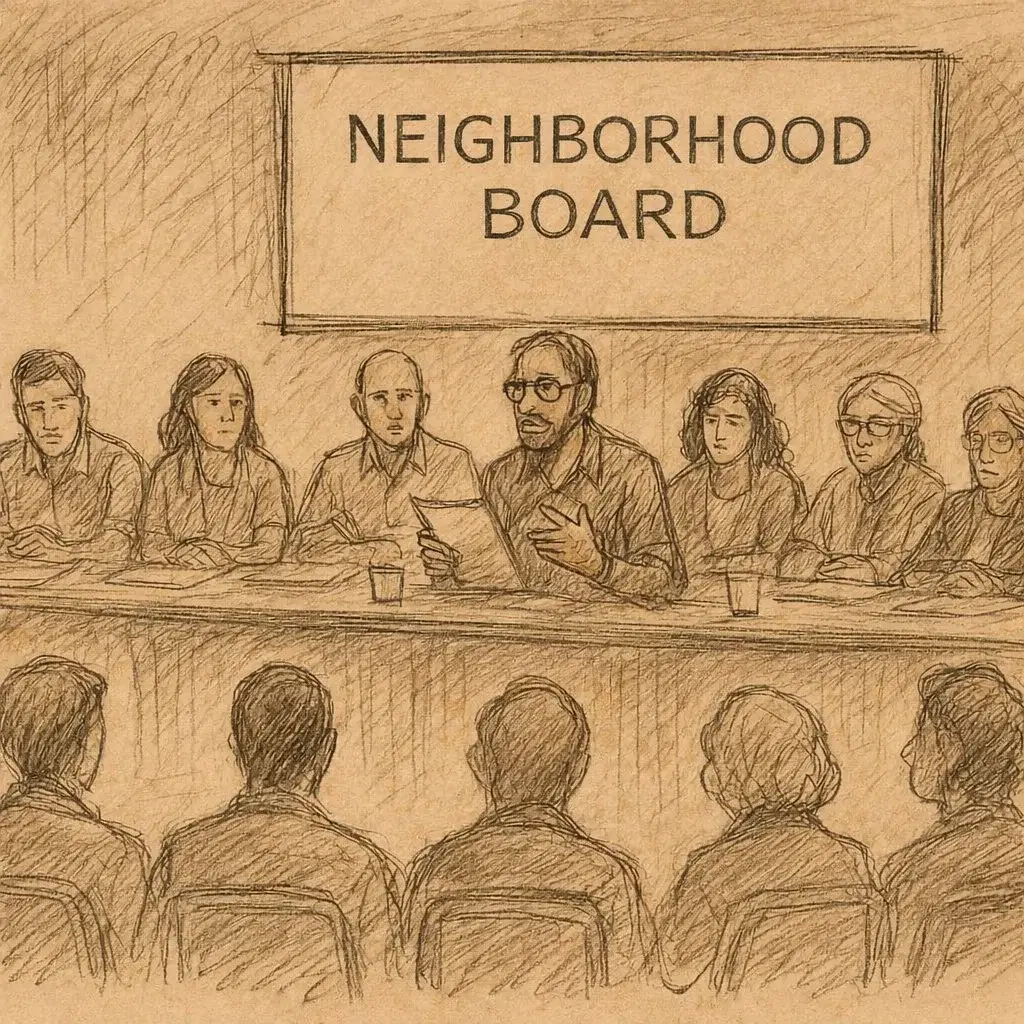
No 02 Kuli'ou'ou Kalani Iki Neighborhood Board Regular Meeting
Listen to this article:
2 Kuliouou-Kalani Iki Neighborhood Board Meeting – September 4, 2026
Call to Order, Quorum, and Staff Changes
The board reviewed its meeting procedures, including two-minute limits for public comments, three minutes for reports, and five minutes for presentations, as well as muting instructions for WebEx and telephone participants. New Neighborhood Assistant Kelly Nakamura conducted the roll call and reported eight members attending in person and two online, establishing quorum. The chair welcomed Nakamura and thanked outgoing Neighborhood Assistant Zoidel for his long service and support, noting that he will move to the Mānoa Neighborhood Board.
Police Report and Kalani High School Traffic
Honolulu Police Department District 7 reported two motor-vehicle thefts, three burglaries, four thefts, and four unauthorized entries into motor vehicles or car break-ins during August, along with 6,251 total calls for service across the district. Lieutenant Nishimura encouraged residents to register at hnlalert.gov for official notices concerning severe weather, emergencies, road closures, water-main breaks, and other hazards, particularly during storm season. A Waiʻalae Iki Golf Course subdivision resident asked why four officers had been directing or observing traffic near Kalanianaʻole Highway, Waiʻalae Avenue, and Waikui Street around August 11 during the morning school commute. The concern involved Kalani High School traffic being diverted into a private subdivision and longstanding congestion at the area’s intersections. Nishimura said HPD had received a traffic-related complaint through city transportation officials and would determine whether the observation produced a study or recommendations, while keeping the community association involved. The board also thanked HPD for directing traffic during power outages when signals along Kalanianaʻole Highway were not operating.
Fire Department Report and Lithium-Ion Battery Safety
Captain Emmett Hall of the Wailupe Fire Station’s Third Platoon reported 12 alarm activations with no fire, 34 medical incidents, and one motor-vehicle collision during August. Because the department is responding to more lithium-ion battery fires involving phones, laptops, e-bikes, scooters, toys, tools, and electric vehicles, residents were advised to avoid inexpensive chargers, never charge devices on beds, rugs, or other heat-absorbing surfaces, unplug equipment after it is fully charged, charge larger devices such as e-bikes and power tools outdoors, and stop using any battery that becomes hot. Travelers were also advised to keep battery-powered equipment in sight while flying. Fire Prevention Week will be observed in October, including an October 3 event at the Honolulu Zoo from 10 a.m. to 2 p.m. under the theme “Charge into Fire: Safe Charging Is a Superpower.” Residents expressed concern about people hiking during severe weather and thereby placing rescuers at risk. Hall did not have a breakdown identifying which types of battery-powered products caused recent fires but directed the public to HFD’s website for further information.
Water-Main Breaks and Water Education
The Board of Water Supply reported two eight-inch water-main breaks in August: one on August 15 at 118 Hawaiʻi Aloha Street and another on August 31 at 1118 Hawaiʻi Aloha Street. Residents were invited to an “Imagine a Day Without Water” event, held in partnership with a state representative’s office, on September 26 from 9 a.m. to 1 p.m. at ARCA Safety in Waiʻanae. Planned activities included educational displays, interactive exhibits, games, a rain-barrel workshop, and food and refreshments for purchase. The agency also followed up on a previous inquiry alleging that approximately six million gallons per day from Kalauhaʻi Fishpond entered the sewer system. The Board of Water Supply said questions concerning fishpond restoration or water discharge should go to the Department of Land and Natural Resources, while the Department of Environmental Services could address any flow entering the sewer system. Members associated with the Maunalua Fishpond Heritage Center said the state owns the fishpond, the center serves as a steward, there is no such discharge, and insufficient water is actually one of the pond’s problems.
Board of Water Supply Tours
A resident asked whether tours of the Hālawa Shaft might resume. The Board of Water Supply explained that the shaft was closed following the Red Hill fuel contamination crisis and because its cable car was not operating, making pedestrian access potentially dangerous and creating liability concerns. The manager and chief engineer currently have no schedule for reopening the shaft to tours. The agency continues to offer Waiheʻe Tunnel tours and is working to reopen the Fred Ohrt Museum. A resident strongly recommended the Waiheʻe tour as an opportunity to see water moving through lava rock and learn that rainwater may take approximately 20 years to percolate through the geology before reaching the water system. Interested residents may contact the agency at contactus@hbws.org for information about future tours.
Board Vacancies and August Minutes
The board encouraged residents to apply for five vacant neighborhood seats: one representing lower Waiʻalae Iki, one for mid-Waiʻalae Iki Ridge, one for Kainani and the Wailupe Peninsula, one for Hawaiʻi Loa Ridge and Niu Valley, and one for Kuliʻouʻou. The chair invited interested residents to observe the board’s work and contact her about serving in the future. Approval of the August 5 minutes was deferred until the next meeting so members could review additional corrections. Identified typographical changes included spelling Matt Glei’s surname as “G-L-E-I” and correcting “Kualoa Ranch.”
Ongoing Safety and Mental-Health Crisis at a Residential Property
The board held an extended multiagency discussion about a property on Laue Laue Street where neighbors have experienced years of alleged hazardous, threatening, and disruptive behavior by a resident identified as Somsak. A neighboring resident described concerns before and after fires on August 28, 2025, and March 9, 2026, including reports of following women or watching children, a fight involving a teenager, repeated nighttime car alarms, people living in the carport, boards being thrown through a neighboring home’s jalousie windows, barricades that impeded emergency access, widespread spray-painting, recurring small fires, angry outbursts, thrown objects, public urination, dismantled bicycles and accumulated materials, trespassing and theft from the adjacent property at 660, threats toward neighbors, noxious odors, human waste, and hazardous debris such as broken glass, concrete, asphalt, and metal. The resident reportedly returned to camp on the burned property with his brother after the first fire and refused repeated housing offers from CORE, the Red Cross, and the Veterans Administration; CORE temporarily placed him in shelter on more than one occasion, but he left shortly afterward. Neighbors also reported dry branches piled around and over a tarp enclosure near the stream, creating concern that another fire could spread through adjoining properties. A July 21 incident resulted in an arrest, and the resident allegedly failed to appear for an August 13 court hearing, leading to a bench warrant. The community’s requested outcome remained removal from the neighborhood to a setting where professional treatment could be provided, with some residents also asking that his brother’s situation be addressed.
Planning, Demolition, and Possible Property Sale
Department of Planning and Permitting Director Dawn Takeuchi Apuna explained that DPP can inspect and cite land-use and building-code violations but faces limitations when the person involved owns or legally occupies the property. After a major fire left dangerous structures on the lot, DPP worked with the resident’s estranged wife to expedite a demolition permit. DPP, HPD, and CORE coordinated to ensure that occupants were away from the site while demolition occurred. Apuna said the wife intends to sell the property once certain legal matters are resolved, which could ultimately end the current use of the site, although it is not an immediate solution. DPP committed to continue investigating reportable building or land-use violations. Neighbors asked city agencies to notify them when enforcement, court, or property actions are taken because they have observed the resident acting out when frustrated and want advance warning of periods when the risk of fire or confrontation may increase.
Assisted Community Treatment and Outreach
Honolulu Emergency Medical Services Assistant Chief Jeff Zuckernick, speaking for the city’s CORE unit, said CORE is highly familiar with the resident and has exhausted the voluntary measures legally available to connect him with care. He reported a potentially significant development under Act 219: the individual was reportedly being evaluated through an Institute for Human Services process for court-ordered Assisted Community Treatment. Such an order can require outpatient mental-health treatment and may include long-acting injectable medications administered monthly to reduce psychotic episodes. The matter remained in the evaluation and court process, and detailed medical information could not be publicly disclosed. City representatives acknowledged that the situation exposes a service gap because many programs focus on unhoused people even when a housed property owner may display similar mental-health needs and risks.
Enforcement, Warrants, and Legal Options
HPD representatives explained that many documented incidents appear to be petty misdemeanors or misdemeanors that may result only in time served if the individual is held overnight and appears in court. Police can execute an outstanding bench warrant if officers encounter the person in public or have a lawful reason to enter the property, but the judge would determine whether he is detained further, evaluated, or released. Officers stressed that residents should call 911 for fires, threats, noise, disturbances, erratic behavior, or other suspected offenses and explicitly request to meet with the responding officer; without a witness, complainant, or evidence explaining what occurred before police arrived, officers may find only a person sitting lawfully on his own property. Current behavior can still trigger a new real-time evaluation by a mental-health professional even if prior evaluations resulted in release. Drug or paraphernalia charges would require evidence linking the items to a specific person. Residents and board members called for closer coordination with the prosecutor, particularly concerning alleged reckless endangering, terroristic threatening, harassment, trespassing, and fire-related conduct, and argued that prosecution should not be avoided merely because a case may be difficult.
Injunctions, Nuisance Remedies, and Condemnation
Council Chair Tommy Waters recommended that affected neighbors seek injunctions against harassment, noting that the forms are available online or at District Court and do not require a lawyer. If granted, an injunction would regulate contact between the petitioner and respondent and allow arrest for violations, although it would not automatically remove the respondent from property he owns. The owner of the neighboring property at 660 would need to participate in any trespass complaint involving that lot, and clearly posted “No Trespassing” signs could strengthen enforcement. Other suggested actions included requesting HPD and HFD records, filing a civil nuisance lawsuit, pursuing appropriate fire-related charges, and completing an HPD 252 statement. Waters also offered to explore whether the city could condemn and acquire the property for a public purpose and later resell it, but cautioned that condemnation requires a court process, fair-market-value payment, and substantial time; the wife’s planned private sale may occur sooner. He committed to contact the prosecutor’s office, monitor any warrant arrest and court date, and examine possible city legislation before leaving office.
Wailupe Stream Fire Hazard and Broader Nuisance Concerns
Residents said the adjacent Wailupe Stream has become overgrown to the point that it resembles a “jungle,” with trees reportedly 20 to 30 feet high and no maintenance expected until the following year. They warned that dry conditions and strong winds could carry a fire through the stream corridor toward homes and the shopping center. Speakers also cited other island homes where extensive rubbish accumulation, mental-health issues, or neglect have preceded fires, arguing that current laws place nearby residents at risk when agencies are unable to intervene because a hazardous person is housed or owns the property. Suggestions included involving the Department of Human Services, working with the resident’s wife, and pursuing state legislation that addresses dangerous behavior associated with mental or emotional illness regardless of housing status. Mayor’s representative Dita Holifield offered to serve as a central point of contact, coordinate updates among DPP, HPD, CORE, IHS, Council Chair Waters, and the board chair, and keep residents informed as the case progresses.
Mayor’s Office and City Events
The Mayor’s Office announced Department of Environmental Services community meetings on the city’s integrated wastewater plan, including sessions held September 2 at Kailua Elementary School, September 3 at Kapolei Hale, and September 10 at Mission Memorial Auditorium. The office also reported the opening of new hippopotamus and penguin displays at the Honolulu Zoo and said discussions continue about possible local bamboo-growing areas connected to earlier questions about pandas, although no plan is final. A newly improved driving range at the Ala Wai Golf Course was blessed and opened with a new food vendor and food-court area; more than half a million rounds or visits associated with golf were cited annually. The office also promoted three nearly sold-out Journey concerts and an accompanying press event. In response to community requests, Holifield agreed to ask the Department of Parks and Recreation about repairing large holes in the approximately 10-year-old rubber playground surface at Niu Valley and to determine which city division must approve a Mālama Maunalua conservation video proposed for buses serving Hanauma Bay.
East Honolulu Koʻolau Ungulate Fence Resolution
The board considered a resolution supporting the East Honolulu Koʻolau ungulate fence project, which is intended to protect watershed lands from damage caused by feral pigs. The project is partially connected to a National Oceanic and Atmospheric Administration grant administered through Mālama Maunalua. Board member Sandra Fund, an unpaid Mālama Maunalua board member, recused herself because the organization is a project funder and the project is a subrecipient of its NOAA grant. With no requested amendments, the resolution passed by roll call with nine affirmative votes and Fund’s recusal recorded. Members emphasized the project’s role in protecting the watershed and long-term water supply.
Food Security Fund Ballot Proposal
Kalani High School Environmental Club students, serving as youth representatives of the Hawaiʻi Foodbank-led Coalition for Local Food Security, asked voters to support Proposal 119, which will appear as Question 1 on the November ballot. The proposal would dedicate 0.5 percent of existing annual city real-property-tax revenue to food-security and local-food initiatives without creating a new tax or raising existing tax rates. Students estimated that the dedication would provide approximately $8 million and said more than $1 billion in real-property-tax revenue had remained unspent in the prior year. Funds could support organizations already distributing food, strengthen local farmers, and expand access to nutritious meals. Students shared personal and community experiences with hunger, including its effects on energy, school attendance, grades, physical health, and mental well-being. They stated that approximately one-third of Hawaiʻi households experience food insecurity, representing about 250,000 people on Oʻahu, and emphasized that the problem affects housed families, children, neighbors, and workers as well as people experiencing homelessness. Because the Charter Commission meets only once every decade, they described the measure as a rare opportunity to establish a long-term funding commitment and urged East Honolulu’s high-turnout electorate to vote yes.
Local Hunting, Fishing, and Agricultural Land
A hunting-community representative supported the students’ food-security concerns and noted that properly managed hunting and fishing can provide locally sourced lean protein. He highlighted beginner youth archery instruction offered by the Bushwhackers Archery Club in Kapolei and offered to connect interested residents with hunting and fishing resources. Another resident urged advocates to connect food insecurity with preservation of prime agricultural lands in Central Oʻahu, warning that continued conversion of farmland to housing could reduce the island’s future ability to produce food. Later, a resident asked the governor’s representative for help reprinting DLNR’s laminated waterproof fishing guide, which identifies fish species and legal size limits but has periodically remained out of print because of limited funds. The governor’s representative agreed to seek an update from DLNR and report back about available copies and possible support for another printing.
Hawaiian Electric Reliability and Public Ownership Proposal
Several residents described increased electrical outages following what had been presented as a Hawaiian Electric grid upgrade approximately six months earlier. One speaker said his household had experienced more outages since the work than during the previous five to ten years and requested an explanation of the causes, the utility’s restoration performance, and its storm-season preparedness. Another resident proposed a board resolution supporting conversion of Hawaiian Electric into a publicly owned utility, arguing that its monopoly structure and obligations to private shareholders weaken incentives to prevent failures or restore service quickly. Mayor’s representative Dita Holifield had offered to help assemble input from Hawaiian Electric and utility regulators, potentially in coordination with the Hawaiʻi Kai Neighborhood Board because outages have affected all of East Honolulu.
HECO Town Hall and Equipment Failures
Representative Mark Hashem announced a Hawaiian Electric town hall tentatively confirmed for Wednesday, September 23, from 5:30 to 7:30 p.m. at Niu Valley Middle School. Hawaiian Electric staff are expected to explain recent outages, current repair work, and long-term plans, and the board will distribute the event information through Neighborhood Commission channels, social media, and Nextdoor. Community activist Kahi Pacarro said approximately 1,000 residents across House Districts 18 and 19 had completed a survey concerning HECO reliability and encouraged further participation so the results could establish a performance baseline. Pacarro also warned that repeated outages can damage a home’s main circuit breaker near the electric meter. His own older home lost power for nine days while an obsolete replacement breaker was shipped from the continental United States, prompting him to advise owners of older homes to identify their breaker model and consider obtaining a spare. The board separately relayed a HECO notice that work would occur in the coming weeks on a utility pole at 4576 Kalanianaʻole Highway, although no specific work date was provided.
Property-Tax Reform Proposal
A resident proposed limiting qualifying homeowners’ real-property taxes to 1 percent of household income, arguing that retired residents can be displaced when assessed values and tax bills rise even as income falls. The proposal was also intended to make it easier for families to inherit homes without being overwhelmed by property taxes. To replace lost revenue, the resident suggested creating an additional property-tax tier beginning at values of $10 million. Council Chair Waters explained that the city already offers a program limiting property taxes to 3 percent of household income for qualifying homeowners, with an income threshold he recalled as approximately $80,000 or less. Applications were due September 30, and he distributed packets containing information, application forms, and reminder magnets, asking residents who did not qualify to pass them to relatives, friends, or neighbors who might.
Wastewater Rates, Stream Maintenance, and Stormwater Fees
Waters encouraged residents to participate in the city’s wastewater planning process, noting that recently approved sewer-rate increases are expected to double bills over the next ten years; he said he voted against the increases. He also planned to introduce a resolution seeking an audit of the stream-maintenance program, an issue repeatedly raised in connection with Wailupe Stream. The Department of Facility Maintenance has requested legislation to fund stormwater infrastructure through a fee based on the amount of impervious surface, such as concrete, on each property. Waters had not introduced the measure because of the current cost-of-living burden but expected the concept to return. Residents were encouraged to attend or join online the September 10 integrated wastewater-plan meeting at Mission Memorial Auditorium.
Red Curbs and Trailhead Parking
Waters discussed Bill 54, intended to address hikers parking across driveways near the Kuliʻouʻou trailhead on Kalaʻau Street. The measure would allow the city and homeowners to paint curbs red as a visible no-parking warning. He explained that privately painted red curbs are currently unauthorized, and DPP may require residents to remove or cover them. One resident cautioned that red paint could be abused to block excessive stretches of public curb, citing a roughly 200-foot painted area near a bus stop in Kahala, and asked that markings be limited to legally restricted areas immediately adjoining driveways. The resident also urged HPD to enforce existing parking laws concerning blocked driveways, mailboxes, and turnarounds rather than unnecessarily reducing public access to Kuliʻouʻou hiking areas.
Visitor Parking Fees and Park Security
Waters also discussed Bill 32, introduced with Councilmember Andria Tupola, which would authorize parking charges at city parks, preferably aimed at out-of-state visitors, with revenue returned to the affected park. Ho‘omaluhia Botanical Garden was cited as an increasingly crowded destination where visitor parking fees could support maintenance. Waters also suggested that controlled or paid parking at scenic sites such as the Hālona Blowhole could deter vehicle break-ins, drawing a comparison to Hanauma Bay, where gated access reduced smash-and-grab thefts. The proposal was presented as an alternative source of park funding that would not rely entirely on local property taxes.
Ocean Leadership and Campaign-Finance Reform
Kahi Pacarro announced the third annual Ocean Uprise Youth Summit focused on ocean leadership. The program will bring together 20 participants from around the world and 10 local participants between ages 18 and 30, with eight of the local spaces already filled. Foundation support covers participant expenses. Pacarro also reported that a proposed special legislative session on corruption had not gained enough support to proceed and asked the board to consider a resolution closing what he described as a contractor campaign-contribution loophole. The concern is that relatives of government contractors may donate to political campaigns in ways that can influence decisions benefiting those contractors.
Governor’s Office Report
Governor Josh Green’s representative highlighted the September edition of the governor’s “Ke Ala Hou” newsletter, including state responses to tropical cyclones Lala and Bokke and emergency-preparedness information at ready.hawaii.gov. The Department of Accounting and General Services has installed more than 160 automated external defibrillators in DAGS-owned facilities statewide. Hawaiʻi is also receiving $18.5 million for electric-grid resilience and hazard-mitigation projects on Oʻahu, Maui, and Hawaiʻi Island through a partnership involving the Hawaiʻi State Energy Office, Hawaiian Electric, and the Hawaiʻi Emergency Management Agency.
Council Chair Waters’ Term and Election Dispute
Waters said his council term will end January 2 after six years as Council Chair, but he will continue working on legislation and neighborhood concerns during his remaining four months. Residents questioned the election litigation that removed him from the ballot after he had initially been permitted to run, describing the outcome as disenfranchising approximately 8,000 voters. Waters said the Hawaiʻi Supreme Court concluded in one proceeding that the Circuit Court should have dismissed the original challenge because election objections generally must be brought within the statutory period before ballots are finalized, but a separate action involving 40 voters produced a 3–2 decision that he was ineligible under the Charter’s two-consecutive-term limit. He characterized the circumstances as unusual and said a future remedy, if needed, might require state legislative action rather than a City Council ordinance.
Representative Hashem and Kalani Traffic Follow-Up
Representative Mark Hashem reported that Capitol renovations had temporarily left his office without normal telephones, computers, and workspace. Although completion had been suggested for October, he expected possible delays and apologized for any interruption in constituent service. He also agreed to follow up on the August police traffic observation near the Waiʻalae Iki Golf Course subdivision and Kalani High School. Hashem, whose son attends Kalani, acknowledged severe morning congestion and said he avoids driving directly to campus, instead using Kahala Mall as a drop-off point. Residents said short signal timing, traffic backing up from the university area, and vehicles turning into neighborhood streets create repeated delays and unsafe behavior, and they requested any HPD study or report generated by the observation.
Closing Announcements
No reports were provided during the meeting by representatives of Congressman Ed Case or Senator Stanley Chang. The board’s next regular meeting was announced for October 7. The chair again thanked outgoing Neighborhood Assistant Zoidel for his service, wished him well with the Mānoa Neighborhood Board, and closed the meeting by thanking residents, officials, students, and agency representatives for their participation.