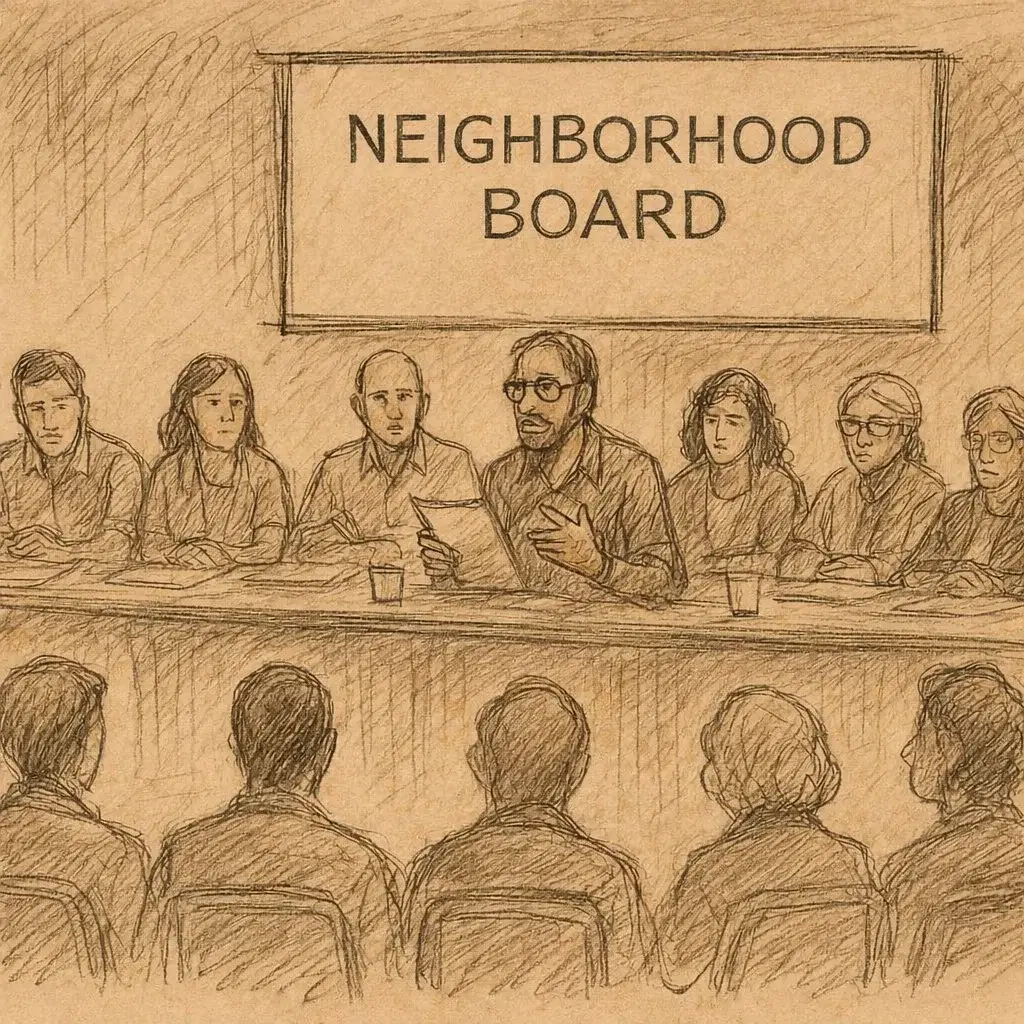
No 02 Kuli'ou'ou Kalani Iki Neighborhood Board Regular Meeting August 2026
Listen to this article:
2 Kuliouou-Kalani Iki Neighborhood Board Meeting – August 6, 2026
Police Response to Ongoing Neighborhood Safety Concerns
The board continued discussing an ongoing situation involving a resident whose conduct has raised concerns among neighbors and public-safety agencies. Over the next 30 days, the mayor’s representative, police leadership, affected residents, and other stakeholders plan to meet and develop a fuller understanding of the history and available responses. Police Chief Arthur “Joe” Logan’s successor, Chief Lazar, was expected to be invited to appear in person at the September board meeting, where the matter would receive dedicated agenda time. A resident clarified that the incident referenced by Officer Nishimura occurred on July 21, when a neighbor was reportedly shouting angrily late at night, walked down the valley, and was apparently detained because of aggressive behavior. She knew of no recent arrest connected to fire activity; the most recent fire-related case involved a fire allegedly set in March. The board invited affected neighbors Andrea and Rick Wagner to participate in the next discussion.
Crime Patterns and Traffic-Calming Feedback
Lieutenant Nishimura reported that police had not identified any geographic cluster or concentrated hotspot of criminal activity within the neighborhood board area; reported incidents appeared dispersed. A resident asked about recently installed speed humps on West Tyne Drive near the school. Nishimura had not received notable feedback from either residents or officers, but House candidate Kahi Pukaro, citing extensive door-to-door conversations, said community opinion was approximately evenly divided. Some residents were very upset by the humps, while others were highly grateful for the added traffic calming.
Water Use by Oahu Data Centers
Board of Water Supply representative Jimmy Yanus responded to earlier questions about the water demands of Oahu data centers. In 2025, the identified facilities collectively consumed approximately 25 million gallons, averaging about 68,500 gallons per day. Their combined use declined from 2024 to 2025 and remained substantially below the consumption of some major commercial shopping centers. The Board of Water Supply said it would continue monitoring this growing sector and encouraging data-center operators to maximize water efficiency. During the later climate-resilience discussion, a resident raised the environmental costs of artificial intelligence, particularly the water needed to cool data centers, and suggested that sustainability organizations avoid using AI-generated graphics. Yanus also clarified that the Board of Water Supply does not manage wastewater or sewers; those responsibilities belong to the Department of Environmental Services.
Red Hill Wells, Drinking-Water Quality, and Main Breaks
The Board of Water Supply confirmed that wells affected by the Red Hill fuel contamination remain shut down. No new information was available regarding whether the contaminant plume is moving toward other wells, but the agency did not anticipate shutting down additional wells at that time. Testing in the Kuliouou area showed no unexpected or concerning water-quality findings. Yanus also said the public water system contains no lead pipes and that lead and copper monitoring has found no lead problem in the drinking-water supply; the results are documented in the agency’s online water-quality report. Two water-main breaks occurred during July: a four-inch pipe installed in 1975 broke on July 3 at 1778 Alaweo Place, and a 16-inch pipe of unknown installation year broke on July 18 at 6020 Kalanianaole Highway.
“Imagine a Day Without Water” Event
The Board of Water Supply announced its free, family-oriented “Imagine a Day Without Water” event, organized with the office of State Representative Chris Muraoka and more than 25 city, state, nonprofit, and community organizations. The event was scheduled for Saturday, September 26, from 9 a.m. to 1 p.m. at the Arc of Safety at Waianae Mall, 86-120 Farrington Highway. Planned activities included interactive exhibits, educational displays, games, prizes, a rain-barrel workshop, and food and refreshments for purchase. The event promotes the “One Water” principle that drinking water, wastewater, stormwater, and other water resources are interconnected and should be managed collectively. Heolani Sonoda-Pale asked how organizations could apply to host a booth; Yanus said he would consult the agency’s communications section. The board also confirmed that Board of Water Supply personnel, including Barry through the One Water initiative, are involved in East Oahu’s long-term planning and resilience work.
Board Vacancies and July Minutes
The board announced six vacancies across neighborhood subdistricts that include Lower Waialae Iki, Mid-Waialae Iki Ridge, the Waialae Iki and Wiliwilinui area, Kainani and Wailupe Peninsula, Hawaii Loa Ridge and Niu Valley, and Kuliouou. Residents interested in community service, neighborhood problem-solving, and local advocacy were encouraged to apply and to share the opportunity with others. The board reviewed the minutes of its July 1 regular meeting. With no corrections offered, the minutes were approved as distributed.
East Oahu Community Action Network
Aloha McGuffey of KISCA Hui returned to update the board on the initiative previously called the Community Climate and Resiliency Mandate. The project has moved from planning into implementation and is now called the East Oahu Community Action Network, or AOCAN. Its regional framework covers Kaimuki and Palolo through East Honolulu, Hawaii Kai, and the ahupuaa of Waimanalo, with the goal of coordinating communities on sustainability, environmental protection, and disaster resilience. McGuffey said AOCAN hopes to work through neighborhood-board sustainability or environmental committees and through separate community sessions where such committees do not exist. She invited board members and residents to complete a QR-code survey identifying their highest climate-resilience and environmental priorities so that the network can focus first on the most urgent concerns.
AOCAN Working Groups and Youth Participation
AOCAN’s steering committee selected three initial working-group priorities from ten subjects identified during a September 2025 symposium. The first will focus on education, with educators from Kaimuki Middle School and Punahou working with area students to identify youth concerns and develop sustainability and environmental programs. The second will address disaster readiness and Firewise planning; Andrea and Rick Wagner were expected to collaborate with Matt Dly on the group’s initial structure. The third will focus on resilience hubs. Organizational work was beginning immediately, with detailed implementation anticipated in early 2027. McGuffey offered to share the full AOCAN framework with interested residents.
Proposed East Oahu Resilience Hubs
AOCAN is exploring three possible resilience hubs, although none had yet been established. One is being considered in Waimanalo, another in the Hawaii Kai–Kuliouou area, and a third in the Kaimuki–Palolo–Waialae–Kahala area. These would be long-term community centers for disaster education, emergency coordination, youth programs, environmental projects, and cross-neighborhood communication. McGuffey emphasized East Oahu’s dependence on Kalanianaole Highway as its principal transportation route and said coordinated hubs could allow surrounding communities to assist one another if a disaster blocked access. Representatives Joe Gedeon and Tina Grandinetti, both members of the steering committee, were examining ways to establish and implement the hubs. Potential hub projects could also include coordinated control of invasive coqui frogs, which have been reported in Palolo and Waimanalo and could spread farther across Oahu without intervention.
KISCA Hui Membership and Communications
McGuffey explained that KISCA stands for the Kahala Initiative for Sustainability, Culture, and the Arts and is sponsored by the Kahala Hotel and Resort. The hui had approximately 170 members and primarily met through Zoom because of participants’ schedules. It uses the Basecamp platform to communicate and coordinate projects. Residents were invited to join by providing their name and email address, with a mobile number optional. In response to a question, McGuffey acknowledged that an animated graphic used in the AOCAN materials had been generated through ChatGPT, although the underlying framework came from the prior symposium and was assembled in Word. A resident urged the organization to consider the energy and cooling-water use associated with AI systems when preparing future sustainability materials.
Honolulu Century Ride
Christopher Salas, events director for the Hawaii Bicycling League, announced the 43rd Honolulu Century Ride for Sunday, September 27. The event will start at Kapiolani Park and offer routes extending as far as Swanzy Beach beyond Kualoa Ranch, with the full round trip totaling 100 miles. Organizers expected about 1,200 participants, an increase over recent years when attendance was slightly above 1,000 but still below the early-2000s peak of roughly 3,000. From approximately 6 to 8 a.m., one outbound makai lane of Kalanianaole Highway will be coned off to provide space for the initial large group of riders; Salas corrected an earlier statement that had mistakenly identified the mauka lane. Normal traffic will continue in the remaining lanes. Returning riders will be spread out later in the day and are expected to use the shoulder individually or in small groups.
Holy Nativity Great Pumpkin Festival
Holy Nativity School development director Dorothy Jorgensen announced the school’s 14th annual Great Pumpkin Festival for October 17. The fundraiser was expected to attract about 1,000 families from across East Honolulu and feature a pumpkin patch, rides, games, and other family activities. To address heavy traffic and protect children crossing between the school’s two campuses, Holy Nativity applied to close a short section of Nainui Place between Nainui Street and the Starbucks parking lot. The shopping center would remain accessible, nearby businesses had been informed, and the road was expected to reopen by mid-afternoon. Jorgensen said the school begins each academic year with a road-safety campaign encouraging drivers to slow down and yield to children, and it was working to ensure that neighbors retained access to homes and driveways during the festival.
Campaign Finance and Public Trust
During public input, House candidate Kahi Pukaro said repeated door-to-door conversations revealed widespread distrust of government and a growing belief that corruption is simply part of the political system. Referring to recent Capitol indictments, he argued that legal outside influence and corporate campaign contributions can shape legislative decisions. He encouraged residents to examine publicly available Campaign Spending Commission records and compare donor information with lawmakers’ actions. Pukaro said candidates with substantial corporate support can dominate mail, advertising, and promotional outreach, while candidates who reject such funding struggle for visibility. He advocated fully publicly financed elections as a way to reduce campaign-finance influence, while acknowledging that it would not eliminate every form of corruption. Later, he estimated that such a system could cost each taxpayer approximately $7 to $10 per year, or around $20 per election cycle.
Mayor’s Report and New Police Leadership
Mayor Rick Blangiardi’s representative, Dita Holifield, highlighted the first redesign of Hawaii driver’s licenses and state identification cards in 17 years, including enhanced security features, and the city’s continued work on the Iwilei transit-oriented development vision. She also noted the swearing-in of Chief Lazar as the Honolulu Police Department’s 13th chief and praised his early leadership. Holifield planned to coordinate with the board chair to invite him to the September meeting, including for the neighborhood safety discussion raised earlier. Other city announcements included recognition of America’s 250th anniversary, a national award for greener city parks, Journey’s anticipated final Hawaii tour appearance at the Blaisdell, and the appointment of John Berry as Honolulu Zoo director. Berry previously worked with the Washington, D.C., zoo and served as U.S. ambassador to Australia during the Obama administration.
Lower School-Zone Speed Limits
The Department of Transportation Services is implementing Ordinance 24-32 by reducing speed limits on City and County roadways bordering schools. Limits that had been 25 miles per hour when children were present will become 20 miles per hour from 6 a.m. to 6 p.m. on school days. The city will also install or replace missing, faded, and outdated school-zone signs within 1,000 feet of schools. Because Oahu has more than 200 schools, the islandwide project will involve thousands of signs. The mayor’s office asked for patience as the new limits and signage are phased in.
Youth Climate Action Fund
The Mayor’s Office of Climate Change, Sustainability and Resiliency opened applications for the Youth Climate Action Fund. Oahu youth may receive grants of up to $4,099 to design and carry out climate-related projects. Applications were available through the Resilient Oahu website. The program creates a direct funding path for youth-led efforts involving emissions reduction, environmental education, adaptation, community preparedness, or other climate solutions.
Proposed Giant Pandas at the Honolulu Zoo
A resident asked whether Honolulu would pay China approximately $3 million to bring giant pandas to the zoo. Holifield explained that China retains exclusive licensing control over pandas and requires host institutions to accept a pair following an extensive vetting process. The commitment would last ten years, and Honolulu would also need to establish a sustainable bamboo farm. The pair would not necessarily need to be male and female. Holifield confirmed that the project would require a significant licensing and hosting investment but said final figures had not been completed or released. The city was exploring private donations and corporate support outside the regular city budget. She could not yet say what would happen if private fundraising failed or provide a definitive total cost.
Governor’s Office Report
Deborah Kwan introduced herself as Governor Josh Green’s new representative to the board, replacing Dave Day. She directed residents to the governor’s August newsletter, which included updates on the anniversary of the Lahaina wildfire and Maui’s rebuilding progress, the 20th anniversary of the Hawaii National Guard’s partnership with Indonesia, a new University of Hawaii research center focused on clinical trials, and a substantial number of new Department of Hawaiian Home Lands leases. A resident asked why the Department of Health often announces travel-related or foodborne illnesses without identifying the location where exposure occurred, arguing that location information could help the public avoid risk without violating patient privacy. Kwan agreed to seek an explanation. She also agreed to obtain more information about Governor Green’s reported interest in publicly financed elections.
City Council Bills on Curbs and Shopping Carts
Council Chair Tommy Waters described five measures advancing to full Council consideration. Bill 54 would formally authorize the Department of Transportation Services to paint curbs red, a practice that he said was not then legally authorized even though red and yellow curb markings were already visible in some places. The proposal was prompted partly by problems near the hiking trail at the top of Kalaau Place in Kuliouou, where visitors allegedly block driveways, use residents’ hoses, and leave rubbish; some residents had reportedly moved away because of the continuing disturbance. Bill 53 would make possession of a shopping cart away from its commercial property a petty misdemeanor. Waters said abandoned carts are common on sidewalks and in streams, can cost roughly $300 to $1,000 each, with around $800 typical, and ultimately increase consumer costs. Police currently hesitate to seize a cart from someone holding it because retailers do not want to appear in court to prove ownership and lack of permission. The bill would allow officers to demand surrender of an off-premises cart or make an arrest, though Waters acknowledged unresolved questions about cart storage, sanitation, redistribution, and potential civil-liberties objections.
Property-Tax and Vehicle-Weight Relief Proposals
Bill 45 would raise the homeowner exemption for residents age 65 and older from $180,000 to $200,000, while Bill 46 would increase the standard homeowner exemption from $140,000 to $160,000. Waters said these adjustments would partly offset annual increases in property values and resulting property-tax bills. Bill 47 would reduce Honolulu’s motor-vehicle weight tax from seven cents to 5.5 cents per pound, saving the typical owner about $50 annually. The measure would reduce city revenue by approximately $34 million, but Waters said he had identified about $200 million in unspent funds from vacant positions and other lapsed appropriations. He introduced the local proposal after a state bill to equalize vehicle taxes among counties failed in conference committee; Honolulu motorists can currently pay as much as three times the amount charged in some neighbor-island counties.
City Funding for Resilience Hubs and Land Conservation
Waters reported that the City Council had appropriated $2 million per council district for planning resilience hubs in response to recent emergencies, including Kona low storms and a tsunami warning. Actual use of the money depends on release by the mayor, and residents who support the initiative were encouraged to advocate for the funding. Waters also thanked Heolani Sonoda-Pale and Kahi for work related to the Clean Water and Natural Lands Fund and announced that the Council had granted final approval to the pending matter discussed at the previous meeting. He expressed hope that the city would complete its remaining due diligence without further prolonged delay.
Public Financing Pilot and Council Election Dispute
Waters recalled that, while serving as Senate Judiciary chair around 2006–2007, he supported publicly financed campaigns but encountered strong testimony from taxpayers opposed to funding political candidates. He nevertheless helped establish a fully financed pilot program for elections in Kona and suggested reviewing its results. He also addressed his own Council election disqualification, saying his votes would not be counted in the upcoming election despite his belief that he was eligible to seek the term. Waters said he was appealing and might ask the Hawaii Supreme Court to require a new election even if he were ultimately found ineligible, because his candidacy could have affected the remaining candidates, particularly the third-place finisher, and may have discouraged other qualified people from entering. Several residents expressed support and said they had voted for him. When asked which remaining candidate he preferred, Waters declined to endorse anyone until the appeal was resolved.
Recognition of Sheridan Spangler
The Honolulu City Council formally honored board member Sheridan Spangler for more than three decades of service to the Kuliouou-Kalani Iki community. Waters credited Spangler’s sustained leadership, experience, and representation of neighborhood concerns with helping create a stronger and more connected community. Residents also recognized Waters’s staff, including Adam, Tasha, and Kevin, for consistently responding to local issues.
Wailupe Stream Maintenance and Flood Risk
A resident warned that vegetation in Wailupe Stream had returned rapidly after the previous clearing, with boulders also coming down into the channel during hurricane season. Particular concern was raised about the bridge near the meeting area and the potential consequences if debris obstructed or damaged it. Waters agreed that the stream had again become overgrown and said he would continue pressing the Department of Facility Maintenance to clean it twice annually, preferably before winter. He noted that the last cleaning had occurred about eight months earlier. Waters has advocated placing stream-maintenance schedules online so residents can see each stream’s position in the work queue, but Wailupe was not yet shown. He said the islandwide crew may have only about five workers; although five additional positions were authorized, they remained vacant. Contracting out some work could be considered to address the backlog, subject to discussions with the United Public Workers union.
Housing Affordability and Off-Island Ownership
A resident raised concern that new condominium projects, particularly around Ward Village, are marketed in Japanese- and Chinese-language publications to overseas buyers seeking investment or second homes, making it difficult to meet local housing needs simply by building more units. Waters said the Council has sometimes required owner occupancy when approving large developments and that he had introduced an empty-homes tax to impose higher property taxes on vacant properties owned by out-of-state or foreign investors. The proposal failed to secure the five Council votes needed for passage and might also have faced a mayoral veto. The tax was intended either to generate revenue for local needs or encourage owners to rent units to residents, although owners of properties worth $3 million to $10 million might simply pay the higher tax. Waters noted that many Ward-area buildings fall under the state Hawaii Community Development Authority rather than direct Council approval. He said the Council had approved more than 10,000 affordable units during his chairmanship, but affordability definitions remain problematic: the city may classify housing as affordable at 120% of area median income and the state at 140%, levels exceeding $100,000 in annual household income. More rental housing is being approved for households below 60% of area median income, who face the most severe shortage.
Clarity of City Council Notices
A resident asked the Council to make public notices and legal advertisements more specific, noting that phrases such as “sidewalk issues” or “transfer of funds” do not clearly explain the subject, impact, source, or destination of proposed actions. Waters agreed that bill and committee descriptions should state what a measure actually does and where transferred funds are moving from and to. He said he would continue urging committee chairs to use clearer language so residents can understand upcoming decisions and provide informed testimony.
Upper Wailupe–Kuliouou Ungulate Fence
Craig Gorsuch, manager of the Koolau Mountains Watershed Partnership, updated the board on the project formerly referred to as the Pia Valley Ungulate Fence. The proposal would construct approximately 21,000 feet of fencing around 522 acres in the upper Wailupe, Kuliouou, Pia, Kupaua, Kalani Iki Forest Reserve, and Natural Area Reserve region, at elevations from roughly 1,000 to 2,600 feet. The area contains mixed native forest rather than the predominantly introduced vegetation found at lower elevations. About 248 acres within the proposed enclosure are currently public hunting land. The Game Management Advisory Commission submitted 23 questions, including whether the state would replace hunting acreage. No law requires an acre-for-acre replacement, but the Department of Forestry and Wildlife is examining possible new public hunting areas, including Helemano Forest Reserve and Honouliuli.
Ecological Purpose of the Fence
Gorsuch said feral pigs are among the most destructive invasive animals in high-elevation conservation forest. Rooting and trampling can eliminate rare plants, damage native seedlings, reduce canopy complexity, spread invasive vegetation, expose soil, lower water quality, and increase runoff and sediment entering Maunalua Bay and nearby coastal waters. A single pig can destroy an entire population of a threatened or endangered plant or seriously damage habitat for endangered kahuli land snails. Pig trails and rooting can expose ohia roots, creating entry points for the fungus responsible for rapid ohia death. Standing water in pig wallows can also breed mosquitoes that transmit avian malaria and avian pox to native honeycreepers. Gorsuch said hunting alone has not sufficiently reduced pig populations in sensitive upper watersheds, making fencing the most reliable means of exclusion.
Native Species and Biosecurity Measures
The project is intended to protect native plants including alai, alahee, ulei, ohia lehua, lama, iliahi, akoko, ieie, ao, haha, and loulu, as well as kahuli snails, Hawaiian hoary bats, apapane, and amakihi. Contractors would avoid cutting ohia wherever possible. If cutting is unavoidable, exposed wood would be treated with a protective sealant such as B-Lock, which combines elastomeric paint with a boric-acid fungicide. Boots, tools, chainsaws, gloves, and other gear would need to be cleared of soil and debris and disinfected with isopropyl alcohol, while clothing would be washed and dried between uses. These requirements are designed to avoid introducing or spreading rapid ohia death and other biological threats.
Hunting, Hiking, and Pig Removal
After consultation with hunters, the project added and relocated step-over gates. Earlier plans placed gates mainly along ridge trails, but hunters explained that they generally enter pig habitat through gulches. The revised design calls for at least eight gates, with many located in gulches, as well as gates on both sides of the ridge to preserve hiking access. Only one gate would be on an official Na Ala Hele trail; the others would serve informal routes or gulch access. Hunters would be invited to help remove pigs remaining inside after completion. Gorsuch said programs on Hawaii Island have used helicopters to move captured pigs and goats quickly to processing sites, but Oahu lacks comparable helicopter and refrigerated transport capacity, making large-scale recovery of trapped animals more difficult.
Archaeology, Funding, and Construction Logistics
A Section 106 archaeological review identified no known cultural-resource conflicts, but contractors would be required to stop work and notify the appropriate authorities immediately if they encountered artifacts, iwi, or other archaeological material. The project has approximately $850,000 in National Oceanic and Atmospheric Administration grant funding for fence construction and is supported by the Department of Land and Natural Resources, Department of Forestry and Wildlife, Malama Maunalua, the Koolau Watershed Foundation, Protect & Preserve Hawaii, and the Koolau Mountains Watershed Partnership. Materials would be staged near Hamehame Ridge, trucked from an adjacent Pinnacle Ridge staging area, and sling-loaded into the mountains by helicopter because Kamehameha Schools does not allow long-term storage at the landing area. The anticipated construction period is about eight months. When asked whether work would occur seven days a week and how noise would be managed, Gorsuch said the contractor’s schedule had not yet been determined and would need to comply with community standards.
Proposed Board Resolution and Next Meeting
Gorsuch requested a board resolution supporting the upper-watershed ungulate fence. The chair recommended that he prepare formal language for review, with assistance from board members, rather than seeking only a general verbal endorsement. The proposed resolution will be placed on the September agenda, and Gorsuch agreed to return to answer additional questions. The board’s next regular meeting was announced for September 2, 2026. No reports were presented by Congressman Ed Case’s office, Senator Stanley Chang’s office, or the Hawaii Department of Transportation; the board noted that state transportation representative Mazza Mercuria was off island but remained available to address future neighborhood concerns.