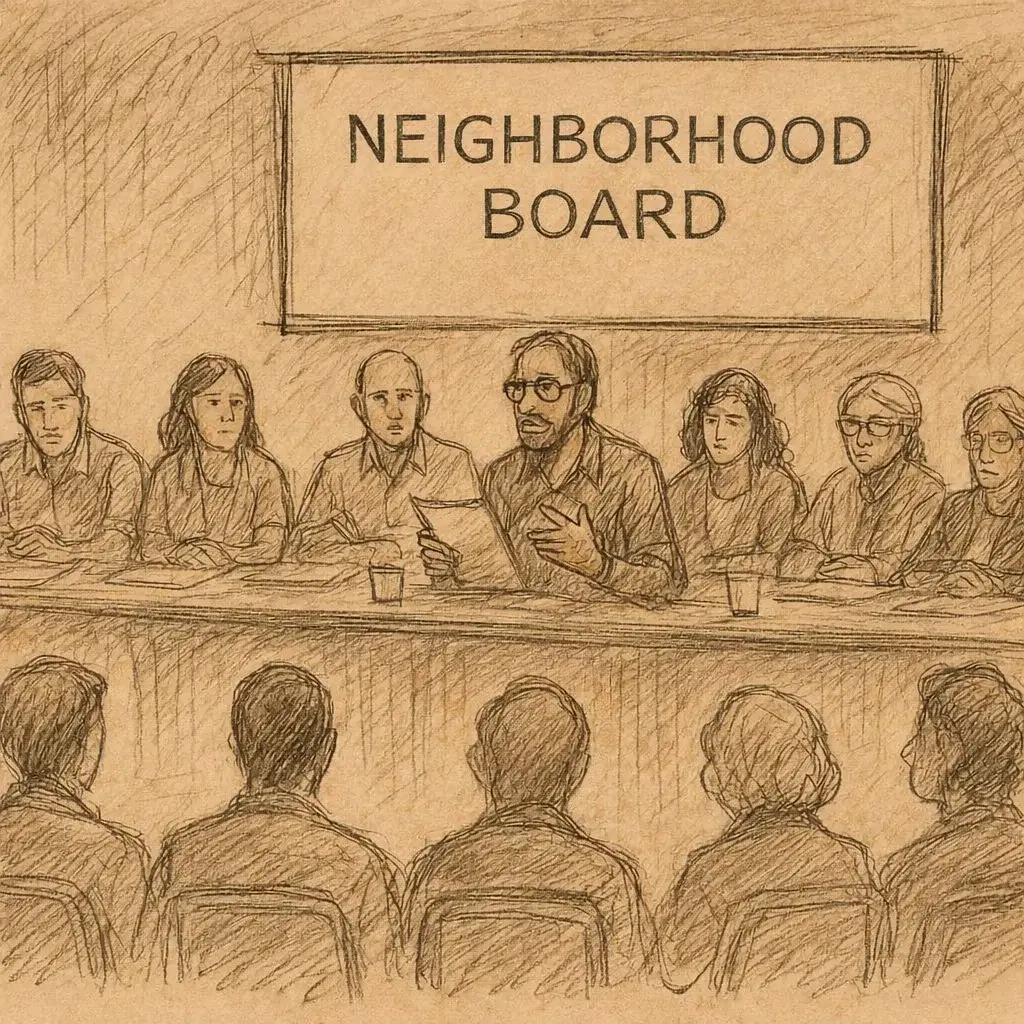
No 28 Koʻolauloa Neighborhood Board Regular Meeting November 2026
Listen to this article:
28 Koolauloa Neighborhood Board Meeting – November 13, 2026
Honolulu Fire Department Report
Keenan Gutierrez of the Hauʻula Fire Station reported one brush fire, one nuisance fire involving rubbish or another non-structure/non-vehicle source, no cooking fires, and two activated fire alarms during the reporting period. Emergency responses included 58 medical calls, one motor-vehicle collision, no pedestrian-involved collisions, no mountain or ocean rescues, and no hazardous-material incidents. The department’s holiday travel guidance urged residents to drive sober and alert, avoid cellphones and drowsy driving, arrange designated drivers or rideshares when alcohol is involved, use seat belts and appropriate child restraints, keep medications and identification accessible, and turn off holiday lights and close doors before leaving home or going to bed. Gutierrez clarified that the Kahuku brush fire occurring on the morning of the meeting was not included in these figures and would appear in the next report.
Fire Risk, Vegetation, and Mitigation in Kahuku
Residents emphasized that Kahuku remains vulnerable to repeated fires even during rainy periods, citing a recent house fire and the morning’s brush fire. They said prolonged wet weather and Kona low conditions have increased vegetation growth, which could become a larger fuel load as conditions dry. Particular concern was expressed for the area around the Kahuku senior housing community. A previously planned community fire-mitigation day has reportedly been postponed multiple times because of emergency-management demands related to Kona lows. Councilmember Matt Weyer’s office later reported that it had been notified of the morning fire and recurring fires near a houseless encampment, had met with the Kahuku Village Association and the Department of Customer Services, and was seeking a city administration letter that would allow HPD to undertake an enforcement-related action described as an “SPO.” The Department of Emergency Management was also asked to reconsider and reschedule the delayed mitigation day. The fire representative agreed to pass the community’s concerns up the department’s chain of command.
Proposed Lāʻie Hills Zipline and Emergency Access
Residents again raised concerns about a proposed large zipline operation in the Lāʻie hills, described as nine ziplines and 16 towers with projections of as many as 1,000 visitors per day. They questioned whether the lines and towers could interfere with helicopter water drops during wildfires, noting that earlier major fires in the Lāʻie hills required aerial suppression for more than a week, and asked how firefighters would rescue injured visitors in steep terrain. Gutierrez said station-level operational personnel had not received relevant planning information and recommended contacting the Honolulu Fire Department’s community-relations office. He agreed to ask department leadership whether the project had been assessed and whether emergency plans existed. Residents also alleged that construction had proceeded without permits, that bridges or other structures were being built, and that an existing Circuit Court ruling may prohibit work. The Mayor’s representative agreed to seek a Department of Planning and Permitting response for the January meeting, while the Army representative agreed to investigate prior Army concerns about tower heights, aviation safety, and firefighting operations.
Honolulu Police Department Report
Sergeant Sean Costigan reported that HPD had received at least five new officers or recruits for the district, with assignments to be determined by departmental scheduling, and said additional personnel were expected. He described the new police chief as communicative and supportive of new technology, including a drone program. HPD’s October statistics, compared with September, showed auto thefts declining from two to one, burglaries increasing from one to two, thefts increasing from three to seven, vehicle break-ins increasing from zero to one, and robberies remaining at zero. Calls for service declined slightly from 626 to 617. HPD urged residents to lock vehicles, remove valuables, watch out for one another, be cautious around pedestrians during the holidays, and avoid drinking and driving. The board also discussed HPD’s newly released 2026–2031 strategic plan; a board member had participated in the planning process, and members requested a copy for distribution. A question about whether the district’s incoming officers would receive new Tacoma or Ford F-150 vehicles was answered by noting that vehicle acquisition remained in process.
U.S. Army Updates
Selena Jankowski of U.S. Army Garrison Hawaiʻi announced the Army’s final public hiring fair of the year, scheduled for November 17 from 8:30 a.m. to 2:00 p.m. at the Aliamanu Military Reservation gym. Walk-in applicants were advised to bring two references, identification, a Social Security card, and a résumé or application. Child and Youth Services positions may include retirement benefits, access to recreational facilities, reduced child-care costs, training, and commissary and exchange privileges. The Army’s annual training exercise began November 7 and was scheduled to continue through November 16, with additional traffic, helicopter flights, staging, and troop movements expected through November 25 as personnel and equipment returned toward Schofield Barracks and other locations. The board also asked the Army to help arrange a tour for board members and community leaders of Drum Road and other possible emergency access routes. Jankowski advised the board to contact the garrison’s community-relations office and agreed to follow up on the zipline project and on a question about whether approximately 700 acres proposed for return to the state are in the motocross park area.
Mayor’s Office Updates
The Mayor’s representative summarized the November newsletter, which covered construction of new affordable housing, two newly opened EMS stations and groundbreaking for a third, recognition of five HPD officers for bravery and lifesaving actions, acknowledgment of Dr. Sasha Breland, installation of Honolulu Hale’s holiday decorations, a giant panda sculpture gifted by Chengdu, and a college-led Chinatown cleanup. In response to a resident’s question, the representative clarified that the affordable housing projects discussed in the newsletter are on School Street and in ʻEwa, not in Koʻolauloa. Residents stated that the district also needs affordable housing and continued to ask what affordable-housing commitments may be required under the Turtle Bay unilateral agreement.
Turtle Bay Community Benefits and Development Oversight
Residents requested a detailed accounting of the community-benefits package associated with the Turtle Bay unilateral agreement, including affordable housing, parks, child care, and other promised benefits. They questioned who is responsible for enforcement, what development thresholds trigger the obligations, whether construction is being allowed before required benefits are delivered, and whether a parcel reportedly acquired for affordable housing lies within a flood zone. The Mayor’s representative said DPP had previously indicated that certain community benefits are triggered by development of specified parcels and committed to obtaining a fuller response for January. Councilmember Weyer’s office noted that an active lawsuit involving Arete could affect development timelines and deferred to DPP for the legal and permitting details. Residents also asked for follow-up from the councilmember after an August 10 visit to the Lāʻie zipline site.
State Resilience Funding and Government Reports
Governor Josh Green’s liaison, Erica Yamauchi, said the administration had confirmed that statewide resilience and disaster-mitigation proposals include projects in Koʻolauloa, but identifying specific line items requires inquiries to each responsible department. She planned to provide the details by email or at a future meeting. She had also asked the Department of Education to send a facilities representative to the meeting, but no facilities official appeared. Representative Jill Tokuda’s and Representative Sean Quinlan’s offices did not provide reports. The Mayor’s and council offices thanked Kahuku High School educators and community sponsors for a recent hukilau learning experience that connected students with mālama ʻāina, aloha ʻāina, traditional food preparation, net throwing, family, and place-based education. Councilmember Weyer’s office also acknowledged receipt of notes from the Kahuku flood-mitigation meeting and said it was pursuing next steps.
Kahuku School Repairs and State Land Updates
Senator Brenton Awa’s representative reported that DOE officials had reassessed damage to Kahuku High and Intermediate School’s band and fitness rooms following a Kona low storm. Mold caused by water intrusion required air-quality testing, and both rooms received air clearance on November 4, allowing reconstruction to proceed. Another repair update is expected in December and may be presented to the board in January. DOE also determined that a new electrical-load assessment is needed rather than relying on an assessment from several years ago. Funding for an electrical upgrade was included in the prior year’s supplemental budget, and the design has recently been approved, but implementation is expected for the 2027–2028 school year. The representative also announced that the Board of Land and Natural Resources would consider proposed operating hours and access restrictions for state small-boat harbors and boating facilities. The Kahuku parking area of Mālaekahana State Recreation Area, closed beginning October 26 for parking-lot construction, is expected to remain closed through January 31.
Mālaekahana Residential Proposal
Residents asked for clearer public notice and community review of a housing proposal in the Mālaekahana area that reportedly requires a major Special Management Area permit. Linda Donoso responded that she is not a commercial developer and that she and her family purchased property approximately ten years ago within an existing eight-unit condominium property regime. She said her family owns four lots, lives on one, intends the others for family members, and is not creating vacation rentals. According to Donoso, the proposal has already gone through a local town hall, environmental review, site inspection, and DPP processing, with a final Honolulu meeting approaching. Other residents remained concerned about the ownership and intended use of the remaining lots and alleged that public reporting had created confusion. Because the matter had not been formally placed on the agenda, the board referred it to the Government Transparency and Accountability Committee for a public meeting later in November, where the permit history, ownership, agency communications, and possible board recommendation could be examined.
Kahuku High and Intermediate Electrical Crisis
Kahuku High and Intermediate School students Harumi Suniko, Odell Brink, Leah Suniko, and Tabai Ata-Chung presented concerns about the campus’s aging and unreliable electrical system. They said old wiring, possible pest damage, insufficient electrical capacity, and repeated temporary repairs have caused outages, slow or unstable connectivity, poor lighting, loss of ventilation, and disruptions to online assignments, attendance systems, school phones, security functions, and daily instruction. Students described classrooms where power or internet failures make it difficult to complete work and where frequent changes to lesson plans interfere with learning. They stressed that reliable electricity is also an emergency-communications issue because staff need working phones and connectivity to reach administrators, families, and emergency responders. Only about one-third of the campus reportedly has air conditioning, even as the school increases its use of technology and attempts to install additional cooling systems.
Classroom Heat, Safety, and Maintenance Delays
Students shared accounts from teachers who said classroom conditions had worsened despite prior electrical work. One seventh-grade science teacher reported having no breeze and being unable to use air conditioning, forcing her to redesign lessons because students could not concentrate. A portable classroom used for Advanced Placement government and special education reportedly reached 90 degrees, while another comment described special-education students spending extended periods in rooms that rarely fall below 85 degrees. A Polynesian dance teacher said students endured three weeks without electricity, adequate lighting, ventilation, or internet during hot weather. Students also reported rusting and flaking pipes in one building and noted that cellular service can disappear during outages, forcing someone to leave a classroom to seek help in an emergency. Faculty said plumbing repairs are similarly delayed and clarified that more than two restrooms remain available, although broken facilities and privacy concerns have persisted. Students also observed that repair work is often performed during class, with drilling and construction noise disrupting instruction, and recommended scheduling more work during school breaks.
Advocacy and Special Meeting for Kahuku Schools
The students asked the board to support permanent electrical upgrades, stronger preventive maintenance, better long-range facilities planning, and direct advocacy with lawmakers and DOE rather than continued short-term fixes. Participants suggested a capital-improvement-project request, use of already appropriated funds, construction-union advocacy, military engineering assistance, temporary relocation of classes, reassignment of the most academically intensive classes to functioning rooms, and eventually staged rebuilding of the aging campus. Governor Green’s liaison offered to help navigate DOE and administration channels, while board members asked for a clear accounting of prior appropriations, current project status, and reasons for delay. The board unanimously approved a motion to hold a separate public meeting focused on school infrastructure, potentially at Kahuku High School, and to invite DOE, elected officials, and other responsible agencies. The planned session would seek precise funding and project information and allow students to present specific recommendations. Members stressed that similar needs may exist at other Koʻolauloa schools, including Lāʻie Elementary, and that the meeting should consider broader regional solutions.
Kamehameha Highway Coastal Resilience Study
State Department of Transportation representative Casey Abe provided an update on the Kamehameha Highway Long-Range Coastal Resiliency Study. A project website contains the September 24 presentation, the Highway and Community Sea Level Rise Vulnerability Assessment, the Transportation Assessment Report, and a draft Planning Concepts Evaluation Report, along with a public-comment function. The second of three in-person community meetings was scheduled for December 10 at the Hauʻula Elementary School cafeteria from 6:00 to 8:00 p.m., 30 minutes earlier than the time shown on the board agenda. Participants were encouraged to review the draft concepts report and submit comments online or at the meeting. Some residents objected that the process appeared centered in Hauʻula and asked for a separate Kahuku meeting because of the area’s growth, proposed projects, transportation pressures, and distinct bicycle-path concerns.
Kahuku Shared-Use Path
DOT presented plans for an ADA-compliant shared-use path on the mauka side of Kamehameha Highway, extending from Puaʻalea Street and Kahuku Medical Center to the existing Mālaekahana bicycle path. The project is intended to provide a safer route for pedestrians and bicyclists, particularly students traveling to Kahuku Elementary and Kahuku High and Intermediate schools. Most of the path is designed to be ten feet wide, although limited right-of-way near the school will require a narrower section protected from traffic by concrete curbing and delineators. DOT is coordinating with the city Department of Transportation Services to relocate bus shelters and is acquiring easements from Hawaiian Electric and the City and County of Honolulu; delays in obtaining the city easement have affected the schedule. The existing path near a bridge will be widened to form the connection. Senator Mazie Hirono and Representative Jill Tokuda secured $6.98 million in federal fiscal year 2026 congressional earmark funding, covering most project costs. Bid advertising is anticipated in April 2027, with construction completion targeted for August 2028. The board approved a motion supporting the project and requested that DOT investigate a missing crosswalk near the bus stop and Kahuku Medical Center.
Punalʻu Beach Parking and Shoreline Protection
DOT displayed a photograph submitted by a board member showing vehicles driving or parking on the beach in Punalʻu and asked the board to recommend a response. Options included signs, additional naupaka planting, physical barriers, or a combination of measures. A Punalʻu resident supported maintaining and expanding naupaka because it helps stabilize the shoreline and requested barriers that would prevent vehicles from entering the beach while still allowing people to park along the road and walk in. DOT asked the board to discuss the options, formally identify the preferred treatment, and send its recommendation for administrative review and a future status report.
Secondary Emergency Access Road
The board resumed discussion of a secondary access route for Koʻolauloa, including Drum Road, the old Koʻolau road or rail alignment, and possible inland routes that could remain usable if coastal portions of Kamehameha Highway are damaged or inundated. Members noted that road closures can isolate communities and limit access to emergency hubs. DOT advised the board to work with state legislators and the highways administration to secure funding for a feasibility study, which could examine land ownership, route connections, community needs, climate change, and a scenario involving approximately six feet of sea-level rise by 2100. Members said the study should consult affected communities and landowners, include Kualoa and areas within the neighboring Kāneʻohe/Kahaluʻu board district, and review prior analyses. The board approved a motion supporting a feasibility study and directed the Infrastructure Committee to develop a more detailed resolution for consideration in January. The Army was separately asked to facilitate a tour of Drum Road for board members and community leaders.
University of Hawaiʻi Education Law Clinic
Education-law attorney Dora Dome announced that the William S. Richardson School of Law will launch an education law clinic in spring 2027. The clinic will train law students and help develop a larger group of Hawaiʻi attorneys knowledgeable about special education, student discipline, individualized education programs, assessments, and family educational rights. Planned work includes parent-education sessions on Oʻahu, Kauaʻi, Maui, and Hawaiʻi Island; accessible FAQs and other materials; and possible representation or consultation for families at IEP meetings and disciplinary hearings. The clinic is seeking a Koʻolauloa or Windward host site for a session between late February and mid-April, and the Hauʻula Community Center was offered as a venue with breakout rooms and possible virtual access. The clinic will also circulate a de-identified survey to identify family needs and hopes to train non-attorney advocates. Community members recommended collaboration with Hoa Pili, a nonprofit reportedly serving more than 100 Koʻolauloa families with neurodiverse children. The board unanimously supported the project and offered to consider a formal written letter in January. Because the clinic currently has funding for only one year, evidence of community need and support will assist efforts to sustain it.
Board Committee Organization
The board has created four new committees and is working to establish their initial meeting schedules, agendas, memberships, and priorities. The chair said the early meetings should emphasize relationship-building and identifying work plans, and asked committee chairs to submit dates and agendas promptly so the Neighborhood Commission Office could combine required mailings and meet public-notice deadlines. The Infrastructure and Emergency Response Committee was considering November 24, a Tuesday, because the following Wednesday falls immediately before Thanksgiving. Its work will include the secondary-access-road resolution and other infrastructure concerns. The Government Transparency and Accountability Committee was expected to meet later in November to consider the Mālaekahana housing matter. The board also clarified that not every environmental, Native Hawaiian, cultural, religious, plantation-family, or diversity issue requires its own committee; some matters may span multiple committees or be addressed directly by the full board.
Traffic Speed and Safety Concerns
A resident raised concerns about speeding, blind residential driveways, and the lack of traffic-calming measures in Kaʻaʻawa, saying vehicles regularly travel too fast and that animals have been struck and killed. The resident questioned why an existing speed hump is located near open fields rather than in the residential area where it could slow traffic more effectively and asked how the community could request additional humps. He said HPD had referred him to the neighborhood board after he asked whether action would occur only after a fatality. The board connected him with the appropriate board contact to continue pursuing a formal request, likely with involvement from the Kaʻaʻawa Community Association and transportation agencies.
Noise, Landscaping Equipment, and Air Quality
The same resident drew attention to the Quiet Clean Hawaiʻi initiative and concerns about noise and pollution from two-stroke leaf blowers, weed trimmers, and plastic trimmer line. He described seeing multiple landscaping crews operating near an elementary school while classes were in session and questioned how students could concentrate amid the noise. Although existing rules reportedly allow such work between 8:00 a.m. and 6:00 p.m., he argued that permitted operating hours do not address emissions, plastic debris, or school-day learning disruptions and encouraged the community to review the initiative’s website.
Athletic Uniform Equity
A community member questioned apparent inequities in Kahuku High School athletic uniforms, stating that the football team receives new jerseys annually while the girls’ volleyball team continues to use uniforms approximately five years old, some tattered or improperly sized. The resident asked whether this could raise Title IX concerns. A board participant advised taking the matter first to the school principal and administration and formally documenting any concern about unequal treatment, funding, or equipment between boys’ and girls’ athletic programs.
Environmental Complaints and Future Agenda Items
A participant asked which committee should handle environmental issues such as alleged ocean pollution associated with construction at Turtle Bay, as well as Native Hawaiian, plantation-family, religious, and broader diversity concerns. The chair responded that Native Hawaiian and community-character considerations should inform all committee work and that significant pollution concerns may be addressed by the full board rather than assigned automatically to one committee. The Turtle Bay water-pollution allegation was identified as a possible future full-board matter. The meeting concluded after an invitation for additional public comment.