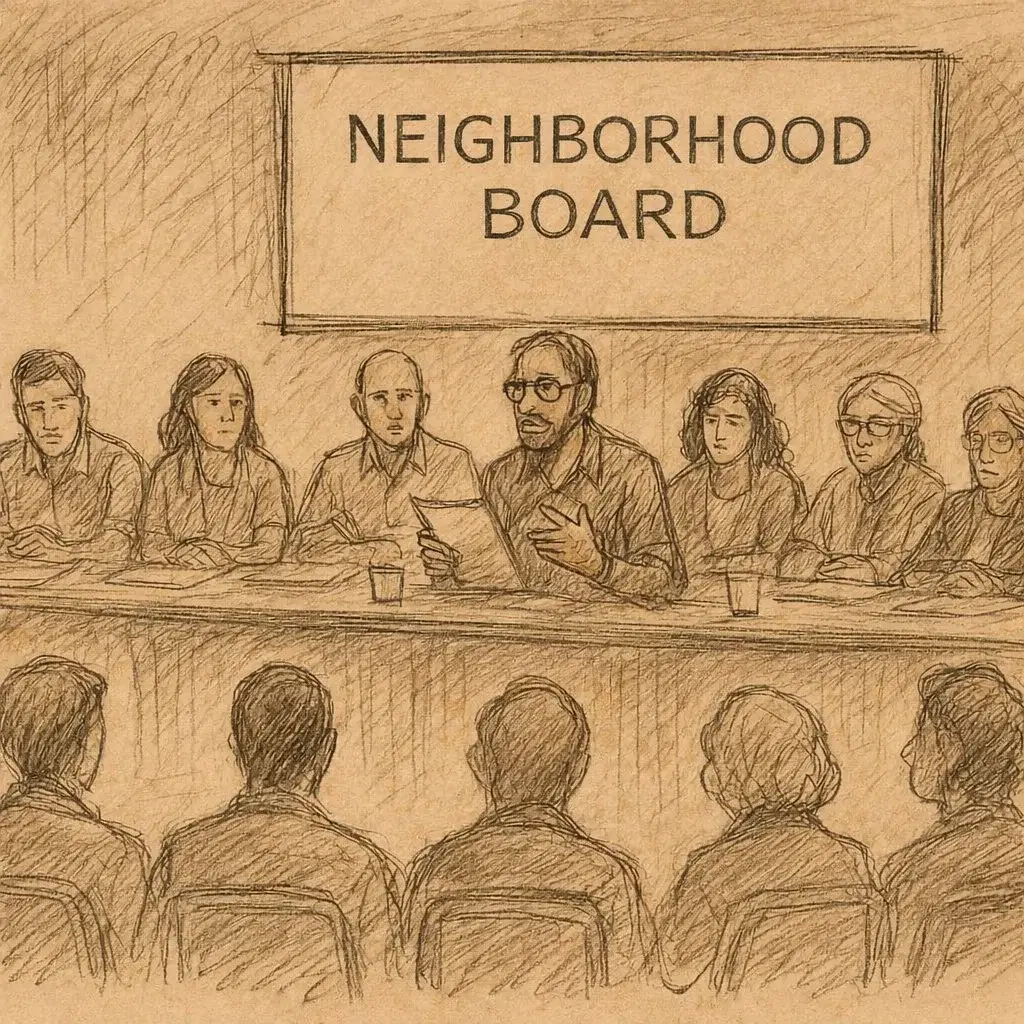
No 28 Koʻolauloa Neighborhood Board Regular Meeting October 2026
Listen to this article:
28 Koolauloa Neighborhood Board Meeting – October 10, 2026
Meeting Opening and Weather-Related Attendance
The meeting was called to order with lower in-person attendance because rain and uncertainty about whether the meeting would be rescheduled kept some residents and board members off the roads. More participants joined online, including several board members, although the chair initially was unsure whether a quorum had been reached. The board proceeded with city, state, federal, and community reports while acknowledging the weather-related travel concerns.
Honolulu Fire Department Activity and Holiday Safety
Honolulu Fire Department Station 15, represented by Chris from the Hauʻula station, reported activity for the Hauʻula, Kahuku, and Kaʻaʻawa areas during the preceding month. Firefighters responded to two wildland brush fires, three activated alarms with no fire, 42 medical emergencies, four vehicle collisions, and four mountain rescues. The month was otherwise described as relatively slow. With the holiday season approaching, HFD advised residents to use electrical decorations and appliances certified by a nationally recognized testing laboratory, follow manufacturers’ instructions, remain present and alert while cooking indoors or outdoors, keep combustible materials away from heat and flames, and exercise added caution when walking or driving between dusk and dawn.
Emergency Response When Kamehameha Highway Is Blocked
A resident asked how first responders would reach Koʻolauloa communities if flooding or another emergency blocked the region’s only highway connection. HFD acknowledged that a closure would create both access and response-time problems. The Fire Department does not have high-water vehicles, although EMS and the Honolulu Police Department reportedly do, and such vehicles were deployed during earlier flooding near Wailua. HFD can use those assets as a contingency, but officials cautioned that mobilizing and transporting them into the area takes time. This discussion reinforced concerns about the vulnerability created by dependence on a single coastal highway.
Brush Fires and Mountain Rescues
The HFD representative could not provide exact incident locations because he had not personally responded to the calls. He believed the brush fires occurred in the drier Kahuku area and were probably small, as he had not heard of any major incident. Residents were directed to HonoluluFire.gov for potentially available public incident information. The four mountain rescues were believed to have occurred in the Kaʻaʻawa station area, which includes numerous hiking trails. Board members asked whether those rescued were visitors, residents, military personnel, or students, particularly because of continuing illegal access to Crouching Lion, but no detailed demographic or enforcement information was available.
Ocean-Rescue Access Near Bikini Beach
The board raised concern about emergency ocean access at Bikini Beach across from the Polynesian Cultural Center in Lāʻie. A lot traditionally used to move rescue watercraft toward the shoreline may be affected by future development by Hawaii Reserves, Inc., potentially forcing responders to launch farther away at Hukilau. HFD said it would prefer to preserve the access but does not have authority to compel a private landowner to maintain it. The department currently has the gate code and is still being allowed to use the property, but future access remains uncertain. Members noted that reliable access is particularly relevant given rescues near Lāʻie Point and surrounding waters.
Honolulu Police Department Crime Statistics
Lieutenant Drew Okagi presented Honolulu Police Department statistics for September. The area recorded two motor-vehicle thefts, up from one the previous month; one burglary, up from zero; three thefts, down from five; no vehicle break-ins, down from two; and no robberies in either month. HPD received 626 calls for service, compared with 674 in the preceding month. An online participant attempted to ask about a young woman discussed on social media, but connection problems prevented completion of the question.
City Updates and Emergency Communications Tower
The city report summarized items from the mayor’s newsletter, including expanded crisis response through MH-3, HPD’s selection of new deputy chiefs, city assistance on Kauaʻi, recovery milestones following the Kona low, and upgrades to the Honolulu Zoo’s penguin and hippopotamus exhibits. The report also described a draft environmental assessment for a microwave communications project associated with Schofield and the former Kahuku Nike missile site. The proposal would replace a 90-foot microwave tower with a 180-foot tower at a location where its overall elevation would be approximately 11 feet lower than the existing facility, harden the historic Building 84 radio structure, add an HVAC enclosure, and install a backup generator. The taller tower is intended to improve line-of-sight connectivity with the Kaʻena Point antenna and enable emergency communications infrastructure to withstand a Category 4 hurricane. Design is estimated at $533,000 and construction at $4 million, with several agencies involved.
General Election Reminder
Residents were reminded that the general election is November 3 and that Oʻahu conducts elections primarily by mail. All active registered voters automatically receive ballots, with general-election ballots expected to begin arriving October 16. Additional information was made available through the city elections website at Honolulu.gov/elections.
Beach-Park Debris and Unhoused Occupancy
In response to complaints about debris on the Kāneʻohe side of a stream at a beach park and an unhoused individual occupying the area, the Department of Parks and Recreation reported that it had coordinated with the Department of Facility Maintenance. Some debris was removed on September 24, and the agencies planned to continue addressing the remaining material. HPD has repeatedly informed the individual of park-closure rules. According to the report, the person temporarily removes belongings when officers are present but returns afterward, so HPD intends to continue education and enforcement efforts.
Homeless Outreach and Emergency Shelter Services
The Department of Community Services identified the Institute for Human Services as the outreach provider for the broader Koʻolauloa area. Castro Mazzani was identified as the outreach director, and the main outreach number given was 808-447-2865, with an online outreach-request link placed in the meeting chat. Before severe weather, government agencies and homeless-service providers warn people living in waterways, beneath bridges, and in other hazardous locations and attempt to persuade them to use shelters with available beds. When an emergency evacuation center opens, mass-care staff, shelter personnel, partner organizations, and volunteers provide refuge and try to connect individuals with temporary shelter or longer-term services before the evacuation center closes.
Wind-Turbine Risks and Emergency Shelter Planning
The city’s Department of Emergency Management responded to questions about whether Kahuku wind turbines can withstand only a Category 1 hurricane and whether nearby shelters fall within a potential turbine-debris zone. DEM could not confirm the Category 1 premise and said turbine engineering limits, shutdown procedures, and debris modeling should be addressed by the owner, project engineer, permitting agencies, and regulators. DEM has no defined map showing where turbine debris might land and noted that hurricanes, including storms with embedded tornadoes, may carry debris for miles. Shelter decisions are made incident by incident based on hazards, forecast impacts, building conditions, access routes, staffing, facility availability, and public need. Koʻolauloa planning must consider hurricane winds, coastal and stream flooding, tsunamis, landslides, road closures, utility failures, and building conditions. Residents were urged to identify alternative safe locations, prepare supplies for 14 days, and register for HNL Alert at hnlalert.gov rather than waiting for shelter announcements.
Online Information for Major Development Projects
The Department of Planning and Permitting explained why its website does not yet list a proposed 74-unit ocean-side housing development near the Polynesian Cultural Center. DPP said posting projects online is a public service rather than a statutory requirement and that no land-use permit application has yet been filed for the development. The first formal step will be environmental review under Hawaiʻi Revised Statutes Chapter 343, with the document published through the Hawaiʻi Environmental Review Program’s Environmental Notice. DPP expects to post the project once a Special Management Area major permit application is received. The Lāʻie zipline is not currently listed because it was reviewed under an active conditional-use permit application in 2019 and has no current land-use application pending.
Lāʻie Zipline Environmental and Traffic Review
DPP also answered why an environmental impact statement or traffic study was not required for the Lāʻie zipline. In its 2019 conditional-use-permit findings for the CW Lāʻie project, DPP concluded that the proposed agribusiness activities did not trigger an environmental assessment or environmental impact statement under HRS Chapter 343. The director determined that the site was suitable based on its size, shape, location, topography, infrastructure, and natural features. The State Department of Transportation’s Highways Division did not anticipate adverse effects on Kamehameha Highway. The permit report nevertheless addressed cultural and historic resources, flora and fauna, streams, mitigation measures, and project conditions.
Insurance Solvency and Storm Claims
The board had asked what safeguards prevent insurers from becoming insolvent and abandoning policyholders after a major storm. After contacting the Department of Commerce and Consumer Affairs, the Neighborhood Commission Office reported that the issue should instead be directed to the lieutenant governor’s office, the governor’s representative, or state legislators at a future meeting. No substantive answer about insurance solvency protections was provided during this meeting.
Reporting Low-Hanging Utility Lines
Residents were advised to report low-hanging wires directly to the responsible utility: Hawaiian Electric for power lines and the relevant telecommunications provider, such as Spectrum, for internet or cable lines. If ownership is uncertain, residents may contact the Hawaiʻi Public Utilities Commission at 808-586-2020 or puc@hawaii.gov. A community member later said a telecommunications technician advised callers to use precise language such as “blocking access” and “creating an endangerment,” because those descriptions may prompt a faster response. Representative Sean Quinlan’s office was also identified as an interim point of contact willing to route reports when residents cannot determine who owns a line. Another resident proposed requiring telecommunications companies to mark their lines periodically, such as every four poles, to make ownership easier to identify.
Real-Property Tax Relief for Storm Damage
Chelsea, reporting for the City Council office, announced that property owners whose land or structures were damaged by recent storms may seek remission of city real-property taxes. Applicants should thoroughly document damage and submit the city’s natural-disaster tax-remission form with photographs, contractor reports, estimates, invoices, and insurance records. Relief is limited to real property, including land and buildings, and does not cover furniture, vehicles, crops, equipment, or other personal property. The application deadline is June 30, 2027, and claims may be filed online, by mail, or in person through the city’s Real Property Assessment Division.
Kahuku District Park Mowing and Staffing
The Council office thanked residents who reported overgrown grass at Kahuku District Park and the Department of Parks and Recreation for mowing it shortly afterward. The park is normally mowed every two weeks, but heavy rain and equipment problems have disrupted the schedule. District 4 currently has only three mowing operators responsible for city parks from Mokulēʻia Beach Park to Makapuʻu Beach Park. Five positions are authorized, but one is vacant and another employee is on long-term leave. The most recent mowing was reported as September 30, and residents were invited to alert the Council office if overgrowth recurs.
New Kahuku Ambulance Station
A groundbreaking was held for a nearly $5.3 million replacement of the existing Kahuku ambulance station. The current facility is approximately 900 square feet and will be replaced with a modern station designed to provide safer and more functional quarters for paramedics and emergency medical technicians serving the broad area from Kaʻaʻawa to Pūpūkea. Added space and operational capacity will allow EMS to pre-position ambulances when emergencies are anticipated, potentially improving response times across the district. Demolition of the existing structure, located near and behind the Kahuku police station, is scheduled to begin in November.
Land Conservation Workshop
The Council office reported on a land-conservation workshop led by Councilmember Esther Kiaʻāina and attended by Councilmember Weyer’s office, nonprofit organizations, and city, state, and federal agencies. Participating programs and organizations included the city’s Clean Water and Natural Lands Program, the state Legacy Land Conservation Program, the federal Readiness and Environmental Protection Integration program, the Department of the Interior, Trust for Public Land, Office of Hawaiian Affairs, Hawaiʻi Land Trust, and North Shore Community Land Trust. A principal conclusion was that community-based organizations need stronger capacity to obtain funding and participate in land-conservation projects. ʻŌlelo Community Media is expected to rebroadcast the workshop.
School Power, Restrooms, and Bullying Concerns
The governor’s liaison reported that all Department of Education schools in the complex area now have electrical service following Kona-low storm outages. DOE also confirmed that all school restrooms are open and operational and that every toilet stall has a door; any remaining repair requests have been referred to the facilities maintenance branch. Regarding a bullying concern potentially associated with the Red Raider Hub at Kahuku High and Intermediate School, DOE said the school was not aware of current incidents. The hub is used when no substitute teacher is available to cover a class. Students who experience or witness bullying were urged to report it to a school administrator so the school can investigate.
AES Wind-Turbine Operating Limits
The governor’s liaison relayed information from AES Hawaiʻi, which operates the Kahuku wind turbines. AES stated that the turbines are IEC-classified and designed for hurricane-force winds, lightning, and extreme gusts of up to 133 miles per hour. According to AES, turbines automatically shut down at sustained winds of approximately 50 miles per hour and remain offline until conditions are safe, with procedures in place if grid power is lost. The liaison offered either to continue serving as an intermediary or to provide residents with AES contact information for more technical questions.
Community Objections to Wind-Turbine Safety Assurances
Board member Sonny Unger disputed the adequacy of the wind-farm safety information, citing the project environmental impact statement and earlier board discussions that reportedly identified a design threshold of 94 miles per hour. She referred to blade throws and turbine failures elsewhere, including Maui and Oklahoma, and cited a 2006 Vestas safety manual advising evacuation upwind and restriction of access within at least 500 meters, or approximately 1,640 feet, during a runaway event involving older and smaller turbines. Kahuku’s turbines are approximately 568 feet tall, and two were reportedly allowed closer siting through a variance from a one-to-one setback ratio. Another member said earlier research suggested a much larger minimum separation standard, possibly one and a half miles, and described seeing turbine components roll downhill at South Point. The board proposed an on-site meeting in Kahuku with governor’s staff, Sonny, Ben, and other interested members so residents’ safety concerns and setback questions can be addressed directly.
Proposed Standalone Kahuku Public Library
The governor’s liaison followed up on advocacy for a standalone public library in Kahuku. State library officials did not identify an immediate administrative path and instead suggested working with state legislators to secure funding. A new library would require substantial capital investment and a long-term operational commitment at a time when the library system continues to face funding and workforce constraints.
Berm Investigation Near Greater Mount Zion Church
The Department of Land and Natural Resources investigated a reported failing berm or related feature near Greater Mount Zion Church. Staff from four divisions attempted to identify the exact location, found no visible damage, and spoke with homeowners immediately north of the parcel, who said they had not experienced flooding during this year’s rain events. DLNR’s Engineering Division also completed a formal assessment. Because the agency may have inspected the wrong feature, it requested a more exact location along with photographs or video, preferably verified by a board member, before conducting additional follow-up.
Secondary Access and Drum Road
The governor’s office has begun discussions with military partners about whether Drum Road or another route could provide secondary access when Kamehameha Highway is blocked. Officials emphasized that cost is a major obstacle and that the work remains at an early fact-finding stage. Residents questioned whether Drum Road is safe because of possible unexploded ordnance, depleted-uranium-related contamination, asbestos, invasive plants, and other hazards associated with past military use. DOT representative Casey Abe said the state has an emergency-use understanding involving the military and would need to coordinate environmental and public-safety protections before opening the road. The board distinguished between two needs: a permanent alternate route if the coastal highway becomes unsustainable and an emergency evacuation or responder-access route during temporary closures.
Feasibility Studies and Funding for an Alternate Route
Members asked for specific next steps rather than continued general discussion. Ideas included site visits, a formal feasibility study, legislative appropriations, cooperation with the military because it also needs access, and technical assistance from the Army Corps of Engineers, Navy Seabees, Air Force RED HORSE units, or other military construction resources. Casey Abe noted that an earlier report recommended a feasibility study and suggested that the board work with state legislators to secure funding. Members asked the Infrastructure and Emergency Response Committee to return with practical recommendations, potentially including a request for funding, selected routes for study, and site inspections. The governor’s representative was also asked to identify how much of approximately $1 billion in statewide disaster-recovery and resilience needs, including at least $319 million in proposed mitigation projects, is allocated to Koʻolauloa flood control, emergency access, and critical infrastructure.
Alternative Mauka and Kualoa Ranch Routes
Residents discussed possible alternatives to Drum Road. One suggestion was a private Kualoa Ranch route reportedly running behind Kaʻaʻawa that might be available during emergencies. Another was a new mauka road following or paralleling portions of the former Koʻolau railroad alignment. Members said long-term planning should examine helicopter landing locations as well as road options, particularly because coastal erosion threatens not only Kamehameha Highway but also adjacent electrical and water infrastructure. The board’s infrastructure committee was encouraged to research property ownership, engineering feasibility, environmental constraints, emergency agreements, and funding sources for these alternatives.
Malaekahana State Recreation Area Lease
Senator Brenton Awa’s office reported that the Board of Land and Natural Resources was scheduled to consider a long-term lease for Malaekahana Beach Campground LLC to develop and operate a commercial campground and public day-use beach park in the Kahuku section of Malaekahana State Recreation Area. The land-board meeting was scheduled for 9 a.m. the following day, with the matter listed as agenda item E-1. The senator’s office planned to monitor the process and any effects on public access and surrounding communities, and it provided links for viewing the meeting and submitting written or oral testimony.
Hawaiian Electric Damage Claims
Following constituent complaints about storm-related and recurring power outages, Senator Awa’s office contacted Hawaiian Electric. HECO advised that damage claims must be filed within 30 days of the incident. Residents do not need every final receipt or a completed cost calculation before submitting an initial claim, and each claim will be reviewed individually.
Emergency Warning Sirens
The senator’s office reported that nearly all emergency warning sirens in Koʻolauloa were operational. The exceptions were sirens at Cabela Bay and the Polynesian Cultural Center. The office said it would continue following up until those two units are repaired, particularly given recent severe weather and the area’s exposure to flooding, tsunami, and coastal hazards.
ʻUlu Tree Distribution and Food Sustainability
Senator Awa distributed more than 70 ʻulu trees to schools and community organizations across the district. The trees were air-layered from ʻulu at the Kahuku Food Tree Project, now known as the Giving Trees and listed on Google Maps. Each school or organization is expected to plant and care for its tree on its property or campus, expanding long-term access to a staple food crop and supporting districtwide food sustainability. Board members Kamalani and Dottie were thanked for participating.
Army Hiring Fairs and Training Noise
Selena Jankowski of U.S. Army Garrison Hawaiʻi announced hiring fairs on October 19 at the Tellemanal Military Reservation and November 17 at the Aliamanu Military Reservation gym, both running from 8:30 a.m. to 2 p.m. Walk-ins are welcome and should bring identification, a Social Security card, résumé, application, and two references. Child and Youth Services positions include access to recreation facilities, discounted childcare, training, and commissary and exchange privileges. The Army also announced artillery, mortar, and demolition training at Schofield Barracks on October 5–9, 16–19, 22–27, and 28–30, including daytime, nighttime, late-evening, and early-morning live fire.
Joint Pacific Multinational Readiness Center Exercise
The 25th Infantry Division will conduct its annual Joint Pacific Multinational Readiness Center exercise from November 7 through 16. Training will occur mainly on Oʻahu and Hawaiʻi Island, with some activity on Maui and Kauaʻi. Major Oʻahu locations include the Kahuku Training Area, Kapaʻa Airfield, Barber’s Point, Joint Base Pearl Harbor-Hickam, Wheeler, and Schofield. Residents should expect increased military road traffic, aircraft activity, and helicopter noise. The Army committed to maintaining representation at future neighborhood board meetings even if the assigned representative changes.
Stream and Drainage Maintenance
A resident asked DOT whether it has a routine schedule for clearing streams and drainage channels, citing a bridge near James Campbell where clearing had reportedly occurred only once in eight years and only after a Kona-low storm. Casey Abe said DOT performs preventive maintenance, including proactive work in flood-prone places such as Kahaluʻu, but staffing and resource limitations remain significant. He agreed to consult district maintenance crews about schedules and last-cleaned dates. A fuller presentation on drainage complaints, flood concerns, hanging utility lines, and a Kahuku shared-use path was deferred to the next meeting because it had not been placed on the agenda in time.
Kahuku Flood-Mitigation Planning
EA Engineering project manager Levi Collins and hydraulic engineer Luke Reif presented an early-stage Kahuku flood-mitigation project funded through a National Fish and Wildlife Foundation grant held by Nurture Cultivate, Inc. The study focuses on chronic flooding around the Sugar Mill Superette, Kahuku schools, and nearby areas along Kamehameha Highway. Engineers are using the U.S. Army Corps of Engineers’ HEC-RAS software to create a two-dimensional flood model using terrain, land use, rainfall, infiltration, and sea-level data. Preliminary modeling identifies low-lying flood areas near the superette and the grassy area in front of the sugar mill.
Nature-Based Flood-Control Concepts
Rather than relying solely on concrete channels and culverts, the Kahuku project is considering traditional ʻauwai concepts, wetlands, vegetated swales, native plantings, habitat for native birds, and other nature-based systems that can move, store, filter, and infiltrate stormwater. The conceptual plan includes possible features beyond the immediate sugar-mill area, including parts of the surrounding Kahuku community, although the primary focus remains the central flood zone. The long-term concept is to guide excess stormwater toward the ocean while using it productively and improving water quality through natural filtration.
Kahuku Flood-Mitigation Community Meeting
The project team announced a public meeting from 6 to 8 p.m. the following Thursday at the Kahuku Village Association building across from the sugar mill, with dinner provided and a Zoom option available. The session would display preliminary design results and gather feedback from Kahuku residents and the broader Koʻolauloa community. Mahealani explained that work began in 2024 and involves Nurture Cultivate, EA Engineering, facilitator Lili Makaʻāinana, cultural practitioners, farmers, wetland stewards, the Kahuku Community Association, and the James Campbell National Wildlife Refuge. The current phase is conceptual design, and additional community voices are needed before the project advances.
Turtle Bay Runoff Concern
A participant asked whether the Kahuku flood study would address videos allegedly showing construction-related pollution entering the ocean at Turtle Bay and whether ocean-water testing would be conducted. EA Engineering said Turtle Bay lies outside the present study area and that water-quality monitoring there is not part of its current assignment. The team nevertheless said the proposed vegetated swales and wetland features in Kahuku should improve downstream water quality by increasing infiltration and filtering runoff before it reaches the ocean.
Malaekahana Residential SMA Application
Planner Mark Holland presented a Special Management Area major permit application for property at 56-155 in Malaekahana, owned by the Adams and James families. The project was initially treated as an SMA minor application, but DPP’s higher cost valuation pushed it above the $500,000 threshold and triggered the public-presentation requirement. The proposal would renovate the existing main dwelling and construct a second unit for a caretaker who lives on the property year-round, while the owners use the principal residence seasonally. The planned construction area lies landward of mapped shoreline setbacks and projected 3.2-foot sea-level-rise impacts.
Coastal and Environmental Conditions for the SMA Project
The applicant described the site as Jaucas sand with existing artificial fill and said enhanced foundations would be used despite the planned building area lying outside the mapped sea-level-rise exposure zone. The shoreline transect was described as stable, with no mapped erosion rate, and the property is in FEMA Flood Zone X, where base-flood elevation requirements and mandatory flood insurance generally do not apply. Proposed permit conditions include immediately stopping work if cultural artifacts are discovered, halting activity and contacting wildlife authorities if protected animals enter the site, using dark-sky lighting to reduce bird impacts, ensuring any imported soil is clean, and signing a liability release protecting the city from climate-change-related property losses. No board objections or follow-up questions were raised.
New Board Committees and Their Authority
The chair reviewed the board’s four newly constituted committees: Infrastructure and Emergency Response, with ten members; Government Transparency and Accountability, with five; Housing, with six; and Jobs, Entrepreneurship and Economic Development, with six. Committees may investigate issues, gather testimony, meet with agencies, evaluate matters, conduct community outreach, develop proposals, and make recommendations to the full board. They may not speak officially for the board, establish board policy, commit the board to a position, or take actions reserved for the full board. Any formal action must return to the full neighborhood board for approval.
Committee Procedures and Priorities
Committees were encouraged to define their mission, identify two or three top priorities, set measurable outcomes, recruit technical and community expertise, assign concrete work between meetings, and produce tangible recommendations, resolutions, letters, or priority lists. Membership is not limited by residence, although each committee chair must be a board member. All committee meetings must be public, and meeting notes must be completed within 90 days. Committees expire at the end of each board term, although the board may create or discontinue committees as needs change. Before the next meeting, committees were asked to review membership, finalize their mission statements, choose priorities, and decide how often, when, and where they will meet. Members must disclose conflicts of interest before relevant votes.
Government Transparency Contact Directory
The Government Transparency and Accountability Committee plans to compile a practical directory of agency contacts, telephone numbers, email addresses, responsible staff, and procedural instructions. The goal is to reduce delays caused by residents and board members being transferred among agencies or receiving inconsistent answers. The committee hopes to produce an initial list within approximately two months and expand it as new issues arise.
Jobs and Economic Development Committee
The Jobs, Entrepreneurship and Economic Development Committee had no substantive report but requested a complete list and contact information for everyone who volunteered to serve. The chair agreed to help reconstruct the membership list so the committee can establish its distribution list and schedule its first working meeting.
Review of the September 24 DOT Meeting
Participants debriefed the Department of Transportation meeting held September 24 at Hauʻula Elementary School. Several residents appreciated DOT’s willingness to attend, receive written comments, and engage after years without regular local representation. At the same time, they believed the study focused too narrowly on repeated repairs or “Band-Aids” for Kamehameha Highway and did not sufficiently examine relocation or alternate routes. The planning horizon was described as extending roughly 20 years or potentially toward 2100, which residents considered too slow given recurrent flooding, erosion, utility exposure, and road closures.
Coastal Highway Vulnerability and Study Area
Residents said Kamehameha Highway’s proximity to the ocean creates a combined threat to transportation, water lines, and electrical infrastructure. They urged DOT to prioritize the most exposed locations, including Hauʻula, rather than waiting for disaster declarations before accelerating permits and repairs. Some recommended moving portions of the roadway mauka or undertaking more substantial shoreline and drainage work instead of repeatedly rebuilding the same coastal alignment. Participants also objected that the current study appeared to cover only the area from Kualoa Beach Park to Hauʻula, excluding other communities whose residents depend on the same corridor. Others noted that each ahupuaʻa has different terrain and exposure and should be analyzed individually within a districtwide plan.
Concerns About DOT’s Local Knowledge
One attendee said some consultants or agency participants did not appear sufficiently familiar with the area, citing a map that reportedly identified the old local fire station as active. Questions were raised about the study’s funding, consultant-selection process, and whether it would lead to meaningful improvements or merely reassure the public while DOT continues responding case by case. Residents also emphasized that Koʻolauloa’s infrastructure is interconnected with Kahaluʻu and Kailua and that planning should account for water systems, drainage, and travel beyond the immediate study boundary. Members nevertheless thanked Casey Abe and DOT for restoring regular engagement and acknowledged that newer agency staff need time and community assistance to understand local conditions.
Hauʻula Recovery Planning and CERT
Dottie announced that Hauʻula is working with Voluntary Organizations Active in Disaster on a long-term community-recovery plan. Repeated Kona-low storms have left residents anxious whenever heavy rain begins, and the initiative will address recovery after disasters rather than focusing only on immediate response. The model may later be shared with other communities in the moku. Hauʻula’s Community Emergency Response Team has met and trained twice and was preparing for an exercise at Diamond Head. Residents were invited to participate as volunteer “victims,” observe CERT operations, and consider completing CERT training themselves.
Kūpuna Support Program
A new state-supported Kūpuna Loa program is being developed through four nonprofit organizations to serve residents from Kahaluʻu through Koʻolauloa and possibly to the North Shore. The project is part of a statewide model focused on rural communities. Organizers expect to hire a coordinator and nursing personnel and recruit additional volunteers. Residents interested in employment, training, or service opportunities were invited to call 808-255-6944.
Iosepa Voyaging Canoe Anniversary
A celebration marking 25 years of the voyaging canoe Iosepa was announced for October 17 from 8 a.m. to 1 p.m. at Brigham Young University–Hawaiʻi’s Heber J. Grant Building in Lāʻie. Iosepa is part of the university’s Hawaiian Studies program and is housed at the Polynesian Cultural Center’s Hawaiian Village. The gathering will discuss voyaging knowledge, education, and related community canoe programs, with participants from Makaliʻi expected to attend. Families and children were invited, and breakfast and lunch were planned. Other locally used vessels mentioned included Kalaʻiāhu in Kahana and Kauhane Holokai, a training vessel associated with Iosepa.
Rope for Wishes Rodeo
The Rope for Wishes rodeo was scheduled for the upcoming Saturday and Sunday and had already sold out. The event raised more than $15,000 for the Wishes Forever Foundation in 2024 and more than $20,000 the following year, with organizers hoping to increase the contribution again. Residents experiencing traffic, noise, or other adverse effects were encouraged to contact organizers at ropeforwisheshI@gmail.com so issues can be corrected before any future event.
Oʻahu Transit Riders
Luca provided an update on Oʻahu Transit Riders, an advocacy organization intended to bridge communication between individual transit users and transportation agencies. The group distributes a newsletter, represents rider concerns at public meetings, and invites residents to submit transit questions or problems through its contact channels. Luca also agreed to check on the status of work associated with the Hauʻula bicycle path and coordinate with project contacts before a future meeting.
Food Distribution in Kahana
A community announcement noted that Kahana conducts a food distribution on the first Saturday of each month. Organizers want more residents both to receive food when needed and to participate as volunteers, strengthening the program’s reach and community involvement.
Meeting Minutes and Next Meeting
The board approved the draft meeting minutes with two corrections. One corrected Kevin’s surname to Naʻai. The other clarified that Hui Iwa Kūamoʻo had reinterred ten iwi kūpuna at Wāila Iki approximately one and a half to two months earlier and that the vice chair of the Oʻahu Island Burial Council had been invited to attend and participate. The next regular meeting was announced for Thursday, November 12, at 6:30 p.m. at the Hauʻula Community Center. Committees planning meetings before then were asked to coordinate their agendas so public notices could be distributed together.