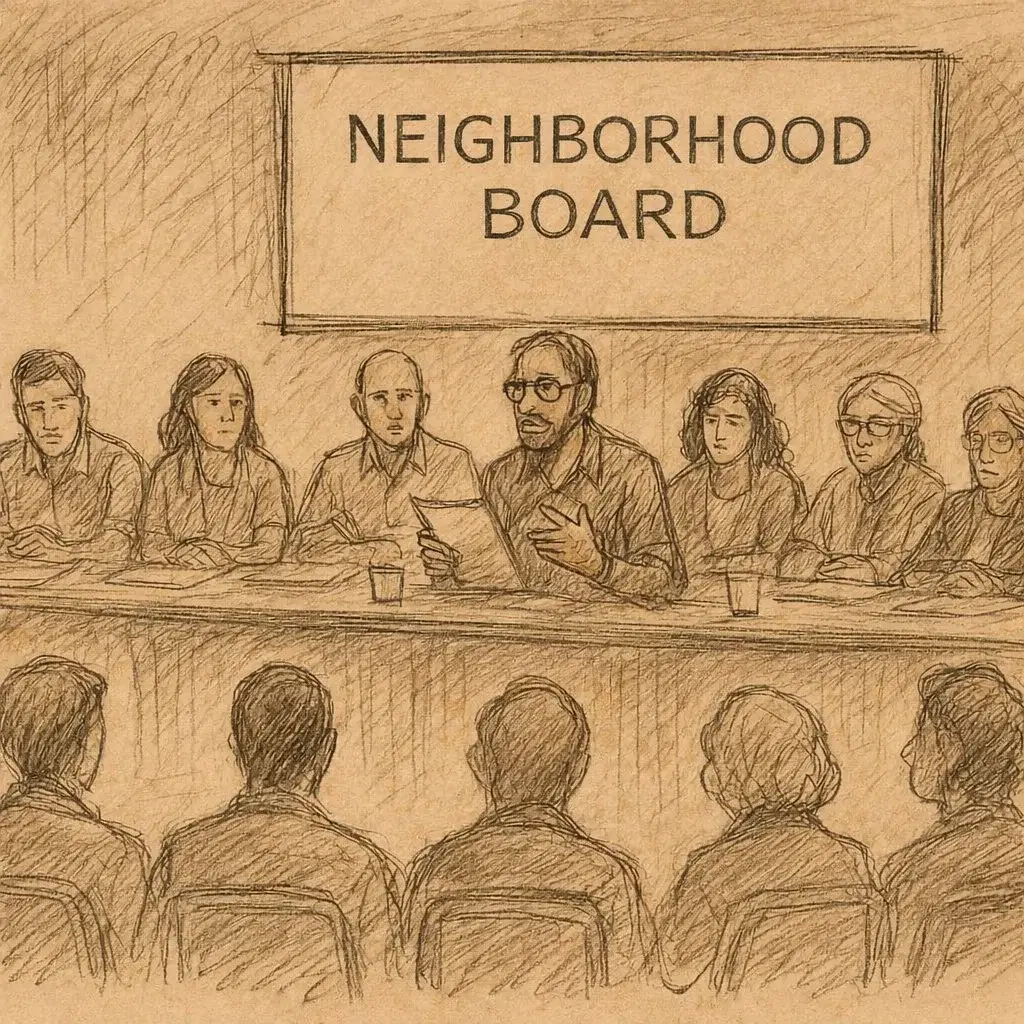
No 28 Koʻolauloa Neighborhood Board Regular Meeting September 2026
Listen to this article:
28 Koolauloa Neighborhood Board Meeting – September 11, 2026
Board Vacancies Filled
The board considered four candidates for two vacant Lāʻie seats: Jojo Chang, Cheryl Brentchley, Kamalani Kelly Ikuli, and Jerusha Wallace-Mangale. Members praised all four candidates and encouraged those not selected to remain active through board committees, including the Jobs, Entrepreneurship and Economic Development Committee. A question was raised about whether votes from Lāʻie representatives should carry greater weight because the vacancies represented Lāʻie; the chair clarified that every board member’s vote counts equally, although the board may consider recommendations from organizations such as the Lāʻie Community Association. Jerusha Wallace-Mangale received the required six votes and was sworn in under the constitutions and laws of the United States and Hawaiʻi, the City and County of Honolulu Charter and laws, and the neighborhood plan. Because no second candidate initially reached the six-vote threshold, the board conducted another round. After being sworn in, Wallace-Mangale cast the deciding vote for Kamalani Kelly Ikuli, who was then sworn in. With both appointments completed, all board vacancies were filled.
Tropical Storm Lala and City Recovery
A representative from Mayor Rick Blangiardi’s office directed residents to the September 2026 mayoral newsletter, which focused on Tropical Storm Lala’s effects on Oʻahu. The newsletter covered activation of the Emergency Operations Center and Joint Operations Center, the response by city workers, islandwide recovery operations, expanded assistance for affected residents, and preparations residents can make before the next natural disaster. The discussion reflected the continuing effects of recent Kona lows and storms on electricity, transportation, emergency shelters, communications, and other services throughout Koʻolauloa.
Kahuku Fire Hazard, Zipline Enforcement, and Hauʻula Beach Park
The mayor’s office provided follow-up on several city issues. A reported fire hazard at the Kahuku elderly housing community, described as Haʻoli Hale, was referred to the Department of Community Services, but a response was still pending and was expected for the October meeting. On the proposed agribusiness and zipline operation, the Department of Planning and Permitting reported that a conditional use permit had been approved on June 17, 2020, for ziplining, mountain biking, and walking tours in AG-1 and AG-2 agricultural districts. A minor modification approved on October 25 added a battery-operated “zip-up” system, elevated boardwalk, restrooms, an extended mountain-bike trail, relocated parking, and modified zipline tower heights. DPP reported issuing notices of violation for unpermitted grading and construction of a deck and stairs and ordering work stopped; the dates given in the report were October 18 and 19, 2026, although those dates fall after the meeting date. The applicant must satisfy conditional-use-permit requirements before building permits or ground disturbance can proceed, and DPP is reviewing the applicant’s submissions. In response to a 311 maintenance complaint at Hauʻula Beach Park, the Department of Parks and Recreation said a full-time groundskeeper is normally assigned Saturday through Wednesday from 6:30 a.m. to 3 p.m., with Thursday and Friday off, subject to staffing and equipment availability. A maintenance supervisor inspected the park on August 14 to follow up on repair requests.
Commercial Aquarium Fishing and City Facility Improvements
Councilmember Matt Weyer’s office reported that Weyer and Councilmember Esther Kiaʻāina testified before the Board of Land and Natural Resources against reopening commercial aquarium fishing, urging continuation of the statewide closure. The office also discussed a land-use measure involving an existing city facility, explaining that the action would formally bring the facility into compliance with state land-use requirements and support continued operations. Planned improvements include administrative offices, vehicle garages, maintenance facilities, and emergency-support infrastructure. Although the facility was not clearly identified in the transcript, the measure had advanced through the Zoning and Planning Committee and passed the full City Council the day before the meeting.
Psychological First Aid and Disaster Readiness
Erica from Governor Josh Green’s Office of Wellness and Resilience announced a virtual psychological first aid training for people who may respond to disasters or community trauma. Several hundred people had already registered, and community workers were encouraged to participate through owr.hawaii.gov. The training was presented as part of a broader effort to prepare residents and service providers for storms, emergencies, and traumatic community events. The governor’s representative also emphasized that she and the new state Department of Transportation liaison, Casey, are available by email between monthly meetings, not only during formal board sessions.
Illegal Vacation Rentals and Tax Enforcement
In response to a prior question about illegal vacation rentals, the governor’s representative explained that state tax matters are handled by the Department of Taxation. She provided information on permitting, planning, reporting suspected illegal rentals, and efforts to ensure that operators pay required state taxes. She also referred residents to the department’s special enforcement section, which investigates complaints and potential tax-related offenses. Illegal vacation rentals later became a central issue in the proposed Housing Committee agenda because they may remove units from the long-term residential market.
Military Lands, Drum Road, and OHA Participation
The board learned more about the state’s new Military and Community Relations Office, known as MACRO. The office provides a process through macro.hawaii.gov for communities to request conversations about military issues, including access to Drum Road and other possible emergency or alternative transportation routes. The governor was credited with working with communities on the return of nearly 50 acres on Oʻahu and Molokaʻi. Residents suggested that MACRO be invited to a regular or special board meeting focused on roads, military access, and infrastructure. Catherine Heath also asked the military to attend neighborhood board meetings and requested that the Office of Hawaiian Affairs have a speaking and voting role in discussions about military lease renewals, given OHA’s representation of Native Hawaiian interests. The governor’s liaison agreed to seek clarification regarding OHA participation.
Rural Health, Senior Housing, and Resilience Hubs
The governor’s representative clarified that a recent large charitable grant to Kahuku Medical Center was not part of the Rural Health Transformation Program. Funds from that program had not yet been distributed, although Kahuku Medical Center was included in the proposal. In response to earlier questions about senior housing and disaster preparation, she said state rental-housing financing currently prioritizes energy-efficient and green construction, including project-wide solar power, grid resilience during weather emergencies, and lower electricity costs for residents. Restrictions on propane and similar emergency energy sources require balancing disaster readiness against fire risk. The discussion emphasized continued statewide investment in resilience hubs, though no specific new Koʻolauloa hub meeting or location was announced.
ʻUlu Giveaway and Kāʻaʻawa Elementary Power
Senator Brenton Awa’s office announced a free ʻulu tree giveaway at Giving Trees in Kahaluʻu on Friday, September 18, at 10 a.m., while supplies lasted. A new Giving Tree Kahaluʻu sign was also scheduled to be unveiled. Bananas delivered to the board meeting came through the same project, which promotes household food production and greater community food sustainability. The office also reported that only about 40% of Kāʻaʻawa Elementary School’s electrical power was functioning, although internet and telephone service had been restored. The remaining work would require the Department of Education to contract for final repairs, and the senator’s office planned to continue monitoring the situation with the principal.
Crosswalk Wording, Construction Alerts, and Insurance Protection
A resident asked HDOT to revise wording at a flashing-light crosswalk from “cross when there is a gap in traffic” to the clearer instruction “cross when it is safe,” noting that a “gap” can vary greatly in size. The resident also requested an update on whether HECO and HDOT could participate in a shared communications application that would notify motorists about construction and tree trimming, allowing drivers to plan trips around delays. A broader question was raised about whether Hawaiʻi’s insurance system could withstand a statewide disaster without insurers exhausting their funds or abandoning longtime policyholders, as residents recalled occurring after a past hurricane. The chair invited government representatives to return with information on legislative and regulatory protections for disaster insurance claims.
Development, Zipline, and Wind-Turbine Concerns
A resident renewed multiple concerns about the large zipline project proposed for the Lāʻie–Mālaekahana area. Questions included why no traffic study had been required for a projected volume described as up to 1,000 tourists per day, why no environmental impact statement had addressed watershed implications, and whether public-health incidents involving an affiliated operator—described as E. coli and norovirus outbreaks that sickened more than 500 people at a Tennessee zipline—had been considered. The resident also asked about an alleged court injunction, military concerns over tower heights along the ridges, and the status of required permits. Additional unanswered development questions concerned why major Lāʻie projects, including a reported 74-unit multiplex or duplex project across from the Polynesian Cultural Center, were not visible on DPP’s website; where affordable housing promised as part of the Turtle Bay development package was being produced; and whether a purchased Kahuku parcel lies in a flood zone. The same resident questioned whether Kahuku’s large wind turbines, reportedly designed in an environmental review to withstand only a Category 1 hurricane, could endanger people directed to shelter nearby if towers or blades failed during a stronger storm.
Government Follow-Up and Accountability
Residents expressed frustration that questions asked at multiple meetings had not received answers, including requests for names and contact information for houseless outreach workers. In response, the board pointed to its newly formed Government Transparency and Accountability Committee. Chair Ben Schaefer said the committee would maintain a log of questions, use the meeting minutes to identify which agency or liaison had accepted each issue, and follow up after every meeting. If an agency response was incomplete, the committee would pursue additional clarification and report the best available answer to the board and community. The board later proposed expanding the committee’s name to Government and Community Accountability and developing a way to evaluate the board’s own performance. A resident who said she had previously faced physical threats, salary retaliation, and pressure to sign a confidentiality agreement after speaking about alleged corruption asked how the board would protect participants. Board leaders said intimidation should be addressed by the full board and that inquiries would be conducted respectfully toward all parties while still seeking accountability.
Sagging Utility and Communications Lines
Residents reported dangerously low or sagging lines along the corridor from Lāʻie through Hauʻula to Kahuku and worried that worsening weather, large vehicles, or pedestrians could come into contact with them. One resident said she had struck a low line while running, and another noted that lines crossing roads should be at least approximately 13 feet high. Board members explained that thinner upper wires generally belong to Hawaiian Electric, while heavier sagging communications cables may belong to Hawaiian Telcom or Spectrum. Residents questioned whether some cables were abandoned lines left in place when customers changed providers, adding unnecessary weight to poles. The board asked whether HDOT or another regulator has overall authority to require line owners to identify, remove, or raise unsafe cables. The governor’s liaison agreed to raise the matter with DOT, and the Infrastructure Committee was assigned to continue examining the proper reporting and enforcement process.
Emergency Shelters and Houseless Residents
A lengthy discussion focused on failures in communication when Kahuku Elementary School was used as an emergency shelter during recent storms. Houseless advocate Cynthia said she transported people from Hauʻula to the shelter but was not told in time that it would close. Although a 5 p.m. closure had been expected, some occupants were reportedly told to leave around 3 p.m. A Red Cross worker later called about a distressed and reportedly suicidal person, but by then the individual had left and could not be located. Other residents had no transportation back to Hauʻula Beach Park, and some now distrust the shelter and do not want to return during future emergencies. Participants asked for clearer operating hours, earlier notice to local advocates, improved discharge and transportation planning, and potentially longer shelter hours—suggested as 8 a.m. through 8 a.m. the next day—so people are not released while roads remain flooded or homes remain unsafe.
Red Cross Coordination and Shelter Management
The board clarified that Kahuku Elementary is currently the city-authorized local emergency shelter and that the American Red Cross, a nonprofit rather than a government agency, staffs and manages it. More trained local shelter managers are needed, and another training session is planned. Residents urged the Red Cross and its funders to provide enough staffing and resources to keep local shelters operating for the duration of community need, particularly because transportation to Honolulu may be impossible during floods and many houseless residents do not want to leave Koʻolauloa. The Infrastructure and Emergency Response Committee agreed to pursue discussions with the Red Cross. The board suggested that Cynthia and other local advocates participate in shelter-management training, including a module on working with houseless residents and understanding community-specific needs. The committee will also examine what happens to residents whose homes remain flooded or uninhabitable when a temporary shelter closes.
Special Management Area Review Process
Environmental consultant Mark presented information connected to three Special Management Area applications. He explained that SMAs are county-designated areas exposed to coastal hazards such as hurricanes, tsunamis, flooding, wind, erosion, and wave action. Presentations to the neighborhood board are required so the community and government agencies can review proposed development and submit comments. The board may take no action, recommend conditions, or oppose an application, although DPP makes the final decision based on the project record. Agency comments can address emergency access, construction hours, noise, lighting, wildlife, and other concerns. The chair stressed that SMA presentations are not merely informational and that the board can respond constructively when it identifies serious reservations.
Hauʻula Replacement Home and Wastewater System
One SMA proposal concerned an inland property at the end of Makaua Road, identified as 54-014G, containing an abandoned and severely termite-damaged dwelling considered uninhabitable. The owner proposes demolishing it and building a new single-family home on the approximately 9,007-square-foot R-5 lot. Two properties lie between the site and the shoreline, and the lot is more than 60 feet inland. Although outside the mapped coastal-erosion area and extreme evacuation zone, part of the property lies in an AE flood zone and a portion is touched by a VE zone, which triggered SMA review rather than a waiver. The project will be subject to conditions involving clean soil, dark-sky lighting, wildlife and cultural-resource protection, structural resilience, and liability acknowledgments. In response to concerns about cesspools in Hauʻula, the consultant said the project proposes a new individual wastewater system submitted to the Department of Health and that the old cesspool must be removed. A board member also asked the consultant to improve his pronunciation of local place names to avoid confusion between similarly named locations.
Five-Home Kamehameha Highway Proposal
A second detailed SMA presentation involved a proposal by Hawaiʻi SPC and builder Cole Thompson for five two-story single-family homes on a vacant R-5 property at 53-224 Kamehameha Highway. The approximately 1.1848-acre, 51,000-square-foot site consists of two lots that the applicant proposes to combine by removing the internal lot line. Plans show garages, on-site parking, a shared access drive, and a cul-de-sac serving the homes. The property reportedly once contained Nakai cabins or another lodging operation and now has an abandoned chicken coop, guinea grass, and shrubs. The site is more than 60 feet from the shoreline, but wave, flood, and storm-surge conditions remain relevant: much of it is in an AE flood zone, the VE zone reaches the highway shoulder, the 3.2-foot coastal exposure line approaches the entrance, and mapped hurricane surge could range from less than three feet to less than six feet. Conditions would address foundation elevation and structural integrity, shallow footings to reduce cultural impacts, clean fill and soil testing, coconut rhinoceros beetle precautions, dark-sky lighting along a wildlife migration route, and immediate work stoppage if cultural artifacts or protected wildlife are found. A board member identified the property as formerly belonging to his great-great-grandmother and said the access is known as Woodward Lane or Cam Lane. The consultant confirmed that new individual wastewater systems are proposed and existing cesspools would be removed under applicable law, which requires cesspool conversion or closure by 2035.
Other SMA Applications
The consultant also referenced another Demeo property at an address beginning with 51-428, although the street name and most project details were unintelligible in the transcript. He noted that an application presented the previous month involving Merton Hernandez and a Woodward-related property had been accepted for filing by DPP as SMA No. 52. The broader discussion confirmed that all three current applications use the required environmental or SMA review pathways depending on project scale and flood-zone conditions, and that plans and supporting materials are available through Whale Environmental Services. The board reminded residents that neighboring property owners are notified and that written or oral community comments become part of the material reviewed by DPP.
Infrastructure and Emergency Response Committee
The chair appointed Dottie Kelly-Paddock to lead the Infrastructure and Emergency Response Committee. Its initial scope includes cesspools, stream flooding, roads, bridges, drainage, electrical power, water, communications, healthcare continuity, emergency shelters, food security, agriculture, and emergency routes such as Drum Road. Kelly-Paddock noted that flooded cesspools can contaminate yards, houses, streets, and the ocean, while power failures can disrupt water supply, communications, hospitals, and access to care. The lack of local dialysis treatment was specifically identified because patients must travel to Kāneʻohe or Honolulu. Residents urged the committee also to include day-to-day public infrastructure such as schools, parks, recreation facilities, refuse sites, stores, post offices, police, and fire services. The chair cautioned that the agenda was very broad and may require working groups or additional committees. Current projects mentioned included the Kahuku shared-use path and continued efforts toward a district park swimming pool, while members also urged scrutiny of whether major developments, including hotels and the proposed zipline, contribute adequately to roads and public services affected by increased use.
Housing Committee Priorities
Atalina Posse was appointed to chair the Housing Committee, centered on whether people who live, work, raise families, and serve Koʻolauloa can continue to afford to remain there. The committee will examine protection of the existing housing supply from illegal short-term rentals, vacant investment properties, and other forces that remove homes from long-term use, while distinguishing large commercial operations from responsible resident home-sharing or ʻohana units used to supplement local household income. It will explore workforce and affordable housing, accessory dwelling units, multigenerational housing, community land trusts, pathways to homeownership, and the infrastructure required to support new housing, including water, wastewater, roads, drainage, schools, emergency access, and healthcare. A third priority is preventing displacement caused by rising rents and property taxes, difficulty saving for down payments, heirs-property complications, and the widening gap between local wages and housing costs. Residents asked that the committee include housing and services for houseless people, and Cynthia was recruited to contribute that perspective. Participants also advocated not only for low-income housing but for middle- and higher-income opportunities supported by better-paying local careers.
Jobs, Entrepreneurship, and Economic Development
Uila Bendiola was appointed chair of the Jobs, Entrepreneurship and Economic Development Committee, abbreviated JEED. Its purpose is to strengthen sustainable livelihoods for Koʻolauloa residents by improving access to living-wage employment, supporting existing and aspiring local entrepreneurs, and addressing broader economic conditions in coordination with the Housing Committee. Members discussed the possibility of creating a local entrepreneurship hub modeled on a Kakaʻako facility where people have workspaces, meet collaborators, exchange ideas, and receive business support outside their homes. Residents emphasized that Koʻolauloa has world-class musicians, dancers, storytellers, cultural practitioners, ocean experts, and holders of Indigenous knowledge whose skills are often undercompensated. Film, television, music production, environmental work, and marine careers were suggested as higher-wage possibilities. Education, training, grant access, and responsible management of nonprofit or public funds will be incorporated so resources reach their intended programs and beneficiaries.
Committee Membership and Sunshine Law Requirements
The board recruited both board members and community volunteers for the four committees. No committee may contain six or more neighborhood board members because six constitutes a quorum of the full board; therefore, each committee may include no more than five board members, although it may include any number of community members. Committee meetings must be publicly announced at least seven days in advance, held at an accessible location or through a properly noticed virtual or hybrid format, and conducted exactly as described in the agenda. Committee chairs must prepare agendas and submit them for public posting and mailing, and committees must produce minutes within 30 days. Items not on a published agenda generally cannot be added without the required two-thirds committee vote. The neighborhood commission office will provide the exact neighborhood-plan and Sunshine Law language. The chair encouraged each committee to lead a thematic regular meeting or hold one or more special meetings each year to develop its priorities in greater depth.
Resolutions from Other Neighborhood Boards
The board discussed how to handle the large number of resolutions circulated by other neighborhood boards. Some members argued that joining islandwide resolutions can demonstrate broad public support on issues such as Hawaiian Homes funding, taxes on vacant homes, restrictions on commercial aquarium collection, or transportation concerns. Others cautioned that routinely endorsing many resolutions could dilute Koʻolauloa’s voice and create unnecessary work. The emerging approach was to circulate relevant resolutions to committee chairs and board members, place a resolution on the agenda only when a member believes it applies to Koʻolauloa, and communicate when the board chooses not to act. Members also discussed asking City Council members to introduce parallel council resolutions on high-priority local matters, citing a council resolution supporting the Kahuku district park pool as an example of how formal action can build momentum.
Maunawila Heiau Archaeological Collection
Archaeologist Rosanna Thurman of Oceanic Archaeological Science and Educational Services provided an update on work at Maunawila Heiau, where she has worked since approximately 2011. The land is owned by the Hawaiian Islands Land Trust, and work is coordinated with the Hauʻula Community Association, Hui O Hauʻula, the Koʻolauloa Hawaiian Civic Club, and the public Maunawila Heiau Steering Committee. Archaeological monitoring during vegetation clearing, trail work, and property maintenance has documented more than 400 significant finds. Traditional Hawaiian artifacts include adzes, poi pounders, octopus-fishing lures, and ʻulu maika, while historic materials are associated with the McGregor homestead that occupied the site from the early 1900s until roughly the 1920s. The artifacts have been cataloged and individually labeled, and a new display was installed in the Hauʻula Community Association’s food-pantry waiting room. A longer presentation and blessing by Cy Bridges were planned for the following day during the kūpuna breakfast, marking the artifacts’ return to Hauʻula after several years of processing and study.
Reinterment of Ancestral Remains
During community announcements, a board member reported participation in the reinterment of ancestral remains returned through an established repatriation effort led by Halealoha and associated partners. Approximately 10 to 20 sets of remains, already placed in baskets, were reportedly reinterred in the hills at Hawaiʻi Loa Iki. The effort seeks to recover and respectfully return iwi kūpuna held by universities and other institutions on the continental United States.
Community Service, Food Distribution, and Health Fair
The Koʻolauloa Day of Service was announced for Saturday, September 12, from 9:30 a.m. to 1 p.m. at the Lāʻie Stake Center cultural hall. Indoor projects and community-service connections were to involve organizations including the Hawaiʻi Foodbank, American Red Cross, WIC, and Hawaiian Islands Land Trust. KEY Project’s regular food distribution at Kahuku KVA was announced for the third Thursday of the month from noon to 2 p.m., while another food-bank distribution was noted for the Kahana orientation center on the first Saturday of each month. Kahuku Medical Center will hold its first Pilina Ola community fair on October 8 from 3 to 7 p.m. in the rear parking lot, featuring live music by Kapena, blood-pressure checks, health education, community resources, keiki activities, giveaways, and raffle prizes.
Wastewater Planning and Cesspool Priorities
Residents were encouraged to engage with the City and County of Honolulu’s integrated wastewater planning process. Meetings had been held in Kailua, Kapolei, and Honolulu to gather public priorities, including through interactive exercises in which participants identified their most urgent wastewater concerns. Board members emphasized that cesspools and inadequate wastewater infrastructure are major problems in Koʻolauloa, especially where flooding can carry sewage into homes, roads, streams, and the ocean. The city’s engagement was viewed as an opportunity to press for investment despite the significant cost, and residents said wastewater officials should be held accountable for incorporating rural community needs into the final plan.
Kamehameha Highway Open House and CERT Training
Residents were urged to attend an HDOT community meeting at Hauʻula Elementary School on September 24 from 6 to 8 p.m. to discuss Kamehameha Highway needs. The meeting followed years of requests for direct community engagement about the highway, and numerous attendees indicated they planned to participate. Community Emergency Response Team training was also promoted for Koʻolauloa. Organizers said each community, including Lāʻie, Kahuku, Kāʻaʻawa, and neighboring areas, should maintain an active CERT team. The free training consists of approximately two and a half to three days, including local Saturday sessions on September 14 and 26, free lunch, and a practical morning exercise at Diamond Head involving rescue skills and retrieving injured people from bunkers.
Proposed Standalone Public Library
A board member renewed the idea of constructing a standalone public library in Kahuku to serve Koʻolauloa and North Shore communities. The current public library shares space with Kahuku High and Intermediate School, limiting space and available resources. A possible site across from the school was suggested because it is near student drop-off activity and could provide a safe, cooled place for young people to study and gather. Another possible location near Kahuku Medical Center is owned by the city and might require a land transfer to the state. Because land acquisition has been a major obstacle, the governor’s office was asked to explore support and funding for purchasing or transferring a suitable parcel.
Kahuku Schools’ Power, Facilities, and Staffing
Board members expanded the discussion of school electrical failures beyond Kāʻaʻawa Elementary to Kahuku High and Intermediate School. Teachers and students were reportedly still using unventilated classrooms without electricity or internet access and without adequate alternative spaces. Members requested state assistance for both campuses and asked that the matter become a priority at the next meeting. Broader concerns about Kahuku High and Intermediate included severely deteriorated facilities, only two reportedly functioning student bathrooms with inadequate privacy, bullying, teacher shortages, and occasions when students are sent to sit in the cafeteria because no teacher is available. Participants emphasized that these problems do not reflect a lack of effort by teachers or administrators, but rather shortages of funding, staffing, maintenance, and systemic support. The board itself has no discretionary budget to address the repairs directly.
Approval of Minutes and Adjournment
The board unanimously approved the minutes of its August 13 regular meeting by voice vote. The meeting was then adjourned, with attendees invited to view the newly installed Maunawila Heiau archaeological display before leaving.