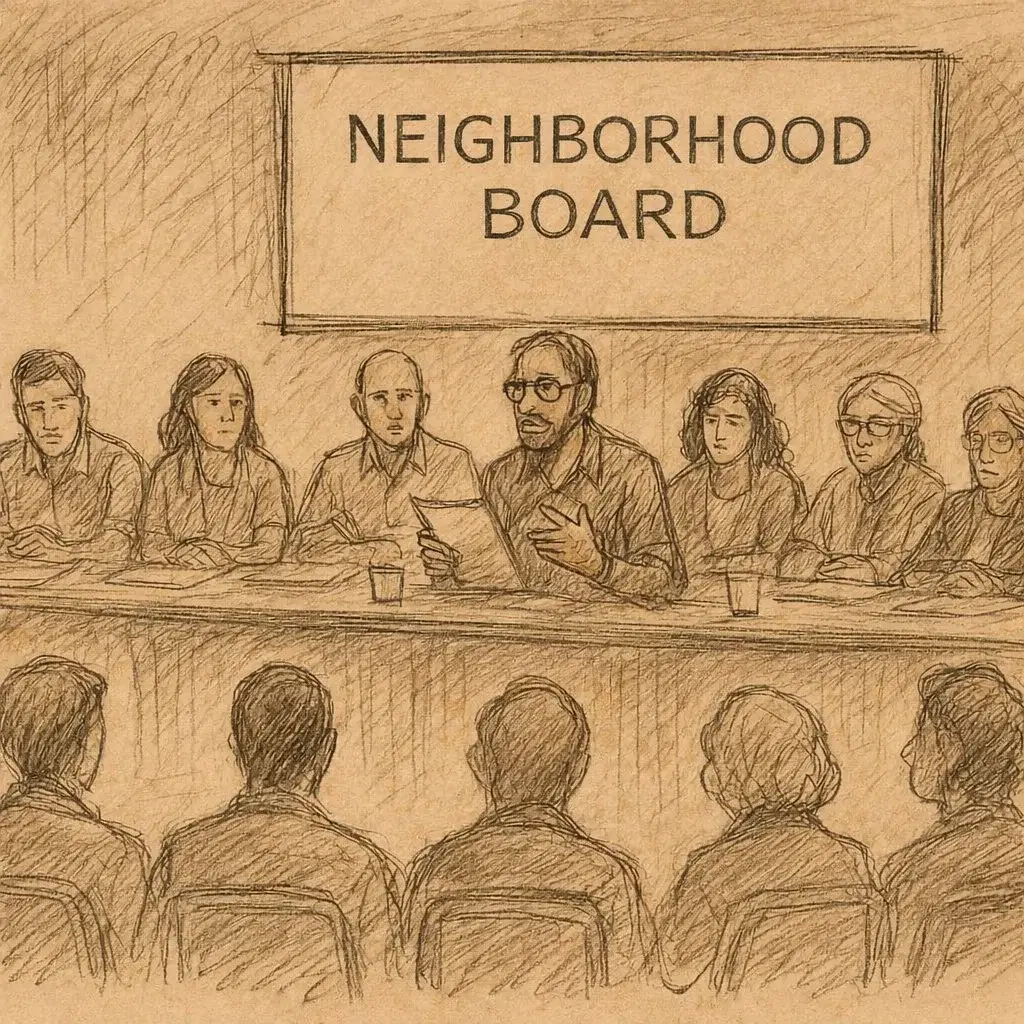
No 28 Koʻolauloa Neighborhood Board Regular Meeting July 2026
Listen to this article:
28 Koolauloa Neighborhood Board Meeting – July 10, 2026
Police Staffing and Recruitment
The meeting opened during a discussion with the Honolulu Police Department about whether police staffing in Koʻolauloa will grow alongside new housing and population increases, particularly in Lāʻie, Kahuku, and at Brigham Young University–Hawaii. The representative said decisions about expanding authorized staffing are made above the precinct level, while HPD’s immediate priority is filling existing vacancies. Although Koʻolauloa covers a large geographic area, densely populated areas such as Waikīkī and urban Honolulu generally receive priority because of their concentration of residents and visitors. HPD reportedly has approximately 500 vacancies department-wide, rather than a fixed number assigned specifically to this precinct. Applicants generally need a high school diploma or GED, a valid driver’s license, and to be at least 21 by graduation; they must also pass an extensive background review involving criminal history, driving, finances, and credit. The representative estimated starting compensation at more than $80,000 and acknowledged discussion of a possible $25,000 recruitment bonus. Board members thanked the department and encouraged qualified young residents to consider police careers.
Board Officers Reelected
The board conducted its annual July election of officers. A motion was made and seconded to retain the existing slate, with the current chair, Uila as vice chair, Allegra as secretary, and Ben as treasurer. No alternative nominations were offered, and the board approved the same officers without opposition.
School-Zone Speed Limits
A written report from the mayor’s office stated that the Honolulu Department of Transportation Services will lower posted school-zone speed limits on City and County roads from 25 mph to 20 mph when children are present. The new limit will apply from 6 a.m. to 6 p.m. on school days. The city will also install or replace missing, faded, or outdated school-zone signs within 1,000 feet of schools. Because more than 200 schools and thousands of signs are involved, implementation will occur in phases over several years, beginning near public schools. Priority locations in each council district will be selected using school enrollment, Title I status, the number of students living within walking distance, grade level, crash history, and documented speeding. For roads outside city jurisdiction, the city will request comparable changes from the responsible state or other roadway agency.
Hauʻula Pavilion Lights and Emergency Volunteers
The mayor’s report followed up on malfunctioning lights at the Hauʻula Beach Park pavilion. Hawaiian Electric work in the area had affected the pavilion’s electrical service, but the utility completed its work in May 2026 and the lights were reported to be functioning properly. The Department of Emergency Management also responded to a resident’s request for community-based civil defense volunteers. The former Civil Defense Volunteers program continues as the Emergency Management Reserve Corps, organized by police-district boundaries. Approximately 150 volunteers are currently active and may be deployed during emergencies for traffic control, weather monitoring, public alerts, and support to HPD and other responders. Amateur radio operators also participate. Additional information is available through the Department of Emergency Management’s “Get Involved” webpage.
Kahuku Affordable Housing Site and Flood Risk
The Department of Planning and Permitting requested an exact address or tax map key to determine whether land purchased by Arete for a Kahuku affordable-housing project lies in a flood or tsunami zone. Participants described the property as approximately eight lots across from Kahuku High School, between the school and an LDS church, although others initially associated the question with land near Keiki Cove or former Turtle Bay holdings. Uila offered to obtain the relevant TMKs and coordinate with the mayor’s representative so DPP can provide a definitive flood- and tsunami-hazard determination.
Turtle Bay Community Obligations
Residents continued to seek clarification about whether Arete and the Ritz-Carlton/Marriott must provide the community benefits associated with development of the Turtle Bay properties. DPP reported that the applicable zone change, special management area permits, and conditional use permits do not themselves require a separate community benefits package. The property is, however, governed by an Urban Design Plan, Master Landscape Plan, and Unilateral Agreement approved under Resolution 86-308 and Ordinance 86-99, and the landowner must satisfy those conditions before phased development can be fully built out. Residents disputed the framing of DPP’s response, arguing that the Unilateral Agreement is itself the community benefits package, runs with the land, and includes affordable housing, daycare, parks, and other obligations that should have preceded additional construction. The board agreed to invite both Arete and DPP to a future meeting so they can address the agreement, enforcement responsibilities, and development approvals together.
Illegal Short-Term Rentals and Pat’s at Punaluʻu
DPP confirmed that residents may anonymously report suspected illegal short-term rentals through its online Request for Investigation system by selecting either “Short-Term Rental Ad” or “Short-Term Rental Use.” Requester information is confidential, and anonymous complainants were encouraged to provide as much detail as possible. DPP also addressed concerns that Pat’s at Punaluʻu may be operating as an unofficial hotel because of a posted check-in sign. According to DPP, the property lost its hotel status after failing to maintain a 24-hour, seven-day front desk. The Short-Term Rental Enforcement Branch has issued multiple notices of violation and notices and orders and will continue monitoring compliance. Residents may contact the branch at 808-768-8907. Community members called for stronger enforcement and possible criminal penalties for people knowingly facilitating illegal rentals, including owners, real estate professionals, and other participants, citing the loss of long-term housing and increasing rents.
City Council Policy and Economic Revitalization Cuts
Councilmember Matt Weyer’s office reported that he co-introduced Resolution 26-160 with Councilmember Tyler Dos Santos-Tam, urging the Legislature to prohibit the commercial aquarium harvest of aquatic life from state waters. He also co-introduced Resolution 26-161 with Councilmember Esther Kiaʻāina, asking the administration to establish minimum standards for resilience hubs built or retrofitted with fiscal year 2027 capital funds. The proposed standards would guide hub design, site selection, and assignment of responsibility within city government. The office also reported that the City Council overrode the mayor’s line-item veto concerning cuts to the Office of Economic Revitalization. Councilmember Weyer opposed the cuts, which eliminate 15 positions and approximately $2 million. His office described OER as especially valuable to District 2 businesses, residents, and farmers recovering from the Kona Low storms.
Governor’s Office Follow-Ups
Erica Yamauchi of the state Office of Wellness and Resilience referenced service-provider meetings held after the Koʻolauloa special meeting in April to identify barriers in the Kona Low response. She invited the board to identify any unresolved issues. She also followed up on a proposed wind-turbine site visit involving residents and government officials, suggesting the legislative interim as a suitable time to schedule it. After discussing transportation concerns with board member Ben, including possible new speed humps or tables, she agreed to ask the state Department of Transportation to attend the next meeting, at least virtually.
Voting Access and Backup Plans
During questions concerning an earlier report about Senator Brenton Awa’s discussion with Chief Election Officer Scott Nago, board members raised concerns about long lines and the limited number of in-person voting locations. They asked why schools are no longer widely used as polling places, recalling that neighborhood voting sites promoted participation and community interaction. Members urged restoration of more local voting centers and development of backup options in case mail service is disrupted. Another member cited reports that federal immigration enforcement personnel might be present at polling sites and said election planning should preserve multiple voting methods and enough locations in heavily populated communities. The representative agreed to take the questions back for follow-up.
Senior Housing Emergency Preparedness and Fire Fuels
A Kahuku resident asked state officials to pursue legislation requiring managers of low-income and senior housing to take greater responsibility for emergency preparedness. At Kahuku Senior Haʻoli Hale, residents are restricted from keeping propane stoves, fuel, generators, solar equipment, and other items they might need during outages, while management has repeatedly characterized the property as independent living and told residents to prepare themselves. The resident said management had declined for approximately three years to participate in community emergency-planning discussions. She also asked Councilmember Weyer to hold a larger talk-story meeting in Kahuku rather than limiting gatherings to five to ten people. In addition, she requested city action to clear grass, trees, and other fire fuels from city-owned land surrounding the housing property. A planned two-day mitigation effort involving emergency-management personnel and Team Rubicon was lost during the Kona Low response, and the vegetation has continued to grow. The council office and the Office of Wellness and Resilience agreed to follow up.
Lāʻie Development and Public Review
Residents questioned why large projects in Lāʻie had not been presented to the Neighborhood Board, citing a proposed zip line and road construction in the hills, millions of dollars in BYU–Hawaii building permits, and HRI’s proposed 74-unit multiplex and duplex project. They asked whether DPP was applying the same public-review expectations in Lāʻie as elsewhere and whether the community or board should receive notice before major approvals. The questions were referred for follow-up with DPP.
Evacuation Capacity, Growth, and Climate Risk
Several speakers connected Turtle Bay expansion, illegal vacation rentals, and other development to evacuation and emergency-response limits. One resident said officials still had not explained how evacuations would account for short-term-rental occupants whose numbers, identities, locations, supplies, and familiarity with evacuation routes are unknown. Another estimated Turtle Bay’s present capacity at approximately 6,000 people and warned that expansion could increase it to 7,000 or 8,000, effectively adding the population of two towns to the moku. Residents cited century-old bridges, a coastal highway threatened by erosion, heavily congested roads, inadequate emergency infrastructure, and rising hurricane and severe-weather risks. Board members proposed using committees and resolutions to document the cumulative effects of development and press agencies for coordinated infrastructure and preparedness plans.
Emerging Film and Ocean Careers
A resident highlighted two recently signed state initiatives involving film tax credits and growth in ocean-related industries. The ocean initiative was described as supporting international partnerships and jobs in ocean technology, marine science, and food systems. The resident asked how Koʻolauloa residents could receive the training and access needed to secure these higher-paying jobs, contrasting them with tourism employment that often does not provide enough income to meet local housing costs. Officials were asked to ensure that the region’s students and working families participate in these new economic opportunities.
Punahou Cross-Country Event at Kualoa Ranch
Punahou School Athletic Director Scott Wagner corrected the date for the school’s Kualoa Ranch running event to Saturday, September 19, 2026, rather than October 4. The event will involve no more than 500 people, including workers, and spectators will not be allowed. Participants are expected to arrive between approximately 6:30 and 8 a.m.; the event area will then be secured to limit vehicle movement, with departures around noon. HPD will assist with traffic control. Kahuku was invited as promised after the prior year’s event and has accepted. The race will use a limited front section of the ranch without stopping ordinary visitor operations. Wagner said the 2025 event was the ranch’s first comparable outside event since COVID, was intentionally small, and did not appear to create major traffic impacts. He could not provide the rental cost.
Stream Gauges and Flood Monitoring
Quinn Campbell, a University of Hawaiʻi at Mānoa doctoral candidate, presented options for monitoring floods in Koʻolauloa. The closest major U.S. Geological Survey stream gauge is on Kaluanui Stream south of Hauʻula, and its readings may not represent conditions across the region’s many watersheds. Residents can use the USGS system to create water-level alerts, but this requires knowing which gauge level represents danger. A permanent USGS gauge costs approximately $30,000 and is maintained by USGS after installation. A lower-cost alternative is the locally founded Hohonu sensor system, which uses fixed equipment attached above waterways and can provide community text alerts and data. The estimated subscription is $3,000 annually per sensor, with one well-placed sensor potentially sufficient for a stream. The board discussed seeking agency, grant, organizational, or resident support for sensors on the most damaging streams.
Watershed Restoration and Flood Reduction
Campbell also described upstream and downstream methods for slowing runoff and reducing peak stream flows. Removing invasive albizia can limit large debris that blocks channels and creates backwater flooding, while controlling miconia can reduce erosion. Clearing hau and other vegetation from waterways can prevent debris accumulation. Restored loʻi kalo and other low-lying “sponge lands” may retain stormwater and reduce the volume and speed of runoff into developed areas. Board members discussed reviving a roughly ten-acre former loʻi area across from Hauʻula Elementary School, although previous efforts encountered opposition and permitting challenges involving the Department of Parks and Recreation and the Army Corps of Engineers. A member said the Army Corps had recently renewed contact about the site. The board also raised the deteriorating berm along Kaluanui Stream, previously built with approximately $1 million in state funds, and called for it to be restored. The group is exploring a NOAA grant for stream and flood infrastructure. Campbell agreed to provide his presentation and investigate permitting restrictions and suitable sensor locations.
GROW Food-Waste Composting Program
The city’s Refuse Division introduced GROW, or Green Recycling Organic Waste, which expands the curbside green-cart program to include household food scraps. A pilot began April 1, 2026, in Waipahu, Nānākuli, Hawaiʻi Kai, Mililani, Kailua, and Kalihi, with islandwide implementation scheduled for October 1. The program addresses an estimated 60,000 tons of residential food waste generated on Oʻahu each year and supports the city’s goal of diverting 95% of waste from landfills by 2030. Accepted items will include meat, seafood, leftovers, loose coffee grounds, tea leaves, cheese, yogurt, and ordinary yard waste. Milk, ice cream, other liquids, pet waste, glass, metal, plastic, paper products, filters, tea bags, and manufactured compostable packaging will not be accepted. The city is excluding compostable cups and containers because of concerns about PFAS “forever chemicals.”
Food-Waste Collection Concerns
Residents may collect scraps in a lidded reusable container, freeze them until collection day, use baking soda or coffee grounds to control odor, and layer food between yard waste to absorb liquid. Plastic or paper bags and liners must not be placed in the green cart. Green carts will continue to be collected every other week rather than weekly, prompting concerns about maggots, odor, limited freezer space, liquid leakage from trucks, and the difficulty of storing food waste for two weeks. The city said existing collection trucks will remain in use and expects yard waste to absorb liquids. Hawaiian Earth Recycling in Wahiawā will accept up to two free residential vehicle loads per day and process material through an in-vessel composting system, after which compost will be sold to residents, landscapers, and agricultural users. City transfer stations and convenience centers will initially continue accepting yard waste only, although specialized food-waste containers may be considered in a later phase.
Mālaekahana State Recreation Area Improvements
State Parks Administrator Alan Carpenter reported on the two sections of Mālaekahana. The Kalanai section will remain open for camping and day use, with future upgrades planned. The Kahuku section, historically operated by a lessee and previously known for plantation-era cabins, is undergoing approximately $7 million in improvements. Work includes two comfort stations, new roads and parking, sewer, water and electrical infrastructure, showers, and an ADA campsite. Infrastructure construction is expected to be completed by December 2026. State Parks is negotiating with a unanimously selected long-term lessee, subject to approval by the Board of Land and Natural Resources. The lessee will complete campsites and build no more than seven cabins, preserving the section’s historic capacity while meeting modern codes. Lease conditions will also require beach and dune restoration with native plants. State Parks hopes the Kahuku section can reopen by summer 2027.
Mālaekahana Access, Affordability, and Parking
Residents asked why the state will continue using a private lessee rather than directly managing the Kahuku section. Carpenter said State Parks lacks sufficient staffing, although staffing has recently improved. Thirteen initial proposals were reportedly narrowed to eight and then five qualified offers, with community members participating on the selection committee. Affordability for Hawaiʻi residents and avoiding excessive development were major selection criteria. Carpenter anticipated modest rates, recalling prior prices of roughly $10 per person for camping, about $50 for a family hale, and generally less than $100 for lodging. State Parks can distinguish between residents and nonresidents but may not be legally able to offer zip-code-specific discounts. A limited number of legal camper-van sites may eventually be included, while camper vans remain prohibited in the Kalanai section because vehicles are separated from campsites. Parking at the southern end will increase by roughly 30% to 40%, and a new approximately 50-stall lot will be added near the northern entrance, comfort station, showers, ADA campsite, and beach access. Carpenter agreed to return with detailed site plans after the project is presented to the land board, possibly in August.
Mālaekahana Group Camping and Green-Fee Revenue
Future work at the Kalanai section will include replacing a comfort station at Campsite A and designing a group-use pavilion and campsite for gatherings of up to 100 people. This is intended to better accommodate local families, schools, and community groups that currently must compete for multiple reservations online. Construction will be sequenced so both sections are not closed simultaneously. Carpenter also addressed the new state “green fee,” saying it should eventually provide substantial support to DLNR projects, including cesspool conversions and improvements at heavily visited parks. However, the first funding round has not yet added State Parks staff, and the program has only begun to distribute money.
Kaʻaʻawa Elementary Electrical Upgrades
PBR Hawaiʻi presented the Department of Education’s proposed electrical upgrades and long-term repair program at Kaʻaʻawa Elementary School. The 3.7-acre state-owned campus lies along Kamehameha Highway within the Special Management Area, the urban state land-use district, R-5 residential zoning, and FEMA Flood Zone AE, which has a 1% annual chance of flooding. Salt air and coastal exposure have corroded and deteriorated the school’s electrical distribution system. The approximately $1.5 million project will replace distribution and interior and exterior electrical equipment and place lines underground where feasible. Construction is expected to take ten months after approval of the environmental assessment, major SMA permit, demolition permit, and grading permit. Future repairs and modernization could include utilities, building systems, classrooms, and offices, with each future disturbance limited to no more than 1,500 square feet.
Kaʻaʻawa Environmental Review and Backup Power
The draft environmental assessment was published July 8, 2026, beginning a 30-day comment period ending August 7. Pre-assessment consultation occurred from September through October 2025. After the EA is approved, DPP will review the major SMA permit, conduct a public hearing, and forward a recommendation to the City Council, which must hold at least two hearings and act within 60 calendar days of receiving the findings. Board members urged the project team to meet with the Kaʻaʻawa Community Association and asked DOE to consider local contractors. The project does not include renewable energy, battery storage, or emergency generators, although the campus already has photovoltaic panels. Residents noted that the school has previously closed during power failures and asked DOE to add solar battery backup or another standby system, especially for hurricane and emergency conditions. The project team agreed to raise the request with DOE. A question about improving the mauka bus stop was deemed outside the campus project’s jurisdiction.
Board Priorities and Committee Restructuring
The board approved a proposal establishing four principal areas of focus: housing, including houselessness and affordability for local residents; infrastructure and emergency response, including wastewater, flood control, roads, power, shoreline access, shelters, and emergency services; government transparency and accountability, including effective auditing; and jobs, entrepreneurship, and economic development for local families. The proposal calls for reviewing the board’s approximately nine committees to determine which should be retained, merged, or eliminated. Planning, permitting, transportation, and parks issues could be handled across broader committees or as recurring board agenda items. Committees will be expected to develop annual plans, evaluation measures, and clearer accountability for commitments. The board also intends to hold a special meeting devoted to priorities, operations, committees, and recruitment of community members able to lead specific work.
Board Resignations and Lāʻie Vacancies
Board member Carol explained that full-time caregiving for her mother had caused repeated absences and would require her resignation. The board thanked her and acknowledged that family responsibilities had to take priority. Akela was also expected to resign because of increasing caregiving responsibilities for her husband. Both seats represent Lāʻie, and the board encouraged community members to identify strong Lāʻie candidates. Vacancies do not require a general election; after resignations are submitted in writing and the matter is placed on an agenda, candidates may present their qualifications and be appointed by board vote. Jerusha Nana Fuanani Wallace Mahoney expressed interest in serving. She described herself as a longtime Lāʻie resident, Native Hawaiian educator at BYU–Hawaii, former Kahuku High School and elementary-school employee, and member of a family with multigenerational ties to the moku. She was invited to return at the next meeting. A notice concerning absent board member John was deferred because he was not present.
Transportation Projects and DOT Consultation
A committee report stated that the Department of Transportation plans signs and future speed tables between Kahana and Kaʻaʻawa and in Kualoa. Members objected that DOT had previously been asked to consult the board and affected communities before installing traffic-calming devices. They cited the cumulative effect of speed humps on emergency trips to the only nearby trauma centers, Queen’s and Castle. The board determined that it had unanimously approved a letter on January 9, 2025, requesting consultation, after drafts dating back to June 2024. Members asked that the letter and minutes be confirmed, resent if necessary, and followed by a DOT presentation explaining its consultation policy and current plans. The board also approved a new motion to send a formal letter addressing speed-table concerns. A reported fencing project was expected to finish by the end of July, while an online bridge-project schedule listed October 4, 2026, but had apparently not been updated since 2025; DOT was asked to keep project information current.
Burial-Site and Cultural Resource Work
Ben reported on work associated with the Oʻahu Island Burial Council and related cultural-resource matters. More than 750 iwi kūpuna connected with Kawaiahaʻo Church have been reinterred, and a plan concerning more than 3,000 iwi at Mōkapu was accepted in coordination with the Marine Corps after decades of delay. Additional work is underway on burial matters in Waiʻanae, recognition of a Fukumitsu family connection to a burial in Hakipuʻu, and exposed iwi at Kualoa Beach Park, an area historically associated with Hawaiian martial-arts training. The city did not renew the prior monitoring contract at Kualoa, so efforts are underway to identify others who can monitor erosion and cultural remains. The council is also addressing burial locations near North Shore roadside parking across from areas frequented by sea turtles, where management requires agreement among families, agencies, and land users.
Military Land Community Conversations
Zoe, representing the state’s military and community relations office within DBEDT, introduced a “Community Conversations” series seeking public input on military lease and training lands. The discussions are intended to explore how military institutions and Hawaiʻi communities can work together and are generally organized for five to ten participants so everyone has time to speak, although larger groups may be accommodated with longer sessions. Participants have included residents, nonprofit organizations, government entities, and people with military connections. Information gathered is transmitted to the governor’s office, and residents were invited to organize a group or use the program’s online materials and QR code.
Honolulu Century Ride
The Hawaiʻi Bicycling League announced the 43rd Honolulu Century Ride for Sunday, September 27, 2026. The final aid station will be at Swanzy Beach Park, where riders completing 50 miles will turn around for the return trip to town. The aid station is expected to operate from 8:15 a.m. to 12:15 p.m. Roaming HPD officers and course marshals will be stationed along the route to support rider and traffic safety.
Youth Transportation Leadership
Luca Kinaberti announced the end of his term on the Hawaiʻi Youth Transportation Council as he prepares to attend the University of Vermont. He identified Kaʻau Yuan as the new representative for the North Shore and Koʻolauloa and said he would encourage the new member to attend the August board meeting. Luca and another student, Aziza, are also compiling results from a February pedestrian walk audit and working with HDOT and the Oʻahu Metropolitan Planning Organization on possible community walkway improvements. More concrete recommendations are expected in August. Luca was additionally appointed to a commission addressing public bus fares. Board members thanked him for his volunteer service and encouraged his continued public leadership.
Resilience Hub Learning Community
Eli Warren introduced the Oʻahu Resilience Hub Learning Community, a partnership involving the Center for Resilient Neighborhoods, Kapiʻolani Community College, the Hawaiʻi Community Foundation, emergency-management agencies, climate and resilience offices, and other organizations. Its mission is to help individual hubs, regional networks, and community groups exchange practices and coordinate preparedness. The structure includes a hub advisory council, leadership team, coordinators, working groups, youth leaders, general members, and a developing cultural advisory council. Activities include training, virtual office hours, monthly meetings, first-aid education, community emergency action plans, and lessons from the Kona Low response. A June summit covered core hub functions, youth leadership, emergency action planning, and preparedness programs. Eli agreed to distribute the presentation and information about future sessions and leadership opportunities.
Turtle Bay Roadside Vegetation
A resident reported that naupaka along the Turtle Bay area has grown into the roadway shoulder, obscured signs, reduced visibility on curves, and eliminated space previously available for bicyclists, runners, disabled vehicles, and emergency pull-offs. The vegetation was described as extending across an area that once provided roughly ten feet between the roadway and the property fence. Although some cutting has begun, the resident asked whether DOT is responsible for requiring Turtle Bay to clear vegetation encroaching on state land. The state liaison agreed to determine agency responsibility and seek a response from DOT.
Kahuku Medical Center and Rural Health Funding
A resident asked why Kahuku Medical Center, described as Oʻahu’s only rural hospital, was not visibly involved in planning for approximately $188 million in Rural Health Transformation Plan funding or in designing its six initiatives. The state liaison agreed to determine which agency, possibly the State Health Planning and Development Agency, is administering the funding and how Kahuku Medical Center is included. The board also noted that the medical center is in the midst of an approximately $7 million facility upgrade and has circulated community surveys asking what new services residents want.
Food Systems and Early College Programs
A resident called attention to the mayor’s Office of Climate Change, Sustainability and Resiliency’s new Oʻahu food-systems plan and said rural communities did not appear to have provided sufficient input. The meeting also highlighted expanding early-college opportunities at Kahuku High School. Windward Community College professor and Hauʻula resident Dave Crump is expected to teach a marine-science course after another lecturer became unavailable. Crump said he also wants to develop agriculture offerings for Koʻolauloa and Koʻolaupoko, potentially involving sustainable-agriculture instructor Thomas Bleazard, another Hauʻula resident who works with information technology applications in farming. Crump is also teaching a fishpond-related course at Castle High School. Participants connected these courses with future marine-science, ocean-industry, cultural-resource, and technology-based agricultural careers.
Charter Amendment Proposals
A board member reported two proposals under consideration by the Honolulu Charter Commission. One, submitted through a Koʻolau-related organization, concerns distinctions between landfills and recycling centers and how those facilities should be treated. Another, associated with Councilmember Weyer, would authorize the city to award Climate Resiliency Fund grants to nonprofit organizations. The proposals were shared for community awareness as the charter review proceeds.
Minutes and Next Meeting
The board unanimously approved the minutes of the May 14 meeting. The next regular meeting was scheduled for Thursday, August 13, 2026, at 6:30 p.m. Expected follow-ups include invitations to Arete and DPP, a requested DOT presentation, flood-monitoring information, the Mālaekahana site plan, Lāʻie board-vacancy nominations, and responses concerning emergency preparedness, rural health funding, development review, vegetation maintenance, and infrastructure consultation.