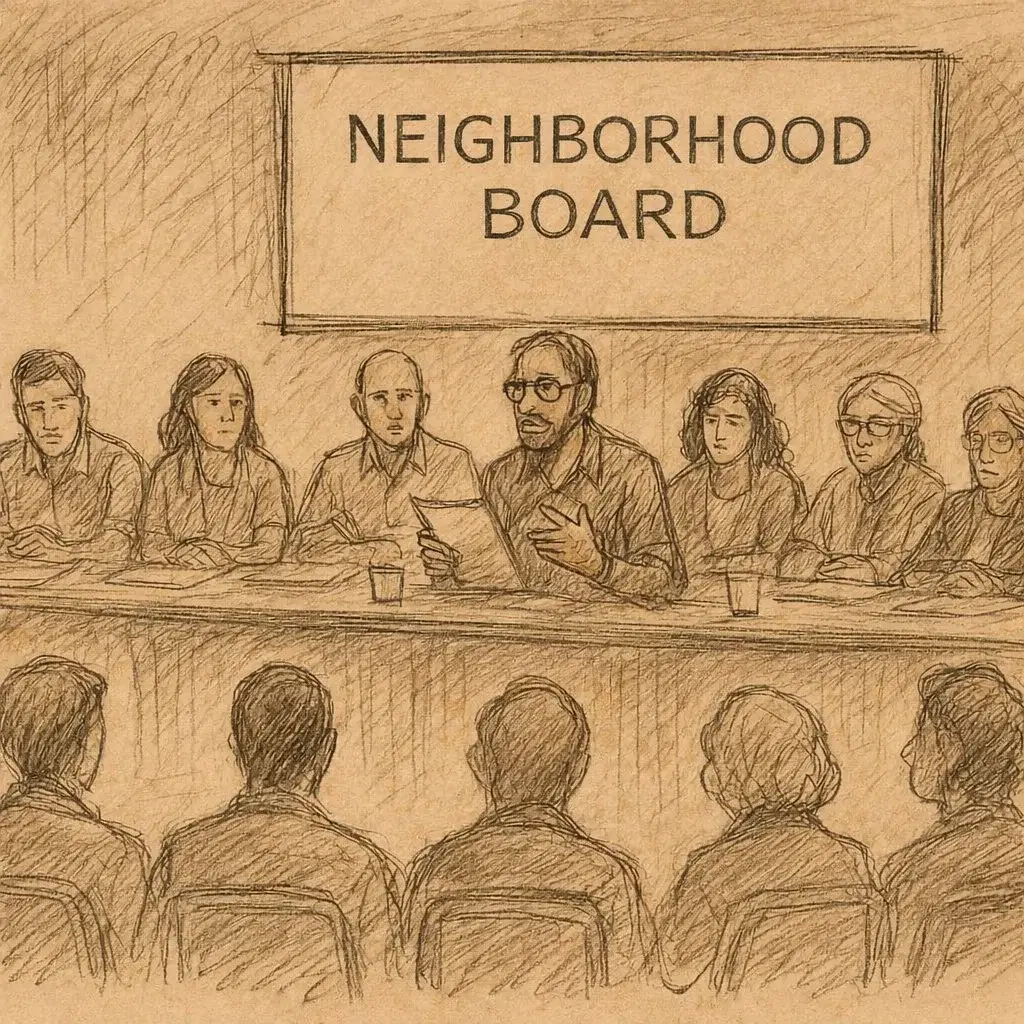
No 16 Kalihi Valley Neighborhood Board Regular Meeting September 2026
Listen to this article:
16 Kalihi Valley Neighborhood Board Meeting – September 10, 2026
Meeting Opening and Procedures
The Kalihi Valley Neighborhood Board No. 16 regular meeting was called to order at 6:30 p.m.; although the meeting title identifies September 10, the opening announcement referred to Wednesday, September 9, 2026. Participants were instructed to raise their hands before speaking, identify themselves for the record, address remarks through the chair, mute microphones when not speaking, and generally limit comments and reports to two to five minutes. Written testimony may be emailed using contact information on the Neighborhood Commission Office website. The chair noted that the board could act on properly noticed agenda items under Hawaiʻi Revised Statutes Chapter 92, but could not vote on unlisted matters unless they were lawfully added. Meeting handouts and reference materials are archived on the board’s Google Drive, while recordings are available through YouTube.
Honolulu Fire Department Incidents and Battery Safety
Honolulu Fire Department representative Kaulana Simeona reported August activity consisting of one structure fire, one nuisance fire, one activated alarm with no fire, and 51 medical emergencies. Because HFD is responding to more lithium-ion battery fires involving smartphones, laptops, e-bikes, e-scooters, toys, power tools, vehicles, and similar devices, residents were advised to use manufacturer-supplied or approved chargers, charge devices on hard and flat surfaces rather than beds, pillows, or carpeting, and unplug them once fully charged. Large devices such as e-bikes, scooters, and tools should be charged outside when possible and never positioned where they block an exit. Devices should immediately be taken out of use if they become unusually hot, swell, leak, smell strange, smoke, hiss, or make popping sounds. Airline passengers were advised to keep charging devices visible, refrain from charging e-cigarettes or vapes aboard aircraft, and notify flight attendants of any problem. HFD’s Fire Prevention Week Family Day was announced for October 3, 2026, from 10 a.m. to 2 p.m. at the Honolulu Zoo under the theme “Charge into Safety: Safe Charging Is a Superpower.”
Vegetation and Wildfire Hazards
Board members raised concerns that overgrown yards and unmanaged public or utility property could become wildfire hazards during dry and windy periods, despite recent humidity and rain. The discussion referenced the possibility of conditions similar to those that contributed to the Lahaina fire and noted that many Kalihi Valley residents already maintain vegetation behind their own homes to reduce risk. Simeona said residents may contact HFD and request a fire inspector, who can inspect the property and speak with the owner when the situation falls within the department’s authority. He agreed to seek clarification on how inspections and enforcement apply when the owner is the city, another public agency, or a utility. Board members thanked HFD for its work during hurricanes and recent storms.
Honolulu Police Department Crime Report
Sergeant Jason Allen of the Kalihi Night Watch reported 548 incidents during August 2026, up from 529 in July. The listed offenses included two auto thefts, one simple assault, seven thefts, and one unauthorized entry into a motor vehicle. HPD recorded no aggravated assaults, burglaries, robberies, sexual assaults, or rapes for the month. Lieutenant Yamashita also announced a Coffee with a Cop event for Wednesday, October 7, from 9 to 11 a.m. at the McDonald’s in Waikamilo Shopping Center, 1414 Dillingham Boulevard. The event will allow residents to speak informally with officers and build relationships with District 5 personnel.
Illegal Parking Near Kalihi Uka School
Residents and board members asked HPD to conduct checks on Lehua Street across from Kalihi Uka School, where vehicles reportedly park in no-parking areas, turnaround zones, on the bridge, and near the crosswalk and traffic signal. One report described a resident being unable to enter her driveway around 5 p.m. on a weekend because of parked cars, while another participant said the violations are common at night and likely could be observed immediately. A white SUV with a San Francisco 49ers sticker was identified as a frequent offender near the corner and crosswalk, although no license plate was provided. HPD agreed to conduct checks in the area.
Juvenile Crime and After-School Supervision
A board member cited FBI National Incident-Based Reporting System information suggesting that one in five violent crimes committed by juveniles occurs between the end of the school day and the time parents return home. HPD representatives agreed that inadequate supervision can contribute to juvenile misconduct, but said they did not necessarily believe there was a shortage of programs. They suggested that parental initiative and enrolling children in available activities are also factors. The board member responded that more programs aligned with the interests of parents and young people could increase participation. This discussion later connected with broader concerns about the prolonged loss of usable recreational facilities at Kalihi Valley District Park.
State Surveillance Cameras
HPD was asked about surveillance cameras facing the KPT and CAM4 housing areas. Lieutenant Yamashita confirmed that the matter had been brought to the department’s attention and that, based on information provided by a sergeant after consultation with the Department of Law Enforcement, the cameras were functioning. He avoided operational details so as not to undermine their purpose and clarified that the cameras are associated with the state rather than the city.
Board of Water Supply Outreach Event
Board of Water Supply representative Iris Oda repeated an invitation to the “Imagine a Day Without Water” event on Saturday, September 26, from 9 a.m. to 1 p.m. at the Ark of Safety in Waiʻanae Mall, 86-120 Farrington Highway. The event will feature interactive and educational exhibits, games, hands-on activities, giveaways, a rain-barrel workshop, and food and refreshments for purchase. It will explain the agency’s “One Water” concept, which recognizes that all forms of water are interconnected and should be managed as one resource.
Board of Water Supply Vegetation Maintenance
Oda followed up on concerns about Board of Water Supply land above 1920 Kilohi Street and behind Kalihi Valley homes. The agency was considering goat grazing to control vegetation, although internal discussions had been delayed by recent storms. Board members and nearby residents questioned whether goats or a procurement process were necessary, arguing that the affected area is small, accessible, and close to locations already serviced by BWS maintenance crews. They said residents have been cutting grass behind their homes because vegetation can grow within about five feet of structures and become a fire hazard. A former board chair recalled that BWS routinely maintained such property about a decade ago without needing repeated community requests and asked the agency to establish a regular rotational maintenance schedule.
Nearby resident Kevin Shimabukuro explained that the land contains not only grass but also kiawe and pine trees, which goats may not adequately address. He also raised concerns that goat waste could worsen leptospirosis and flow through a man-made drainage route into connected streams and waterways. He said BWS already cuts grass monthly behind the Avalon care facility and in another nearby section, while his family and neighboring owners maintain the intervening portions themselves or hire landscapers. Residents offered to accompany BWS staff on a site visit and identify the precise area of concern. Oda agreed to inspect the location, relay the information to agency officials, and follow up with residents and the board.
Drainage and Flooding at a Care Facility
A community member reported that stormwater from BWS land flows through an eroded gully into a nearby home-care property, identified during the discussion as Avalon, where kūpuna and other patients may need to be moved during heavy rain. Although BWS previously constructed a concrete drainage channel or half-pipe along the length of the facility, participants said runoff still enters the property during intense rain and created serious problems during recent Kona low conditions. Shimabukuro confirmed the existence of the concrete ditch and BWS’s regular maintenance behind Avalon. Oda asked for the exact location and contact details and said communications and field personnel could conduct a site visit.
Water-System Capacity in Upper Kalihi Valley
A resident asked whether an aging pump near Kalihi Street and Nani Aleja prevents homes farther into the valley from adding extensions, bathrooms, or kitchens. The concern was described as potentially affecting all properties beyond a booster or pump station rather than a single parcel. Oda could not confirm the claim during the meeting and agreed to ask BWS technical staff whether the station’s age or capacity imposes development restrictions in that part of Kalihi Valley.
Mayor’s Office Storm and Departmental Updates
Mayor Rick Blangiardi’s representative, Bandmaster Clark Bright, referred residents to the mayor’s newsletter for information on the city’s response to Storm Lala and expressed hope that the community remained safe through the more recent storms. Several previously reported matters remained pending with the Department of Facility Maintenance, including a tree issue, stream cleaning, vegetation cutting, and a broken streetlight at the intersection of Kwiikele Place and Kwiikele Street. Bright said the administration was still awaiting departmental responses.
Manaiki Place Construction Investigation
The Department of Planning and Permitting investigated a suspected “monster home” at 1802 Manaiki Place and found excavation and foundation preparation underway. DPP determined that the project was proceeding according to approved plans under a building permit issued December 29, 2025, for a new three-story, single-family dwelling. Based on the inspection and permit specifications, DPP did not classify it as an unlawful monster home. Bright explained that a large dwelling is lawful if it complies with the Land Use Ordinance and its approved permit; residents who suspect work beyond an authorized scope should provide DPP with a specific address so inspectors can investigate.
Later, Council Member Tyler Dos Santos-Tam’s office reported that a separate inquiry about an excavator and work allegedly continuing for more than two years at the same address had been referred to both DPP and the Department of Design and Construction. Constituent Services Director Lynn Robinson promised to provide the answer as soon as it became available rather than waiting for the next board meeting. The minutes were later corrected to ensure the street name read “Manaiki.”
Large Homes and Neighborhood Parking
Residents stressed that permit compliance does not resolve the parking pressure created when large homes contain many rooms or occupants. Kalihi Valley’s narrow streets can become congested when a single property generates ten or more vehicles, even if on-site construction is technically lawful. A resident asked the city to develop a way to regulate or mitigate the downstream parking effects of high-occupancy housing. Bright said he did not know whether the city had a direct solution but would ask DPP whether any policy or planning response was under consideration.
Kalihi Valley District Park Pool, Showers, and Gym
Bright reported information from the Department of Parks and Recreation stating that shower repairs had been investigated July 30 and completed July 31, and that the pool was reportedly open as of September 8. Board members disputed the shower report, noting that access remained boarded off. They emphasized that Kalihi Valley has one of the few Olympic-sized public pools in the area, but it has operated at less than half of its potential for approximately three years because users lack full access to showers and related facilities.
Board members identified $107,550 in the fiscal year 2027 capital improvement budget for renovation of Kalihi Valley District Park recreational facilities, separate from approximately $4.8 million associated with gym remediation, and asked whether the smaller allocation could be used for showers, ventilation fans, or other immediate work. They requested a clear schedule rather than repeated statements that repairs were complete. Bright agreed to reconfirm the status with Parks and Recreation.
Robinson later provided a more detailed project update. The gym roof replacement remains in design, with drawings approximately 90 percent complete. The city expects to advertise for bids later in 2026, with construction following contract award. The current scope includes replacing the roof, removing the existing ridge vent and underside insulation, replacing roof and underside metal grating, replacing decorative wood slats above the locker rooms, replacing metal fascia along the roof, and replacing cracked panels in the boxing room. A work order for termite-damaged gym flooring was submitted November 24, 2025, and Maintenance Support Services is finalizing a master agreement, with floor work expected during fiscal year 2027.
Robinson said the pool’s replacement parts had been installed and the pool was operating, including extended weekend hours when weather permits. She explained that the newly repaired exterior showers may remain inaccessible because deteriorated decorative wood above them could fall on users. Board members argued that the wooden façade is decorative, could be removed or replaced independently within a short period, and should not keep new showers unusable until the entire roof project is completed. They asked the city either to remove the hazard immediately or secure it so the showers can open. Robinson agreed to pass along that request and seek an accurate schedule.
Gym Ventilation and Industrial Fans
Board members reminded Robinson that a prior park walk-through included a request for four large industrial fans inside the gym. Participants described the meeting room as extremely humid and said even basic ventilation was lacking at a district facility. Robinson said the fans were not included in her initial follow-up list and agreed to resubmit the request. Members suggested that the $107,550 recreational-facilities appropriation could potentially support fans or other interim improvements, although Robinson said she had not been told funding was the principal obstacle; bidding and project execution appeared to be the larger delays.
Feral Chicken Control
A board member asked whether the mayor had contracted with only one company, possibly based at Sand Island, to control thousands of feral chickens across Oʻahu. He questioned whether additional companies could be allowed to participate so removal could occur more quickly and broadly. Bright knew of one contractor but did not know the total number of firms or the procurement arrangement and agreed to ask how many companies had been retained.
Overgrown Private Trees and Blocked Sidewalks
A board member reported that trees and vegetation from private property along Camp Hall Road and parts of Kalihi Street extend into pedestrian space, forcing walkers to duck or step into the roadway. Bright explained that city or state agencies can be notified when vegetation originates on public land, while private owners are generally responsible for maintaining plants on their property. He was uncertain whether the city formally orders private owners to trim such hazards and requested specific addresses so the locations could be investigated.
Congressman Ed Case’s Federal Update
Kekoa Kaluhiva of Congressman Ed Case’s office said the congressional delegation was coordinating with Governor Josh Green, the Hawaiʻi National Guard, Mayor Blangiardi, and the Department of Emergency Management following Hurricane Lowell. Although Kauaʻi sustained most of the damage, officials also assessed Honolulu shorelines with state harbor agencies. Congressman Case, a member of the House Appropriations Committee, had participated in committee approval of all 12 federal spending bills for the fiscal year beginning October 1; the measures still awaited action by the full Congress. Case was also pursuing bipartisan gerrymandering reform through the Problem Solvers Caucus and supporting the Pacific Islands Liaison Initiative Act to address transnational crime in the Indo-Pacific.
The office was accepting applications for nominations to U.S. military service academies through October 9 and entries for the Congressional App Challenge for Hawaiʻi students. Constituents needing assistance with veterans’ benefits, Social Security, passports, or other federal agencies were directed to case.house.gov or 808-650-6688.
TSA Identification Casework
A board member said an identification problem with TSA in Kona remained unresolved since July. The member had repeatedly called, submitted an online complaint, and encountered a phone line that went directly to voicemail or disconnected before allowing a message. The issue was complicated by the member still holding a Nevada driver’s license after moving back to Hawaiʻi. Kaluhiva offered a congressional privacy-release form so Congressman Case’s staff could contact TSA directly and pursue the case.
Federal Funding for Housing and Resilience
Board members asked how federal funding could support low-income housing, youth services, community nonprofits, and resilience planning in Kalihi. Organizations mentioned included Parents and Children Together, KKV, and Kōkua Kalihi Valley or related community providers. Kaluhiva explained that congressional earmarks are now generally called Community Project Funding requests and noted that Kōkua Kalihi Valley had previously received support for facility improvements. For resilience hubs, he advised continued coordination with the city’s Office of Climate Change, Sustainability and Resiliency, including Dr. Kealoha Fox and Michael Kern, and with Hawaiʻi Emergency Management Agency representatives. Local and state agencies generally identify hub locations and needs first, after which federal support may fund infrastructure and implementation.
A resident also requested faster investment in Kalihi Valley public housing, describing vacant or underdeveloped spaces, deteriorated conditions, and the prolonged absence of recreation facilities. Kaluhiva said affordable- and low-income-housing funding requests generally reach Congress through state and city agencies, but the office would continue working with those agencies to identify federal support. Another member asked Congressman Case to draw upon Hawaiʻi’s Micronesian, Polynesian, Melanesian, and Asian communities when shaping Indo-Pacific policy and responding to China’s expanding regional influence. Kaluhiva said the request was noted.
Governor’s Hurricane Lowell Response
Governor Josh Green’s representative, Jill Radke, reported that the governor spent the day on Kauaʻi with Mayor Derek Kawakami, Major General Stephen Logan, legislators, and Department of Business, Economic Development and Tourism Director James Tokioka assessing Hurricane Lowell damage. The governor submitted an expedited request for a presidential major-disaster declaration, which, if approved, could help restore essential services, repair public infrastructure, assist families and businesses, and accelerate rebuilding. More than 90 percent of Kauaʻi had initially lost power, and about 20,000 homes and buildings—nearly half of the island’s total—remained without electricity at the time of her report. State agencies were sending generators, equipment, and potential shelter resources, clearing roads, repairing damage, and working to restore harbor shipments. A damaged harbor at Lēʻahi was also mentioned. Most airports had returned to regular operations, Līhuʻe Airport resumed flights the previous day, and hospitals were back on the electrical grid. Radke also agreed to relay concerns about increasing affordable-housing support to the governor. Board members thanked the governor for maintaining a visible and calming public presence throughout recent emergencies.
Kalihi Connection Coalition
Laura Pokipala of Parents and Children Together presented the Kalihi Connection Coalition, a monthly network of service providers, Department of Education schools, agencies, nonprofit organizations, and elected officials. The coalition shares information about programs, helps providers refer families to one another, and builds collaboration because no single organization can supply all needed services. Meetings alternate between in-person and Zoom formats, generally include a presentation from one partner, and are followed by written notes summarizing participating organizations’ activities. The coalition hopes to expand business participation, contribute to resilience-hub planning, and ensure that Kalihi residents know how to access existing resources.
“We Are Kalihi: Youth Matter” Event
The coalition’s fourth annual We Are Kalihi event, themed “Youth Matter,” was scheduled for Saturday from 10 a.m. to 1 p.m. at King David Kalākaua Middle School. Organizers distributed more than 200 surveys to young people, including students in Waipahu and at Dole and Kalākaua middle schools, and received approximately 150 responses. The children said they primarily wanted games, family and teacher challenges, and opportunities to play together. About 40 vendors were expected. HPD planned to provide shave ice and popcorn, the Hawaiʻi Literacy Bookmobile would conduct family readings, artist Ricky Kamai would participate during the final hour, and a kendama exhibition and challenge would be held. Hawaiian Dredging Construction Company donated free hot dogs and chips for attendees.
Participants praised the event but urged the coalition to involve more schools and youth from upper Kalihi Valley, where families may feel isolated from activities concentrated near KPT and CAM4. Kalihi Uka School, Our Lady of the Mount, KKV, and other valley institutions were suggested as future partners or venues. A board member noted that free meals are a strong incentive for attendance and can help children from KPT and CAM4 who may not consistently receive dinner or lunch. The coalition welcomed board members and community organizations to join its monthly work.
Community Advocacy Through the Coalition
Board members asked the coalition to help advocate for restoration of Kalihi Valley District Park and the KPT gym. They described the district park’s roof, façade, showers, boxing room, and other amenities as unusable or deteriorated despite the site being a central recreational hub for Kalihi. The KPT gym was said to have remained empty for about 15 years. Participants urged the coalition and board to identify a shared community project and use their combined relationships with agencies and nonprofits to advance it. Pokipala agreed that advocacy is necessary to secure services and said the coalition could help elevate both facilities.
Pokipala also shared that the previous year’s We Are Kalihi event at Dole Middle School generated 40 completed community surveys about safety, service priorities, desired activities, and ways providers could improve access. The coalition intended to conduct another survey at the 2026 event and use the resulting information to support advocacy. The board asked that future flyers be sent early enough for inclusion in neighborhood newsletters.
Council Office Enforcement and Road Updates
Robinson reported that HPD had checked the intersection of Kalihi Street and Makuhine after complaints about speeding and red-light running but did not observe violations during those checks. Officers did not dispute residents’ reports and planned to continue monitoring. Members also requested updates on repainting faded street lines along Kalihi Street and nearby side streets, particularly because markings become difficult to see during heavy rain. Robinson said requests had already been submitted and that some side streets may have been restriped. She would compare the original list with completed work.
Board members suggested that the larger problem may require repaving rather than simple striping because the roadway from Makuaakane toward Kamehameha Shopping Center was described as uneven, potholed, and washboard-like. They reasoned that striping deteriorated pavement shortly before a future resurfacing project would be inefficient. Robinson recalled that a broader repaving project may be the reason restriping had been delayed and agreed to submit a new inquiry covering repaving and striping together.
Security Camera Trailers and Police Staffing
The council office was asked to seek mobile security-camera trailers for Kalihi Valley. A board member cited reports that HPD was short approximately 450 officers and had returned substantial unspent funds, and argued that 360-degree mobile cameras could monitor high-crime areas, record vehicles entering and leaving, and allow officers to focus on calls for service. Robinson initially understood an earlier request to concern Kalihi Uka Park specifically, but agreed to submit a broader request for two or three trailers at strategic Kalihi locations. The proposal was tied to statements from the police chief about using surveillance technology and drones elsewhere in Honolulu.
Aging School Speed Signs
Board members again asked when decades-old electronic school-speed signs along Kalihi Uka and School Street would be replaced. The existing power infrastructure was said to remain available, making replacement appear less complicated than installing a new system. Members argued that functioning speed displays could reduce speeding around schools even before more extensive traffic-calming work is completed. Robinson did not have an update but agreed to follow up.
Storm-Damaged Roads and Sidewalks
Residents reported potholes and eroded sidewalks following recent storms, including damage on side streets and possibly private roads. Robinson requested a complete list of locations and said the city would investigate. She noted that some work may still be possible on private roads, although city maintenance responsibilities differ, particularly for private storm-drain systems.
Representative Ikaika Hussey’s District Update
Representative Ikaika Hussey identified ten active issues affecting the district. He was preparing a comprehensive information request and a meeting with Farrington High School’s principal concerning inadequate air conditioning. He cited a state auditor’s report showing that Hawaiʻi appropriated roughly $100 million for public-school air conditioning, yet relatively few units were installed, with spending averaging about $125,000 per completed classroom. He described that cost as unacceptable and said a new plan was needed for Farrington.
Hussey’s office was also pursuing replacement garbage cans, helping a Piliwai Street resident address a tree on state land that was damaging or eroding a wall, seeking a traffic study for a speed hump on Akahi Street near the Hele gas station, requesting clearer one-way markings at Lehua Street and Kalihi Street, monitoring 1802 Manaiki Place, and assisting a resident facing a federal immigration-status problem.
Flooding, Culverts, and Kalihi Stream
Following earlier storm flooding, Hussey learned that culverts beneath Likelike Highway and Kalihi Street had been blocked. The Hawaiʻi Department of Transportation cleared some obstructions, but he was discussing more substantial changes, especially near the Samoan church. He proposed installing a grate directly into Kalihi Street to increase the surface area through which pooled water can enter the culvert and stream. During a previous flood, water in the area reportedly rose halfway up a person’s leg and required an emergency response.
Residents said the area remained flooded after the latest storm, though less severely, and asked for vegetation and accumulated debris to be cleared along Kalihi Stream from the Retreat area up Kalihi Street and around the S-curve. They said blocked access to the stream forces water to continue down the roadway and flood adjacent areas. Hussey agreed that drainage improvements and better conveyance into the stream were needed.
Piliwai Street Parcel and Possible Condemnation
Hussey asked the board to consider the future of the parcel at 2713 Piliwai Street near Nalani Eha. The property was described as overgrown, occupied by a boat that has remained there for years, and used as an access point into the stream. He suggested that the parcel could be considered for condemnation and repurposed for a public or more productive private use because its current condition is an eyesore and may encourage unwanted activity.
The board said the owner had been cited twice for vegetation and feral-chicken issues but noted that the boat appears to be legally situated on private land. Members said they could continue reporting overgrowth but lacked authority to remove a privately owned boat. Hussey responded that repeated citations may not be enough and that a broader land-use solution should be explored.
Upper Kalihi Valley Sidewalks
A board member pressed Hussey for action on sidewalks farther up Kalihi Street, noting repeated concerns from bus riders and kūpuna who currently walk near traffic. Hussey said sidewalk construction had been discussed while he served on the neighborhood board and that funding once intended for Kalihi Valley was reportedly redirected to another district. He emphasized that new appropriations would be needed and said he was discussing how Kalihi infrastructure funding could be incorporated into larger state budget negotiations, including potential debates over rail financing and a possible General Excise Tax extension.
Hussey also identified a practical conflict: portions of the unimproved roadside that would become sidewalks are currently used for parking. He suggested identifying alternative parking before enforcement and construction. The board responded that pedestrian safety should not continue to wait and warned that action should occur before a walker is seriously injured or killed.
Traffic Calming Near Kalihi Uka School
Residents cited repeated crashes near Kalihi Uka Elementary School and asked whether additional speed humps should be installed. Hussey said he supported “traffic calming,” a broader planning concept that can include speed humps, narrowed travel lanes, obstacles, and other road designs intended to reduce vehicle speeds. He recommended a focused discussion with residents and planners to choose the best measures rather than relying exclusively on speed humps.
Cones, Trash Bins, and Illegal Street Parking
A lengthy discussion addressed residents using cones or trash bins to reserve or expand parking on Kamanahiki Road and nearby streets. Participants said some vehicles extend beyond driveways or carports into the roadway, narrowing travel lanes and contributing to crashes involving older motorists. It was clarified that residents may not place cones in public roadways to claim parking, and trash bins should generally be placed out only within the allowable period before collection, described during the meeting as about 24 hours.
Robinson said HPD enforcement could be requested but warned that officers would likely cite all observed violations, not only homes using cones. Hussey expressed concern about adopting parking enforcement that could burden residents without providing alternatives, but other members argued that the law should be applied consistently and that removing illegal parking would improve safety and make sidewalk construction possible. A resident reported that HPD had twice declined to act near a house with roughly 20 vehicles because cars could still maneuver around the obstruction. The board asked for clearer and more consistent enforcement standards.
Restricted Parking Zone Debate
The discussion expanded to the Restricted Parking Zone program. Hussey said some affected residents described the program as unfair because Kalihi households must pay to park on public streets while residents of communities such as Kāhala, Hawaiʻi Kai, and Kāneʻohe do not face the same requirement. Board members disputed that characterization, saying Kalihi residents had chosen the RPZ to prevent nonresidents, including people associated with nearby housing facilities, from taking neighborhood parking. Members emphasized that officials should not protect illegal parking and called for a separate, dedicated discussion of Kalihi’s severe parking shortage.
Future Growth and Kalihi Infrastructure
A board member stressed that Kalihi is central to Hawaiʻi’s economy because goods entering through the port and industrial district move through the area. He urged state officials to treat Kalihi infrastructure as a statewide priority rather than an afterthought. The member also anticipated as many as 20,000 additional residents from redevelopment at Mayor Wright Homes, Kaʻahumanu Homes, and the KPT low-rise area, which would increase demand for roads, sidewalks, parking, transit, recreation, and public services. The Kalihi Connection Coalition’s resilience work was suggested as a vehicle for identifying an initial walkability and traffic-calming project and then seeking city and state implementation.
Attendance of Elected Officials
Council Member Tyler Dos Santos-Tam’s representative joined after the agenda item had initially been tabled because of access problems with the online link. No representative attended for Senator Donna Mercado Kim, although questions could be forwarded through the chair. Representative Hussey arrived later and delivered his report in person. The mayor was unavailable for both the Kalihi Business Association Christmas Parade and the earlier We Are Kalihi event. The board expressed concern that government leaders need to hear recurring complaints directly, particularly those involving long-delayed recreational-facility repairs.
Approval of August Meeting Minutes
The board approved the August 12, 2026, regular meeting minutes unanimously with corrections. Iris Oda’s Board of Water Supply reference was changed from “369” to “3069,” the person who asked about the timing of high-school football cancellations in the governor’s report was corrected from Mr. Wong to Mr. Liwa, and the address at issue was corrected to “1802 Manaiki” rather than “Maniki.” No committee reports or chair’s report were presented.
Community Events and Announcements
The next Kalihi Valley Neighborhood Board meeting was scheduled for Wednesday, October 14, 2026, at 6:30 p.m. at Kalihi Valley District Park. Board meetings air on ʻŌlelo Channel 49 on the fourth Saturday of each month at 6 p.m. and on the first and third Sundays at 9 a.m.
The “Stations of Abundance” event was announced for September 11, 2026, from 2 to 5 p.m. at the Kahauiki/Kalihi Transit Center and Skyline station near Middle Street. The event will celebrate locally produced food, allow residents to meet farmers, offer demonstrations and samples, and provide registered participants with a free bag of local produce from the Roots Food Hub. KKV was identified as one of the organizations supporting the event.
A board member planned to attend a principals’ meeting at Kalihi Elementary the following day with a Kalihi-Pālama board representative to meet new school leaders and discuss educational concerns. The Kalihi Business Association Christmas Parade was expected in approximately two months, with a formal board proposal planned for the next meeting. Farrington High School’s homecoming activities were scheduled for the following week, Monday through Saturday, culminating in a football game against Radford at Edward “Skippa” Diaz Stadium at Kusunoki Field. The meeting adjourned after the chair thanked participants attending both online and in person.