No 16 Kalihi Valley Neighborhood Board Regular Meeting June 2026
Listen to this article:
16 Kalihi Valley Neighborhood Board Meeting – June 12, 2026
Meeting Opening and Agenda Changes
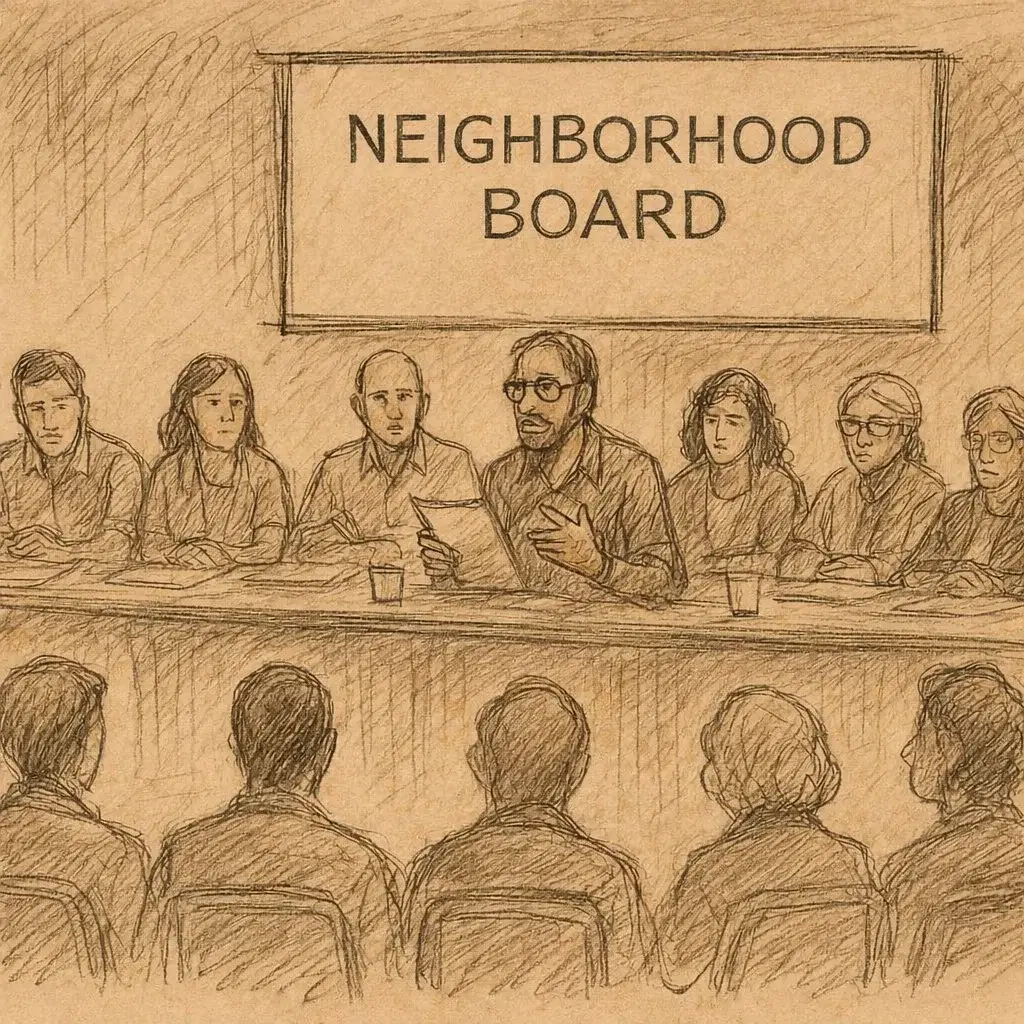
The Kalihi Valley Neighborhood Board convened shortly after 6:30 p.m. with the chair opening the meeting, reviewing speaking procedures for both in-person and virtual participants, and confirming quorum with six voting board members present. The chair reminded attendees that comments should be directed through the chair, that speakers should identify themselves for the record, and that testimony could also be submitted by email. The board also noted that handouts are archived in the board’s Google Drive and recordings are available on YouTube. Early in the meeting, the board unanimously agreed to amend the agenda to add a representative from Congressman Ed Case’s office under the state and federal elected officials section so that a report could be heard that evening.
Honolulu Fire Department Report and Hurricane Preparedness
The Honolulu Fire Department, represented by Kyle from Station 32, reported June activity statistics for the area, including 53 medical calls and one motor vehicle accident. The department used its report to emphasize hurricane preparedness, noting that hurricane season runs from June 1 through November 30. Residents were urged to review and refresh emergency kits, prepare a 14-day household supply capable of sustaining family members for two weeks without utilities or outside access, and verify whether their insurance policies include hurricane or flood coverage, since standard homeowners and renters policies generally do not. The department also directed residents to Honolulu.gov/DEM for preparedness information, to HNLalert.gov for direct storm alerts, and to HFDNHB@honolulu.gov for follow-up questions. During discussion, a community member reminded HFD of the Kalihi Business Association Christmas Parade scheduled for November 27, 2026, described as one of the state’s oldest Christmas parades, beginning at Kalihi Union Church and ending at Kamehameha Shopping Center.
Police Crime Statistics, Serious Incident Review, and Speeding Concerns
Honolulu Police Department representatives, including Sergeant Kato and Lieutenant Yamashita, reported crime statistics for May. Compared with April, aggravated assaults decreased from two to one, auto thefts dropped from six to five, burglaries fell from three to one, robberies were zero, sex assaults were zero, simple assaults were one, thefts were three, and unauthorized entry into motor vehicles totaled two. The one felony aggravated assault involved a domestic incident on May 13 in which a son stabbed his mother’s boyfriend and later attacked responding EMS and fire personnel, leading to his arrest.
A substantial portion of the police discussion focused on long-running resident complaints about speeding in Kalihi Valley, particularly on Kalihi Street. A board member said speeding had been raised six or seven times already and described residents repeatedly identifying it as one of their top concerns. He referenced a recent daytime crash near Monte Street and Kalihi Street in which a vehicle reportedly flipped, with Hawaiian Electric called to the scene, and said neighbors believed speed was a factor. HPD responded that the incident may have been overshadowed operationally because it occurred shortly after a major crash near the H-1 airport exit involving critical injuries and fatalities, which had drawn significant police attention. Police also said they have conducted laser speed enforcement in the valley and often find that vehicles appear to be moving faster than they actually are, with many clocked at or near the speed limit. HPD encouraged dissatisfied residents to visit the Kalihi Police Station and speak directly with a watch commander if they believe their concerns were dismissed in the field. The exchange underscored ongoing dissatisfaction among some residents, who feel current enforcement and response have not adequately addressed roadway safety.
Coffee with a Cop and Police Outreach
HPD confirmed that “Coffee with a Cop” was scheduled for Friday, June 12, from 9:00 a.m. to 11:00 a.m. at Starbucks in Kamehameha Shopping Center, 1620 North School Street. Officers described the event as an informal opportunity for residents to meet district officers, raise concerns in a low-pressure setting, and build relationships outside of emergency calls or formal complaint channels. A board member noted that he had not heard of the event before and urged broader advertising because the community would likely appreciate the opportunity. Another asked whether a major or the newly appointed district leadership would attend; HPD said a commander is usually present, though they could not confirm which one for that event.
Homeless Encampment and Safety Under the Bridge Near Board of Water Supply
A neighborhood security watch report raised concerns about increasing homeless encampment activity under the bridge just past the Board of Water Supply on Kalihi Street, in the Nalani area. The reporting resident said newer unknown individuals had been seen entering the area under the bridge and that some people in the neighborhood were uneasy or reluctant to report it themselves. HPD acknowledged the concern and said they would begin making checks in the area starting that night.
Police Staffing Shortage and Recruitment Efforts
Community members pressed HPD about the long-standing shortage of officers, recalling that the department had previously been short roughly 400 officers and saying they had recently heard the shortage had climbed to around 500. Questions centered on whether public safety can be adequately maintained under such conditions and what concrete steps are being taken beyond simply waiting for recruits. HPD acknowledged the shortage as part of a broader national law-enforcement recruitment and retention problem. Officers said the department is trying both to enlarge academy classes and to retain veteran officers who are eligible to retire. They also highlighted early pipeline programs including LEAP, the Explorer program for youth, the police cadet pathway, and a June 22 exam and preparation effort aimed at recruitment. Board members encouraged residents to spread the word to family and friends looking for work.
Board of Water Supply Questions and Public Works Issues
Although no formal Board of Water Supply report appears to have been delivered, residents used the discussion period to raise several infrastructure questions. One concerned a weeklong Board of Water Supply work site near the Kokua Kalihi Valley Comprehensive Family Services location on School Street by Ahonui Street, where the road had reportedly been blocked off during repairs. Another involved whether fundraising car washes on private property could violate stormwater or discharge rules if wash water flows onto the street. A further clarification from the audience identified the affected cross street as Ahonui, which helped narrow the location of the utility work.
Overgrown Grass on Kuahivi Way and Questions of Land Ownership
During residents and community concerns, a board member relayed complaints from a resident on Kuahivi Way regarding an overgrown grassy area between Kuahivi Way and Likelike Highway across from a nearby property near the Iglesia ni Cristo area. The grass has reportedly become tall enough that people may hide there at night and animals such as cats or rodents may shelter there and affect nearby trash areas. The central issue was uncertainty over whether the land is maintained by the city, the state, or a private owner. A representative from Senator Donna Mercado Kim’s office offered to run a real property search if the location were emailed to her and said the office would follow up after identifying ownership.
Parking Shortages at the Meeting Site
Board members raised serious concerns about inadequate parking at Kapālama Hale, where the meeting was being held. One member noted that one reason the board had moved there was for accessibility, yet sports events and other users were filling the parking lot at the same time as the board meeting. Another member said it took about 20 minutes just to find parking. The issue was described as significant enough that the board may need to revisit its meeting location if parking conflicts continue.
Overgrown Tree Hazards, Sidewalk Obstructions, and Urban Forestry
A resident asked about a very large overgrown tree on Barker Street near Violet Street that is close to homes and has become a concern as hurricane season begins. Senator Kim’s office explained that if a tree is a city tree, only the Division of Urban Forestry can inspect, trim, or remove it, and city trees cannot legally be altered by private persons. If the tree is private, ownership would need to be confirmed first. The office offered to check the address and determine ownership in the same way it planned to check the overgrown grass parcel. Later in the meeting, hazardous trees returned as part of Senator Kim’s report, where her office again directed residents to use the city’s 311 system and said the Division of Urban Forestry can inspect termite-damaged, aging, or potentially falling trees.
Overcrowded Rentals, Too Many Cars, and Neighborhood Impacts
Residents also raised concerns about rental properties they believe are overcrowded beyond intended occupancy, leading to too many vehicles parked on neighborhood streets and contributing to disorder and maintenance issues. The complaint included allegations that some owners live off-island while renting out homes to many occupants and neglecting upkeep, placing pressure on neighbors and local streets. The mayor’s representative said specific addresses should be submitted so that the matter could be looked into, but no immediate policy or enforcement solution was presented during the meeting. The topic reflected broader tensions around parking, housing density, absentee ownership, and neighborhood quality of life.
Exceptional Tree Program Presentation
Emily Perry presented on the city’s Exceptional Tree Program on behalf of the Mayor’s Arborist Advisory Committee. She explained that exceptional trees are protected by city and county ordinance under a statewide act established in 1975 to preserve trees with notable historic, cultural, aesthetic, biological, or location-based significance. Criteria can include age, rarity, endemic status, size, beauty, or historical and cultural value, and a tree only needs to meet one criterion to be nominated. Owners of designated exceptional trees may receive a $3,000 tax deduction every three years for trimming services. The advisory committee, made up of specialists in arboriculture, sustainability, and related fields, reviews nominations. Perry explained that exceptional trees must be cared for by qualified arborists and can only be removed if the Division of Urban Forestry determines there is an immediate public safety risk. She noted that there are about 1,400 exceptional trees statewide, but many are aging out, and there are currently no exceptional trees identified within the Kalihi Valley neighborhood board boundaries despite some nearby along the Pali and Likelike corridors. She encouraged residents to nominate worthy trees and said nomination forms could be obtained by QR code, email, or through the Division of Urban Forestry.
Hawaii Hazards Awareness and Resilience Program
Evan Mokuahi-Hayes of HI-EMA’s Community Outreach Branch presented the Hawaii Hazards Awareness and Resilience Program, or HRP, which is designed to help communities prepare for disasters. He reviewed the hazards facing Hawaii, including tsunamis, hurricanes, tropical storms, flooding, earthquakes, volcanic hazards, and wildfires, and said that even if Kalihi Valley is less focused on tsunami risk than some coastal communities, it should be concerned about wildfire because of its green mountain environment and dry El Niño conditions. He cited a striking statewide figure: only 12 percent of households are currently considered prepared to withstand a major statewide disruption such as port shutdowns. He challenged residents to ask whether they are ready for two weeks without outside supplies and urged anyone not yet prepared to start with one week and build from there.
Mokuahi-Hayes outlined the six HRP modules, which begin with building a community leadership team and proceed through hazard awareness, personal preparedness, risk assessment, and development of a formal community emergency action plan. He said communities typically take six to ten months to complete a plan, though it can move faster if residents are highly engaged. He emphasized that the process depends on broad participation and cannot be left to a handful of people speaking for 15,000 residents. He also said that, for the first time, community outreach has a seat in the Emergency Operations Center, allowing real-time communication between communities and state emergency management during crises.
Local Disaster Planning, Food Distribution, and Shelter Questions
Board members connected the HRP presentation to local efforts already underway in Kalihi. One member said he had already begun drafting Module 1 and had circulated the modules to the board, noting that Kalihi is a critical statewide hub because ports, shipping, and distribution run through the area. He also said a resilience “hub” is being organized locally, with participation from The Pantry on Rose Street, which has discussed its role in food distribution during emergencies. Questions were raised about support for residents who cannot afford to stockpile food, batteries, and supplies. In response, the presenters pointed to Hawaii Foodbank and HI-EMA’s broader network, including business, school, volunteer, and donation-management partners. Questions also focused on whether a ready-to-use shelter already exists in Kalihi Valley. The response was that county emergency management has the primary lead on formal shelters, but local planning is trying to identify unofficial sheltering and distribution points and document them as part of the emerging community plan.
Flooding on Hokua Street and Frustration with Slow Government Response
A resident raised a specific hazard mitigation issue on Hokua Street behind Damien High School, where a drainage area near a speed hump reportedly clogs and causes flooding to older homes. The resident said community members themselves had cleaned the drain so water could pass, but expressed frustration that repeated outreach to government has not produced a timely or durable solution. In response, the resilience presenter said this type of unresolved chronic issue is common in many communities and is exactly why the risk assessment and planning process should bring government agencies and community members to the same table. He acknowledged the seriousness of the concern but said his role was to help build the plan and connect stakeholders rather than directly order infrastructure fixes.
Mayor’s Office Report: Food Systems Plan, Homelessness, Microloans, and Prior Follow-Ups
Bandmaster Clark Bright, representing Mayor Rick Blangiardi, reported that the city’s Climate Change, Sustainability and Resilience Department had released a draft of Oʻahu’s first Food Systems Plan, a five-year action plan containing 70 proposed actions to improve food production, distribution, access, and waste management while supporting community health, the economy, and the environment. Public comments were invited through June 30. Bright also highlighted items from the mayor’s newsletter, including the federal aid deadline, the naming of David Lazar as the new Honolulu police chief, city homelessness reduction initiatives, the departure of former Managing Director Michael Formby, efforts to expand access to local food, and a city microloan program for small businesses. On local follow-up issues, he said the administration was still awaiting responses regarding a prior tree issue and the Kamananui Stream cleaning matter.
Residential Parking Zone Permit Costs and Utilization
The mayor’s office also relayed a detailed Department of Transportation Services response regarding the Kalihi Valley Residential Parking Zone program. The current annual rates were reported as $62.50 for a first residential permit, $125 for a second, $187.50 for a third, and $250 for a fourth. Annual visitor permits cost $62.50, while daily visitor permits are $10, up to ten per month. DTS said only eight participating households had chosen to purchase four annual residential permits. As of May 2026, 175 annual residential permits and 46 annual visitor permits had been purchased. With 391 on-street RPZ spaces identified in the area, residential permits represented 45 percent of available spaces and visitor permits represented 12 percent, for a combined 57 percent. The average annual amount paid per participating household was $122.14, or about $10.17 per month. A board member then asked where the money goes and how the city accounts for it, saying residents in the Wilson Track area feel they do not see much enforcement in return for what they pay. The mayor’s representative agreed to follow up with the city for a more specific answer.
ADA Accessibility in Parks and Conditions at Kapālama Facilities
The mayor’s representative also addressed a prior concern involving ADA restroom accessibility, using a response from the Department of Parks and Recreation. DPR said many parks were built before modern ADA standards but that when facilities are altered, the city must bring the altered portions into compliance to the maximum extent feasible under Title II of the Americans with Disabilities Act. The department said it continues to review accessibility improvements as park projects move forward. A resident then shifted the conversation to the condition of the current park facility, describing bird droppings being swept by volunteer workers, children jumping fences into the swimming pool, and broader questions about the boxing gym and general management of the site. He asked whether proper staff would be hired and how soon improvements would actually occur. The mayor’s representative said funds had been approved for parts of the work and the city is trying to move as quickly as possible, though no definite timeline was given.
Question About Broader Agency Participation at Board Meetings
One resident questioned why routine reports at the board tend to come from police, fire, and water-related agencies but not from departments such as Education or Parks and Recreation, given their direct impact on neighborhood life. The chair said those have been the usual reporting agencies but that she could work with staff to invite other departments in the future. The exchange reflected interest in hearing directly from agencies responsible for schools, parks, and other everyday services.
Congressman Ed Case’s Office Report and Federal Funding for Kalihi
Kekoa Kaluhiva, district director and deputy chief of staff for Congressman Ed Case, introduced himself and explained that the First Congressional District spans from Makapuʻu to Mililani and west to Kapolei, covering roughly 700,000 to 750,000 residents. He said the local congressional office has four staff members and focuses heavily on constituent assistance involving federal agencies, including veterans’ benefits, immigration, and Social Security. He highlighted the congressman’s role on the House Appropriations Committee and reported two federal funding items advanced that day for Kalihi: $250,000 for Kokua Kalihi Valley’s accessibility and resilience project to modernize its facility with solar photovoltaic installation, an entry ramp, and a new elevator, and $1 million for Kalihi-Pālama Health Center’s emergency resilience and internal renovation project, including air conditioning repairs, an emergency generator for its elevator and medication refrigerators, and purchase of a digital panoramic x-ray machine. He said the measure had moved out of committee and was headed to the full Congress. Board members also asked whether the congressman could support disaster hub development in Kalihi, and Kaluhiva responded that the congressman already supports resilience-related efforts, including port infrastructure and federal disaster funding.
Sustainability, Resilience, and Federal Policy Discussion
A resident asked the congressional representative whether there are federal efforts specifically supporting sustainability in Hawaii, distinguishing that concept from resilience and disaster response. Kaluhiva said Congressman Case’s office does have information on resilience and local food production on its website, but he was cautious in giving a broad verbal answer because the term “sustainability” can mean different things in different contexts. He invited the resident to follow up directly with him offline for a more tailored discussion. Another board member asked whether the office would attend future meetings regularly. Kaluhiva replied that because the district contains 24 neighborhood boards and the office only has four staff members, their goal would more realistically be quarterly attendance and written updates between meetings.
Senator Donna Mercado Kim’s Report: Insurance, Trees, Events, and New Laws
Kathy Lee reported for Senator Donna Mercado Kim and said the office remains active even though the legislative session has ended, with the senator maintaining daily office presence and distributing regular reports and community bulletins. She warned residents about upcoming H-1 closures associated with the Middle Street overpass improvements, noting a full closure had already caused major backups and that another Saturday closure was scheduled for July 11 from 8:00 p.m. to 8:00 a.m. She also reported receiving requests for help from homeowners whose insurance policies were not being renewed because of single-wall home construction, explaining that insurers are increasingly wary of risks from wind, hurricanes, and severe weather. She encouraged affected residents to contact the Hawaii Insurance Division within DCCA for guidance, while acknowledging that the government cannot force private insurers to renew policies. Her report also revisited hazardous trees, again directing residents to the city’s 311 system and the Division of Urban Forestry. She announced a PACT “Getting to Know Your Community and Neighbors” event scheduled for Saturday, June 13, from 11:00 a.m. to 3:00 p.m. at the Kamehameha Homes resource center area serving Kuhio Park Terrace residents and redevelopment workers. When asked about Act 137 relating to farm-to-school procurement, she explained that the measure is intended to help farmers know in advance what schools want to purchase so they can grow accordingly, and she noted that the Hawaii Farm Bureau had been deeply involved in supporting and explaining the legislation.
Representative Ikaika Hussey’s Report: Cleanup, Infrastructure Memo, and Disaster Follow-Up Risks
Representative Ikaika Hussey reported in person and announced a community cleanup for the following day at 5:30 p.m., combining neighborhood conversation with practical work such as trash pickup and graffiti paint-out. He also described a draft infrastructure memo his office has been assembling to collect issues affecting Kalihi Valley, especially street safety, sidewalks, and similar concerns that are not directly within the legislature’s jurisdiction but can be elevated to city agencies in a coordinated way. He invited residents to add comments through an online link for a few more days.
Hussey also reflected on the broader impacts of the Kona low storms, emphasizing that some of the most difficult problems come after the storm itself. He cited a house on Popolo Street where a boulder moved from the mountain due to rain and broke through a retaining wall, leaving a dangerous situation on private property that is not the owner’s fault yet exceeds what most households can manage. He also mentioned a tree that fell on a house at St. Anthony Retreat Home in the back of the valley. He said the state needs new policy tools for hazards and damage on private property caused by larger environmental forces and noted that one law passed this session supports community co-management of public resources like mountains and streams, which he hopes may help in the future.
Kalihi Street Safety, Sidewalks, Crosswalks, and Complete Streets
A major exchange with Representative Hussey focused on Kalihi Street and the broader issue of roadway design in the valley. Residents again raised speeding, unsafe crossings, lack of sidewalks mauka of Nalaniʻehā, and the way parked cars force pedestrians into the road. Hussey said Kalihi Street functions like a highway through the community because it has two lanes in each direction for part of its length and very few stopping features, creating a conflict between fast vehicle movement and pedestrian safety. He said that if it were up to him, the road would be redesigned to prioritize safety rather than speed. He criticized the prior removal of a mid-block crosswalk near a school and park area, saying people still naturally cross there and that the philosophical question is whether roads exist to move people quickly or safely. He pointed to the city’s Complete Streets program as a useful framework and said it is already being engaged around Kalihi Elementary.
Residents also asked about the mauka section beyond Nalaniʻehā, where sidewalks are absent and vehicles park in the space where sidewalks would otherwise be. Hussey said he has discussed that corridor with Complete Streets and believes a new strategy is needed for parking management, because current conditions force elders, children, and other pedestrians into the street. A former board member also asked about a 2024 resolution requesting a sidewalk feasibility study from Kamanaiki Street to Kalihi Valley District Park, and whether results had ever been communicated to the board or community. No direct answer was given on the status of that study during this meeting.
School Safety, Education Access, and Summer Meals
The board’s Education Committee report highlighted the Department of Education’s summer meals program operating from June 9 through July 17 at 74 schools statewide. Breakfast is being served from 7:15 a.m. to 8:45 a.m. and lunch from 10:30 a.m. to noon, free to all students age 18 and under, with eligible special education participants served up to age 21. Schools in or near the Kalihi Valley community offering meals include Dole Middle, Farrington High, Fern Elementary, Kaiʻulani Elementary, Kalakaua Middle, Kalihi Elementary, Kalihi Waena, and Kapālama Elementary. A board member urged parents to take advantage of the program. Later in the meeting, Kalihi Elementary Principal John Hamilton thanked Representative Hussey for meeting with him about Complete Streets and ways to help students get to school safely and on time. The board also discussed the importance of connecting more regularly with school community councils and learning more about school-level issues and data.
Committee Reports and Ongoing Projects
During committee reports, most committees reported no new updates, including budget, sidewalk/transportation, sustainability, and RPZ. The Joint Committee report focused on two ongoing projects: the disaster planning effort described earlier under HI-EMA’s program, and progress on the “Safe Places” initiative, which is now in contact with the Department of Education and moving toward inclusion at least within the Farrington complex. The Education Committee repeated the summer meals information and also mentioned an opportunity shared by EF Tours for local families interested in hosting international students.
Community Conduct at the Duck Pond and Trespassing Concerns
Near adjournment, a board member returned to an earlier resident complaint involving young people trespassing onto private property to access a pond area and disrespecting the property owner. He referenced a social media video that he said documented the incident and wanted the matter noted in the record. He objected to comments online implying that the resident was an outsider, emphasizing that Portuguese families have a long history in Kalihi and that property rights and respectful behavior apply regardless. He said the people seen trespassing did not appear to be from Kalihi and contrasted that behavior with local expectations of respect.
Closing Announcements and Next Meeting
The board announced that its next regular meeting would be held on Wednesday, July 8, 2026, at 6:30 p.m. at Kalihi Valley District Park. The public was also reminded that neighborhood board meetings are broadcast on ʻŌlelo Channel 49 on the fourth Saturday of the month at 6:00 p.m. and the first and third Sunday of the month at 9:00 a.m. Before adjournment, one board member announced a future fundraiser for the Alulike Mount hall in September to support facility maintenance, with more information to come. The meeting adjourned at 8:50 p.m.