No 15 Kalihi Pālama Neighborhood Board Regular Meeting October 2026
Listen to this article:
15 Kalihi-Palama Neighborhood Board Meeting – October 22, 2026
Meeting Opening and Participation Rules
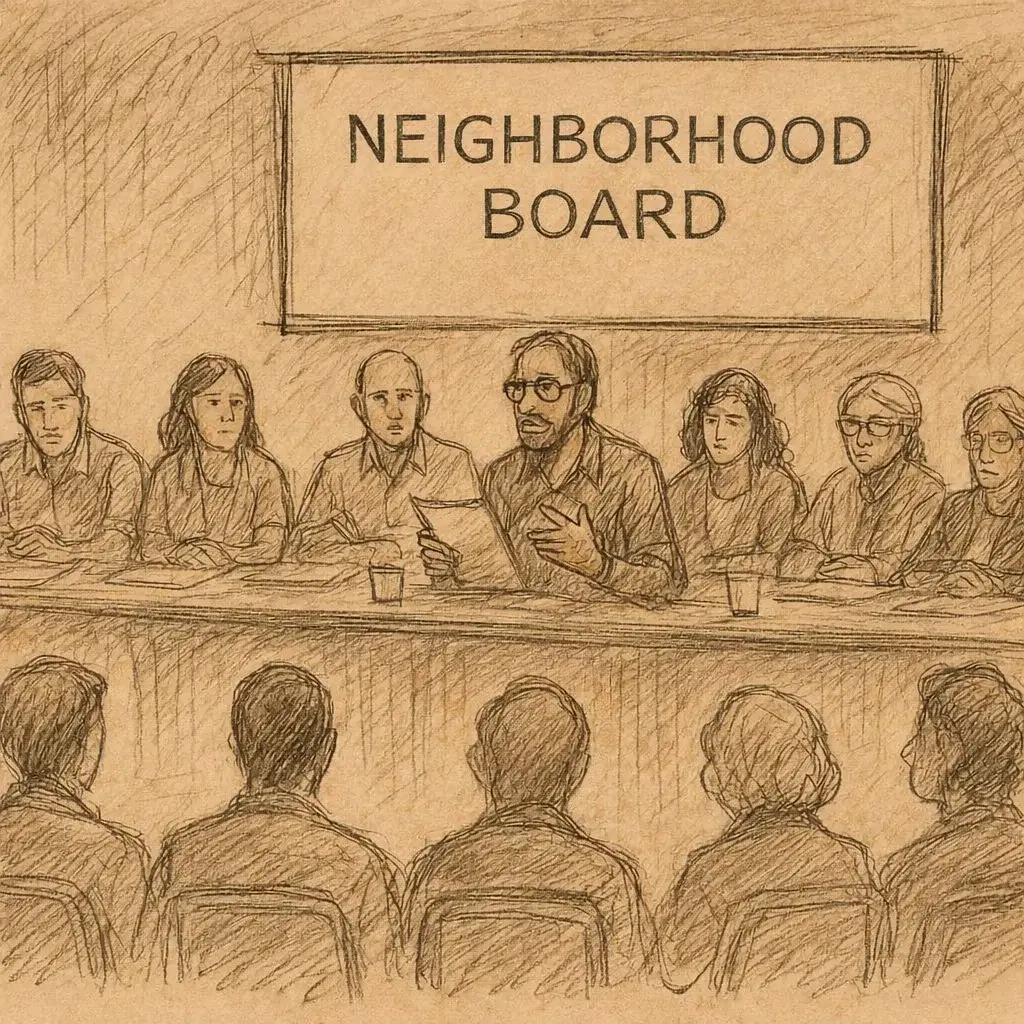
Chair Evelyn Cullen convened the regular meeting at 6 p.m. at Kapālama Hale, Room 153, with remote participation through Webex. The chair stated that the purpose of the Neighborhood Board System is to ensure effective citizen participation in government decisions and reviewed speaking limits, remote-meeting procedures, and public-comment rules. Seven members were initially present, establishing quorum; four new members were seated later in the meeting. The transcript records the chair announcing the meeting date as Wednesday, October 21, although the meeting title identifies it as the October 22, 2026 regular meeting.
Honolulu Fire Department
Firefighter Jacob Irvine of the Kalihi Fire Station presented Honolulu Fire Department statistics for September 2026. The neighborhood had no structure or wildland fires, 16 nuisance fires, one cooking fire, and 24 alarm activations where no fire was found. HFD also responded to 226 medical emergencies, eight motor-vehicle collisions, and three hazardous-material incidents, with no pedestrian collisions or ocean or mountain rescues reported. Residents were directed to HFD’s online Fire Response Search Tool for incident maps and further details. With the holiday season approaching, HFD advised residents to use electrical products certified by recognized testing laboratories, follow manufacturers’ instructions, remain present and attentive while cooking, keep combustible items away from heat and flames, and exercise additional caution while driving or walking, particularly during low-light hours around dawn and dusk.
Honolulu Police Department District 1
Sergeant Freeman reported activity for HPD Beat 1-5-0. Calls for service increased from 276 in the previous month to 321. Motor-vehicle thefts declined from four to two, burglaries from two to one, and thefts from three to two. There were no car break-ins or graffiti cases. Assaults increased from three to five, one sexual assault was reported compared with none previously, drug cases declined from three to two, and motor-vehicle crashes rose from 13 to 16. No board or community questions were raised.
Honolulu Police Department District 5
Sergeant Perez presented September statistics for Beats 5-5-8 and 5-5-9. Total calls for service rose from 548 in August to 562 in September. The area recorded one aggravated assault, up from none; four auto thefts, up from two; two sex-assault-type cases, up from none; one simple assault in each month; five theft cases, down from seven; and one vehicle break-in in each month. No burglaries or robberies were reported in either month. The board and public had no follow-up questions.
Board of Water Supply
The Board of Water Supply representative did not make an oral presentation, but the chair noted that a written report had been submitted to the board.
Rail Construction on Dillingham Boulevard
Gabby Camacho of the Honolulu Authority for Rapid Transportation announced that HART’s electronic updates would move from a weekly format to a monthly newsletter intended to provide more detailed information. HART also planned to restripe Dillingham Boulevard and remove traffic cones between Kōkea Street and Kahi Street beginning that week. The resulting road configuration was expected to remain for approximately three months, or until guideway-and-stations contractor Tutor Perini was ready to begin work in that segment. When construction begins, concrete barriers similar to those elsewhere in the project corridor will be installed. No questions were raised.
Filling Four Board Vacancies
The board acted to fill four at-large vacancies. Residents interested in serving were required to attend and provide residency information. The board unanimously selected the applicants presented during the meeting, with seven votes cast for each appointment. The audible names included Fa‘atea, Percy Sialana, and Lisa Hasso; the meeting subsequently recognized four new board members in total. Hasso described living in Kūhiō Park Terrace-area public housing, serving two terms as a housing-board president and one as vice president, and representing parents on the school community councils for Kalihi Kai Elementary, Kalākaua Middle, and Farrington High schools, as well as on the Department of Education’s Community Children’s Council. The new members recited the oath to support the federal and state constitutions, city laws, the Honolulu Neighborhood Plan, and to perform their duties impartially. Existing members encouraged the new appointees to attend in person when possible to strengthen quorum and face-to-face community participation. Members also noted that an earlier proposal concerning the board’s voting or membership structure had been declined and could not be revisited until the following year.
Recognition of Robert and Roland Cazimero
The board prepared certificates recognizing Robert and Roland Cazimero for their Kalihi roots, musicianship, authenticity, and preservation of Hawaiian culture. Members discussed the brothers’ role in the Hawaiian Renaissance, their beginnings with the Sunday Manoa, performances as hotel and May Day headliners, and appearances with the symphony at the Hawai‘i Theatre. The discussion also acknowledged their family’s connection to restoration of the Hawai‘i Theatre and their family ties to Kohala on Hawai‘i Island. Roland Cazimero is deceased, while Robert Cazimero remains a prominent cultural figure. Board members emphasized that the brothers grew up in the Kalihi-Pālama area near KPT and represent an important part of the community’s cultural identity.
St. Elizabeth’s Episcopal Church
The Reverend Katie Nakamura Rengers introduced herself as the new priest in charge of St. Elizabeth’s Episcopal Church, which began in 1902 and has served Kalihi for approximately 125 years. She had moved from Alabama five months earlier and had led the church for four months. She described St. Elizabeth’s as a multicultural congregation serving Samoan, Micronesian, Hawaiian, Chinese, Ilocano, immigrant, and multigenerational families. Sunday worship is held at 9 a.m. The church operates a food pantry Monday through Saturday, generally between 8 and 11 a.m.; serves hot lunches Tuesday through Thursday; and provides Saturday breakfast. Its current outreach focuses heavily on unhoused residents, including allowing people to use the church’s address to receive identity documents and personal mail.
Church Services, Health Partnerships, and Property Standards
St. Elizabeth’s hosts five Chuukese-language congregations and an Ilocano service on the first Sunday of each month, and its campus is active seven days a week. Through partnerships with River of Life Mission and Ke Ola Mamo, the church offers wound care, mental-health assistance, help obtaining documents, and other services intended to support longer-term stability. Kalihi-Pālama Health Center operates a major clinic on the property, and We Are Oceania also serves Micronesian families there. The church expected between 350 and 400 children at a Halloween trunk-or-treat event. Reverend Rengers said the church was clarifying campus hours and behavioral expectations for visitors, particularly unhoused guests. Sleeping, weapons, illegal drugs, and other disruptive conduct would be addressed through clearer boundaries so that outreach services would not adversely affect children, nearby businesses, restaurant patrons, or other residents. She invited direct community feedback and expressed interest in partnerships with schools, businesses, and neighborhood organizations.
Kalihi Christmas Parade
Rupati Liwo of the Kalihi Business Association and Kalihi Valley Neighborhood Board invited the board to participate in the 77th annual Kalihi Christmas Parade on Friday, November 27, beginning at 6 p.m. The route will start at Kalihi Union Church, proceed along King Street to Farrington High School, turn toward Houghtailing Street and School Street, and end at Kamehameha Shopping Center. A related gathering at Pālama Elementary School is intended to provide a viewing and participation point for Kalihi Valley residents because much of the route passes through Kalihi-Pālama. Organizers are planning a larger community observance for the parade’s 80th anniversary in three years.
Parade Logistics and Cultural Focus
Organizers asked participating groups to incorporate more music, singing, and dancing to reflect the Asian American and Pacific Islander communities’ traditions of storytelling through performance. Each participating organization will be responsible for its own transportation and ADA accommodations, including any buses, trucks, or other vehicles used by participants. Groups may distribute candy, but they were asked to hand it directly to spectators rather than throw it, reducing litter and safety hazards; organizations must provide their own candy or may instead distribute informational materials. Board members discussed limited board funds, accessibility for members unable to walk the approximately one-mile route, the possible use of a truck or flatbed, and whether to march jointly with Kalihi Valley. The board ultimately voted to participate, with nine members in favor, none opposed, and one abstention. Detailed arrangements and the positioning of the two boards’ separate banners were left for later coordination.
Kūhiō Park Terrace Redevelopment
New board member Lisa Hasso reported that the housing community commonly referred to in the discussion as Kuhumanu/Kūhiō-area homes is expected to be demolished and rebuilt to create additional housing capacity. Project paperwork and funding requests can only be submitted during the January application period. If the proposal and funding are approved, Phase 1 relocation could begin near the end of 2027. Hasso said the community had recently held a meeting and expected additional details as the proposal advanced.
Police-Community Trust and School Support
Hasso also discussed a recent “meet the police chief” event at Farrington High School. Although she was disappointed by low parent attendance, she considered the meeting productive and encouraged residents to give the new chief an opportunity to demonstrate his commitment. District 5 plans to increase direct interaction with residents to rebuild trust. Hasso and Representative Shirley were considering a December gathering with District 5 officers at the housing complex, possibly featuring Santa Claus, simple food, and door prizes. She separately urged businesses and residents to support neighborhood schools, particularly Farrington High School, which she identified as a Comprehensive Support and Improvement school needing broader community involvement.
Farrington High School Loudspeaker Noise
Resident George renewed a complaint about the volume of Farrington High School’s football-field public-address system. He said play-by-play announcements could be heard inside his home approximately three-quarters of a mile away, even with windows closed, air conditioning running, and children sleeping. He had previously raised the issue with the board but had not received the expected follow-up, and direct contacts with the school had felt dismissive. Board members suggested contacting Principal Lucek or the athletic director, Mr. Stamaka. Hasso said she had raised the issue at a School Community Council meeting and that the principal was expecting George’s call; she offered to follow up if he continued to receive no response.
Illegal Dumping and Refuse Services
Josh Nakashima, administrator of the Department of Environmental Services Refuse Division, explained the city’s collection and illegal-dumping response. The division provides three-cart curbside service to most single-family homes: gray for trash, blue for recycling, and green for green waste and, as of October 1, food waste. Some areas still receive manual collection. Bulky-item pickup shifted to an appointment system about five years earlier; the division increased illegal-dumping enforcement during the transition and found that streets became cleaner overall. The city also operates transfer stations and convenience centers, including the nearby Kawailoa/Kapa‘a-referenced transfer facility discussed as the “K-E” station, as well as H-POWER and the landfill. Residents can bring bulky items, electronic waste, batteries, fire extinguishers, and other accepted materials to designated facilities, depending on site rules.
Reporting and Enforcing Illegal Dumping
Residents may report dumping by calling 808-768-3200 and selecting option 8 or emailing collection@honolulu.gov, preferably with photographs. The division has three customer-service representatives and five inspectors. Inspectors photograph dump sites, search for mail, labels, license plates, or other identifying evidence, ask neighbors for observations or security footage, and may remove material quickly to prevent larger piles from forming. The city generally begins with education because waste placed in front of a residence may have been dumped by someone else. Repeated or unresolved violations may lead first to a notice of violation and then to a notice and order carrying a fine. HNL 311 reports are also accepted, though direct calls or emails generally reach the division more quickly.
Dumping Hot Spots and Agency Jurisdiction
The city identified 2312 Kalihi Street as a repeated residential dumping location where multiple notices had been issued, and 2342 Kalihi Street, a small commercial area, as another hot spot. The Refuse Division handles residential frontage; the Department of Facility Maintenance handles city roads, bus stops, and nonresidential public areas; and the State Department of Transportation handles state highways. Reports received by the wrong agency are referred to the appropriate jurisdiction. Board members asked about signs and dumping in isolated or poorly observed areas below Nimitz Highway. Nakashima said residents or property owners usually provide permanent signs, while inspectors may use temporary illegal-dumping tape. Residents were encouraged to send exact locations so jurisdiction and possible countermeasures could be assessed.
Possible Unauthorized Wastewater Discharge
A board member reported seeing large government or unmarked trucks open a manhole near the bottom of Mokauea Street in the industrial area and pump material into it, often after normal business hours. The member questioned whether the activity was legal and whether operators were avoiding sewer charges. Nakashima said the issue belonged to the wastewater side of Environmental Services and invited the board to submit details. He noted that Sand Island’s former septage receiving site had closed and was expected to reopen, and acknowledged that some septage haulers might improperly discharge into manholes. The board considered inviting wastewater officials to provide a separate explanation.
Young Brothers Traffic on Nimitz Highway
Daniel Holt of Young Brothers addressed truck congestion on Nimitz Highway and Waiakamilo Road. The Young Brothers gate operates from 7:30 a.m. to 3 p.m. and closes between 11 a.m. and noon, causing queues in the morning and near lunchtime. The entrance has limited stacking space, so only two or three trucks can wait before the line backs onto public streets. At present, containers transferred from Pasha and other terminals must travel onto Sand Island Boulevard, around Nimitz Highway, and back into the Young Brothers gate. Completion of the adjacent Kapālama Container Terminal, expected in mid-to-late 2027, should permit direct internal transfers and reduce truck traffic on surrounding surface streets.
Container Hauling and Safety Concerns
Board members reported seeing container haulers operating after hours, including a single-cab truck carrying a 20-foot container without an apparent city license and Young Brothers-branded containers moving on Sundays. Concerns included possible uninspected cargo, fireworks or contraband smuggling, efforts to avoid weighing requirements, and trucks striking low utility lines on narrow side streets. Holt said Young Brothers transports cargo among the islands but currently does not employ its own truck drivers; outside third-party trucking companies use Young Brothers equipment and branded containers. He could not explain an apparently unlicensed vehicle or quantify how many incoming mainland or international containers are inspected, though he acknowledged continuing efforts to increase inspections. He also explained that truckers sometimes stage containers outside terminal hours because they cannot complete a west-side delivery and return before gates close. The chair indicated that Pasha, Matson, and other port operators might be invited to address broader concerns.
Complete Streets and High-Injury Corridors
Kaylin Bublov of the Department of Transportation Services described a federally funded Safe Streets and Roads for All planning project covering seven high-injury urban corridors. The city received just under $2 million to develop plans for Beretania, Young, South King, Pi‘ikoi, Wilder, Kaheka, and Kapi‘olani. Crash data from 2015 through 2022 showed fatalities and 13 particularly hazardous intersections along Beretania, South King, and Young streets. Although motor vehicles account for most crashes, pedestrians, bicyclists, motorcyclists, and moped riders suffer a disproportionate share of severe outcomes because they lack physical protection. For Kalihi-Pālama, the directly relevant segment is Beretania Street between River and North King streets.
Proposed Beretania Street Safety Measures
Potential Beretania improvements include protected bicycle lanes, possible bus-only lanes, accessible curb ramps, traffic-signal upgrades, leading pedestrian intervals, dedicated left-turn phases, curb extensions, marked parking, bike-lane buffers, traffic calming, improved lighting, rapid-flashing crosswalk beacons, pedestrian refuge islands, and selected roadway reconfiguration. Community members can place location-specific comments on the city’s online map. A public meeting was scheduled for November 4 at 5:30 p.m. at Central Union Church at Beretania and Punahou streets. Beretania may be repaved and restriped beginning in 2027, offering an opportunity for near-term striping and signage improvements before more costly concrete or signal work. A member asked how the paving schedule would be coordinated with rail construction near the Kūwili station area; Bublov agreed to consult the Department of Facility Maintenance and report back.
Accessibility and Concerns About Bus-Only Lanes
DTS confirmed that major capital projects involving curbs, signals, and concrete must comply with public right-of-way accessibility standards, including wheelchair ramps and accessible pedestrian signals for people who are blind. Smaller striping-and-signage projects do not always trigger concrete ADA upgrades, although the city seeks to make them as accessible as possible. One member expressed reservations about bus-only lanes because rail construction and other transportation projects have already reduced space available to drivers. Another online participant praised the King Street bicycle lane and expressed interest in the wider project, while also suggesting that some residents’ interests may align more closely with the Downtown-Chinatown Neighborhood Board because several corridors lie outside Kalihi-Pālama.
Kalihi Walkways Project
DTS provided an update on the Kalihi Walkways project, which would improve pedestrian safety and accessibility at Pālama and Kanoa streets, Kūlike and Beckley streets, and Pu‘uhale Road near Pu‘uhale Elementary School. The federally funded project is in design and must complete environmental review and historic-preservation requirements. Design is expected to finish in 2029, with construction projected to begin in 2030. Information is available through the city’s Complete Streets Kalihi webpage, which also covers proposed bicycle and pedestrian improvements on North King Street.
Homelessness and Behavioral-Health Programs
Mayor Rick Blangiardi’s representative, Stephen Courtney, reported that the city continues to expand its Community Outreach Response and Engagement program and has made the MH-3 behavioral-health initiative permanent across O‘ahu. HPD Chief David Lazar selected Brandon Nakazato and Barker Bode as permanent deputy chiefs. The former Delight Bakery property in Kalihi is being demolished for future affordable housing across from the planned Kūwili Skyline station as part of the city’s transit-oriented development strategy. The city also assisted Kaua‘i after Hurricane Lowell, although O‘ahu avoided major damage.
Drug Use and Maintenance Near Kalihi Schools
In response to reports of drug use in a parking structure between Kalihi Kai Elementary School and Kalākaua District Park gym, District 5 Community Policing Officer Corporal Kelly Crail checked the site on October 5 and October 8 but did not observe active drug use. Residents were told to call 911 when violations are occurring so officers can assess the situation. Hasso responded that residents are often afraid to report drug activity and said the parking structure is poorly maintained, smells strongly of urine, and needs cleaning. She also said grass along McNeill Street is not being maintained. The mayor’s representative agreed to carry the concerns forward.
Leilani and Lakapu Traffic Safety
A resident had requested speed-display signs and no-parking signs near Leilani and Lakapu streets because speeding and vehicles parked near the corner limit sight distance. DTS will investigate and provide its findings to the board. The concern involves both excessive vehicle speed and reduced visibility for drivers and pedestrians approaching the intersection.
Disability Representation and Handy-Van Policies
Members asked who could address Handy-Van policies governing no-shows and late cancellations, and the mayor’s representative agreed to refer the matter to the Department of Transportation Services. Hasso again questioned why the city has commissions for many constituencies but not a dedicated disability commission. The administration’s stated position remained that existing channels are sufficient to address disability concerns. Another member noted that senior housing should be located near shopping and health services to reduce dependence on the Handy-Van.
901 Gulick Avenue Conditions
The Department of Planning and Permitting reported that an October 1 inspection at 901 Gulick Avenue found no pallets stacked against the dumpster in the no-litter area, and an October 12 follow-up found pallets being recycled within the loading area and the area maintained. DPP said loitering should be addressed by HPD. Resident Karsten/Kirsten Leona, who lives across the street, disputed that assessment and said pallets remained on site. During later board discussion, she said loitering, public drinking, urination, disturbances, and other nuisance activity have continued despite repeated reports since January. The property has no-loitering signs and added one light, but she said these measures have not resolved the problem.
Proposed Long-Term Action at 901 Gulick Avenue
Leona compared the property with Mayor Wright Homes, where fencing, controlled access, and security measures were used beginning around 2005, and with the Kapālama Canal, where fencing was installed after repeated unauthorized activity and encampments. She asked why similar physical and preventative measures could not be coordinated at 901 Gulick Avenue, particularly because she believes the Hawaiian Snow property owners have not taken sufficient responsibility. Board members expressed frustration with the slow response, discussed stronger involvement by Councilmember Radiant Cordero, possible fencing or other permanent measures, and even a neighborhood safety-watch effort. Members cautioned that residents should not be sent endlessly among agencies while conditions continue. Councilmember Cordero’s office agreed to discuss further action, while the chair recommended continued use of HNL 311 so complaints reach multiple responsible agencies. No final physical remedy was approved.
Council District Updates
Councilmember Radiant Cordero’s office announced several Halloween activities, including an October 23 trunk-or-treat at Salt Lake District Park and other Skyline and neighborhood events listed in the written report. Residents were warned about holiday scams and directed to information on 20 proposed Honolulu Charter amendments. HPD checked the Nakawaina Street turnaround near Beckley Street on September 22 after reports of unauthorized parking and homeless habitation; no people or vehicles were found, but debris was referred to the Department of Facility Maintenance. Three trees at Moku‘ea Mini Park were scheduled for removal by the end of December. The Board of Water Supply confirmed that a Beckley Place service interruption resulted from recent water work and said it would improve advance notification.
Amelia Street Encampment and Emergency Preparedness
Councilmember Tyler Dos Santos-Tam’s office reported progress clearing a substantial encampment near the stream on Amelia Street. HPD and the Department of Facility Maintenance began a multiday cleanup after outreach to people living there, and at least two individuals accepted shelter services. The office plans to continue working with organized Amelia Street residents to keep the area clean and safe. The councilmember and Representative Takayama/Takenouchi were also hosting an emergency-preparedness town hall at Kawānanakoa Middle School on October 22 at 6 p.m., covering emergency kits, family plans, and storm readiness.
Army Hiring and Training Activity
U.S. Army Garrison Hawai‘i announced its final hiring fair of the year for November 17, from 8:30 a.m. to 2 p.m., at the Aliamanu Military Reservation gym. The event is open to the public, walk-ins are welcome, and provisional hiring may occur on site. Applicants were advised to bring two references, identification, a Social Security card, a résumé, and an application, although applications would also be available at the event. Child and Youth Services positions offer retirement benefits, access to recreation facilities, discounted childcare, and commissary and exchange privileges. The Army also advised residents of annual training from November 7 through 16, which will increase military vehicle traffic, helicopter activity, and large cargo-aircraft flights, including flights following the H-1 corridor. Most training will occur at Kahuku Training Area, Kawaihāpai Airfield, Barbers Point, Joint Base Pearl Harbor-Hickam, Wheeler, and Schofield Barracks, with some activity on Hawai‘i Island.
Constitutional Amendment and Election Guidance
In his final report before leaving office, Senator Karl Rhoads discussed Constitutional Amendment No. 1, which he introduced. The amendment would increase the Senate’s interim period for confirming or rejecting judicial nominees from one month to two months, potentially reducing costly special sessions convened to consider a single judge and encouraging nominations before the regular legislative session ends. He reminded voters that leaving a state constitutional amendment blank counts as a “no,” while leaving a city charter question blank simply results in no vote on that question. He also said general-election ballots should already have arrived; voters who did not receive one could call the county clerk at 808-768-3610. He advised using a ballot drop box rather than mail close to the November 3 deadline because postal delivery could be slower. Voting another person’s ballot is a Class C felony punishable by up to five years in prison and a $10,000 fine.
Power Outages, Vaccines, and Nimitz Bridge Repairs
Senator Rhoads advised residents that they may file claims with Hawaiian Electric for losses resulting from power outages, generally within 30 days, although the process can be difficult for customers. He also noted that COVID-19, influenza, and RSV were circulating and that updated vaccinations were available and generally covered by insurance. The Hawai‘i Department of Transportation had established a traffic emergency zone at Nimitz Highway and River Street to accelerate procurement and permitting for urgent bridge-deck repairs. Recent inspection found deterioration that could otherwise lead to further structural damage or closure, adding another complication to a corridor already disrupted by rail construction. Board members thanked Rhoads for 20 years of legislative service—10 years in the House and 10 in the Senate—and he described the meeting as his final neighborhood-board appearance as senator.
Bishop Museum, Amazon, and University Athletics
Senator Glenn Wakai reported efforts to expand Bishop Museum’s international Indigenous partnerships. Thirty members of Taiwan’s Council of Indigenous Peoples had recently toured the museum, and work was underway on a memorandum of understanding between Bishop Museum and a planned Indigenous peoples museum in Taiwan. Wakai also announced that Amazon’s Sand Island distribution center would partner with the Hawai‘i Foodbank to improve food deliveries to approximately 60 Department of Education schools operating pantry programs. He described Amazon’s logistics capacity as a useful resource for addressing childhood hunger. Wakai also discussed recruiting student-athletes from Asia for the University of Hawai‘i, streaming games to their home countries, building overseas fan bases, and eventually seeking Asian corporate sponsorships to help UH remain competitive without relying on additional tax funding.
Affordable and Senior Housing Updates
Representative Darius Kila/“Pug” Ratcliffe’s office reported that Hōkūiki Senior Living, a new kūpuna affordable housing development on North School Street, had opened. Rental lottery applications were due October 31, names were to be drawn November 10, and applicants had to be at least 55 years old and meet income qualifications. A member cautioned that senior housing without nearby large shopping centers or healthcare services can place added pressure on Handy-Van service. The office also reported that new sidewalks are planned along Pālama and Kanoa streets as part of the Kalihi Walkways initiative.
Mayor Wright Homes Redevelopment
A groundbreaking for Mayor Wright Homes Phase 1A was scheduled for 9 a.m. the following morning. The first phase will create 308 affordable rental homes. The full redevelopment is expected to involve 11 towers and approximately 2,500 homes over many years. A member asked how existing residents would be relocated. Hasso explained that only households in the portion scheduled for initial demolition had been moved and that construction cannot begin until every affected family has been successfully relocated. The office also reported discussions with Kūwili Connection regarding community engagement around transit-oriented development near Kūwili station, including how to preserve local culture while accommodating new construction.
H-1 Cap Study and Halona Street Burned Van
Representative Ratcliffe’s office said the representative and Senator Rhoads had attended an H-1 cap planning-study meeting. The federally funded effort remains at the community and stakeholder consultation stage. Equipment under the Vineyard viaduct belongs to a private contractor resurfacing an area from Miller Street to Kapi‘olani Street, with work expected to continue through 2027. The office also reported that a burned blue van associated with an unhoused resident remained on Halona Street because HPD cannot tow oversized vehicles. HPD and the state Department of Transportation were aware of the situation, and the representative was working with Councilmember Dos Santos-Tam on removal, though the issue was expected to take time. Residents were encouraged to complete the representative’s pre-session survey, although one board member reported that the survey link was not working.
Dog-Friendly Parks Initiative
The board considered the Department of Parks and Recreation’s second phase of expanded dog access. Proposed Kalihi-Pālama locations included Beretania Community Park, Kauluwela Community Park, Cedar Street Mini Park, a park identified in the transcript as Mehamela Community Park, and Fern Community Park. The proposal would allow leashed dogs rather than create unsupervised off-leash areas. Members supported expanding access but emphasized the need for adequate park maintenance, restroom cleaning, waste-bag stations, and enforcement of owners’ responsibility to remove pet waste. Members clarified that support should not depend on assigning permanent staff exclusively to each dog area, because existing dog parks generally operate without dedicated on-site personnel. The board approved support with a request for proper maintenance by a vote of 10 in favor, none opposed, and no abstentions.
Clarence T.C. Ching Recognition
The board considered a resolution recognizing Clarence T.C. Ching for his extensive contributions to the community. Although sponsoring member Lynn Vasquez was absent, she had asked that the resolution be presented on her behalf and had assisted in drafting it. Members found the recognition straightforward and voted to approve it, 10–0 with no abstentions.
Likelike Highway and School Street Intersection
A state transportation representative reported on traffic at Likelike Highway and School Street. A previous study considered adding a second left-turn lane on School Street, but the proposal was deemed infeasible because it would require acquiring right-of-way from either Kamehameha Shopping Center or Kapālama Elementary School. The existing signal cycle can last approximately five to five-and-a-half minutes, with the Ewa-bound left-turn movement sometimes consuming three to three-and-a-half minutes before cross traffic receives a green light. Pedestrian crossing time further limits adjustments. Members said the delays can make a short trip from Kalihi Uka to Beckley Street take approximately 20 minutes and requested another signal-timing review.
Right Turns on Red at School Street
Members also asked the state to reconsider prohibitions on right turns at red lights on both sides of the School Street intersection. They said vehicles are often held even when there is no conflicting traffic, worsening school-hour congestion. Although some drivers make the turn regardless and the red-light cameras reportedly do not enforce that particular movement, members stressed that many residents will not knowingly violate posted rules. The transportation representative agreed to ask engineers whether right turns on red could be restored and, if not, to provide a detailed safety explanation.
Gulick Overpass and H-1 Widening
The state representative directed residents to h1widening.com for information on the Gulick Street overpass and H-1 widening work. Councilmember Cordero’s office also has online video information about the project. The work was described as continuing through approximately February 2028. A previously reported Nimitz Highway detour concern appeared to have resolved itself, though the state offered to follow up if problems returned.
Closing Business
The board referenced approval of the August 19 and September 16, 2026 regular-meeting minutes, with no substantive amendments recorded in the transcript. A prior traffic-related resolution remained pending because board members had been unable to reconnect fully with the resident and neighbor involved while the resident was traveling. The next regular meeting was scheduled for Wednesday, November 18, 2026, at 6 p.m. at Kapālama Hale, 925 Dillingham Boulevard, Room 153. Meeting recordings are available through ‘Ōlelo Community Media, including Channel 49 and online recording links. The meeting adjourned at 8:41 p.m.