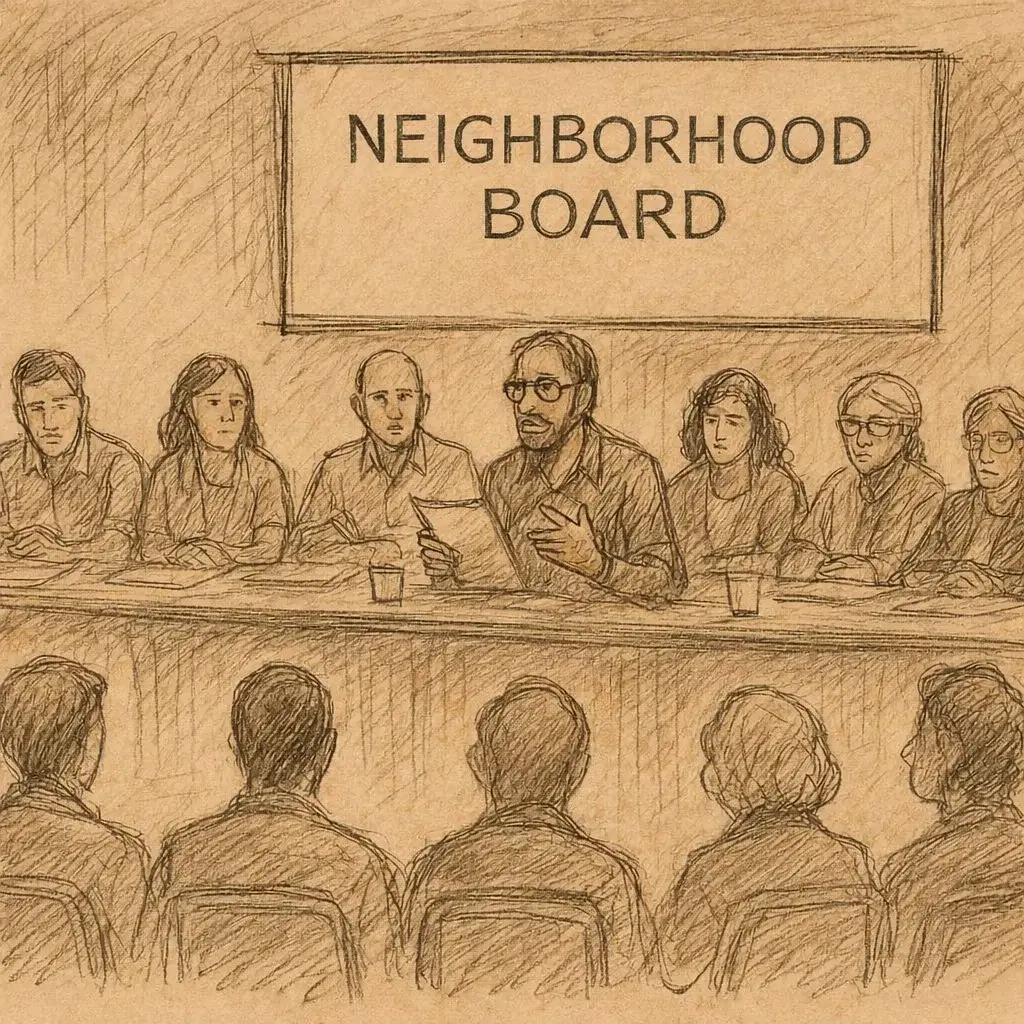
No 04 Kaimukī Neighborhood Board Regular Meeting October 2026
Listen to this article:
4 Kaimuki Neighborhood Board Meeting – October 22, 2026
Call to Order and Quorum
The Kaimukī Neighborhood Board convened at 6:30 p.m. in a hybrid in-person and online format. Roll call established a quorum, with eight members counted as present, including one participating remotely despite initial microphone difficulties. The board then proceeded to public-safety reports, elected-official updates, community presentations, resident concerns, and board business.
Honolulu Fire Department
The Kaimukī Fire Station reported no structure fires during October 2026, along with two activated alarms, 45 medical emergencies, three motor-vehicle collisions, and three hazardous-material incidents. The department’s seasonal safety message urged residents to purchase electrical decorations and appliances certified by nationally recognized testing laboratories, follow manufacturers’ instructions, remain present and alert while cooking indoors or outdoors, keep combustible materials away from heat and flames, and exercise particular caution while walking or driving around dawn and dusk. Responding to an earlier board inquiry, the department also provided lithium-ion battery fire statistics dating from 2022 through September 2026. Electric bicycles accounted for the largest category, with 30 incidents, followed by portable batteries with 25 and electric vehicles with four. Fires involving phones, lawnmowers, massagers, Bluetooth speakers, foil boards, and similar devices generally numbered only one or two per category.
Honolulu Police Department
District 7 reported September crime statistics that included 13 motor-vehicle thefts, seven burglaries, 22 thefts, and three unauthorized-entry-into-a-motor-vehicle cases. Police handled 5,808 calls for service during the month. The department warned residents about telephone scams in which callers impersonate law-enforcement personnel and falsely claim that the victim missed jury duty or has an arrest warrant. These callers often direct targets, particularly older adults, to purchase gift cards. HPD emphasized that such demands are not legitimate and advised residents not to provide gift-card information or money over the phone, but instead to consult a family member or call 911 if uncertain.
Mayor’s Office: Crisis Response, Police Staffing, and City Updates
Mayor Rick Blangiardi’s representative, Brian McKee, highlighted the city’s CORE and MH-3 crisis-response efforts. These programs allow first responders to intervene when someone is considered a danger to themselves or others and transport that person to an appropriate treatment setting even when the person does not believe assistance is necessary. The pilot approach has expanded and was described as improving the city’s response to homelessness and behavioral-health crises. McKee also reported that HPD selected two new deputy chiefs. To reduce excessive overtime costs, Chief Arthur “Joe” Logan’s administration is moving sworn officers from traditionally administrative assignments back into patrol vehicles and field operations. Other city updates included the full reopening and restoration of three Central Oʻahu regional parks that had been used to store waste and oil after a Kona low, approximately $942,000 in Honolulu Zoo improvements to the penguin and hippopotamus exhibits, and the appointment of Jason White as the new Liquor Commission administrator. The mayor also honored Pearl City’s Little League champions with a commemorative bat.
General Election and Charter Information
Residents were reminded that the general election was scheduled for November 3, 2026, with mail voting already underway and in-person voting available at Honolulu Hale. The mayor’s representative agreed to circulate a website containing information on the state constitutional amendments and Honolulu Charter questions. During public comment, resident David Smith said he had reviewed the measures and believed many would require additional personnel or expenditures, making their financial consequences difficult to determine; he recommended voting no when uncertain. The board did not take a position on the ballot measures.
16th Avenue and Koko Drive Dumping and Sewer Overflow
The mayor’s office continued trying to determine which city department was responsible for removing large quantities of bagged rubbish near 16th Avenue and Koko Drive. The Department of Facility Maintenance initially investigated and referred the issue to the Department of Parks and Recreation. Board member Sean Cagle reported that Envision Kaimukī, community volunteers, and approximately 50 ʻIolani School football players had already removed two of three dumping sites, with the city providing a refuse truck. One remaining site near rocks and a stream was more difficult to clear and still required assistance. Cagle also discovered what appeared to be an overflowing or buried sewer manhole farther into the area. He described a strong sewage odor, matted and contaminated ground, wastewater flowing through the park area, and a manhole cover obscured by vegetation. McKee said the matter belonged to the Department of Environmental Services rather than Parks and Recreation and could indicate a blockage related to roots, rocks, or grease, or an inadequately maintained section of the gravity-fed sewer system. Because the discharge was near a stream and could eventually reach the ocean, he agreed to alert Environmental Services Director Roger Babcock and arrange an investigation, potentially including televising the sewer line. Cagle offered video, location information, and assistance guiding crews through the overgrown area.
Happy Day Restaurant Building
A resident asked the mayor’s representative about the deteriorated Happy Day Restaurant property and whether the city has a legal obligation to address an unsafe structure that has become a public nuisance. The resident described an apparent jurisdictional dispute in which the Department of Health considered the restaurant outside its responsibility because it was no longer operating, while the Department of Planning and Permitting reportedly regarded the building as unsafe to enter. Concerns included pests, lingering odors, and harm to nearby businesses. McKee said he did not yet have sufficient information and would consult DPP. Representative Jackson Sayama later reported that the restaurant’s kitchen had been cleaned, including spoiled food formerly stored in refrigerators and freezers, through coordination among DPP, DOH, the property owners, and cleanup workers. DOH was testing for asbestos to determine demolition requirements. Sayama believed the building was likely headed toward demolition because it appeared structurally unrecoverable, although he stressed that demolition had not yet been formally confirmed. The wall facing 11th Avenue may be retained because it is grandfathered under existing city rules and removing it could trigger a larger setback. DPP had found neighboring businesses structurally independent despite their close visual and physical connections, but demolition could still affect them. Sayama encouraged residents to continue patronizing nearby restaurants and shops, noting that the odor had substantially improved.
City Council Report
Council Chair Tommy Waters’ office announced that information on proposed Honolulu Charter amendments appearing on the November 3 ballot was available through the Charter Commission’s Oʻahu Votes website, with additional public communication being prepared. Bill 53, which would prohibit possessing or using a shopping cart away from the legal owner’s premises, passed first reading and was referred to the Public Safety Committee for discussion. The office also reported the opening of an expanded emergency-services bay in the Civil Beat Plaza building on Waiʻalae Avenue. The location began operating October 4 and provides ambulance coverage for Kaimukī, Pālolo, and Kāhala while serving as a backup for East Honolulu. By the time of the meeting, the Kaimukī ambulance had responded to more than 200 emergency calls and provided care to more than 100 patients transported or transferred to emergency rooms.
State Legislative Updates
Representative Tina Grandinetti announced a staffing transition in her office. Office manager Aaron Enriquez departed after being admitted to the University of Hawaiʻi at Mānoa’s master’s program in urban and regional planning. Kate Rafferty, a District 20 resident with a background in clean energy and sustainability, began work as the new office manager and was expected to attend the following board meeting. Grandinetti said her 2027 legislative package was under development and would focus significantly on data privacy and consumer protection. Representative Jackson Sayama thanked the organizations and ʻIolani students who removed approximately three tons of rubbish from the nature park area and also provided the Happy Day Restaurant update. Sayama expected to move offices in November and said he would provide updated contact information. Representatives of the governor, Senators Stanley Chang and Les Ihara Jr., and Congressman Ed Case were unavailable.
Rainwater Capture and Follow the Drop
Hawaiʻi Green Growth Operations Manager Cyrus Howe presented the Follow the Drop program, which addresses flood risk, polluted brown-water runoff, and inadequate aquifer recharge in the Ala Wai watershed through green stormwater infrastructure. The watershed extends roughly from Diamond Head to Punchbowl and from the Koʻolau range to the reef, encompassing eight neighborhood-board districts, approximately 11 neighborhoods, about 200,000 residents, and thousands of acres of roofs, streets, and other impervious surfaces. Rain falling on these surfaces cannot readily recharge groundwater and instead carries vehicle residue, biological material, and other pollution into the Ala Wai Canal, harbor, and ocean.
Hawaiʻi Green Growth is offering free property assessments under a Hawaiʻi Community Foundation grant. Staff examine downspouts, photograph site conditions, and use satellite imagery and mapped drainage areas to estimate annual gallons of runoff at each downspout. The information helps identify the appropriate type and size of rain barrel, rain garden, or other installation. The effort began in 2024 with support from the National Fish and Wildlife Foundation and assessed more than 100 residential, condominium, school, commercial, and church properties, identifying more than 600 potential projects. In 2025, the organization installed approximately two dozen rain barrels across the watershed, including at a Mānoa home and a Makiki condominium. Condominiums can participate when their homeowners’ association or AOAO and property manager approve.
A new grant is expected to fund approximately 100 additional barrels. The installations will contribute to the Million Gallon Project, which seeks to capture one million gallons of stormwater annually throughout the watershed by 2030. Existing installations represent roughly 10% of the target, while the next 100 barrels could raise progress to an estimated 30% to 40%. Howe said barrels can also provide emergency water for toilet flushing during power outages that interrupt water-pumping systems. The barrel systems use enclosed lids and downspout diverters that return overflow to the original drainage path, reducing mosquito and overflow concerns. Because urban properties often lack sufficient space and required setbacks for rain gardens, catchment barrels may be the most practical option for many Kaimukī sites. Renters may participate with landlord approval, and residents completing assessments by year’s end were eligible for a drawing for an artist-painted barrel. The program also installed a rain garden at Aliʻiolani Elementary School in partnership with the Department of Education and contractors.
GROW Food-Scrap Composting Program
The Department of Environmental Services’ Recycling Branch explained the Green Recycling Organics Waste, or GROW, program. Oʻahu households generate approximately 60,000 tons of food waste annually, and the city is expanding composting to help reach its goal of 95% landfill diversion by 2030. Following a pilot conducted from April 1 through September 30, 2026, the program expanded islandwide on October 1 for households receiving automated curbside collection.
Residents may now place food scraps directly into green carts together with yard waste. Accepted food materials include fruits, vegetables, cheese, yogurt and other dairy products that are semisolid at room temperature, bread, baked goods, pasta, rice, grains, seeds, meat, poultry, seafood, fish and chicken bones, eggshells, nutshells, and leftovers. Existing accepted green waste includes grass clippings, leaves, branches, trimmings, and natural Christmas trees. Prohibited items include liquids, paper, plastic, metal, glass, fats, oils, grease, pet waste, coffee cups, takeout containers, pizza boxes, fast-food packaging, corks, dirt, rocks, bricks, and plant pots. Products labeled biodegradable or compostable are also excluded because of concerns about PFAS “forever chemicals” and their effect on compost quality.
Residents were advised to collect scraps in sealed reusable containers, resealable bags, yogurt tubs, jars, or kitchen pails, and then empty the contents loose into the green cart. Bags and liners should not be placed in the cart. Freezing scraps until collection day, adding baking soda or coffee grounds, placing green waste at the bottom, and layering or burying food scraps can reduce odors. Green-cart collection will remain on the existing every-other-week schedule, with no changes to collection days or traffic. Residents may also make up to two free noncommercial drop-offs per day at the Hawaiian Earth Recycling compost facility in Wahiawā. City transfer stations and convenience centers will continue accepting green waste but not food scraps. Collected material will be processed by Hawaiian Earth into compost sold to homeowners, landscapers, farmers, and agricultural users. The facility has USDA training for safely processing coconut rhinoceros beetle host material. ENV offers online FAQs, brochures, videos, public workshops, social-media information, and school presentations.
Pedestrian Laws and Vision Zero
The Kaimukī Vision Zero presentation reviewed pedestrian rights and responsibilities. Honolulu’s distracted-walking ordinance, in effect for approximately nine years, prohibits pedestrians from viewing phones, tablets, laptops, e-readers, or other mobile electronic devices while crossing a street or highway. Penalties were described as $35 for a first offense, $75 for a subsequent offense, and $99 for another repeat offense. Under Hawaiʻi law, a motorist must stop for a pedestrian in the driver’s half of a crosswalk or when a pedestrian approaching the driver’s half is close enough to be in danger. The requirement does not automatically apply to the entire crosswalk, although drivers should yield whenever uncertain. Driver penalties for failing to yield can range from $150 to $1,000.
The presentation emphasized that legal crosswalks may be marked or unmarked where roads intersect. A pedestrian crossing elsewhere must yield to vehicles and may receive a $100 jaywalking fine. A legislative proposal to change Hawaiʻi’s jaywalking law failed during the previous session. Recent street projects on Nuʻuanu Avenue and Lunalilo Home Road were cited as examples of safety-focused engineering, including narrowed crossings, pedestrian islands, repurposed travel or turning lanes, wider crosswalk markings, and speed tables. Although such projects can generate opposition because of reduced parking, narrower roads, lower speeds, or lost turn lanes, they are intended to reduce vehicle dominance and protect pedestrians, children, and kūpuna.
As of October 15, Hawaiʻi had recorded 75 statewide traffic deaths, compared with 100 by the same date in 2025. Fourteen pedestrians had been killed, compared with 31 at the same point the previous year. No traffic fatalities were known to have occurred within the Kaimukī neighborhood boundaries. A board member questioned why the city sometimes removes marked crosswalks, citing a location on Kapiʻolani Boulevard near the Marco Polo building where pedestrians still cross at an intersection. The presenter said crosswalk removal can be part of active street engineering when another configuration is judged safer and agreed to seek a location-specific explanation.
Hawaiʻi Food and Wine Festival at KCC
Kapiʻolani Community College Culinary Arts Department Chair Grant Itomitsu announced that the Hawaiʻi Food and Wine Festival’s major “Greatest Hits” event would be held at KCC on Saturday, November 7, because renovations made the Hawaiʻi Convention Center unavailable. The festival is a nonprofit event that allows University of Hawaiʻi culinary students to work with local, national, and international chefs and provides financial and other support to community-college culinary programs. The event was initially planned for the campus’s central Great Lawn, Makahiʻapo, but uneven ground led organizers to move it to Lot A near Leʻahi Hospital, Makapuʻu Avenue, and Kīlauea Avenue, bringing it closer to residences.
Approximately 1,100 guests, 20 chefs, 26 winemakers, six mixologists, and more than 100 culinary students were expected. Tent construction was scheduled for Thursday, November 5, from 4 to 9 p.m. Additional tents, a stage, lighting, generators, and other infrastructure were to be installed Friday from 8 a.m. to 7 p.m. Doors would open at 5 p.m. Saturday, with arrivals staggered at approximately 600 guests around 5 p.m. and 500 around 6 p.m. Guests would park in Lot B near the farmers market and take shuttles via Makapuʻu Avenue to Lot A; valet parking would not be offered. Seven special-duty HPD officers were assigned to traffic, pedestrian, and crowd safety, while private security would provide crowd control and overnight monitoring beginning Thursday. Barriers would define the event area, and stage speakers would face inward toward campus to limit neighborhood noise. Tickets began at $295 and were already sold out. Because Convention Center renovations could last two years, the event may return to KCC in 2027, and the college intends to review neighborhood impacts after the event.
Nature Park Trail Safety and Street Signage
Hui Mālama Maumai requested permanent warning signs and potentially a crosswalk near the nature park bounded by 16th Avenue, Koko Drive, and Paula Drive. Community groups have been reopening lower and upper trails in accordance with what they understand to be the park’s master plan, increasing hiking, dog walking, and crossings between trail sections. Residents described Koko Drive as hot, overgrown, and lacking adequate sidewalks, with vehicles accelerating downhill from Paula Drive because a long park frontage has few driveways or other interruptions. Pedestrians are often forced close to the roadway, and drivers may not expect people to cross between the lower and upper trails.
The group submitted requests through Honolulu 311 and contacted the Department of Transportation Services, which reportedly referred the matter to engineering staff. Council and legislative offices were also notified. The group proposed permanent signs similar to temporary roadwork warnings, along with a marked crossing. Board discussion also focused on the need for Parks and Recreation and Hawaiian Electric to cut back grass and vegetation, particularly under utility lines and along the roadside. Participants said vegetation should be cleared substantially farther from the pavement to protect pedestrians and reduce future fire hazards. The group was encouraged to identify examples of preferred signs and continue coordinating with city departments.
Maumai Nature Park Cleanup
Envision Kaimukī reported on its October 9 Adopt-a-Park cleanup of three large rubbish sites in the nature park. Approximately 50 ʻIolani School football players, four adult chaperones, community volunteers, Envision Kaimukī members, Representative Jackson Sayama, and city personnel participated. Volunteers used a newly marked trail and passed bags downhill in a fire-brigade line. In approximately one hour, they removed about 200 bags totaling an estimated three tons from two sites. Parks and Recreation supplied a partially loaded refuse truck and crew. One more difficult site remains, along with smaller items at the first two locations, and the ʻIolani students expressed interest in helping with another cleanup. The team later won its football game against Pac-5 by a score of 69–14.
Participants also raised concerns about thick vegetation becoming combustible during a future dry season after the current wet growing period. Fire ants were found in the area, and one volunteer reported being covered and bitten while clearing a trail. Nearby residents were urged to watch for infestations. Envision Kaimukī clarified that some recent vegetation clearing was connected to wildfire mitigation rather than a neighboring dojo project.
Route 200 and Central Kaimukī Bus Access
The Transportation Committee reported continued efforts to revise Route 200. Three neighborhood boards—Kaimukī, Pālolo, and Diamond Head/Kapahulu/St. Louis Heights—have adopted six resolutions concerning the route after approximately two years of study and community discussion. A submission to the mayor included a technical analysis of the existing and former routes, access to destinations, coverage, frequency, accessibility, safety, 13 attachments, and approximately 80 pages of material. The mayor’s representative said a requested meeting with the mayor was not currently expected because the administration considered the matter to have reached the end of the normal escalation process and a mayoral override of the Department of Transportation Services would be difficult.
The committee said total ridership figures supplied by DTS did not show which parts of the route were serving passengers. Its observations suggested strong ridership above Waiʻalae Avenue but mostly empty buses below Waiʻalae, where Route 200 travels between the parallel Route 2 and Route 3 corridors and passes primarily residential properties. The proposed alternative would reroute only that portion of Route 200 onto the former Route 9 alignment, restoring access to Kaimukī town, the library, post office, churches, fire station, Kaimukī Middle School, Leʻahi Hospital, HUGS, and the Diamond Head Health Center. The committee said kūpuna had lost convenient access to Kaimukī town, middle-school students could no longer easily reach the library after school, and workers and other residents faced reduced service to central Kaimukī.
The proposed route would also remove what the committee characterized as an unnecessary Kapiʻolani Park segment because Pālolo riders can already use Routes 13 and 14 to reach Waikīkī and the park via Kapahulu Avenue. The alternative was estimated to be 1.5 miles shorter per trip. Using an average operating cost of approximately $10 per bus mile, the committee projected annual city savings of more than $250,000. Members also warned that reduced bus access was decreasing foot traffic to Kaimukī businesses, increasing parking congestion, and potentially contributing to shorter business hours, customer losses, closures, and decline in the district’s commercial center. The committee requested a substantive city explanation of why the current route is preferable and expressed frustration that the mayor would not meet with representatives of the three boards.
Kapolono Field and Park Maintenance
Resident Ken Aoki asked what would be required to designate Kapolono Field as a park where leashed dogs are permitted. He had seen a recently installed “no dogs” sign, one of which had apparently been altered by removing the word “no.” He also requested clarification of the official park boundaries and whether walking a leashed dog on an adjacent sidewalk technically violates the prohibition, citing an enforcement situation at Kapiʻolani Park where park property reportedly extended beyond the visible field. The chair explained that the board previously supported certain proposed dog-park locations but did not include Kapolono, and said the exact property boundary would need to be clarified with the city.
Aoki also reported storm-damaged branches remaining near the baseball field following Tropical Storm Lala. Although contractors had returned more than once to trim trees and remove only the material they had cut, older storm debris remained near center field. He said similar debris at Kīlauea and 11th Avenue was eventually removed, but the material inside the park had been present since August. He was advised to submit a location-specific report through Honolulu 311 and to follow up with city representatives about the park boundary and dog rules.
Additional Resident Comment
Another resident described cilantro as having helped her personally with sleep, memory, mood, and nightmares and characterized the experience in spiritual terms. The chair asked that comments be tied to a specific neighborhood concern and brought the testimony to a close without board action.
Christmas Parade and Meeting Record
The board unanimously approved submitting a request to the Neighborhood Commission Office for Kaimukī Neighborhood Board participation in the 79th Annual Kaimukī Christmas Parade on Thursday, December 3. The board also approved the written summary and video record of its September 16, 2026 meeting. A correction changed the first reference in the Vision Zero report from Act 260 to Act 262 and removed an accompanying editorial note suggesting that the same act number had been used for an earlier school-zone measure.
Upcoming Meetings and Neighborhood Board Elections
The next regular meeting was scheduled for Wednesday, November 18, 2026, at 6:30 p.m., both in person and through WebEx. The board will recess in December and reconvene on January 20, 2027. Residents were encouraged to run in the upcoming neighborhood-board election. Candidate registration forms were expected to become available December 18, with a February 19 deadline and voting beginning April 23. Meetings are broadcast on ʻŌlelo Channel 49 on the second Sunday of each month. Residents were again encouraged to use the Honolulu 311 app to report city maintenance and service issues.