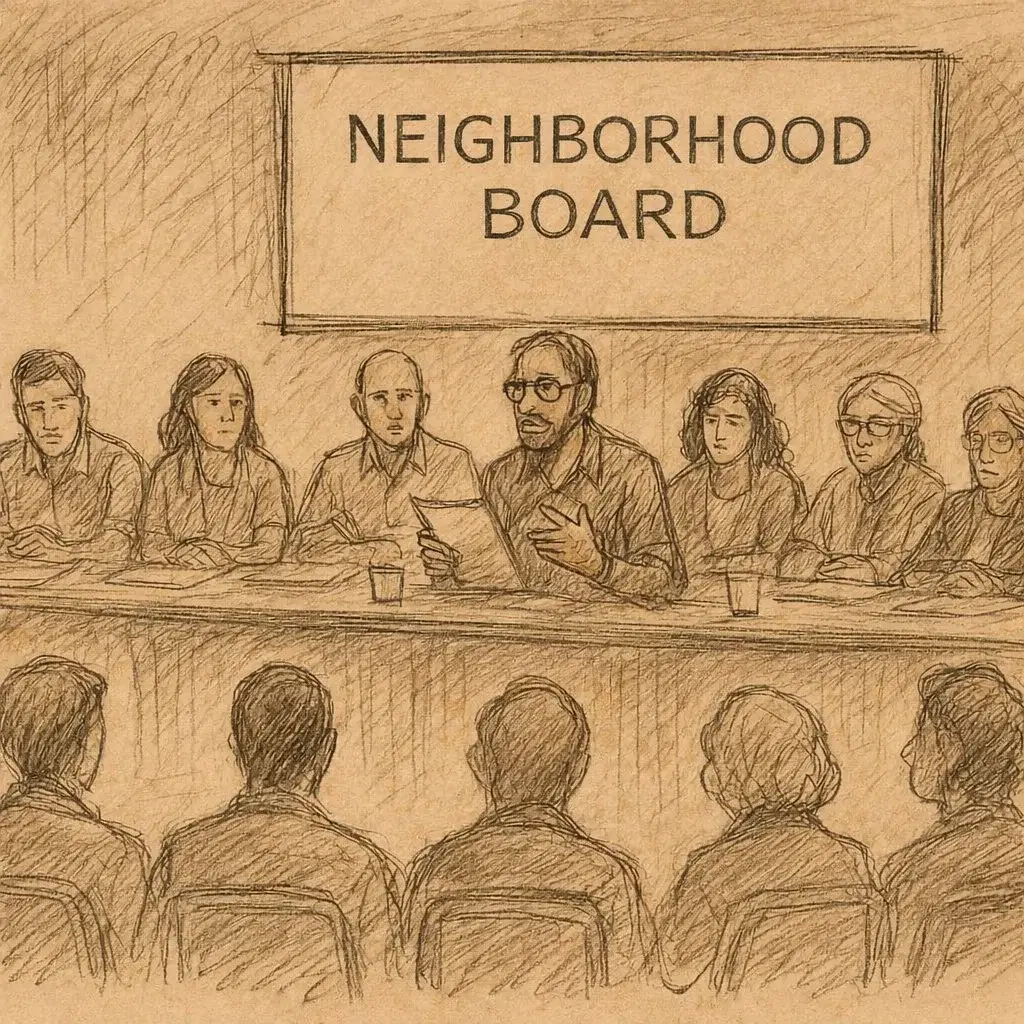
No 04 Kaimuki Neighborhood Board Regular Meeting September 2026
Listen to this article:
4 Kaimuki Neighborhood Board Meeting – September 17, 2026
Call to Order and Meeting Procedures
The meeting opened with eight board members present, including members attending online, which established a quorum. Chairing officials reminded participants that board members would generally speak before the public, with in-person attendees recognized before online participants. Online attendees were asked to keep cameras and microphones off unless speaking, then activate both and state their names; in-person speakers were likewise asked to identify themselves at the microphone so their comments could be entered accurately into the record.
Honolulu Fire Department
The Kaimuki Fire Station reported a relatively quiet August 2026, with no structure, wildland, nuisance, or cooking fires. Firefighters responded to five activated alarms where no fire was found and 50 medical alarms, with no reported vehicle-pedestrian collisions, motor vehicle crashes, mountain rescues, ocean rescues, or hazardous-material incidents. The department focused its safety message on the increasing number of fires involving lithium-ion batteries in phones, laptops, e-bikes, e-scooters, toys, tools, and automobiles. Residents were advised to use manufacturer-approved chargers, charge devices on hard surfaces rather than beds or upholstered furniture, unplug fully charged devices, and charge larger equipment outside when possible without blocking exits. Devices should no longer be used if they become unusually hot, swell, leak, smell strange, smoke, or make popping or hissing sounds. Air travelers were advised to keep charging devices visible and not charge e-cigarettes or vapes aboard aircraft. The Fire Department announced a Fire Prevention Week Family Day at the Honolulu Zoo on October 3, 2026, from 10 a.m. to 2 p.m., under the theme “Charge into Fire Safety: Safe Charging Is a Superpower.” In response to resident Jason Liang’s question, the department said it did not yet have a device-by-device breakdown of lithium-ion battery fires but would ask command staff whether those statistics were available.
Honolulu Police Department
Honolulu Police Department District 7 reported six motor vehicle thefts, three burglaries, 28 thefts, nine unauthorized entries into motor vehicles or car break-ins, and 6,251 total calls for service during the reporting period. Police had also begun monitoring Sierra Drive following a request concerning speeding, with observations occurring during morning and evening periods. No findings were available yet, but HPD expected to provide additional information at a future meeting. The department encouraged residents to enroll in HNL Alert, the City and County of Honolulu’s notification system for severe weather, road closures, water-main breaks, and other disruptions affecting daily routines. The system can be customized at hnlalert.gov.
Emergency Communications During Outages
Board members and residents raised concerns that HNL Alert and other digital services may be inaccessible when storms interrupt electricity, internet, or cellular service. HPD acknowledged that real-time electronic alerts have limitations and recommended keeping a battery-powered AM/FM radio as a backup. The mayor’s representative added that the city has satellite phones, software capable of giving certain mobile phones satellite capability, and push-to-talk radio systems used by agencies such as Emergency Management and the Board of Water Supply. Those radio systems remain available while their towers are powered, but commercial cellular towers may lose service after backup batteries—described as lasting about four hours—are exhausted, with service potentially declining from 5G to LTE and then disappearing entirely. Participants noted that emergency-management agencies coordinate with local AM radio stations, and KSSK was identified as a commonly used source of emergency information, although HPD did not describe it as an officially sponsored city station. The discussion reinforced the need for households to maintain more than one way to receive instructions when power, cellular service, and internet access fail simultaneously.
Dog Enforcement at Kapaʻolono Community Park
A board member asked about reports that police had recently issued citations to people walking dogs at Kapaʻolono Community Park and whether the public had been notified of increased enforcement. HPD did not have details about the specific operation but said the department regularly receives complaints concerning dogs at that park and elsewhere in East Honolulu. Police generally do not announce enforcement operations in advance, although officers may provide verbal warnings to individuals when a new or intensified effort begins. A resident also noted that dogs are not permitted at the park. HPD said pet owners should be prepared to use locations where dog walking is legally allowed.
Board of Water Supply
The Board of Water Supply reported no water-main breaks in Kaimuki during August. It also announced the free “Imagine a Day Without Water” event scheduled for September 26, 2026, from 9 a.m. to 1 p.m. at the Arc of Safety at Waiʻanae Mall, 86-120 Farrington Highway. Organized with State Representative Chris Muraoka’s office and more than 25 government, nonprofit, and community organizations, the family event was to include interactive exhibits, educational displays, games, giveaways, rain-barrel workshops, and food for purchase. The event centered on the “One Water” concept, which treats drinking water, stormwater, wastewater, and other water resources as interconnected and requiring coordinated management. A resident followed up on a concern first raised two months earlier about low water pressure on the 800 block of 21st Avenue. The Board of Water Supply representative apologized for not having the answer immediately available and agreed to search previous correspondence, provide any available information in the meeting chat, or conduct additional follow-up.
Tropical Storm Lala Response and City Updates
The mayor’s representative reported that Tropical Storm Lala dominated the city’s recent work. The Department of Facility Maintenance removed approximately 660 tons of post-storm debris. On Oʻahu, one home was destroyed, 25 homes sustained major damage, and 363 homes sustained minor damage. The city also reported distributing more than half a million pounds of food through the Department of Community Services and associated shelter and outreach operations. Crews conducted pre-storm stream clearing when forecasts provided enough warning, followed by additional work after heavy rain deposited silt and debris. Outreach teams sought people experiencing homelessness in hazardous places such as streambeds and beneath bridges, moved them when possible to shelters or facilities such as HONU, and distributed food to those receiving assistance. Other mayoral updates included the swearing-in of David Lazar as Honolulu’s 13th police chief, redesigned Hawaiʻi driver’s licenses and state identification cards with added security features, a city commemoration of the United States’ 250th anniversary, the reduction of school-zone speed limits from 25 mph to 20 mph, and a national award recognizing the Department of Parks and Recreation’s greener-city-parks work.
Storm Drain, Trash, and Traffic-Signal Follow-Up
The city initiated Work Order 44-2-1 to repair a damaged catch basin, broken storm drain, and exposed reinforcing steel at 16th Avenue and Nohea Street. Because storm-cleanup operations were still consuming personnel and equipment, the work was expected to be completed when resources became available, with a target of the end of 2026. The Department of Transportation Services was also investigating a pedestrian-signal conflict at Makapuʻu Road and Diamond Head Road, where drivers receiving a left-turn indication may encounter pedestrians crossing at the same time and may not have enough time to complete their turns safely. A separate complaint concerned a large amount of bagged trash at 16th Avenue and Koko Drive. The Department of Facility Maintenance determined that the affected area fell partly under Parks and Recreation jurisdiction, so the mayor’s representative redirected the request to that department rather than requiring the resident to start the process again.
Queen Theater Property
The city provided an update on the privately owned Queen Theater at 3588 Waiʻalae Avenue. The property was placed on the open market on June 10, 2026, on an “as-is” fee-simple basis. City officials had previously met with the owner and determined that restrictions and site conditions made a city purchase inappropriate. Additional history showed that the owner declined an April 2026 inquiry about selling to the city. Officials from city departments later met with the owner and her attorney, visually inspected the property, and discussed community interest in preserving the theater and restoring its façade. Although the theater is not on the historic register, it has appeared on an endangered historic-sites list. The city suggested voluntary condemnation as a mechanism through which the building might be acquired and repurposed for public use, but the owner later declined through counsel. Board member Becky Gardner clarified that her concern was not limited to city acquisition; she wanted to know whether permit assistance, sewer-related help, tax incentives, credits, or other city tools could support a private purchaser in restoring and reopening the theater. No specific assistance program was identified during the meeting.
Route 200 and Transportation Advocacy
The Kaimuki Transportation Committee and the joint Kaimuki–Diamond Head transportation group continued to press for changes involving TheBus Route 200. The Department of Transportation Services had previously said it was monitoring conditions but did not plan changes. Representatives noted that three neighborhood boards serving areas along the route—covering Pālolo, Diamond Head, Kapahulu, St. Louis, and Kaimuki—had unanimously adopted resolutions concerning the service. The boards intend to make a formal request for a meeting with the mayor. The mayor’s representative agreed to facilitate the request once a written letter was sent by email and said it would be forwarded to the mayor and managing director. The Transportation Committee later confirmed that this request constituted its report for the month.
Honolulu Charter Ballot Questions
A resident asked how many proposed governmental amendments would appear on the upcoming ballot after finding only two constitutional amendments online while hearing references to as many as 20. The mayor’s representative agreed to obtain further information, and Council Chair Tommy Waters’ office clarified that there would be 20 Honolulu City Charter questions. The office posted the city Charter website in the meeting chat and invited residents to contact the council chair’s office with additional questions. The discussion distinguished the city Charter questions from separate proposed amendments to the Hawaiʻi State Constitution.
Happy Day Restaurant and Older-Building Safety
Council Chair Tommy Waters’ office reported on the partial ceiling collapse at Happy Day restaurant on Waiʻalae Avenue on August 8. After complaints that the vacated restaurant still contained food and other perishables, the office contacted the Hawaiʻi Department of Health. Health inspectors reached the property owner, who arranged for a cleanup company to begin work, tentatively the day after the meeting or that Friday. The Department of Planning and Permitting had also sent letters to the owners and was working with its staff on the property. A board member asked whether DPP is required to inspect public-serving buildings once they reach a certain age, given Kaimuki’s concentration of older structures and the possibility of similar failures. The council representative declined to speculate and promised to confirm the applicable inspection requirements and provide the answer to board leadership for distribution.
Electric Scooter Enforcement in Waikīkī
Council Chair Waters introduced Bill 58, which would authorize the city to remove shared micromobility vehicles, primarily two-wheeled electric scooters, from city property and roadways within the Waikīkī Special District without first notifying the operator. Scooters would have to remain upright and comply with valid parking permits, and they could not obstruct bus stops, accessible parking stalls, pedestrian routes, or sidewalks. Although the measure was limited to Waikīkī, it addressed broader concerns about scooter parking, sidewalk access, and the city’s authority to remove obstructions.
Parks, Native Trees, and Volunteer Stewardship
The City Council recognized the Aloha Tree Alliance for protecting native ecosystems and encouraging environmental stewardship. The nonprofit has planted thousands of native trees along the Kuliʻouʻou Ridge Trail and is working with Mālama Maunalua Hui on efforts to beautify and improve the long-term sustainability of Mauʻumae Nature Park. Council staff thanked the alliance’s executive director, nursery manager, volunteers, the neighborhood board, the Department of Parks and Recreation’s Adopt-a-Park program, and other participants contributing to the project.
Community Emergency Response Team Training
Jason Liang followed up on a request made to Council Chair Waters the previous month for additional Community Emergency Response Team, or CERT, training information and opportunities to be placed online. Council staff did not yet have an update but agreed to seek an answer, provide it at the next meeting, or contact Liang directly. The request arose in the context of recent storms and public interest in expanding neighborhood-level emergency preparedness.
Koko Head Freeway Off-Ramp Redesign
The Hawaiʻi Department of Transportation presented revised plans for the Koko Head freeway off-ramp used by eastbound motorists. The current configuration allows both lanes to turn left, while the right lane can also turn right. Under the redesign, the left lane would become left-turn-only and the right lane right-turn-only. Engineers believe the simpler arrangement will reduce lane searching, conflicts, and crashes, including situations where a driver turns left from the leftmost lane and immediately attempts to cross traffic to reach Harding Avenue. DOT’s traffic counts did not indicate that eliminating one left-turn lane would create an unacceptable backup, but the new traffic signals will connect with the city’s signal system and can be retimed if queues develop. At Koko Head Avenue and Harding Avenue, the mauka-bound left lane would become left-turn-only, while the center lane would proceed straight and the right lane would turn right.
Off-Ramp Barrier and Residential Safety Concerns
The board strongly challenged DOT’s decision not to install crash barrels or another substantial physical barrier in the median directly opposite homes that have previously been struck or threatened by vehicles leaving the off-ramp. DOT said engineers concluded that barrels would provide mainly a visual cue and would not stop a fast-moving vehicle weighing thousands of pounds. The planned design instead uses pavement markings, lane assignments, and flexible plastic delineators to guide motorists. Board members responded that impaired or confused drivers may not react to visual cues, particularly at night, and noted that signs and median structures have been hit repeatedly over several years. They argued that even a partial reduction in vehicle speed could protect residents and that the analysis should consider the safety of occupants of the homes, not only drivers. Members asked DOT to revisit the matter with the director and traffic engineers, review prior neighborhood board minutes documenting the repeated incidents, and contact the two affected households directly. Residents also suggested adding stronger reflectors, advance signs, temporary barrels, and a phased driver-education or transition period so motorists are not surprised by the changed lane pattern. DOT’s representative said the request had been heard clearly and that barriers could be added later as a relatively small maintenance modification.
Off-Ramp Construction and Traffic Operations
Construction on the Koko Head off-ramp project is expected to run from January through the end of 2027, with normal working hours of 8:30 a.m. to 3 p.m. DOT did not yet have a detailed schedule showing when lanes or the entire ramp might be partially or fully closed but agreed to provide that information when available so the board could notify the public. A resident also warned that traffic at Koko Head and Harding already becomes congested when vehicles queue for the westbound freeway entrance and school traffic is released. The resident recommended reviewing signal timing and ensuring that vehicles leaving the freeway can distribute into available mauka-bound lanes rather than being forced unnecessarily into a single lane. DOT accepted the suggestion for further consideration.
Vision Zero and 2026 Traffic-Safety Legislation
The Kaimuki Vision Zero update reviewed the results of traffic-safety proposals introduced during the 2026 legislative session. Of nine bills and companion measures dealing with intersections, crosswalks, leading pedestrian intervals, and school-area improvements, Senate Bill 3234 became Act 262. Enacted in memory of Thea Mahilona, a pedestrian killed in a traffic collision, the law provides for pedestrian-safety improvements adjoining school properties. House Bill 2021 became Act 259 after earlier concerns about high-speed electric-vehicle language were addressed. The law establishes enforceable definitions, identification measures, and educational requirements concerning e-bikes, electric mobility devices, and high-speed vehicles. People under 16 must be under direct parental or guardian supervision when operating Class 2 or Class 3 e-bikes. Three proposals that would have reduced minimum parking requirements at commercial or transit-oriented developments did not pass, nor did six bills proposing free public transportation for students, youth, or the general public.
Open Streets, Speed Assistance, and Fatality Data
Senate Bill 3029 became Act 176, expanding support and funding for “Open Streets” events that temporarily repurpose roads as car-free spaces for community activities. House Bill 2023 became Act 260 in July and requires intelligent speed-assistance technology for drivers convicted of excessive speeding or drag racing. The Vision Zero representative identified distraction, impairment, and speeding as the three primary causes of roadway deaths. As of the day before the meeting, Hawaiʻi had recorded 64 traffic fatalities statewide, compared with 93 at the same point in 2025. No bicycle fatalities had been recorded statewide, and no traffic fatalities were known to have occurred within the Kaimuki neighborhood area. A resident raised the danger of pedestrians using mobile phones in crosswalks; participants noted that Honolulu already has a law prohibiting this behavior, though enforcement and public compliance remain concerns.
Local Food Security Charter Amendment
Melissa, speaking on behalf of a student-led campaign mentored by local advocates, presented Honolulu Charter Amendment Question 1 concerning local food security. The proposal would dedicate one-half of one percent of existing real property tax revenues to local agriculture, farmers, and food distribution for people in need. It would not increase tax rates but would reserve a portion of current revenue for those purposes. Approximately a dozen high school students had been visiting neighborhood boards and conducting outreach at schools and in the community, including students who had personally experienced hunger. Advocates directed residents to localfoodsecurity.org and urged voters to support “Question 1 for local food security.” They emphasized that this city Charter question is separate from the state constitutional amendment also numbered Question 1. Unlike state constitutional amendments, an unmarked city Charter question would not automatically count as a “no” vote, although advocates asked voters not to skip it.
Hawaiian Electric Communication and Grid Reliability
The board discussed whether Hawaiian Electric should provide reports or periodic updates directly to the Kaimuki community following widespread outages caused by recent storms. Members wanted clearer information on how the utility communicates with businesses, families, and kūpuna who may not use social media or have internet access during an outage. They also asked why nearby blocks can experience sharply different restoration times—for example, one area remaining without power for 48 hours while another is restored in four—and whether outage estimates can be provided at a more localized level. Because Hawaiian Electric is privately owned but regulated by the Public Utilities Commission, the board proposed continuing the discussion when the governor’s representative could participate. Members recalled that the governor’s representative had previously offered to seek a Hawaiian Electric representative for a future meeting and asked that this request be formally reflected in the minutes. The board also renewed interest in Hawaiian Electric’s long-term plans for undergrounding utility lines.
Outage Restoration and Utility Resources
Resident and civil engineer Dave Smith offered his observations about the recent Kaimuki outage. He attributed the longer outage in the uphill area to a failed transformer near Paula Drive and said Hawaiian Electric crews left around 9 p.m., while service was restored around midnight, possibly because additional safety review was required before reenergizing the circuit. He also noted that equipment and personnel had been moved among islands in response to storm damage on Hawaiʻi Island and Kauaʻi, limiting the number of crews immediately available on Oʻahu. He explained that wind can cause electrical shorts that damage transformers, resulting in lengthy replacement and restoration work. While acknowledging the inconvenience, he cautioned that Hawaiian Electric cannot maintain unlimited crews and equipment in every location simultaneously.
Proposal for a Publicly Owned Electric Utility
Jason Liang renewed his request to present a resolution supporting conversion of Hawaiian Electric into a publicly owned utility. He argued that an investor-owned company may lack sufficient financial incentive to harden the grid when customers have no practical alternative and cited Kauaʻi Island Utility Cooperative as a possible model. He also connected the issue to Hawaiian Electric’s previous changes to solar net-metering, arguing that upgrading the grid to accept more distributed solar power would have been preferable to limiting customer compensation. Board member Sean emphasized that the board would need an in-depth comparison before voting on any resolution, including details about costs, ownership, governance, grid hardening, restoration performance, and the fact that Kauaʻi also experienced extensive outages during the recent hurricane. There was interest in hearing a fuller presentation, but no resolution was considered or adopted at this meeting.
Approval of August Meeting Record
The board reviewed the written summary and video report from its August 19 meeting. A member identified minor spelling errors and a pronoun correction in the section concerning questions about the Envision Kaimuki presentation. The board approved the record as amended by voice vote. No board members reported attendance at other neighborhood board or public meetings.
Planning Commission Notice
The board announced a City and County of Honolulu Planning Commission meeting scheduled for September 30, 2026, at 1:30 p.m. The meeting would be available remotely and in person in the sixth-floor conference room of the Frank F. Fasi Municipal Building, 650 South King Street. The agenda included a Central Oʻahu state special-use permit associated with the Waiawa Correctional Facility. Residents wishing to offer testimony or obtain further information were encouraged to consult the meeting notice.
New Kaimuki Ambulance Unit
The Honolulu Emergency Services Department expects to begin basing an ambulance unit in Kaimuki in October 2026. Kaimuki is currently served by ambulances responding from Waikīkī, Wailupe, or occasionally more distant locations, so the new unit is intended to reduce emergency medical response times within the community. A formal announcement was expected later in the year, and residents seeking additional details were directed to contact Shane S. Enright at the City and County of Honolulu.
Closing Announcements
The next Kaimuki Neighborhood Board meeting was scheduled for October 21, 2026, at the same time and location. Meeting broadcasts were noted as airing on Channel 49 at 9 p.m. on the second Sunday. Residents were reminded to use the Honolulu 311 application to report city-maintained infrastructure and service problems. An attendee also recognized the Kaimuki YMCA director and staff member present at the meeting and encouraged residents to consider the YMCA’s community programs, many of which were described as free or low-cost.